
In the temperate coastal waters of southern Australia swims one of nature’s most extraordinary masters of disguise. The leafy sea dragon (Phycodurus eques), affectionately known as “leafies” by enthusiasts, represents evolutionary camouflage perfected to an art form. Unlike any other marine creature, these delicate beings have developed leaf-shaped appendages that flow from their bodies, creating an illusion so convincing that they appear to be nothing more than floating seaweed. This remarkable adaptation not only enables them to evade predators but also makes them one of the ocean’s most captivating creatures to observe.
Related to seahorses and pipefish within the Syngnathidae family, leafy sea dragons have captivated marine biologists, photographers, and ocean enthusiasts alike. Their unique appearance, coupled with their gentle, almost mystical movements through the water, has earned them protected status in their native Australia. As we dive deeper into the world of these magnificent creatures, we’ll explore their biology, behavior, habitat, and the conservation efforts dedicated to preserving these living masterpieces of natural camouflage.
Evolutionary Mastery: Anatomy of Perfect Disguise

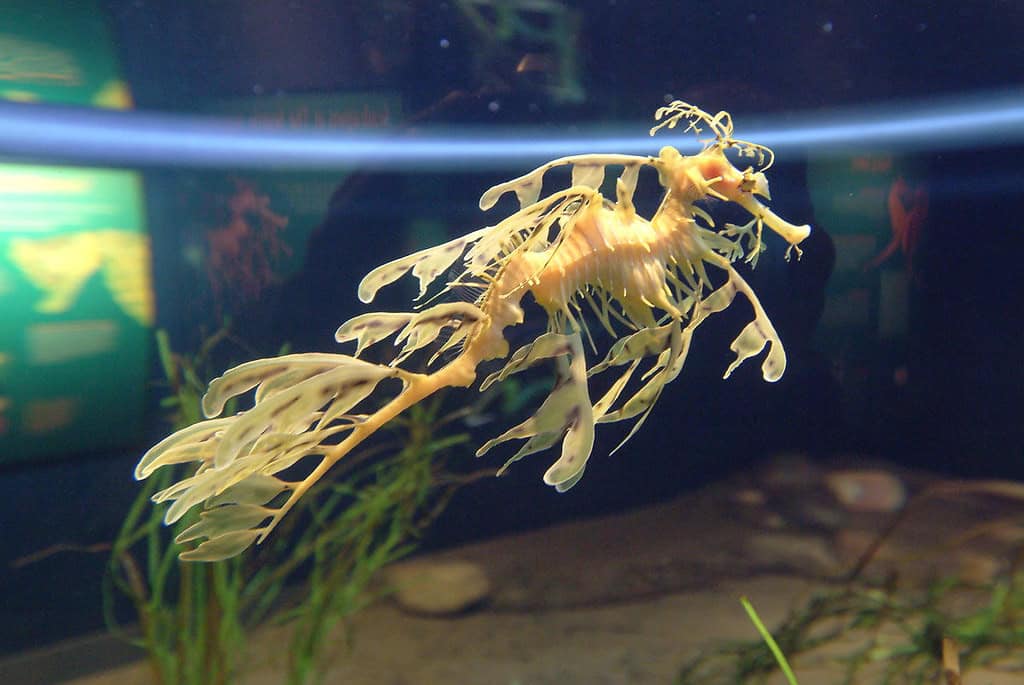
The leafy sea dragon’s body is a testament to evolutionary ingenuity. Growing up to 35 centimeters (14 inches) in length, these creatures possess dozens of leaf-like appendages projecting from their slender bodies. These ornate outgrowths aren’t just for show—they serve as the primary camouflage mechanism, allowing the animal to blend seamlessly with the seaweed and kelp forests they inhabit. Unlike true fins, these appendages are purely ornamental, remaining largely motionless as the sea dragon navigates its environment.
Propulsion comes instead from nearly transparent pectoral fins on the neck ridge and a dorsal fin along the back, both beating rapidly yet almost invisibly at 30-70 times per second. This ingenious propulsion system complements their disguise, as the minimal movement helps maintain their camouflage. Their elongated, tubular snout, similar to their seahorse cousins, is perfectly adapted for precision feeding, while their armored body consists of bony plates and spines beneath the skin, offering protection without sacrificing their leafy appearance. The sea dragon’s eyes can move independently of each other, providing a 360-degree field of vision—crucial for both spotting prey and detecting threats while maintaining their stationary disguise.
Life Among the Kelp: Habitat and Distribution
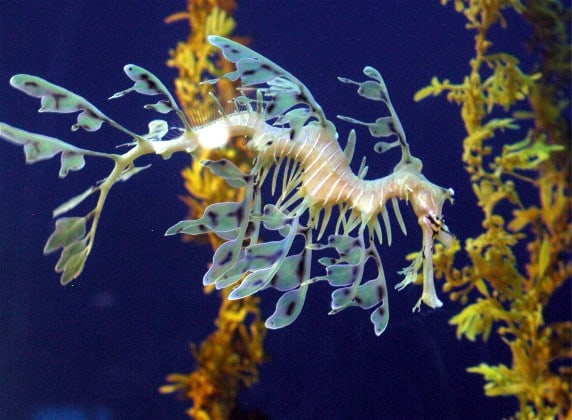
Leafy sea dragons are endemic to the southern coast of Australia, with populations concentrated around South Australia and Western Australia. Their geographic range spans from Geraldton, Western Australia, to Wilson’s Promontory in Victoria, though they’re most commonly found in waters near Adelaide and the Fleurieu Peninsula. These magnificent creatures thrive in specific environmental conditions, inhabiting temperate coastal waters at depths between 4 and 30 meters (13 to 98 feet).
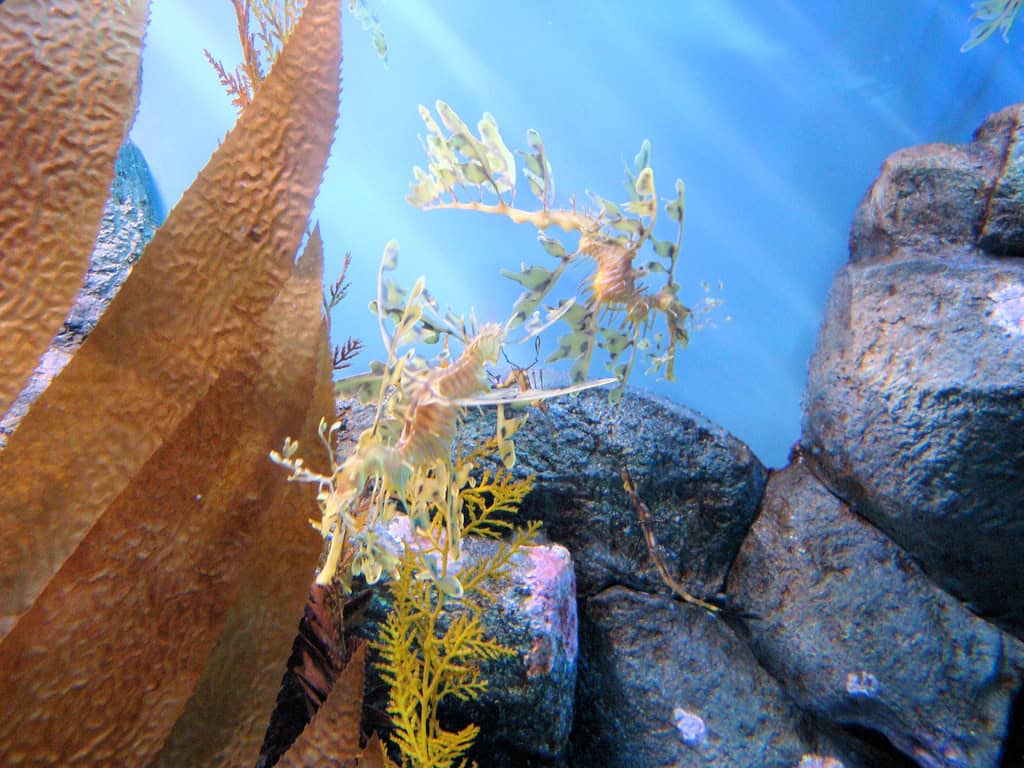
Their preferred habitat consists of rocky reefs, seagrass meadows, seaweed beds, and kelp forests—environments that match their elaborate camouflage. Water temperatures between 14-20°C (57-68°F) provide optimal conditions for these sensitive creatures. While they can occasionally be found in sandy patches between vegetation, leafy sea dragons are most at home among the swaying seaweeds where their disguise is most effective. Their limited distribution and specific habitat requirements make them particularly vulnerable to environmental changes, contributing to their protected status and conservation significance.
Dining with Precision: Feeding Habits and Diet

The feeding mechanism of leafy sea dragons is as specialized as their appearance. Unlike many marine creatures, they have no teeth or stomach. Instead, they are equipped with a long, pipe-like snout ending in a small mouth that functions like a precision vacuum. When a leafy sea dragon spots suitable prey—typically small crustaceans like mysid shrimp (often called “sea lice”), plankton, larval fish, or minute amphipods—it positions itself with remarkable patience before striking with surprising speed, creating a powerful suction that draws the prey directly into its digestive tract.
A typical leafy sea dragon may consume hundreds of tiny crustaceans daily, requiring near-constant foraging. Their feeding strategy involves drifting slowly through their habitat, blending perfectly with surrounding vegetation while scanning for prey with their independently moving eyes. This specialized feeding adaptation highlights the sea dragon’s ecological niche as a mid-water ambush predator. Interestingly, their diet contributes to their coloration—the pigments in the tiny crustaceans they consume help maintain their vibrant coloration, ranging from olive to yellowish-brown with spectacular iridescent blue accents.
Graceful Mobility: Movement and Locomotion

The leafy sea dragon’s movement through water is nothing short of mesmerizing. Unlike the vertical posture of their seahorse relatives, leafy sea dragons maintain a horizontal orientation as they drift through the water. Their primary means of propulsion comes from nearly invisible pectoral and dorsal fins that flutter with extraordinary speed, creating the illusion that they’re simply drifting with currents rather than actively swimming. This gentle, swaying motion mimics the movement of the surrounding vegetation, further enhancing their camouflage.
While they’re capable swimmers, leafy sea dragons typically move slowly, traveling no more than 150 meters in a day. They lack a prehensile tail like their seahorse cousins, meaning they cannot grasp onto vegetation to anchor themselves against strong currents. Instead, during rough conditions, they often retreat to deeper, calmer waters. Their unique mode of locomotion represents an evolutionary trade-off: while sacrificing speed, they’ve gained the ability to move in a manner that maintains their disguise—a strategy that has proven highly effective for their survival despite making them vulnerable to changing ocean conditions or being swept away during storms.
The Dance of New Life: Reproduction and Breeding

The reproductive cycle of leafy sea dragons features one of nature’s most fascinating role reversals. Like their seahorse relatives, it’s the male who becomes pregnant, though through a different mechanism. Breeding typically occurs in late winter to early spring (August to October in the Southern Hemisphere). The elaborate courtship ritual begins with males and females mirroring each other’s movements in a synchronized swimming dance that can last for days. When ready to mate, the female produces up to 300 bright pink eggs, transferring them to the male’s specialized brood patch on the underside of his tail.
Unlike seahorses with their enclosed brood pouches, male leafy sea dragons carry the fertilized eggs exposed on their tail, attached within small cup-like depressions supplied with oxygen through the rich blood vessels beneath. For approximately 6-8 weeks, the male incubates these eggs until fully developed sea dragons emerge—perfect miniature replicas of their parents, measuring just 20mm in length. These newborns are immediately independent, receiving no further parental care. Breeding occurs just once annually, with pairs forming seasonal rather than lifelong bonds. This low reproductive rate, combined with specific breeding conditions and high juvenile mortality, contributes to their vulnerability as a species.
Masters of Deception: Camouflage Strategies

The leafy sea dragon’s camouflage represents one of nature’s most sophisticated examples of cryptic coloration and morphological adaptation. Their yellowish to olive-brown bodies featuring intricate patterns of spots and markings blend flawlessly with the brown kelp and seagrasses of their native habitats. The iridescent highlights that occasionally shimmer across their bodies mimic the way sunlight dapples through seaweed fronds. This exceptional camouflage isn’t static—leafy sea dragons can adjust their coloration to some degree over days or weeks to match changes in their surroundings or seasonal variations in vegetation.
Beyond color matching, their most remarkable adaptation lies in their leaf-like appendages. These elaborate protrusions vary between individuals, creating unique disguises while breaking up the outline of their bodies—a technique known as disruptive coloration. When motionless, which they often remain for hours, they become virtually invisible even to trained observers. This passive defense strategy has proven so effective that leafy sea dragons have few natural predators despite lacking other defensive mechanisms. Their camouflage also serves a dual purpose, allowing them to approach prey undetected before striking with their lightning-fast feeding action.
Life Cycle and Longevity: Growing Up Dragon
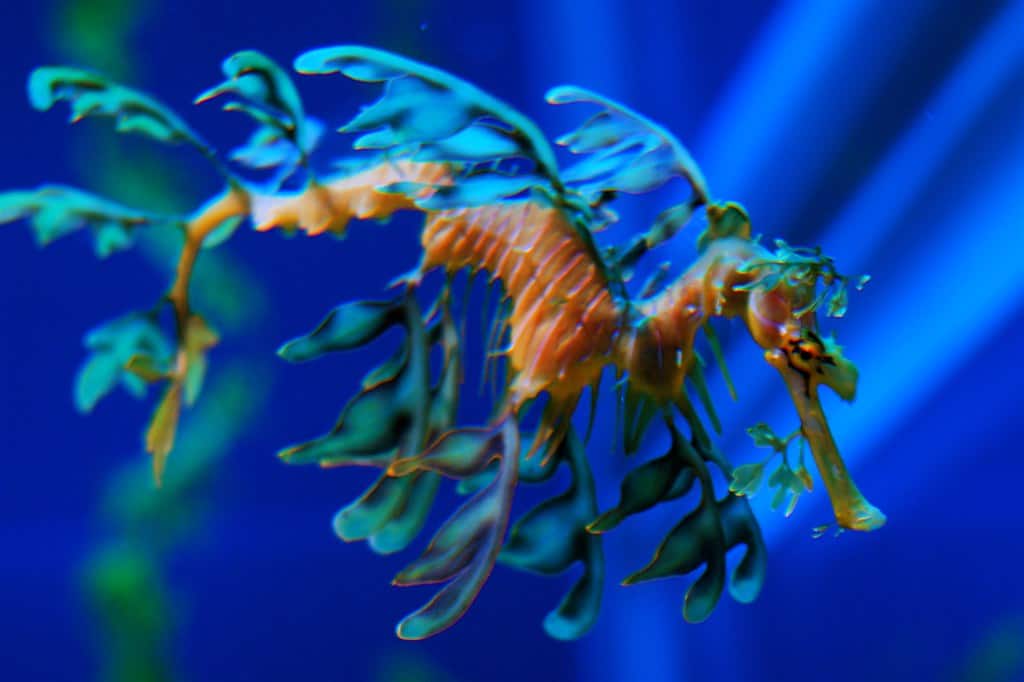
The journey from egg to adult represents a precarious path for leafy sea dragons. After hatching as fully-formed but tiny versions of adults, young sea dragons immediately face the challenges of independent life. These juveniles, just 20mm long, must navigate finding food while avoiding becoming prey themselves. Their first months are characterized by rapid growth as they develop their distinctive leaf-like appendages. The juvenile phase lasts approximately 12 months, during which mortality rates are highest, with many succumbing to predation or environmental challenges before reaching maturity.
Adult leafy sea dragons typically live 5-7 years in the wild, though specimens in optimal conditions have been documented reaching 9 years. Sexual maturity occurs at approximately 1-2 years of age, when males develop their brood patches and can participate in reproduction. Throughout their lifespan, they continue to grow slowly, with the most dramatic development occurring in their ornate appendages, which become increasingly elaborate with age. Each sea dragon develops a unique pattern of these leaf-like projections, making individuals recognizable to researchers who study their populations—much like fingerprints in humans. This individuality has helped scientists track specific specimens over time, contributing valuable data about their longevity and territorial habits.
Threats in a Changing Ocean: Conservation Challenges
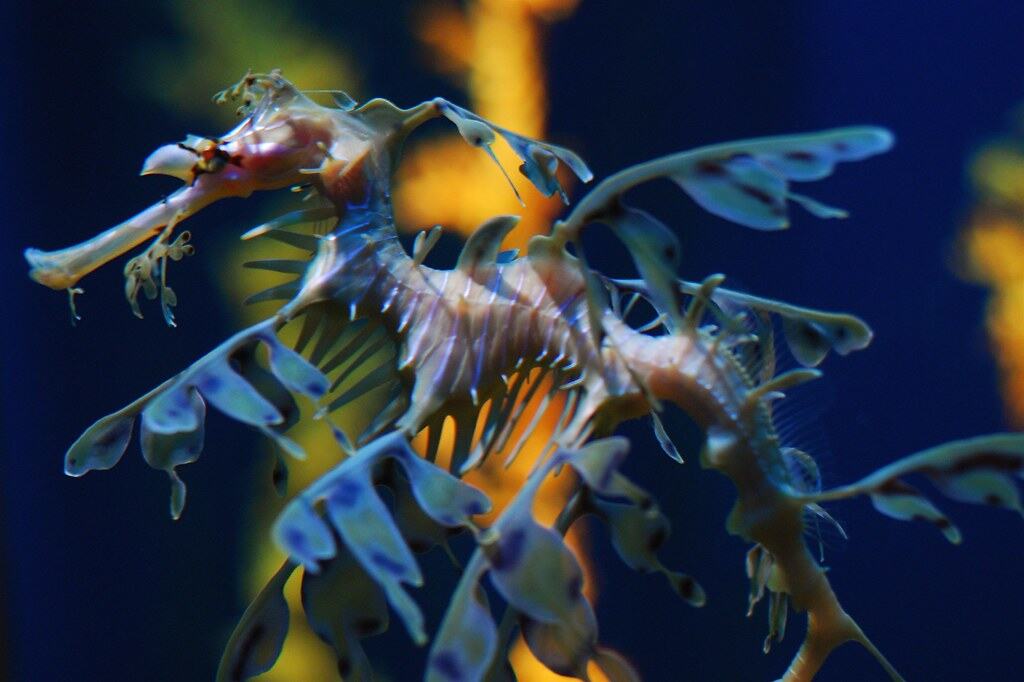
Despite their remarkable camouflage protecting them from natural predators, leafy sea dragons face numerous anthropogenic threats that have led to declining populations. Habitat destruction poses perhaps the greatest challenge—coastal development, pollution, and agricultural runoff have degraded many of the kelp forests and seagrass meadows they depend on. Climate change introduces additional stressors, as warming ocean temperatures and increasingly violent storms directly impact their sensitive habitats. Sea dragons, with their limited mobility, are particularly vulnerable to being swept away during extreme weather events.
The aquarium trade has historically posed another significant threat, with specimens fetching high prices on international markets. Although now legally protected, illegal collection still occurs. Additionally, unintentional capture as bycatch in fisheries and boat propeller strikes contribute to population decline. Their naturally low reproductive rate compounds these problems—with just one breeding season annually and relatively few offspring, populations recover slowly from disturbances. These cumulative pressures have resulted in leafy sea dragons being listed as “Near Threatened” on the IUCN Red List and receiving protected status under Australian law, making their collection and trade illegal without special permits.
Conservation Success Stories and Ongoing Efforts
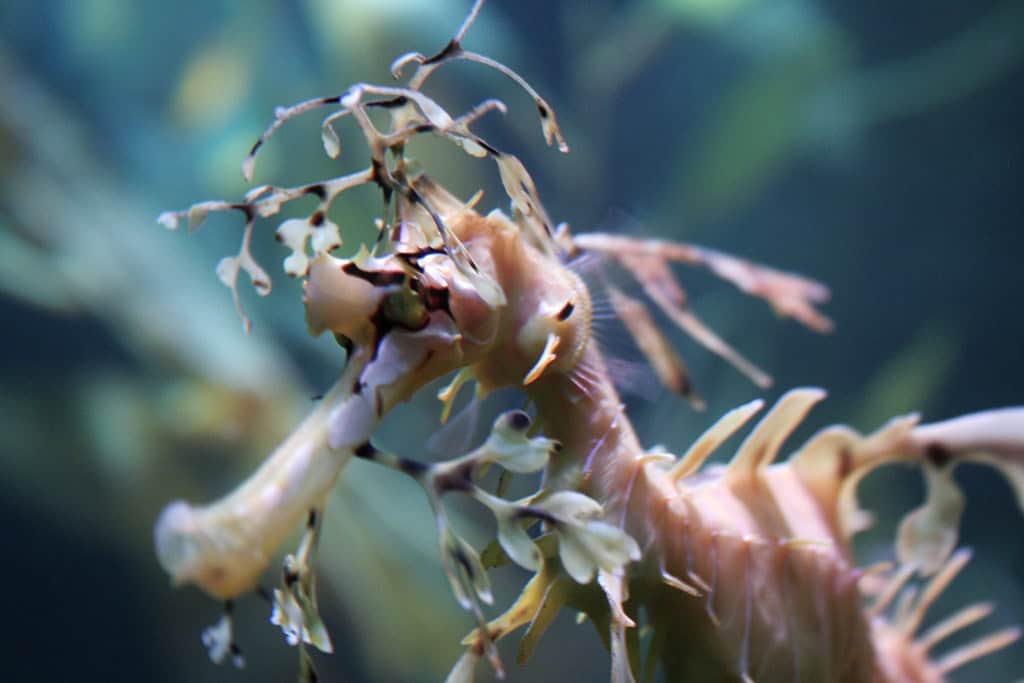
Conservation initiatives for leafy sea dragons have gained momentum in recent decades, yielding encouraging results. Australia’s establishment of marine protected areas throughout the sea dragon’s range, including marine parks in South Australia and Victoria, has created safe havens where these creatures and their habitats receive legal protection. Public education campaigns have raised awareness about these charismatic animals, fostering local community investment in their preservation. Citizen science programs, where recreational divers document sea dragon sightings, have proven invaluable for monitoring population trends and distribution patterns.
Captive breeding programs represent another important conservation approach. While notoriously difficult to breed in captivity, several major aquariums have achieved success, including the Aquarium of the Pacific in California and Australia’s Melbourne Aquarium. These breakthroughs reduce pressure on wild populations while providing opportunities for research and public education. Ongoing scientific studies focusing on their genetics, behavior, and habitat requirements continue to inform conservation strategies. Restoration projects targeting damaged seagrass meadows and kelp forests benefit not only sea dragons but entire marine ecosystems. These multifaceted conservation efforts demonstrate how charismatic species like the leafy sea dragon can serve as ambassadors for broader marine conservation, protecting the complex underwater environments on which countless species depend.
Cultural Significance and Human Fascination

The leafy sea dragon has captured human imagination across cultures and generations. To the indigenous Ngarrindjeri people of South Australia, these creatures feature in traditional stories and are considered spiritual beings deserving of respect. Their mythical appearance has inspired artists, writers, and designers worldwide, appearing in everything from marine-themed artwork to fashion and jewelry. Their popularity extends to their status as unofficial marine ambassadors for South Australia, where they’re celebrated in local festivals and featured prominently in tourism materials.
The scientific community has shown equal fascination. Marine biologists study sea dragons not only for their unique biology but also as indicators of ecosystem health—their presence generally signifies thriving, diverse marine environments. Public aquariums around the world prominently feature leafy sea dragons in specialized exhibits, where they consistently rank among visitors’ favorite displays. These carefully designed habitats not only showcase these remarkable creatures but serve as powerful educational tools, introducing millions of people to concepts of marine conservation, evolutionary adaptation, and biodiversity. The emotional connection people form with these otherworldly beings often translates into broader support for ocean conservation initiatives, demonstrating the leafy sea dragon’s importance beyond its ecological role.
Scientific Research and Recent Discoveries
Scientific understanding of leafy sea dragons continues to evolve through dedicated research efforts. Recent genetic studies have revealed insights into their population structure, suggesting more limited gene flow between geographically separated groups than previously thought—information crucial for effective conservation planning. Advanced tracking techniques, including acoustic tagging and environmental DNA sampling, are providing unprecedented data about their movements, habitat utilization, and population distribution without disturbing these sensitive creatures.
Perhaps most excitingly, behavioral research has uncovered previously unknown aspects of sea dragon social interactions. While once thought to be primarily solitary, careful observation has documented complex communication through subtle body postures and color changes. Researchers have also identified surprisingly consistent migration patterns within localized areas, with some individuals showing fidelity to specific sites across seasons. Technological advances in underwater photography and videography have allowed documentation of rare behaviors, including previously unrecorded details of their courtship rituals. These scientific discoveries not only enhance our appreciation of these remarkable creatures but provide essential knowledge for protecting them in a rapidly changing marine environment.
The Enduring Legacy of Nature’s Perfect Disguise
The leafy sea dragon stands as a testament to nature’s boundless creativity and the power of evolutionary adaptation. Through millions of years of refinement, these extraordinary creatures have achieved a level of camouflage so perfect that they remind us how much remains to be discovered in our oceans. Their continued survival depends on our commitment to preserving the marine environments that support them and countless other species. As we face unprecedented environmental challenges, the sea dragon’s story offers both inspiration and warning—a reminder of nature’s resilience when given the chance to thrive.
Beyond their ecological significance, leafy sea dragons enrich our world through their sheer otherworldly beauty. They challenge our perception of what’s possible in nature and remind us why marine conservation matters on both practical and spiritual levels. In protecting these living works of art, we preserve not just a species but a source of wonder for future generations. The leafy sea dragon’s mastery of disguise has allowed it to survive for millennia; now its visibility as a conservation icon may help ensure it survives for millennia more, continuing to drift through Australia’s coastal waters like living poetry—a perfect fusion of form and function.

- The Arctic Wind Pattern That’s Bringing Cold Snaps to Texas - July 16, 2026
- This Insect Has the Quickest Strike in Nature - July 16, 2026
- The Deadliest Animal in the US Isn’t What You Think - July 16, 2026