

Imagine a tiger pausing at the edge of a busy highway, unsure whether to risk a dash across or turn back into shrinking forest. For countless animals, roads, railways, and farms have become dangerous walls, splitting habitats and threatening their survival. But there’s hope—wildlife corridors are creating safe bridges and tunnels for animals to move, migrate, and thrive. These green lifelines are not just clever engineering feats; they’re emotional testaments to our commitment to share the planet. Let’s explore 15 incredible wildlife corridors making a real difference for animals around the world.
15 Siju-Rewak Corridor, India

Deep in Meghalaya, the Siju-Rewak corridor silently supports one of India’s most elusive animals—the clouded leopard. This stretch of land connects two critical forest patches, allowing not just leopards but also elephants, hoolock gibbons, and hornbills to travel safely. Without this corridor, these animals would be forced into human settlements, leading to conflict and tragedy. Local communities have rallied to protect the corridor, recognizing that their own survival is tied to the health of the forest. Every time an elephant herd passes safely, it’s a small victory for both people and wildlife. The corridor’s preservation is a story of hope, grit, and the possibility of peaceful coexistence.
14 Banff Wildlife Crossings, Canada

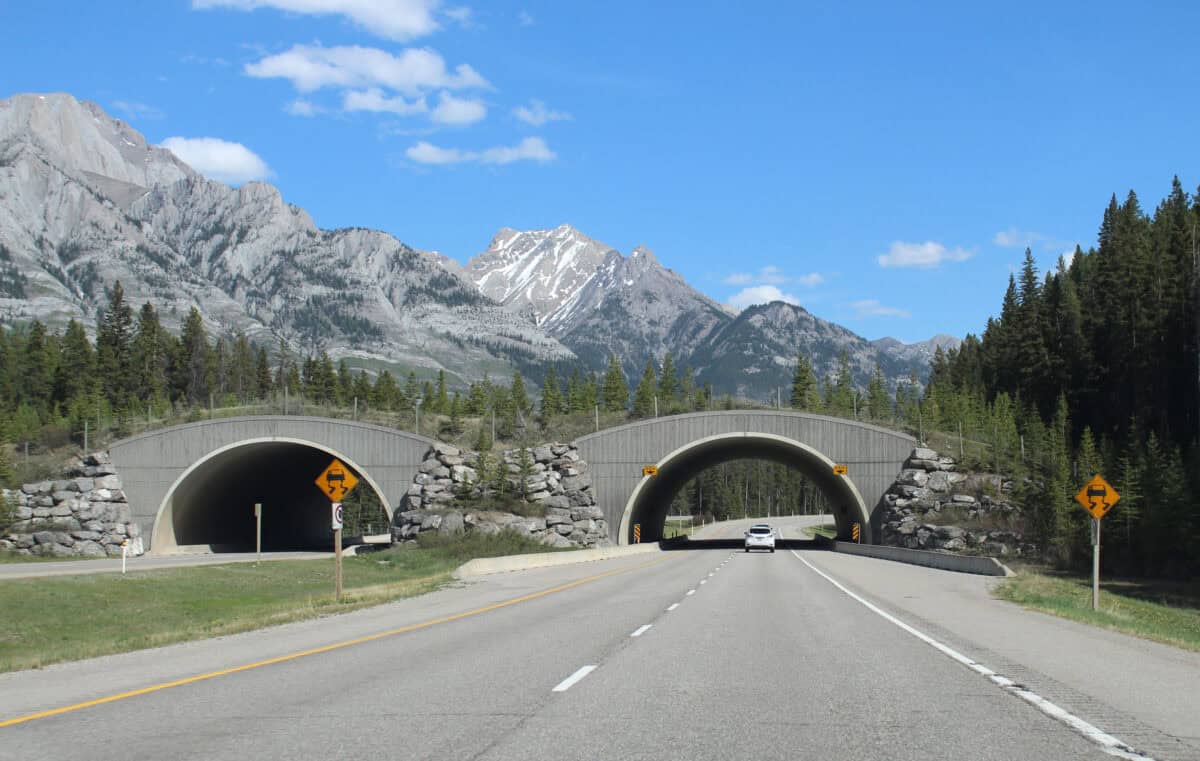
The Trans-Canada Highway slices through Banff National Park, one of the wildest places in North America. For years, animals like bears, wolves, and elk faced deadly risks crossing the road. The solution? Over 40 wildlife overpasses and underpasses now stretch across the highway, covered in native plants and hidden from traffic. These green bridges have reduced wildlife-vehicle collisions by more than 80 percent. Watching a grizzly lumber across an overpass feels like witnessing a secret moment. The Banff crossings are proof that smart design can mend the scars we’ve left on wild landscapes.
13 The Ecoduct De Woeste Hoeve, Netherlands

In the heart of the Netherlands, where highways are everywhere, badgers, deer, and frogs face daunting obstacles. The Ecoduct De Woeste Hoeve is a lush, green bridge spanning a busy road, letting animals cross without fear. It is designed to look and feel like a natural piece of forest. Sensors and cameras reveal a surprising parade of wildlife using the bridge nightly. This corridor has inspired similar projects across Europe, proving that even in densely populated countries, nature can be given safe passage.
12 The Terai Arc Landscape, Nepal and India

Stretching across the lowland jungles of Nepal and northern India, the Terai Arc Landscape links 14 protected areas. This corridor is a lifeline for tigers, rhinos, and elephants moving between fragmented forests. It’s more than just a path; it’s a vast network of grasslands, rivers, and forests, with villages working to reduce poaching and human-wildlife conflict. The corridor has brought wildlife back to places where it had vanished for decades. Seeing a rhino return to its ancestral home is a testament to the power of connection.
11 Christmas Island Crab Bridges, Australia

Every year, millions of red crabs migrate across Christmas Island to lay their eggs in the sea. Busy roads once spelled disaster for these tiny travelers. Ingenious crab bridges and underground tunnels now guide the crabs safely over and under roads. These structures have become world-famous, even drawing tourists to witness the spectacle. The bridges are a quirky but essential reminder that even the smallest creatures deserve safe passage.
10 B2 Elephant Underpass, Kenya

Savannah elephants in southern Kenya faced a new foe—a busy highway cutting through their ancient migration routes. The B2 Elephant Underpass, a wide tunnel beneath the road, now allows entire herds to move safely. Conservationists spent years studying elephant behavior to design the perfect passage. The first hesitant matriarch to use the underpass paved the way for others, showing trust in human helpers. Today, camera traps capture joyful scenes of elephant families strolling through, trunks swaying, on their way to water and food.
9 The Wallis Annenberg Wildlife Crossing, United States

In the bustling heart of Los Angeles, mountain lions are boxed in by freeways. The Wallis Annenberg Wildlife Crossing, set for completion soon, will span ten lanes of traffic. Covered in native vegetation, it will allow cougars, bobcats, deer, and even lizards to escape urban isolation. This crossing is not just an engineering marvel but a symbol of hope for city-dwelling wildlife. It’s a bold answer to the question: Can wild animals thrive alongside millions of people?
8 The Y2Y Corridor, Canada and United States

The Yellowstone to Yukon (Y2Y) corridor is an ambitious effort to connect over 3,200 kilometers of wild land from Wyoming to Canada’s Yukon. Wolves, grizzlies, and caribou now have a fighting chance to migrate, find mates, and adapt to climate changes. The corridor stitches together parks, private lands, and Indigenous territories. It’s a massive, ongoing project, fueled by the belief that nature knows no borders. Hikers and animals alike benefit from these wild highways.
7 Natuurbrug Zanderij Crailoo, Netherlands

This is Europe’s largest wildlife overpass, stretching more than 800 meters across roads, railways, and even a sports complex near Hilversum. Deer, foxes, and reptiles use the bridge daily, while wildflowers and trees make it feel like a true piece of forest. The overpass is a quiet revolution in urban planning, blending infrastructure and ecology. Local schoolchildren visit for nature lessons, learning that bridges can unite more than just people—they can reconnect entire ecosystems.
6 The Elephant Corridor Project, India

India’s growing cities and farms threaten ancient elephant paths. The Elephant Corridor Project is a network of 101 corridors, identified to reconnect forests and preserve migration routes. Some corridors are as narrow as a few hundred meters, yet they mean everything to elephants seeking water and food. Villagers living near these corridors are key partners, helping to reduce crop damage and avoid dangerous encounters. The project’s success is counted not just in elephant numbers, but in peaceful nights for both people and animals.
5 Białowieża Forest Corridor, Poland and Belarus

The primeval Białowieża Forest, home to Europe’s last wild bison, is split by the Poland-Belarus border and roads. A network of corridors—small wooded strips and underpasses—now lets bison, lynx, and wolves move between protected zones. These corridors are critical for the genetic health of threatened species. The forest is a living relic, and the corridors are its veins, pulsing with life and ancient mystery.
4 The Sloth Crossing Project, Costa Rica

Costa Rica’s sloths are slow—and that’s a problem when roads and power lines cut through their rainforest homes. The Sloth Crossing Project strings rope bridges between trees, letting sloths, monkeys, and even kinkajous bypass the dangers below. Locals and tourists alike delight in spotting a sloth inching across a “sky highway.” The project has saved countless animals from tragic accidents and inspired similar efforts across Latin America.
3 The Southern Alps Wildlife Corridor, New Zealand

New Zealand’s Southern Alps are home to rare birds like the kea and takahē, as well as shy alpine lizards. Development has fragmented their habitats, but a network of corridors—restored forests, tunnels, and even rock piles—now links isolated populations. These lifelines are giving endangered species a second chance. Volunteers plant trees and monitor animal movement, turning conservation into a community affair. The corridor is a patchwork quilt, lovingly stitched together for nature.
2 The Ecoduct Kikbeek, Belgium

Belgium’s Ecoduct Kikbeek is a green bridge arching over a highway near Genk, designed for deer, wild boar, and amphibians. What makes it special is its rich plant life—heather, shrubs, and native trees—carefully chosen to attract local wildlife. The corridor is monitored by scientists using footprints and motion cameras. Each photo of a fox or badger is a small triumph. The success of Kikbeek has sparked a wave of similar projects across Belgium, knitting together the country’s wild spaces.
1 The Path of the Pronghorn, United States

Every spring and fall, thousands of pronghorn antelope travel nearly 250 miles between Wyoming’s Grand Teton National Park and the Green River Basin. Roads and fences once blocked this ancient migration. Now, a series of wildlife overpasses and underpasses—built just for pronghorn—allow them to follow their traditional route. The Path of the Pronghorn is America’s first federally designated migration corridor. Seeing a herd dash safely across a bridge brings home just how powerful these structures can be.
Conclusion
Wildlife corridors are more than just bridges and tunnels—they’re lifelines for the world’s most beloved and vulnerable animals. Each corridor tells a story of resilience, cooperation, and hope. By helping animals move safely, we’re not just saving species; we’re weaving ourselves into the fabric of the wild world. What animal would you love to see crossing one of these green bridges?

As a little kid, I fell in love with nature, wildlife, and animals. Living in the USA, South Africa, Italy, China and Germany gave me the opportunity to discover the world's Wildlife. My favorite animals are Mountain Gorillas, Siberian Tigers, and Great White Sharks.
I'm a certified PADI Open Water Diver, went to Everest Base Camp and Trekked Gorillas in Uganda. I hold a Master of Science in Economics and Finance.
Please send any feedback to feedback@animalsaroundtheglobe.com
- Why the Great Barrier Reef Is the Best Place to Spot Sea Turtles - June 3, 2026
- 2 Animals With Super Sized Body Parts and What They are For - June 3, 2026
- Explore The Azores - June 3, 2026