


The thundering of hooves, the intense focus in their eyes, and the sheer power displayed with every stride – racehorses represent the perfect marriage of natural ability and human cultivation. For centuries, these magnificent animals have captivated audiences worldwide with their extraordinary speed and athletic prowess. But what exactly makes a racehorse fast? The answer lies in a complex interplay of genetics, physical attributes, training methods, mental disposition, and numerous other factors that collectively create the perfect equine athlete. From the meticulous breeding programs that select for speed-enhancing traits to the cutting-edge training techniques employed by modern trainers, the development of a champion racehorse is both an art and a science. This article explores the multifaceted elements that contribute to a racehorse’s speed and performance on the track.
The Genetic Foundation of Speed

At the core of every fast racehorse lies a genetic blueprint meticulously crafted through generations of selective breeding. The modern Thoroughbred descends from three foundation sires – the Darley Arabian, the Godolphin Arabian, and the Byerley Turk – imported to England in the late 17th and early 18th centuries. These stallions were bred with native English mares to produce horses with exceptional speed and stamina. Today’s fastest racehorses carry specific genetic markers associated with muscle fiber composition, oxygen utilization, and cardiovascular efficiency.
Research has identified several “speed genes,” including variants of the MSTN gene that affects muscle development. The most famous of these is the “C:C” variant, which predisposes horses to excel in sprint races. Studies show that approximately 83% of elite sprinters carry at least one copy of this genetic variant. Other genetic factors include those influencing heart size, lung capacity, and even psychological traits like competitive drive. Breeding programs now utilize genetic testing to make more informed mating decisions, enhancing the probability of producing foals with optimal racing potential.
Anatomical Advantages: The Physical Blueprint
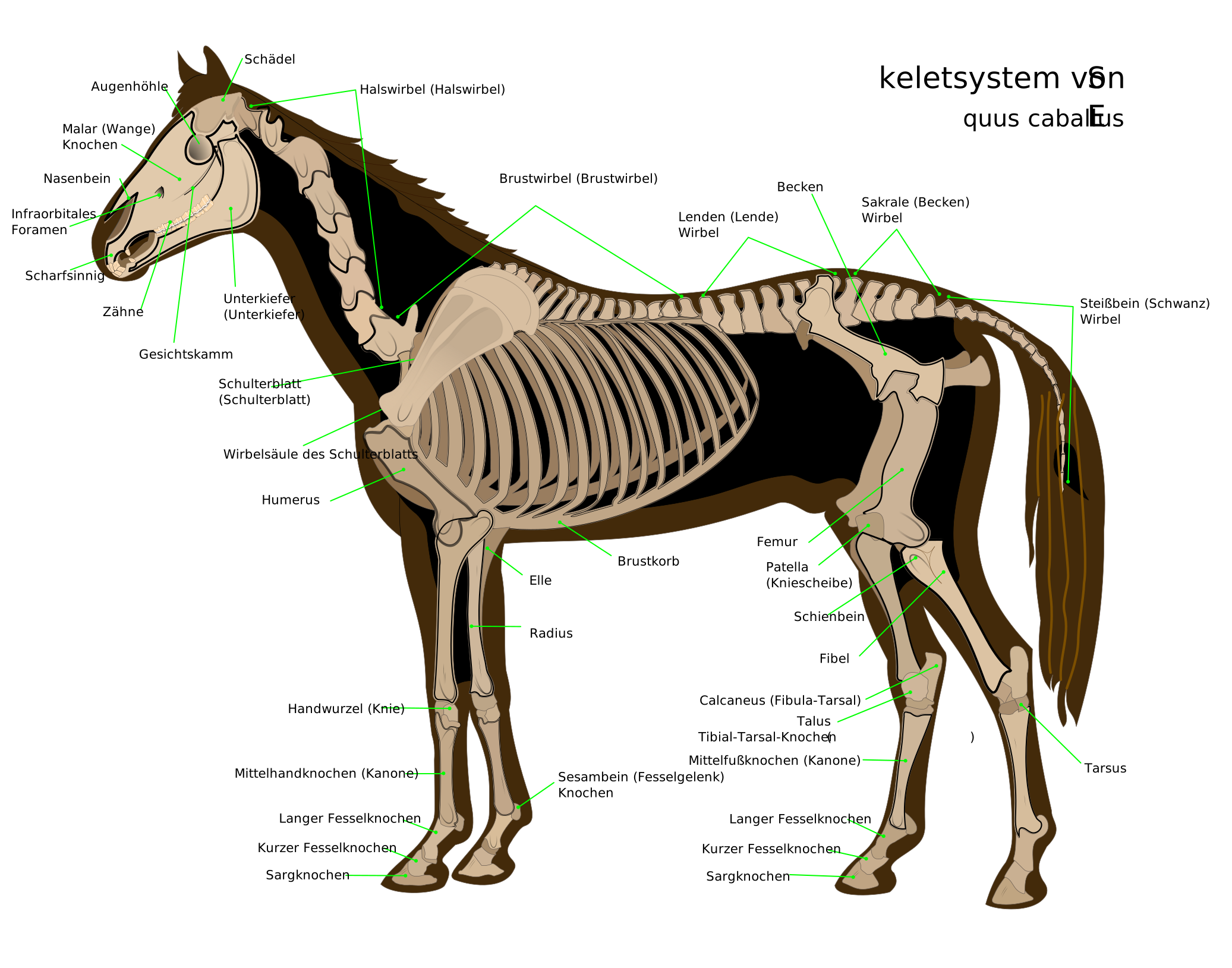
The physical structure of a racehorse plays a crucial role in determining its speed potential. Fast racehorses typically possess a specific set of anatomical features that maximize their running efficiency. These include a large heart (sometimes called the “X-factor” when referring to an enlarged left ventricle), efficient respiratory system, optimal stride length, and favorable muscle composition. The legendary Secretariat, for example, had a heart estimated to weigh 22 pounds—roughly 2.5 times the size of an average horse’s heart—providing exceptional oxygen circulation during high-intensity racing.
The skeletal structure also contributes significantly to speed potential. Fast racehorses generally have longer-than-average cannon bones, well-angled shoulders and hips, and proper alignment from shoulder to hip to hock. This conformation allows for maximum extension of the limbs during the stride cycle. Additionally, a slightly sloping croup (the area above the hindquarters) facilitates powerful propulsion from the hindquarters, where approximately 60% of a racehorse’s forward thrust originates. These physical attributes combine to create the biomechanical efficiency necessary for extraordinary speed.
Muscle Fiber Composition and Energy Systems

The type and distribution of muscle fibers in a racehorse significantly impact its speed capabilities. Racehorses possess a higher percentage of fast-twitch muscle fibers compared to other horse breeds. These fibers contract quickly and powerfully, generating the explosive force needed for acceleration and high-speed running. Elite sprinters may have up to 80-90% fast-twitch fibers in key locomotor muscles, while horses bred for longer distances maintain a more balanced ratio between fast-twitch and slow-twitch (endurance-oriented) fibers.
Energy production systems also play a vital role in determining racing aptitude. Horses bred for sprint races (5-7 furlongs) primarily utilize anaerobic energy pathways that don’t require oxygen but produce lactic acid as a byproduct. In contrast, middle-distance and staying horses have enhanced aerobic capacity, allowing them to efficiently use oxygen for energy production over longer distances. The most versatile racehorses possess efficient mechanisms for both energy systems, enabling them to accelerate quickly and maintain speed over varying distances. This metabolic efficiency is partly genetic but can be enhanced through appropriate training protocols.
Cardiovascular Excellence: The Engine of Speed
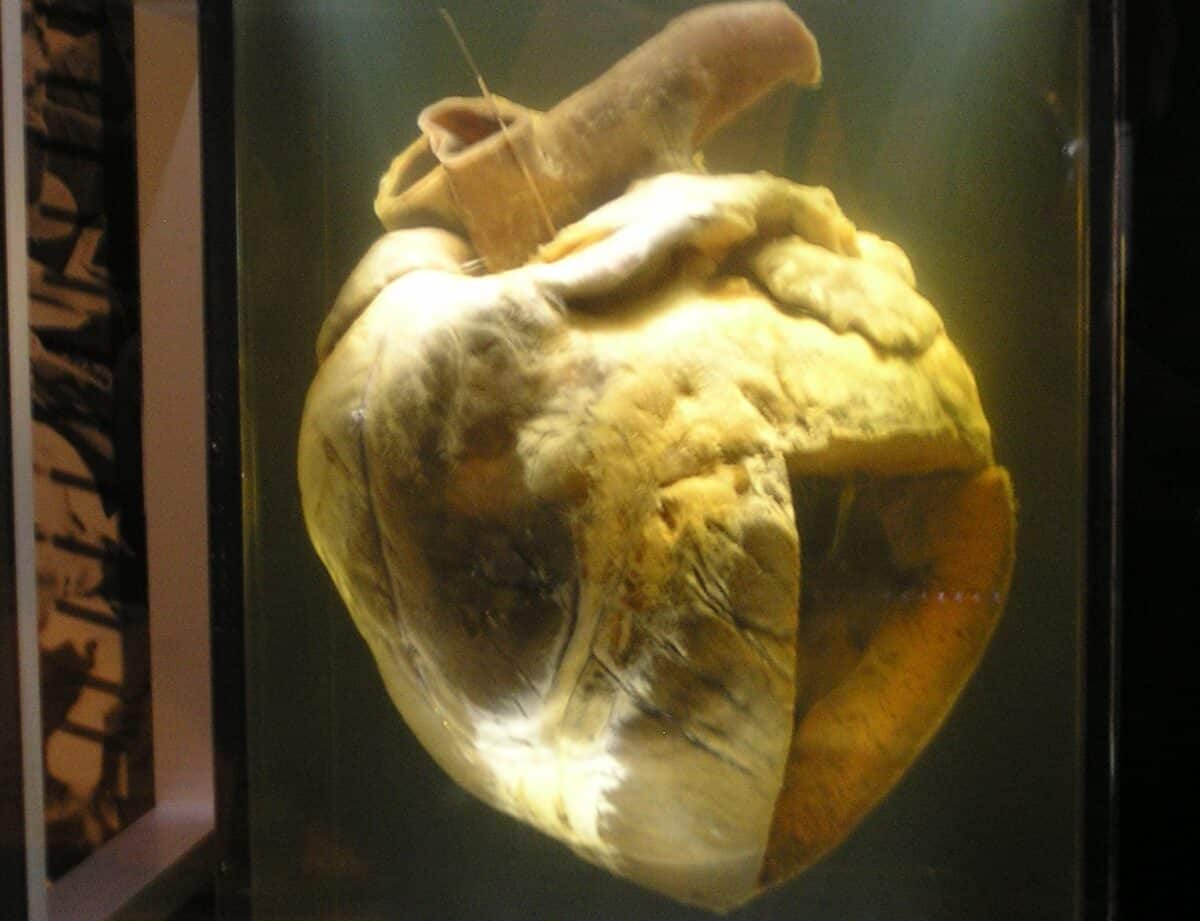
A racehorse’s cardiovascular system serves as its internal engine, and the capacity of this system often separates champions from average competitors. At maximum exertion, an elite racehorse’s heart can pump over 75 liters of blood per minute, compared to approximately 5 liters for a human athlete. This extraordinary cardiac output delivers oxygen and nutrients to working muscles while removing metabolic waste products. Heart size plays a significant role in this capacity, with some top racehorses possessing hearts that weigh 1-2% of their body weight—significantly larger than the average equine heart.
Blood composition also contributes to racing performance. Racehorses naturally have a high concentration of red blood cells (up to 40-50% of blood volume), enhancing oxygen-carrying capacity. During exercise, the spleen releases additional red blood cells into circulation—a process called splenic contraction—further increasing oxygen transport by up to 50%. This adaptation allows horses to dramatically increase their oxygen-carrying capacity during intense exercise. Additionally, elite racehorses develop extensive capillary networks in their muscles through training, improving oxygen delivery at the cellular level and contributing to their remarkable speed and stamina.
Respiratory Efficiency and Oxygen Utilization

The respiratory system represents another critical component in the physiological machinery that powers fast racehorses. Unlike humans, horses are obligate nasal breathers, meaning they can only breathe through their nostrils. During high-intensity exercise, a racehorse’s breathing rate increases from 8-16 breaths per minute at rest to over 150 breaths per minute. This dramatic increase allows them to move approximately 1,800 liters of air through their lungs each minute—roughly 30 times their resting ventilation rate. Any impediment to this airflow, such as laryngeal hemiplegia (roaring) or other upper airway obstructions, can significantly impact performance.
Oxygen extraction efficiency distinguishes superior racehorses from average performers. Elite horses can extract and utilize a higher percentage of oxygen from each breath, converting it more efficiently into energy at the muscular level. This ability is measured as VO2max (maximum oxygen consumption), with top racehorses recording values of 160-180 ml/kg/min—approximately twice that of elite human athletes. Training can improve this efficiency by increasing the density of mitochondria (cellular powerhouses) in muscle cells and enhancing the enzymatic systems that facilitate oxygen utilization. These respiratory adaptations, combined with cardiovascular excellence, provide the physiological foundation for extraordinary racing speed.
Biomechanics of Speed: The Perfect Stride

The mechanics of a racehorse’s movement significantly influence its speed potential. The most efficient racehorses exhibit a stride characterized by optimal length, frequency, and suspension time. Research indicates that stride length is the primary differentiator between elite and average racehorses, with top performers covering more ground with each stride. For example, Secretariat’s stride measured an extraordinary 24-25 feet at full extension, compared to the 20-22 feet typical of good racehorses. This advantage meant he needed fewer strides to cover the same distance as his competitors.
Stride efficiency involves more than just length—it’s about the entire motion cycle. Fast horses minimize the time their hooves contact the ground (stance phase) while maximizing the time spent in suspension. They also exhibit perfect temporal coordination between limbs, with minimal wasted vertical movement. High-speed video analysis reveals that elite racehorses maintain more consistent stride patterns even as they fatigue, whereas less talented horses show deterioration in stride mechanics during the latter stages of races. This biomechanical efficiency translates directly to speed maintenance and ultimately determines racing success.
The Training Effect: Building the Racing Machine

Rodeo Horse training. Image via Unsplash
While genetics provides the foundation, proper training transforms raw potential into racing excellence. Modern racehorse training combines centuries-old wisdom with scientific principles to develop speed, stamina, and racing intelligence. Training programs typically progress through carefully planned phases, beginning with basic conditioning to build aerobic capacity and strengthen bones, tendons, and ligaments. This foundation phase is crucial, as it prepares the musculoskeletal system for more intense work to follow. As training advances, workouts become more race-specific, incorporating high-intensity interval training that mimics the metabolic demands of competition.
Training adaptations occur at multiple levels. Cardiovascularly, regular exercise increases heart size and efficiency, enhances blood volume, and improves oxygen delivery to muscles. Musculoskeletally, training strengthens bones (which can increase in density by up to 30%), tendons, and ligaments while developing the specific muscle groups needed for racing. Neurologically, repeated practice refines coordination, balance, and stride efficiency. Perhaps most importantly, proper training develops the psychological attributes essential for racing success—focus, competitive drive, and the ability to perform under pressure. The best trainers individualize programs based on each horse’s physical capabilities, temperament, and genetic predispositions.
Psychological Factors: The Mind of a Champion

The mental attributes of a racehorse contribute significantly to its performance. Elite racehorses often possess an innate competitive drive—what trainers sometimes call “heart” or “the will to win.” This psychological edge manifests as a desire to surpass other horses and can make the difference in closely contested races. Some horses demonstrate remarkable determination in the stretch run, finding additional reserves of energy when physically pushing their limits. This trait appears to have both genetic and developmental components, with certain bloodlines known for producing particularly competitive individuals.
Temperament also plays a crucial role in racing success. The ideal racehorse combines alertness and sensitivity with tractability and focus. Excessive nervous energy wastes valuable resources before the race even begins, while too placid a disposition may indicate insufficient competitive drive. Trainers work extensively to develop positive psychological attributes through consistent handling, exposure to racing environments, and carefully structured training experiences. The relationship between horse and jockey or exercise rider also influences performance, with familiar partnerships often producing better results than novel pairings. This mental aspect of racing, while less quantifiable than physical attributes, represents an essential component of championship-level performance.
Nutrition: Fueling the Equine Athlete

Proper nutrition fundamentally impacts a racehorse’s speed and stamina. The modern racehorse diet is precisely calibrated to provide optimal energy sources, protein for muscle development and repair, and micronutrients that support overall health and performance. Energy requirements for racehorses in training are substantial—typically 1.5-2 times the maintenance level—and are primarily met through a combination of forage (hay) and concentrated energy sources (grains and supplements). The ratio and timing of these nutrients significantly affect energy availability during racing and training.
Nutritional science for racehorses has advanced considerably in recent decades. Modern feeding programs include specialized supplements targeting specific performance factors: electrolytes to replace those lost through sweating, branched-chain amino acids to support muscle recovery, antioxidants to combat exercise-induced oxidative stress, and joint supplements to maintain cartilage health. Hydration strategies are equally important, particularly in hot climates or for long-distance races. Precise nutritional management helps prevent performance-limiting conditions like tying-up syndrome (exertional rhabdomyolysis) and gastric ulcers, which affect an estimated 80-90% of racehorses. The most successful racing operations employ equine nutritionists who develop individualized feeding programs based on each horse’s metabolic requirements, training intensity, and racing schedule.
Environmental Factors and Track Conditions
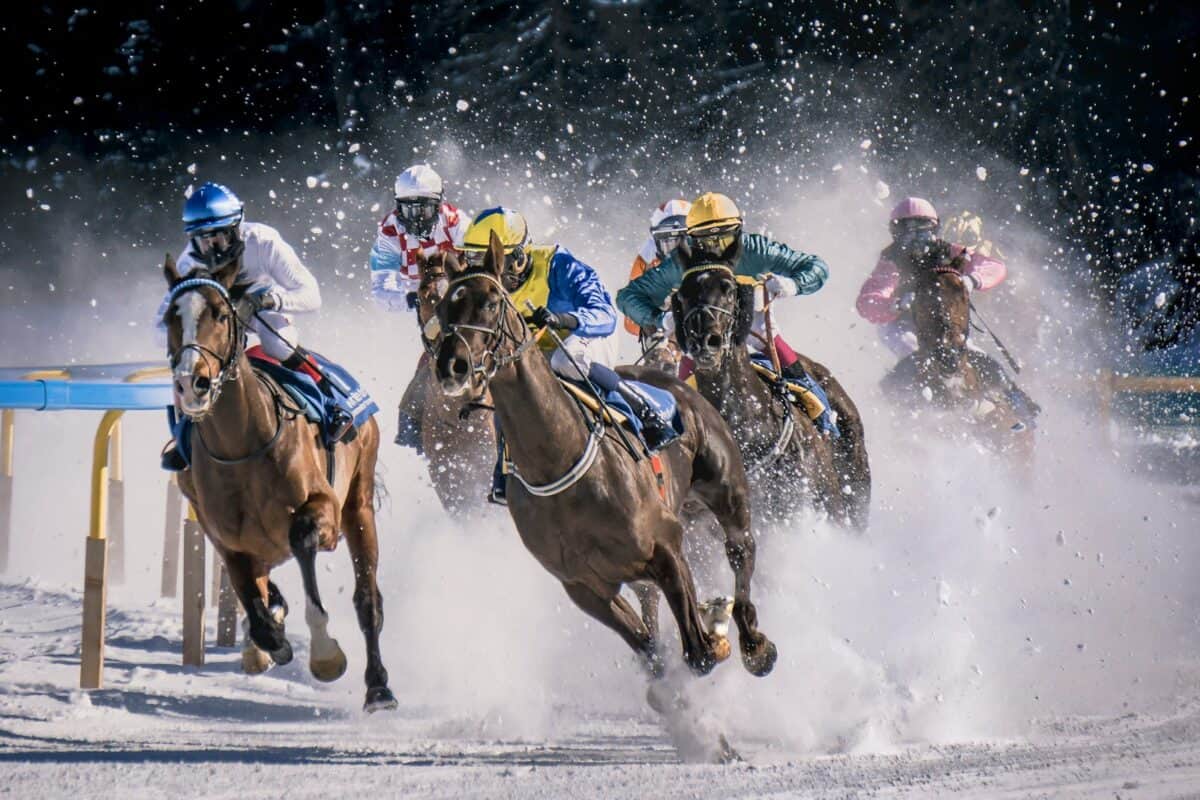
Environmental conditions significantly influence racing performance and help explain why the same horse might perform brilliantly on one occasion and disappointingly on another. Track surface composition—dirt, turf, synthetic materials—affects how horses move and the energy required to maintain speed. Some horses demonstrate a strong preference for particular surfaces, performing consistently better on one type than others. This preference may relate to biomechanical factors, such as stride length and joint loading patterns, which vary across different surfaces. Track condition (firm, good, yielding, soft, heavy) further complicates this relationship, with some horses excelling on wet tracks while others struggle.
Weather conditions also impact performance. Heat and humidity increase cardiovascular and thermoregulatory demands, potentially compromising performance as horses divert energy to cooling mechanisms. Cold conditions may increase energy requirements but can benefit some horses by reducing heat stress. Altitude represents another important variable—races at higher elevations (like those at Santa Anita or Saratoga) present greater respiratory challenges due to lower oxygen availability. Some horses adapt better than others to these environmental variables, contributing to the phenomenon of “horses for courses,” where certain individuals consistently perform better at specific tracks under particular conditions.
Modern Technological Advances in Racing Performance
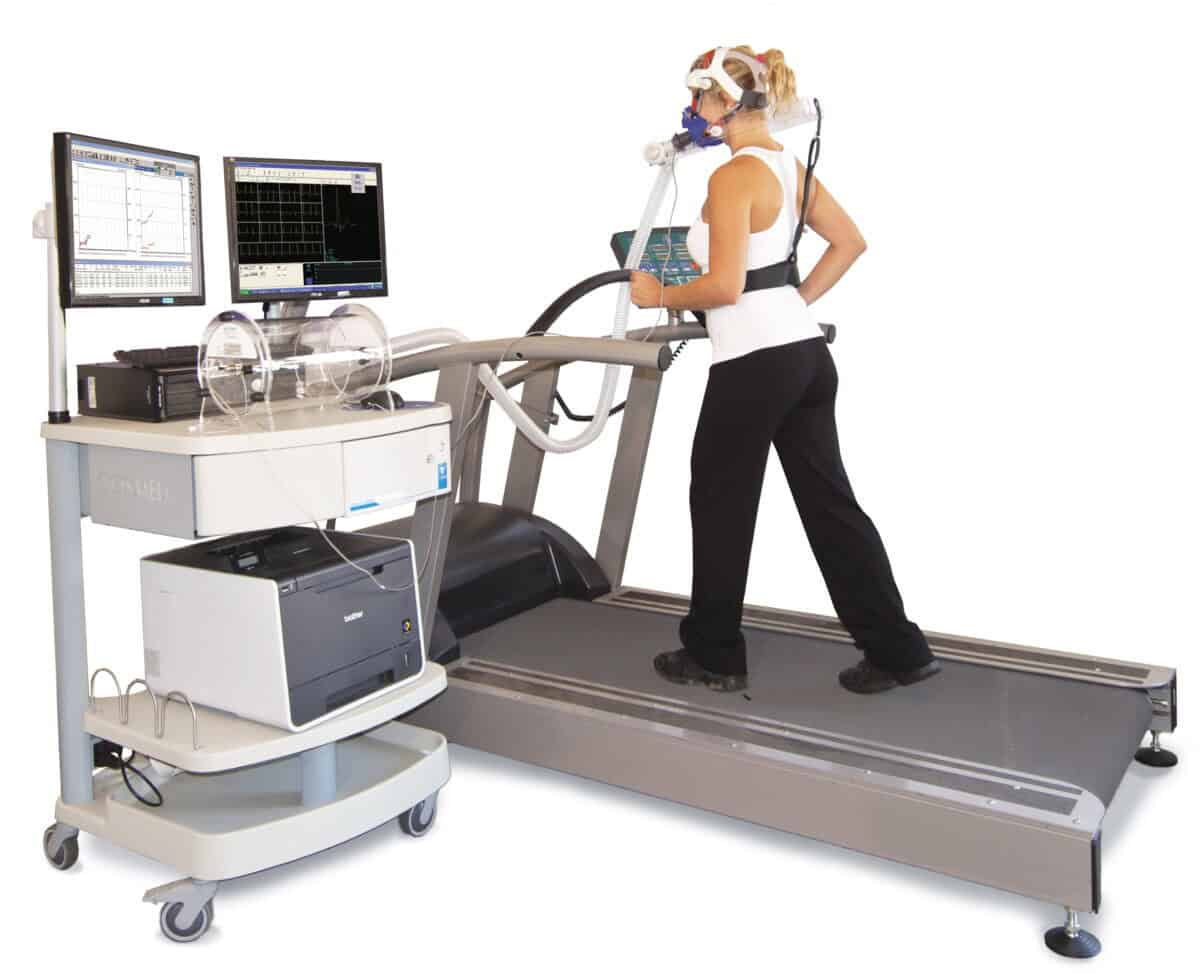
Technology has revolutionized how we understand, measure, and enhance racehorse performance. High-speed treadmill testing now allows for precise measurement of physiological parameters like VO2max, blood lactate thresholds, and stride mechanics under controlled conditions. These assessments help trainers optimize conditioning programs for individual horses and identify potential limitations. GPS and accelerometer-based tracking systems monitor workout intensity, stride parameters, and symmetry during training, providing objective data to complement trainers’ observations and helping detect subtle changes that might indicate developing problems.
Genetic testing represents another technological frontier in racehorse development. Performance-related genetic markers can now be identified through DNA analysis, allowing breeders to make more informed mating decisions. Biological monitoring has also advanced, with blood biomarkers helping trainers assess training adaptation, detect early signs of overtraining, and optimize recovery protocols. Even traditional practices like shoeing have been transformed by technology, with pressure-plate analysis guiding the creation of custom shoes that optimize foot landing patterns and minimize stress on vulnerable structures. These technological innovations, when applied appropriately, help maximize each horse’s speed potential while reducing injury risk.
The Whole Picture: What Truly Makes a Racehorse Fast

Understanding what makes a racehorse fast requires appreciating the complex interplay between numerous factors rather than focusing on any single element. The fastest racehorses emerge from the perfect convergence of genetic potential, physical development, skilled training, psychological attributes, and favorable racing conditions. This holistic perspective explains why breeding two champions doesn’t guarantee a champion offspring, and why seemingly modest-pedigreed horses occasionally achieve remarkable success. Each factor represents a necessary but insufficient condition for exceptional performance; only when all elements align optimally does a truly outstanding racehorse emerge.
The science of racehorse performance continues to evolve, with researchers uncovering new insights into the physiological and biomechanical basis of equine speed. Yet alongside these scientific advances, horsemen’s intuition and experience remain invaluable in identifying and developing talented racehorses. The most successful racing operations combine cutting-edge knowledge with time-tested horsemanship, recognizing that both approaches contribute meaningfully to developing speed. This balanced appreciation of scientific principles and practical experience represents the most effective approach to understanding and cultivating the remarkable speed capabilities of these magnificent athletes.
The exceptional speed of elite racehorses results from a remarkable symphony of factors working in perfect harmony. From the genetic foundation laid through centuries of selective breeding to the meticulous physical development overseen by skilled trainers, every aspect must align to produce a truly outstanding performer. The physiology of these magnificent animals represents one of nature’s most impressive athletic designs, capable of achieving speeds approaching 45 miles per hour while carrying a rider. Understanding what makes a racehorse fast not only enhances our appreciation of these extraordinary athletes but also continues to inform breeding, training, and management practices within the racing industry.
As research advances, our understanding of equine performance will undoubtedly deepen, potentially revealing new factors that contribute to racing excellence. However, the fundamental elements explored in this article—genetics, anatomy, physiology, training, psychology, and environment—will remain central to the development of fast racehorses. Perhaps most fascinatingly, despite all our scientific knowledge, an element of mystery still surrounds truly exceptional performers like Secretariat, whose dominance defied simple explanation. This combination of scientific understanding and persistent wonder makes the study of racehorse performance endlessly captivating, reminding us that these animals represent one of the most successful partnerships between humans and another species in our shared history.

- Cuddling for Warmth: How Meerkats Stay Cozy - July 18, 2026
- This U.S. Lake Is Mysteriously Disappearing—Here’s What Scientists Say - July 18, 2026
- This Jellyfish Hunts in Packs - July 18, 2026