
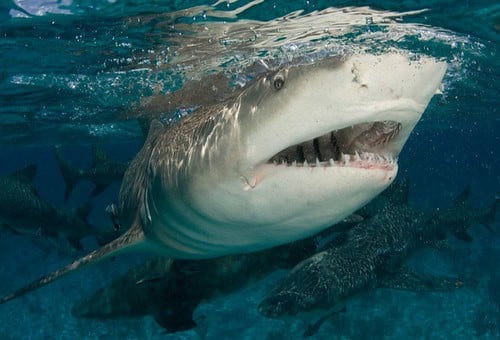
When we think of dangerous sharks, the Great White, Tiger, and Bull sharks typically come to mind first. These apex predators have earned their fearsome reputations through documented attacks and their prominent featuring in media. However, the ocean harbors many other shark species that pose significant dangers to humans, despite their lesser-known status or seemingly harmless appearance. Some sharks that appear docile or uncommon can actually be quite deadly when encountered in their natural habitats. This article explores ten unexpected shark species that possess surprising levels of danger, whether through their aggressive behavior, potent venom, or other hazardous characteristics that make them threats to human safety.
1. Cookie Cutter Shark (Isistius brasiliensis)

Don’t let its small size fool you—the Cookie Cutter shark proves that deadly predators come in all packages. Measuring just 16-22 inches in length, this diminutive deep-sea dweller possesses one of the most specialized feeding mechanisms in the shark world. Its name derives from its hunting technique: the shark attaches to larger animals and uses its powerful suction capabilities and circular arrangement of teeth to extract a cookie-shaped plug of flesh from its victims.
What makes this tiny shark unexpectedly dangerous is its ability to target even large prey, including humans. There have been documented cases of Cookie Cutter sharks attacking swimmers and divers, leaving behind perfectly circular wounds up to 3 inches in diameter. While not typically fatal, these bites can cause significant tissue damage, severe bleeding, and potential secondary infections. Navy SEALs and deep-water swimmers particularly fear these sharks, which are most active during nighttime hours in tropical waters around Hawaii, the Gulf of Mexico, and parts of the Atlantic.
2. Blue Shark (Prionace glauca)

The Blue shark, with its slender body and brilliant indigo coloration, appears more elegant than threatening. These open-ocean sharks are known for their graceful movements and are often observed by divers who report them as curious but non-aggressive. However, this perception masks their potential danger. Growing up to 12 feet long, Blue sharks possess rows of serrated teeth designed for slicing through flesh, and they’re responsible for numerous unprovoked attacks on humans, particularly shipwreck survivors.
The International Shark Attack File has recorded more than 30 attacks attributed to Blue sharks, with at least four fatalities. What makes them particularly dangerous is their abundance—they’re one of the most common large shark species—and their tendency to investigate potential food sources with an exploratory bite. During World War II, Blue sharks gained notoriety for attacking sailors stranded in the open ocean after naval battles, earning them the grim nickname “sailors’ executioners.” Their widespread distribution across temperate and tropical waters means humans are more likely to encounter these sharks than many other species.
3. Oceanic Whitetip Shark (Carcharhinus longimanus)
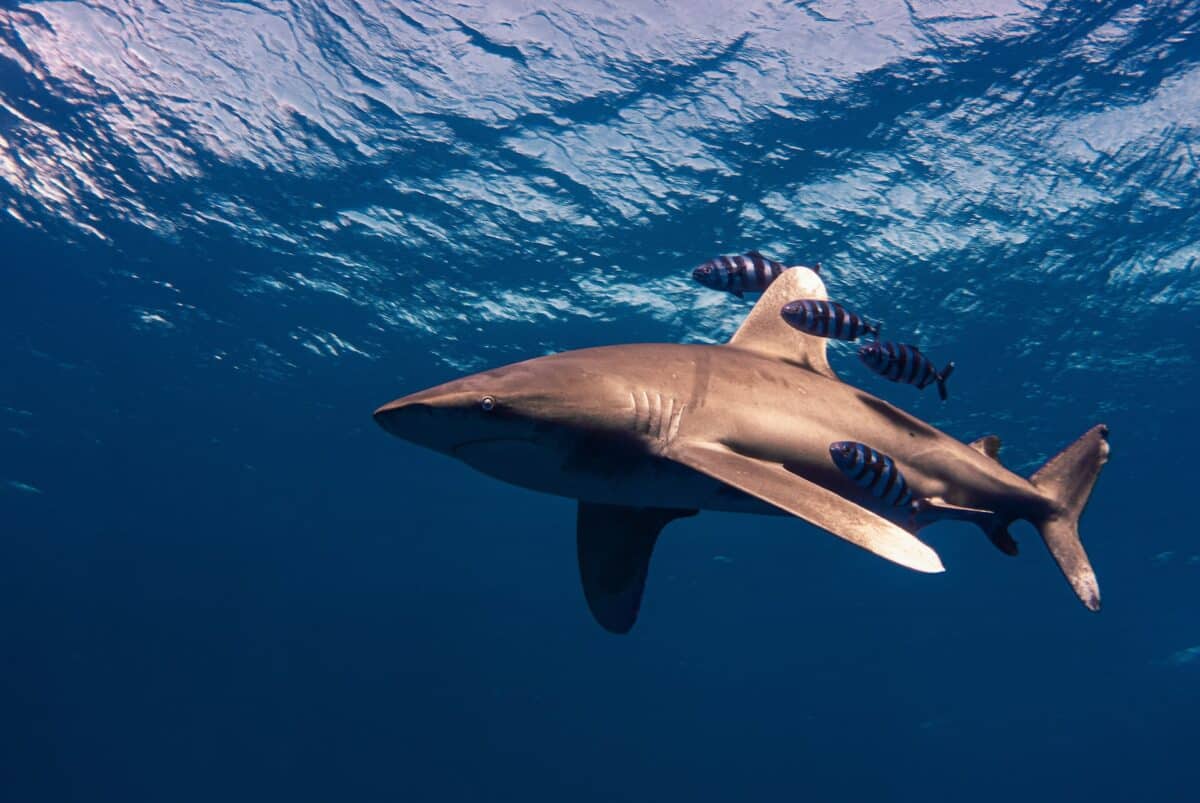
The Oceanic Whitetip has been called “the most dangerous shark you’ve never heard of” by many marine biologists. These sharks aren’t typically associated with coastal attacks, which explains their relative obscurity in public consciousness about dangerous sharks. However, renowned oceanographer Jacques Cousteau described them as “the most dangerous of all sharks.” These medium-sized sharks (reaching 10-13 feet) are distinguished by their rounded, white-tipped fins and persistent hunting behavior.
What makes Oceanic Whitetips particularly deadly is their involvement in mass casualty events at sea. They’re believed responsible for hundreds of deaths following shipwrecks and air crashes, most notably the sinking of the USS Indianapolis in 1945, where approximately 80 sailors were killed by sharks while awaiting rescue. Oceanic Whitetips are known for their aggression and determination when food is present, showing little fear of humans and a willingness to pursue potential prey relentlessly. Unlike many sharks that take investigative bites, Oceanic Whitetips often continue attacking until the prey is consumed, making encounters with them particularly dangerous for humans stranded at sea.
4. Wobbegong Sharks (Family Orectolobidae)
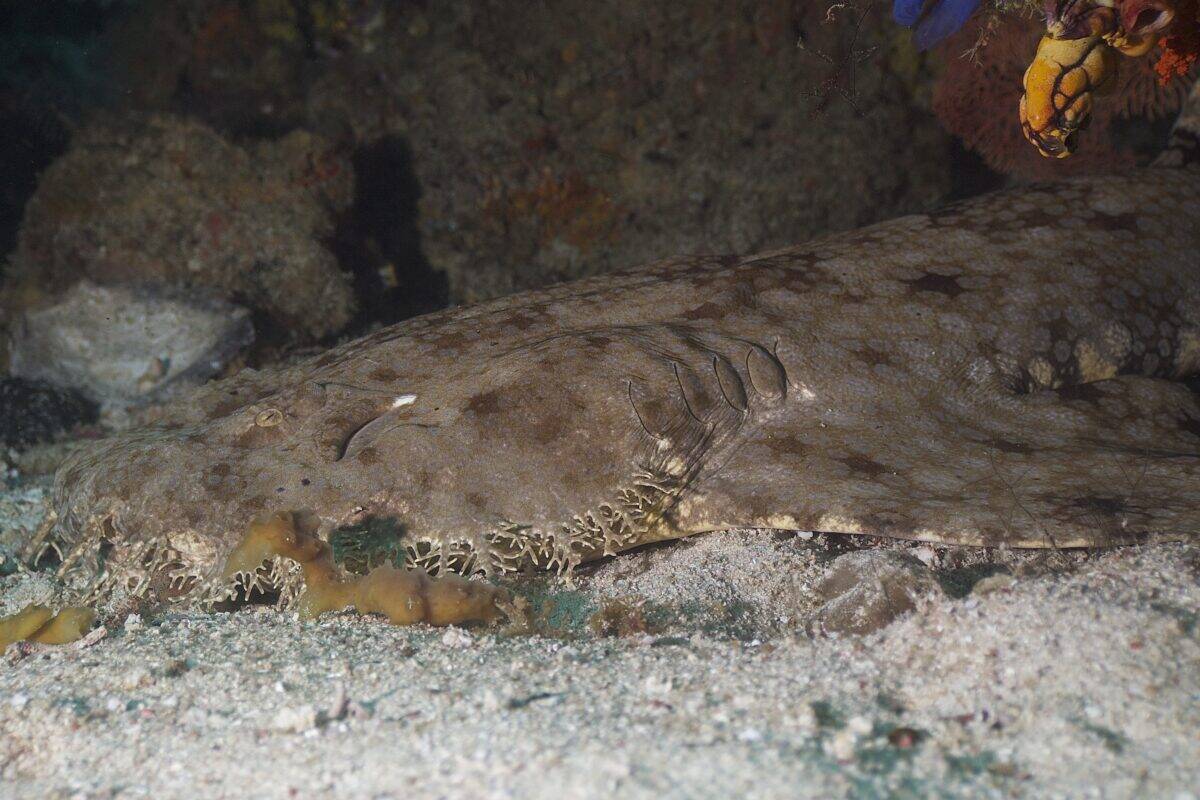
Wobbegongs are masters of camouflage, with flattened bodies and ornate patterns that allow them to blend perfectly with the ocean floor. Their name comes from an Australian Aboriginal word meaning “shaggy beard,” referring to the tasseled appendages around their mouths that help them blend into their surroundings. These bottom-dwelling sharks are often perceived as harmless because of their sedentary lifestyle and tendency to remain motionless for long periods. However, this perception can lead to dangerous encounters.
What makes Wobbegongs unexpectedly dangerous is their lightning-fast strike capability combined with powerful jaws. When threatened or inadvertently stepped on by waders or divers, they can deliver severe bites with remarkable speed. More concerning is their tendency to hold onto victims with tenacious grip—there are documented cases of Wobbegongs maintaining their bite for hours, even after being removed from the water. Their mouths contain numerous small, sharp teeth that can cause serious lacerations and tissue damage. While fatalities are extremely rare, these seemingly docile sharks account for numerous injuries annually, particularly along the Australian coastline where several species of Wobbegong are common in shallow waters.
5. Shortfin Mako Shark (Isurus oxyrinchus)

The Shortfin Mako is renowned as the fastest shark in the ocean, capable of bursts exceeding 45 mph. While their speed is well-known among marine enthusiasts, many people don’t realize just how dangerous these sharks can be to humans. Makos possess an impressive intelligence that rivals many marine mammals, and they’re known for their problem-solving abilities and complex hunting strategies. Their athletic prowess includes the ability to leap up to 30 feet out of the water, sometimes landing in fishing boats—a behavior that has resulted in numerous injuries.
What makes Makos particularly deadly is their combination of speed, power, and dental armament. Their teeth are uniquely designed to pierce rather than saw, allowing them to impale prey with devastating efficiency. When provoked or threatened, Makos display a fearlessness that distinguishes them from many other shark species, sometimes charging directly at perceived threats. The International Shark Attack File has recorded at least 42 Mako attacks on humans, including three fatalities. Sport fishermen consider them among the most dangerous catches due to their tendency to fight aggressively when hooked, sometimes attacking boats and even jumping aboard to continue the battle. Their unpredictable nature and lightning-fast movements make encounters with Makos particularly hazardous.
6. Silvertip Shark (Carcharhinus albimarginatus)

The Silvertip shark, recognizable by its distinct white fin margins, presents an elegant appearance that belies its potential danger. This reef-associated species typically grows to 8-10 feet in length and inhabits tropical waters across the Indo-Pacific region. What many ocean enthusiasts don’t realize is that Silvertips rank among the more aggressive reef sharks, displaying bold behavior, particularly when food is present. Unlike some shark species that approach cautiously, Silvertips often make rapid, direct approaches to anything they perceive as potential prey.
Their danger stems from their territorial nature and increasing boldness around humans as reef ecosystems face mounting pressures from fishing and tourism. Silvertips have been implicated in numerous attacks on spearfishers, who are particularly vulnerable as the sharks are attracted to fish blood and struggling prey. Their large size, powerful swimming capabilities, and substantial teeth make them capable of inflicting serious injuries. The International Shark Attack File has documented several unprovoked attacks attributed to Silvertips, though fatalities remain rare. Divers report that these sharks can quickly transition from curious observation to aggressive posturing with little warning, making them unpredictably dangerous in certain situations.
7. Blacktip Reef Shark (Carcharhinus melanopterus)

The Blacktip Reef shark is often considered one of the more photogenic shark species, with its distinctive black-tipped fins contrasting against its gray-brown body. Commonly encountered by snorkelers and divers in shallow tropical waters, these modest-sized sharks (typically 5-6 feet) have a reputation for being timid and quick to flee from human presence. This generally accurate characterization has led many to consider them entirely harmless, which can create dangerous situations when people become complacent around them.
Their unexpected danger arises from their hunting technique and habitat overlap with humans. Blacktips are specialists in hunting in shallow water, using sudden bursts of speed and agility to capture prey in the surf zone—the same areas frequently used by swimmers and waders. When hunting in murky water or during their crepuscular (dawn and dusk) feeding periods, Blacktips rely heavily on their electroreceptors rather than vision, potentially mistaking human limbs for their natural prey. The International Shark Attack File has recorded over 40 unprovoked attacks by Blacktip Reef sharks, mostly resulting in lacerations and puncture wounds rather than fatalities. Their presence in popular tourist destinations like the Maldives, Thailand, and French Polynesia means they account for a disproportionate number of shark encounters, particularly “hit-and-run” attacks in turbid water.
8. Nurse Shark (Ginglymostoma cirratum)
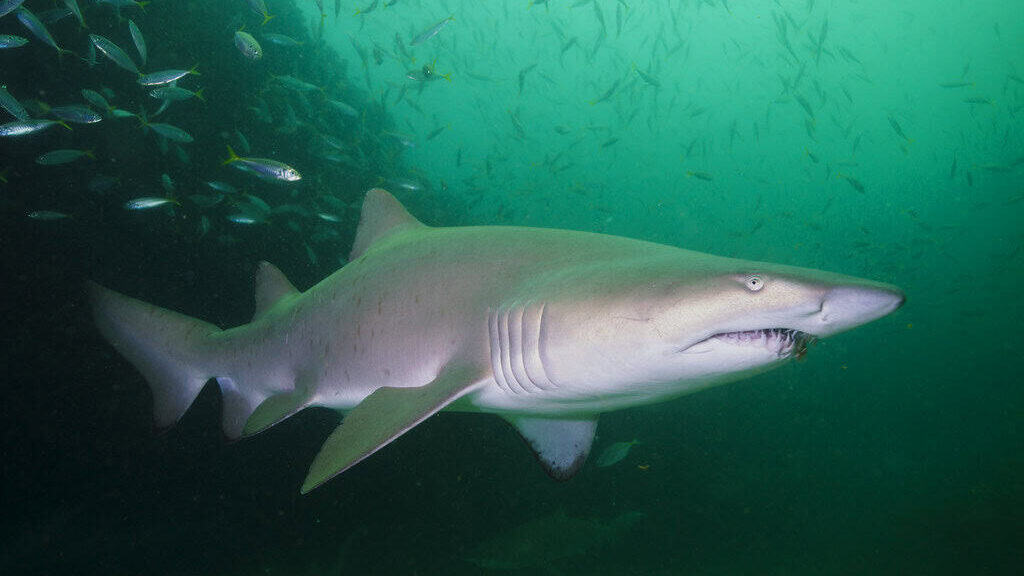
The Nurse shark might be the poster child for “looks can be deceiving” in the shark world. With their docile demeanor, slow movements, and habit of resting motionless on the seafloor, Nurse sharks have gained a reputation as the “couch potatoes” of the shark family. Reaching lengths of up to 14 feet but typically seen at 7-9 feet, these brownish sharks are common sights for divers in tropical and subtropical waters of the Atlantic and eastern Pacific. Their apparent sluggishness and tolerant attitude toward human presence have made them popular attractions at “shark petting” tourist operations.
However, their placid nature masks a surprising danger. Nurse sharks possess exceptionally strong jaws filled with thousands of small, serrated teeth designed to crush shellfish and hold prey firmly. When provoked or handled, they can deliver a powerful bite and—most dangerously—they rarely let go. Emergency rooms in Florida and the Caribbean regularly treat patients with Nurse sharks still attached to their limbs. Their suction-feeding mechanism creates a grip so tenacious that victims sometimes require surgical removal of the shark. While fatalities are extremely rare, the U.S. Navy formerly classified Nurse sharks as high-risk species due to their bite tenacity. The majority of Nurse shark attacks occur when humans attempt to touch, feed, or handle them—a sobering reminder that even seemingly docile sharks deserve respect and distance.
9. Lemon Shark (Negaprion brevirostris)
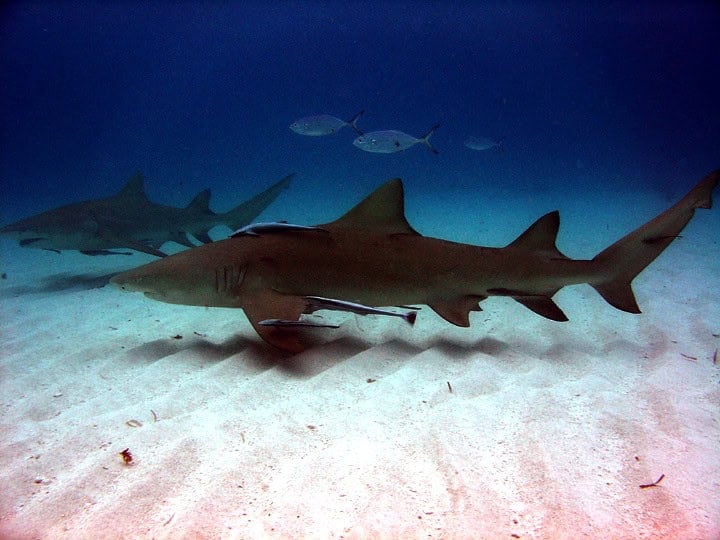
The Lemon shark, named for its yellowish-brown coloration that provides excellent camouflage over sandy bottoms, has long been considered one of the more placid large shark species. Growing to lengths of 10-12 feet, these substantial predators are commonly encountered in shallow subtropical waters, particularly around Florida, the Bahamas, and the Caribbean. Their relatively docile nature has made them favorites for shark diving operations and research programs, with scientists often highlighting their intelligence and apparent capacity for social learning.
What many don’t realize is that Lemon sharks possess several characteristics that make them potentially quite dangerous. Their size and dental armament are substantial—adult Lemons have powerful jaws lined with hundreds of serrated teeth designed for slicing through prey. While not typically aggressive toward humans, they become considerably more dangerous in certain contexts. Lemon sharks are known to form large aggregations during breeding seasons, and these groups can exhibit pack-like hunting behaviors. The International Shark Attack File has recorded numerous attacks attributed to Lemon sharks, including several that resulted in serious injuries. Their danger is amplified by their comfort in extremely shallow water—they routinely patrol in depths of just 2-3 feet, bringing them into frequent contact with waders and swimmers in popular tourist destinations. Their intelligence, while fascinating, also means they quickly learn to associate humans with food at sites where feeding occurs, potentially increasing risk during encounters.
10. Hammerhead Sharks (Family Sphyrnidae)
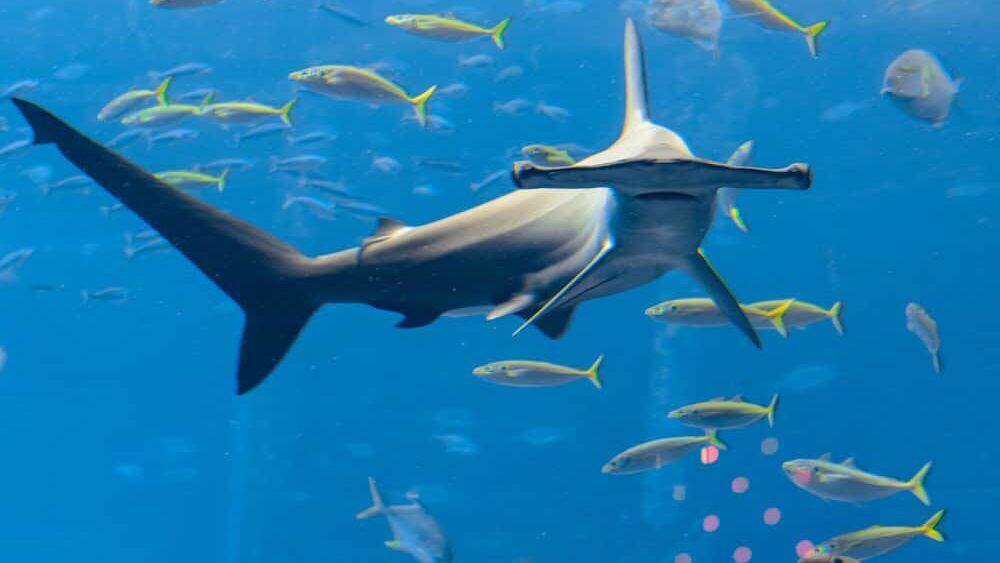
The distinctive T-shaped heads of Hammerhead sharks make them among the most recognizable ocean predators, but their danger level is often underestimated. While the Great Hammerhead (Sphyrna mokarran) can reach imposing lengths of up to 20 feet, other species like the Scalloped Hammerhead (Sphyrna lewini) and Smooth Hammerhead (Sphyrna zygaena) are more commonly encountered by humans. These sharks are often perceived as curiosities rather than threats, partly due to their unusual appearance and partly because they typically show limited interest in humans during chance encounters.
However, Hammerheads possess several characteristics that make them unexpectedly dangerous. Their wide-set eyes provide nearly 360-degree vision, making them exceptional hunters that can detect prey movements from virtually any angle. Great Hammerheads in particular are known to prey on other sharks and have extraordinarily powerful bites—among the strongest of any shark relative to body size. While Hammerhead attacks on humans remain relatively rare (the International Shark Attack File has recorded fewer than 20 unprovoked attacks), their size and strength make any aggressive encounter potentially deadly. Scalloped Hammerheads are known to form massive schools of hundreds or even thousands of individuals, and these aggregations can become dangerous if provoked. Divers report that Hammerheads, unlike many shark species, sometimes display persistent curiosity rather than fleeing from human presence, occasionally making close investigative approaches that can be intimidating and potentially risky if the shark feels threatened.
Understanding the True Nature of Shark Danger

Despite the potentially deadly nature of these ten shark species, it’s essential to put shark danger into proper perspective. Shark attacks remain exceedingly rare, with typically fewer than 10 fatalities worldwide annually, compared to the millions of people who enter ocean waters each day. Many of the sharks on this list have never been definitively linked to a human fatality, yet their physical capabilities and behavioral traits warrant caution and respect. The greatest dangers often arise when humans interfere with natural shark behaviors through feeding, harassment, or entering waters during prime hunting conditions.
Conservation status is another critical consideration, as many of these species face significant population declines due to overfishing, habitat destruction, and climate change. Several hammerhead species are endangered, and the once-abundant Oceanic Whitetip has declined by an estimated 98% in some regions. By understanding these unexpected predators more fully—appreciating both their potential danger and their ecological importance—we can develop more nuanced approaches to shark conservation and safety. The most effective strategy remains education: learning to recognize different shark species, understanding their behaviors, and taking appropriate precautions can help ensure that encounters between humans and these magnificent predators remain safe for both parties.

- The Most Vulnerable Mammals Facing a Hotter Planet - July 30, 2026
- The Bird That Can Recognize More Faces Than a Human - July 29, 2026
- How Army Ants Coordinate Massive Raids Without a Leader - July 29, 2026