

In the wild, survival depends on the ability to find food, and predators have evolved remarkable hunting strategies that showcase nature’s ingenuity. From cooperative pack tactics to sophisticated tools and psychological manipulation, the animal kingdom’s hunters demonstrate incredible problem-solving abilities and adaptations that have been refined over millions of years of evolution. This article explores the 15 most intelligent hunters in nature, ranked by the complexity, effectiveness, and adaptability of their hunting strategies. These remarkable predators don’t just rely on brute strength or speed—they employ planning, teamwork, deception, and even tool use to secure their next meal in ways that often mirror human cognitive abilities.
1. Orcas (Killer Whales): The Ocean’s Ultimate Strategists

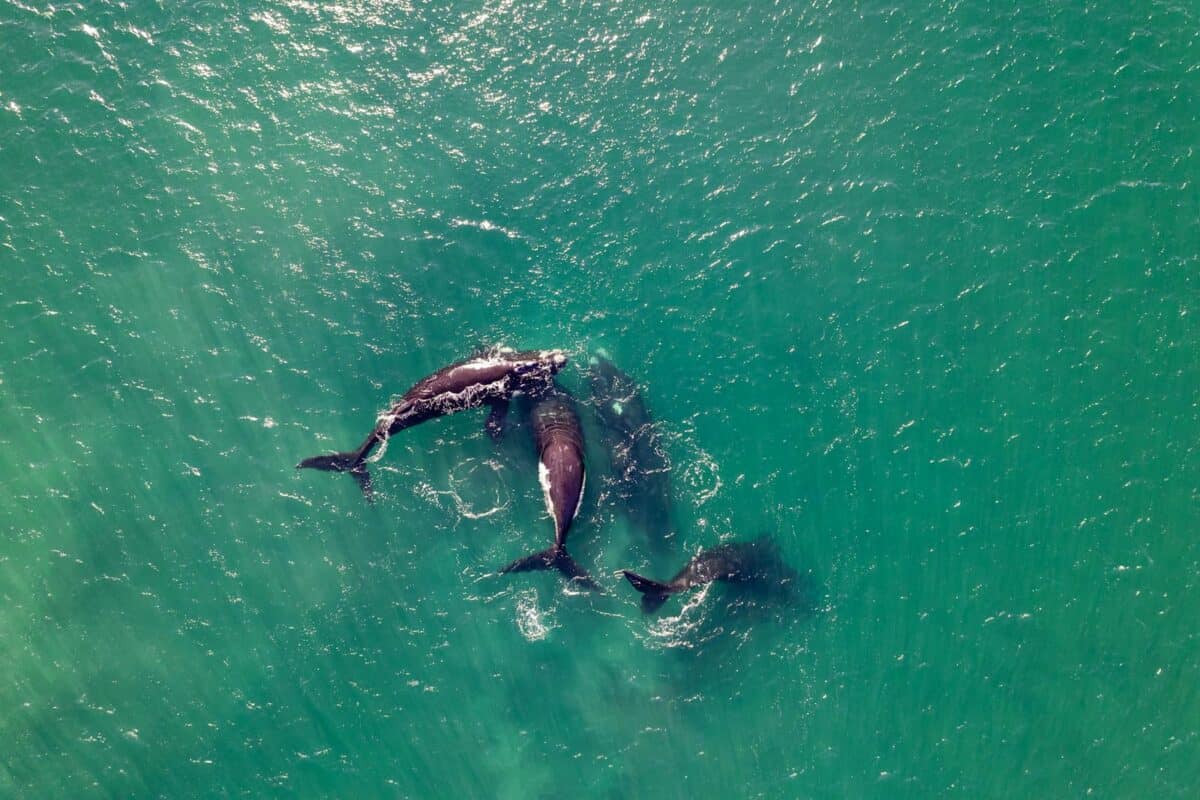
Topping our list are orcas, whose hunting intelligence is unparalleled in the animal kingdom. These marine mammals possess distinct cultural hunting traditions passed down through generations, with different pods specializing in unique techniques. Some orcas create waves to wash seals off ice floes, while others intentionally beach themselves to grab prey before sliding back into the water. Particularly impressive is their ability to coordinate attacks through complex vocalizations that function as a sophisticated hunting language.
Perhaps their most remarkable demonstration of intelligence is their “carousel feeding” technique, where orcas work together to herd fish into tight balls, slap their tails to stun them, and take turns feeding. Researchers have documented orcas developing new hunting strategies in response to changing environments, showing remarkable behavioral plasticity. With brain-to-body mass ratios among the highest in the animal kingdom and distinct pod cultures that maintain different hunting traditions, orcas demonstrate strategic thinking that rivals that of great apes and approaches human-like intelligence in their hunting approaches.
2. Bottlenose Dolphins: Cooperative Tool Users

Bottlenose dolphins exhibit extraordinary cooperative hunting and tool use that earns them the second spot on our list. These marine mammals have been observed using sponges as protective nose guards while foraging in rocky seabeds—a clear example of tool use that’s passed down culturally from mother to offspring. This “sponging” behavior protects their sensitive rostra while they search for prey hiding in the sediment, demonstrating both innovation and cultural transmission of knowledge.
Their coordinated hunting strategies are equally impressive. Dolphins create “mud nets” by swimming in circles and stirring up mud rings that trap fish, forcing them to jump out of the water and directly into waiting dolphin mouths. In some regions, they drive fish onto shorelines in a technique called “strand feeding,” timing their approach with tidal patterns. Most remarkably, different dolphin communities develop their own unique hunting techniques adapted to local environments, showing that these aren’t just instinctual behaviors but learned and culturally transmitted strategies that demonstrate high-level problem-solving abilities.
3. Wolves: Masters of Coordinated Pack Hunting

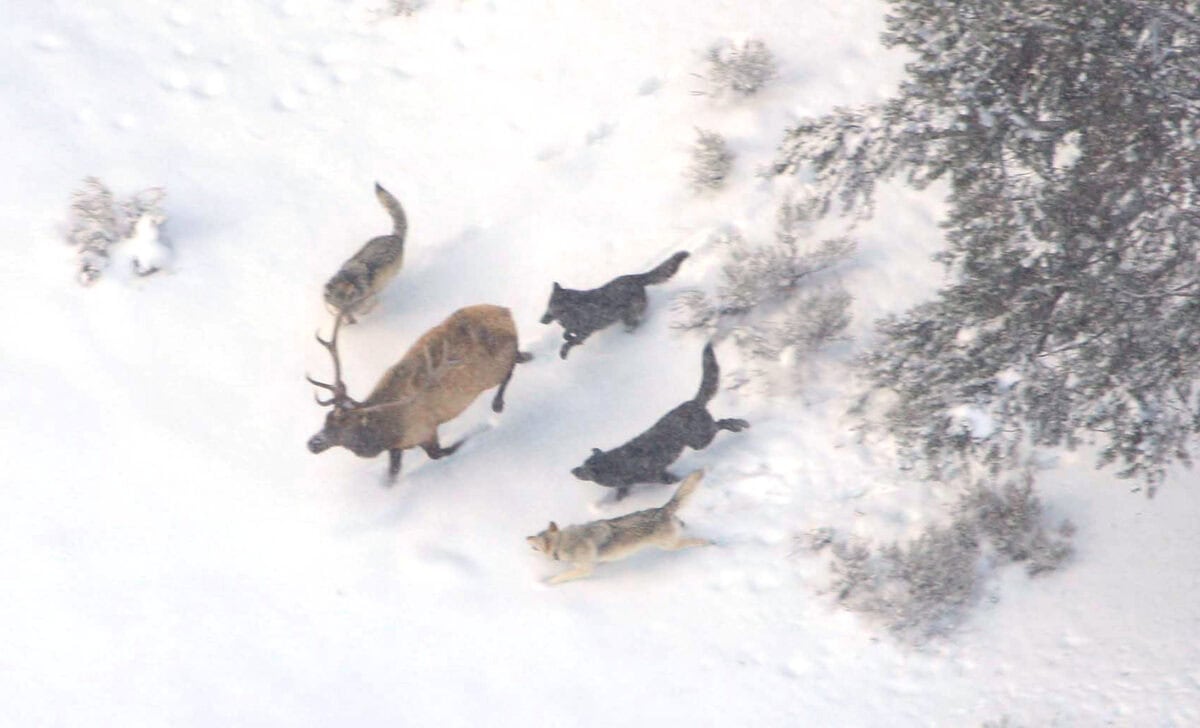
Wolves secure the third position through their sophisticated pack hunting strategies that demonstrate advanced social coordination. Their hunting approach involves complex role specialization, with different pack members taking on specific duties during a hunt. Some wolves serve as scouts, others position themselves as ambushers, while others drive prey toward waiting pack members. This division of labor requires not just coordination but an understanding of each wolf’s strengths and the ability to communicate hunting intentions through body language and vocalizations.
What truly sets wolf hunting apart is their ability to adapt tactics based on terrain, prey type, and weather conditions. Studies show they calculate risk versus reward when selecting targets, often choosing vulnerable individuals within a herd. When hunting larger prey like bison, wolves demonstrate remarkable patience, sometimes following herds for days while assessing which animals might be weaker or injured. They’ve been observed using relay running techniques to tire larger prey, with wolves taking turns chasing to conserve energy while ensuring the prey remains constantly pursued. This level of tactical flexibility and coordination requires significant cognitive processing beyond simple instinct.
4. Chimpanzees: Primate Hunters with Tool Innovation

Our closest living relatives, chimpanzees rank fourth for their hunting strategies that involve tool use, planning, and cooperation. Perhaps most famous is their use of modified sticks as spears to hunt small primates hiding in tree hollows—a behavior first documented in Senegal that demonstrated intentional weapon crafting. Chimps carefully select branches, strip them of leaves and side stems, and sharpen one end with their teeth before thrusting them into tree cavities to impale bush babies and other small mammals.
Their group hunting of colobus monkeys showcases sophisticated coordination. Studies in Tai National Park revealed that chimps assume different roles during hunts—some act as drivers pushing monkeys in specific directions, while others block escape routes, and still others make the actual capture. Research has shown that successful hunters share meat strategically, often with allies who assisted in the hunt or with potential mates, demonstrating an understanding of social reciprocity. Even more remarkably, chimps have been observed planning hunts in advance, moving quietly when approaching hunting grounds and communicating through subtle gestures rather than vocalizations—showing intentionality and forethought that approaches human hunting strategies.
5. Crows and Ravens: Avian Problem Solvers
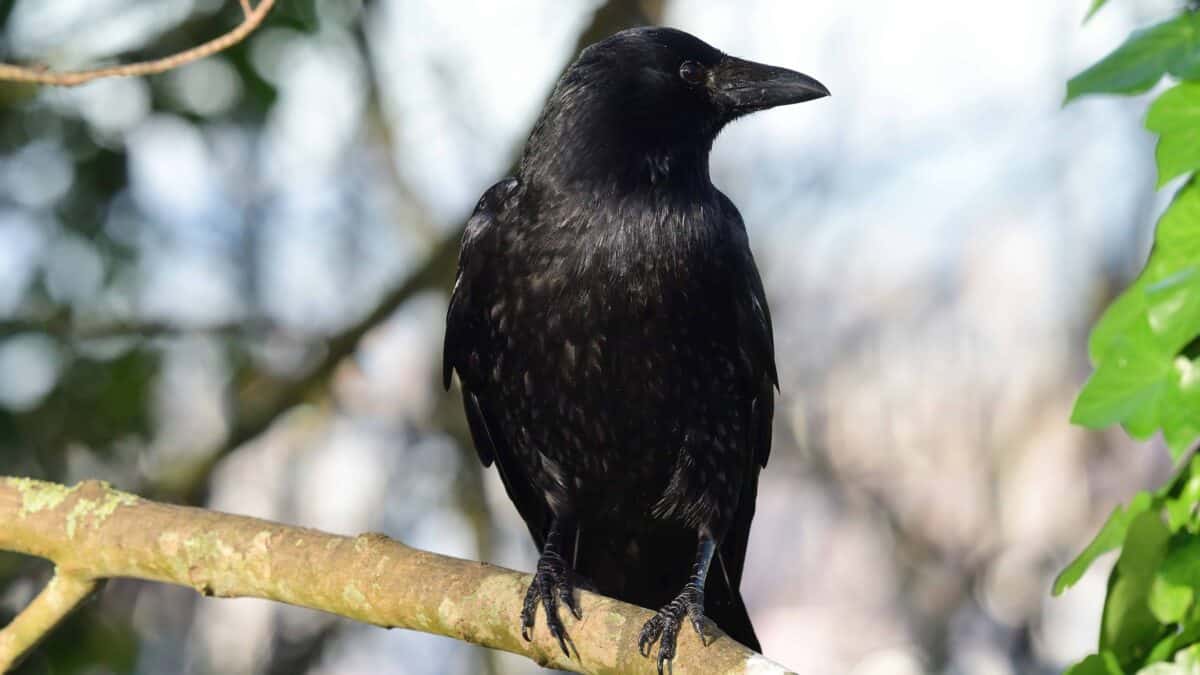
The corvid family, particularly crows and ravens, earn fifth place for their extraordinary problem-solving abilities and tool use when hunting. New Caledonian crows fashion sophisticated tools from twigs and leaves, creating hooks and barbed tools to extract insects from tree crevices. Laboratory studies have shown these birds can solve multi-step problems, even using tools to acquire other tools—a form of meta-tool use previously thought unique to humans and great apes. They’ve been observed dropping nuts onto roadways so passing cars will crack them open, and then waiting for traffic lights to change before safely retrieving their food.
Ravens display impressive cooperative hunting strategies, with some individuals flushing out prey while others make the capture. They’re also notorious for their ability to follow wolf packs and human hunters, anticipating the opportunity for scavenging—a behavior that requires understanding the hunting behaviors of other species. Particularly ingenious is their “team thieving,” where one raven distracts a nesting bird while another steals eggs or chicks. Their hunting adaptability extends to modern environments; researchers have documented ravens using cars as “can openers” by placing roadkill in traffic lanes so vehicles will break the carcass open, demonstrating their ability to leverage human infrastructure as hunting tools.
6. Octopuses: Marine Masters of Deception
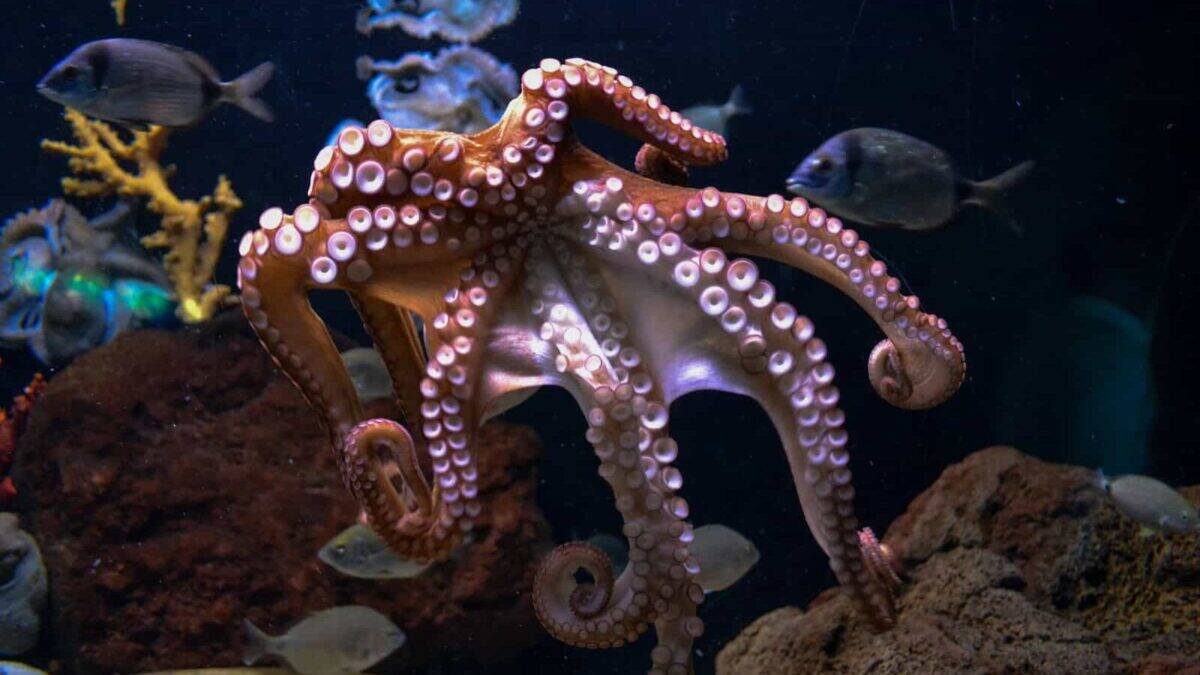
Octopuses secure the sixth position through their remarkable problem-solving abilities and strategic hunting approaches that are unparalleled among invertebrates. With a distributed nervous system that includes a central brain and additional neural tissue in each arm, octopuses can process complex information while hunting. They’ve been observed using coconut shells and other objects as portable shelters and hunting blinds, demonstrating tool use that was once thought impossible for invertebrates. Some species collect and arrange stones to create defensive barriers at their den entrances while they hunt, showing environmental manipulation and planning.
Their hunting strategies often involve sophisticated deception and camouflage. The mimic octopus can impersonate over 15 different marine species, selecting which disguise to use based on which predators are nearby. When hunting, octopuses can change not just their color but their skin texture and body shape to approach prey without detection. They demonstrate remarkable learning capabilities, solving puzzles to access prey in laboratory settings and remembering solutions for months. Perhaps most impressive is their ability to open childproof pill bottles, unscrew jar lids, and navigate mazes to reach prey—cognitive feats that showcase problem-solving abilities rivaling those of many vertebrates despite having evolved along a completely separate evolutionary path.
7. Lions: Strategic Ambush Hunters

The iconic African lion earns seventh place for coordinated hunting tactics that showcase remarkable strategic thinking. Unlike many predators that rely primarily on speed or strength, lions employ complex cooperative strategies tailored to specific prey and environments. Female lions, the pride’s primary hunters, demonstrate sophisticated role specialization during hunts. Studies in the Serengeti have documented how lionesses assume specific positions during hunts—some serving as “wings” that circle around prey, others as “centers” that drive prey toward waiting ambushers, and still others as blockers that cut off escape routes.
What truly distinguishes lion hunting intelligence is their situational awareness and tactical flexibility. They adjust hunting group size based on prey type and environmental conditions, using larger groups for larger prey and splitting into smaller units when hunting in thick vegetation. Lions consistently exploit environmental features during hunts, using darkness, wind direction, and terrain to their advantage. They’ve been observed deliberately driving prey into muddy areas where their targets become bogged down and vulnerable. Perhaps most impressive is their ability to coordinate without vocal communication during the final stages of a hunt, using subtle body language and anticipating each other’s movements—a level of silent coordination that requires significant cognitive processing and understanding of their pride members’ intentions.
8. Portia Jumping Spiders: Arachnid Masterminds
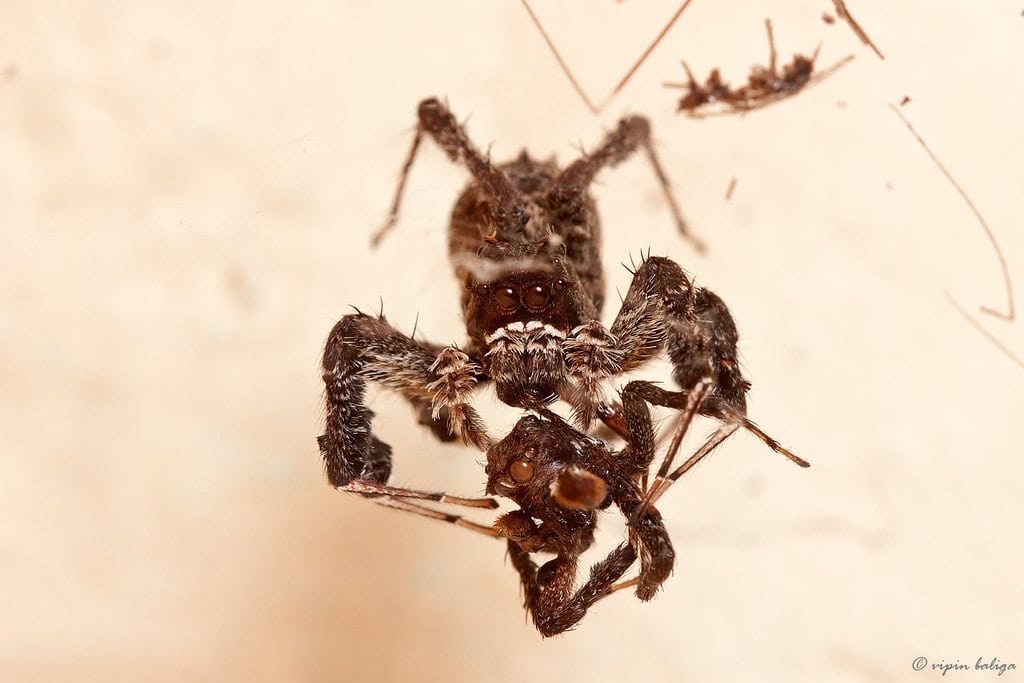
Portia jumping spiders secure eighth place, demonstrating that exceptional hunting intelligence isn’t limited to large-brained vertebrates. These small arachnids exhibit perhaps the most sophisticated hunting strategies of any invertebrate aside from octopuses. What makes their hunting remarkable is their ability to plan and execute complicated stalking routes that temporarily take them away from their prey to achieve a better attack position—a behavior requiring spatial awareness and future planning previously thought impossible in spiders. They’ve been observed taking detours of up to an hour, keeping prey in mind even when it’s no longer visible, demonstrating object permanence.
Portia spiders specialize in hunting other spiders, which requires overcoming dangerous prey with their own defensive capabilities. They employ a remarkable array of deceptive tactics, including mimicking the vibrations of various insects caught in a web to lure the resident spider closer. Different Portia species have been documented using different “plucking patterns” specialized for different prey species, showing remarkable behavioral flexibility. Laboratory experiments reveal they can solve detour problems and trial-and-error learn the most effective hunting approaches for unfamiliar prey. Most impressively, they can improvise entirely new hunting strategies when facing novel situations—a level of cognitive flexibility and problem-solving that’s astonishing for an animal with a brain smaller than a pinhead.
9. Polar Bears: Patient Tactical Hunters

Polar bears claim the ninth position for hunting strategies that demonstrate remarkable adaptability and problem-solving in one of Earth’s harshest environments. Their primary hunting technique—the breathing hole ambush—showcases exceptional patience and strategic thinking. Polar bears can detect a seal’s breathing hole from great distances and will wait motionless beside it for hours, sometimes even covering their black noses with their paws to avoid detection. They’ve learned to approach seals against the wind to prevent detection by scent and move with extreme stealth despite their massive size.
What truly distinguishes polar bear hunting intelligence is their adaptability to changing environmental conditions. As climate change reduces sea ice, researchers have documented polar bears developing new hunting strategies. Some have been observed using tools, such as ice blocks and rocks, to kill walruses by dropping them on the walruses’ heads. Others have developed “still hunting” techniques where they lie motionless near seal breathing holes for hours, conserving energy while waiting for prey. Perhaps most impressive is their ability to hunt beluga whales by waiting at narrow channels during migration and reaching into the water to hook them with their claws—a specialized technique passed between generations that demonstrates both cultural learning and an understanding of whale behavior patterns.
10. Harris’s Hawks: Coordinated Aerial Hunters
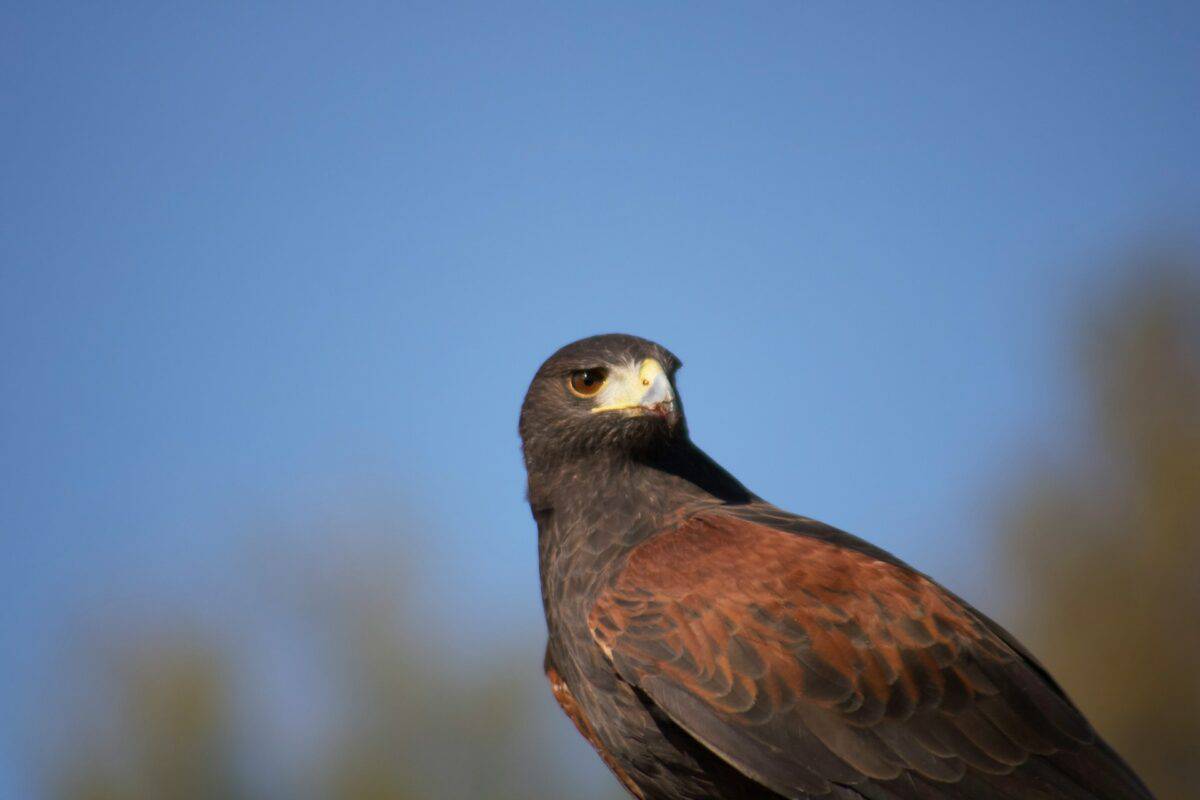
Harris’s hawks secure tenth place as the only raptors known to hunt cooperatively in complex, coordinated group strategies. Native to the Americas, these birds employ a remarkable technique called “relay hunting” when pursuing rabbits and other prey. The hunting party, typically consisting of 2-6 hawks, takes turns pursuing prey to prevent it from escaping while minimizing energy expenditure for each bird. While one hawk actively chases, others position themselves strategically ahead of the prey’s escape route or rest to conserve energy before taking their turn in the pursuit.
Even more impressive is their “flush and ambush” technique, where some hawks deliberately fly into dense vegetation to flush out hidden prey while others wait to intercept fleeing animals. They’ve also been observed performing the “surprise pounce,” where one hawk distracts prey while another attacks from behind. Perhaps their most remarkable behavior is the “stack” hunting method, where hawks literally stand on each other’s backs on a perch to increase their height and visual range—creating a living tower up to three birds tall. This level of cooperation requires significant social coordination and an understanding of how their actions complement those of their hunting partners, representing a level of team hunting rarely seen outside mammals.
11. Crocodiles: Ancient Ambush Specialists

Crocodiles earn eleventh place for hunting strategies that combine patience, strategic positioning, and psychological manipulation of prey. Contrary to the perception of crocodiles as simple ambush predators, research has revealed sophisticated hunting behaviors that have evolved over their 200+ million year history. Nile crocodiles have been observed working together to herd fish into shallows where they become easier to catch, with some crocodiles forming a semicircle to prevent escape while others feed. This level of coordination suggests a higher level of social hunting intelligence than previously recognized in reptiles.
What truly distinguishes crocodilian hunting is their ability to learn and anticipate prey behavior patterns. They memorize seasonal migration routes and position themselves accordingly, sometimes waiting weeks in strategic locations for herds to arrive at river crossings. Saltwater crocodiles have been documented using sticks as bait, positioning themselves beneath branches where birds nest and balancing sticks on their snouts to lure birds looking for nesting material. When the birds approach, the crocodiles snap. This represents true tool use—a cognitive ability rarely documented in reptiles. They’ve also learned to recognize and exploit human patterns, such as appearing at boat ramps where fishermen clean their catch, showing an ability to adapt their hunting strategies to new opportunities created by human activities.
12. Ants: Collective Intelligence Hunters

Army ants and other hunting ant species secure twelfth place by demonstrating that collective intelligence can produce remarkably sophisticated hunting strategies even with individually simple cognitive systems. Driver ants form massive swarm raids with millions of individuals that function as a superorganism, creating living architecture like bridges and rafts to overcome obstacles during hunts. Their raids feature specialized soldier and worker castes with different roles, forming fan-shaped hunting formations that can capture prey many times their size, from insects to small vertebrates.
What makes ant hunting strategies particularly remarkable is their emergent problem-solving capabilities. Army ant colonies can adjust their raiding patterns based on prey availability and density, creating more efficient hunting formations in different environments. Some species like the Malaysian marauder ant use “group retrieval” strategies where scouts assess prey size and recruit precisely the right number of workers needed for transport. Perhaps most impressive are trap-jaw ants, which have evolved mandibles that snap shut at speeds of up to 140 mph—the fastest known movement in the animal kingdom. They use these specialized appendages not just for catching prey but also as escape mechanisms, snapping their jaws against the ground to launch themselves away from threats—demonstrating how specialized adaptations can serve multiple strategic purposes in hunting and survival.
13. Sea Otters: Marine Tool Specialists

Sea otters claim thirteenth place for their sophisticated use of tools and learned hunting techniques that are passed down through generations. These marine mammals are one of the few non-primate species that use tools regularly, employing rocks as anvils and hammers to crack open hard-shelled prey like clams, mussels, and sea urchins. Individual otters select specific stones based on weight and shape, sometimes carrying their favorite rock in an underarm pocket formed by a fold of loose skin, using it repeatedly for multiple hunting expeditions—a clear demonstration of planning ahead for future needs.
What makes sea otter hunting particularly remarkable is their specialized feeding strategies that vary by individual and location, suggesting cultural transmission of knowledge. Researchers have documented distinct “tool kits” and techniques passed from mother to pup. Some otters specialize in certain prey types, developing expertise with specific hunting methods—some focus on burrowing clams that require different excavation techniques than surface-dwelling shellfish. They’ve also been observed wrapping themselves in kelp while sleeping to anchor themselves during hunting breaks, showing an understanding of how to use environmental features to their advantage. Their hunting intelligence is especially impressive considering they must consume about 25% of their body weight daily to maintain their high metabolism in cold water, requiring constant innovation and efficiency in foraging behavior. This constant pressure to locate, access, and process food has likely driven the evolution of their remarkable cognitive skills. Sea otters not only recognize the right tools and techniques but can adjust their strategies based on prey availability, tidal conditions, and learned experiences. Their ability to solve problems and adapt in real-time underscores a level of intelligence that rivals that of many terrestrial mammals.
Moreover, sea otters play a critical ecological role as keystone predators in coastal marine environments, particularly kelp forest ecosystems. By preying on sea urchins and other herbivores that graze on kelp, they help maintain the health and biodiversity of these underwater forests. Their influence extends beyond individual cleverness into ecosystem-level impact, showing how intelligence in the animal kingdom is often tied to ecological significance. Sea otters remind us that complex thought processes are not exclusive to land animals—and that even ocean-dwelling species can display a blend of cultural learning, innovation, and environmental stewardship.
Conclusion: Intelligence in the Pursuit of Prey
The most successful predators in nature aren’t always the biggest or fastest—they’re often the smartest. From the orca’s coordinated wave-washing to the trap-setting tactics of antlions and the deceptive lures of anglerfish, hunting strategy in the wild is a masterclass in innovation and adaptation. These animals rely on more than brute strength; they use teamwork, foresight, mimicry, and even tool use to outwit prey in environments where energy efficiency and timing can mean the difference between feast and famine.
Ranking the smartest hunters reveals a stunning diversity of predatory intelligence across land, sea, and sky. It reminds us that cognitive abilities aren’t exclusive to primates or mammals—evolution has produced cunning in many forms. These predators challenge how we define intelligence itself, showing that in nature, strategy is as vital as speed, and cleverness can be the sharpest weapon of all.

From exploring the marine wonders in the Azores and witnessing the vast savannas of Kenya, to delving deep into the rich biodiversity of South Africa and traversing iconic landscapes in Australia and the US like Yellowstone, Chris's experiences are vast.
With a penchant for diving alongside sharks, the ocean holds a special place in his heart.
Through his academic insights, he champions wildlife conservation, striving with 'Animals Around The Globe' to cultivate a profound connection between humans and animals, enhancing our mutual appreciation.
Connect with him at Feedback@animalsaroundtheglobe.com.
- Why Spiders Don’t Get Stuck in Their Own Webs - July 20, 2026
- What Scientists Found in a 10,000-Year-Old Beehive - July 20, 2026
- This Spider Builds Fake Decoys of Itself - July 20, 2026