

In the quest to build more efficient and adaptable robots, scientists are turning to an unlikely source of inspiration: spiders. Despite having brains smaller than a pinhead, spiders demonstrate remarkable cognitive abilities, solving complex problems with minimal neural processing power. This efficiency has captured the attention of roboticists and neuroscientists alike, who see tremendous potential in understanding how these tiny creatures achieve so much with so little.
Spider brains represent a masterclass in evolutionary optimization, having evolved over 380 million years to perform complex behaviors while maintaining extraordinary energy efficiency. By studying these miniature marvels of natural engineering, researchers hope to develop new algorithms and control systems that could revolutionize robotics, creating machines that are more autonomous, energy-efficient, and capable of adapting to changing environments with minimal computational resources.
The Remarkable Cognitive Abilities of Spiders

Despite their diminutive brain size—typically containing fewer than 100,000 neurons compared to the human brain’s 86 billion—spiders display astonishing cognitive capabilities. Jumping spiders, for example, can plan complex hunting strategies, remembering and tracking prey even when it disappears from view. This suggests a form of working memory previously thought to require much larger brains. Other species build intricate webs that are marvels of engineering, adjusting their design based on environmental conditions, prey availability, and previous success rates.
Perhaps most impressively, some spiders demonstrate learning and problem-solving abilities that rival those of much larger animals. Research has shown that spiders can learn from experience, recognize individual conspecifics, and even display personalities—consistent behavioral differences between individuals. These cognitive feats challenge our understanding of what’s possible with such limited neural hardware and suggest new approaches to artificial intelligence that prioritize efficiency over raw computational power.
Decoding Spider Neurobiology
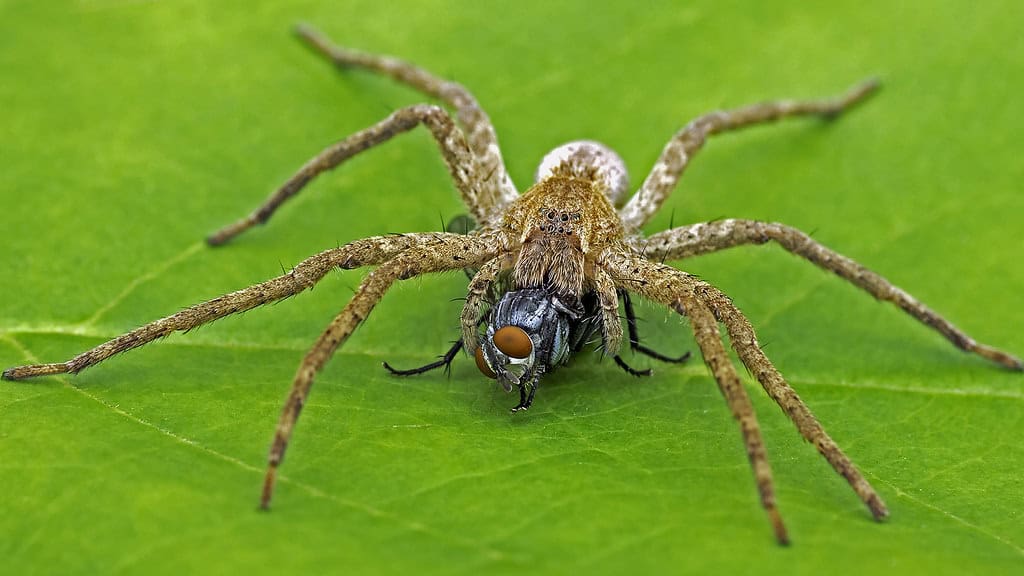
Understanding spider cognition begins with studying their unique neuroanatomy. Unlike vertebrates with centralized brains, spiders possess a distributed nervous system with a central brain connected to ganglia (neural clusters) throughout their body. This architecture allows for both centralized decision-making and rapid, localized responses—a design particularly interesting to roboticists developing distributed control systems for multi-limbed robots.
Recent advances in neuroimaging technologies have enabled researchers to observe spider brains in unprecedented detail. Using techniques like micro-CT scanning and calcium imaging, scientists can now map neural connections and observe brain activity in real-time as spiders perform various tasks. These studies reveal specialized neural circuits for specific behaviors, such as prey detection, web construction, and spatial navigation—insights that could inform more specialized, efficient control algorithms for robots.
Spider Vision Systems as Models for Robot Perception

Spider vision represents one of the most promising areas for robotic applications. Jumping spiders, in particular, possess remarkable visual systems despite their tiny size. With eight eyes arranged to provide nearly 360-degree awareness, these spiders can detect movement, judge distances, and recognize shapes with extraordinary precision. What makes this system particularly interesting to roboticists is its efficiency—rather than processing all visual information at once (as most computer vision systems do), spiders use a tiered approach to perception.
Their main forward-facing eyes provide high-resolution detail but in a narrow field, while secondary eyes monitor for movement in the periphery, only triggering detailed processing when something interesting appears. This attention-based vision system allows for powerful visual capabilities with minimal neural investment—a strategy now being implemented in robots to reduce computational demands while maintaining effective environmental awareness. Companies like Opteran Technologies have already developed navigation systems for drones based on these principles, allowing for obstacle avoidance with dramatically less processing power than conventional approaches.
Web Construction: Programming Complex Behaviors with Simple Rules

The spider’s ability to construct geometrically complex webs using relatively simple neural programming has become a model for robotic behavior planning. Studies have revealed that rather than following detailed blueprints, web-building spiders employ sets of simple rules that, when executed in sequence, produce sophisticated structures optimized for catching prey. This emergent complexity from simple instructions parallels concepts in swarm robotics and distributed AI systems, where individual agents follow basic protocols that collectively generate complex behaviors.
Researchers at MIT and other institutions have analyzed these web-building algorithms to develop new approaches for programming robots to construct structures or navigate complex environments. Rather than requiring explicit instructions for every possible scenario, these spider-inspired systems allow robots to follow basic rules that adapt to changing conditions—much like how a spider adjusts its web when encountering an obstacle. This approach has proven particularly valuable for scenarios where robots must operate autonomously in unpredictable environments without continuous human guidance.
Energy Efficiency: Doing More with Less

Perhaps the most valuable lesson spiders offer robotics is extreme energy efficiency. Spiders have evolved to minimize energy expenditure while maintaining high functionality—a necessity for predators that may go weeks between meals. Their nervous systems reflect this optimization, using minimal neural resources for maximum behavioral output. For instance, spiders can maintain precise control of eight legs with far fewer neurons than would be predicted based on vertebrate models, suggesting alternative control architectures that could benefit robotic systems.
This efficiency extends to their sensory processing as well. Rather than continuously analyzing all environmental inputs, spider brains prioritize and filter information, focusing computational resources only on relevant stimuli. Roboticists are now implementing similar principles in what’s called “event-based” processing, where sensors and processors activate only when detecting significant changes, dramatically reducing power consumption. For mobile robots and especially small drones, where battery life is a critical limitation, these spider-inspired efficiency measures could extend operational times from minutes to hours.
Ballooning Behavior: Inspiration for Aerial Robotics

One of the most fascinating spider behaviors being studied for robotic applications is “ballooning”—a technique where spiders release silk threads into the air to catch currents and travel vast distances, sometimes miles high and hundreds of miles across oceans. What makes this remarkable is that spiders can sense and respond to electric fields in the atmosphere, allowing them to time their launches for optimal travel conditions. This passive but controlled flight mechanism operates with minimal energy expenditure while achieving remarkable range.
Engineers at the University of Bristol have drawn inspiration from this behavior to develop microrobots that can similarly harness environmental energy for mobility. These devices use electrostatic forces or air currents for propulsion rather than motors or actuators, dramatically reducing weight and power requirements. Such innovations could enable deployments of environmental sensor networks or exploration robots that disperse over large areas without requiring individual power sources or propulsion systems—a potential revolution for environmental monitoring and planetary exploration.
Silk Production: Smart Materials and Actuators

Spider silk, often described as “nature’s high-performance polymer,” represents another area where spider biology is informing robotics. Beyond its famous tensile strength, spider silk has remarkable properties including variable elasticity, adhesiveness, and the ability to change properties based on environmental conditions. What’s particularly relevant to robotics is how spiders control silk production and deployment with simple neural circuits, adjusting composition and placement with remarkable precision.
This has inspired developments in “smart materials” for soft robotics, where researchers are creating artificial muscles and actuators that change properties in response to stimuli. Spider-inspired synthetic fibers that contract or expand in response to electrical signals or environmental conditions could enable new generations of robots with fewer mechanical parts and lower power requirements. Companies like Spintex Engineering are already commercializing synthetic spider silk technologies that could revolutionize everything from robot grippers to artificial muscles for prosthetics.
Decentralized Control Systems

The spider’s distributed nervous system offers valuable insights for developing more robust robot control architectures. Unlike the centralized “brain” in most current robots, spiders operate with a combination of central processing and local control nodes throughout their body. This hybrid approach allows them to coordinate complex behaviors while maintaining rapid local responses—if a leg encounters an obstacle, it can adjust immediately without waiting for central processing.
Robotics researchers at institutions like the University of Tokyo and Boston Dynamics have implemented similar principles in multi-legged robots, creating systems where central algorithms handle overall navigation and task planning while local controllers manage moment-to-moment limb movements. This architecture provides greater resilience—if one part fails, others can compensate—and reduces delays between sensing and action. Such decentralized control systems have proven particularly valuable for robots operating in challenging environments where rapid adaptation is essential, from search-and-rescue scenarios to space exploration.
Learning and Adaptation in Minimalist Neural Systems

Recent research has revealed that spiders possess remarkable learning capabilities despite their limited neural resources. Studies show they can learn to associate novel stimuli with rewards, adapt hunting strategies based on experience, and even recognize individual conspecifics. These learning abilities challenge traditional assumptions about the neural requirements for adaptive behavior and suggest alternative approaches to machine learning that don’t require massive datasets or computational resources.
Inspired by these findings, researchers at institutions including the University of Konstanz and Harvard University are developing new learning algorithms that prioritize efficiency over brute-force processing. These “sparse learning” approaches enable robots to adapt their behavior with minimal training examples and computational overhead. Such systems could be particularly valuable for small, autonomous robots that must learn and adapt to new environments without constant human supervision or the ability to upload massive datasets to cloud computing resources.
Real-World Applications and Current Research
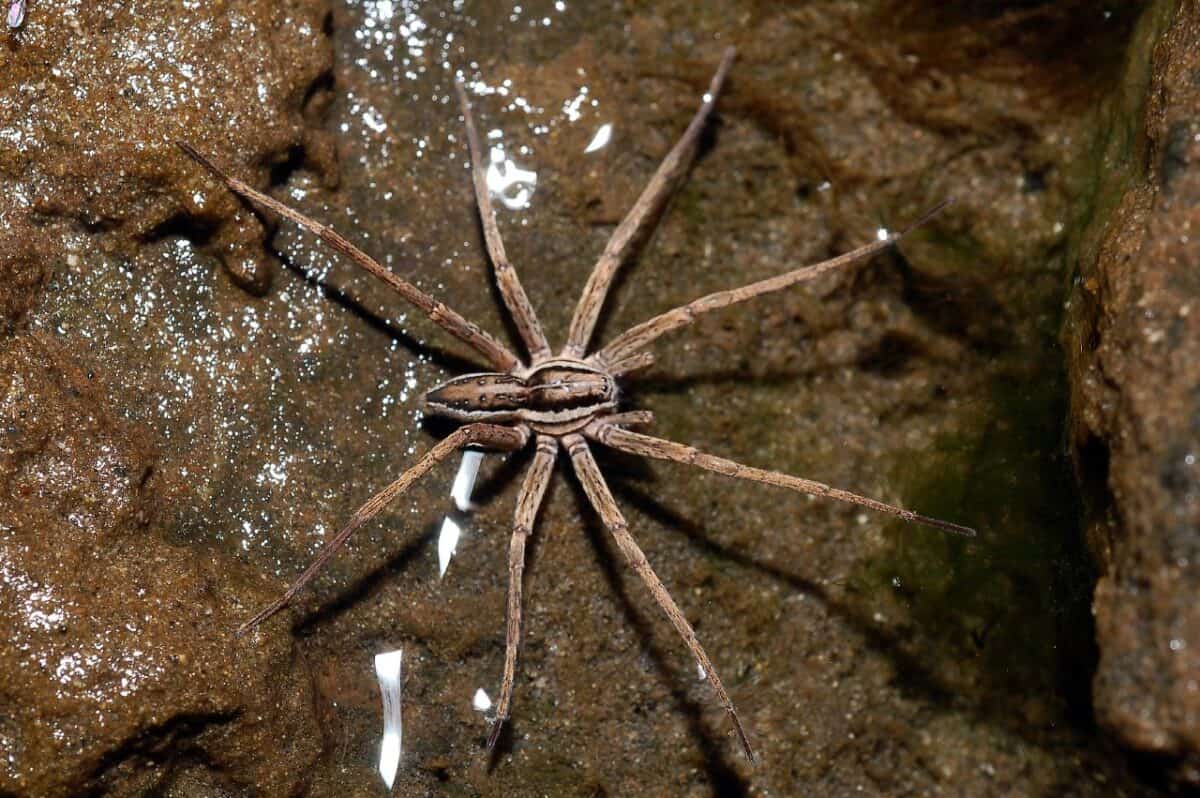
The translation of spider-inspired neurobiology into practical robotics is already underway across multiple fronts. Companies like Opteran Technologies have commercialized navigation systems based on spider vision principles, enabling drones to navigate complex environments using a fraction of the computing power required by conventional computer vision. These systems allow for obstacle avoidance and navigation without GPS or mapping, using visual cues similar to how spiders navigate their environments.
In other applications, researchers at Stanford University have developed micro-robots that can jump and land with precision inspired by jumping spiders, while teams at the Italian Institute of Technology have created soft robotic actuators based on spider hydraulic systems. Military and space agencies are particularly interested in these innovations, as they could enable small, autonomous robots for reconnaissance or planetary exploration that operate effectively with minimal power and communication requirements. As research continues, we can expect a new generation of robots that combine the efficiency and adaptability of spiders with the precision and programmability of modern electronics.
Ethical Considerations and Future Directions

As with any advancing technology, spider-inspired robotics raises important ethical considerations. Creating more autonomous, adaptable machines brings questions about responsibility, control, and potential misuse. Additionally, as these robots become more capable of operating independently for extended periods, concerns about environmental impact and unintended consequences must be addressed. Researchers in this field increasingly recognize the importance of developing ethical frameworks alongside technological advances.
Looking forward, the integration of spider neurobiology with robotics promises to continue delivering innovations across multiple domains. The next frontier appears to be combining these biological insights with advances in materials science and artificial intelligence, creating robots that not only mimic spider behavior but incorporate spider-like adaptability at the material level. As researchers continue decoding the mysteries of spider cognition, we move closer to a new paradigm in robotics—one where efficiency, adaptability, and simplicity take precedence over raw computational power, leading to machines that operate more like living organisms than traditional robots.
Conclusion: Nature’s Tiny Engineers Reshape Robotics

The study of spider brains represents a perfect example of how nature’s solutions can inform technological innovation. By understanding how these small arachnids achieve remarkable feats with minimal neural resources, researchers are developing a new generation of robots that are more efficient, adaptable, and capable of operating autonomously in complex environments. This bio-inspired approach marks a significant shift from traditional robotics, emphasizing elegant simplicity over brute-force computation.
As this research continues to advance, we can expect to see increasingly sophisticated robots that incorporate spider-inspired features—from event-based vision systems and decentralized control architectures to energy-efficient locomotion and adaptive learning capabilities. These innovations will likely transform fields ranging from search-and-rescue operations to space exploration, environmental monitoring, and medicine.
Perhaps most profoundly, this research challenges our understanding of intelligence itself, suggesting that remarkable cognitive capabilities don’t necessarily require large brains or massive computational resources. As we continue learning from these eight-legged engineers, we may discover entirely new approaches to creating artificial intelligence that is more sustainable, efficient, and harmonious with the natural world.
The humble spider, often feared or overlooked, may well become one of humanity’s most important teachers as we navigate the challenges of creating truly intelligent machines for the future. By studying these masterpieces of evolutionary engineering, we gain not just technological insights but a deeper appreciation for the elegance and efficiency with which nature solves complex problems.

- Why You Shouldn’t Chase Butterflies With Nets - July 22, 2026
- The Animal Kingdom’s Best Dads Ranked - July 22, 2026
- The Most Vulnerable Fish Species in U.S. Rivers Today - July 22, 2026