
You’ve heard it a hundred times: when a cat gets old, it starts drifting away. It sleeps more, hides more, stares at walls, and seems to be quietly checking out of the relationship. Most owners brace for that slow fade and call it “nature.”
Here’s the part almost nobody tells you. Behaviorists say a lot of senior cats are doing the exact opposite of pulling away – they’re just showing it in ways so small and so quiet that even devoted owners miss it completely. Once you know what to look for, that “distant” old cat starts to look like something else entirely: a cat that is holding on tighter than ever.
#1 – It Sleeps In The Same Room, Even If Not On Your Lap
A cat that genuinely wants space will go find it – a closet, a basement, a spot behind the furthest couch cushion. A cat that instead parks itself in your bedroom, on your couch, or just outside your office door is telling you something completely different. That’s not distance. That’s a body too tired to climb, attached to a heart that still wants to be close.
Senior cats often trade cuddling for what behaviorists call “proximity comfort” – being near you without the physical toll of jumping or climbing. If your cat settles at the foot of the bed instead of curling on your chest, that’s not rejection, that’s arthritis-friendly love. Watch how it moves when you change rooms, and notice if it always picks a spot with a clear view of you. That’s a cat quietly saying, “I’m still yours. I’m just tired.”
#2 – It Follows You Slowly, Room To Room
Most people watch a stiff old cat trail behind them and assume it’s hunting for food. But behaviorists point out that following you – even at a painful, shuffling pace – is one of the most direct attachment behaviors a cat can show. A cat in true withdrawal mode stays planted. It avoids movement, especially when its joints ache.
Here’s the tell that gives it away: your cat doesn’t always want something when it arrives. No meowing, no pawing at the food bowl, no demands. It just shows up, circles once, and lies down near you. That’s not begging – that’s loyalty choosing discomfort over distance. If you notice those slow, determined little “shuffle walks” every time you switch rooms, your cat isn’t drifting off. It’s insisting on staying in your orbit, one sore step at a time.
Fast Facts
- Veterinary researchers estimate that arthritis affects 60% of cats older than age 6, and 90% of cats older than age 10
- A cat with advanced arthritis may slow down, become less willing to jump, or start avoiding stairs – behavioral changes that are easy for owners to misread as normal aging
- Cats instinctively mask pain, a survival habit carried over from life in the wild
- A cat that keeps following you despite sore joints is choosing closeness over comfort
#3 – It Still Checks On You At Night
People talk endlessly about checking on their aging pets. Almost nobody mentions that a lot of those pets are still checking on them, too. Many older cats keep up silent little “night rounds” long after they’ve stopped sleeping curled against you.
You might half-wake to a faint jump onto the bed, a whisker brushing your cheek, or the soft click of claws in the hallway – that’s a wellness check, not restlessness. A cat that used to sleep on your chest might now sit by your door at 3 a.m., peek in, and pad back to its own bed. If you find your cat near you in the morning even though it clearly didn’t stay all night, chances are it came and went several times. That’s not a cat drifting away. That’s a guardian that refuses to clock out.
#4 – It Purrs Softly Instead Of Loudly
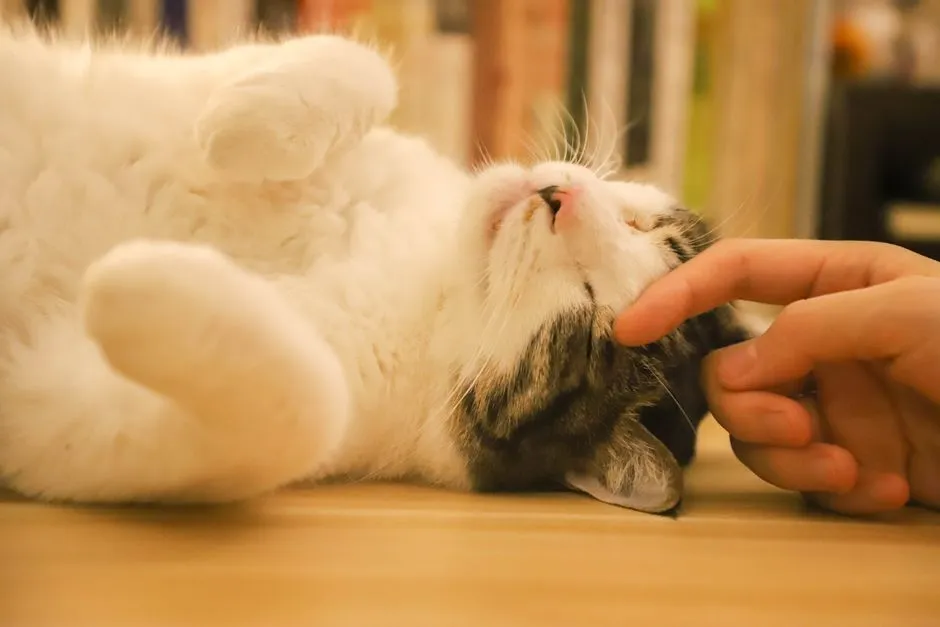
People panic when an old cat stops producing that big, tractor-engine purr, and the internet loves to treat it as a bad omen. But in most seniors, the purr doesn’t disappear – it just gets quieter, breathier, and more deliberate. Less energy and age-related changes in the throat can turn a roar into a gentle vibration you feel more than hear.
Here’s the real test: does that soft purr still start the moment you touch it, talk to it, or lie down nearby? If so, that’s deep contentment, not detachment. You may need to rest your fingers against its side or throat to even notice it’s happening. That small effort can be a strangely emotional moment, because you realize your cat never actually stopped talking to you – you just had to listen closer.
#5 – It Keeps Its Grooming Routine When You’re Around
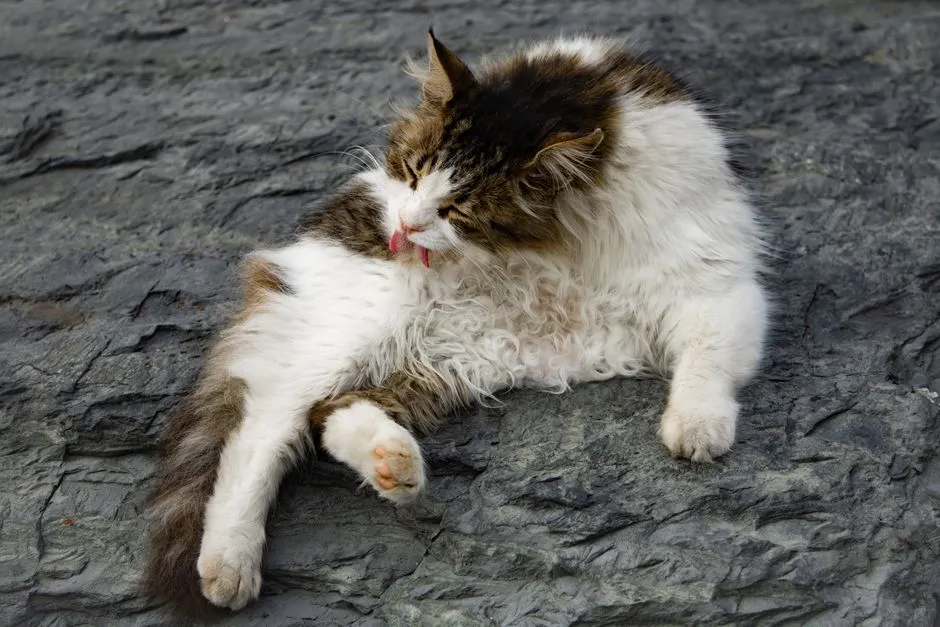
Everyone knows a senior cat that stops grooming altogether is a warning sign. Fewer people talk about the opposite pattern: a cat that keeps grooming itself, especially right after you’ve been near it, is quietly saying, “I still care about being part of this.” Self-care takes energy an old cat doesn’t waste on a life it’s checked out of.
Watch for the little “mini baths” that happen right after you pet it, followed by it resettling closer instead of farther away. Some owners misread this as the cat “wiping their scent off” in rejection. In reality, it’s often social grooming – the cat is blending your scent into its own routine and calming itself down. If the only time it seems motivated to freshen up is when you’re nearby, that’s not distance. That’s you being its emotional baseline.
#6 – It Meows Less, But Makes Eye Contact More
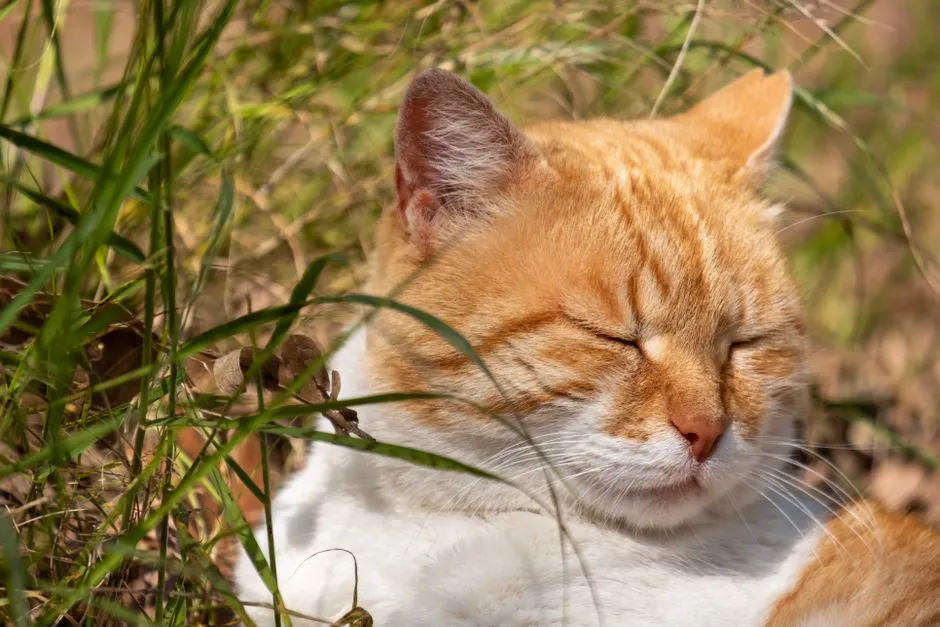
Most people equate a chatty cat with a loving cat, so when an older cat goes quiet, they assume it’s pulling away emotionally. But behaviorists agree that eye contact and slow blinking are some of the strongest bonding signals a cat can give – and seniors often trade loud meows for that quieter, more intimate language.
Notice what happens when you say its name, walk into a room, or sit near its bed. If your cat looks up, holds your gaze for a beat, and gives that slow, deliberate blink, that’s essentially a feline “I love you, I feel safe.” Cats often reserve that gesture for one person only. A cat that stopped caring would simply look away to conserve energy. A quieter cat that’s locking eyes with you more isn’t ignoring you – it’s having full conversations without making a sound.
At a Glance
- Researchers at universities in England think slow-blinking at your cat, who might respond in kind, could be a way to get them to warm up to you
- The slow blink appeared to function as a genuine positive social signal, not simply a reflex or coincidence
- A slow blink signals vulnerability – closed eyes mean a cat doesn’t need to watch for threats
- Shelter cats who reciprocated slow blinks were rehomed more quickly than cats who blinked less in response
#7 – It Chooses Your Scent Over “Better” Spots
You can buy the fanciest orthopedic bed on the market, and your old cat will still ignore it in favor of your unmade pillow, your laundry pile, or the exact dent in the couch where you always sit. Senior cats frequently prioritize scent over comfort – your smell matters more to them than memory foam ever will.
This is where a lot of owners get it backward. They see the cat curled in the laundry basket and assume it’s just chasing warmth. In reality, that mix of detergent, skin oils, and everyday you is your cat’s emotional anchor – a portable version of its person. Given the choice between a sunny, isolated window and a shady corner that smells like your sweatshirt, a bonded senior cat will pick the sweatshirt almost every time. That’s not a cat retreating. That’s one nesting in you, even when you’re not in the room.
#8 – It Tolerates Handling It Used To Hate
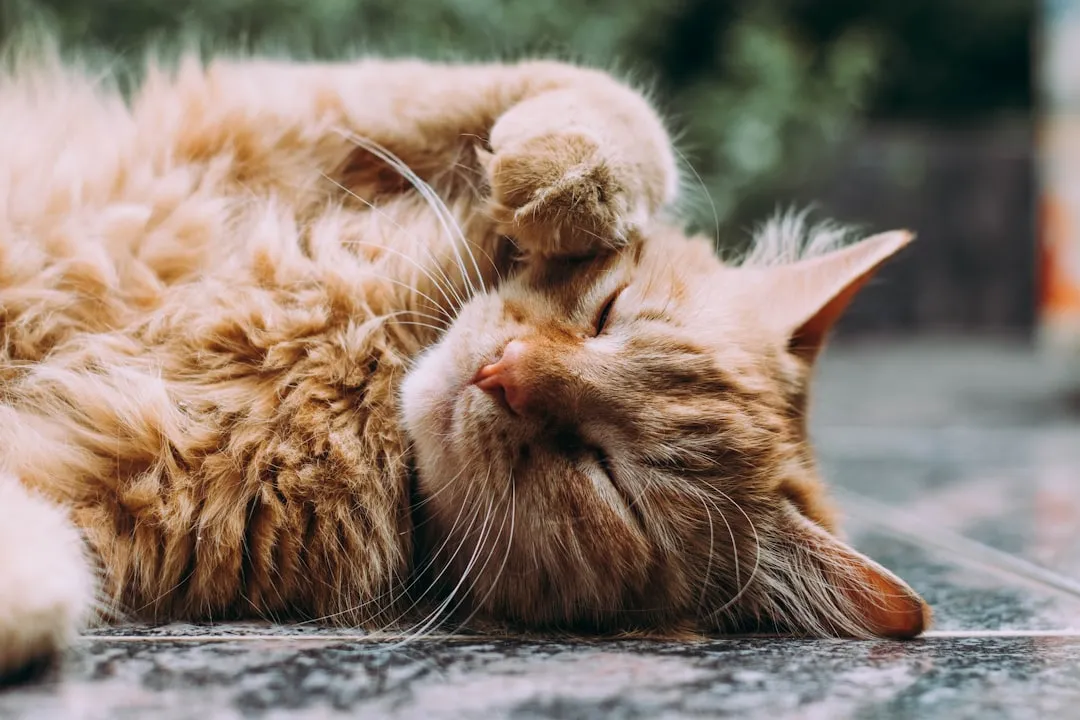
Here’s a controversial one: a lot of owners misread increased tolerance as a cat “shutting down.” In many seniors, it’s the opposite. Allowing handling they used to fight – nail trims, brushing, being lifted slowly – can actually signal deeper trust. A genuinely fearful or detached cat tends to grow less tolerant with age, not more.
If your cat once swatted during brushing but now leans quietly into it, that shift is worth paying attention to. It may not enjoy the process any more than it used to, but it now trusts you enough to let the annoyance slide, which is a big deal for an animal built on boundaries. Watch its body language for confirmation: a loose tail, soft ears, half-closed eyes. Pain can also quiet a cat, so context matters – but relaxed handling paired with relaxed posture usually means one thing. You’ve become non-negotiable in its world.
#9 – It Still Responds To Your Routine Cues
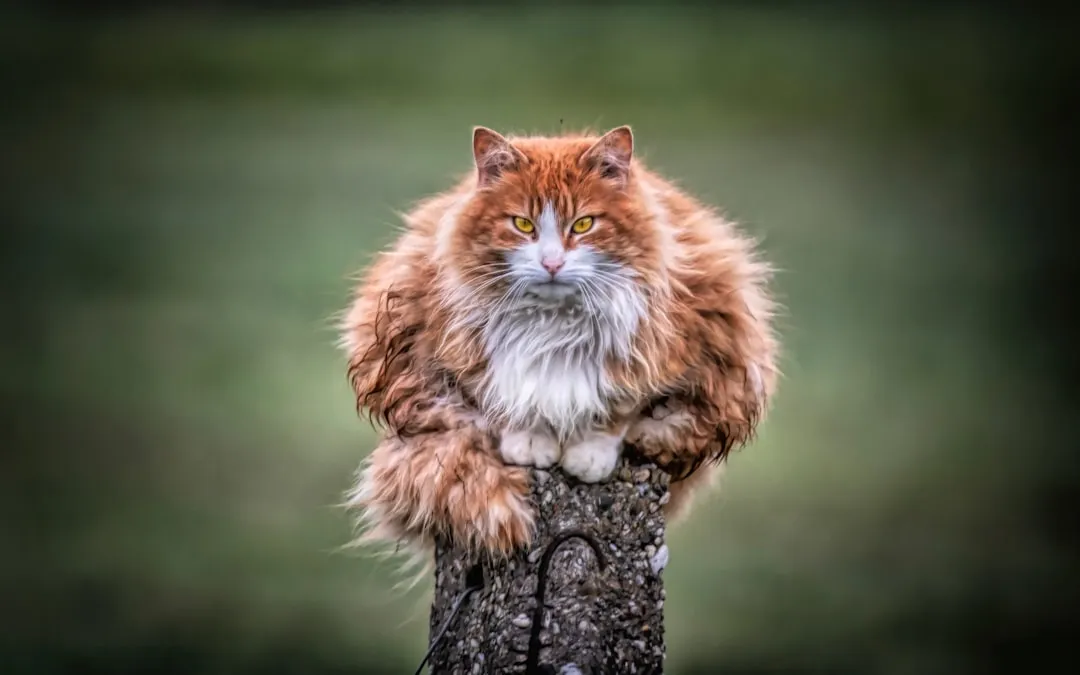
A cat that has truly stopped caring stops investing in predictability altogether. A senior cat that still perks up at your alarm, your keys, the rattle of the treat jar, or the theme song of your nightly show is still deeply wired into your daily rhythm. That’s not autopilot. That’s a shared life still running.
Ask yourself: does it shuffle toward the kitchen when the coffee maker starts? Does it limp to the couch the second it hears the Netflix “ta-dum”? There are geriatric cats who barely move all day, yet still drag themselves to the doorway the moment they hear their person’s car pull into the driveway. That’s not indifference – that’s devotion outworking a failing body. If your cat is still syncing its day to yours, it isn’t emotionally checking out.
#10 – It Shares Its “Safe Spot” With You
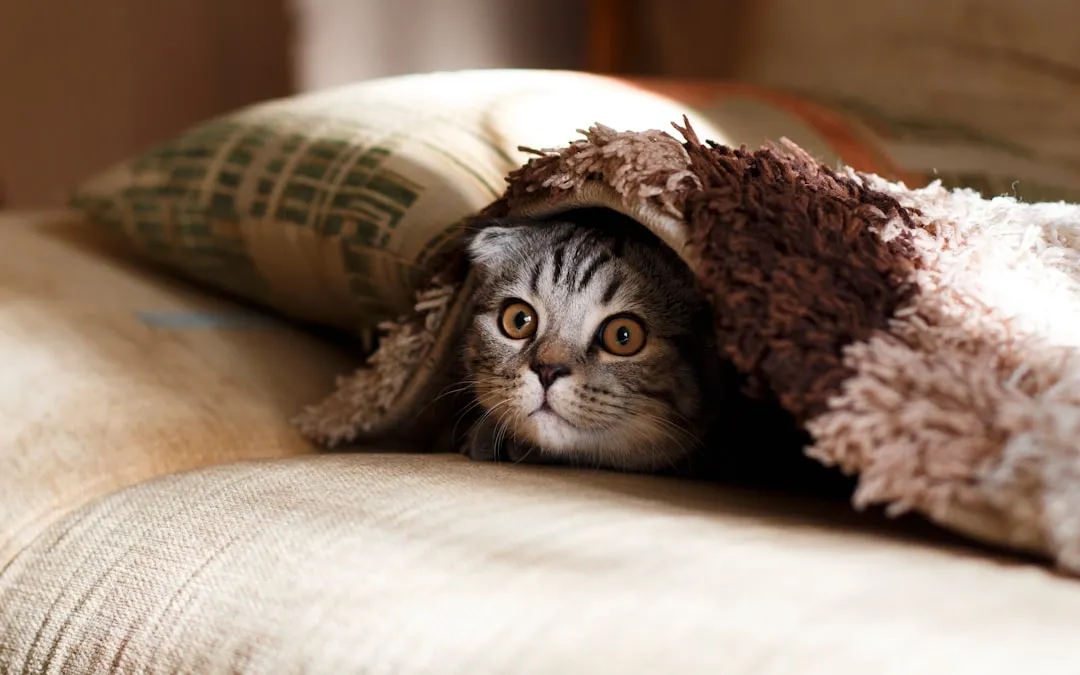
Most cats keep one ultra-secure hideout: under the bed, behind a chair, a specific corner of the couch. When a senior cat lets you into that space, or better, moves that safe spot closer to wherever you usually are, it’s making you part of its actual security system.
Maybe it used to hide under the far side of the bed and now curls under your nightstand instead. Maybe its favorite box has slowly migrated next to your desk. Some owners see a cat hiding more and assume it’s pulling away – but if that hideout has a clear line of sight to you, it isn’t withdrawal at all. It’s a cat managing its physical limits while refusing to let go of its person. When the bunker always keeps you in view, you’re not just the roommate. You’re the base camp.
Quick Compare
- True withdrawal often looks like spatial disorientation and long periods of staring blankly into space or at walls
- Devoted aging looks like hiding in a spot that still keeps a clear line of sight to you
- Sudden withdrawal, confusion, or nighttime yowling points to something more than simple aging, and is worth a vet visit
- Devoted aging looks like slower movement paired with a hideout that keeps migrating closer to you, not farther away
#11 – It Still Seeks Gentle Physical Contact
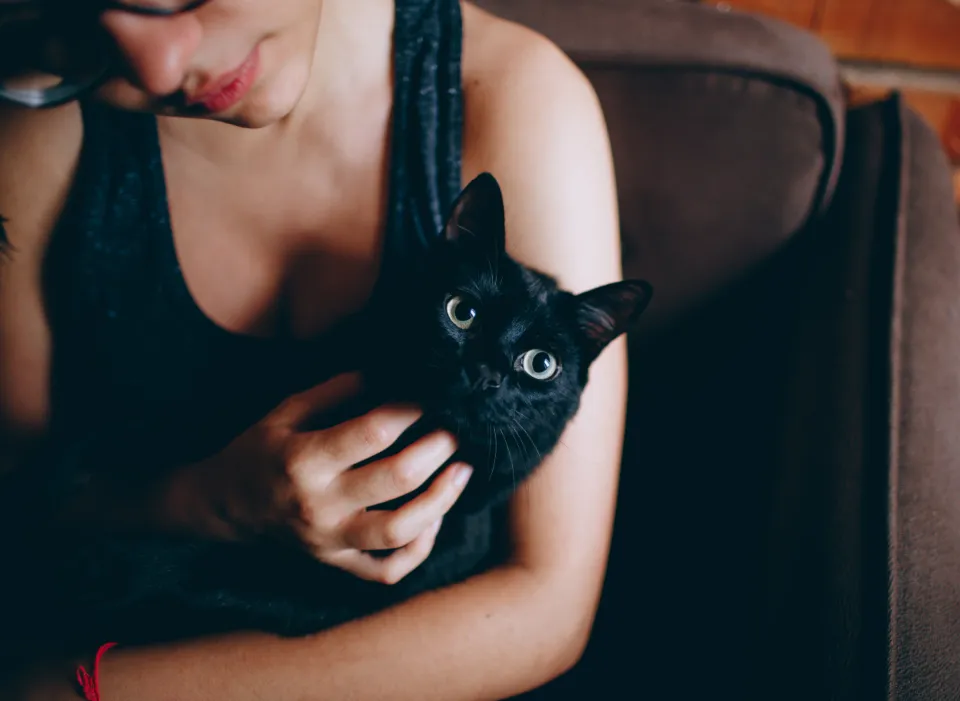
True disengagement looks like avoidance: a cat that moves away from touch, avoids shared surfaces, and tenses up when you get close. A senior cat that presses its head into your hand, leans against your leg, or rests a paw on your arm – even for a few seconds – is actively grounding itself in you.
Older cats often lose their taste for full-body cuddles that twist a sore spine or squeeze aching joints, so they downgrade to smaller gestures instead: a chin on your ankle, a tail draped across your wrist, a quick forehead bump before flopping down nearby. Some of the most bonded senior cats spend only seconds in direct contact before settling an inch away, close enough to feel you move, far enough to stay comfortable. If your cat still initiates those small touches, it isn’t slipping away. It’s adapting how it loves you.
#12 – It Shows “Social Referencing” When Unsure
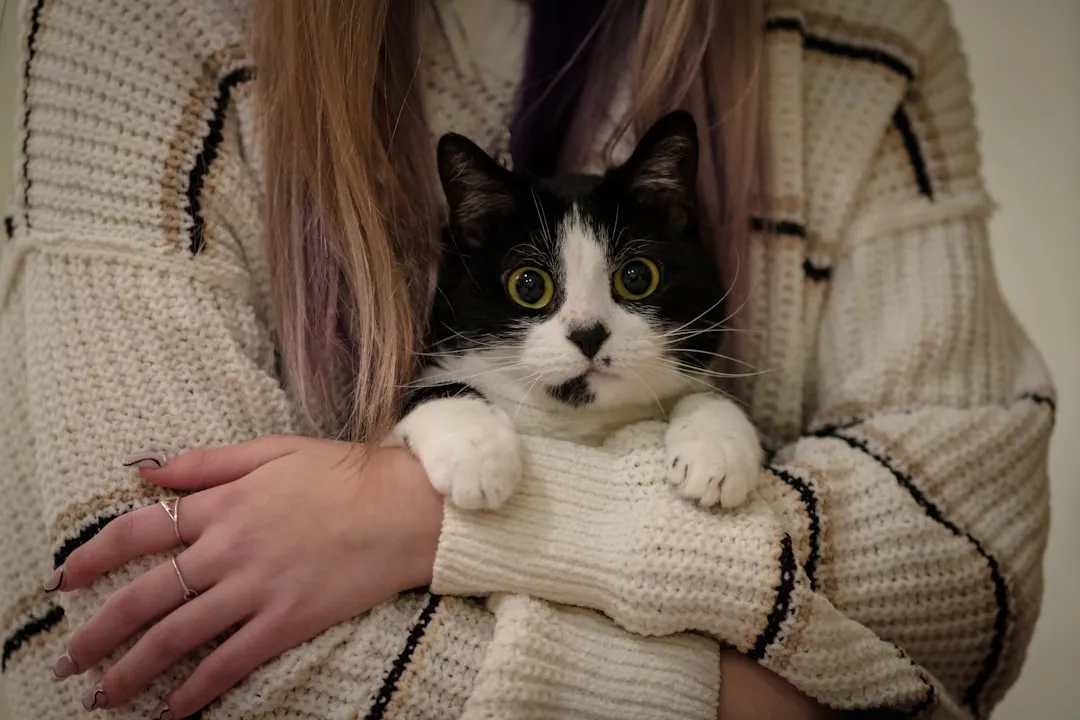
This is one of the most underrated attachment signs, and it shows up strongly in older cats. Social referencing means your cat looks to you to figure out how to react to something new or confusing. Puppies do it loudly. Cats do it in near silence.
A strange noise happens, and instead of bolting, your cat glances at you first. A new person walks in, and it flicks an ear, then checks your posture before deciding what to do. A piece of furniture moves, and it scans your face before deciding whether to panic. An emotionally distant cat doesn’t bother “asking” anyone’s opinion – a connected one does, even deep into old age. When your cat pauses, studies you, and relaxes because you look calm, that’s one of the clearest signs available that you haven’t been left behind at all.
#13 – It Chooses To Spend Its Limited Energy On You
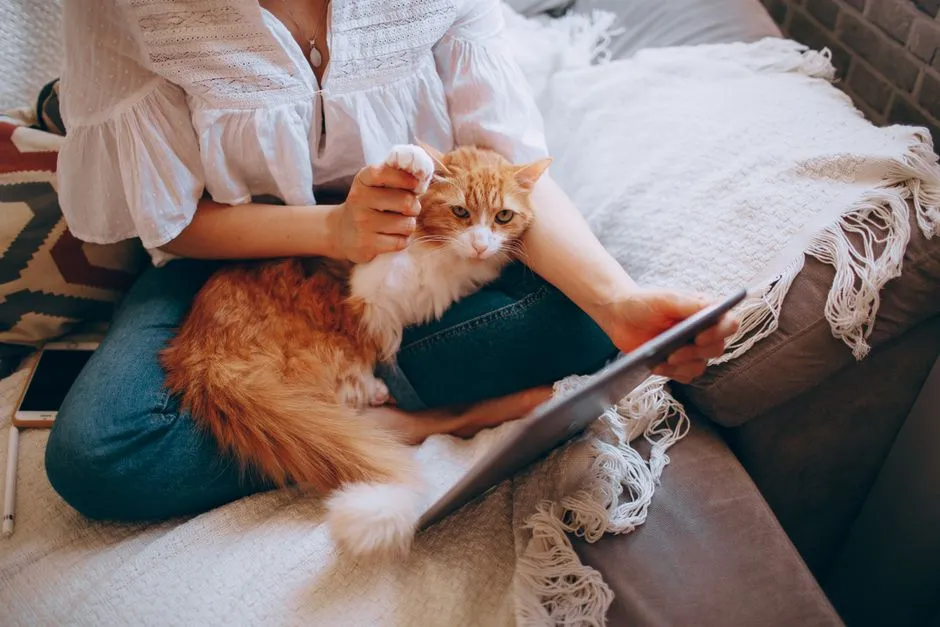
Here’s the hard truth nobody likes saying out loud: old cats know, on some level, that their energy is running low. Every jump, every climb, every walk across the room now costs something. Who they choose to spend that energy on is the clearest statement they’ll ever make.
If your senior cat skips jumping on the counter but still drags itself onto the couch the moment you sit down, ignores its toys but musters the strength to meet you at the door, or sleeps most of the day yet forces one slow lap around the house right after you come home, you’re watching a choice being made in real time. It could hoard what little energy it has left and stay curled up alone somewhere quiet. Instead, it spends that energy on you, every single time. That’s not a cat pulling away. That’s a cat telling you exactly where it wants to be with whatever it has left.
Worth Knowing
- Senior cats often sleep 16 to 18 hours a day, more than younger cats, leaving only a small window of true waking energy
- Every one of those waking minutes is effectively a choice about where to spend it
- Cats that are genuinely checked out of a relationship stop making that choice altogether
- A senior cat that keeps using its limited hours to be near you is showing you its priorities in real time
The Bottom Line
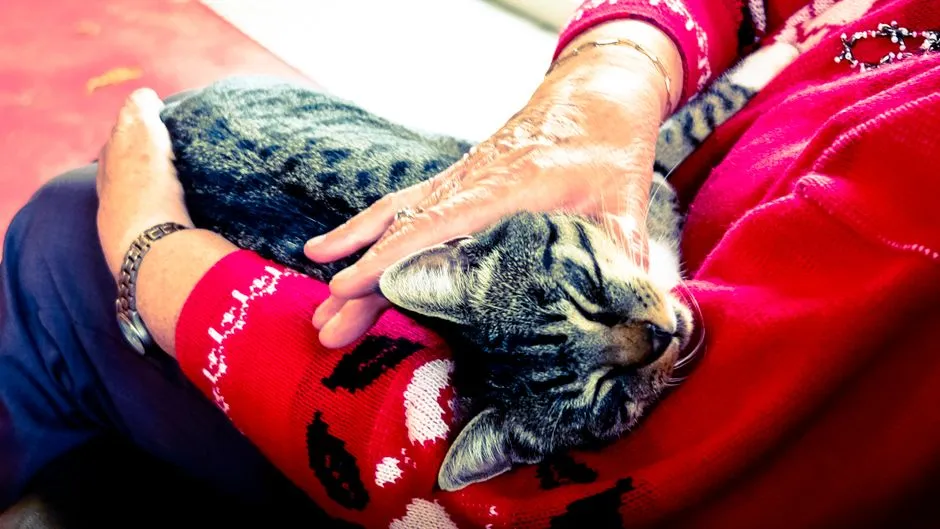
The biggest mistake people make with an old cat is assuming quieter automatically means colder. In reality, most seniors don’t stop loving you – they just start loving you in smaller, smarter, more economical ways.
Following you room to room, choosing your scent over a sunny window, purring so softly you have to feel it instead of hear it, blinking slowly across a room, dragging itself to your side out of habit and devotion – none of that is detachment. That’s a cat rationing its last good years and still deciding, over and over, that you’re worth spending them on.
Is it a little heartbreaking to realize your cat is spending its limited energy just to stay near you? Honestly, yes. But treating an aging cat like it’s “already gone” simply because it moves slower and quieter is unfair to both of you. Your old cat isn’t pulling away. It’s holding on exactly as hard as its aging body will allow – you just have to know how to see it.
