

When the sky suddenly darkens in the middle of the day and shadows vanish while the temperature drops, the experience can feel downright otherworldly. For ancient civilizations, were terrifying events that seemed to herald disaster or divine intervention. The Maya, however, developed something extraordinary. They created a system so mathematically precise that they could predict every observable solar eclipse in their territory for over seven centuries. Without telescopes, computers, or even metal tools, these ancient astronomers accomplished what seems almost impossible, tracking patterns in the heavens with astonishing accuracy.
In the heart of the Yucatán more than a thousand years ago, a group of Maya astronomers, known as daykeepers, tracked the movements of the Moon with such precision that they could foresee centuries in advance. Recent research published in Science Advances has finally decoded how they did it, revealing secrets hidden within one of the oldest surviving books from the Americas.
The Dresden Codex: A Thousand-Year-Old Astronomical Marvel
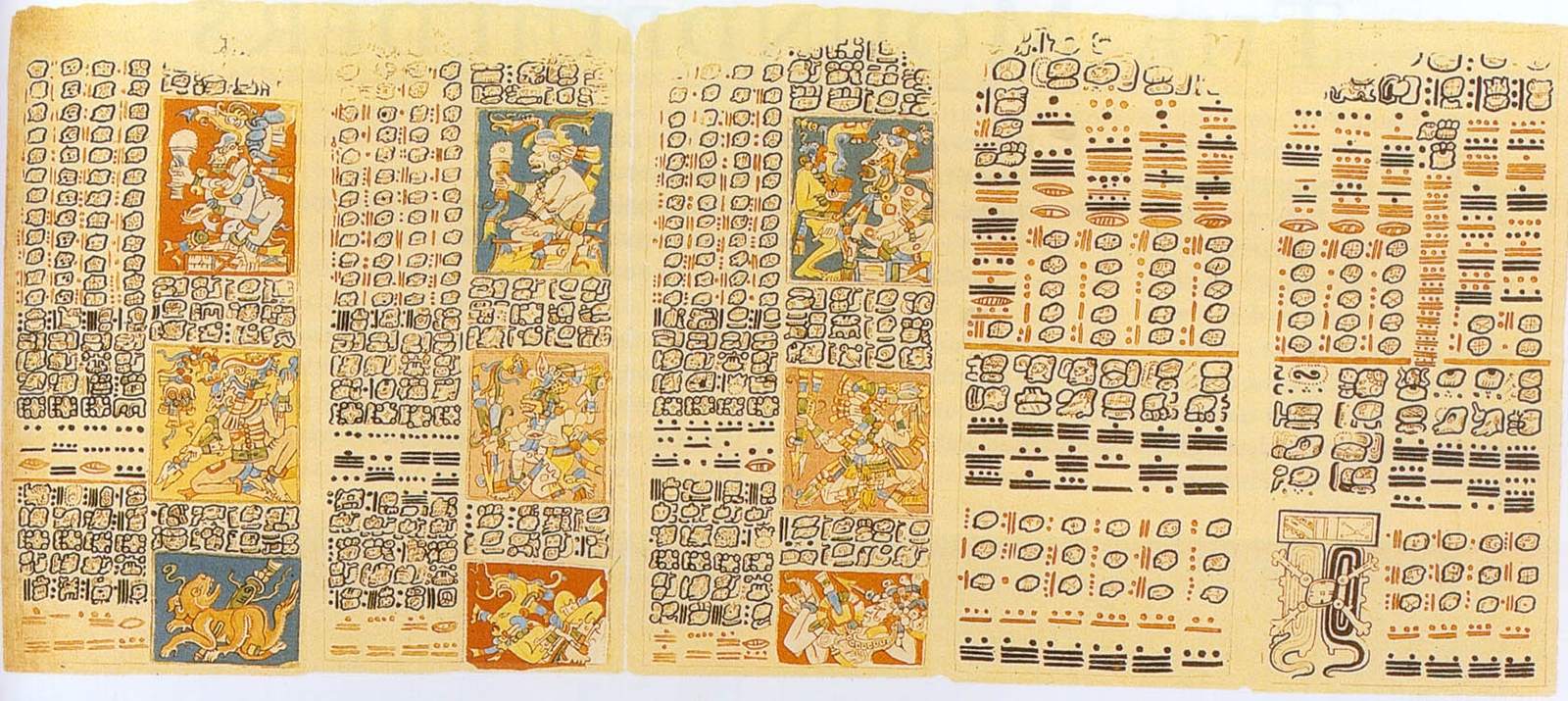
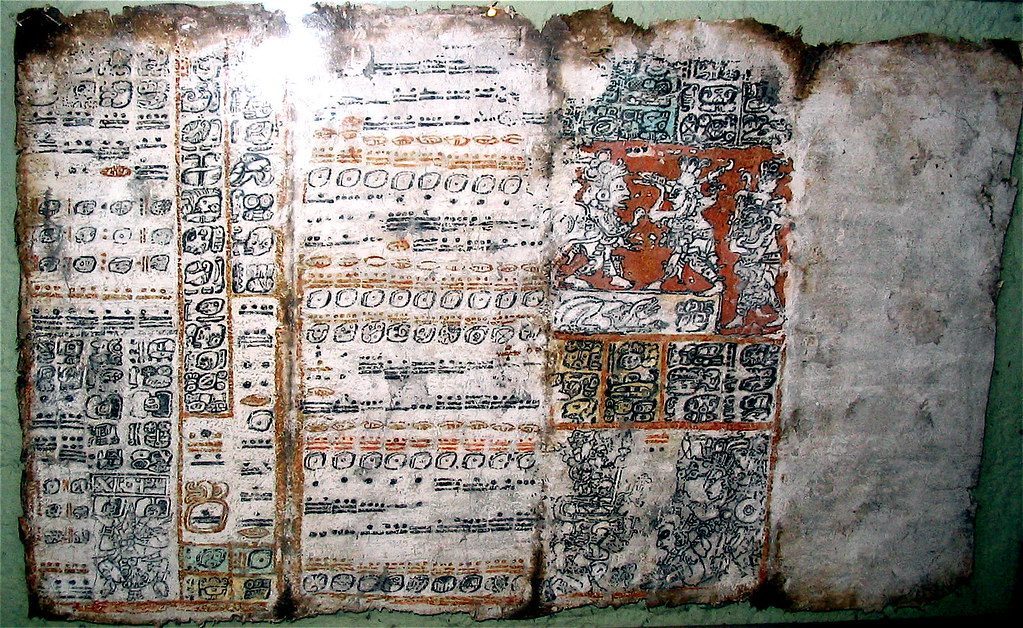
The Dresden Codex is a pre-Columbian Maya book of the 11th or 12th century. This fragile manuscript, written on paper made from fig tree bark and folded accordion-style, somehow survived Spanish colonization and now resides in Germany.
A study published in the journal Science Advances analyzes the Dresden Codex, the most famous surviving record of Mayan astronomy. In particular, researchers focused on the eclipse prediction table which spans 405 lunar months. The document stretches over eight pages filled with intricate hieroglyphs, numerical calculations, and celestial imagery. For more than a century, scholars puzzled over how this ancient table actually worked. The Dresden Codex eclipse table spans 405 lunar months and contains 69 new moon dates, of which 55 were designed to predict solar eclipses. This careful design allowed Mayan astronomers to track celestial patterns using intervals of six lunations, approximately 177 days, while incorporating longer spans of 11 or 17 lunations to account for the complex dance between lunar cycles and eclipse patterns.
It Started as a Lunar Calendar, Not an Eclipse Tool
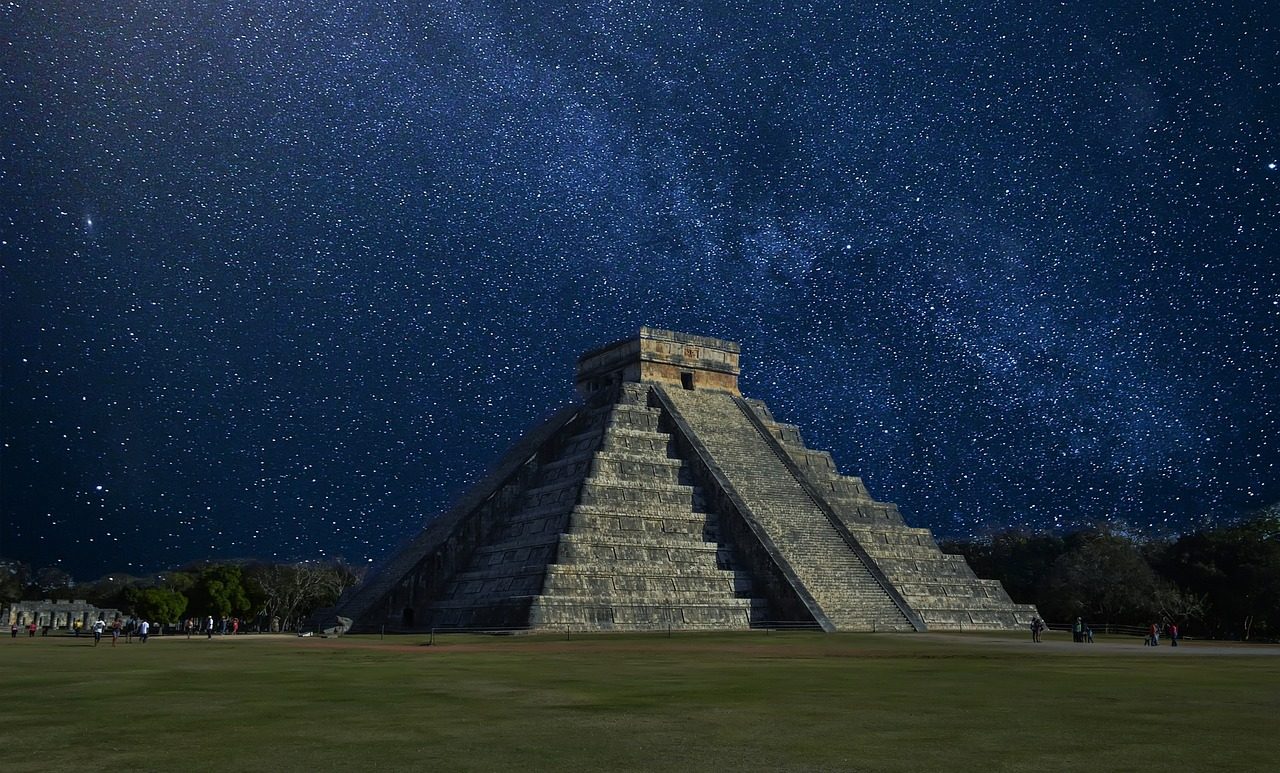
Here’s where things get surprising. The research overturns a long-held assumption that the table’s 405-month length meant it was created solely for predicting eclipses. Instead, the paper’s authors state that it was first designed as a lunar calendar to align with the Maya’s 260-day astrological calendar.
The Maya didn’t set out to predict eclipses at all. They were tracking the moon’s phases for ritual purposes, coordinating their sacred ceremonies with lunar cycles. They used modeling and statistics to show that the 405-month cycle’s length of 11,960 days aligns with the 260-day calendar (46 x 260 = 11,960) much more closely than it aligns with the cycles of solar and lunar eclipses. Through repeated observations over decades, the daykeepers began noticing something remarkable. Eclipses tended to repeat on the same named days within their sacred 260-day cycle. This wasn’t planned, it was discovered. The Mayan model for predicting solar eclipses grew directly out of their model for tracking the moon and harmonizing their calendars.
The Overlapping Table System: Correcting for Centuries
Let’s be real, keeping predictions accurate across generations is no easy feat. Even the slightest miscalculation compounds over time until everything falls apart. The Maya solved this problem with remarkable ingenuity.
The latest study shows that to maintain correct predictions for over 700 years, the Mayans used a system of overlapping tables. Instead of starting a new table, they would reset the next table to precise internals of 223 or 358 months before the previous table ended to correct for small astronomical errors that accumulate over time. Think of it like recalibrating your watch periodically to prevent drift. The research team found that by restarting tables at these optimal intervals, maintaining a ratio of four resets at 358 months for each reset at 223 months, Maya astronomers could predict every observable solar eclipse for centuries. These specific intervals correspond to known eclipse cycles, and resetting at these moments allowed the system to self-correct before errors accumulated enough to throw predictions off.
Mathematical Precision Rivaling Modern Methods

The accuracy achieved by Maya astronomers is genuinely stunning. Their reconstruction even identified which intervals the Maya preferred to realign their predictions, using ratios such as 1447 days to 49 months, yielding a near-perfect lunar month length of 29.530612 days. For comparison, the modern astronomical average is 29.530589 days, meaning the Maya’s model was astonishingly accurate to within two seconds.
This level of mathematical precision rivals modern computational methods, achieved without telescopes, computers, or even metal tools. They accomplished this through meticulous naked-eye observations, recorded over generations. The study also revealed how Maya astronomers recognized eclipse “families” – groups of eclipses occurring at 88-month intervals. All 55 intended prediction stations in the Dresden Codex belong to one of three distinct families, each following this pattern. This organizational principle, combined with their understanding of the 520-day near-recurrence of eclipses in their sacred calendar, formed the backbone of their predictive system.
Observations Spanning Centuries Built the Foundation

So how long did it take to develop such sophistication? By analyzing eclipse patterns from this period forward, the researchers concluded that by 550 CE, Mayan astronomers likely possessed sufficient observational evidence to develop a predictive table similar to the Dresden Codex. “Daykeepers would have had sufficient evidence for the table’s stations long before that date,” the researchers found.
In their analysis, Justeson and Lowry cataloged 145 solar eclipses visible across the Maya world over eight centuries. They found that eclipses separated by 669 lunar months, roughly 54 years, tended to recur near the same longitude and time of day. This recognition of long-term patterns required astronomical record-keeping across multiple generations. Astronomers didn’t just observe the sky during their own lifetimes; they consulted centuries-old records, building upon the work of their predecessors. It’s hard to say for sure, but this commitment to long-term data collection rivals the best scientific traditions anywhere in the world.
The Sacred 260-Day Calendar: Key to Eclipse Prediction
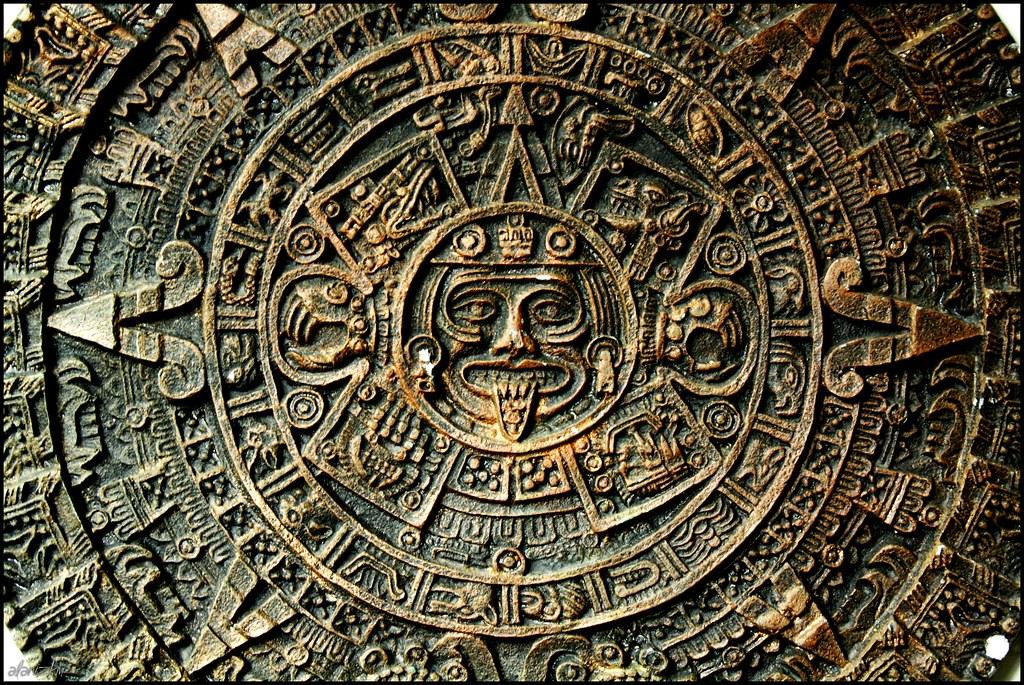
A new study has found that the 260-day ritual calendar is the key to understanding how the Maya . This sacred calendar, still used by ritual specialists in Guatemalan highland communities today, wasn’t just religious, it was astronomical.
Only later was the table repurposed, following the discovery that the lunar cycle and the 260-day ritual calendar dovetailed after 405 lunar months, equivalent to 46 260-day periods. That’s likely when the Maya discovered that successive eclipses tended to recur on the same named day in the 260-day cycle. Imagine the moment when an ancient daykeeper realized this pattern. Eclipses weren’t random acts of the gods, they followed mathematical rules that could be anticipated and understood. For example, no where else in the world has the 260-day period been used for eclipse prediction. This was a uniquely Mayan innovation, born from their particular way of understanding time as cyclical and interconnected.
A Legacy of Scientific Achievement

The table would have anticipated every solar eclipse observable in the Mayan territory from a century or two after the first evidence of the Mayan lunar calendar to at least the era of the extant eclipse table, 700 years later. Seven centuries of reliable predictions, built without telescopes, without calculus, without even a concept of gravity.
The codex was good for 700 years, but the researchers said that the method is still accurate, even today. The Dresden Codex wasn’t just a historical curiosity or religious artifact. It represented genuine scientific discovery, arrived at through observation, hypothesis testing, and mathematical modeling. The Classic Maya in particular developed some of the most accurate pre-telescope astronomy in the world, aided by their fully developed writing system and their positional numeral system, both of which are fully indigenous to Mesoamerica. The Classic Maya understood many astronomical phenomena: for example, their estimate of the length of the synodic month was more accurate than Ptolemy’s, and their calculation of the length of the tropical solar year was more accurate than that of the Spanish when the latter first arrived.
Conclusion: When the Sky Speaks in Numbers

The Maya proved that sophisticated science doesn’t require modern technology, just careful observation, rigorous record-keeping, and brilliant mathematical insight. Their eclipse predictions stand as a testament to human ingenuity and the universal desire to understand the cosmos. When we look at the Dresden Codex today, we’re not just seeing ancient superstition, we’re witnessing real astronomy conducted by people who understood that the universe operates according to predictable patterns.
But it’s humbling to recognize that a thousand years ago, Maya astronomers were doing much the same thing. And they were armed only with their eyes, their calendars, and an unshakeable conviction that the universe spoke in numbers. The next time you witness a solar eclipse, think about those ancient daykeepers who could tell you centuries in advance exactly when the sun would disappear. Pretty remarkable when you consider they figured it all out without a single computer algorithm, wouldn’t you say?
