

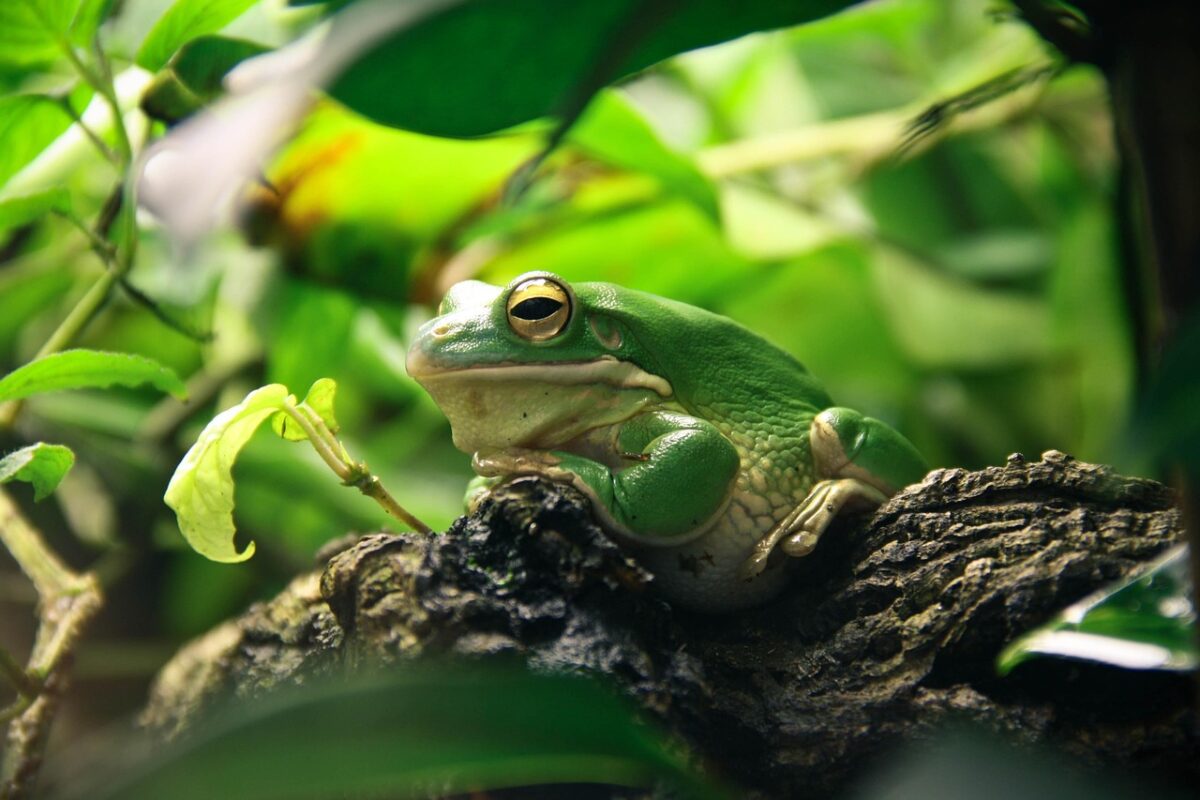

Discovering the Core Needs of Pet Frogs (Image Credits: Pixabay)
Embarking on the adventure of setting up a frog terrarium opens a window into the captivating world of amphibian care, where attention to detail fosters a vibrant, self-sustaining habitat.
Discovering the Core Needs of Pet Frogs
Did you know that a mismatched environment can lead to stress and health issues in frogs, potentially cutting their lifespan short? Many beginners overlook this, but tailoring the setup to your frog’s natural behaviors ensures long-term vitality.
Species like tree frogs demand vertical climbing areas to replicate their arboreal lifestyles, while ground-dwellers thrive in wider spaces for foraging. Researchers emphasize matching humidity and temperature to the frog’s origin – tropical varieties often require 70-90% humidity and warm gradients between 75-85°F.
Monitoring tools become indispensable here. Thermometers track heat zones, and hygrometers gauge moisture levels, allowing adjustments that prevent respiratory problems.
To get started, consider these foundational elements:
- Assess your frog’s activity patterns: climbers need height, explorers need floor space.
- Research origin-specific conditions: tropical setups favor misting, arid ones prioritize dry zones.
- Invest in basic gauges: digital models offer precision without complexity.
With these insights, newcomers build confidence in creating a space that supports natural instincts and promotes well-being.
Selecting and Preparing the Enclosure
Choosing the enclosure sets the stage for success, as the wrong size or shape can hinder your frog’s mobility and comfort. Experts recommend starting with a 10-20 gallon tank for a single frog, scaling up for multiples.
Vertical tanks suit arboreal species, providing room for branches and vines, whereas horizontal ones work for burrowing types. Materials matter too – glass or acrylic resists humidity, but ensure secure lids to thwart escapes.
Placement influences stability; position the tank away from windows to avoid temperature swings and direct light that could overheat the interior.
Key considerations include:
- Dimensions: Prioritize height for tree frogs, width for others.
- Durability: Opt for humidity-proof builds with easy-access doors for maintenance.
- Positioning: Stable spots maintain consistent conditions day and night.
A thoughtfully selected enclosure not only houses your frog but also simplifies daily care routines.
Building Layers: Substrate, Plants, and Features
The base layer forms the terrarium’s backbone, influencing moisture retention and cleanliness in ways that mimic wild ecosystems. Beginners often start with a drainage base of gravel or hydroballs to avert waterlogging.
Top it with absorbent substrates like coconut coir or sphagnum moss, which hold humidity without sogginess. For bioactive designs, incorporate live plants such as pothos or ferns that purify air and offer shelter.
Beneficial critters, including springtails and isopods, join the mix to decompose waste, reducing manual spot-cleaning. Water elements – a shallow dish or stream – provide drinking sources and humidity boosts.
Follow this layering approach:
- Drainage: 1-2 inches of gravel for excess water flow.
- Substrate: 3-4 inches of coir mixed with moss for moisture balance.
- Plants and crew: Add rooted greenery and cleanup insects for a living system.
- Water: Integrate accessible features with dechlorinated water.
This setup evolves into a low-maintenance haven, where plants and inhabitants work in harmony.
Optimizing Environment: Light, Heat, and Humidity
Balancing light, heat, and humidity transforms a basic tank into a thriving domain, directly impacting your frog’s metabolism and skin health. Full-spectrum LED lights simulate daylight cycles, typically 12 hours on, 12 off.
Heat sources like under-tank mats create warm spots, while fans ensure ventilation to prevent stagnation. Misting systems maintain humidity, especially vital for species prone to dehydration.
Regular checks reveal imbalances – low humidity might signal more frequent sprays, while overheating calls for shaded areas. Automated timers streamline these controls for busy owners.
Essential tools and tips include:
- Lighting: Low-wattage bulbs for day-night rhythm without excess warmth.
- Heating: Gradient setups with one warm end (80°F) and cooler side (70°F).
- Humidity: Daily mists aiming for 60-80%, monitored via digital devices.
Mastering these elements yields a stable, frog-friendly microclimate that requires minimal intervention over time.
In summary, a well-crafted frog terrarium not only delights with its lush, dynamic setup but also nurtures your pet’s health through thoughtful design and ongoing vigilance.
Key Takeaways
- Match the enclosure and conditions to your frog’s species for optimal thriving.
- Incorporate bioactive elements to create a self-regulating, low-maintenance ecosystem.
- Monitor and adjust light, heat, and humidity daily to prevent common health pitfalls.
What aspects of frog care intrigue you most? Share your setup tips in the comments below.

- Urban Coyotes Show Remarkable Adaptability, Learning to Thrive in City Environments - July 22, 2026
- Beavers Are Nature’s Engineers, Creating Vital Habitats for Other Wildlife Species - July 21, 2026
- The Recovery of the California Condor Offers Hope for Other Critically Endangered Birds - July 21, 2026