
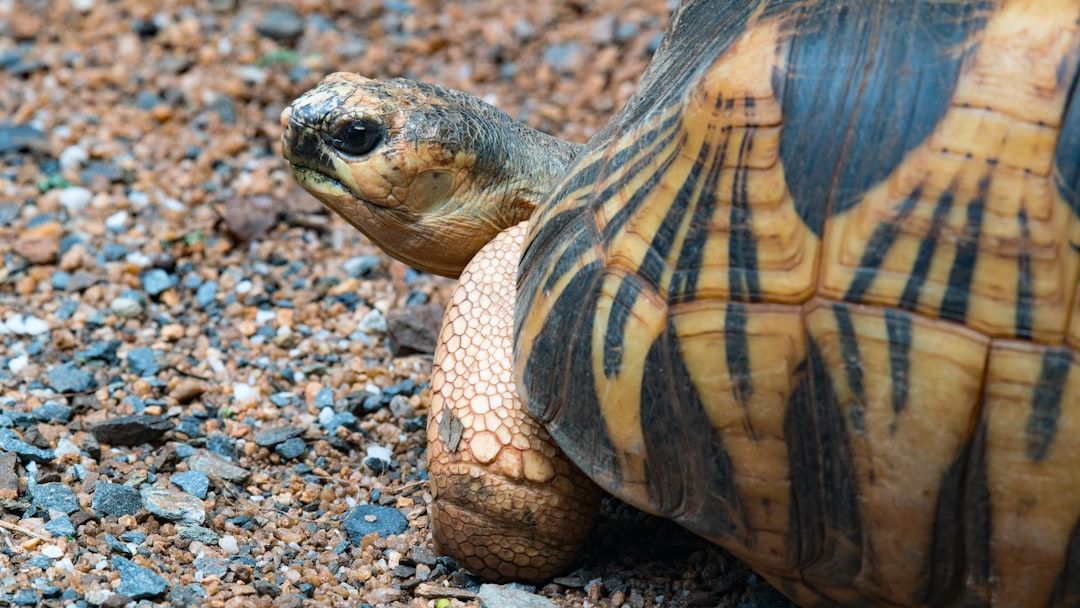
Think you know turtles? These ancient creatures have survived for over 200 million years, yet most people remain completely unaware of their staggering diversity. While painted turtles and snapping turtles might come to mind first, there exists an entire universe of shelled wonders so bizarre, so visually stunning, and so secretive that they seem almost mythological.
Here’s the thing: turtles aren’t just dull brown reptiles lounging on logs. Some breathe through their rear ends, others sport punk rock hairstyles made of algae, and a few have gone practically extinct before scientists even had a chance to study them properly. Let’s dive into the fascinating and sometimes heartbreaking world of turtles you probably never imagined existed.
The Mary River Turtle: Nature’s Green-Haired Rebel
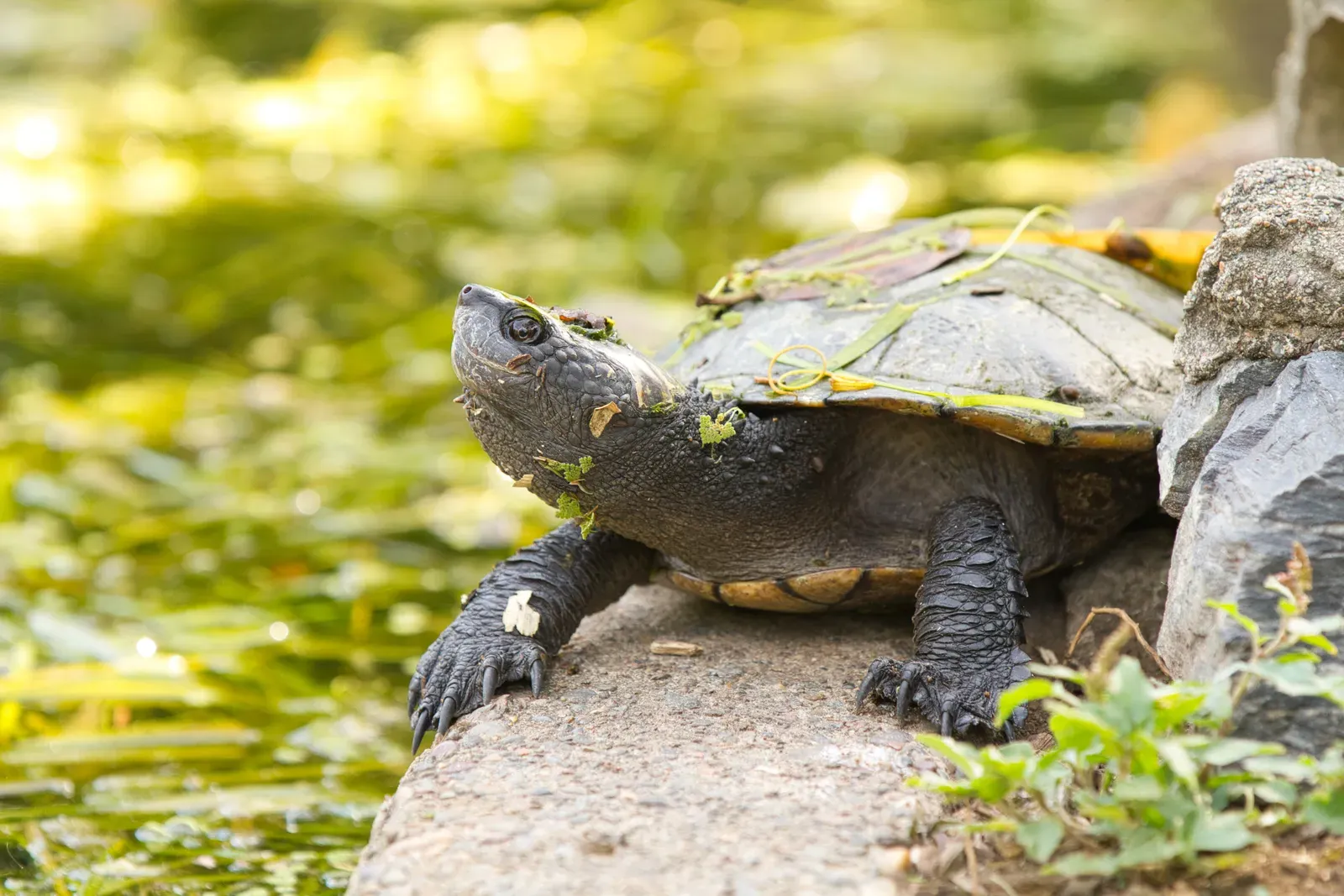
Known as the “punk rock turtle” for the green “hair” on its head – which is really algae – this crazy-looking turtle is sadly endangered. It’s hard to say for sure, but the Mary River turtle might just be the most Instagram-worthy reptile on the planet, even if it doesn’t realize it.
Living only in the Mary River in Queensland, Australia, this turtle has other strange features including two whisker-like spikes on its chin, large blue eyes, long claws, and the ability to breathe through its genitals – that is, the opening in its behind that’s used for excretion and reproduction. Yes, you read that right. The Mary River turtle has specialized glands located in its cloaca, aka the opening reptiles use for reproduction and excretion, that allows it to breathe underwater for extended periods of time – up to 72 hours! This bizarre adaptation lets the turtle stay submerged far longer than most species, hunting and hiding without needing to surface constantly. Think of it as having an underwater snorkel built into a rather unexpected place.
Yangtze Giant Softshell Turtle: Racing Against Time
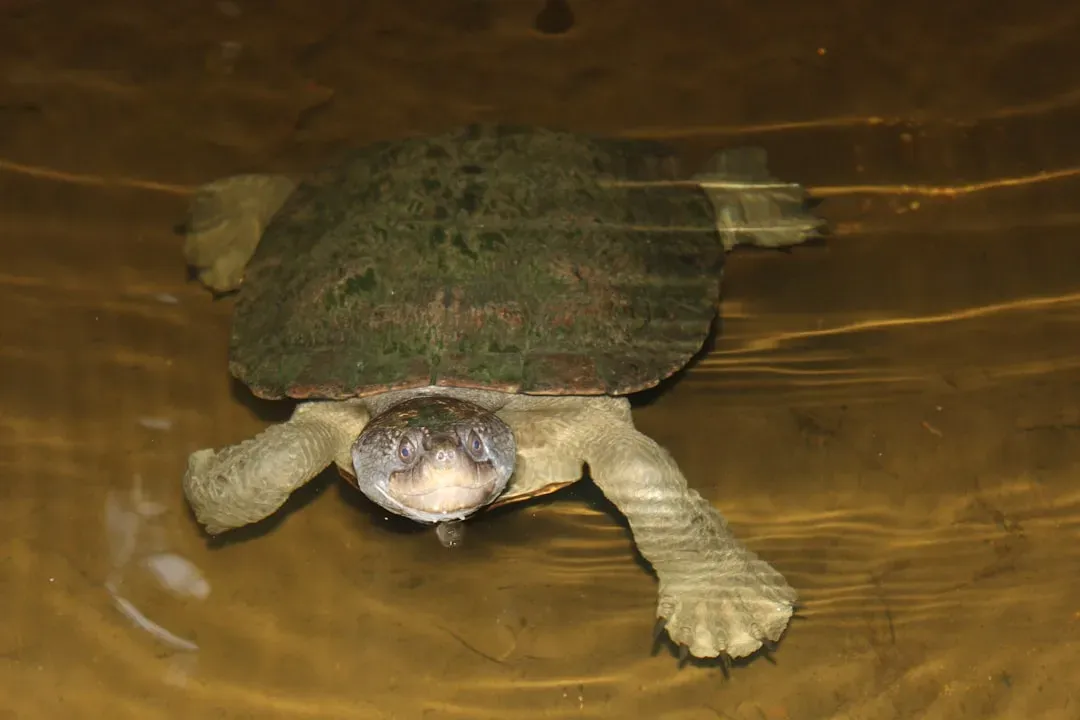
Only two or three individuals of the Yangtze softshell turtle are known to exist; the last known female died in 2023, rendering the species functionally extinct. Let’s be real, this is heartbreaking. Imagine being one of the last three members of your entire species on Earth.
Scientists have developed and tested a portable environmental DNA kit to help detect the presence of the Yangtze softshell turtle (Rafetus swinhoei) in large bodies of water. With the help of this tool, they hope to find any as-yet-unknown turtles that might be swimming around undetected in the lakes of Vietnam. This finding brings new hope, with the possibility of bringing wild animals together in a controlled environment for captive breeding. The race is on to locate any hidden individuals before it’s truly too late. Conservationists are literally scouring vast lakes, searching for genetic traces in the water, hoping against hope that a female exists somewhere out there.
Geometric Tortoise: Living Art Under Threat
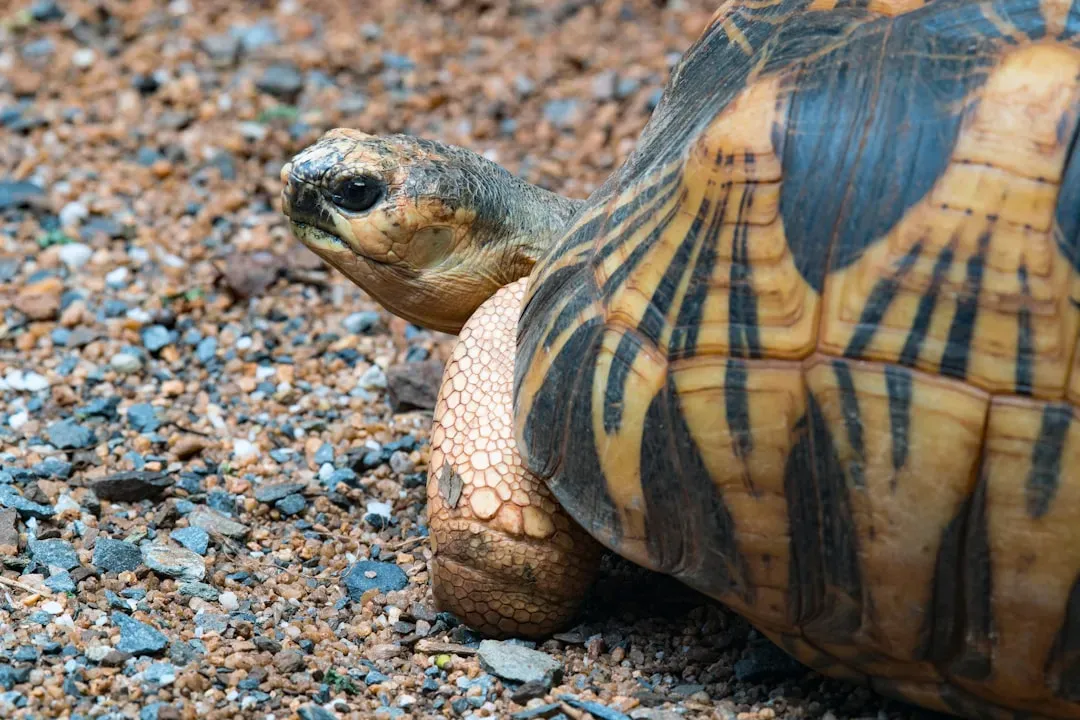
This tiny, five inch-long tortoise has one of the coolest shells in existence, with an intricate black and yellow pattern that helps it blend in with its surroundings. When you see one, it looks like someone meticulously painted precise geometric designs across its carapace. Nature really outdid itself with this one.
It lost around 90 percent of its habitat in the shrub-lands of its native Western Cape Province of South Africa due to agriculture and urbanization. The population of these cute animals was further diminished by widespread wildfires in the region. The Turtle Conservancy estimates there may be fewer than 1,000 individuals left in the wild, so they’ve set up a turtle preserve there to help save the species. The geometric tortoise is fighting for survival in one of the world’s most transformed landscapes. What once was sprawling shrubland is now mostly farmland and suburbs.
Matamata Turtle: The Master of Disguise
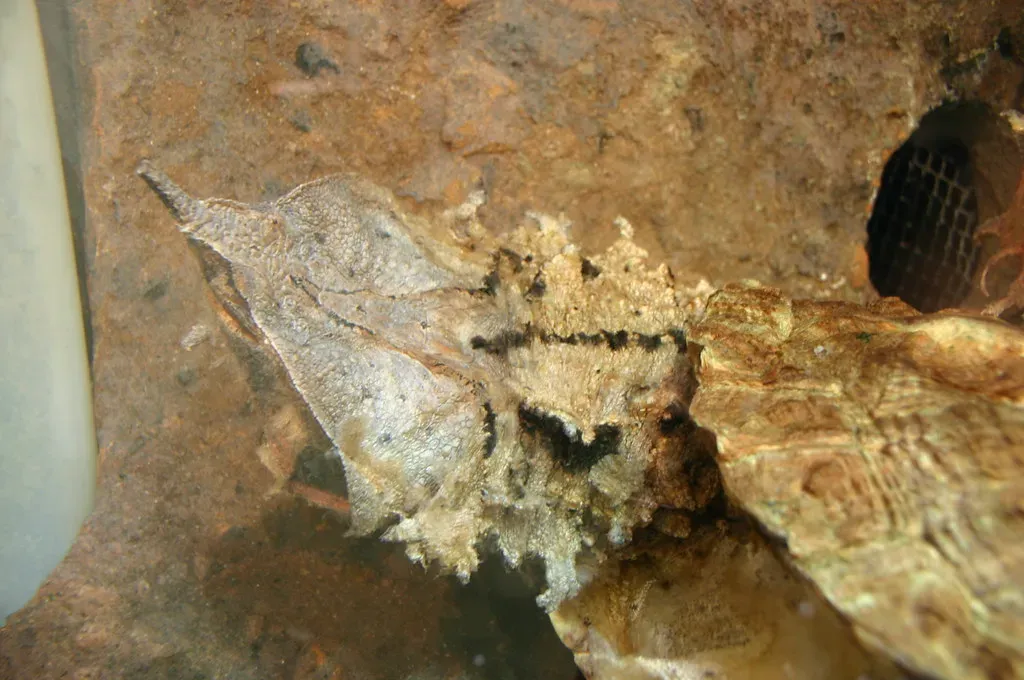
These bumpy, strangely shaped turtles look like a pile of rocks and leaves to help them blend into the murky shallow pools they inhabit in the Amazon of South America. This allows them to use a sneak attack on the unsuspecting fish that make up their diet. Honestly, if you spotted one sitting on the riverbed, you’d probably swim right past without noticing.
The matamata’s flat and triangular head has a long snout at the end that the turtle can stick out of the water to breathe through, kind of like a snorkel. Matamata is fairly big, growing to a foot and half and weighing nearly 40 pounds. Scientists just discovered, in April 2020, there are actually two species of Matamata turtle, which evolved along different paths 13 million years ago. The discovery that there are actually two distinct species means each population is smaller than previously thought, which could shift their conservation status dramatically. Their unique, almost prehistoric appearance also makes them vulnerable to illegal collectors who want them for private displays.
Pig-Nosed Turtle: The Freshwater Oddball
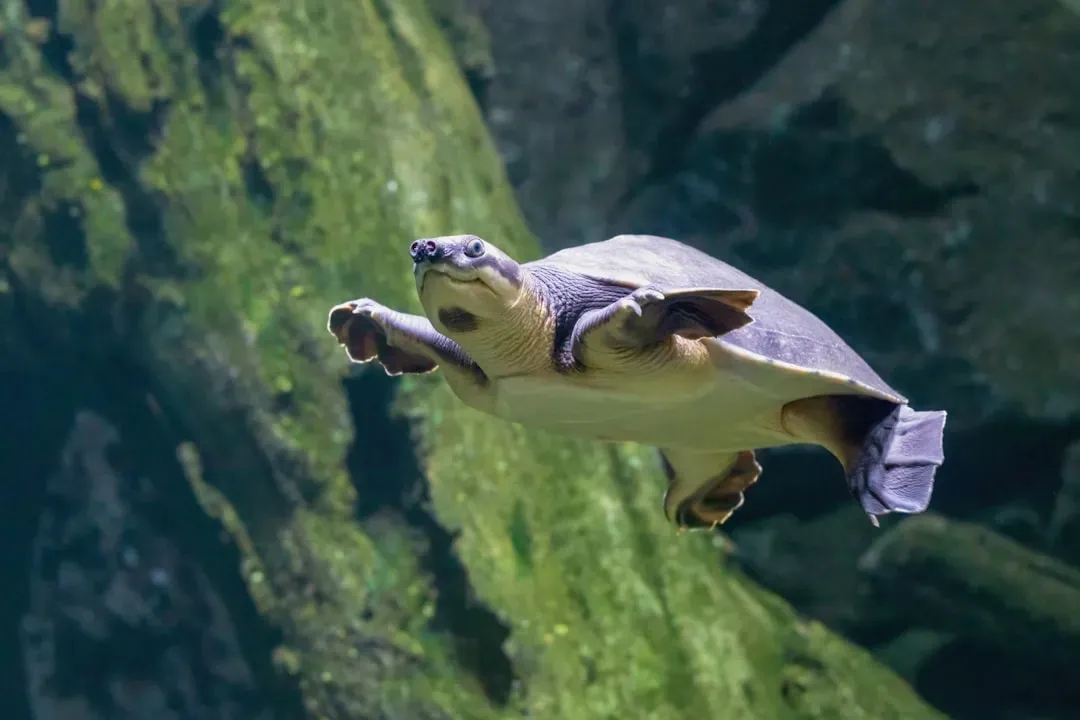
As its name suggests, this endangered turtle has a very unique snout, which pokes out of the water to breathe while the rest of its body remains hidden below the surface. It also has flippers, similar to a sea turtle, and leathery skin like a soft-shell turtle. It’s like evolution couldn’t decide what kind of turtle to make, so it just borrowed features from several different types.
The pig-nosed turtle is quite large, at over two feet long and up to 30 pounds. Also called the Fly River turtle, it’s native to warm freshwater in Papua New Guinea, parts of Australia, and Indonesia – in fact, it only leaves the water to nest. This species spends nearly its entire life submerged, which makes it particularly vulnerable to water pollution and habitat changes. The pig nose isn’t just for show, it’s a highly effective breathing apparatus that lets the turtle stay mostly hidden from predators.
Roti Island Snake-Necked Turtle: The Serpentine Marvel
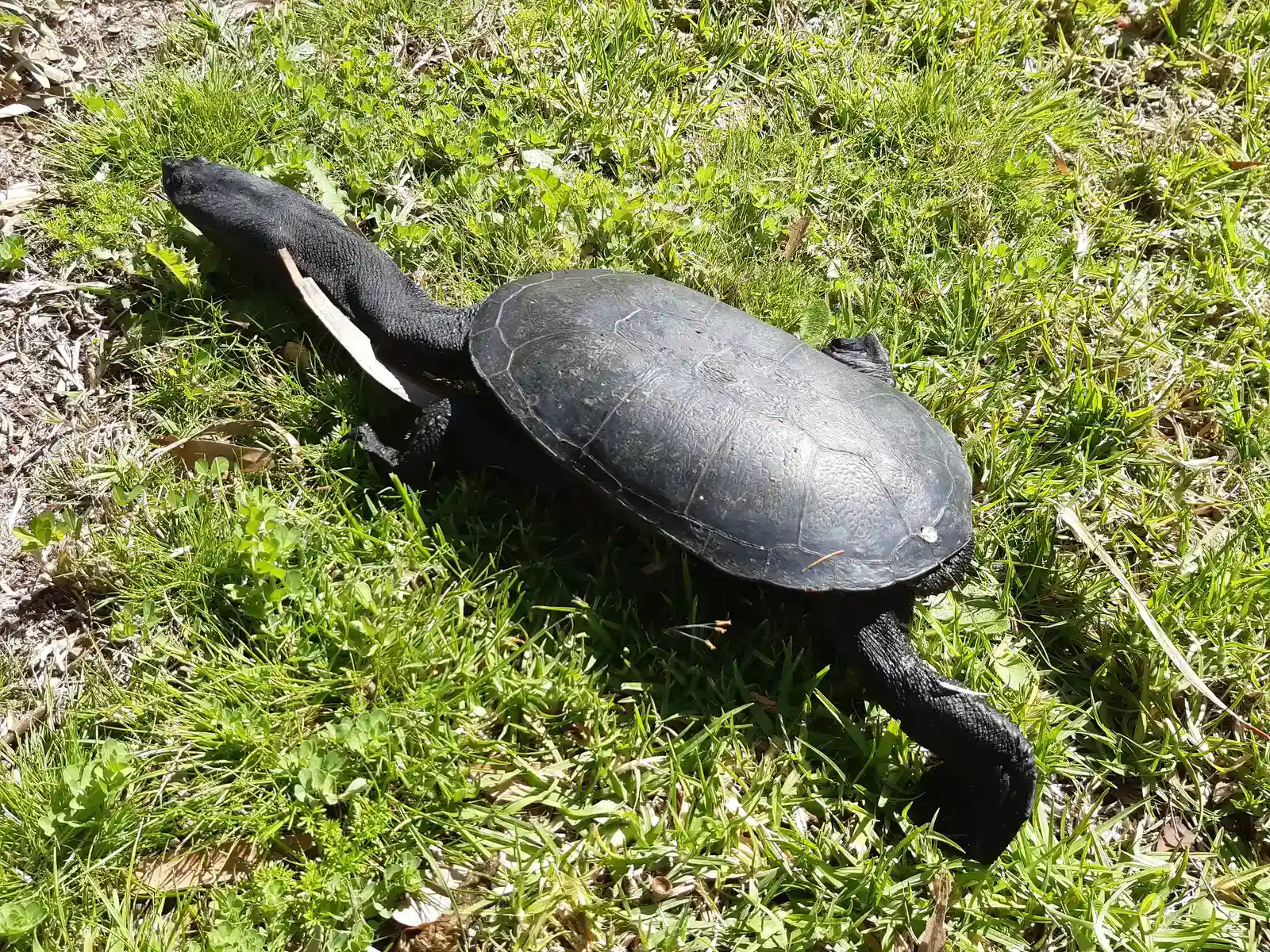
The Roti Island snake-necked turtle is a freshwater species that exists only on the Indonesian island of Rote and East Timor. Its serpentine neck is so long that it can’t even retract its head directly into its shell; it has to wind its neck up sideways. I know it sounds crazy, but imagine having a neck so absurdly long that folding it normally just isn’t an option.
This rare reptile is critically endangered, but WCS Indonesia is trying to stabilize the population by reintroducing the turtles to their natural habitat and setting up a breeding center right on Rote. The pet trade nearly wiped this species out completely, with collectors fascinated by its unusual appearance. Local breeding programs represent one of the last hopes for these creatures, though their extremely limited range makes recovery particularly challenging.
Flattened Musk Turtle: Alabama’s Hidden Treasure
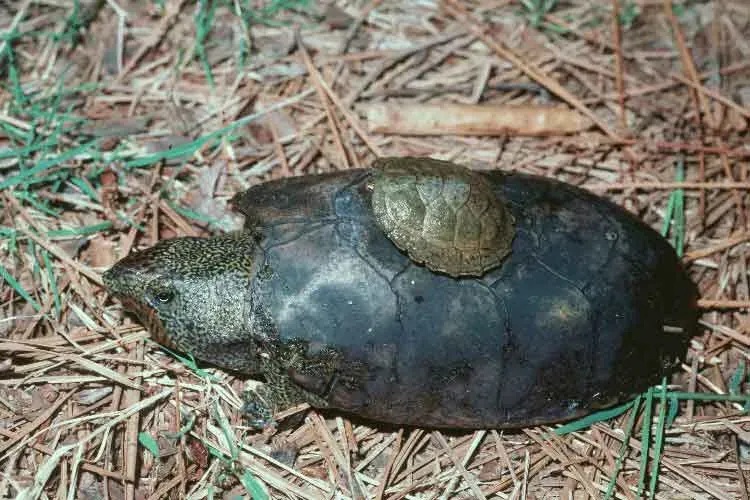
My breath catches at the sight of the rarest turtle on the continent, which is just one representative of the incredible array of life that exists in Alabama, a global hotspot of freshwater diversity. This federally endangered species is only found here in the state’s Black Warrior rivershed, whose tributaries unfurl around Birmingham and spill into six counties. Most people don’t realize Alabama harbors such unique biodiversity, yet here we are.
Flattened musk turtles are endemic to the Black Warrior watershed of Alabama. Today, only two strongholds remain. Jenkins prefers not to disclose the exact streams because of the other threat to the already beleaguered species: poaching. Historically, flattened musk turtles lived all over this watershed in incredible abundance, using their shells, which look like someone gently took a rolling pin to them, to slip into underwater rocky cervices. Their flattened profile isn’t just quirky, it’s survival. These turtles can squeeze into rock crevices that other predators simply cannot access.
Spiny Turtle: The Spiked Defender
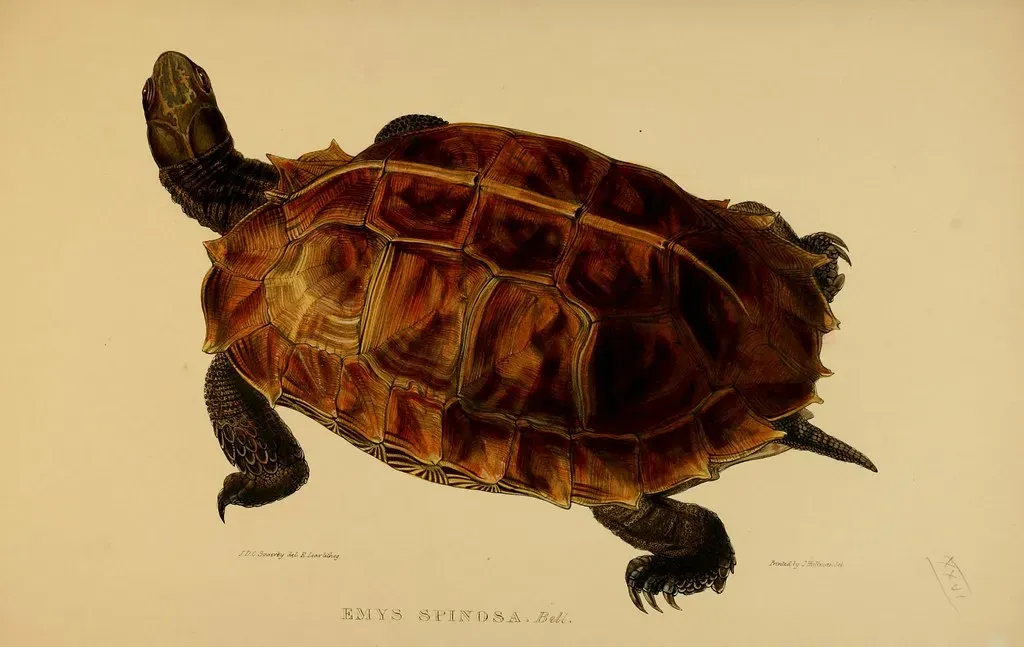
This endangered turtle is so named because when it’s young, it has pointy spikes on the outer rim of its shell as a defense mechanism and also to help it blend in with leaves on the forest floor. Its spikes, though, fade with age. Young spiny turtles look like miniature medieval shields equipped for battle.
Native to Thailand, the Malay Peninsula, and Indonesia, the spiny turtle lives near rainforest streams, but is vulnerable to the illegal wildlife trade for its unique shell, and also as food or pets. The International Union for Conservation of Nature (IUCN), though, notes that trade seems to have declined in Indonesia despite high demand. The decline in trade offers a small glimmer of hope, though habitat destruction continues to threaten remaining populations. As rainforests shrink, so do the cool, clear streams these turtles depend on.
Bog Turtle: North America’s Tiny Gem
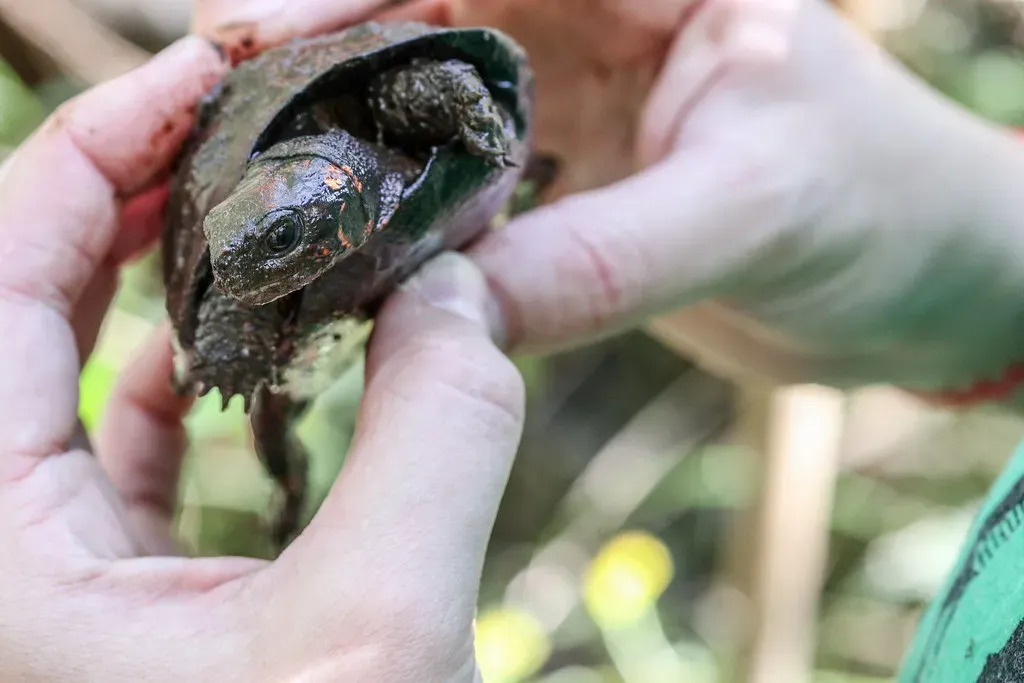
Bog turtles might not be exactly exotic, as they live in the eastern United States, but they are one of the rarest turtles in the country. Listed as critically endangered as a whole by the IUCN (states may rank the status by their local population), the tiny turtles are a victim of habitat loss and illegal collecting. These animals also hold the distinction of being the smallest turtle in North America, at only four inches long. Something this small and rare feels almost mythical when you encounter one.
They love to live in the mud, but you might spot them by their bright orange patches on either side of their head. Those distinctive orange spots make them stand out, which unfortunately also makes them appealing targets for collectors. Wetland drainage across the eastern United States continues to eliminate the specialized boggy habitats these turtles require, leaving fragmented populations struggling to survive.
Pascagoula Map Turtle: The Contour-Marked Wonder
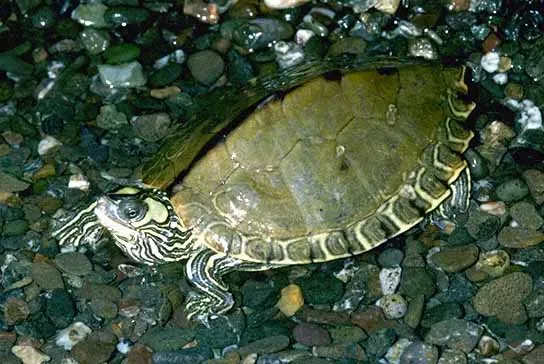
These small but brightly colored turtles with distinctive spiny ridges on their shell, and yellow lines around its head and body, live only around the Pascagoula River in southeast Mississippi. Also called a yellow-blotched sawback, its shell features concentric rings that look like contour markings on a map, and the outer rim of its shell looks like a series of sharp teeth. The patterns are so precise they genuinely resemble topographic maps.
It’s listed as a vulnerable species, but that’s actually a step up from its previous categorization of endangered. This represents one of those rare conservation success stories where targeted protection efforts have made measurable improvements. Still, the species remains restricted to a single river system, which means any major pollution event or habitat alteration could prove catastrophic.
Big-Headed Turtle: The Unconventional Climber
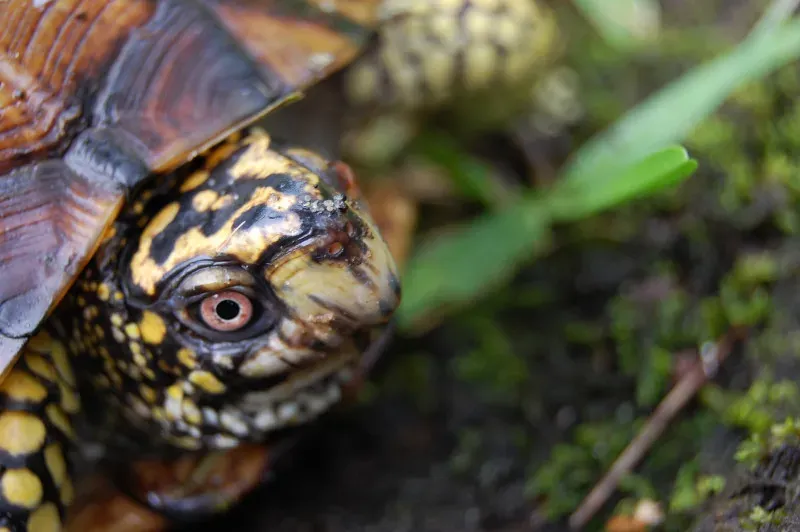
It also has an enormous head. The big-headed turtle has a skull made of solid bone, making it impossible to withdraw its oversized, triangular head into its shell. Located throughout southeast Asia, the big-headed turtle is the only species in its family, Platysternidae, and its numbers are dwindling. Having a head too big to hide seems like a serious evolutionary disadvantage, yet these turtles have persisted for millions of years.
This turtle enjoys rugged terrains. It’s an excellent climber, one that gravitates towards rocky mountain streams rather than shallow swamps. Unlike most turtles that prefer calm, muddy waters, big-headed turtles scale rocks and navigate rushing currents with surprising agility. Their powerful jaws and clawed feet make them adept at gripping slippery surfaces, turning their oversized head into less of a liability in their specialized mountain habitat.
Indian Star Tortoise: The Living Starburst
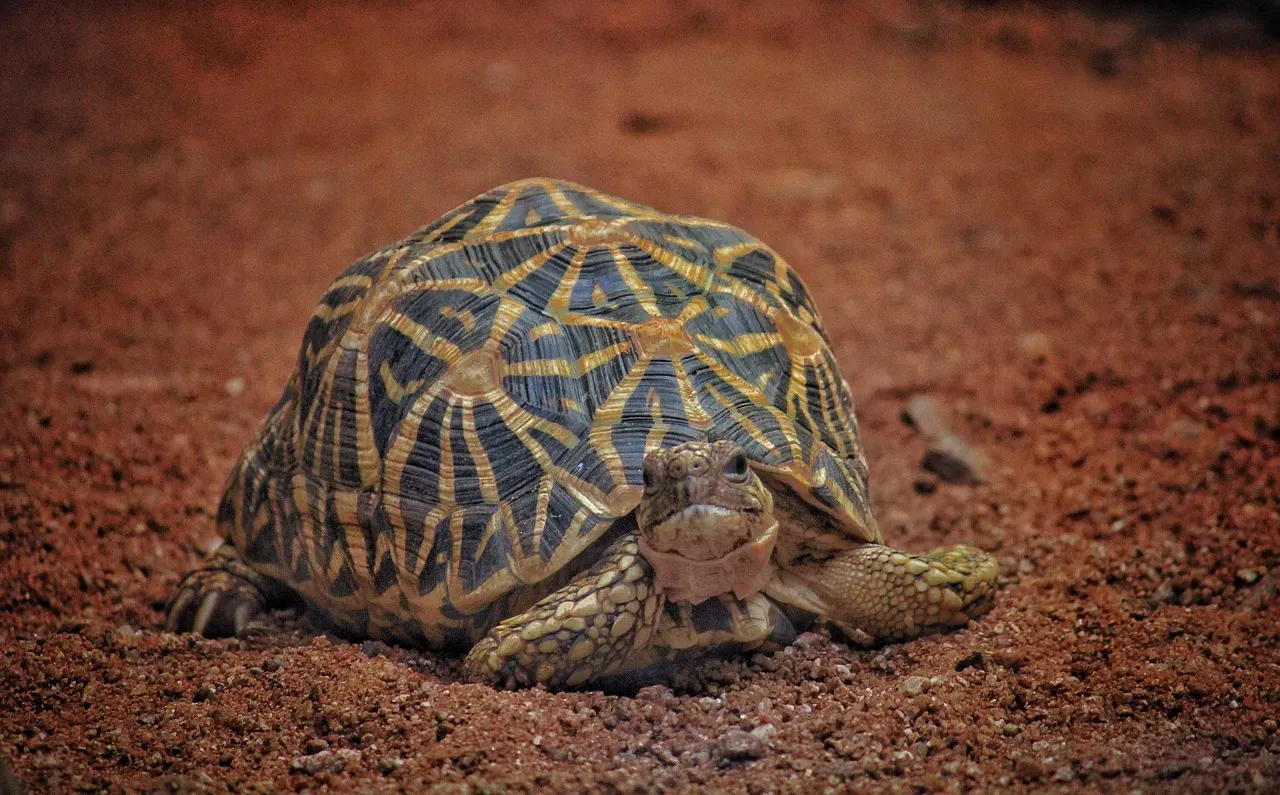
Native to dry regions of India, Pakistan, and Sri Lanka, these medium-sized tortoises typically reach 7-12 inches and display dramatic geometric patterns that function as natural camouflage in their grassland habitats. Each segment of the shell radiates yellow lines from a central point, creating dozens of miniature star patterns across the entire carapace.
Potential keepers should be aware that Indian Stars are protected by CITES Appendix I regulations in most of their range, making it essential to purchase only captive-bred specimens with proper documentation to ensure legal ownership. The illegal wildlife trade has hammered wild populations, with thousands smuggled annually to supply international pet markets. The striking appearance that makes these tortoises so beautiful also makes them highly sought after, creating a vicious cycle of poaching pressure despite legal protections.
Leatherback Sea Turtle: The Deep-Diving Giant
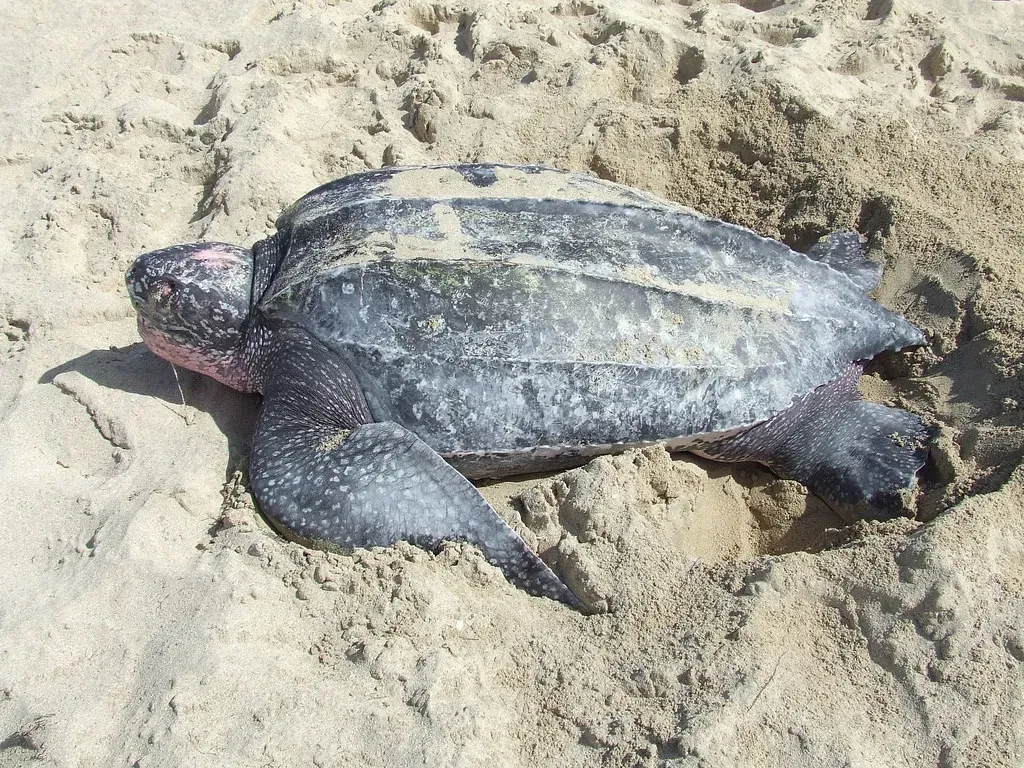
These amazing ocean creatures are the largest turtle currently alive on Earth, and they undertake the longest migrations of any reptile, across both the Pacific and Atlantic Oceans. With a leathery back instead of a hard shell, which is more flexible for swimming, the huge leatherback can be up to 2,000 pounds and over six feet long. Their size alone is staggering, dwarfing every other turtle species.
The largest of the sea turtles, leatherback turtles can reach over 1.8 m (6 ft) in length and nearly 640 kg (1,410 lbs) in weight. During their long migrations, leatherbacks regularly dive to depths greater than 1,000 m (3,281 ft) in search of gelatinous zooplankton to eat. These depths exceed those reached by many submarines. The pressure at those depths would crush most creatures, yet leatherbacks navigate them with ease, hunting jellyfish in the dark, cold water where few other predators venture.
Conclusion: Protecting Our Shelled Treasures
The turtle species we’ve explored represent just a fraction of the remarkable diversity still clinging to existence on our planet. From turtles breathing through their cloacas to giants diving deeper than most submarines, these creatures demonstrate evolution’s endless creativity. What strikes me most is how many of these species teeter on the edge of extinction, victims of habitat loss, illegal trade, and human indifference.
More than half of the approximately 350 current turtle species in the world are threatened with extinction. That statistic should shake us. These animals survived the dinosaurs, endured ice ages, and adapted to countless environmental shifts over millions of years, yet they may not survive us.
Conservation efforts offer hope, from environmental DNA testing to find hidden individuals, to breeding programs working against impossible odds. Each rediscovered turtle, each successful hatchling, each protected wetland represents a small victory. The question remains whether we’ll act quickly enough and decisively enough to preserve these extraordinary creatures for future generations. What do you think it would take to truly protect these vanishing species? Tell us in the comments.

- 16 Horse Breeds That Vets Say Are Nearly Impossible to Recommend to Beginners Anymore - June 13, 2026
- 6 Signs Your Home Has a Spider Infestation - June 13, 2026
- 8 Things You Should Never Do When Hiking In Angel’s Landing - June 13, 2026