
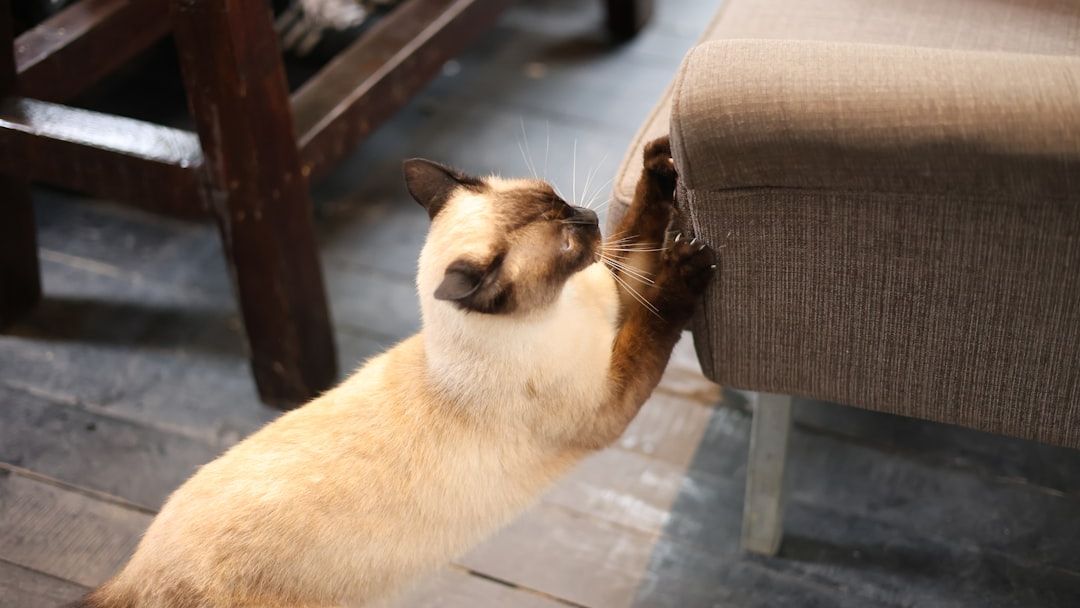
You’ve walked into your living room for the hundredth time and spotted yet another set of fresh claw marks dragging down the side of your sofa. Frustration sets in as you stare at your cat, who seems completely oblivious to the destruction. Maybe you’ve already bought a scratching post, yet your cat ignores it entirely while your furniture continues to suffer. This is the story for so many cat owners, and honestly, it feels like a losing battle.
Here’s the thing, though. There’s actually one simple trick that most people overlook, and it’s a total game changer. It’s not about buying the most expensive cat tower or using some magic spray. The secret lies in something far more strategic, and once you understand it, you’ll wonder why you didn’t figure it out sooner. Let’s dive in.
Understanding Why Cats Scratch in the First Place
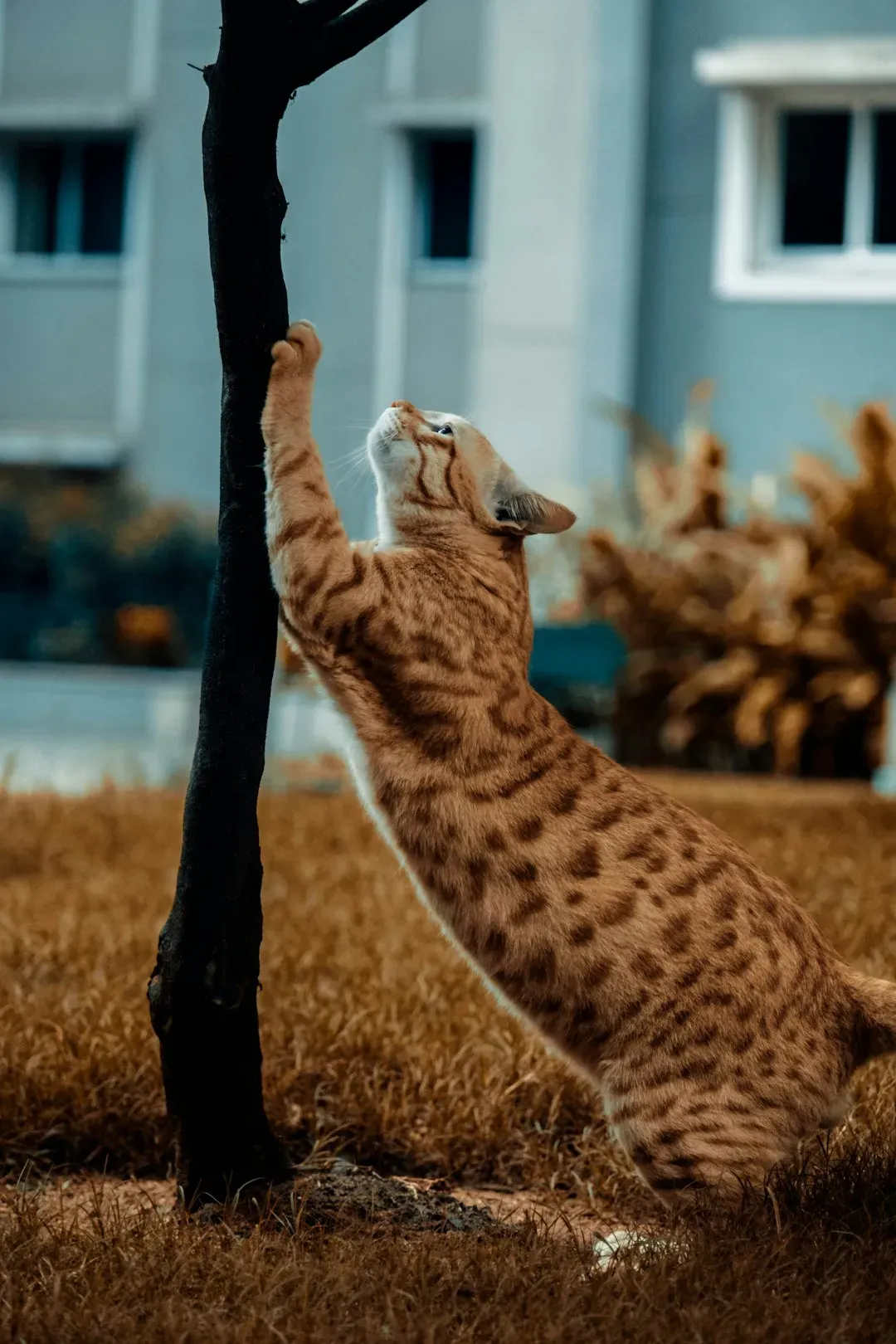
Before we get to the solution, we need to talk about what drives this behavior. Cats scratch to mark territory and because their claws need regular sharpening to remove frayed, worn outer claws and expose new, sharper claws. Scratching is an essential exercise technique which serves to stretch and strengthen their upper bodies.
Think of it like your cat’s version of yoga and a manicure rolled into one. Cats’ paws have scent glands, so scratching is a way for them to mark their territory, and cats tend to scratch when they’re feeling excited or anxious. It’s not a vendetta against your couch. They’re just doing what nature programmed them to do. When you realize scratching isn’t misbehavior but a biological necessity, everything shifts.
The One Trick That Changes Everything: Strategic Placement
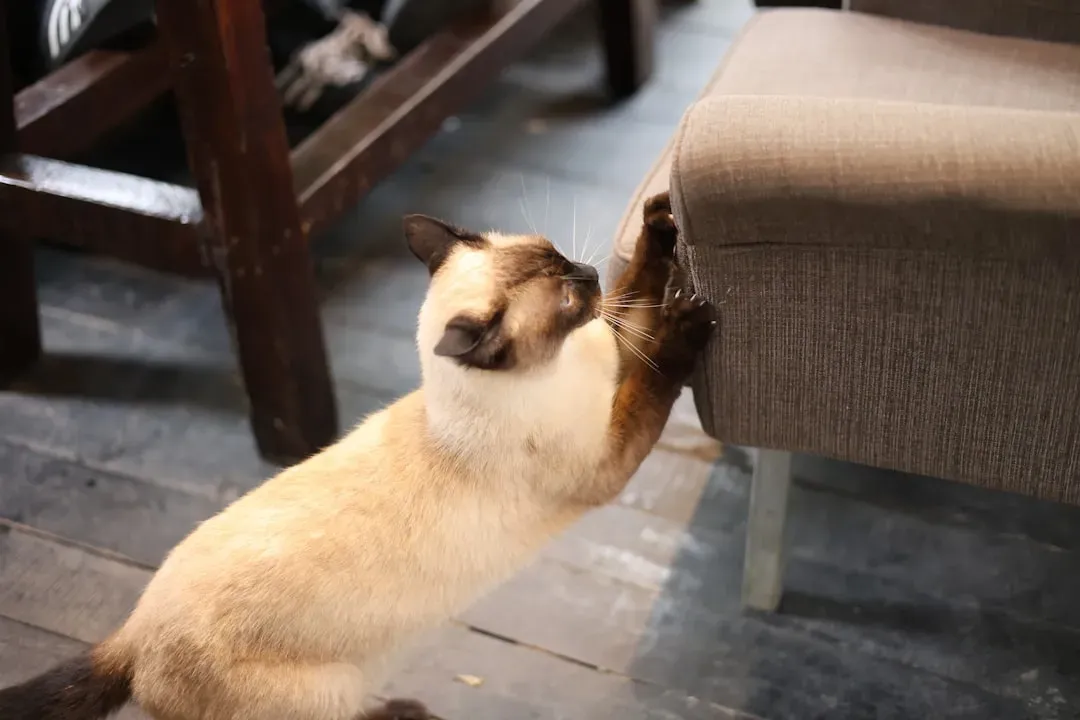
Let’s be real. This is where most cat owners get it completely wrong. Placement matters: Put scratchers where your cat already scratches. That’s it. That’s the trick.
You need to have more than one scratching post, and you want to put them in locations that your cat is likely to use them, which might mean right next to your couch if the couch is a place that your cat really enjoys scratching. I know it sounds almost too simple. You might be thinking, why would I put a scratching post right next to my already shredded armchair?
Because that’s where your cat wants to scratch. If you’re retraining a cat who is currently scratching a piece of furniture then the post should be placed right next to that object. You’re not hiding the post in a corner where you think it looks nice. You’re putting it exactly where your cat has already told you they prefer to scratch. It’s brilliant because you’re working with their instincts, not against them.
Choosing the Right Scratching Surface
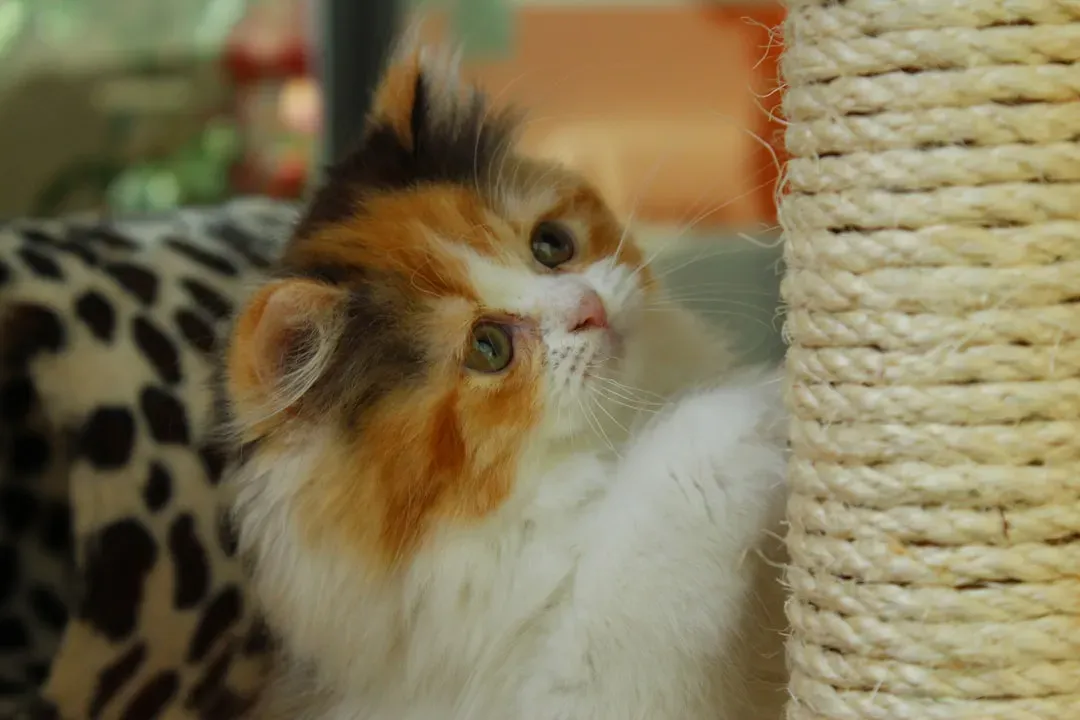
Now, placement alone won’t do the job if you’re offering your cat a scratching post they hate. Match your cat’s preferences with the right scratching materials like sisal, cardboard, wood, or carpet and orientations such as vertical versus horizontal.
Sisal is typically the best choice because it’s rough, durable, and the cat can get an effective and satisfying scratch. Some cats go crazy for cardboard, while others want something that feels more like tree bark. Cats prefer shredded and torn objects because they can really get their claws into the material, and used posts will appeal to your cat because they smell and look familiar.
The key is observation. What is your cat currently destroying? If it’s your carpet, try a horizontal cardboard scratcher. If it’s the corner of your fabric sofa, look for something with a similar texture. Don’t just buy what looks cute to you.
Height and Stability Matter More Than You Think
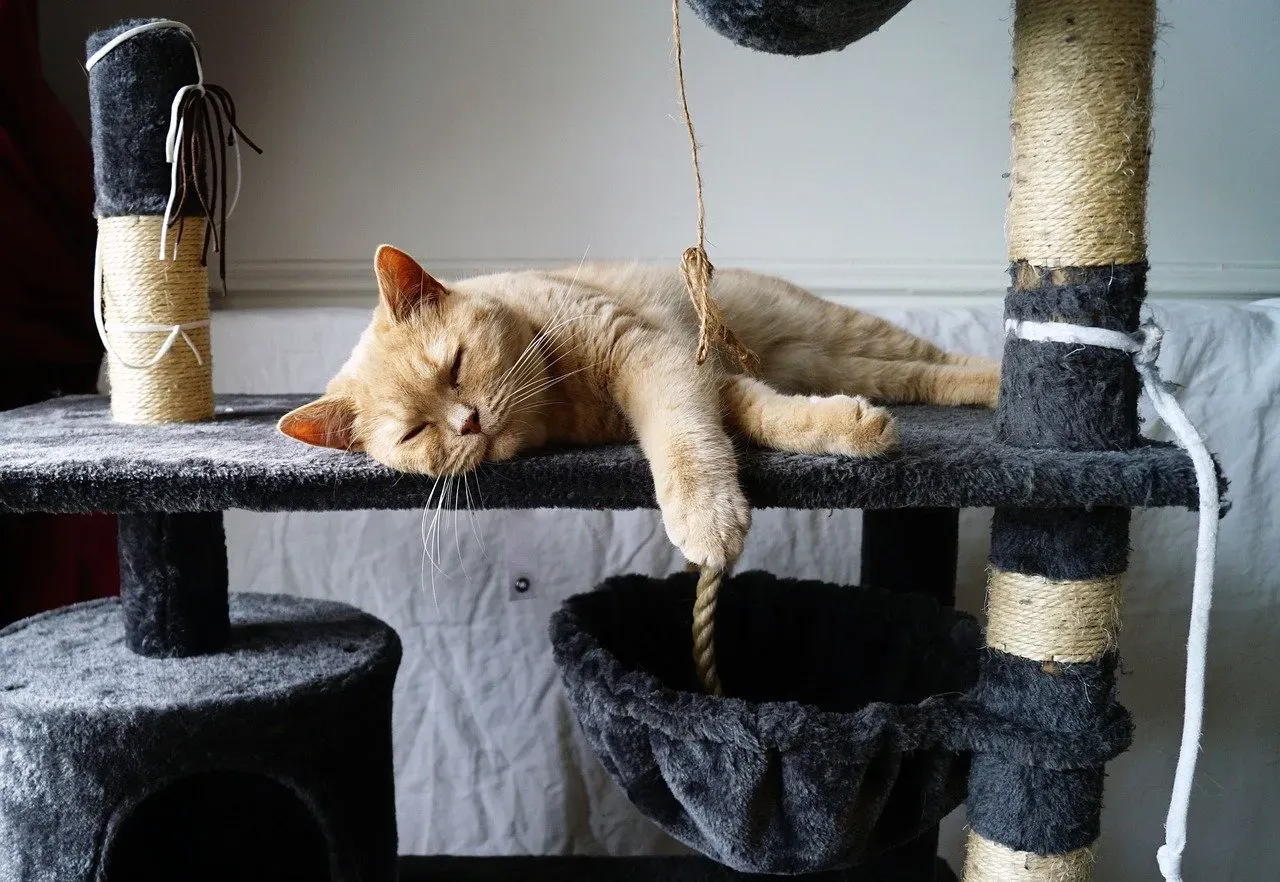
The scratching post should be tall enough to allow your cat to fully extend while scratching, which means your cat can stretch his body out fully and pull those back and shoulder muscles. All cats want a sturdy post that won’t shift or collapse when used, and most cats also like a post that’s tall enough that they can stretch fully.
A wobbly post is useless. If the scratching post is wobbly or unstable, your cat will head right back to that trusty old sofa because he has to be able to lean his full weight against the post without having it topple over. Imagine trying to stretch on a yoga mat that keeps sliding away. You’d give up too.
The scratching post should be tall enough for your cat to stretch out fully, with 30 inches being a good height to aim for. Taller posts need wider, heavier bases to prevent tipping. This isn’t optional. Stability is non-negotiable if you want your cat to actually use it.
Making the Furniture Less Appealing While You Retrain
Here’s where you double down on your strategy. While you’re introducing the perfectly placed scratching post, you also need to make the furniture temporarily unappealing. Use humane deterrents like double sided tape or aluminum foil, and scents like menthol or citrus also work well because cats are not big fans.
Cover the inappropriate objects with something your cat will find unappealing, such as double sided sticky tape, aluminum foil, sheets of sandpaper or a plastic carpet runner with the pointy side up. This creates a situation where scratching the furniture becomes unpleasant, while scratching the post right next to it is satisfying and rewarding.
Try sprinkling catnip on the post or giving your cat high-value treats or praise each time they use the scratching post instead of your furniture. Positive reinforcement accelerates the learning process. Catch them using the post and make it rain treats. They’ll connect the dots fast.
Conclusion: It’s All About Working With, Not Against, Your Cat
The biggest mistake cat owners make is assuming their cat will magically discover and love a scratching post tucked in the guest bedroom. You cannot and should not stop a cat from scratching altogether, but you can help cats fulfill their natural need to scratch by redirecting their behavior because the goal is to redirect the behavior, not try to stop it.
Strategic placement is the game changer. Put the post where your cat already scratches, make sure it’s tall and sturdy, match the material to what they’re already shredding, and temporarily deter them from the furniture. That’s the trick. It’s not rocket science, but it works because you’re respecting your cat’s instincts instead of fighting them.
What’s your biggest struggle with cat scratching? Have you tried placing the post right next to the furniture they love to destroy? Let us know in the comments.

- The Pet Your Zodiac Sign Would Rescue Without Hesitation - August 16, 2026
- 7 US States Where Mountain Lions Are Closer Than You Think - August 16, 2026
- 10 US States With the Highest Black Bear Populations - August 16, 2026