

Something is going wrong at the bottom of the world, and it’s happening faster than most people realize. Emperor penguins, those iconic, impossibly majestic creatures that brave Antarctica’s brutal winters, are now facing a crisis that scientists are only beginning to fully map from space.
What satellite imagery is revealing about their breeding grounds is both fascinating and deeply unsettling. The scale of the threat, the speed of the change, and the sheer vulnerability of these birds to forces completely outside their control makes this one of the most urgent wildlife stories unfolding right now. Let’s dive in.
A View From Space That Changes Everything
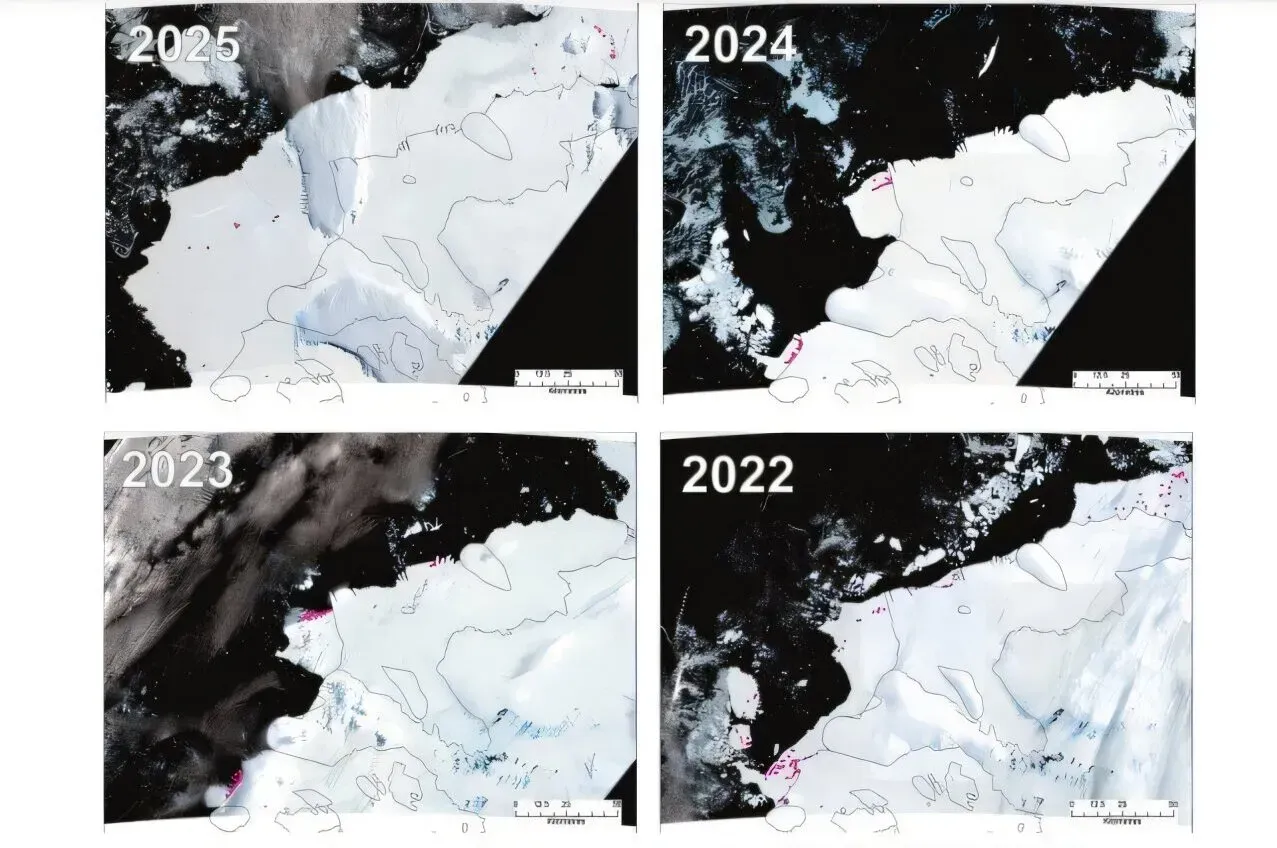
Here’s the thing about satellite technology – it lets scientists see what no human could physically witness at the edge of the Earth. Emperor penguins breed on sea ice in some of the most remote, inhospitable regions of Antarctica, where sending research teams is extraordinarily difficult and expensive. That’s precisely why satellite imagery has become such a game-changer for monitoring these colonies.
Researchers analyzing high-resolution satellite images have been able to track penguin colonies by spotting the large brown stains – yes, guano patches – that penguins leave on the ice. It sounds almost comical, but it works remarkably well. The size and density of these patches give scientists reliable estimates of colony populations without ever setting foot on the ice.
What the latest imagery is showing, however, is deeply alarming. The data points to dramatic shifts in sea ice conditions that are directly threatening where and whether these penguins can successfully breed each season.
Sea Ice Collapse Is Hitting Breeding Grounds Hard
Emperor penguins are extraordinarily dependent on stable sea ice. They need it solid and intact throughout their entire breeding cycle, which runs from around April to January. Chicks that haven’t yet developed their waterproof adult feathers simply cannot survive if the ice beneath them breaks up too early.
In recent years, Antarctica has experienced record low sea ice extents, particularly around 2023, which sent shockwaves through the scientific community. The 2023 Antarctic sea ice minimum was so far below historical averages that researchers described it as statistically staggering, almost outside the range of natural variability. The consequences for penguin colonies nesting on that ice were severe.
Satellite images confirmed what many feared: chicks at multiple colonies were lost when the ice broke apart before they were ready to fend for themselves in open water. Honestly, it’s hard to overstate just how catastrophic that kind of event is for a species that already reproduces slowly, raising just one chick per breeding pair per year.
Which Colonies Are Most at Risk
Not all emperor penguin colonies face the same level of danger. Location matters enormously. Colonies situated in areas where sea ice has become increasingly unstable are far more vulnerable than those in naturally sheltered bays or more stable ice zones.
The Bellingshausen Sea region, for instance, has been identified as particularly precarious. Colonies in this area have been monitored closely, and the satellite data paints a troubling picture of repeated breeding failures correlated with poor ice conditions. It’s almost like watching a slow-motion catastrophe unfold frame by frame.
Meanwhile, some colonies in more sheltered regions of the Weddell Sea appear to be holding on more steadily. I think it’s important not to flatten the story into a single dire narrative, because the reality is complex and geographically varied. Still, the overall trend is deeply concerning even when accounting for localized stability.
The Role of Climate Change in This Crisis
Let’s be real: this isn’t happening in a vacuum. The dramatic loss of Antarctic sea ice is directly linked to rising global temperatures driven by human activity. Scientists have been modeling these scenarios for years, and the projections were grim. The actual observations are now matching, and in some cases exceeding, those worst-case scenarios.
Emperor penguins were formally listed as threatened under the U.S. Endangered Species Act in 2022, specifically because of the projected impact of climate change on their sea ice habitat. That listing was based largely on climate models, but now the satellite imagery is providing hard, visual, real-world evidence that those models were right to be alarmed.
The relationship between global carbon emissions and penguin survival in Antarctica might seem remote and abstract, like saying your car exhaust affects a bird you’ve never seen on a continent you’ll never visit. But the connection is direct and measurable. Every fraction of a degree of warming shifts the odds further against these birds.
How Satellite Technology Is Transforming Penguin Research
The use of satellite imagery for wildlife monitoring is genuinely one of the coolest scientific tools of our time. Researchers use images from missions like the European Space Agency’s Sentinel satellites and commercial providers to identify, count, and track penguin colonies with remarkable precision. The resolution now available allows scientists to detect changes in colony size year over year.
What makes this approach so powerful is its consistency. Unlike field expeditions that depend on weather windows, logistics, and funding cycles, satellite monitoring can provide repeated, comparable data across seasons and years. It creates a kind of long-term visual archive of how these ecosystems are changing in real time.
The latest studies have used machine learning tools alongside satellite imagery to automate the detection of penguin colonies, dramatically speeding up analysis. This means that the scientific community can respond faster to emerging threats, which is more important now than ever before.
What Breeding Failure Actually Looks Like on the Ice
One of the more heartbreaking revelations from this research is the visual evidence of failed breeding seasons. When sea ice collapses prematurely, the satellite images show colonies where the guano stains simply disappear or shrink drastically from one season to the next, reflecting the loss of chicks and the dispersal of adults.
In 2022, following catastrophic sea ice loss, at least four colonies in the Bellingshausen Sea region experienced what researchers described as total breeding failure. That means essentially zero chicks survived to fledging. In species terms, that’s the equivalent of an entire generation simply being wiped out in one season.
It’s the kind of data point that stops you cold. A total breeding failure isn’t just a bad year for the penguins in that colony – it’s a permanent gap in the population. Emperor penguins live for roughly twenty years, but their replacement rate is low and slow, meaning populations can’t easily absorb repeated crashes.
What the Future Could Look Like for Emperor Penguins
Scientists have modeled multiple future scenarios for emperor penguins based on different global warming trajectories. If warming is limited to around 1.5 degrees Celsius above pre-industrial levels, which was the ambition of the Paris Agreement, the outlook is bad but potentially survivable for many colonies. At two degrees or beyond, the projections become catastrophic for the species as a whole.
The uncomfortable truth is that the world is currently on a trajectory that makes the more optimistic scenarios increasingly difficult to achieve. That doesn’t mean the situation is hopeless, but it does mean the margin for delay is essentially gone. Immediate and dramatic reductions in global emissions remain the single most important factor in determining whether emperor penguins have a viable future.
It’s worth sitting with the weight of that for a moment. The fate of one of the world’s most extraordinary animals is directly and measurably tied to decisions being made right now in boardrooms, legislatures, and energy markets around the world. The satellite images don’t lie, and what they’re showing us deserves far more attention than it typically receives.
A Species at a Crossroads
The satellite data has made one thing undeniably clear: emperor penguins are not facing a distant, hypothetical future threat. The threat is active, visible, and accelerating. These images represent some of the most direct, visual evidence yet that climate change is already reshaping life at the poles in profound ways.
I find it genuinely striking that some of the most compelling evidence for the real-world consequences of global warming comes not from a laboratory or a climate model, but from images of penguin poop disappearing from Antarctic ice. Science has a way of grounding the abstract in the achingly concrete.
The story of emperor penguins is ultimately a story about choices and consequences. The choices are ours. The consequences, so far, are largely theirs.
What does it take for us to truly act? That’s the question the satellite images are quietly, persistently asking – and it deserves an honest answer. What do you think we owe these birds? Share your thoughts in the comments.

- Urban Coyotes Show Remarkable Adaptability, Learning to Thrive in City Environments - July 22, 2026
- Beavers Are Nature’s Engineers, Creating Vital Habitats for Other Wildlife Species - July 21, 2026
- The Recovery of the California Condor Offers Hope for Other Critically Endangered Birds - July 21, 2026