
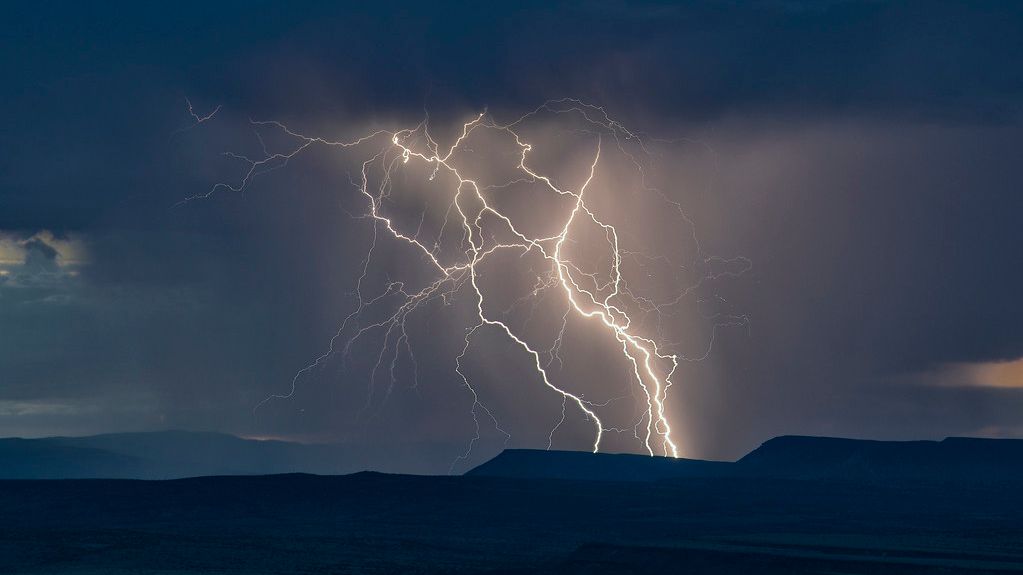
There is something both terrifying and strangely beautiful about a lightning bolt crashing into a forest. One moment, the trees are still. The next, the sky tears open and thousands of volts find their way to the ground through the nearest tall thing in the landscape. Most of us think of lightning as a single, dramatic event with one clear outcome. A tree gets hit, it burns, it falls. The end. Honestly, that picture couldn’t be more incomplete.
The reality of what happens when lightning meets a forest is far stranger, far more layered, and in some ways surprisingly life-giving. There are trees that die within seconds, others that quietly rot from the inside out over years, and remarkably, a handful of species that appear to actually benefit from being struck. The forest is a far more electric place than most of us ever imagine. Let’s dive in.
The Violent Physics of a Strike: What Actually Happens in That Millisecond
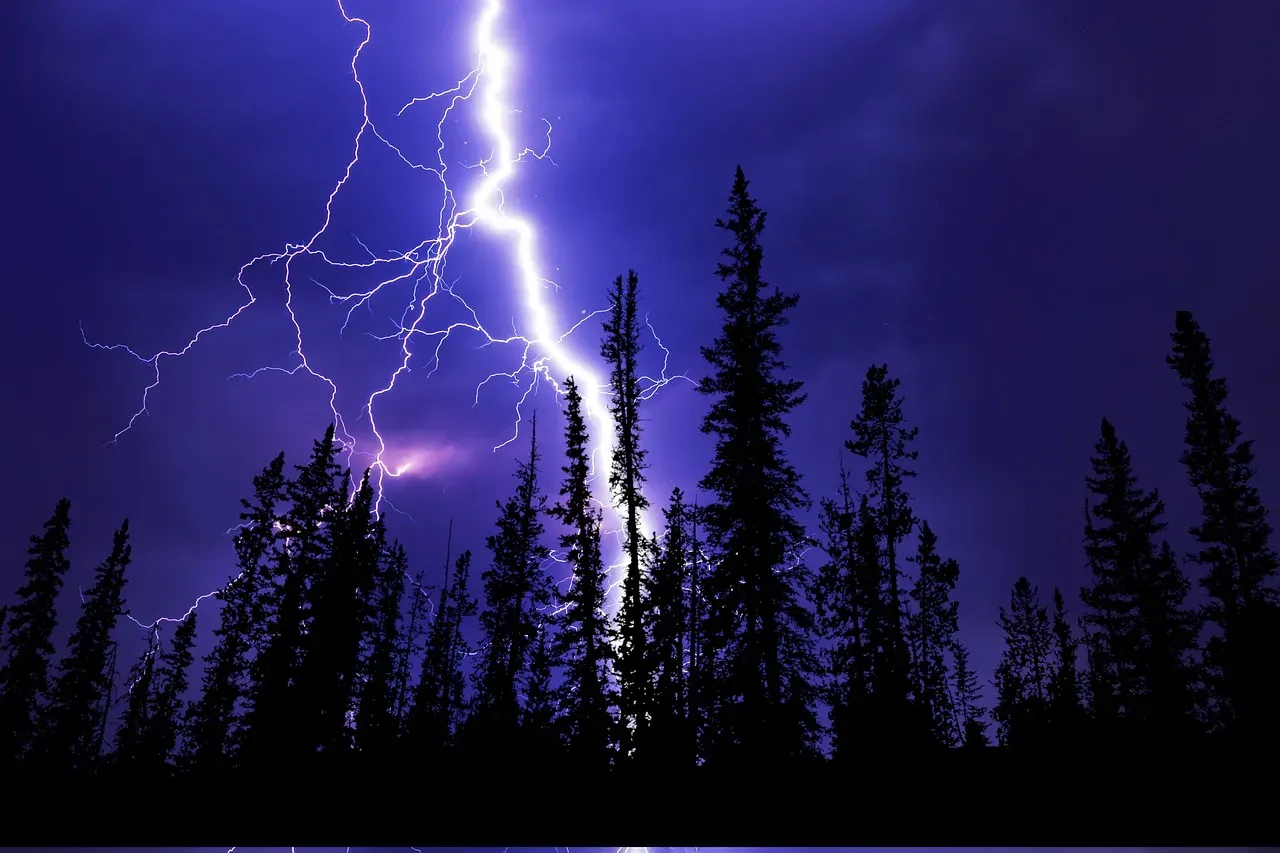
Most people picture a lightning bolt as a clean, Hollywood-style flash. The truth is far more violent. With up to 100 million volts and a temperature of up to 50,000 degrees Fahrenheit, lightning causes water and sap in a tree to boil and steam, blowing off the bark or causing wood fiber to explode. Think of it like a pressure cooker the size of a tree trunk, suddenly and explosively releasing everything at once.
Lightning, like electricity, follows the path of least resistance. While wood isn’t a great conductor, water and sap inside a tree increase its conductivity, as does water on the bark from rain. This is why a soaked tree during a storm can actually carry the charge down its wet exterior with surprisingly little internal damage, while a dry tree on a sunny afternoon can be reduced to shards.
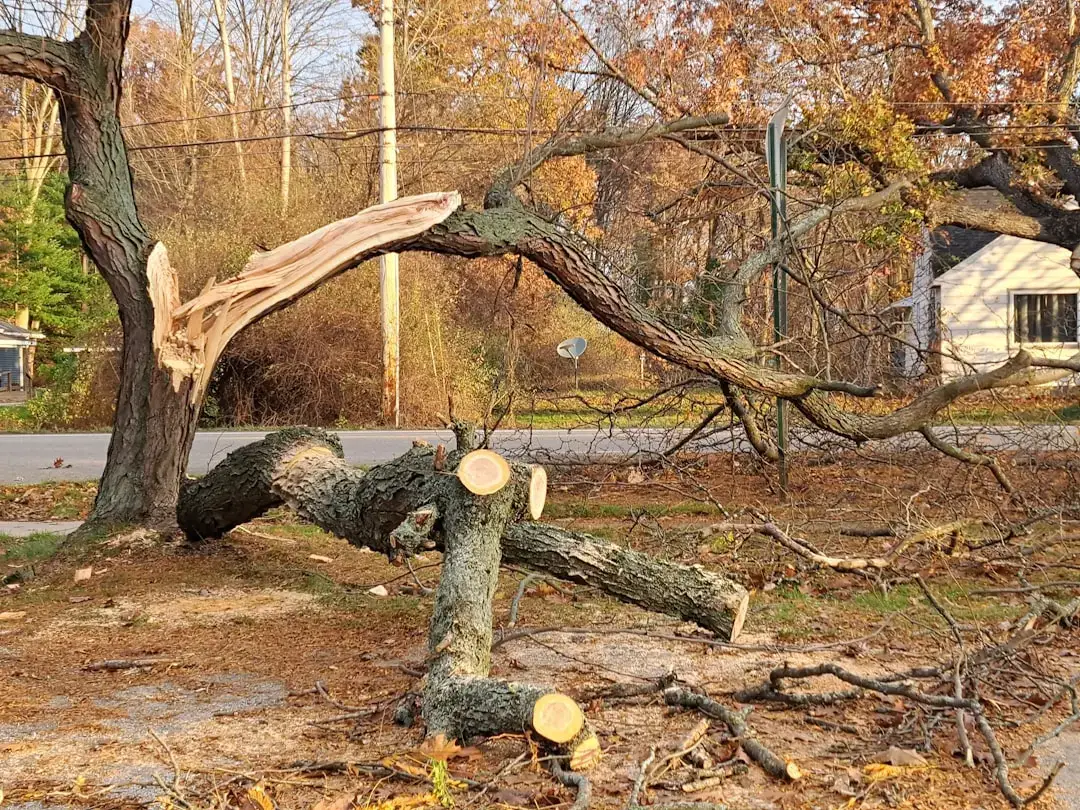
Sometimes, lightning will strike one side of a tree. Such a strike often kills the tree’s living tissues in a strip running along a large branch, vertically down the trunk to the ground, or even ending a metre or two above the ground. You’ll notice the lightning scar on trees like these, as it’s very visible. Other times, there is barely a mark on the surface, while the interior is completely destroyed. Lightning plays no fair game here.
Intermediate effects on the trunk include removal of a few outer bark flakes, one or more spiral bark furrows, ejection of wood slabs, and splitting and cross-sectional severing of the trunk. The damage really does range from a cosmetic scratch to total obliteration, often determined by nothing more than a few degrees of moisture content in the bark at the exact moment of impact.
More Than One Tree: The Hidden Chain Reaction Through the Canopy
Here is something that genuinely surprised me when I first came across the research. A lightning strike doesn’t quietly end at the tree it hits. Not even close. Lightning attaches to a tree crown and then it flows outward and jumps out from its branches and trunk to the neighbors, sort of like spider webs through the canopy, and electrocutes normally 23 trees on average, killing about a quarter of them.
That figure is extraordinary when you sit with it. One bolt. Twenty-three trees affected. A single lightning strike in a tropical forest damages nearly 25 trees, on average, impacting carbon storage, biodiversity, and forest recovery. The electric current ripples outward through the interconnected canopy like a shockwave through water.
Smaller trees are less likely to survive the damage of a strike, and the trees in younger forests are more densely packed and more connected by woody vines, making it easier for electrical current to spread. This is a bit like how a tight row of dominoes falls faster than widely spaced ones. The denser the forest, the further the devastation can travel.
Lightning either kills or injures trees in compact, often circular groups; the number of trees affected may range from a few to a hundred or more. There is usually a focal point near the center of the group where one or two trees show structural effects and where trees of all sizes and even low shrubs may have been killed. The resulting clearing in the canopy can reshape the light and ecology of that patch of forest for years to come.
Lightning as a Wildfire Starter: The Scale Will Shock You
Lightning strikes are the fundamental cause, or the essential natural cause, of wildfire ignition, which leads to the loss of properties and human lives. It’s not just a headline risk. It is one of the oldest forces reshaping Earth’s forests long before humans arrived on the scene.
Lightning-induced fires account for 77% of the burned area in extratropical intact forests, and lightning ignitions will probably become more frequent as the global climate warms. That figure is worth reading twice. Nearly four-fifths of the vast, remote wildernesses burning in the world’s intact forests are started by a single bolt from the sky.
Every second, almost 46 lightning flashes occur on the Earth due to the electric fields between the cloud and the ground, which potentially trigger wildfires. Not all of them ignite fires, of course. Lightning-induced wildfires are exacerbated by the abundant availability of fuel with a lower moisture content and high lightning efficiency. Dry conditions are essentially the accelerant that turns a near-miss into a catastrophe.
The long-continuing current in the lightning wave is affirmed to be primarily responsible for the ignition of forest fuels that cause wildfires. Therefore, the successful ignition or smoldering of the wildland fuels depends on the duration of the long-continuing current. A strike can also smolder invisibly. A latent lightning-caused fire smoldered in decayed heartwood of a live Douglas-fir for 6 days before the tree collapsed and spread fire to ground fuels. Six days of silent burning before a single flame was visible. That’s a sobering thought.
The Dead Tree That Stays Alive: Ecology of Lightning Snags and Opened Canopies

Let’s be real. The image of a charred, blackened trunk standing alone in a clearing feels like pure destruction. But dead trees in a forest are not just casualties. They are some of the most biologically productive structures in the entire ecosystem. Unlike pine logs that fall and rot in the dense shade of the forest floor due to insects and moisture, standing dead “snag trees” that were heat-killed by a fire or lightning strike may remain standing for decades.
After insects eventually penetrate the veneer of cooked sap and woodpeckers chop larger holes in the stem, lightning-killed snags provide a durable wooden apartment complex for birds, mammals, and insects. A snag is essentially prime real estate in the forest world, carved out by a bolt of electricity.
Lightning plays a role in forest communities through direct structural and physiological effects upon both individual trees and small groups. It removes the old and decadent members in a closed stand, thus creating openings that may result in species heterogeneity and changes in microclimate and wildlife habitat. Think of it as nature’s way of pruning the forest without using a single human hand.
Forests may recover differently from lightning than from other forms of damage, favoring some species over others. The new light flooding into a lightning-created gap invites entirely different plant communities to take root. Suddenly, sun-loving species that couldn’t survive under a dense canopy get their moment. The forest reshuffles itself, and that diversity is quietly good for everything living there.
The Trees That Learned to Love Lightning: Nature’s Most Shocking Adaptation
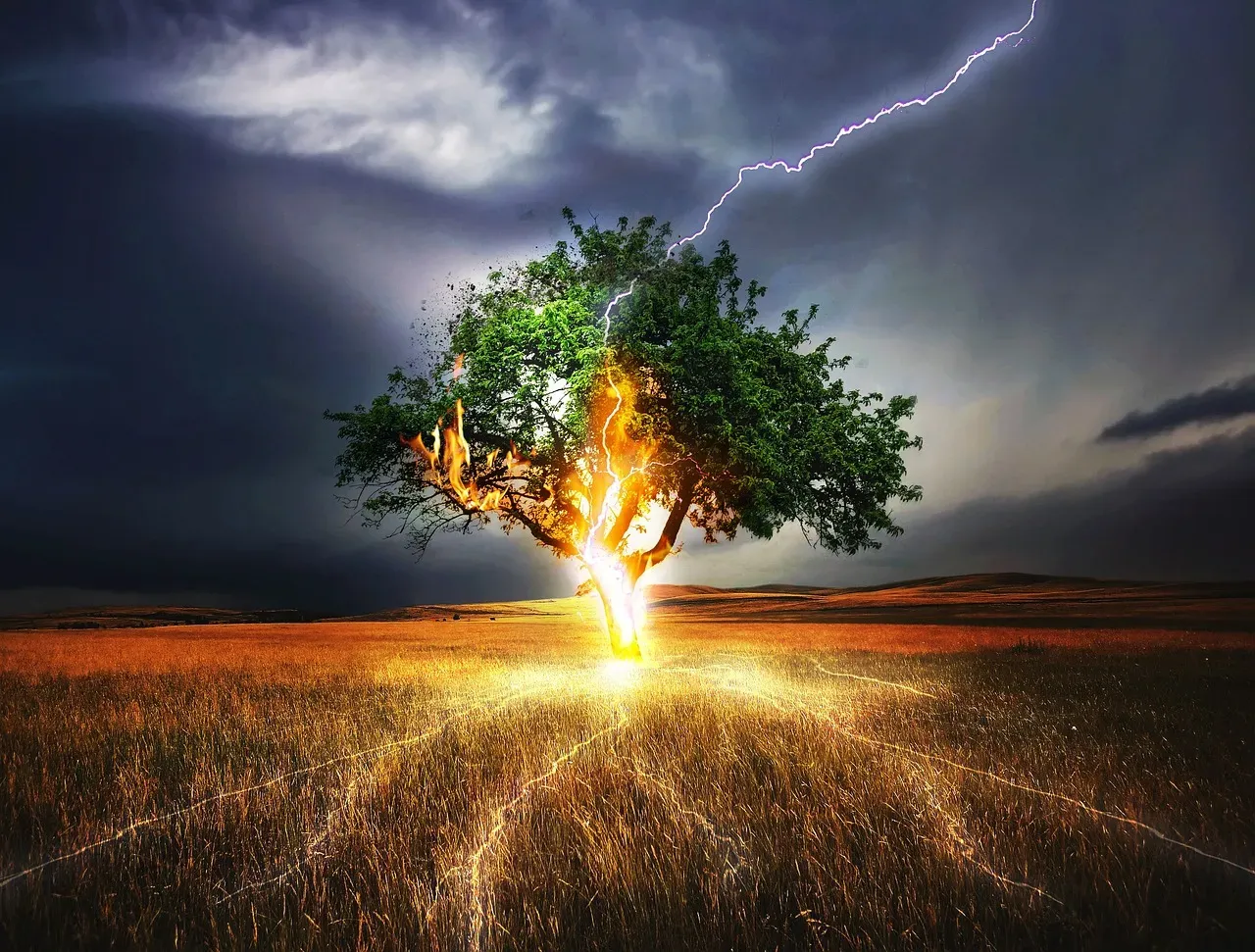
Here is where the story gets genuinely astonishing. I know it sounds crazy, but some trees don’t just survive lightning. They appear to have evolved to benefit from it. Researchers studying lightning’s effects on Panama’s forests found that one tree, Dipteryx oleifera, often survives being hit by lightning and even benefits from the overall effects.
All nine almendro trees that had been struck were practically unscathed, losing only small patches of leaves. In comparison, similarly tall trees of other species took nearly six times as much damage; 40% of their upper branches and leaves were destroyed, on average, and 64% of those trees died within the first two years after being struck. The contrast is remarkable.
Lightning strikes on the almendros reduced the average number of parasitic vines on a tree by 78 percent, by killing them. These vines climb on top of the trees to “steal” light. So the strike essentially clears the tree of its parasites and eliminates competing neighbors at the same time. It’s brutal efficiency, really.
Gora and his collaborators hypothesized that the physiology of Dipteryx oleifera must be conferring some protection against the massive amount of current imparted by a lightning strike. Previous work by Gora and other researchers has suggested that this tree is more conductive than average; higher levels of conductivity mean less resistance and therefore less internal heating. The tree essentially channels the electricity rather than absorbing it. Think of the difference between a worn-out old wire that heats dangerously and a fresh, well-gauged cable that barely warms at all. That’s what separates survivors from casualties in a lightning storm.
Conclusion: The Forest Is Wired Differently Than We Think
A lightning strike in a forest is never just a single event. It’s a cascade. It’s a chain reaction through canopies, a slow-burning smolder in a hollow trunk, a cascade of death that paradoxically opens the door to new life. Lightning is a fundamental Earth system process that influences the world’s major forest biomes and their carbon storage through two primary pathways. Lightning is the major cause of boreal forest fires, while lightning strikes kill patches of trees in tropical forests.
The forest does not experience a lightning bolt the way a human standing under a tree does. For the ecosystem as a whole, it is at once a destructor, a sculptor, an architect of diversity, and in rare cases, even a tool of survival for the craftiest species. With lightning on the rise due to climate change, understanding the effects of lightning will be critical to managing and regrowing tropical forests in a way that maximizes carbon storage and forest health.
There is something humbling about realizing that forests have been navigating this electric relationship with the sky for millions of years, long before we started studying it. The next time a storm rolls in and a bolt cracks down somewhere in the distance, consider that it isn’t just noise and light. It’s an ancient conversation between the sky and the trees, one we are only just beginning to understand. What would you have guessed was happening inside that forest? Tell us in the comments.
