
Florida is a lot of things to a lot of people, but for birders, it occupies a category entirely its own. The state’s subtropical climate, ancient sandy ridges, sprawling freshwater wetlands, and tropical hammocks have created a patchwork of ecosystems so distinct that certain birds evolved here and simply never left. Some species became so tied to a specific patch of scrub or a particular freshwater marsh that the rest of the continent became, functionally, irrelevant to them.
That kind of ecological isolation is rare. Most birds in the eastern U.S. range across several states, often dozens. The five species below do not. Whether by evolutionary design, habitat dependency, or the sheer uniqueness of Florida’s landscape, these are birds that birders must come to Florida to find.
1. Florida Scrub-Jay: The State’s Only True Endemic
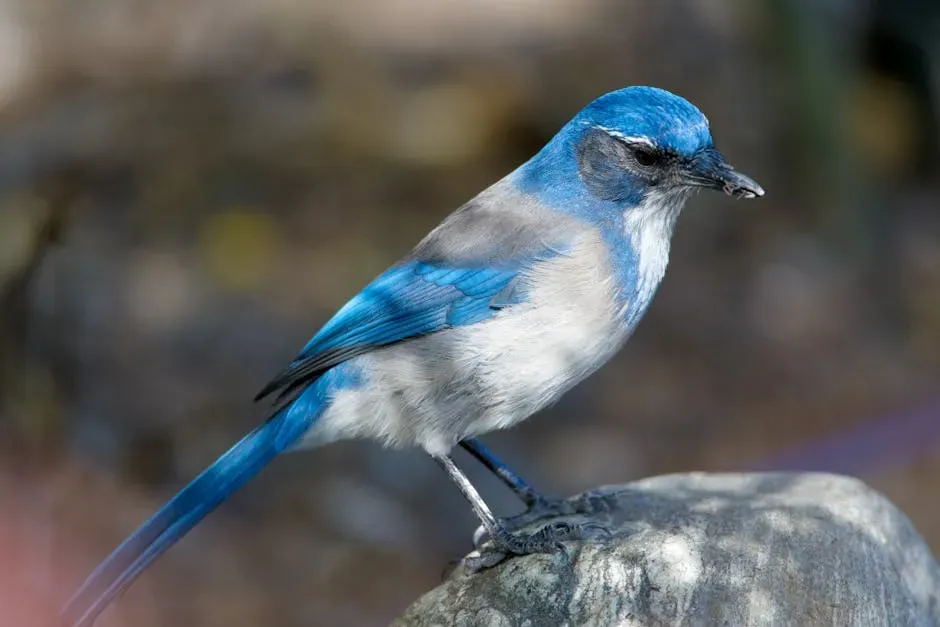
The Florida Scrub-Jay is the only species of bird endemic to the U.S. state of Florida, and one of only 15 species endemic to the continental United States. That fact alone makes it a serious draw for birders from around the world. Yet the bird itself is remarkably approachable, almost disarmingly so.
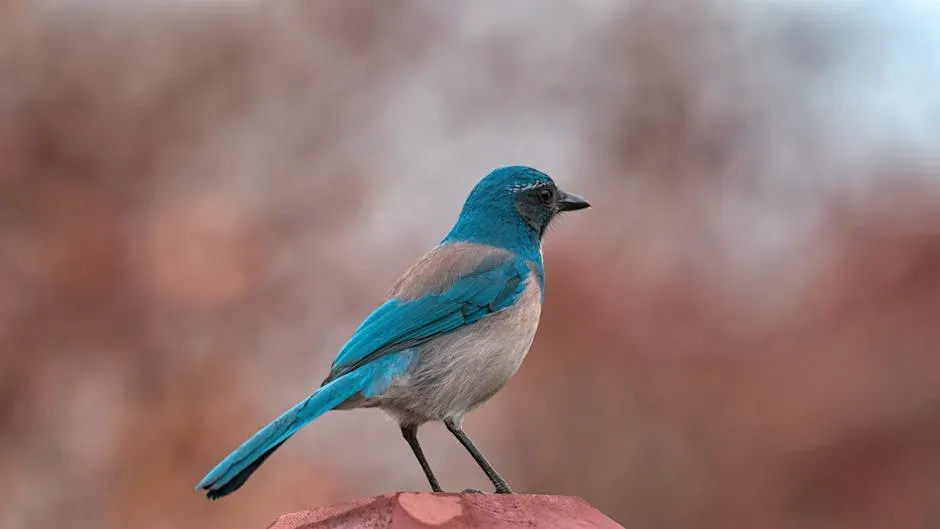
It is a blue and gray bird about the size of a Blue Jay, with blue wings, head, and tail, a gray back and underparts, and a whitish forehead and neck. Unlike Blue Jays, this species does not have black markings or a crest. That sleek, uncrested profile gives it a look that’s genuinely unlike anything else in the eastern U.S.
Scrub-jays inhabit sand pine and xeric oak scrub, and scrubby flatwoods, which occur in some of the highest and driest areas of Florida, including ancient sandy ridges that run down the middle of the state, old sand dunes along the coasts, and sandy deposits along rivers in the interior.
Florida scrub-jays are social and engage in a rare family structure called cooperative breeding, meaning a family consists of a breeding pair accompanied by up to six helpers, who are often older offspring. Helpers act as sentinels to watch for danger, as well as help feed and raise scrub-jay babies. It’s an unusually tight-knit social system for a wild bird.
The 2025 State of the Birds report lists Florida Scrub-Jay as a Red Alert Tipping Point species, meaning it has lost more than half of its population in the past 50 years, has a perilously low population, and has shown steep declining trends. The scrub-jay population has declined roughly 90 percent in the past century, driven largely by development and fire suppression that has allowed scrub habitat to grow too dense. For now, spots like Oscar Scherer State Park near Sarasota and Merritt Island National Wildlife Refuge remain reliable places to find them.
2. Florida Grasshopper Sparrow: The Rarest Bird in North America
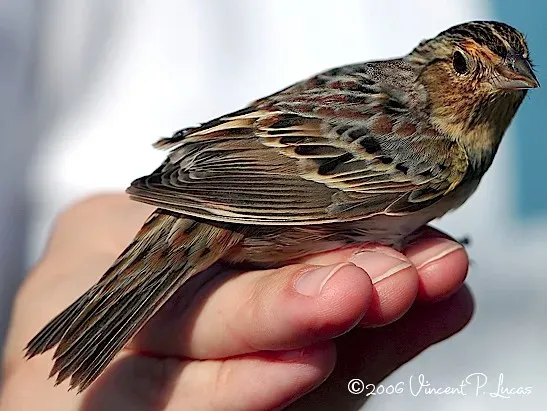
The Florida grasshopper sparrow, known scientifically as Ammodramus savannarum floridanus, is considered the rarest bird in North America and is a non-migratory subspecies found only in the dry prairies of south-central Florida. That distinction is sobering. There are birds with smaller global numbers, but within North America, this unassuming little sparrow holds the most precarious position of any species.
Florida grasshopper sparrows get their name from their buzzy, grasshopper-like song, which happens to be the weakest song of any North American bird. This insect-like quality, coupled with the sparrow’s secretive nature, makes finding them in the field extremely challenging. Plenty of visitors drive through its prairie habitat without ever knowing they passed near one.
The Florida grasshopper sparrow relies on frequent fire to maintain its early successional habitats, and flooding heavily impacts nesting success. Both threats are difficult to control in a landscape that has been dramatically altered over the past century.
Because the birds are ground nesters and are vulnerable to predation and flooding, protocols are in place to protect any Florida grasshopper sparrow nests found. These include predator-deflection fencing, invasive fire ant treatments in nesting areas, and nest lifting to avoid flooding. Additionally, a captive breeding program is underway with the goal of releasing hand-reared sparrows into the wild to supplement the natural populations. The effort is painstaking but necessary.
3. Everglade Snail Kite: A Raptor Built for One Meal
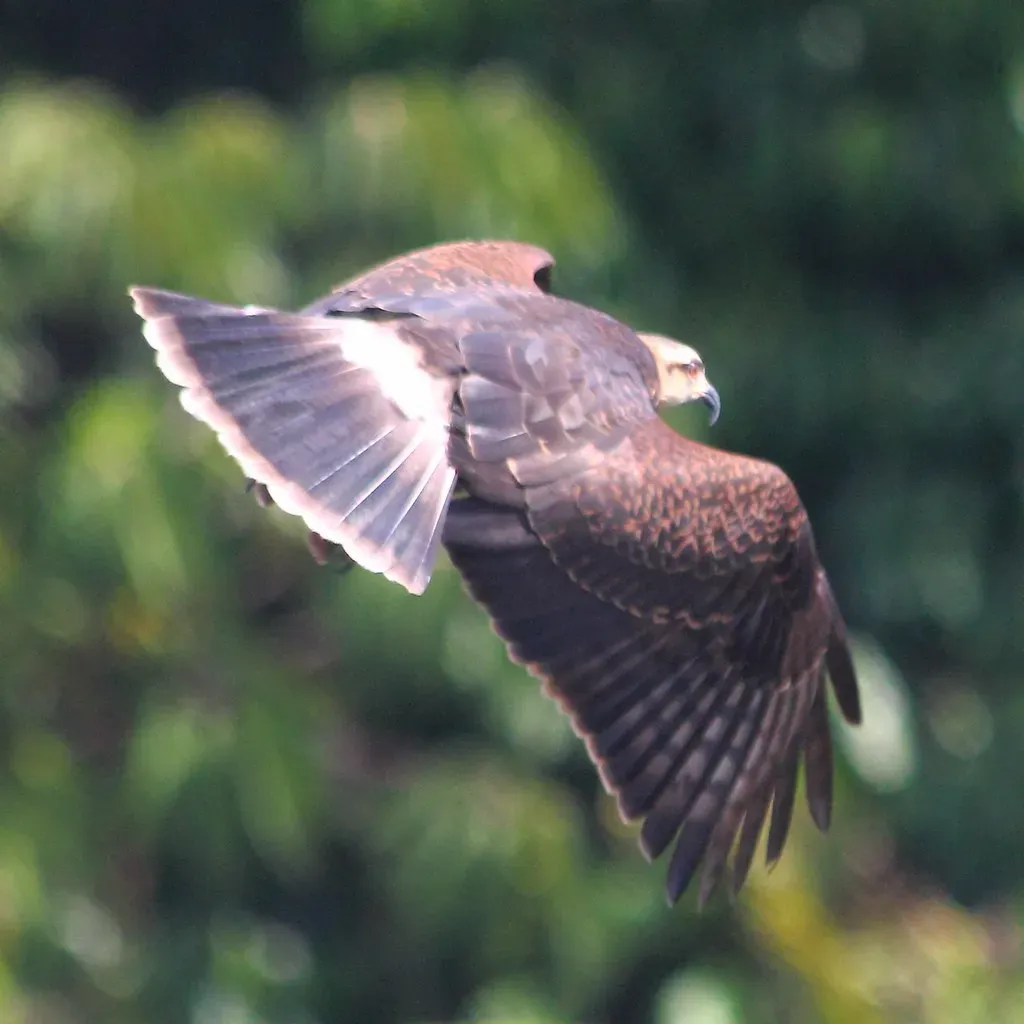
In the United States, the Snail Kite is restricted entirely to peninsular Florida, and is effectively an endemic subspecies population within U.S. borders. The Florida population belongs to the subspecies known historically as the Everglade Kite, and it goes nowhere else. No other state can claim it.
The snail kite is uniquely adapted for a diet almost exclusively of freshwater apple snails. Its beak is not the crushing bill of a Buteo hawk designed to snap spinal cords, nor the tearing beak of a falcon. It is a specialized tool evolved to slip inside the spiral aperture of an apple snail’s shell and slice the columellar muscle. Evolution, it turns out, can get very specific.
In the wide-open marshes of central Florida, the broad-winged Snail Kite glides slowly and low over the sawgrass. The apple snail is strongly affected by water levels, and drainage of wetlands has hurt populations of both the snail and the kite.
The Snail Kite continued to decline in the 2000s, with population falling below 800 in 2007. One contributing factor was the introduction of an invasive South American snail species that was roughly five times bigger than the native species, and most kites could not eat the new snails. However, the kites quickly evolved to be about 12 percent bigger to adapt to the new food source. That is a remarkable example of rapid, observable evolution in a wild bird population.
The population gradually rebounded, reaching a count of around 3,000 snail kites in 2022, aided in part by Everglades conservation efforts conducted over the course of 30 years. It is a rare conservation success story, though the species remains federally endangered.
4. White-crowned Pigeon: A Caribbean Visitor That Stays in Florida
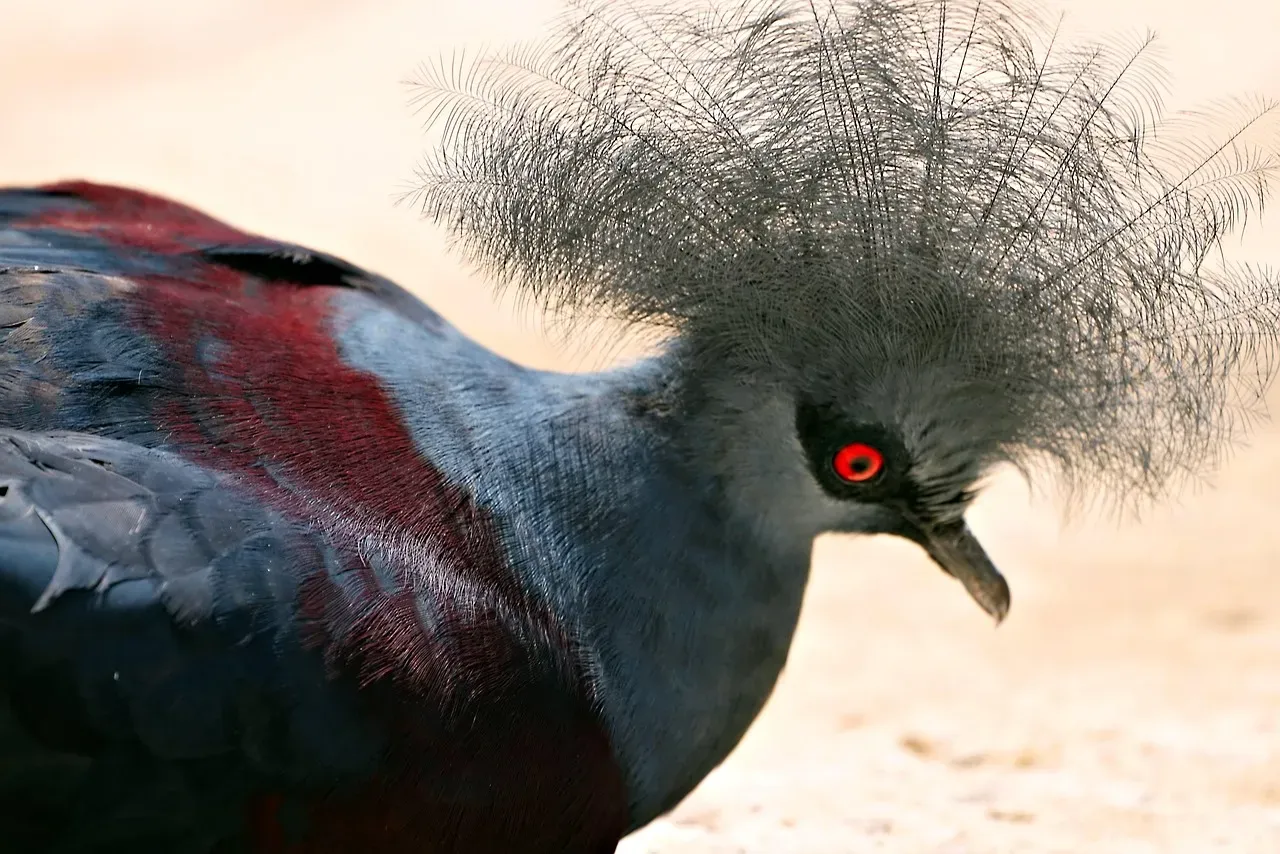
The White-crowned Pigeon is found in extreme south Florida in low-lying forest habitats. Within the continental U.S., the Florida Keys and the tip of the mainland represent the northern boundary of this bird’s range. It breeds in the Caribbean and then, for much of the year, it is a Florida bird, and nothing else in the continental U.S. can claim it.
White-crowned Pigeons are most common in the Florida Keys, and can be found at Key Largo Hammocks State Botanical Site and in Key West. They may also be spotted perched on wires anywhere along U.S. 1 from Key Largo to Key West. For anyone making the drive south on the Overseas Highway, a glance at the wire lines is always worth the effort.
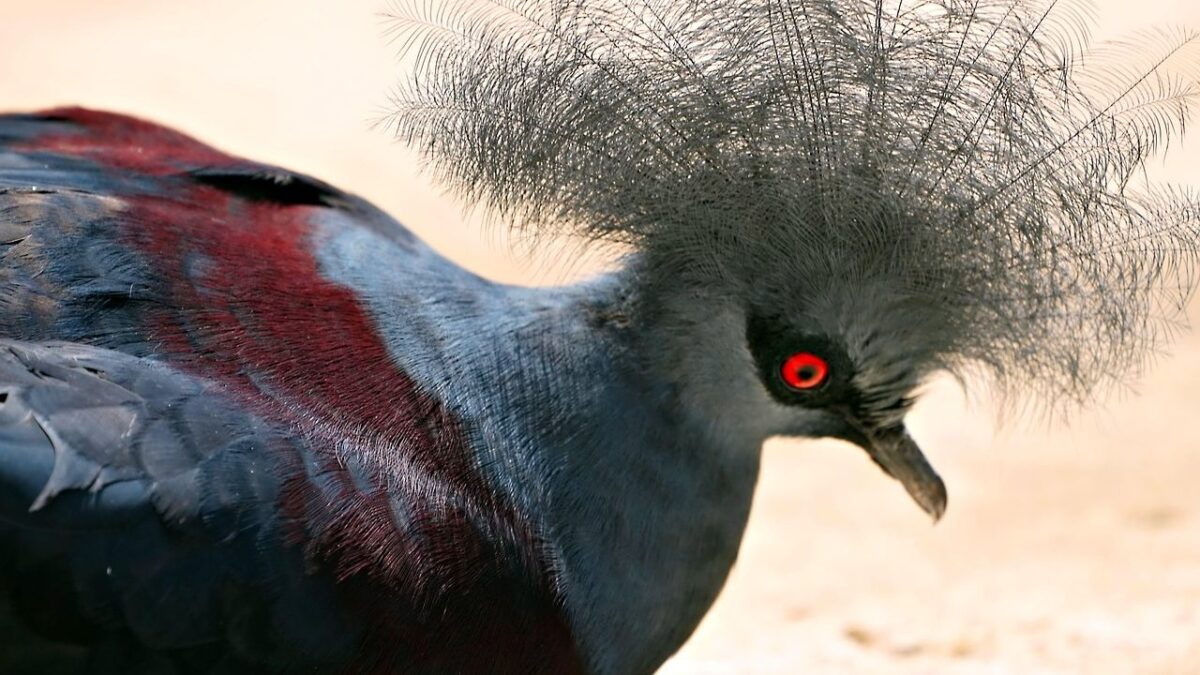
The bird itself is striking in a quiet way: a dark, slate-bodied pigeon with a cleanly contrasting white cap that seems almost painted on. Threats from development and habitat degradation continue to put pressure on the species. The tropical hardwood hammocks of the Keys that the pigeon depends on are among the most fragile and shrinking habitats in the state.
5. Florida Grasshopper Sparrow’s Neighbor: The Limpkin and Its Haunting Call
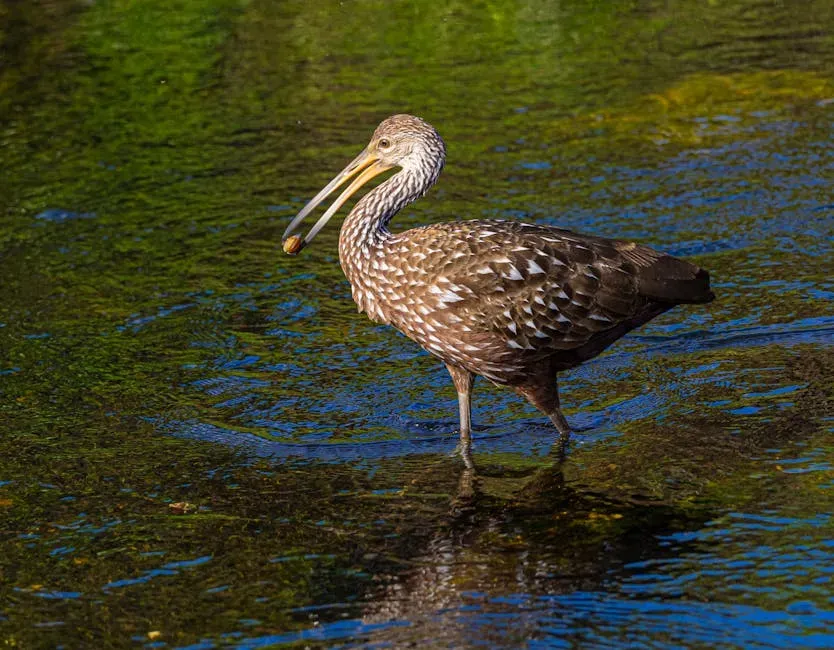
While the Limpkin is not strictly limited to Florida within U.S. borders in the strictest taxonomic sense, it stands as one of Florida’s most distinctive wading birds, easily recognized by its brown plumage streaked with white and its haunting, wailing call that echoes across wetlands at dawn and dusk. For most of the country, encountering a Limpkin in the wild is simply not possible. Florida is the reliable stronghold.
These medium-sized birds inhabit freshwater marshes, swamps, and lake edges throughout Florida, where they specialize in hunting apple snails with their slightly curved bills. You will often spot Limpkins walking deliberately through shallow water, probing the substrate for their preferred prey.
The Limpkin occupies its own taxonomic family, Aramidae, with no close living relatives. It is, in that sense, genuinely one of a kind. Their unique feeding behavior and vocalizations make them unforgettable encounters in Florida’s wetland environments. Anyone who has heard that call across a dark marsh at dawn will understand why it tends to stop people in their tracks.
Gliding slowly and low over Florida’s sawgrass marshes, the Limpkin and species like the Snail Kite share a reliance on the apple snail, which is strongly affected by water levels. Drainage of wetlands has hurt populations of both the snail and the birds that depend on it. Their fates are interwoven in ways that make wetland conservation an urgent, connected cause.
Why These Birds Matter Beyond Birdwatching
Each of these five species is, in its own way, a living measurement of how Florida’s ecosystems are holding up. The Florida scrub-jay is an important umbrella species and indicator species for the endangered scrub habitat. When it struggles, so do the Florida mouse, the sand skink, and a long list of plants that share the same ancient dunes.
Habitat loss and habitat degradation continue to be the major threats to bird species in Florida. The connection between Florida’s development pressure and the decline of these species is direct and well-documented. That said, conservation programs, prescribed burning, and protected land management have made genuine differences in places like Kissimmee Prairie Preserve and Oscar Scherer State Park.
More than 500 migratory, year-round, and wintering bird species call the Sunshine State home. Among them, these five occupy a category that no other state can offer. They are not just interesting birds. They are Florida’s birds, shaped by millions of years of isolation into something the rest of the continent simply does not have.
That is worth protecting, and worth making the trip to see.

- Why Jaguars Are Key to the Health of the Amazon Rainforest - June 21, 2026
- How Crocodiles Survived Every Mass Extinction So Far - June 21, 2026
- Komodo Dragons Have Venom, Not Bacteria – Here’s What Science Now Knows - June 21, 2026