

Most people assume their pet is sweet, maybe a little goofy, and happy to snooze the afternoon away. What they don’t always notice is the quietly calculating mind operating behind those eyes. Animal cognition research has advanced considerably over the past decade, and what scientists are finding consistently challenges old assumptions about what pets actually understand.
Dog intelligence is defined as the ability to learn, think, and solve problems, though trainers, owners, and researchers still find it difficult to agree on a single method for testing it. The same challenge applies to cats and many other companion animals. The result is that genuine genius often goes unrecognized simply because we’re not looking in the right places.
1. They Learn New Commands Unusually Fast

Speed of learning is one of the clearest early indicators of a sharp animal mind. One of the main signs of exceptional intelligence in dogs is learning new commands quickly without the need for extensive training. Some dogs require lots of repetition to learn a new trick or command, while highly intelligent dogs may learn very quickly after just a few tries.
The average dog’s intelligence is often compared to that of a two-year-old child. They understand approximately 165 words or gestures on average. Some, however, can learn as many as 1,000. That is not a trivial range.
If your dog or cat picks up a new behavior after watching you demonstrate it once or twice, that’s worth paying attention to. It suggests the animal isn’t just reacting to stimulus but actually processing and storing what it observes.
2. They Categorize Objects by How They’re Used, Not Just How They Look
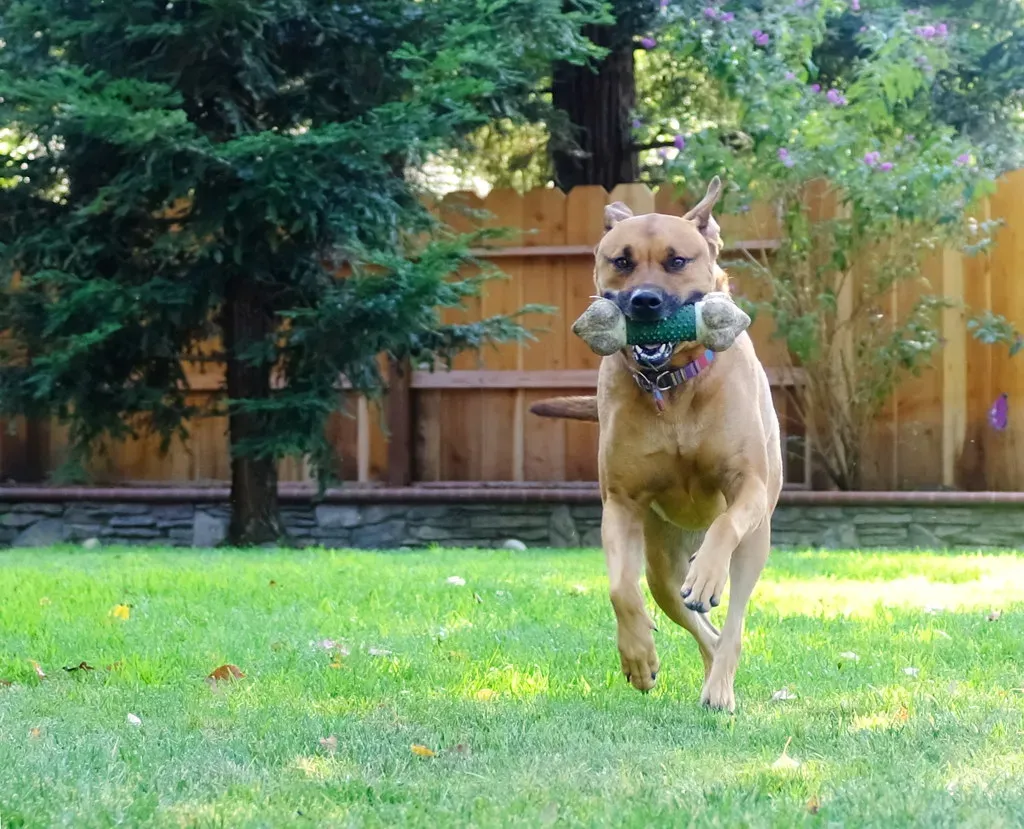
A 2025 study demonstrates that some highly gifted dogs can categorize objects not just by appearance, but by how they are used. The dogs’ ability to connect verbal labels to objects based on their functional classifications suggests that they form a mental representation of the objects based on their experience with their functions, which they can later recall.
Dogs known as “Gifted Word Learners” can understand and remember the names of many different objects, especially toys. Most dogs might learn a handful of commands like “sit” or “stay,” but these special learners can memorize dozens or even hundreds of words and connect them to specific items. When their owner says “ball” or “teddy bear,” they don’t just react to the tone of voice; they actually recognize the word and fetch the correct toy.
This ability to categorize by function suggests that dogs mentally represent objects not only by their look but also by their use. Such findings point to parallels between early human language development and canine learning. It’s the kind of cognitive flexibility most people never think to look for in a pet.
3. They Remember Things Without Being Reminded

Long-term memory in pets is a surprisingly reliable sign of cognitive strength. A really smart dog will remember commands over time, even if they haven’t been used in a while. For instance, if a dog is taught to walk backward on command and hasn’t done it in a year, a smart one will still remember how to do it when asked. Testing your dog with a command they haven’t heard in a while is one way to determine their intelligence.
The ability to connect verbal labels to objects based on functional classifications suggests that dogs form a mental representation of objects based on experience. These findings provide insight into the evolution of basic skills related to language and their relationship to other cognitive abilities, including memory.
Memory that holds across weeks or months is meaningfully different from simple conditioned response. If your pet navigates a familiar route confidently or returns to a hidden treat long after it was concealed, you’re watching real memory at work.
4. They Solve Puzzles With Purpose

Puzzle feeders or puzzle toys are a bit like brain teasers. Dogs have to figure out how to manipulate the object to get the reward out. This can keep a dog’s mind engaged and help prevent boredom. Some pups figure out the answer very quickly.
Most dogs enjoy earning treats, but some are a cut above the rest when it comes to solving complex problems. Treat dispensing puzzles are a great motivator and come in a range of difficulty levels, where some demand a higher level of cognitive engagement. The speed at which your dog can problem solve complex tasks is a great indicator of intelligence level.
Watch not just whether your pet solves the puzzle, but how. A genuinely intelligent animal tends to slow down, assess, try a deliberate approach rather than batting randomly. The methodical ones are usually the clever ones.
5. They Communicate in Surprisingly Specific Ways

Smart dogs are more than just vocalizations. These pets communicate with greater precision by using distinctive sounds, body language, or even behaviors to deliver their points. Some dogs nudge their leash to let their owners know they wish to go out for a walk, while others might fetch their ball whenever it is time to play.
Ostensibly humans and dogs are speaking different languages, but if your pet is smart, they will find methods to communicate their needs in a way you can understand. Cats are equally capable of this. Cats look for human cues and gestures and can respond to human moods. They can also recognize specific human voices and become attached to particular people in their lives.
Targeted, deliberate communication is genuinely different from general restlessness or noise-making. When a pet consistently uses the same signal to convey the same need, that’s a communication system. A small one, but a real one.
6. They Anticipate Your Routine Before It Happens

Highly intelligent dogs are able to learn your habits, body language, tone, and micro-signals. They watch you closely, almost as if studying your actions. They notice when you grab your shoes or keys before a walk. Smart dogs often anticipate your next move, like when they grab their own leash, walk to the door, or wait by the window when you’re due to be home soon.
Smart dogs often seem like mind readers. They track time, habits, and environmental cues. Some dogs can predict routines down to the minute. This is pattern recognition running quietly in the background all day long.
The difference between a well-adjusted pet and a genuinely perceptive one is often visible here. The genius version isn’t just reacting to your movement. It’s predicting it based on accumulated observation. That’s a different cognitive skill entirely.
7. They Use Social Inference to Figure Things Out

To illustrate how social inference works, researchers will hide a ball under one of two cups and point to the correct cup. Dogs, just like young toddlers, will then infer that the ball is under the cup being pointed to and retrieve it correctly. This might seem like a simple task, but even Bonobo apes, mankind’s closest genetic relatives, are incapable of inferential reasoning.
Similar to dogs, cats are also capable of inferential reasoning. Hungarian scientist Adam Miklosi, one of the world’s foremost animal cognition experts, conducted the same pointing test with cats and received similar results, proving that cats were able to learn through social inference, just like humans and dogs.
A pet that watches where you look, follows your gesture, or uses your reaction to guide its own behavior is exercising a form of social intelligence. It’s not magic. It’s cognition working across species lines.
8. They Get Bored – and Make Their Boredom Known

Some of the smartest dogs misbehave because they get bored easily. Some dogs can learn but are stubborn. Some have days where they don’t feel like performing. A pet that chews furniture, reorganizes your belongings, or invents chaos during quiet afternoons may not be badly behaved at all.
Even when highly trained, a particularly intelligent dog will misbehave if they are lacking in a desired level of stimulation. Destructive behaviors can be a sign of boredom, or that your dog feels unfulfilled by their current routines. Like humans, a smart dog will become restless if their day becomes repetitive and dull.
Dogs need mental stimulation just like people do. If a dog is bored all day, they might seem lazy, but it’s really a lack of challenge. Cats manage this differently, often through solo investigation. Either way, chronic restlessness in a well-fed, healthy pet is often a cognitive signal.
9. They Imitate Actions They’ve Watched

Dogs often imitate the actions of their humans or other animals, showing astounding learning abilities. Imitation is a sign of a dog’s ability to observe, understand, and replicate behaviors, which is often a sign of high intelligence.
Some dogs are capable of observational learning and are able to figure out how to open a door or mimic human movements just by observing them. This matters because imitation requires the animal to mentally translate what it sees into a coordinated physical action. That’s not simple.
Watch for your pet modeling behavior that was never directly trained, like nudging a latch the way they watched you handle it, or climbing up somewhere by replicating steps they saw another animal take. These moments are easy to dismiss as coincidence. They’re often not.
10. They Understand Your Emotional State

Intelligent dogs are very good at sensing and interpreting your emotions. Had an awful day at work? A smart dog will read your sadness and double up as an emotional support animal by taking steps to comfort you, such as cuddling up with you or refusing to leave your side until your tears dry.
A dog that senses when you are sad and tries to make you feel better is showing signs of emotional intelligence. They may cuddle with you when you are crying or feeling down. They may bring you their toys when you are sad to try and cheer you up. They may simply sit and refuse to leave your side until you feel better.
Emotional responsiveness in pets is often mistaken for affection alone. It’s also intelligence. Recognizing a shift in your body language, adjusting behavior accordingly, and choosing an appropriate response all involve reading a complex social environment accurately.
11. They Adapt Quickly to New Environments or Situations

Dogs that adjust to new routes or strange settings can show astounding levels of cognitive flexibility. This demonstrates that their minds adapt quickly to changing situations, which is an essential component of intelligence. The smart ones are flexible and never rigidly stuck to the same routine.
Cats’ problem-solving skills, memory, and adaptability are a few reasons the felines are intelligent. A study found that cats can remember their owner’s voice and recognize their name, suggesting a level of social intelligence. Additionally, cats demonstrate a use of social learning and the ability to adapt to complex environments.
An animal that freezes or retreats when something changes is following instinct. One that investigates, recalibrates, and integrates the new situation into its behavior is doing something cognitively richer. Adaptability under mild stress is one of the cleaner tests of animal intelligence available to everyday observation.
12. They Manipulate People Strategically

Many smart dogs know exactly how to manipulate their owners. This isn’t malicious. It can be natural for a dog to try to push the boundaries and see how much they can get away with, similar to how a toddler might. For example, they know which person in the household is most likely to cave into a request for people food, or they know how to get fed twice by going to someone else in the home and acting like no one’s fed them yet.
Pets also train their owners. Do you jump up when they run to the back door? Do you get out the food when they bring you their bowl? How well-trained you are is a sign of how smart your pet is.
Strategic manipulation across multiple household members requires a theory of mind, an understanding that different individuals have different thresholds and responses. It is genuinely sophisticated social cognition, even if it results in your cat getting an extra meal.
13. They Invent Their Own Games

Smart dogs get creative during their playtime. They often come up with new ways of entertaining themselves or inventing games without anyone teaching them. These pets show a higher level of creativity while figuring out how to toss a toy into a basket or finding new ways to interact with family members.
Some games, like hide-and-seek, can be more complex. Many dogs learn and enjoy playing these games, which is a sure sign that your pet’s brain can process more abstract ideas than simply playing with a toy.
Self-generated play is meaningful. It requires imagination of a kind, or at least the ability to project forward and construct a scenario without external prompting. When your pet creates a game from nothing and invites you into it, that’s a genuinely interesting cognitive event.
14. They Show Awareness of Cause and Effect

Some pets quickly learn how to open doors, gates, and even containers to access food. This kind of behavior highlights their ability to understand cause and effect, manipulate objects, and make decisions based on past experiences.
If your dog seems to give thought to things that will have negative outcomes and then avoid them, they may be showing signs of adaptive intelligence. If they had an unpleasant encounter and avoid similar situations in the future, that is adaptive intelligence. It’s even more impressive if they’ve learned what to avoid by watching others or picking up on cues from you. Essentially, they’ve either learned their lesson or evaluated the consequences on their own and adjusted their behavior accordingly.
Cause-and-effect reasoning is not just mechanical. It involves forming a mental model of how actions produce outcomes. A pet that consistently factors past results into current decisions is operating with a kind of practical reasoning that many people never stop to appreciate.
15. They Recognize Their Own Name – and Know When You’re Not Talking to Them

A study found that cats can remember their owner’s voice and recognize their name, suggesting a level of social intelligence. Additionally, cats demonstrate a use of social learning and the ability to adapt to complex environments.
Cats can tell the difference between shorter and longer periods of time and recognize different quantities. They look for human cues and gestures and can respond to human moods. This extends beyond simple name recognition. It reflects an ongoing awareness of the social context around them.
There is still so much to discover about cat and dog intelligence, but the good news is that science is beginning to recognize the importance of studying it. With new experiments being conducted and with the use of technologies like MRI machines to study canine brain activity, we are inching closer to truly unlocking the minds of cats and dogs.
What to Do If Your Pet Shows These Signs

It’s important to incorporate enrichment into your pet’s daily life. Think puzzle feeders, scent work, varied walks, and short training sessions. A mind that doesn’t get exercised tends to find its own outlets, and those outlets aren’t always welcome.
Smart dogs often remain cognitively engaged well into their senior years. Learning new tricks, playing scent games, and taking short walks in new places all help. This mental stimulation can slow cognitive decline. The same principle applies across species.
Dogs and cats come in all shapes and sizes, as well as varying levels of intelligence. Some animals may be excellent communicators, while others show greater intelligence in memory or reasoning. Recognizing your pet’s particular flavor of intelligence is half the work. The other half is meeting it.
Conclusion

Intelligence in animals doesn’t announce itself with a test score or a party trick. It shows up in the quiet moments: the look your dog gives you just before you reach for the leash, the way your cat sits with you on a hard day without being asked, the methodical patience of a pet working through a puzzle for the third time in a row.
The science is still catching up to what many pet owners have sensed for years. Previous research focused on dogs’ memory for command words or object names, but newer work significantly advances the understanding of how dogs relate language to object utility and conceptual grouping, highlighting parallels between canine and human cognitive architectures.
The smartest thing any pet owner can do is pay closer attention. Not to validate a theory or win an argument about which species is more intelligent, but because watching a genuinely sharp animal navigate the world is one of the more quietly rewarding experiences available in daily life.
