

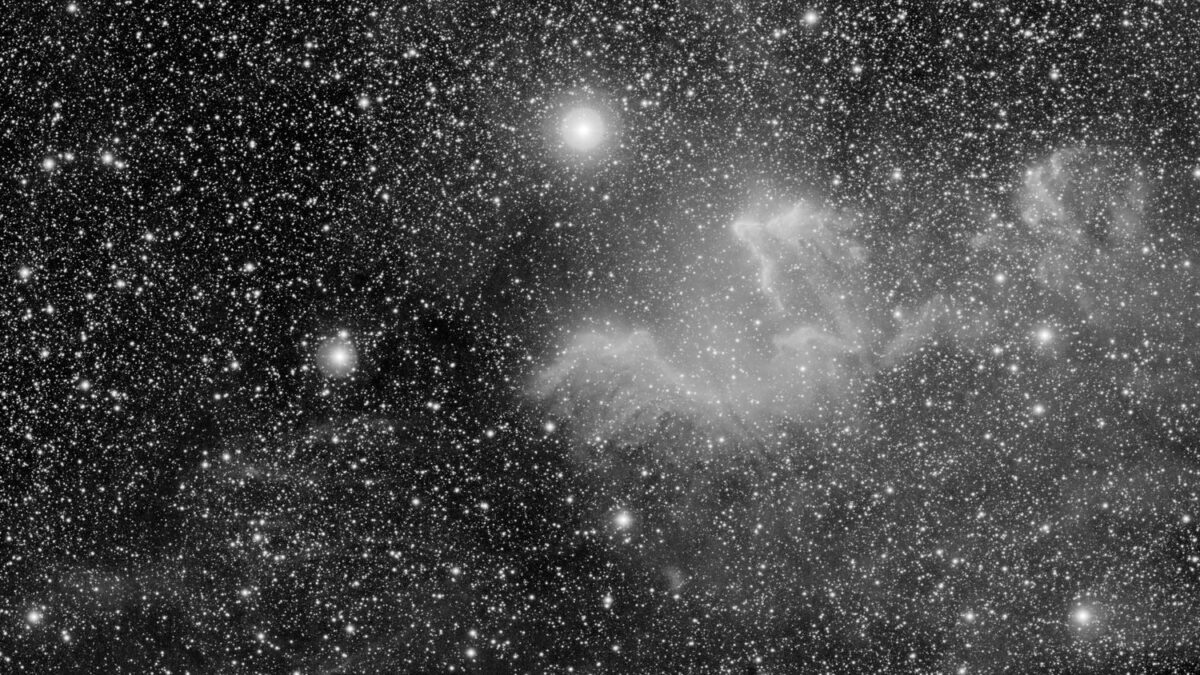
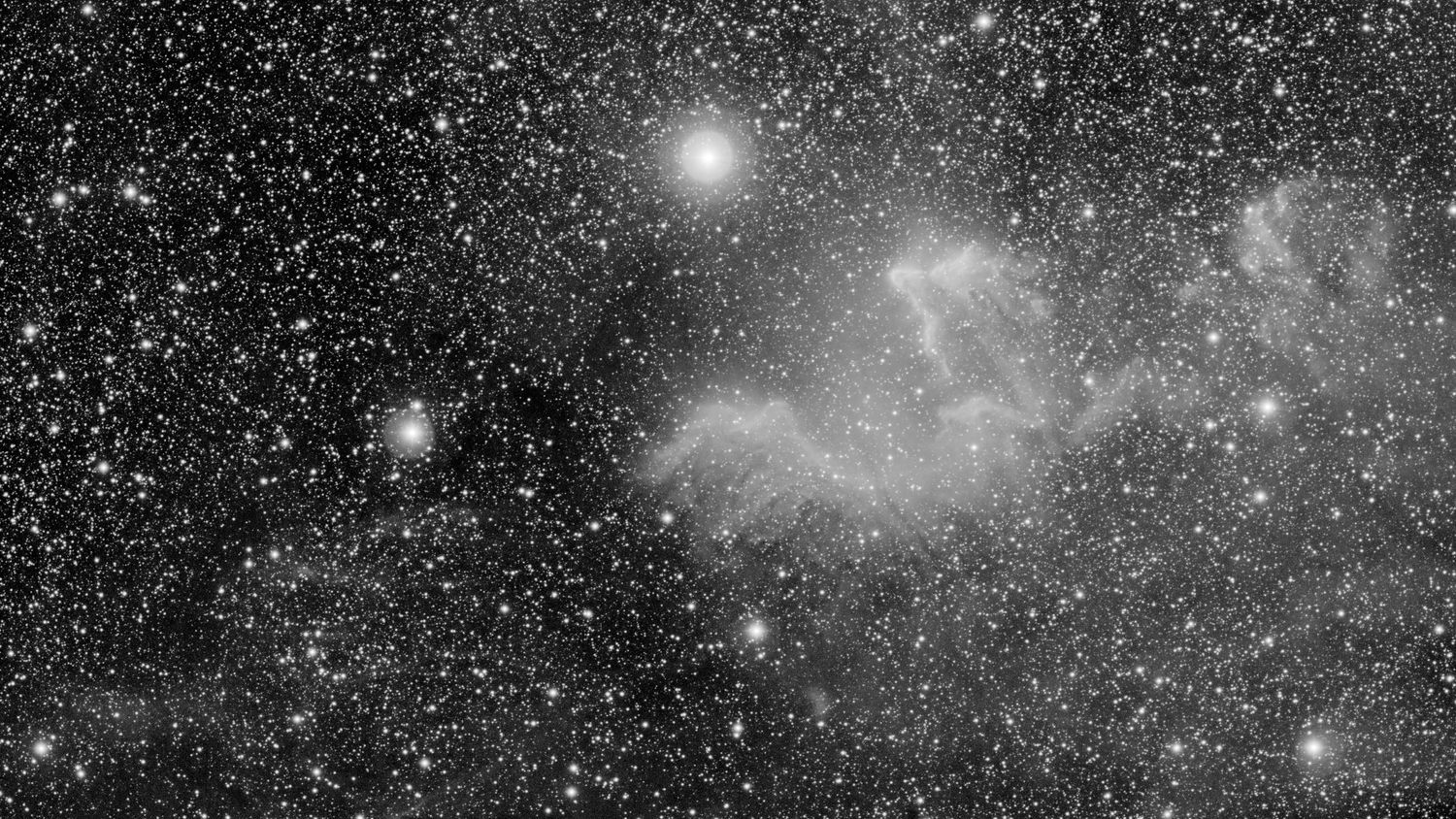
Astronomers finally solve the gamma-Cas X-ray mystery after 50 years – Image for illustrative purposes only (Image credits: upload.wikimedia.org)
Astronomers have pinpointed the source of gamma Cassiopeiae’s enigmatic X-ray emissions, resolving a question that lingered since the 1970s. Observations from the XRISM space mission revealed a concealed white dwarf companion steadily drawing material from the bright Be star. This discovery not only clarifies the star’s unusual behavior but also offers fresh understanding of rare binary systems in our galaxy.
Gamma Cassiopeiae’s Long-Standing Enigma
Gamma Cassiopeiae, a prominent star in the northern constellation, has long stood out for its brightness and variability. Discovered in the 1970s, its strong X-ray output puzzled researchers because it did not match patterns seen in other Be stars, which are known for rapid rotation and surrounding gas disks. Unlike massive stars in binary systems that produce X-rays through collisions or accretion from supergiant companions, gamma Cas showed no obvious partner.
Efforts to explain the emissions spanned decades, with theories ranging from magnetic fields amplifying surface activity to internal nuclear processes. None fully accounted for the high-energy radiation observed. The star’s classification as a gamma Cas analog even defined a subclass of objects with similar traits, yet the core mechanism remained elusive.
Key Insights from the XRISM Mission
The Resolve instrument on Japan’s XRISM observatory, launched in 2023, provided the high-resolution spectra needed to crack the case. Data captured in late 2023 showed periodic variations in the X-ray lines, indicating Doppler shifts from orbiting material. These signatures pointed to a compact companion influencing the star’s disk.
Analysis confirmed the presence of a white dwarf, with a mass around 0.9 solar masses, orbiting at a separation that allows steady accretion. The white dwarf’s gravity pulls hydrogen-rich gas from gamma Cas’s decretion disk, where it forms a hot accretion column reaching millions of degrees Kelvin. This process generates the observed X-rays through nuclear burning and shocks.
How the Binary Dance Produces X-Rays
In this newly identified system, gamma Cas sheds material through its equatorial disk, a common feature for fast-spinning Be stars. The white dwarf intercepts this stream, channeling it onto its surface at rates producing stable, high-temperature plasma. Unlike cataclysmic variables with brighter outbursts, this setup yields persistent emissions matching gamma Cas’s profile.
The companion’s low mass and wide orbit prevent the dramatic flares seen elsewhere, explaining the subtlety of prior detections. Ground-based and earlier space telescopes lacked the spectral precision to distinguish these dynamics from other phenomena.
What matters now: This finding reclassifies gamma Cas analogs, potentially identifying dozens more systems via targeted X-ray surveys. It highlights XRISM’s role in probing faint companions.
Implications for Stellar Evolution and Future Hunts
The discovery reshapes views on post-common-envelope binaries, where a giant star loses its envelope, leaving a hot core and compact remnant. Gamma Cas likely evolved from such a merger or mass-transfer event, with the white dwarf surviving intact. Similar setups may underpin other anomalous X-ray sources.
Researchers now anticipate refined models for disk accretion in non-degenerate systems. Upcoming missions could map more candidates, testing if white dwarf companions explain the full gamma Cas class.
This resolution after half a century underscores the value of persistent observation in astronomy. As tools like XRISM push boundaries, hidden companions in bright stars may prove more common, gradually unveiling the intricate lives of stellar pairs.

As a little kid, I fell in love with nature, wildlife, and animals. Living in the USA, South Africa, Italy, China and Germany gave me the opportunity to discover the world's Wildlife. My favorite animals are Mountain Gorillas, Siberian Tigers, and Great White Sharks.
I'm a certified PADI Open Water Diver, went to Everest Base Camp and Trekked Gorillas in Uganda. I hold a Master of Science in Economics and Finance.
Please send any feedback to feedback@animalsaroundtheglobe.com
- 10 Unique Animals You Can Find Only In California - July 21, 2026
- 10 Loudest Animals on Land - July 21, 2026
- 13 Animals With Extra Limbs or Heads - July 21, 2026