

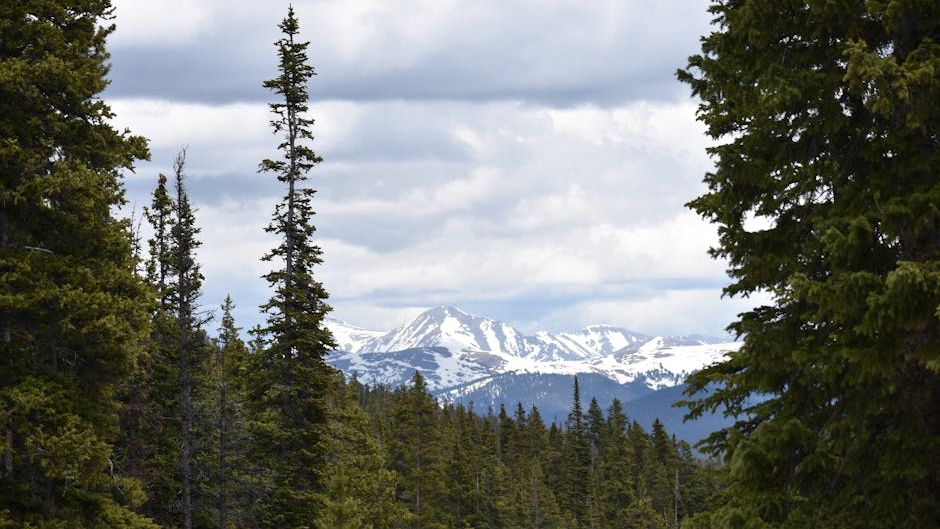
Colorado Snowstorm In May Could Be Its Biggest This Season – Image for illustrative purposes only (Image credits: Pexels)
Boulder, Colorado — Heavy snow fell across the Rocky Mountains on Tuesday and Wednesday, blanketing Boulder with more than 10 inches in what forecasters described as potentially the season’s most significant storm. The event arrived after months of scant precipitation left the region grappling with record-low snowpack and widespread drought. Residents navigated slick roads and power disruptions as the wet accumulation piled up amid early spring warmth.
Storm Tracks Through the Rockies
The snowstorm began intensifying early Tuesday, May 5, prompting winter storm warnings for areas including Denver, Boulder, and Fort Collins. It persisted through Wednesday afternoon, delivering heavy, wet flakes driven by a moisture-rich system. National Weather Service meteorologists highlighted the storm’s liquid content as one of the largest events of the year.[1][2]
Model forecasts had anticipated the setup days in advance, with upslope flow pulling deep moisture into the Front Range. Higher elevations bore the brunt, while lower areas saw a mix of rain turning to snow. The system tapered off by midday Wednesday, leaving behind a fresh layer that contrasted sharply with the bare ground of recent weeks.
Snow Totals Paint a Stark Picture
Boulder recorded 10 inches by early Wednesday morning, with some nearby spots pushing higher. The National Weather Service compiled reports from across the state, revealing widespread accumulations. Mountains north and west of the city saw the deepest dumps, underscoring the storm’s potency at elevation.[3]
- Bear Lake and Trail Ridge: 20.4 inches
- Estes Park: 17 inches
- Jamestown: 16.3 inches
- Nederland: 13 inches
- Loveland Pass: 11 inches
- Evergreen: 10.8 inches
- Boulder: 10 inches
- Denver International Airport: 4.7 inches
Denver-area spots like Broomfield and Berthoud measured around 6 inches, while plains communities farther east saw lighter coatings. These figures marked a rare May outburst, far exceeding the city’s typical 1.4-inch monthly average.
Disruptions Ripple Across the Front Range
The storm’s heavy snow snapped branches laden with fresh leaves, raising concerns for tree damage and power line failures. Roughly 50,000 homes and businesses lost electricity, prompting utility crews to mobilize. Schools canceled or delayed classes Wednesday, and highways turned treacherous with whiteout conditions over passes.[2][1]
Travel proved especially hazardous in the mountains, where gusts up to 45 mph whipped snow into low visibility. Ski areas like Arapahoe Basin seized the opportunity to extend operations through the weekend, a silver lining for late-season enthusiasts. Yet the precipitation offered only partial relief to a parched landscape.
Nearly 60 percent of Colorado languished in extreme or exceptional drought before the storm. The influx boosted snowpack marginally but fell short of a drought buster. State climatologist Russ Schumacher captured the sentiment: “This is finally the type of storm we’ve been waiting for for six months.” National Weather Service meteorologist Kenley Bonner added that it held “the potential to be the biggest storm of the year.”[2]
Meteorologist Russell Danielson emphasized its value: “In terms of the liquid content, this will certainly be one of the bigger storms the region has had this year.” Still, prolonged warmth and lengthening days threatened quick melt-off, limiting long-term gains.[1]
Lessons from a Lean Winter
May snowfalls remain commonplace in the Rockies, with Denver logging measurable amounts more often than not since 2000. This event stood out against a backdrop of early resort closures and vanished snowpack. Most slopes shuttered weeks ago, victims of record heat and minimal storms.
Looking forward, cooler air lingers briefly before temperatures climb. The extra moisture may curb immediate wildfire threats if paired with steady rains. Forecasters urged caution on melting roads and watched for refreezes. For a state yearning for sustained relief, the storm served as a reminder of the Rockies’ unpredictable rhythm.

As a little kid, I fell in love with nature, wildlife, and animals. Living in the USA, South Africa, Italy, China and Germany gave me the opportunity to discover the world's Wildlife. My favorite animals are Mountain Gorillas, Siberian Tigers, and Great White Sharks.
I'm a certified PADI Open Water Diver, went to Everest Base Camp and Trekked Gorillas in Uganda. I hold a Master of Science in Economics and Finance.
Please send any feedback to feedback@animalsaroundtheglobe.com
- The Best Ways to Introduce New Fish to an Existing Aquarium - July 30, 2026
- 10 Creatures With the Strongest Jaws on Earth - July 30, 2026
- 14 Animals Endangered in the U.S. And Whats Being Done - July 30, 2026