

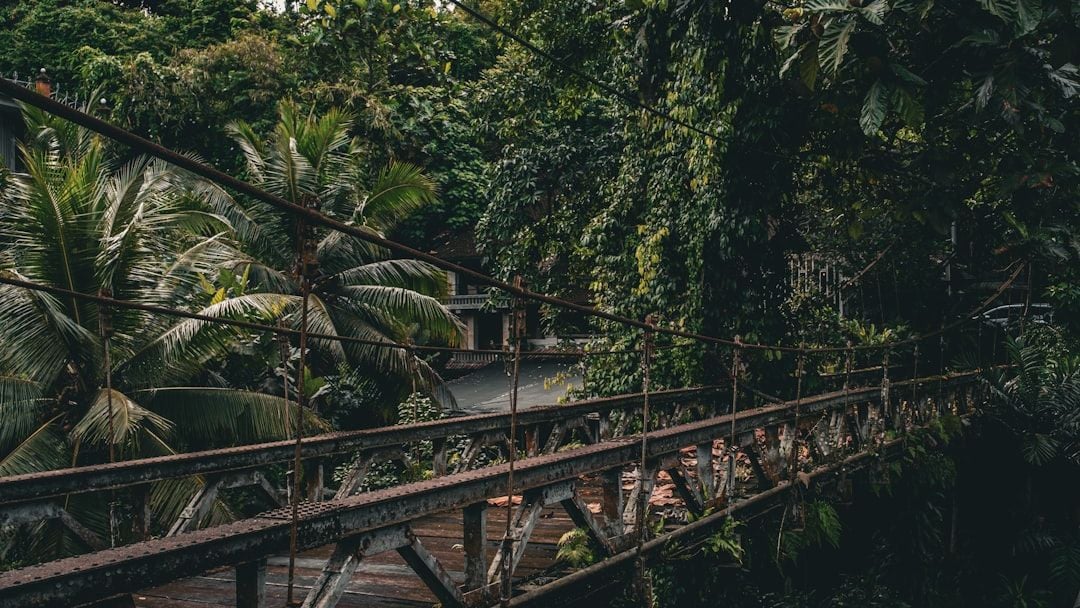
The Jungle’s Hidden Bridges: How treetop crossings are giving Peru’s wildlife a safer future – Image for illustrative purposes only (Image credits: Unsplash)
In the vast forests of southeastern Peru’s Madre de Dios region, roads built to support timber and Brazil nut harvesting have begun to fragment one of the world’s most biodiverse landscapes. The nearly 20 million acres of Amazon forest here support jaguars, tapirs, and exceptional bird populations, yet they also sustain more than 200,000 residents, including 37 Indigenous communities. As infrastructure expands to drive economic growth, wildlife face increasing barriers to food, shelter, and mates. A pilot effort led by WWF is now testing whether simple canopy bridges can restore safe movement across these human-made divides.
Why Forest Roads Create Lasting Challenges
Roads that slice through continuous forest can isolate animal populations on either side, limiting access to essential resources and reducing opportunities for genetic exchange. In Madre de Dios, these routes serve practical needs for local economies, yet they also interrupt daily travel patterns for species that live primarily in the treetops. Over time, such fragmentation weakens the resilience of entire ecosystems, especially as climate pressures intensify. Conservation groups have therefore focused on solutions that allow both development and wildlife to coexist without forcing animals onto dangerous ground.
Testing Practical Designs for Arboreal Species
Researchers are evaluating three main bridge types: single-rope crossings, simple ladders, and ladder-mesh structures. Each design is placed at strategic points where roads cut through dense canopy, aiming to match the natural movement habits of tree-dwelling animals. Early installations show that different species respond to the varied textures and stability levels, helping teams refine placements for maximum use. The goal remains straightforward: provide overhead routes that keep animals off the road surface while preserving their established travel corridors.
| Bridge Type | Key Features | Observed Use |
|---|---|---|
| Single rope | Minimal material, quick to install | Preferred by smaller primates |
| Simple ladder | Basic rungs for footing | Attracts medium-sized monkeys |
| Ladder mesh | Wider, more stable surface | Supports heavier species and mixed groups |
Camera Evidence Shows Early Results
Camera traps mounted near the bridges have already recorded several species making successful crossings. Among the animals documented are Weddell’s saddle-back tamarins, tufted capuchins, Colombian red howlers, and kinkajous. These recordings confirm that the structures function as intended, allowing animals to maintain access to food sources and social groups on both sides of the roads. Continued monitoring will track whether usage increases over time and whether additional species adopt the routes.
Linking Local Action to Larger Forest Goals
The canopy-bridge work forms part of a broader partnership between WWF and HP that targets improved management across nearly 180,000 acres in Peru while restoring 865 acres of degraded land. By keeping wildlife populations connected, the bridges support long-term forest health and the non-timber products that local communities depend on for food, fuel, and medicine. The approach illustrates how targeted infrastructure can reduce conflict between economic needs and ecological integrity without halting development.
Over the coming years, data from these sites will help determine whether similar crossings can be scaled to other road-affected forests. The project’s measured progress offers a practical model for balancing human activity with the movement requirements of forest species, preserving both biodiversity and the livelihoods tied to healthy woodlands.

As a little kid, I fell in love with nature, wildlife, and animals. Living in the USA, South Africa, Italy, China and Germany gave me the opportunity to discover the world's Wildlife. My favorite animals are Mountain Gorillas, Siberian Tigers, and Great White Sharks.
I'm a certified PADI Open Water Diver, went to Everest Base Camp and Trekked Gorillas in Uganda. I hold a Master of Science in Economics and Finance.
Please send any feedback to feedback@animalsaroundtheglobe.com
- 15 Animals That Plan Their Actions - July 21, 2026
- 15 Creatures That Thrive in Darkness - July 21, 2026
- 13 Most Independent Cat Breeds - July 21, 2026