
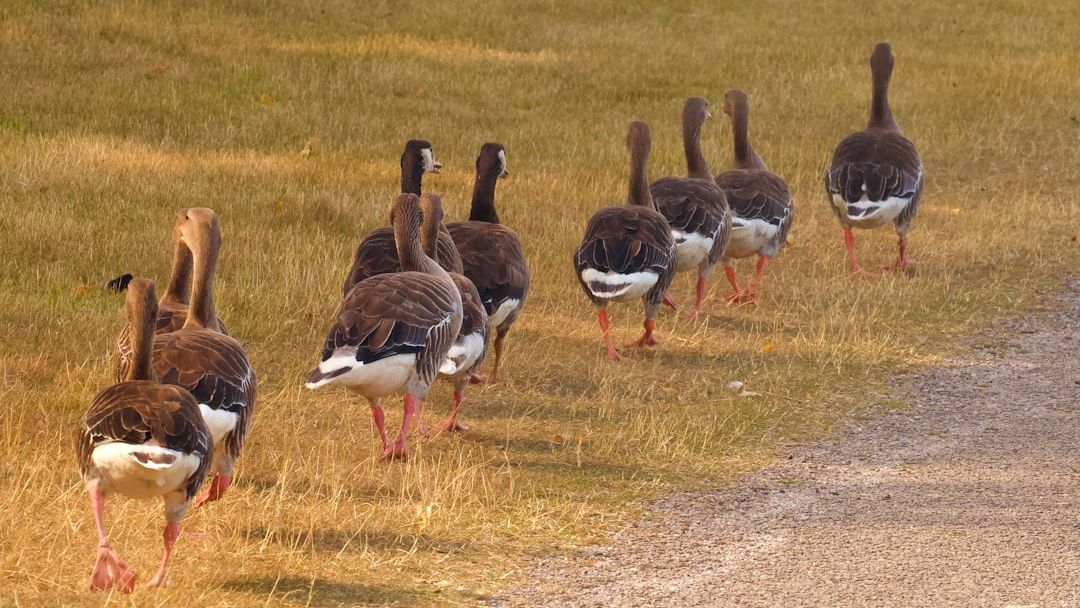
Most people encounter geese as the loud, waddling birds blocking traffic on a suburban road or terrorizing park visitors who got too close to a nest. They’re easy to dismiss. Yet scientists who spend time actually studying these birds keep arriving at the same unexpected conclusion: geese are far more cognitively capable than they look.
Their intelligence doesn’t announce itself the way a crow solving a puzzle does. It shows up quietly, in the way a goose grieves, the way a flock rotates leadership mid-flight, the way a bird remembers your face months after a single bad encounter. Once you start paying attention, the picture that emerges is surprisingly rich.
#1: They Can Recognize Individual Human Faces and Remember Them
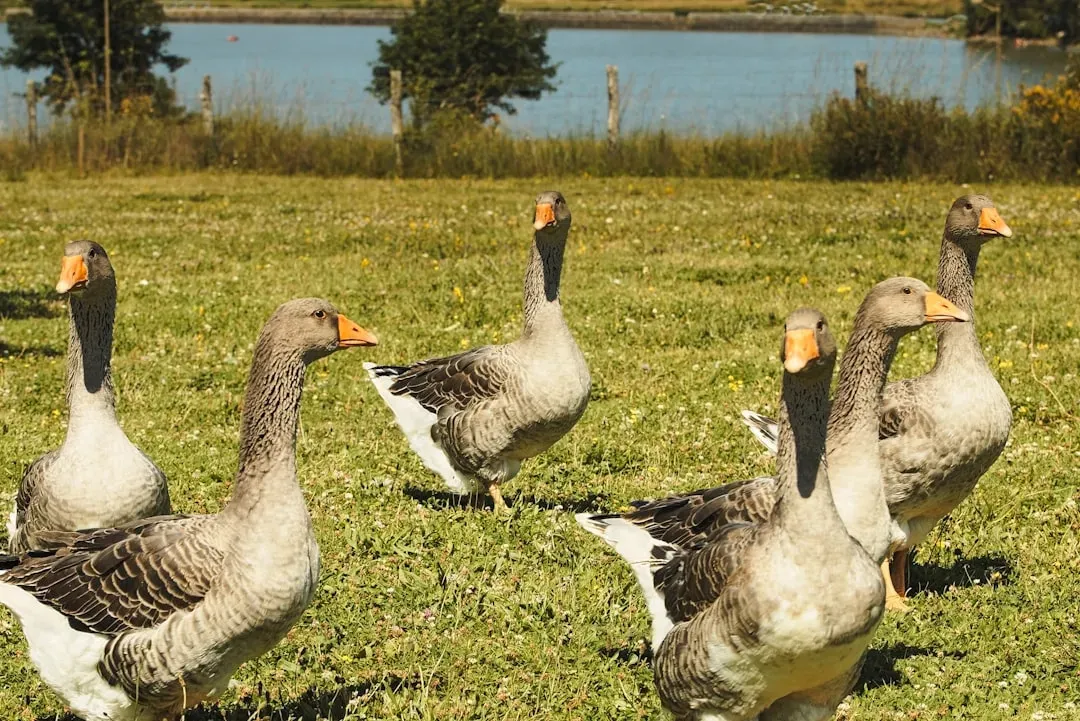
Geese can recognize individual humans, particularly those they interact with frequently, and they remember both positive and negative encounters. That’s not a casual observation. It means a goose that once had a bad experience with a specific person will behave differently toward that person alone, even weeks later.
If someone has previously disturbed or harmed them, geese may react aggressively or avoid that person in the future. This selective memory is so reliable that geese are so smart that to tag them, one researcher’s team can no longer just drive up in a university van, because geese recognize it and flee. He’s taken to having graduate students disguise themselves as joggers in order to net them for tagging.
#2: The V-Formation Is a Feat of Collective Engineering
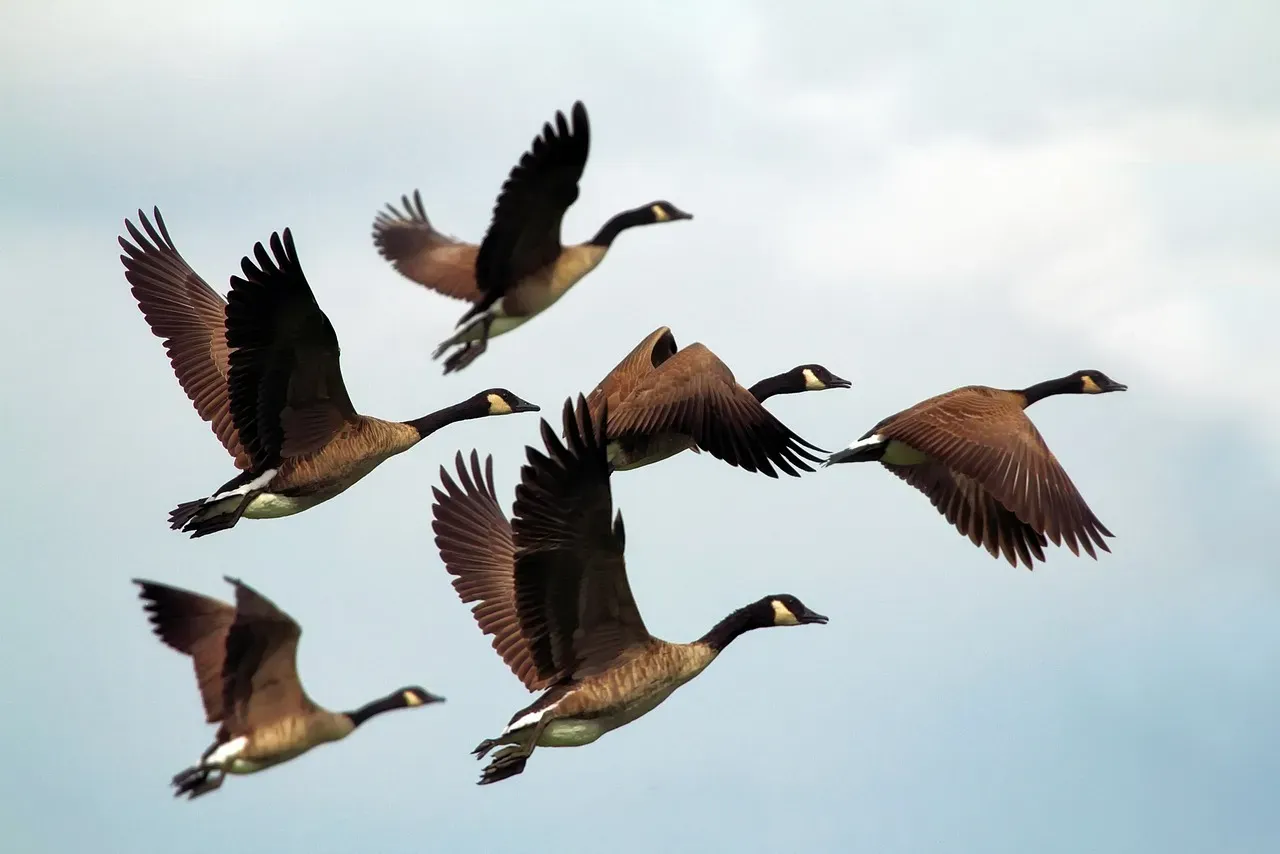
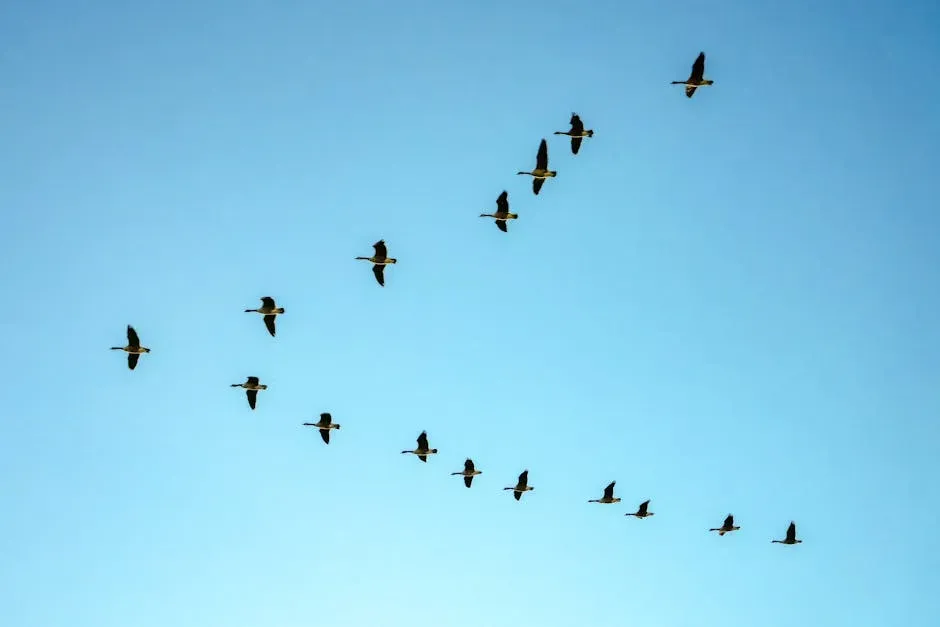
The primary reason geese fly in a V is to save energy. Each bird generates a wake of air behind and beneath its wings, and a following bird positions itself just outside this vortex, gaining upward lift from the air currents created by the bird in front. It’s essentially drafting, the same principle cyclists use in a peloton.
Flying in a V like this can increase the range of large migrating birds like geese by up to seventy percent compared to flying solo. What makes it truly remarkable is the leadership structure: the goose at the front doesn’t get any aerodynamic benefit and must work the hardest. That’s why geese take turns leading. When the lead goose gets tired, it drops back into a trailing position and another goose takes over, ensuring the flock maintains maximum efficiency for long migratory journeys.
#3: They Practice Sentinel Behavior, a Form of Organized Cooperation
Geese exhibit what bird experts call “sentinel” or “sentry” behavior: one bird watches while the other eats, so that if a predator comes, they both don’t have their faces to the ground. Watch a pair of geese feeding and you’ll see this in action without even knowing what to look for. One eats. The other doesn’t. It stands upright, scanning constantly.
They’re trying to detect predators. A lot of things want to eat birds, and they’re better working together, taking turns. This coordinated division of labor isn’t random. It’s a practiced system that keeps both birds alive. The fact that they reliably switch roles speaks to a mutual understanding that very few bird species demonstrate with such consistency.
#4: They Mate for Life and Grieve When a Partner Dies
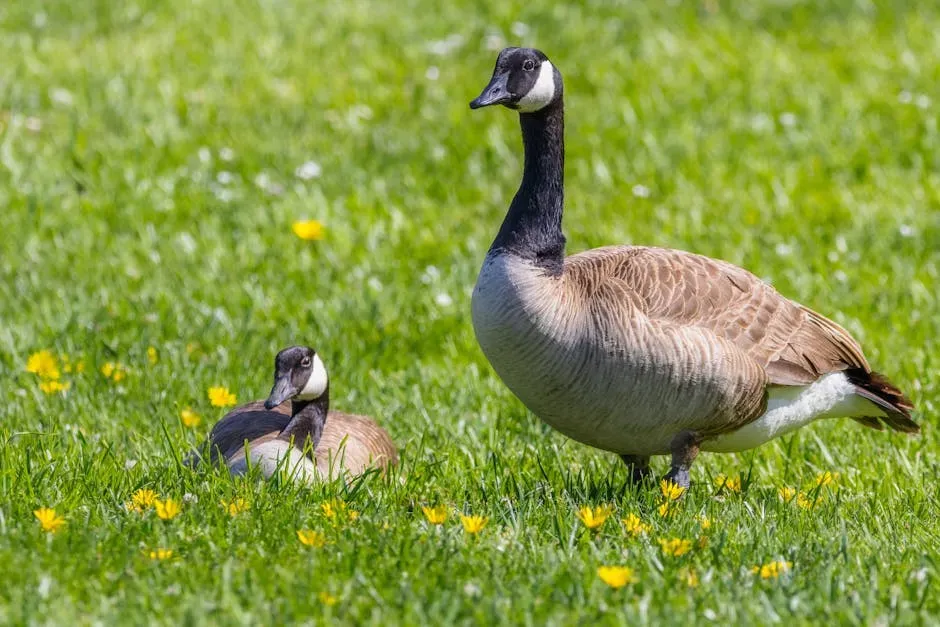
Geese exhibit monogamous behavior, forming strong and lifelong bonds with their mates. This loyalty is a key part of their nesting and breeding habits, as they only have one partner throughout their ten to twenty-five year lifespan. These birds typically form pair bonds when they are at least two years old, displaying a deep sense of commitment in their relationship.
The initial reaction to the death of a mate is often a period of pronounced grief. Witnesses report seeing bereaved geese exhibiting persistent calling, searching, and honking as if trying to locate the missing partner, as well as withdrawal from the flock and a noticeable decrease in feeding and foraging activity. When a goose loses their mate, they enter a period of mourning that can last for up to two years, and many geese don’t pair with another mate at all after losing their first.
#5: Their Navigation System Uses Multiple Built-In Tools

Geese use a combination of celestial navigation, magnetic fields, and visual landmarks to navigate during migration. They also rely on social learning, with younger geese learning migratory routes from more experienced adults. These are not separate backup systems. They work together in an integrated way that makes geese remarkably reliable navigators across thousands of miles.
This “magnetic compass” allows them to fly in the right direction even when the sky is cloudy or during low-visibility conditions. They can sense the magnetic field through specialized receptors in their eyes and brain. During the day, geese use visible landmarks such as coastlines, rivers, and mountain ranges to guide their migration, and they can recognize the layout of the land below and adjust their flight paths to stay on course.
#6: Goslings Imprint and Begin Learning Almost Immediately After Hatching
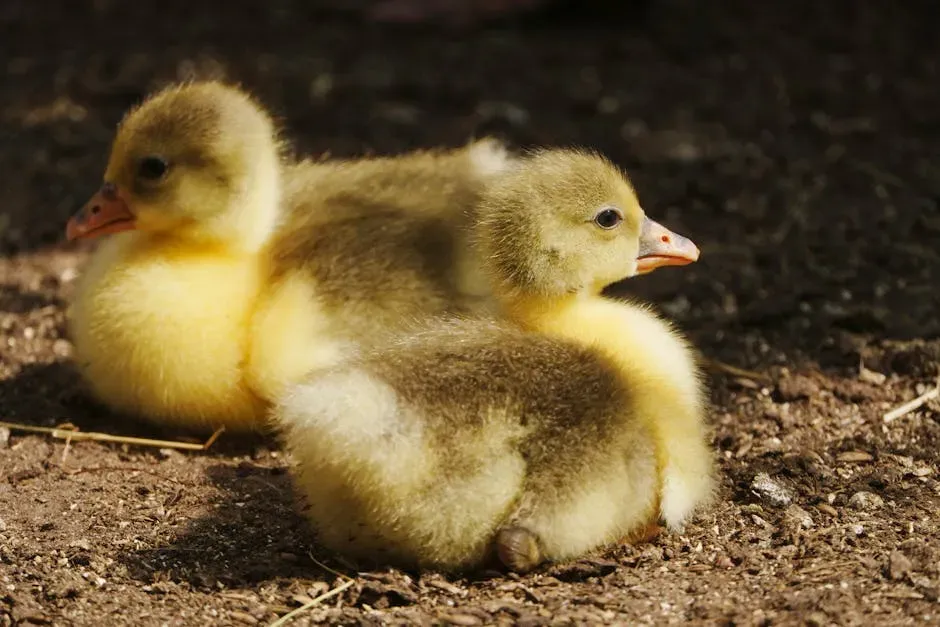
Geese can visually recognize members of their family or flock. This skill is particularly important for goslings, which imprint on their parents shortly after hatching. They use visual cues like size, shape, and movement to identify their mother and follow her closely. That imprinting process is not passive. It’s the beginning of a long period of active learning.
Geese often migrate in large flocks, and younger geese typically learn migratory routes from more experienced adults. The presence of the flock provides a social structure that helps young geese stay on course. So from their very first days, geese are absorbing information from the birds around them, building a mental map of the world that they’ll rely on for decades.
#7: They Learn by Watching Other Geese, Including Strangers
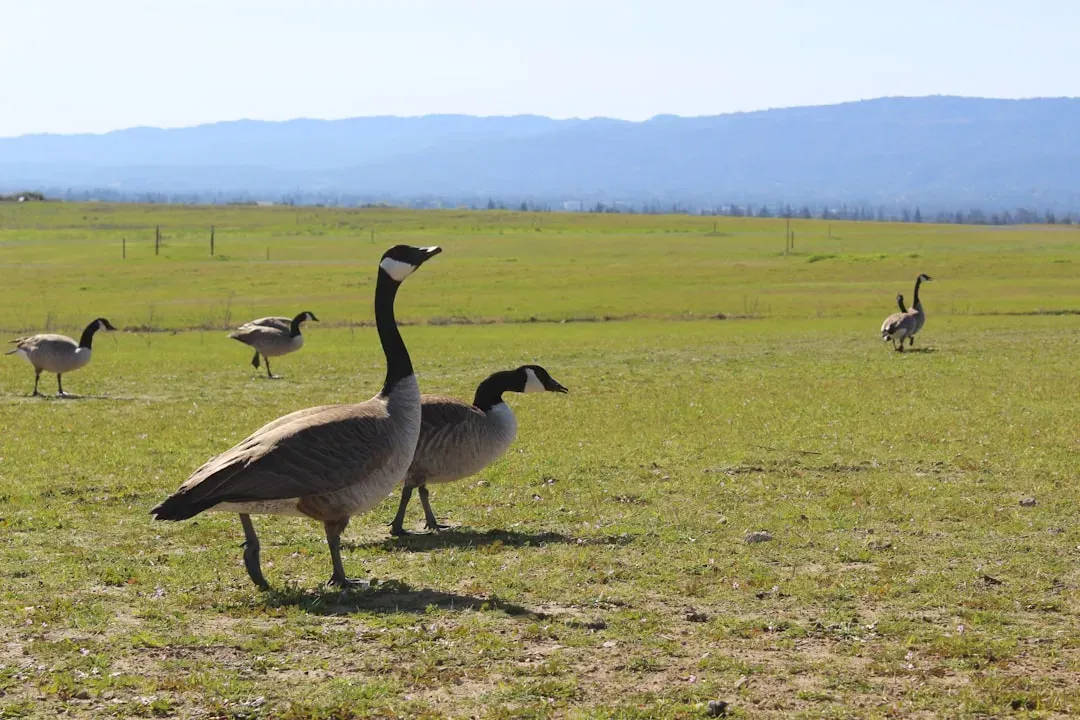
When wild migratory geese joined a group of urban, resident geese, the visitors immediately became docile. They grazed and slept without concern as an observer stood less than two meters away. Instantly they were tame. When in a new urban setting, these geese did as the resident geese did. They learned by observation, itself a complex bit of cognition.
This is observational learning, and it’s more cognitively demanding than it sounds. The wild birds arrived with established fear responses built through genuine experience with hunters and predators. Within moments, watching other geese behave calmly was enough to override those responses. Geese live among us and thrive in stable environments, but they can summon forth brain power when they need it.
#8: Greylag Geese Demonstrate Transitive Reasoning
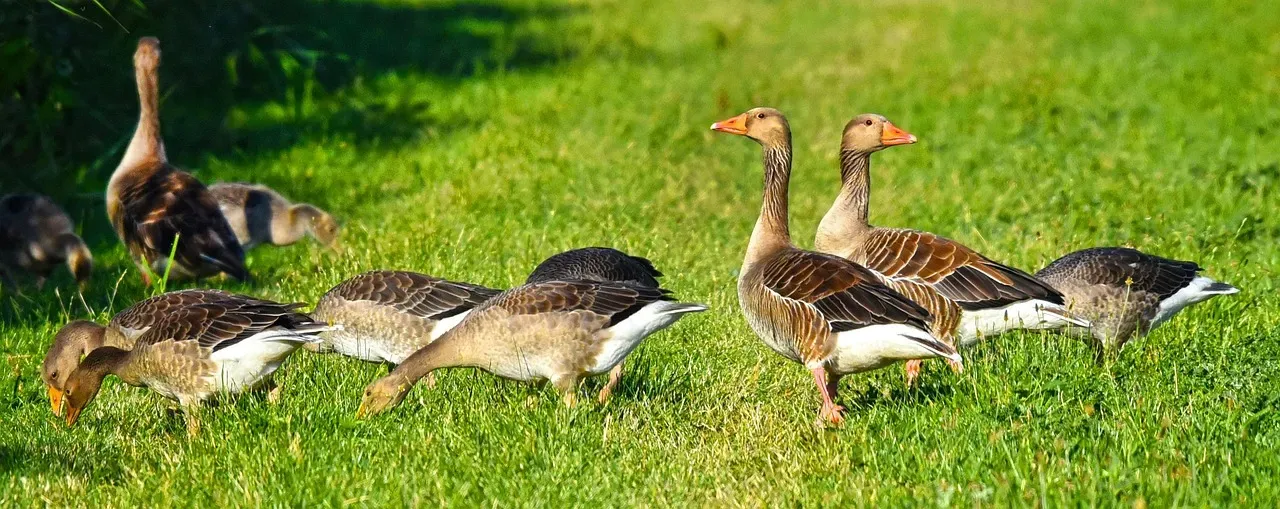
Living in large, stable groups is often considered to favor the evolution of cognitive abilities related to social living, such as the ability to track relationships among group members and to make transitive inferences about relationships based on indirect evidence. Greylag geese are relatively small-brained, but live in complex societies with social support and clan structures, forming dominance hierarchies in which families dominate pairs and unpaired individuals.
Seventeen greylag geese were trained on discriminations between successive pairs of implicitly ordered colors, where the higher ranking color in each pair was rewarded. Geese were re-tested on the task two, six, and twelve months after learning the relationships. They chose the correct color above chance at all three points in time, and also performed above chance on internal color pairs, which is indicative of long-term memory for relational information. The ability to hold and apply hierarchical relationships over a year is not something most people associate with a bird at the park pond.
#9: They Have a Long-Term Spatial Memory for Places
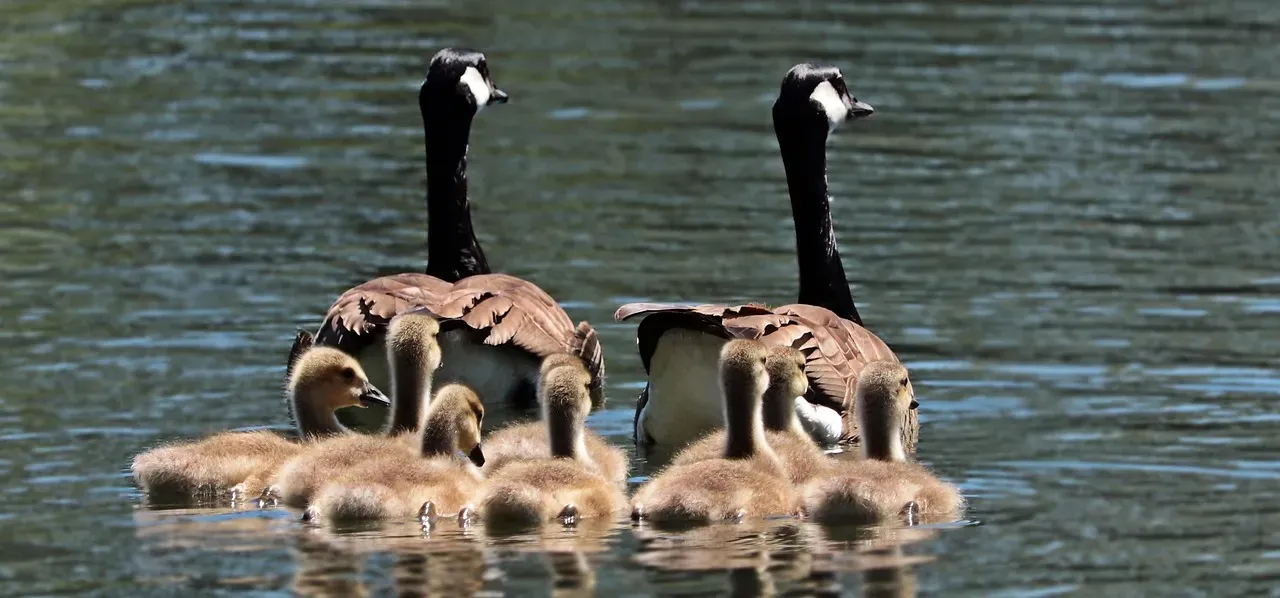
Geese are known for their site fidelity, returning to the same nesting areas year after year. They recognize specific landmarks and environmental features that guide them back to familiar territories. This isn’t just instinct nudging them in a general direction. It’s a detailed memory of specific locations, retained across seasons and migrations.
Their memory capabilities are strong, allowing them to recognize individuals, both other geese and humans, over extended periods. Geese recall successful foraging areas and preferred nesting locations, returning consistently year after year. Research using facial recognition software has confirmed that geese distinguish individual geese, indicating sophisticated visual recognition. The combination of geographic and social memory makes geese some of the more well-mapped creatures in the animal world.
#10: Their Communication System Carries Real Information
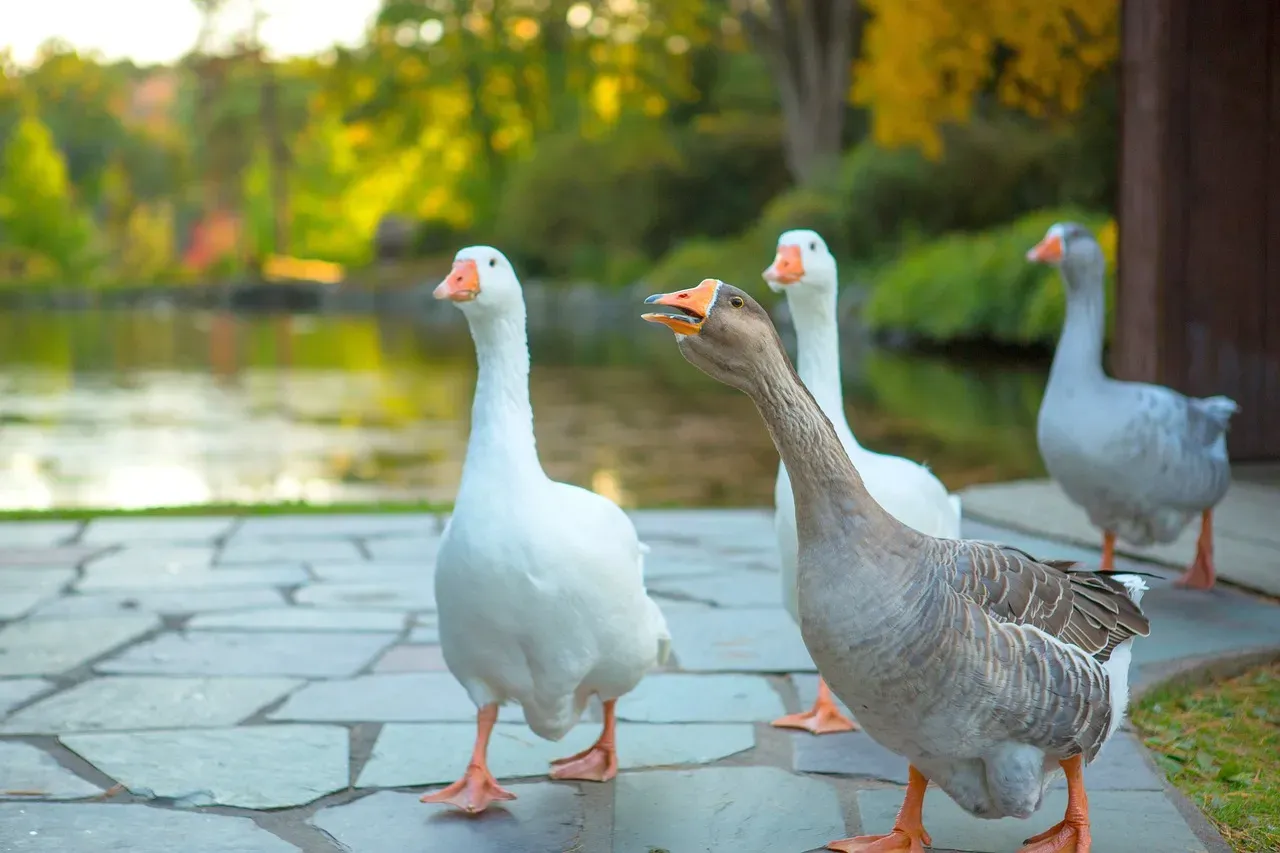
Geese have been observed to communicate in a highly sophisticated manner. Their honking, often thought of as mere noise, is actually a complex system of signals that convey a variety of messages to the flock. These calls can indicate a range of things, from the presence of a predator to a shift in direction during flight. The nuances of these calls suggest a level of social intelligence that is often overlooked.
Researchers have determined from several studies that honking is an expression of their intelligence. It is their way of communicating their bond to each other, expressing that they care for each other and stand ready to protect them from danger. The reason you hear them honking in flight is essentially to maintain order in their formation. What sounds like chaos to a casual observer is actually structured, purposeful, and socially meaningful.
#11: Paired Geese Become More Successful Parents Over Time
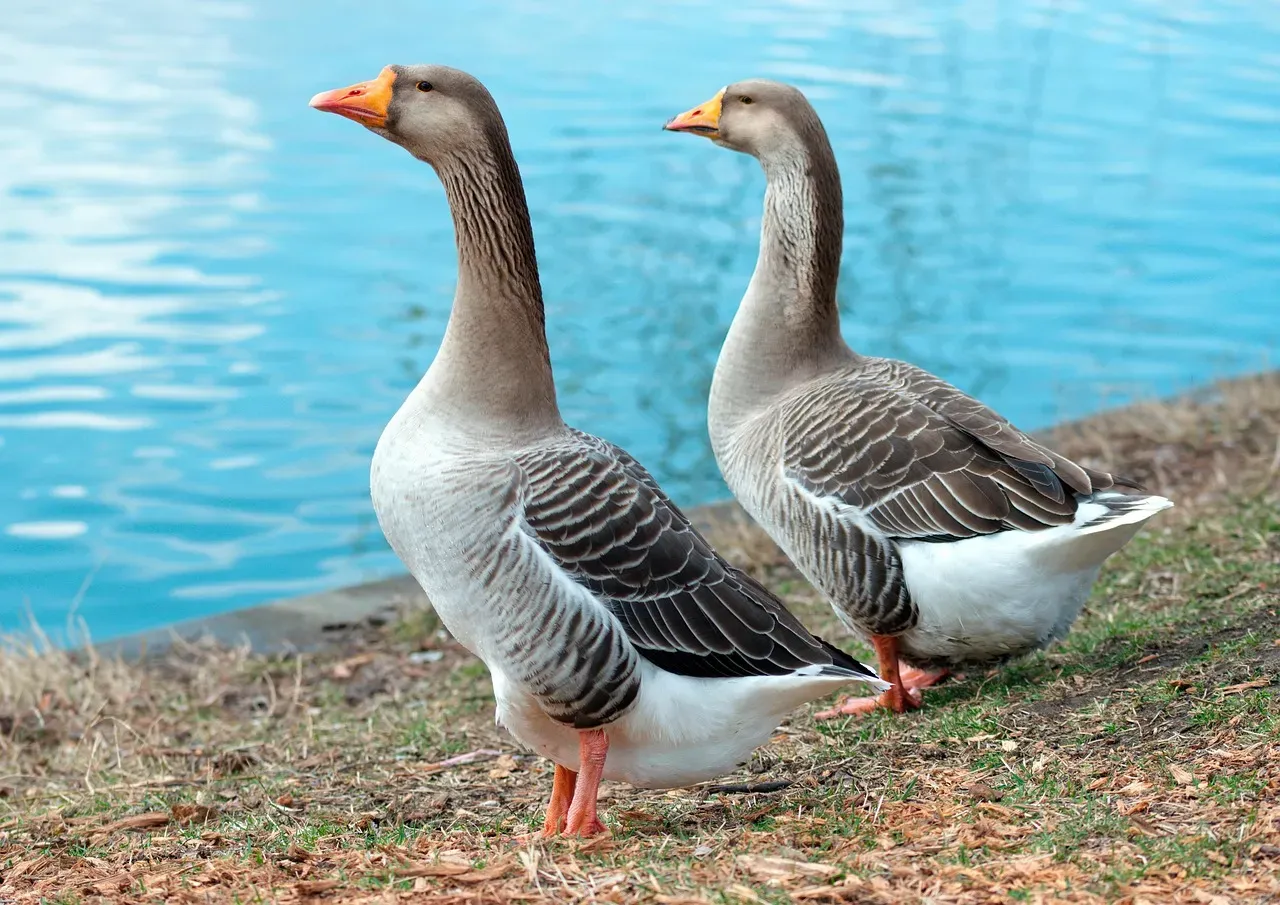
Studies show that geese with strong familial bonds produce more offspring than those without such bonds. Due to the “mate familiarity effect,” paired geese see their reproductive success increase for the first six to eleven years of the partnership. Biologists think this occurs because they’re able to fine-tune their behaviors and coordinate their efforts to acquire optimal resources.
A study published in the journal Behavioral Ecology explained this phenomenon through what researchers called the “Mate Familiarity Effect,” which basically means that as a pair stays together and have new offspring each year, they hone their parenting process. The same study found that the success rate of goslings reaching adulthood increased year on year in pair-bonded goose pairs. That trajectory of improvement, getting measurably better at parenting through shared experience, is a marker of genuine adaptive learning.
The Bigger Picture
Geese are one of those animals that reward a second look. Their intelligence doesn’t play out in flashy, easily filmed moments. It lives in the quiet rotation of a V-formation, in the goose that refuses to eat while its partner feeds, in the bird that still calls into an empty sky weeks after losing a mate.
These birds have shown that intelligence can manifest in a variety of forms, not always in the ways we expect. While we often measure intelligence based on problem-solving abilities or communication skills, the true nature of cognitive prowess may lie in a more holistic understanding of how animals interact with their environment and each other.
Geese have been living alongside humans for a very long time. Perhaps the more interesting question isn’t whether they’re smart enough to deserve our attention. It’s whether we’ve been paying enough attention to notice.
