
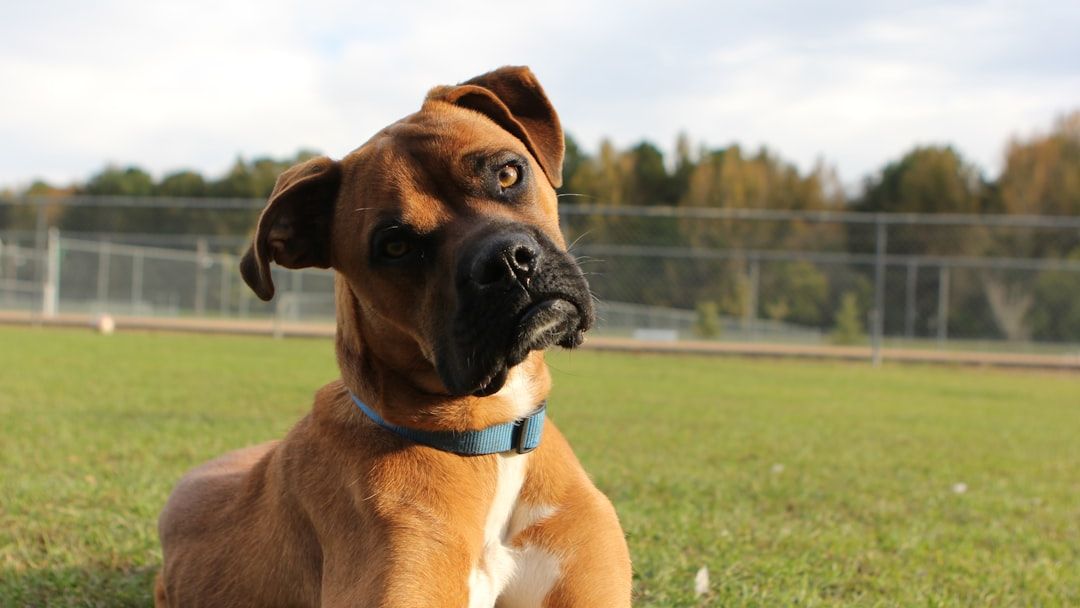
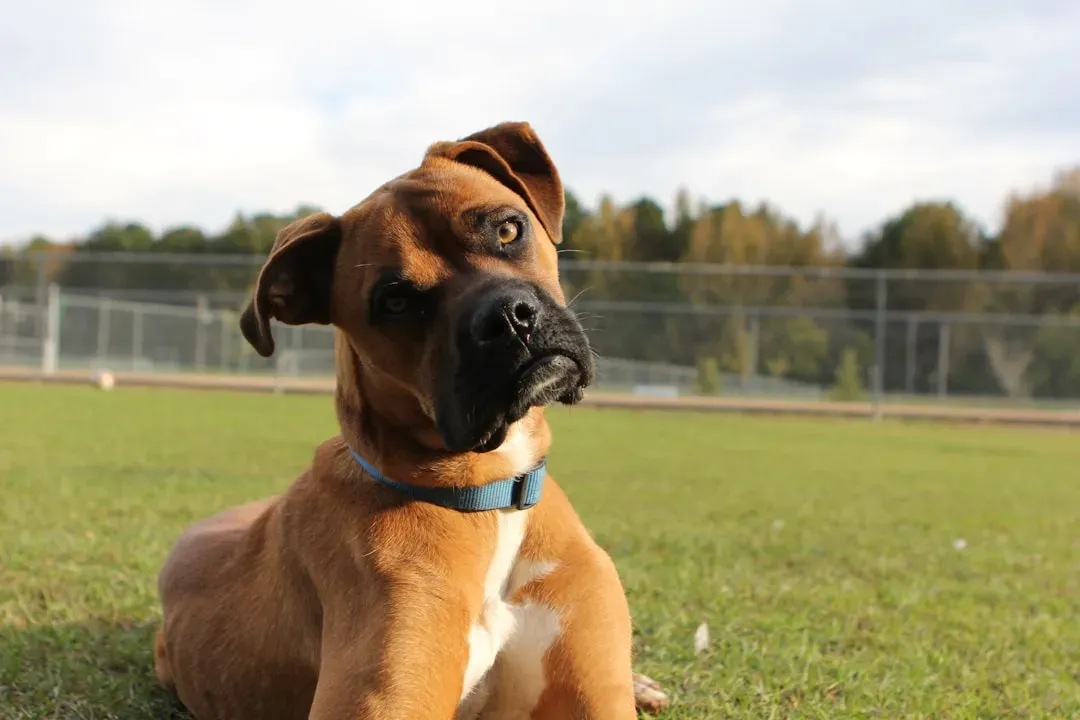
There’s a moment most dog owners know well. You say something to your dog, maybe their name, maybe “walk,” and their head swings sideways with ears perked and eyes locked onto yours. It stops you every time. That small, wordless gesture somehow feels like the beginning of a real conversation.
The head tilt is one of the most studied and most debated behaviors in canine science. Researchers have looked at it from several angles, including hearing, vision, brain processing, and social learning, and while no single explanation covers every dog, the picture that’s emerging is more interesting than most people expect. It turns out that tilt carries genuine meaning.
#1: The Anatomy of Listening More Precisely
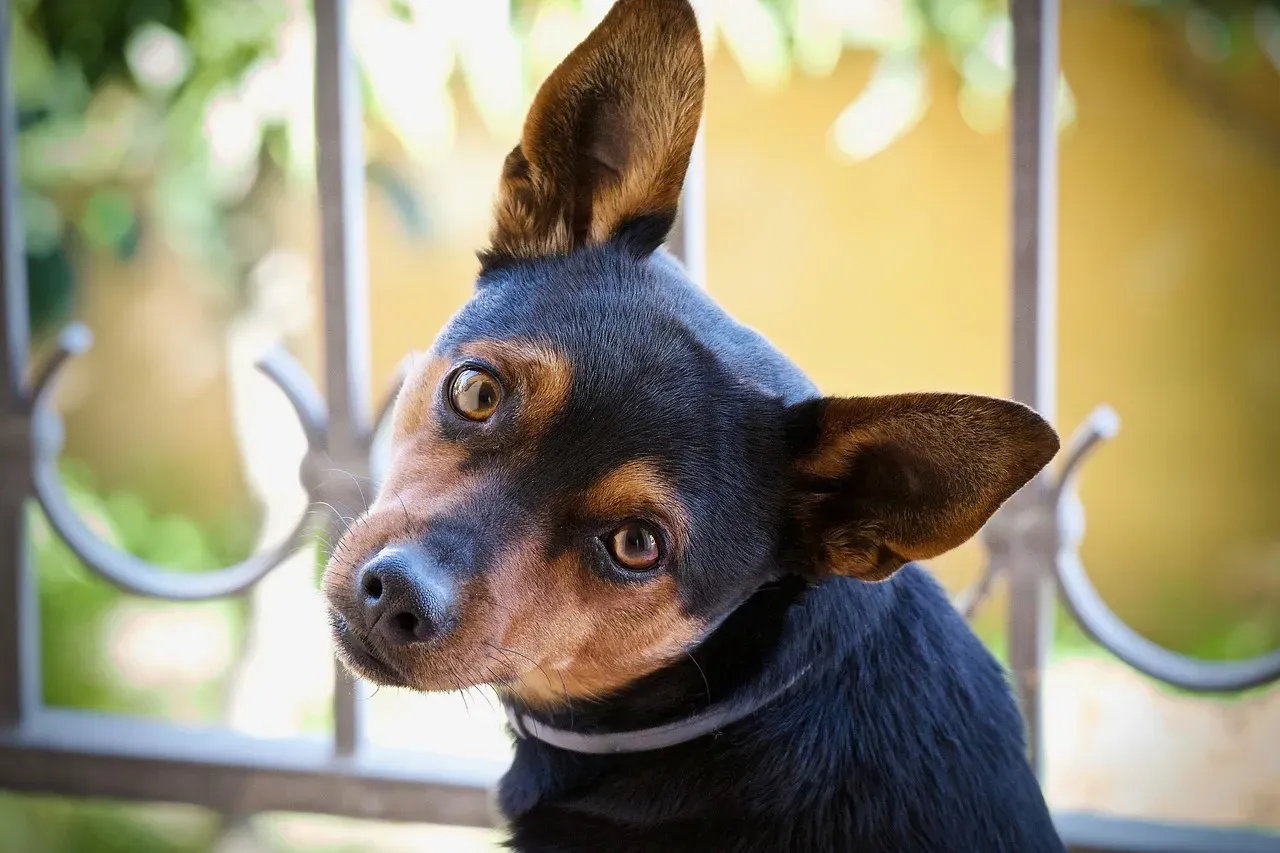
The most widely supported explanation is that head tilting helps dogs gather auditory information. Dogs can detect a far wider range of frequencies than humans, but they are less precise at determining where a sound originates. Dogs have movable ear flaps called pinnae that partially cover the ear canal, and tilting the head adjusts the position of these ear flaps to optimize sound collection.
Dogs can hear sounds across a much wider range of frequencies than humans. While we detect sounds in the range of roughly 20 Hz to 20,000 Hz, dogs can pick up high-pitched frequencies reaching up to 65,000 Hz. Still, wider range doesn’t mean better direction-finding. By adjusting the angle of their ears, dogs can better assess both the direction and distance of a sound by detecting the slight time difference between when the sound reaches each ear.
Different breeds face different challenges with this. A German shepherd’s ear flap covers only the back side of the canal, limiting detection of sounds from the rear. A cocker spaniel has heavy ear flaps that entirely cover the ear canals and interfere with sound wave transmission from all directions. The tilt is, in part, the dog’s way of compensating for its own anatomy.
#2: Seeing Past the Snout

A dog’s muzzle can block some of its vision and reduce the ability to see the lower part of a person’s face. That lower region, particularly the mouth area, is a vital component of human emotional expressions. Dogs are remarkably tuned to human faces, and missing that part of the picture is a real disadvantage.
For dogs with long muzzles, like greyhounds or German shepherds, a head tilt can be a way to get a better view. Their snouts can block part of their vision, so angling the head slightly helps them focus. It’s essentially the canine version of squinting at something interesting. Dog behavior expert Dr. Stanley Coren observed that dogs with shorter muzzles tilt their heads less because they have a better view of our facial expressions and are therefore not so reliant on their ears to understand us. The shape of a dog’s face, it turns out, directly influences how often it tilts.
#3: A Sign of Active Mental Processing

Researchers in Hungary found evidence suggesting why dogs tilt their heads when you speak. The gesture appears to be a signal that the dog is intently listening and processing what it’s hearing. A 2021 study from Eötvös Loránd University, published in Animal Cognition, studied a group of dogs capable of learning and correctly retrieving multiple toys by name. The gifted dogs tilted their heads approximately 43 percent of the time when their owner said a toy name, compared to just 2 percent of the time for typical dogs.
Another reason dogs may tilt their head is to mentally process what they are hearing. A study showed that dogs who successfully linked a word with a specific object were more likely to tilt their head when hearing that word. This suggests the tilt isn’t just a reflex. Research suggests that some dogs tilt their heads when they’re trying to understand words, tone, and emotional cues. Just like humans concentrate by adjusting their posture, dogs may tilt their heads as a sign of active listening and mental processing.
#4: The Brain’s Left Turn and Social Engagement
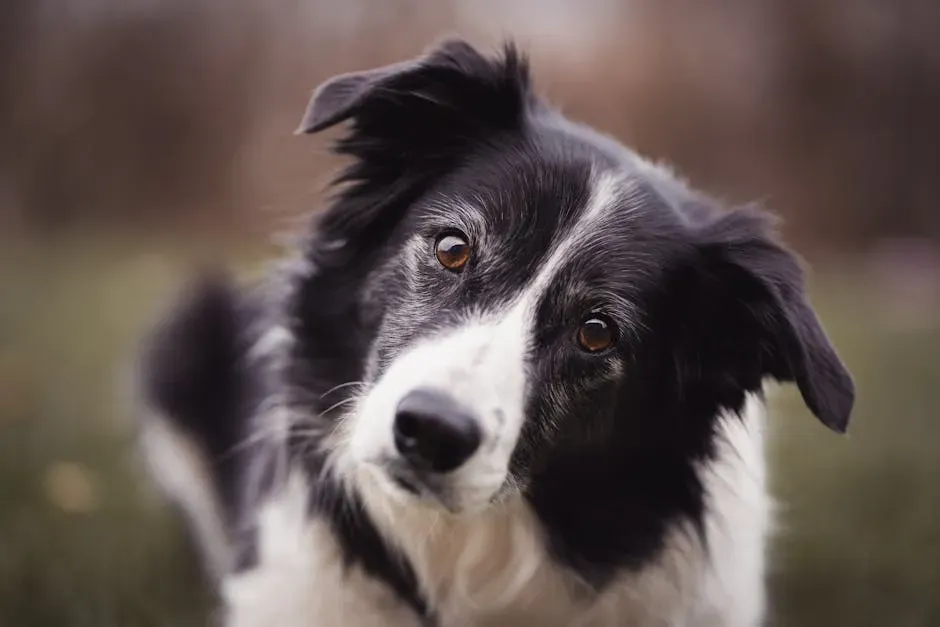
The direction of the tilt matters too. Most dogs lean to the right. The brain processes sensory inputs contralaterally, so the left hemisphere handles inputs from the right side of the body, and vice versa. A rightward tilt may mean the dog is engaging the left hemisphere to process what it’s hearing.
The head tilt appeared far more often during social communication conditions than any other. The dogs weren’t just reacting to noise, they were responding to the sense that someone was talking to them. The emotional connection behind the head tilt has also been studied. Dogs, as skilled observers, frequently respond to human emotions. According to one study, dogs are more likely to tilt their heads when they hear familiar or emotionally charged sounds, such as their owner’s voice or the sound of a toy they recognize. There’s something deliberate going on here, not just sensory fine-tuning.
#5: Learned Behavior and the Human Feedback Loop
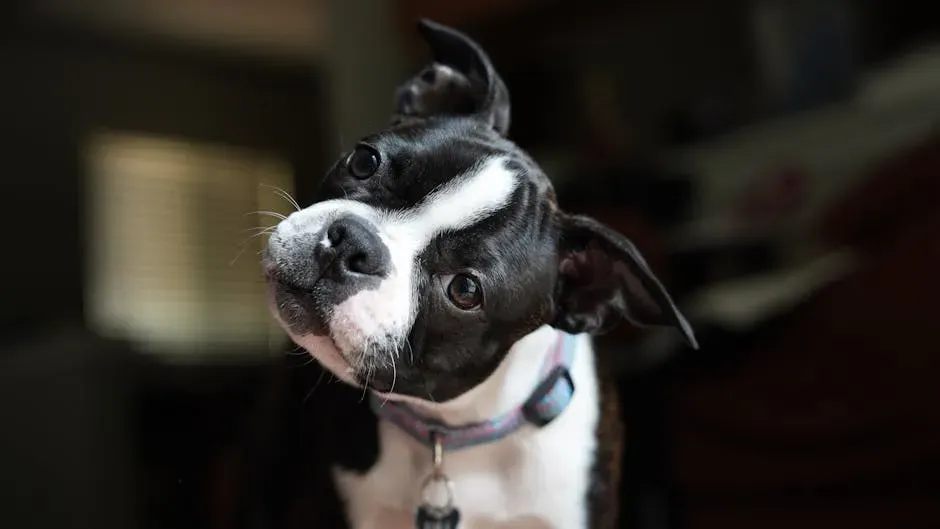
There are several factors involved in the canine head tilt, and it’s human nature to respond to its cuteness with positive reinforcement. When dogs tilt their heads, we give them a good pat, speak in a kind tone, and smile. So another reason dogs may tilt their heads is because we teach them to do it by providing positive reinforcement. Our response to the head tilt encourages repetition, so the more we gush over it, the more we get to enjoy it.
Over the course of domestication, dogs developed what biologists call “neoteny,” where adult dogs retain juvenile features, with their large eyes and soft facial proportions reminding humans of babies. This is not accidental. It’s evolution’s way of ensuring adults stay invested. Dogs acquired that same toolkit over millennia of living alongside us. The tilt looks cute because we’re wired to respond to it. We reinforce what we find endearing, and dogs have figured that out remarkably well.
When a Head Tilt Signals Something Else
A consistent head tilt that is not associated with communication may indicate a medical problem. Infections of the external ear canal caused by bacteria or yeast may cause pain, itching, and an occasional head tilt. Middle ear infections are more serious and are often accompanied by a more persistent head tilt.
A persistent or sudden head tilt, especially when combined with other symptoms like dizziness, stumbling, or eye-flicking, can be a sign of a serious medical condition. The most common medical causes are ear infections and vestibular disease, which affects the body’s balance system. If your dog is tilting their head independently of things they may be seeing or hearing, there might be an underlying medical cause. The persistent tilt will most likely be accompanied by additional symptoms, based on the severity of the problem. Knowing the difference between a curious tilt and a medical one is genuinely worth your attention as an owner.
The Bigger Picture Behind That Sideways Look

What makes the head tilt so fascinating is that it isn’t one thing. It’s hearing mechanics, it’s visual compensation, it’s cognitive effort, it’s social learning, and somewhere in that mix, it’s also a genuine attempt at connection. Dogs have been reading us for thousands of years, and the tilt is one small piece of that deeply evolved attention.
The next time your dog locks eyes with you and tilts that head sideways, know that it reflects something real. The way a dog tilts its head when you speak feels almost like a tiny moment of conversation. It gives the impression that they are doing everything they can to understand you, and researchers say that feeling isn’t far from the truth. Not bad for a gesture that takes less than a second.
