

There’s something genuinely arresting about the moment a male goldfinch lands on a sunlit thistle head in the middle of July. That burst of electric yellow against the green of summer meadows doesn’t seem like it belongs in the natural world – it looks almost painted. Yet here this tiny bird is, entirely real, right in your backyard.
What makes the American goldfinch so compelling isn’t just the color. It’s the set of behaviors, biological quirks, and life choices this bird makes that set it apart from nearly every other songbird on the continent. Some of what you’ll read below will genuinely surprise you.
#1: Their Yellow Color Is Literally Grown From What They Eat
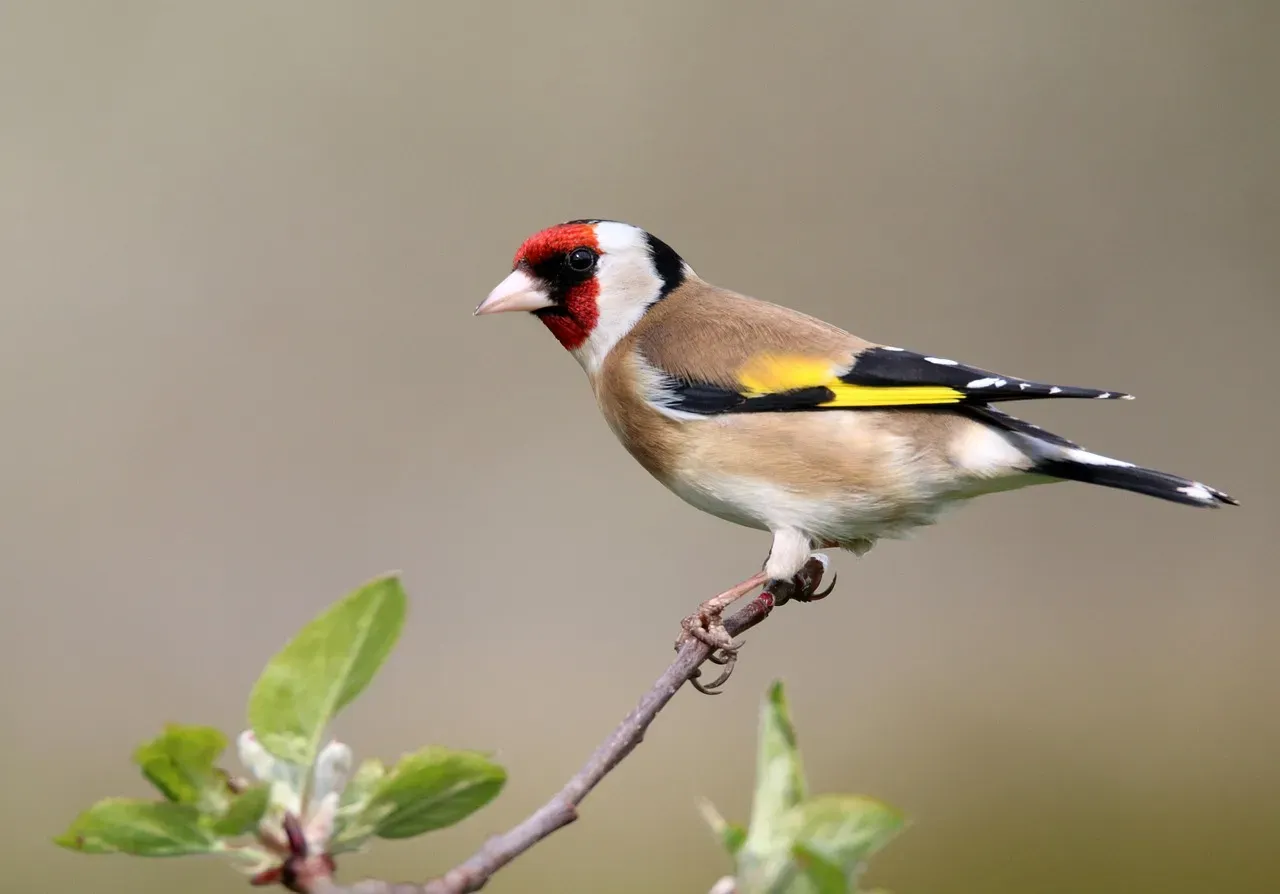
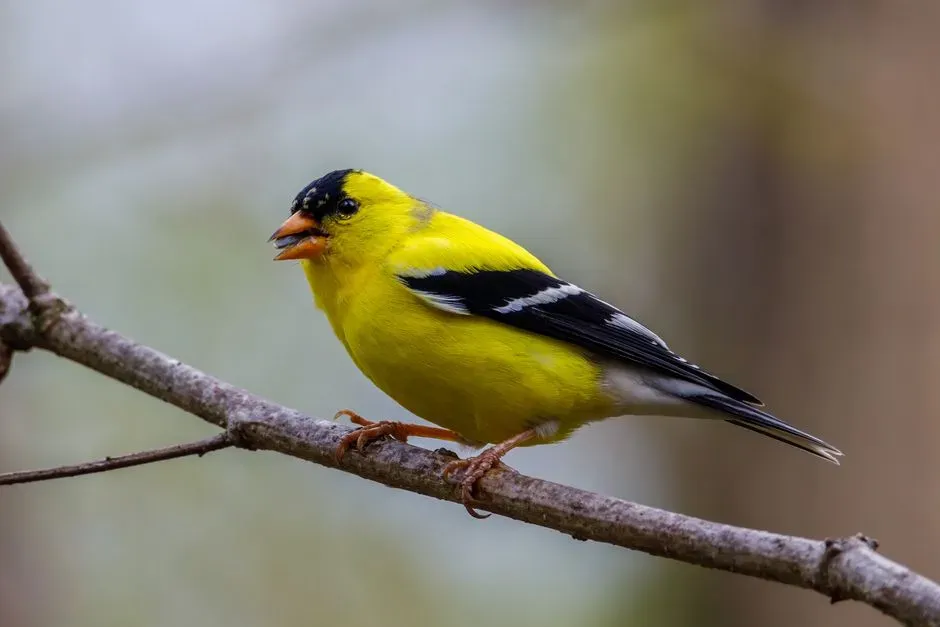
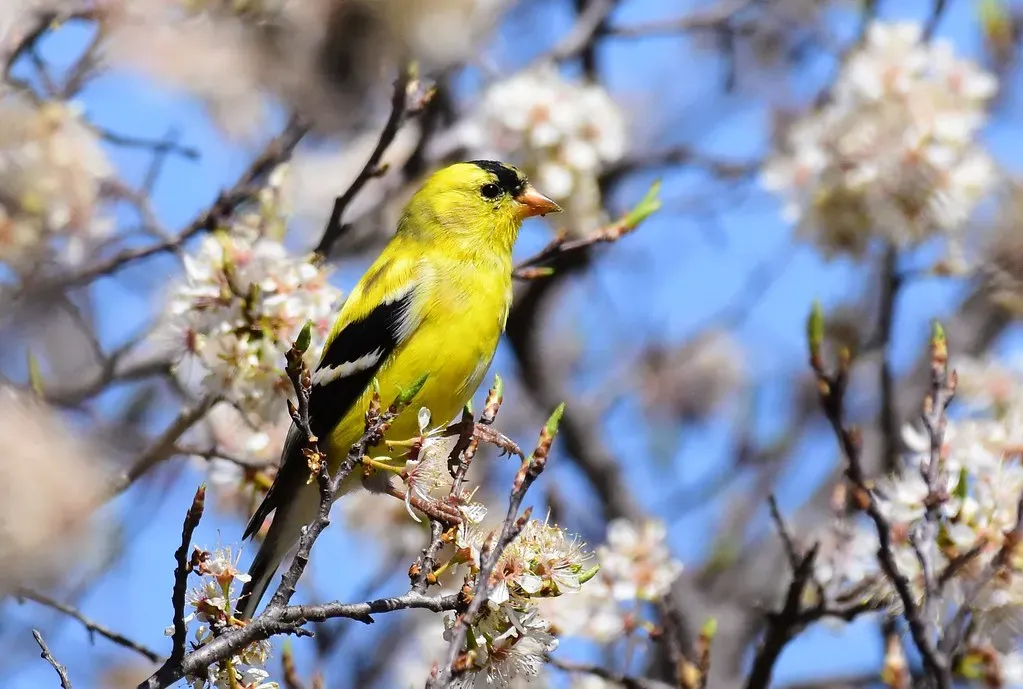
That famous sunshine yellow isn’t some genetic accident. Once the spring molt is complete, the body of the male is a brilliant lemon yellow, a color produced by carotenoid pigments from plant materials in its diet, with a striking jet black cap and white rump that is visible during flight. In other words, the goldfinch earns its color through what it consumes.
Research suggests that females use the brightness of the male’s feathers and his bill as signals of his health and suitability as a partner. The bright yellow feathers signal his previous health when he was molting into his breeding plumage, while the orange bill, which can change color much faster than the feathers, is a sign of his current health. A vibrant male is essentially advertising his nutritional history at a glance.
#2: They Are Among the Most Committed Vegetarians in the Bird World
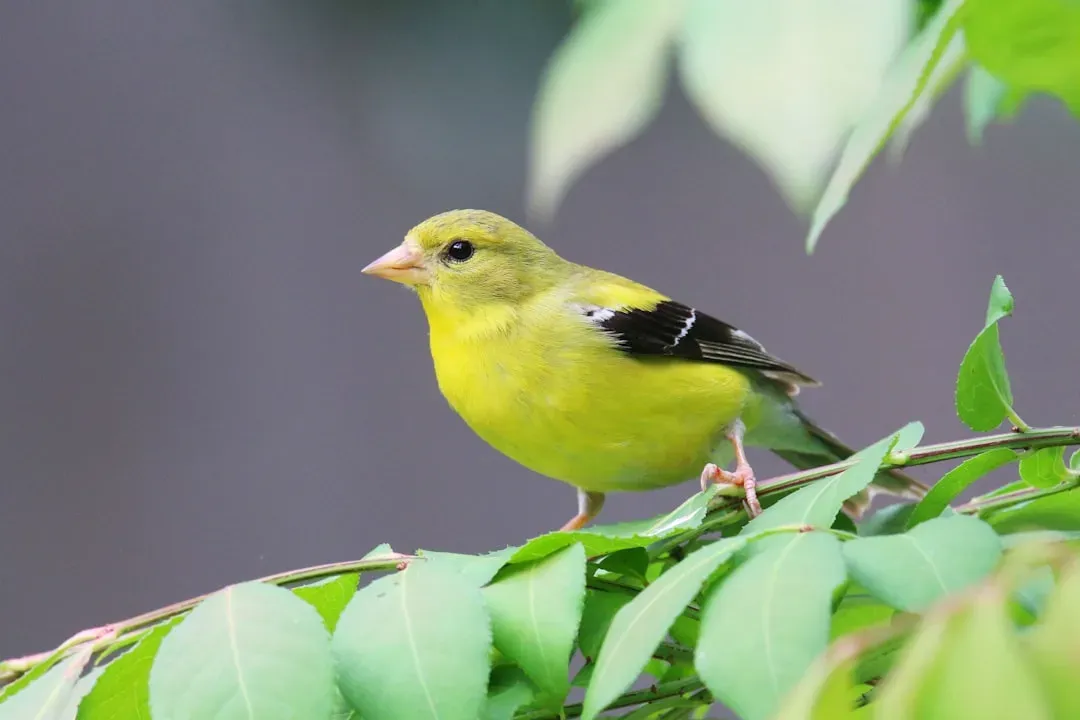
Goldfinches are among the strictest vegetarians in the bird world, selecting an entirely vegetable diet and only inadvertently swallowing an occasional insect. This is genuinely unusual. Most birds that eat seeds as adults still rely on insects during other life stages, particularly when raising young.
A wide variety of songbirds primarily eat seeds as adults. However, these same birds will usually have a primarily insect-based diet as nestlings. Insects have more protein than seeds do, and nestlings need lots of protein to grow up strong and fledge from the nest. Without lots of protein-rich insects to eat, the nestlings won’t grow properly and will often die before leaving the nest. This is true for most of our seed-eating songbirds, but not the American goldfinch. The American goldfinch almost exclusively eats seeds throughout its whole life, even as nestlings. That’s a remarkable biological adaptation that sets this bird on a different path entirely.
#3: Their Seed-Only Diet Accidentally Protects Them From a Parasite
This habit offers a distinct advantage against an occasional parasite, the cowbird. Cowbirds are known for depositing their eggs in other birds’ nests, where the large cowbird nestling often receives an unfair share of food from the unsuspecting parent, risking starvation for the other chicks. But baby cowbirds can’t survive off seeds, and a cowbird hatchling in a goldfinch nest is doomed.
When Brown-headed Cowbirds lay eggs in an American Goldfinch nest, the cowbird egg may hatch but the nestling seldom survives longer than three days. The cowbird chick simply can’t survive on the all-seed diet that goldfinches feed their young. It’s a rare case where a bird’s dietary restriction becomes a form of unintentional self-defense.
#4: They Are the Only Finch in Their Subfamily to Molt Twice a Year
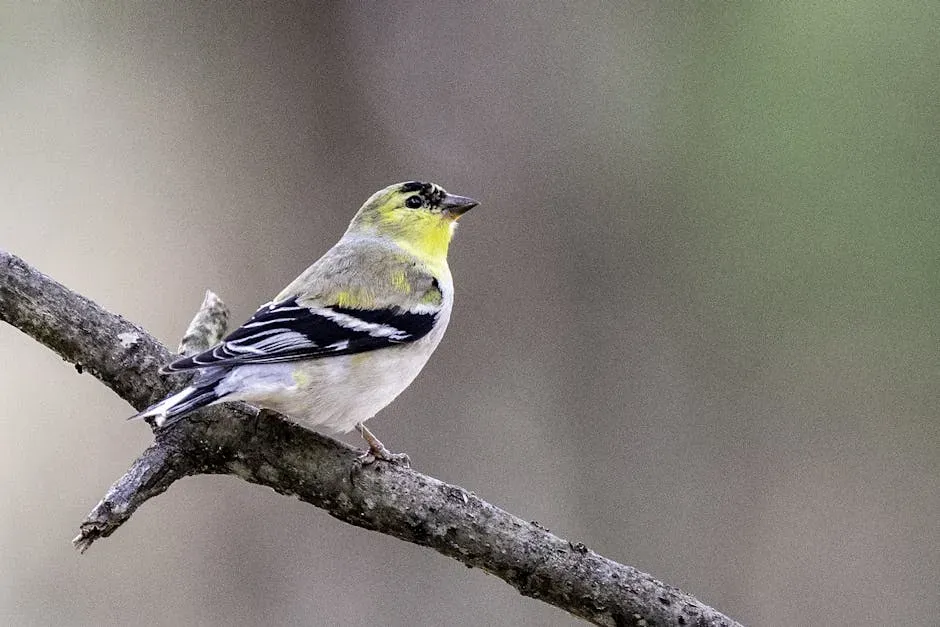
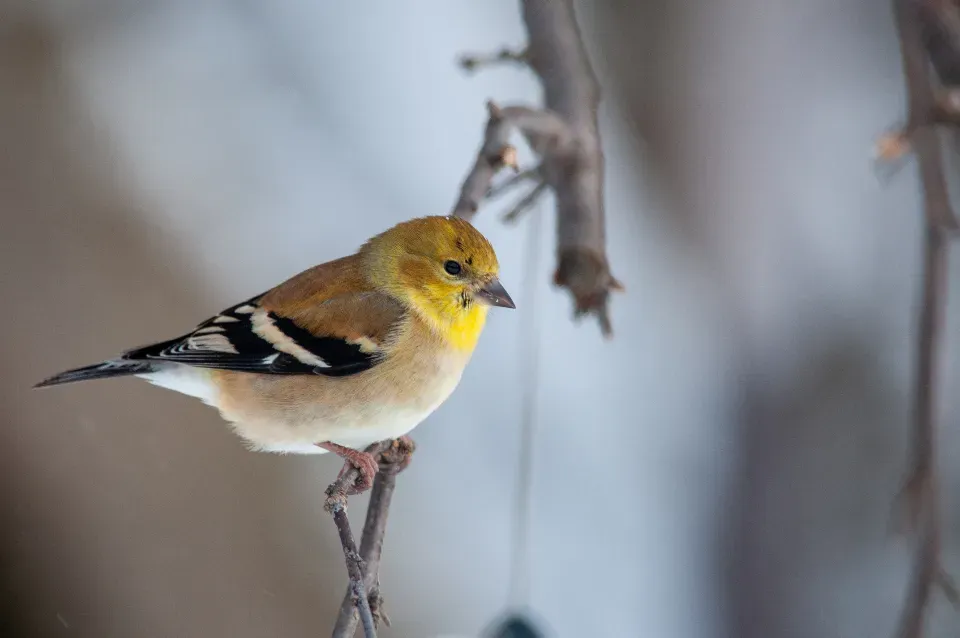
The only finch in its subfamily to undergo a complete molt, the American goldfinch displays sexual dichromatism: the male is a vibrant yellow in the summer and an olive color during the winter, while the female is a dull yellow-brown shade which brightens only slightly during the summer. This double molt is biologically costly, yet the goldfinch does it every single year.
Unlike many birds, goldfinches completely molt their feathers twice a year, before breeding in the spring and after nesting in the fall. During their fall feather molting, American goldfinches grow a new set of feathers that are much denser than their summer plumage. These soft feathers provide an additional layer of insulation to help keep them warm throughout the winter. Even the color of their legs, feet, and bill shifts with each molt cycle.
#5: They Breed Later Than Almost Any Other North American Songbird
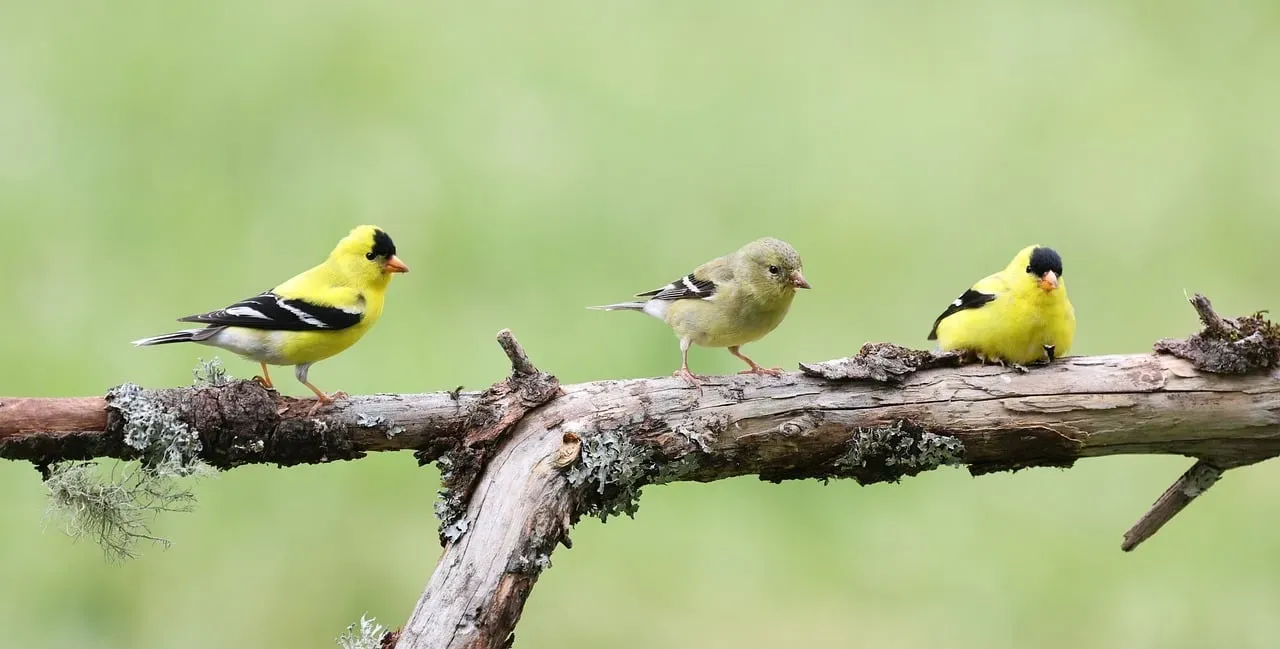
Nesting happens during the dog days of July and August, one of the latest starts to the nesting season of any North American songbird. This timing likely allows them to take advantage of thistle seeds that are most abundant during peak summer. While most birds are already raising fledglings by June, goldfinches are still selecting their nest sites.
American Goldfinches breed later than most North American birds. They wait to nest until June or July when milkweed, thistle, and other plants have produced their fibrous seeds, which goldfinches incorporate into their nests and also feed their young. The entire reproductive calendar is built around plant seed cycles rather than temperature or day length alone, which makes the goldfinch genuinely unusual in ornithology.
#6: Their Nests Are Engineered Masterpieces That Can Hold Water
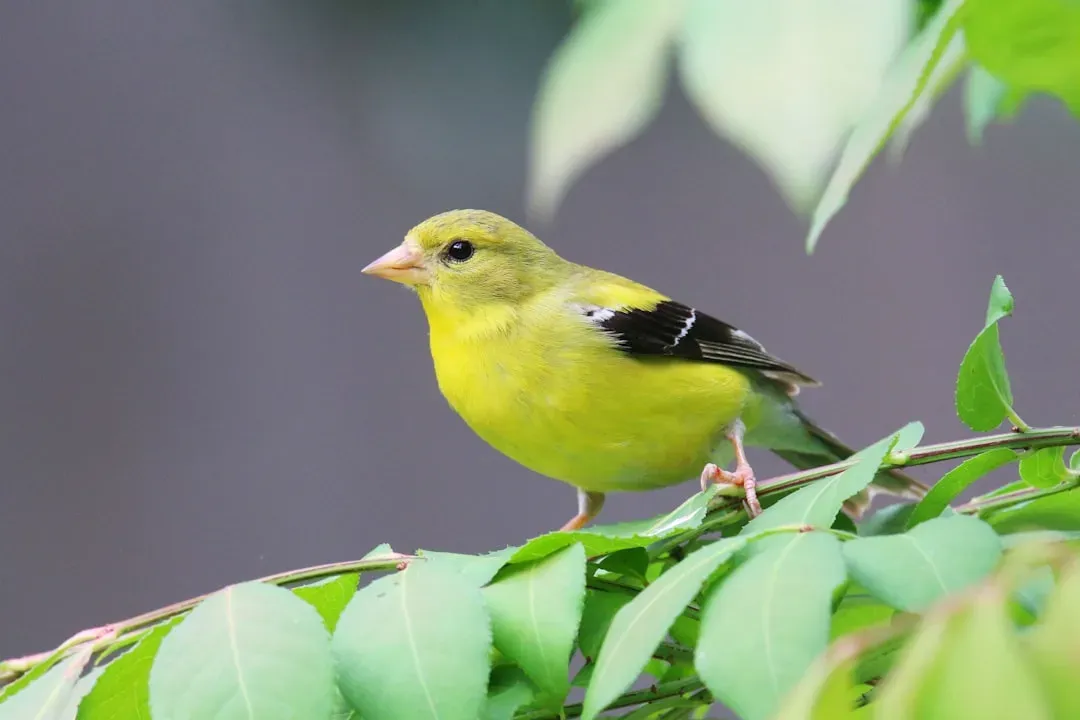
The nest is an open cup of rootlets and plant fibers lined with plant down, often woven so tightly that it can hold water. The female lashes the foundation to supporting branches using spider silk, and makes a downy lining often using the fluffy “pappus” material taken from the same types of seedheads that goldfinches so commonly feed on. The use of spider silk is particularly clever – it gives the nest structural flexibility without sacrificing strength.
The nest of American goldfinches is so tightly woven that it can hold water, and it is possible for nestlings to drown following a rainstorm if the parents do not cover the nest. The female American goldfinch chooses the nest site, builds the nest, and incubates the eggs all on her own. The male feeds the female on the nest throughout incubation and takes on an ever-increasing role in feeding the nestlings as they grow older. It’s a genuine partnership, even if the architectural labor falls to one partner.
#7: They Have a Signature Flight Call That Sounds Like a Snack Food
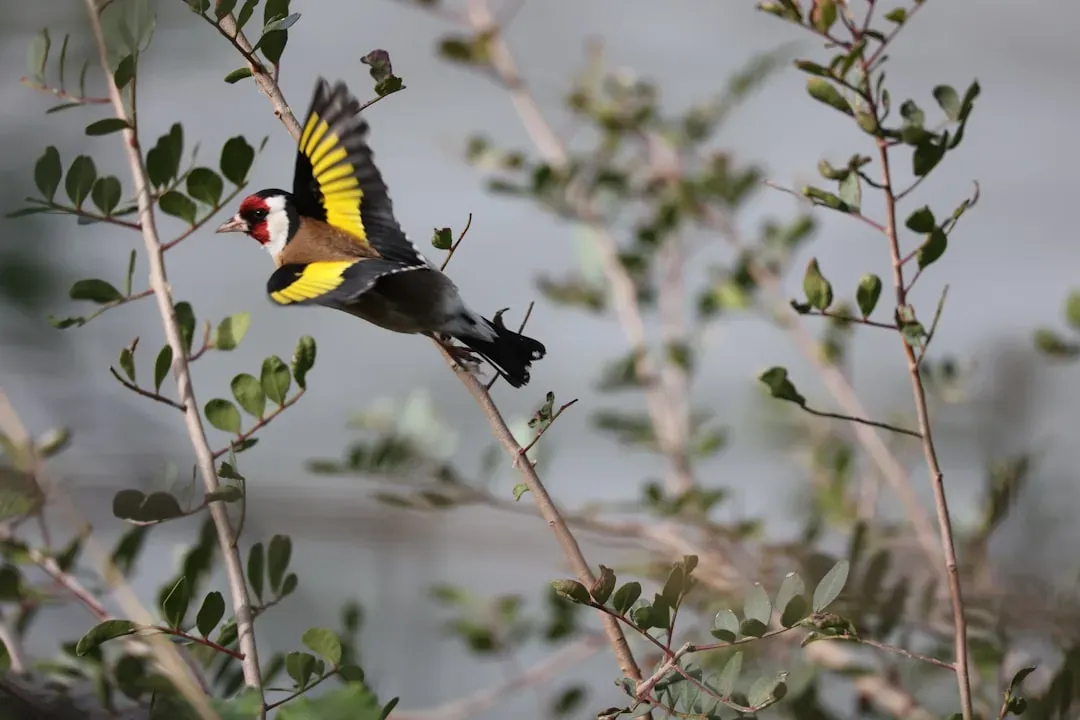
American Goldfinches are very vocal, frequently calling out while in flight. Keep an ear out for their four-syllable call with an even cadence that sounds like po-ta-to-chip or per-chick-or-y. They time their chirps with their flight pattern, which can be easily identified by its bouncy shape: a dip down, a zip back up. They vocalize on the “up” bits.
The American goldfinch flies in a distinctive undulating pattern, creating a wave-shaped path. This normally consists of a series of wing beats to lift the bird, then folding in the wings and gliding in an arc before repeating the pattern. Birds often vocalize during the flapping phase of the pattern and then go silent during the coasting phase. Once you know that call and that bouncy silhouette, you’ll spot goldfinches in the sky long before you see them land.
#8: Mated Pairs Develop Matching Flight Calls
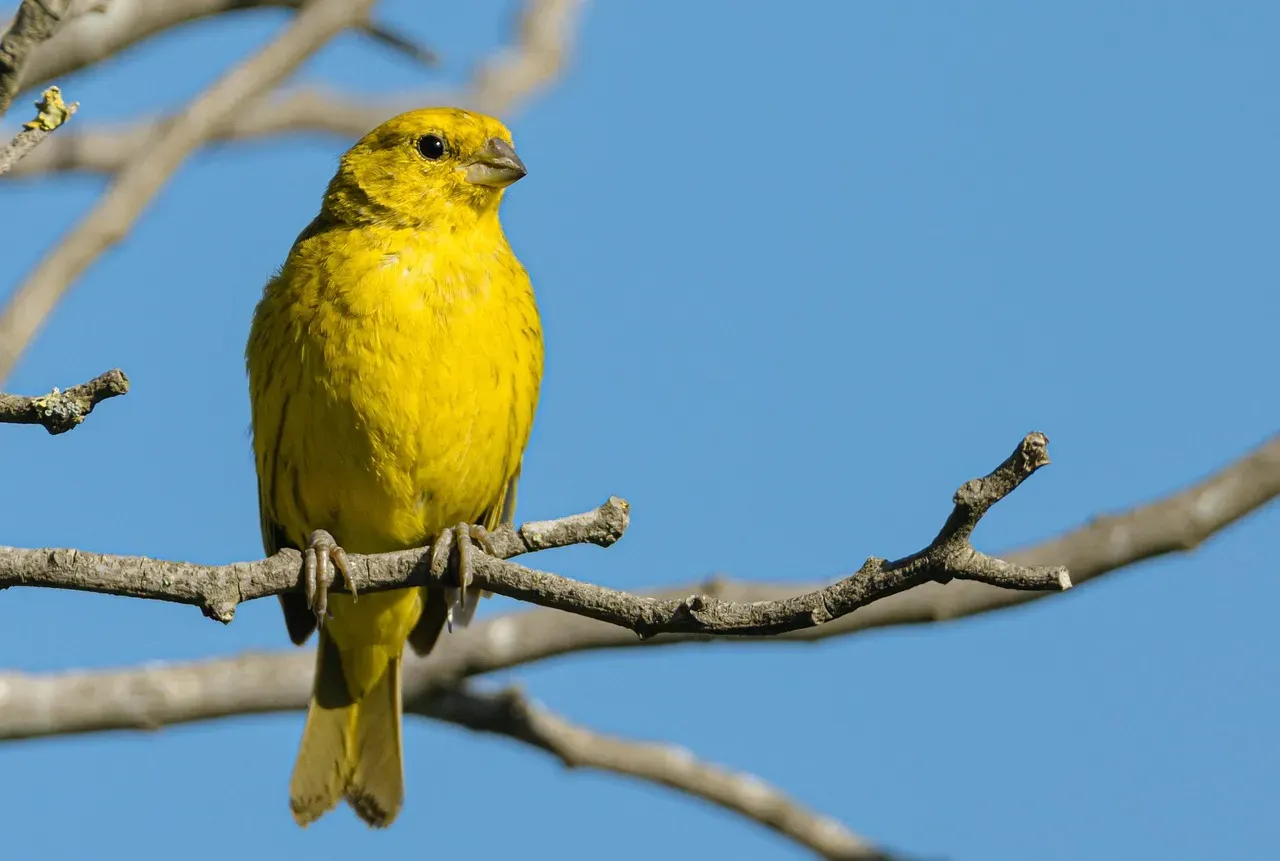
All that calling may sound the same to us, but goldfinches, along with several other types of finches, seem to be able to recognize differences in individuals’ flight calls. Once mates pair up, they begin to make nearly identical calls. Goldfinches tend to travel in flocks, so researchers believe the couple’s shared tune may allow them to find each other or be recognized as a unit by their peers.
Research suggests that the females use the brightness of the male’s feathers and his bill as signals of his health and suitability as a partner. According to this research, the bright yellow feathers signal his previous health when he was molting into his breeding plumage, while the orange bill can change color much faster than the feathers, serving as a sign of his current health. Once they form a pair bond, the male and female develop identical flight calls. There’s something oddly touching about two birds developing the same voice together.
#9: Their Migration Follows a Temperature Rule
American Goldfinches are partially migratory – many stay in roughly the same area, moving around a general region. But those populations in Canada and northern states that do move farther south avoid regions where the average minimum January temperature is 0 degrees Fahrenheit. It’s a practical, almost logical approach to winter survival.
Northern populations of the American Goldfinch are mostly migratory and southern populations are mostly residential. Banding studies have revealed that some American Goldfinches in Ontario migrate more than 1,000 miles to Louisiana. Female American Goldfinches will stay further south during the winter than males, and younger males will winter further north than adult males. Residential flocks roam widely between food supplies during the winter and have been recorded moving over 4 miles between multiple feeding stations in a single day.
#10: The Oldest Known Goldfinch Lived Nearly 11 Years
The oldest known American Goldfinch was 10 years 9 months old when it was recaptured and rereleased during a banding operation in Maryland. For a bird that weighs about as much as a few sheets of paper, that’s a remarkable lifespan. Most wild songbirds of similar size don’t come close to that age.
Both sexes become sexually mature at 11 months of age, and their life expectancy in the wild ranges from 3 to 11 years. The American goldfinch – also known as the willow goldfinch and the eastern goldfinch – is the official bird of Washington State, Iowa, and New Jersey. A bird that carries three state honors, wears a different coat each season, and can outlive a domestic cat in the wild is, by any measure, one of North America’s most underrated small wonders.
Final Thoughts
The goldfinch rewards attention. It’s the kind of bird that seems simple at first – small, bright, common at feeders – but turns out to be far more layered once you start looking. A strict vegetarian that accidentally defeats nest parasites, an architect that uses spider silk, a migrant that follows thermometer readings rather than instinct alone.
Next time a flash of yellow catches your eye across a summer meadow, it’s worth pausing. What you’re looking at isn’t just a pretty bird. It’s a finely tuned biological puzzle that has been quietly solving itself for millions of years.

- What It Means When Your Cat Stares at the Same Empty Corner at the Same Time Every Night – and the Three Explanations Competing for It - July 19, 2026
- What It Means When a Snake Crosses Your Path From Left to Right According to Every Southern Appalachian Tradition That Recorded It - July 19, 2026
- What It Means When Deer Stop Coming to an Area They Have Visited for Years – and What Wildlife Biologists Say They Are Detecting - July 19, 2026