
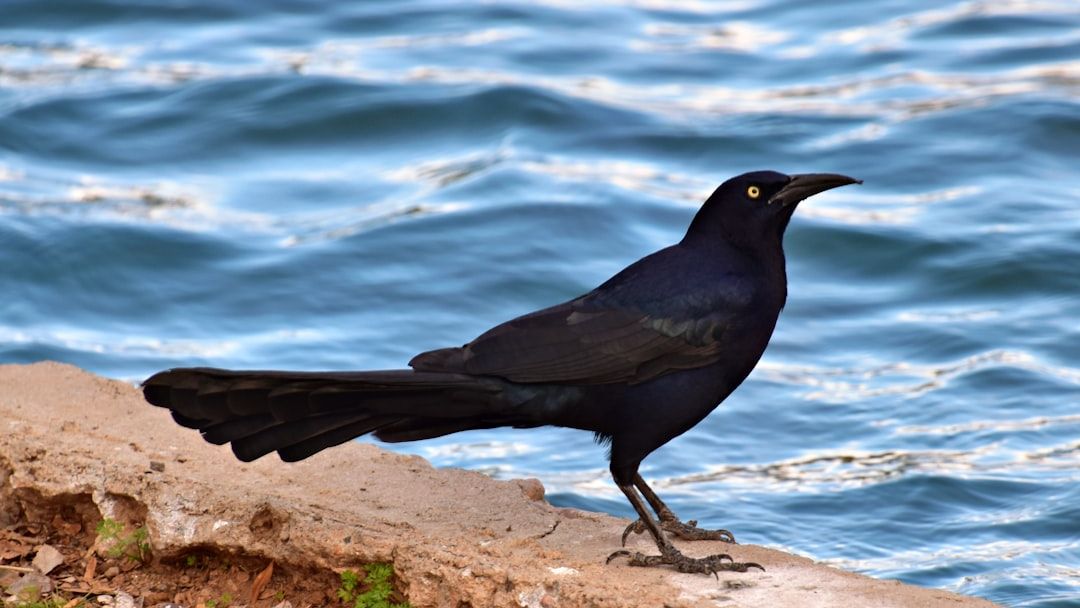
There’s a bird that struts through parking lots like it owns them, stares humans dead in the eye, and will steal food from your hand without a moment of hesitation. Most people walk right past it, assuming it’s just another nuisance blackbird. They’re wrong.
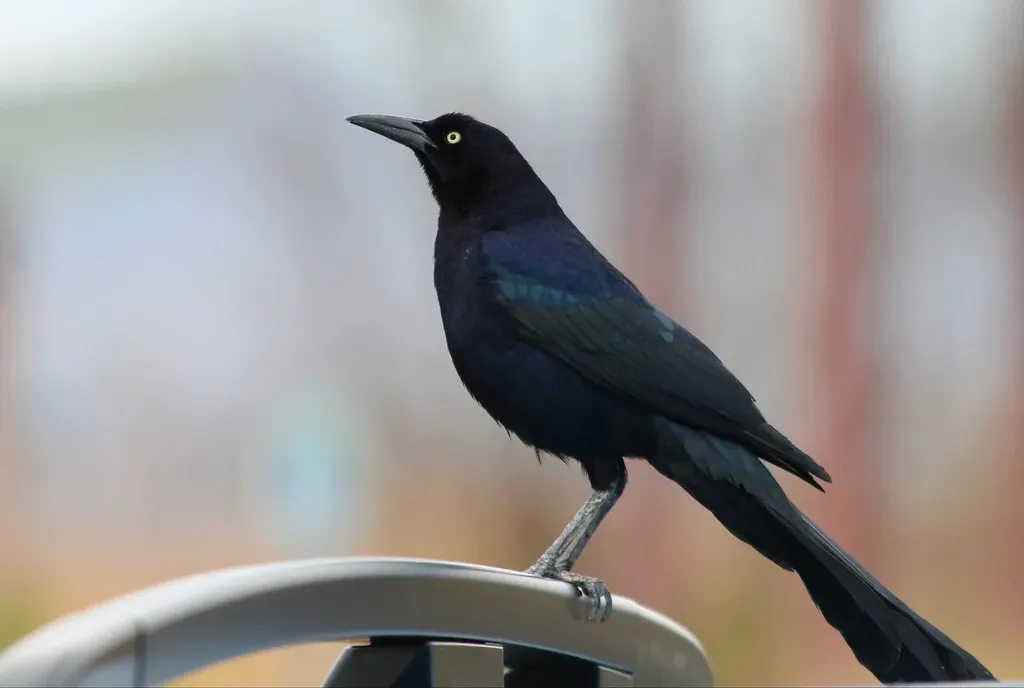
Leggy and sharp-eyed, Common Grackles are often mistaken for crows until they open their bills. Once you hear that discordant screech, there’s no mistaking this native blackbird, which seems equally at home in a marsh or a parking lot. What lies beneath that brash exterior is far more interesting than most people realize. These birds are wired for confidence in ways that science is only beginning to fully appreciate.
#1: They Belong to a Family of Surprisingly Clever Birds
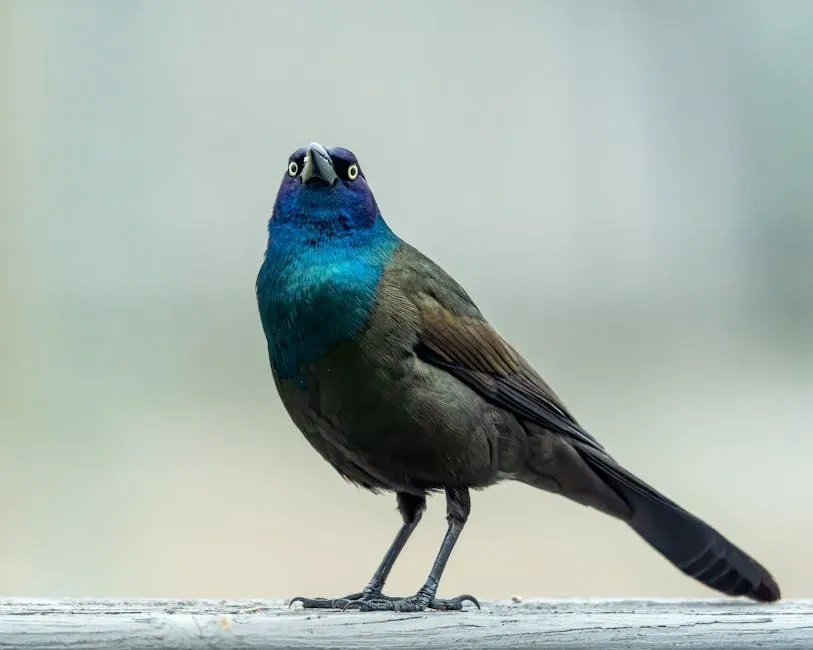
Grackles are far more than just noisy black birds. They’re problem-solvers, communicators, and highly cognitive creatures whose cleverness often goes unnoticed. From their innovative foraging techniques to their complex social structures and impressive communication skills, grackles consistently demonstrate a level of intelligence that places them squarely among the smartest birds in North America, right alongside corvids like jays, crows, and ravens.
The grackle isn’t even distantly related to the crow. It’s a member of the Blackbird family, which includes Brewer’s and Red-winged Blackbirds, as well as Cowbirds and Orioles. That this unrelated bird independently evolved such bold, clever behaviors makes it genuinely fascinating. Convergent intelligence is rare, and grackles pulled it off without the corvid pedigree everyone assumes they have.
#2: Their Behavioral Flexibility Has Been Studied at the University Level
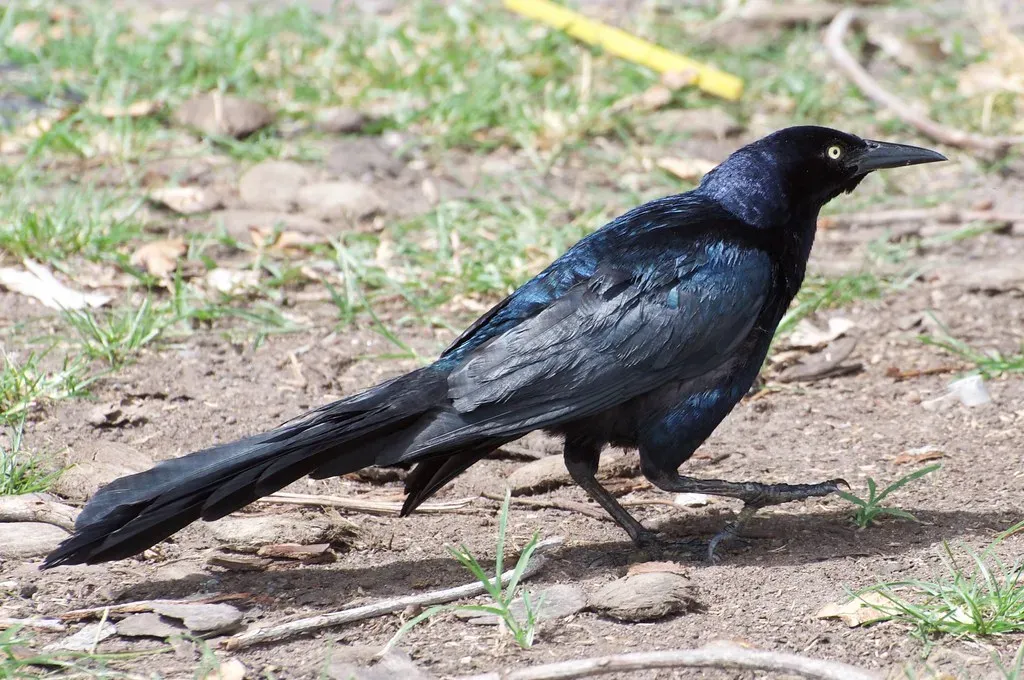
Before starting her PhD in Experimental Psychology, researcher Dr. Corina Logan spent time in Costa Rica where she observed the behavior of great-tailed grackles and was struck by their apparent intelligence. She later obtained funding from the National Geographic Society and the SAGE Centre for the Study of the Mind at the University of California Santa Barbara to set up a field site to study cognition in the great-tailed grackle.
A series of food acquisition challenges she set for them proved that, like crows, they were very good at deploying a variety of solutions to solve different problems. This particular skill is known, in bird scientist lingo, as “behavioural flexibility,” and understanding it is an important piece in solving the bird intelligence puzzle. Logan’s field and lab work primarily explored the species’ ability to change mating, feeding, and social behaviors in response to new habitat. This isn’t casual observation. It’s peer-reviewed science confirming what anyone who’s watched a grackle for ten minutes already suspected.
#3: They’re Extraordinarily Resourceful Foragers
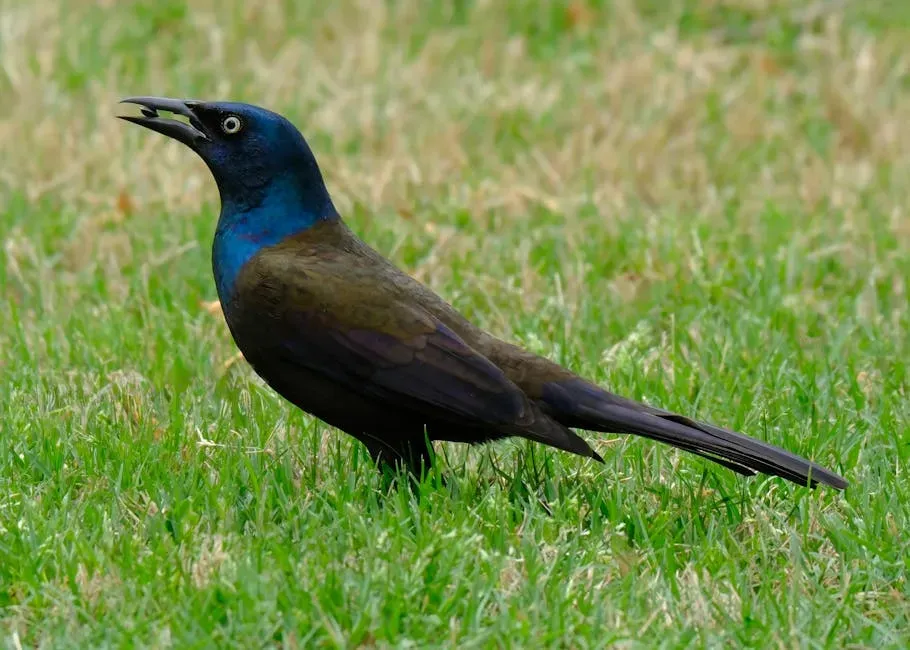
Grackles sometimes follow plows to catch invertebrates and mice, wade into water to catch small fish, pick leeches off the legs of turtles, steal worms from American Robins, raid nests, and kill and eat adult birds. That’s not a bird scavenging out of desperation. That’s a bird with a tactical mind and a remarkably flexible appetite.
Common Grackles will eat nearly anything and everything, from wild and cultivated plants, especially corn, to insects and other songbirds. They have been observed catching fish and crustaceans, stealing worms from American Robins, and prying leeches off the legs of turtles, not to mention picking through human trash for a choice morsel. Their willingness to eat nearly anything, and their creativity in obtaining it, is a core reason they’ve thrived across such a wide range of environments.
#4: They Have a Built-In Tool for Cracking Hard Foods
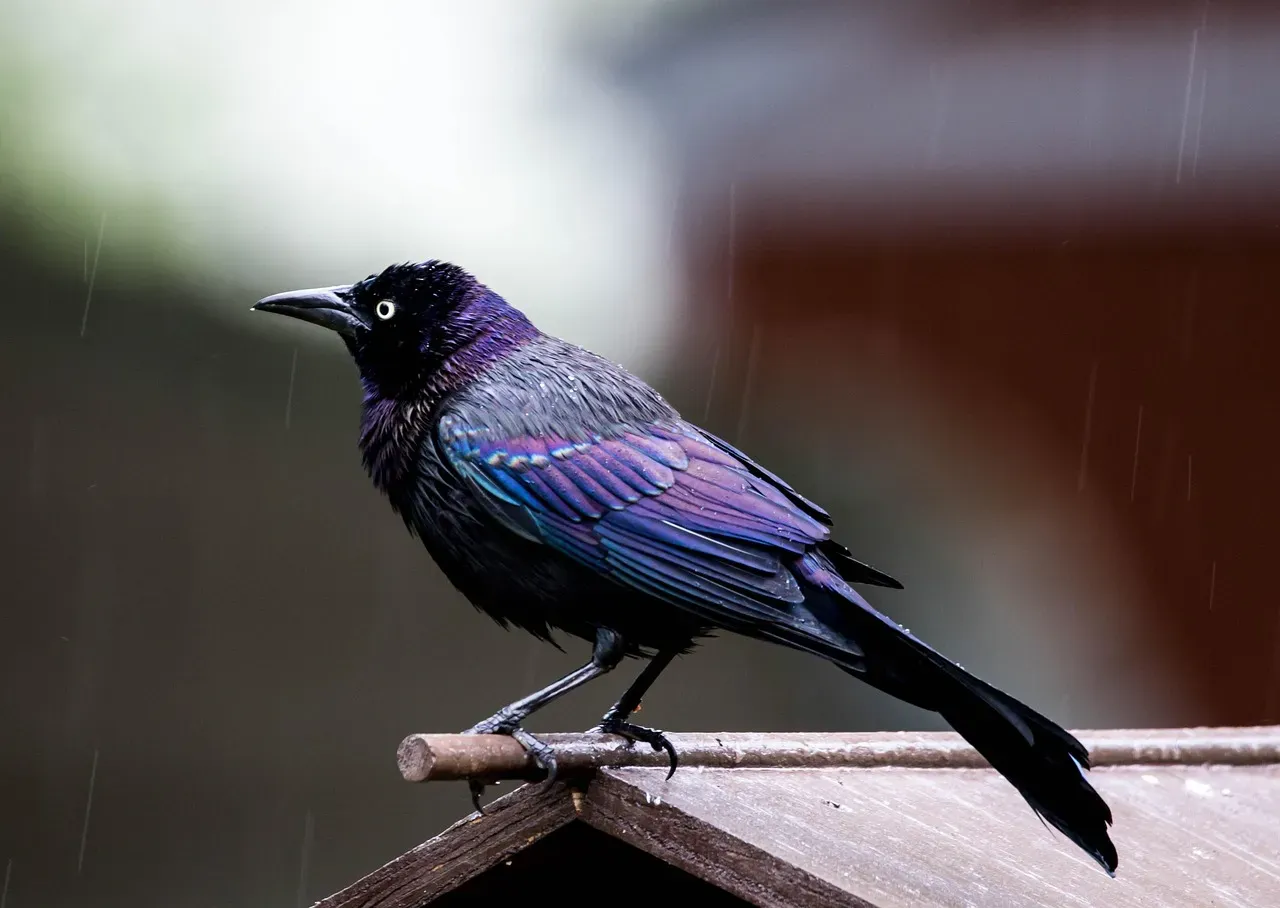
Grackles have a hard keel on the inside of the upper mandible that they use for sawing open acorns. Typically they score the outside of the narrow end, then bite the acorn open. This isn’t something most birds are equipped to do. It’s an anatomical feature that functions almost like a built-in blade, allowing grackles to access food sources that competitors simply can’t reach.
Grackles have a unique adaptation in the keel within their bill which allows them to crack and cut hard nuts or kernels. When you combine this physical advantage with their problem-solving instincts, you start to understand why these birds consistently outcompete others at feeding sites. They didn’t earn their dominant reputation by accident.
#5: They Carry an Internal Compass
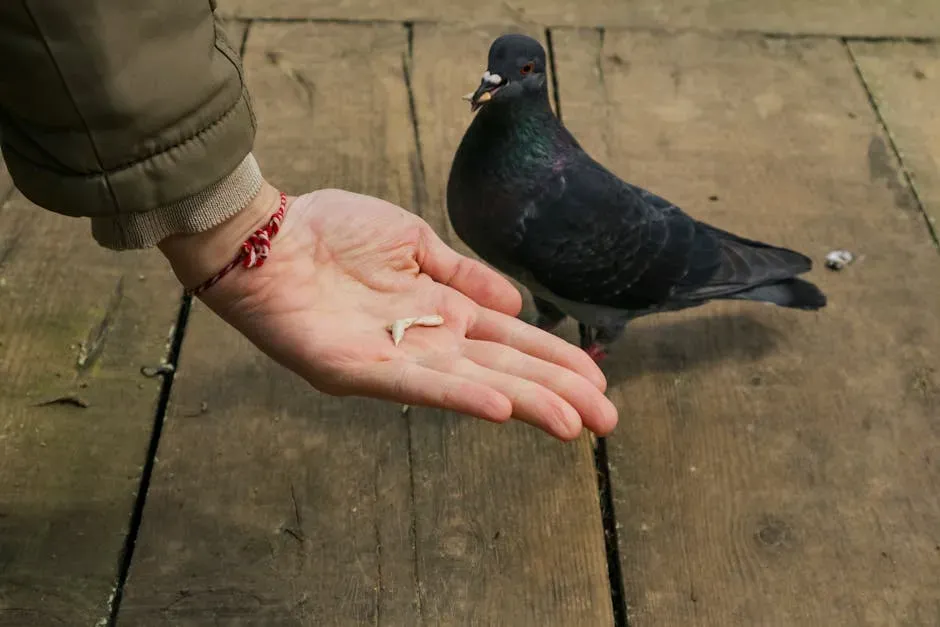
The common grackle is one of several bird species whose head, beak, and neck contain magnetite, which may allow these birds to use the earth’s geomagnetic fields to help navigate. Magnetite is a naturally occurring magnetic mineral, and its presence in grackle tissue suggests the bird may orient itself using the planet’s own magnetic field like a living compass.
This magnetic mineral in the grackle’s head, beak, and neck allows it to tap into Earth’s geomagnetic fields. This internal compass enables the bird to effectively navigate its surroundings. Other animals also possess this ability, including bees, fish, turtles, whales, and bats. Being in company with whales and sea turtles on the navigation front isn’t a bad distinction. It’s one more reason grackles should command more respect than they typically get.
#6: Their Roosts Can Reach a Million Birds
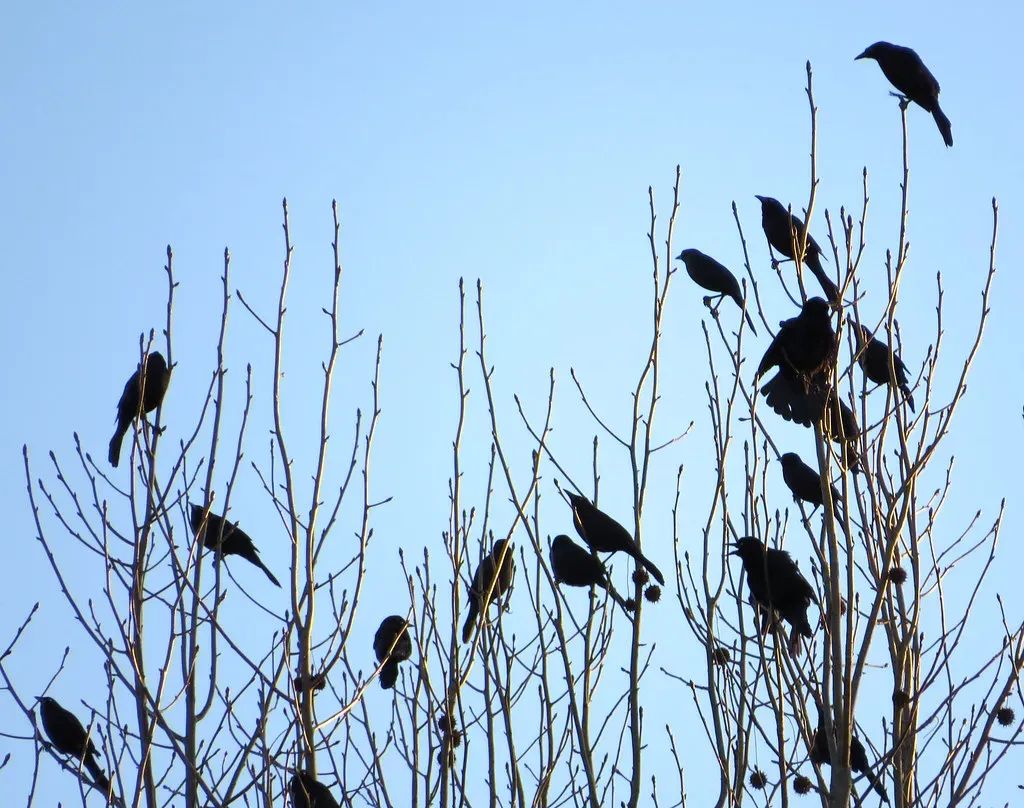
Outside of the breeding season, Common Grackles gather at night in huge communal roosts. The congregations are often mixed-species, including Red-winged Blackbirds, Brown-headed Cowbirds, and European Starlings, and can number up to one million birds. Not all Common Grackles migrate, but the ones that do often travel in similarly mixed flocks.
Grackles are very social birds, and one of the main aspects of their survival is that they can hunt better and know when there is danger. During the non-breeding season, grackles gather in large flocks, which can be quite a spectacle. These flocks are usually seen in open fields, parking lots, or power lines. Their social behavior is beneficial, as it helps protect them from predators through sheer numbers and allows them to find food more easily. There’s real safety strategy at work in those massive gatherings. It’s collective intelligence, not just chaos.
#7: They Practice a Strange and Sophisticated Hygiene Ritual
You might see a Common Grackle hunched over on the ground, wings spread, letting ants crawl over its body and feathers. This is called anting, and grackles are frequent practitioners among the many bird species that do it. The ants secrete formic acid, and this may rid the bird of parasites.
Anting is widespread among birds, but Common Grackles are especially resourceful: they have also been observed “anting” with marigolds, walnut juice, limes, mothballs, chokecherry, and sumac. The fact that they substitute different substances with similar chemical properties shows a level of practical understanding that goes beyond reflex. Whether that constitutes deliberate self-medication is still debated, but the behavior itself is hard to explain as anything other than purposeful.
#8: Their Feathers Don’t Just Look Iridescent, They’re Engineered That Way
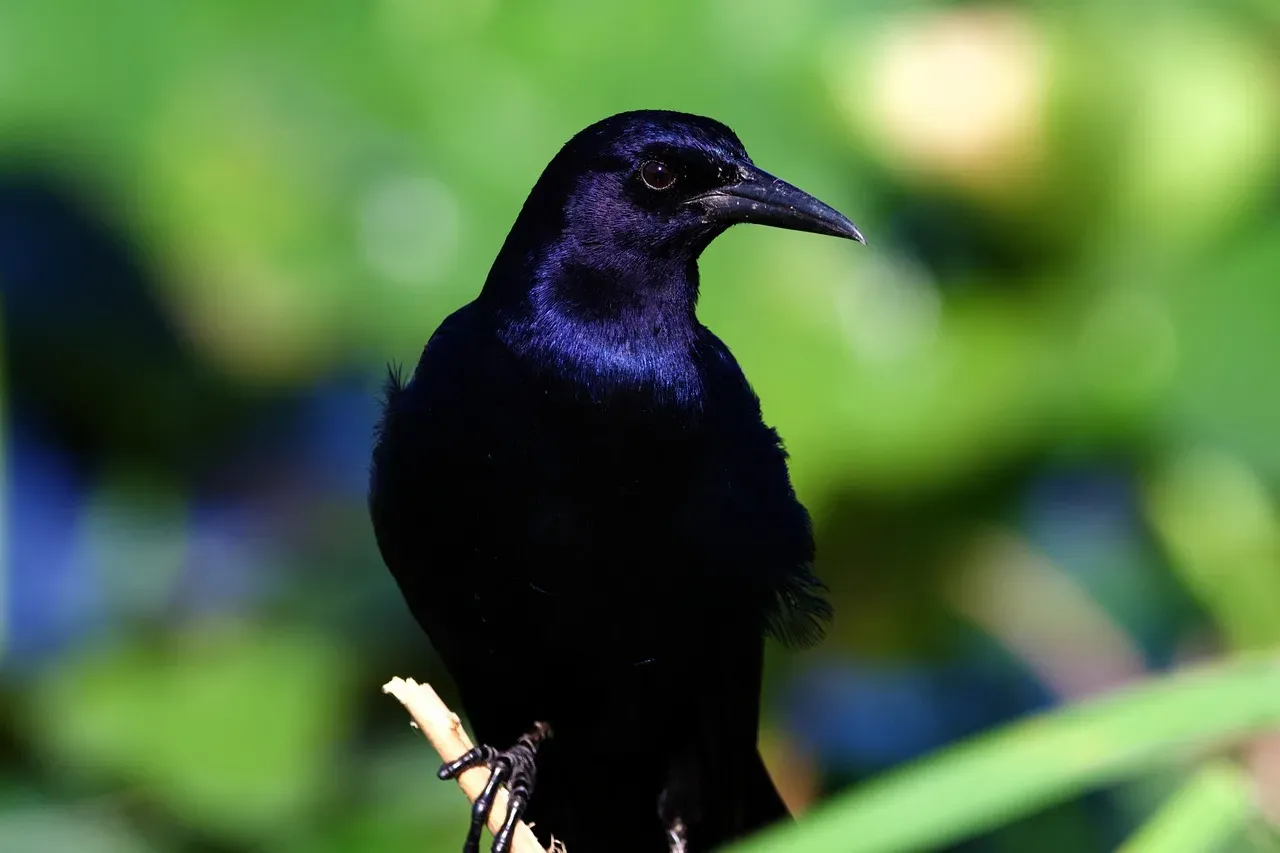
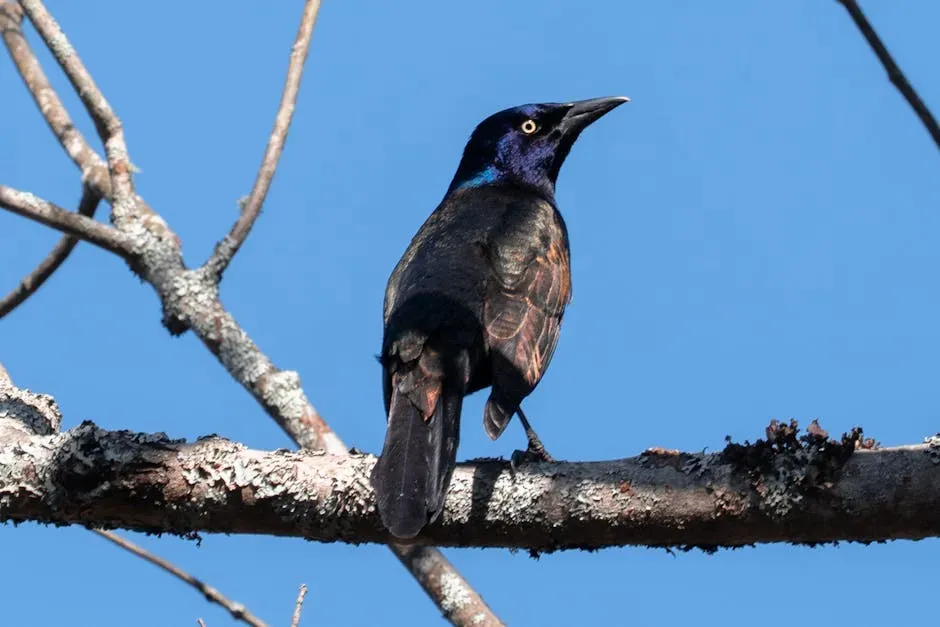
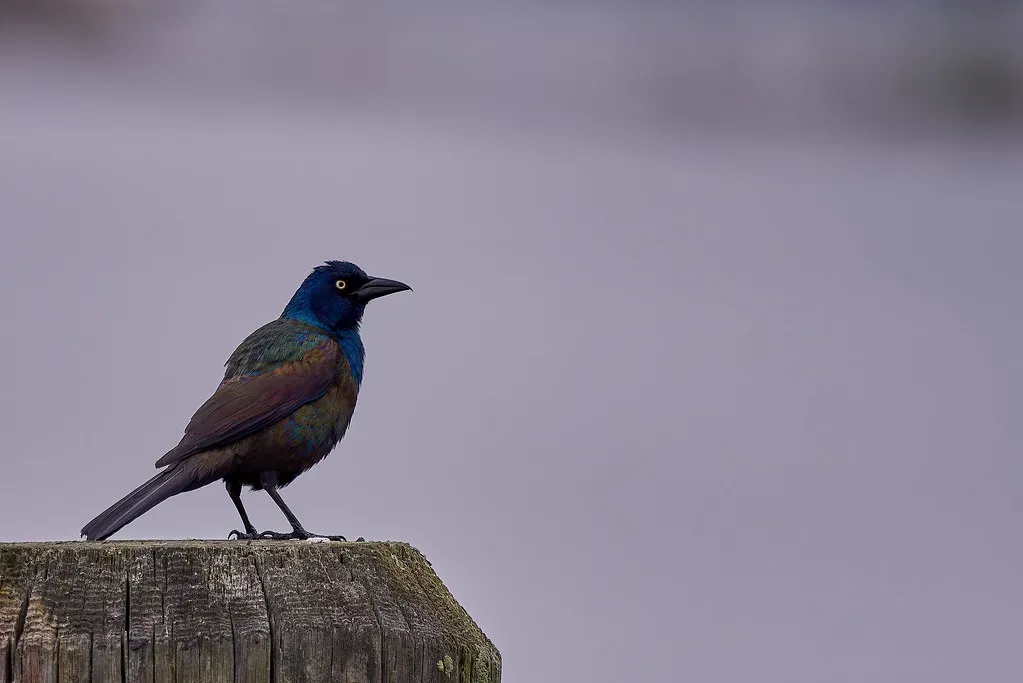
Grackles are known for their glossy, iridescent feathers that can shimmer in shades of blue, purple, green, and bronze, especially in sunlight. This iridescence is visible due to the microscopic structure of their feathers that affects the way light appears when the bird moves. It’s not pigment producing those colors. It’s physics, specifically the way nanostructures within the feather manipulate light at different angles.
Common grackles in different parts of North America have somewhat different colored plumage. In New England and in the West, the subspecies has a brassy bronze body coloration. East of the Allegheny Mountains, the body is purple, and in the southeast the feathers have a greenish hue. So the same species can look almost entirely different depending on where you spot it. That variation is worth knowing the next time you dismiss a shimmering black bird as “just a grackle.”
#9: They’re Surprisingly Bold Toward Predators
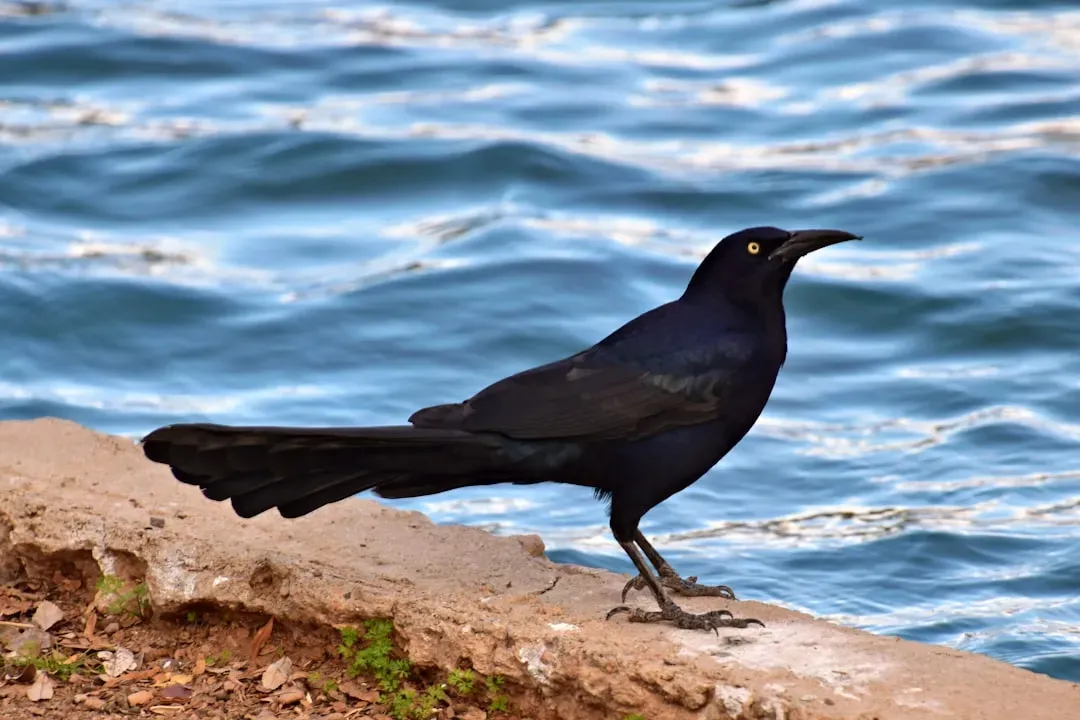
Grackles are territorial only around the nest site. Pairs actively defend their nest by mobbing, chasing, or diving at predators, including humans. That’s not recklessness. It’s calculated defense. A grackle that dives at a human intruder near its nest is making a high-stakes bet and has presumably decided the risk is worth it.
In the breeding season, males tip their heads back and fluff up feathers to display and keep other males away. This same behavior is used as a defensive posture to attempt to intimidate predators. Known for their boldness, grackles often exhibit aggressive behavior towards other birds and even larger animals. They can be seen chasing away other birds from feeders or scavenging spots. The fearlessness isn’t random. It’s a behavioral strategy that has clearly paid off over generations.
#10: They Can Mimic Sounds, Including Human Ones
The Common Grackle is great at mimicry. It mimics noises from other birds as well as those of humans. It is not as skilled as parrots or ravens, but has an uncanny ability, nonetheless. For a bird that’s rarely considered in the same conversation as parrots, this is a quietly remarkable talent that most observers never even notice.
Grackles have a wide range of vocalizations, including whistles, croaks, and clicks. They are known for their loud, harsh calls, which can often be heard in urban areas. Calls of the Common Grackle have been compared to the noise made by rusty gate hinges. These varied vocalizations help them communicate within their social groups, attract mates, and signal danger. What sounds like meaningless noise to the human ear is actually a functional communication system operating across a large and fluid social group.
#11: They’re Declining Despite Their Apparent Abundance
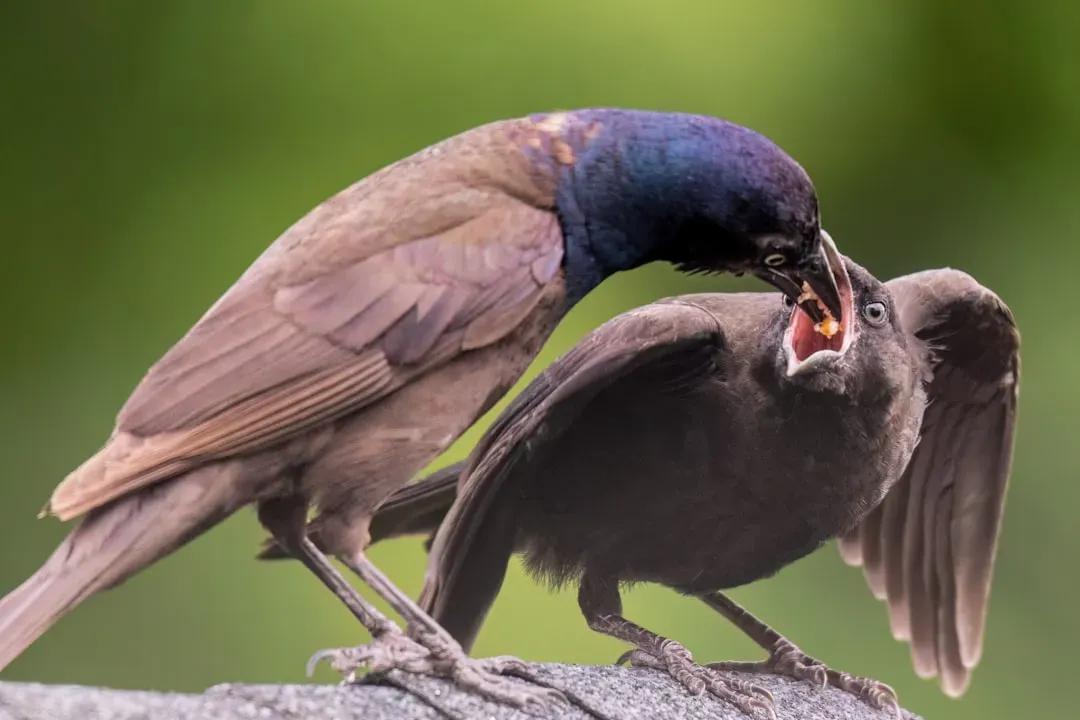
Despite swarming parking lots every winter, Quiscalus quiscula has declined by over half since the 1960s, largely due to pesticide drift and habitat loss. Their population has been on the decline for some time, and it is plummeting as of late. The IUCN Red List has responded by listing this bird as Near Threatened, and there are some conservation efforts in the works to protect this species.
Despite their reputation, Common Grackles are actually essential to the health of the environment. They play an important role in plant biodiversity by dispersing seeds across the land through their droppings. Due to their fondness for grains and seeds, Common Grackles act as seed dispersers in their ecosystem. These birds also control populations of insects and other prey items they consume in their diet, and in turn they provide food for local predators. A world with fewer grackles isn’t just quieter. It’s ecologically poorer in ways most people haven’t begun to consider.
Final Thoughts
Grackles occupy an awkward spot in the public imagination. They’re too common to be celebrated, too bold to be ignored, and too misunderstood to be properly appreciated. The science, though, paints a different picture: a highly intelligent, physically adapted, socially complex bird that has figured out how to thrive in environments most other species struggle with.
The fearlessness isn’t a personality quirk. It’s the product of sharp cognition, strong social bonds, and millions of years of evolution selecting for exactly the kind of confidence that makes people stop and stare. Next time a grackle locks eyes with you in a parking lot, consider the possibility that it already has you figured out.
