

The idea that the universe expands without expanding into anything sounds simple at first. Yet the more one sits with it, the more it quietly rearranges how we picture reality itself. Cosmologists have lived with this description for decades, and it still resists easy translation into everyday language.
The Metric Expansion That Defines Modern Cosmology
Space itself stretches between galaxies rather than objects racing outward through a fixed backdrop. This metric expansion follows directly from the equations that describe a homogeneous and isotropic universe on large scales. Distances grow over time without any need for an external container or empty region beyond the observable cosmos.
Observations of redshifted light from distant galaxies match this picture with remarkable consistency. The same framework also accounts for the cosmic microwave background and the abundance of light elements. No additional outside space is required to make the numbers work.
Why Everyday Intuition Breaks Down Here
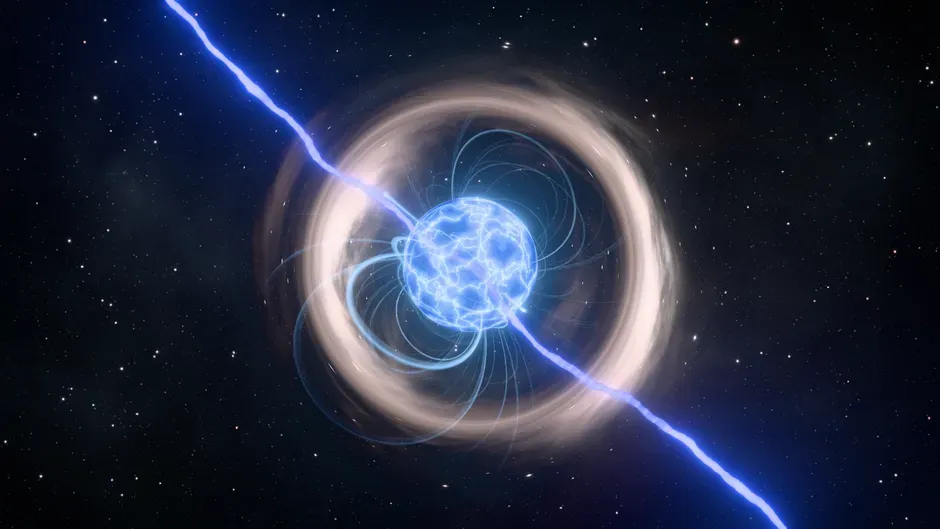
People naturally picture expansion as something moving into unoccupied territory, like ripples spreading across a pond. That image assumes a pre-existing arena in which the universe sits. Cosmology drops that assumption entirely once general relativity enters the description.
Without an external reference frame, questions about what lies beyond lose their usual meaning. The geometry is self-contained. Attempts to force an outside onto the model quickly run into contradictions with the observed uniformity of the cosmos.
The Balloon Surface as a Limited but Useful Guide

Imagine galaxies painted on the surface of an inflating balloon. Points move apart as the rubber stretches, yet the surface itself has no edge or center in two dimensions. The three-dimensional space we inhabit behaves analogously in the standard model, though the extra dimension is not literal.
The analogy helps show why no boundary appears in the math. It also reveals its own shortcomings once curvature or topology enters the discussion. Still, it illustrates how expansion can occur without reference to anything external.
Finite Yet Unbounded Possibilities
A universe can be finite in volume while remaining without edges or an outside. Think of the surface of a sphere again, scaled up to three dimensions. Light traveling far enough in principle could loop back, though current data show no sign of such closure on observable scales.
These topologies satisfy the equations without invoking anything beyond the manifold itself. They also preserve the observed isotropy. The unsettling part is that nothing in the data demands an infinite extent either, leaving both options viable within the same framework.
Early Warnings From the Field Equations
Einstein’s original equations already permitted expanding solutions once the cosmological constant was adjusted or removed. Friedmann and Lemaître worked out the details in the 1920s, showing that uniform expansion follows naturally from homogeneity. The lack of an external space was implicit from the start.
Later measurements of galactic redshifts confirmed the prediction. Each refinement of the model has reinforced that the expansion is a property of spacetime geometry rather than motion through preexisting emptiness. The conceptual discomfort has therefore accompanied the theory for nearly a century.
How the Absence of an Edge Affects Deeper Questions
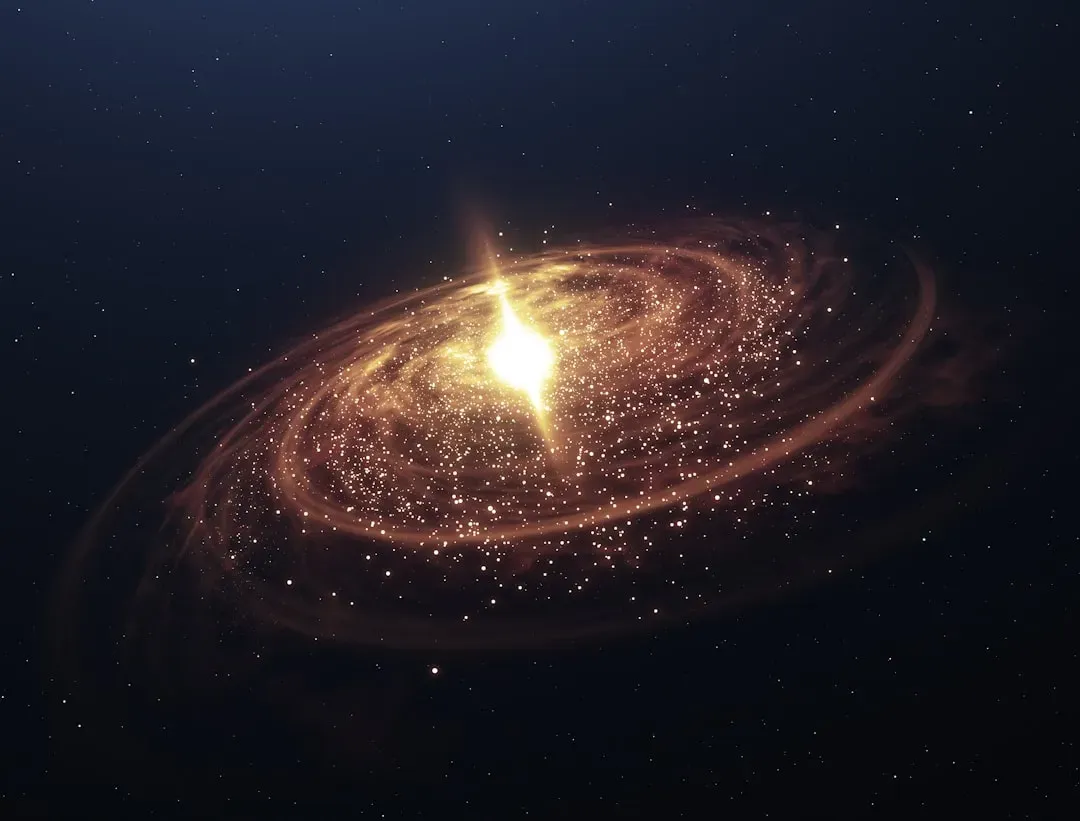
Without an outside, the origin of the universe cannot be pictured as an explosion at a particular location. The Big Bang describes a hot, dense state that occurred everywhere at once. This everywhere-at-once character removes any need for a prior empty region into which matter burst forth.
Quantum gravity approaches that attempt to describe the earliest moments inherit the same feature. They must account for the emergence of spacetime itself rather than its placement inside something larger. The result is a picture in which the usual language of containment simply does not apply.
Conclusion
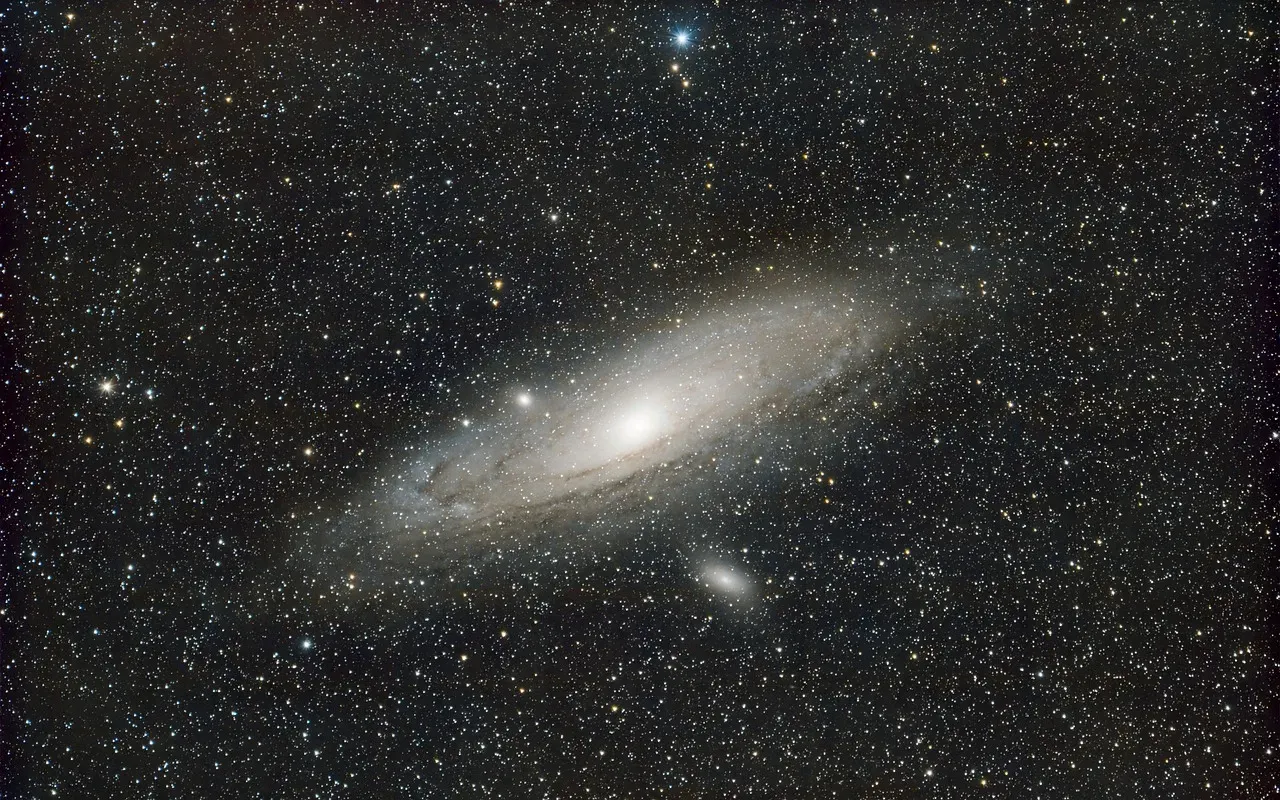
The statement that the universe expands into nothing is not a riddle waiting for a clever workaround. It is a direct consequence of treating spacetime as the stage rather than something staged inside a larger theater. Physicists have carried this implication since the field equations were first solved, and it continues to shape how theories of the early universe and its possible futures are constructed.
Accepting the description does not close every question about existence. It does, however, shift attention toward the properties of geometry and quantum fields that can stand on their own. In that sense the quiet unsettlement has proved productive, pushing the field to refine what counts as a complete explanation rather than reaching for an external backdrop that the data never required.

- The 14 Habits Only Border Collie Owners Will Ever Fully Get - July 30, 2026
- 19 Odd Habits Only Great Dane Owners Would Instantly Recognise - July 30, 2026
- 12 Tender Things a Senior Dog Does Only for the Person It Loves Most - July 30, 2026