
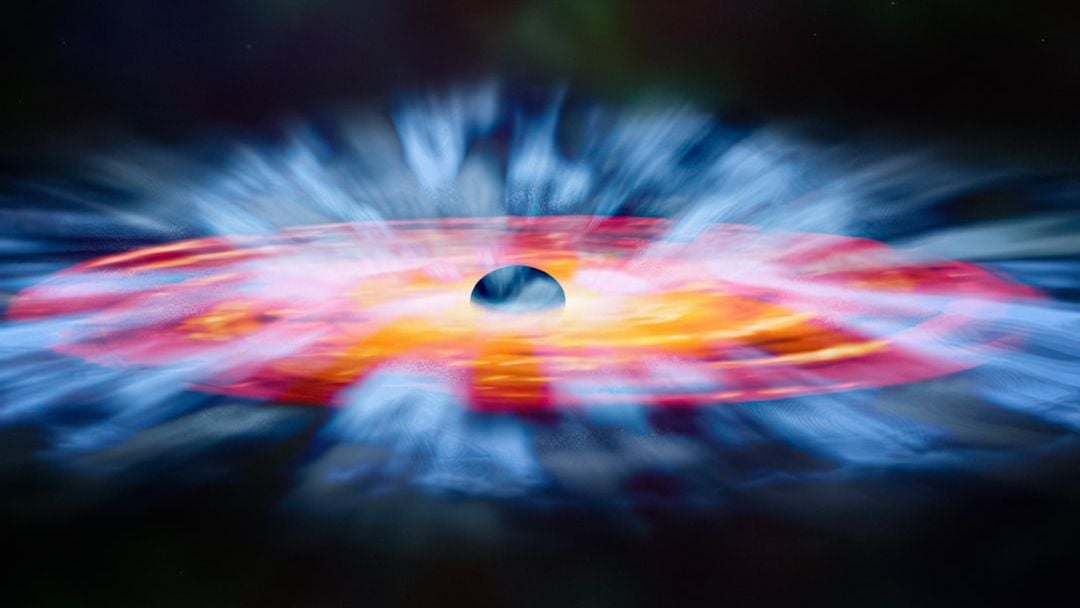
Imagine holding something no bigger than a sugar cube in your hand, only to watch it crush through the floor and keep going. That image captures the kind of density neutron stars pack into their cores, and it comes straight from the equations that describe how matter behaves under the most intense gravity known.
The claim about a teaspoon weighing a billion tonnes sounds wild at first, yet it rests on measurements and models that astronomers have tested against real observations for decades. What follows explores how that number arises and why it keeps holding up.
The Extreme Nature of Neutron Stars
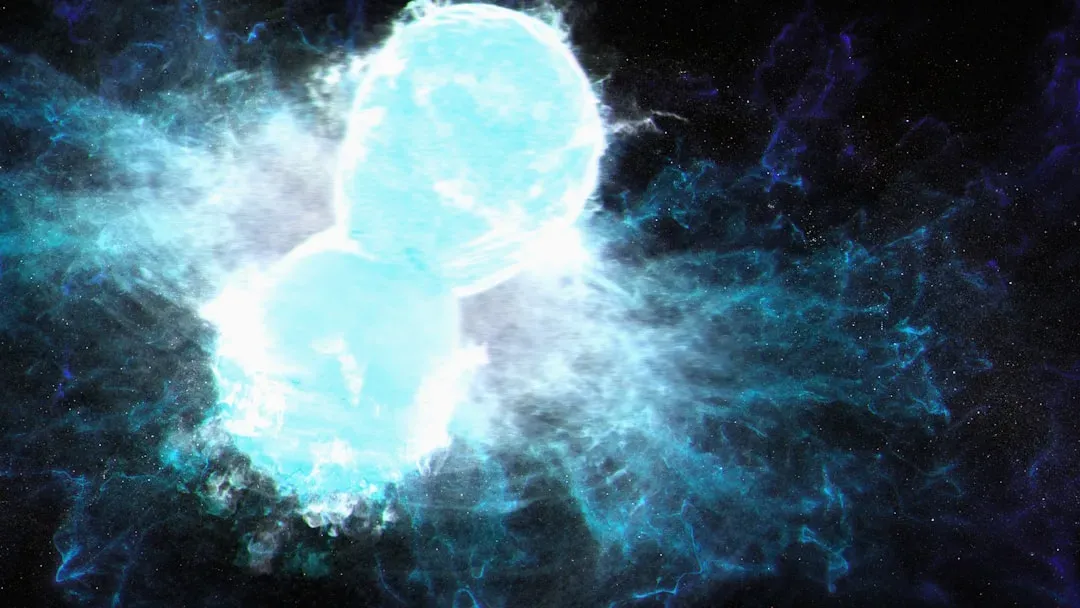
Neutron stars form when a massive star collapses after running out of fuel. The core squeezes down until protons and electrons combine into neutrons, leaving behind an object roughly the size of a city but containing more mass than the Sun. Gravity there reaches extremes that reshape ordinary matter into something almost entirely neutrons packed shoulder to shoulder.
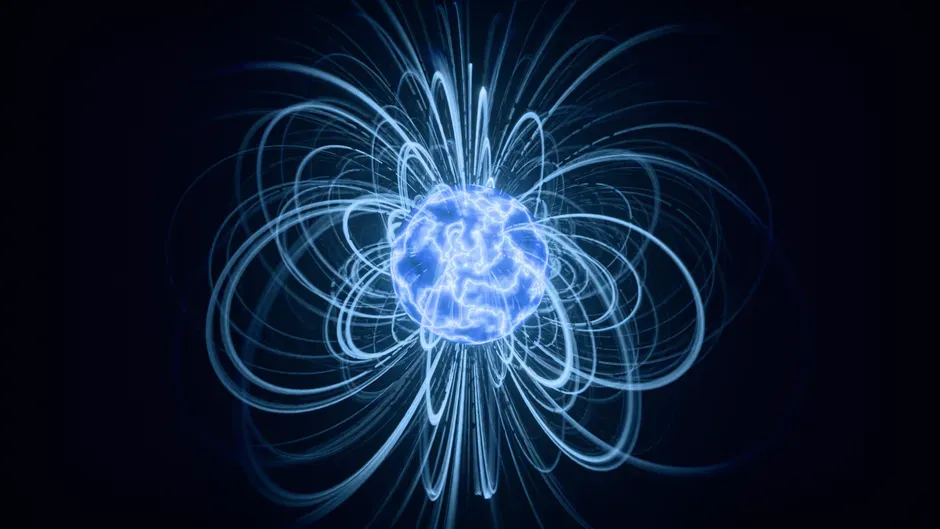
These remnants spin rapidly and emit beams of radiation that sweep across space like cosmic lighthouses. Their surfaces sit at temperatures around a million degrees, yet the real story unfolds deep inside where pressure forces neutrons into states never seen on Earth. The result is an object that challenges every intuition about how solid matter should behave.
Breaking Down the Density Calculation
Physicists start with the typical radius of a neutron star, often around twelve kilometers, and its mass, usually one and a half times the Sun. Dividing that mass by the volume gives an average density near ten to the fourteenth grams per cubic centimeter. That figure already dwarfs anything found in ordinary rocks or metals.
Refinements come from nuclear physics models that account for how neutrons interact at such close quarters. The calculations incorporate data from particle accelerators and from the gravitational waves detected when two neutron stars merged. Each new observation tightens the range without overturning the basic result.
Visualizing That Teaspoon Weight

A standard teaspoon holds about five milliliters. At the density just described, that small volume translates into roughly five hundred billion kilograms. On Earth that mass would press down with a weight close to a billion tonnes, enough to rival the output of several large quarries in a single bite.
The number stays consistent whether the teaspoon sits at the surface or deeper inside the star, because the density does not vary dramatically across most of the object. Only the very center might reach even higher compression according to some models. Either way, the everyday measuring spoon becomes an impossible burden the moment it leaves the star.
How Scientists Confirm These Figures
Radio telescopes track the pulses from rotating neutron stars and measure how their signals bend under their own gravity. X-ray observatories capture the thermal glow from the surface and convert brightness into size estimates. Both methods converge on the same compact dimensions.
Gravitational wave detectors add an independent check by recording the ripples from colliding neutron stars. The waveform encodes information about how stiff or squishy the material is, which in turn constrains the density. So far every dataset aligns with the original theoretical prediction rather than contradicting it.
Everyday Comparisons That Fall Short
A teaspoon of water weighs about five grams. The same volume of lead reaches roughly fifty grams. Even the densest stable element on Earth, osmium, tops out around twenty two grams per cubic centimeter. Neutron star material exceeds all of these by many orders of magnitude.
White dwarfs come closer, with teaspoon weights in the range of an elephant, yet they still fall short by a factor of a million or more. The gap highlights how neutron stars occupy an entirely different regime of physics, one governed by the strong nuclear force rather than electromagnetic repulsion between atoms.
Broader Lessons for Astrophysics
Understanding neutron star density helps explain how heavy elements form during mergers and how the universe recycles material from one generation of stars to the next. It also sets limits on theories that try to unify gravity with quantum mechanics. Without these extreme laboratories, many ideas would remain untested.
The same numbers influence models of supernova explosions and the birth of black holes. When a neutron star grows too massive, it crosses a threshold and collapses further. Tracking that boundary relies on the very density calculations that produce the teaspoon figure in the first place.
Why the Extremes Still Matter
These objects remind us that the universe contains conditions far beyond anything we encounter in daily life. The verified calculations keep the teaspoon example from sliding into mere exaggeration and instead turn it into a reliable benchmark for how matter can behave. That reliability matters when planning future telescopes or interpreting new signals from deep space.
At the same time the fact underscores a quiet humility. Human scales and human materials simply do not apply once gravity wins its argument with the other forces. Keeping that perspective helps ground expectations about what might yet be discovered in the cosmos.
