
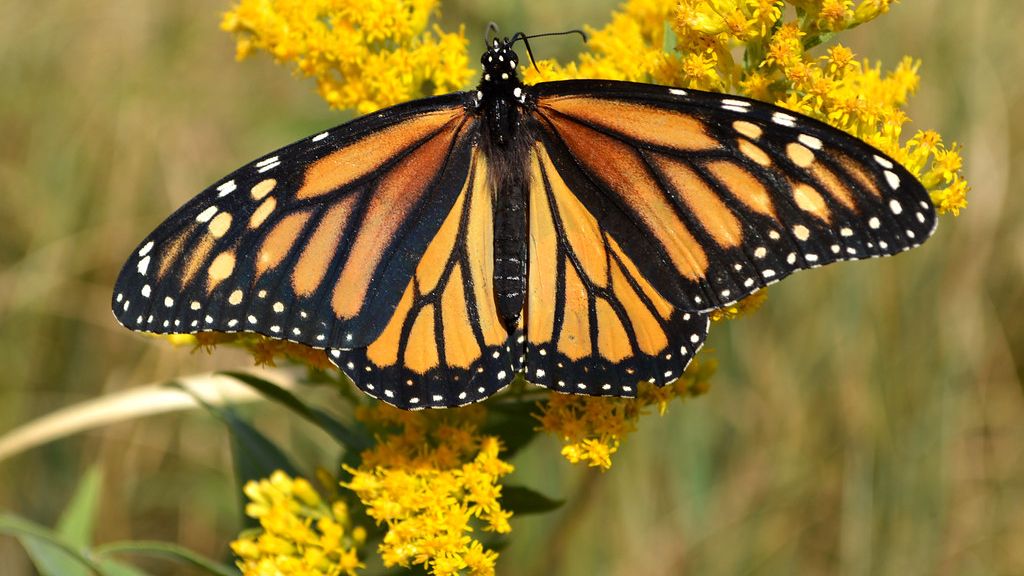
What most people don’t realize is just how critical the relationship between monarchs and native plants actually is. While milkweed is the only food source for monarch butterfly caterpillars, adult butterflies rely on the nectar of many flowering plants to make their incredible migration, particularly at the end of the blooming season in the fall. That distinction matters enormously when you’re deciding what to plant. Here are eight native plants that do the most meaningful work for these remarkable insects.
Common Milkweed (Asclepias syriaca): The Foundation of It All
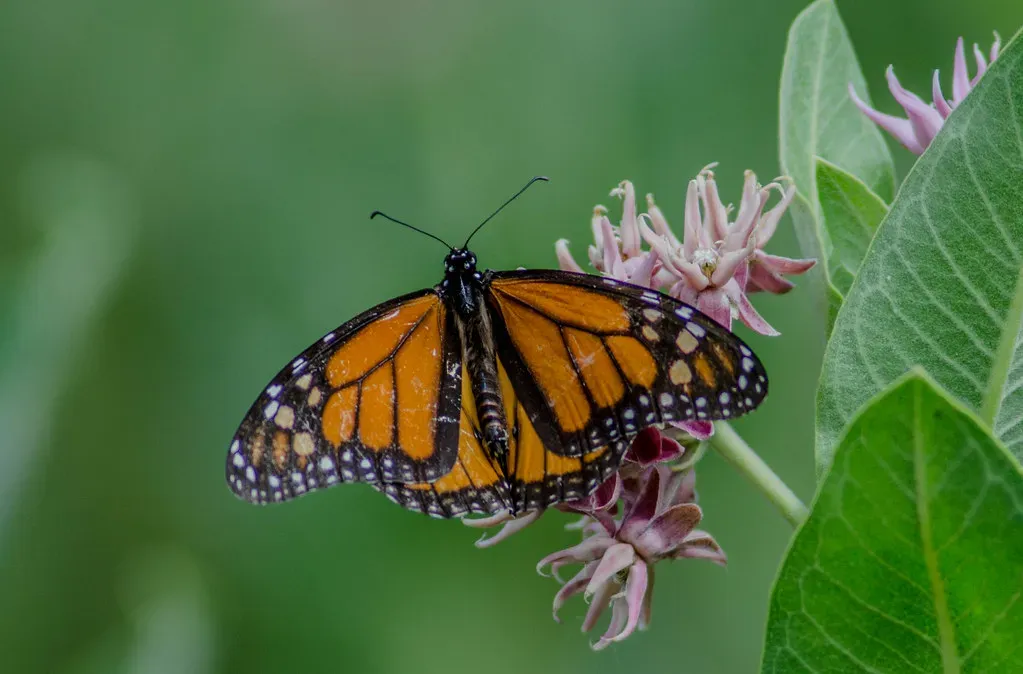
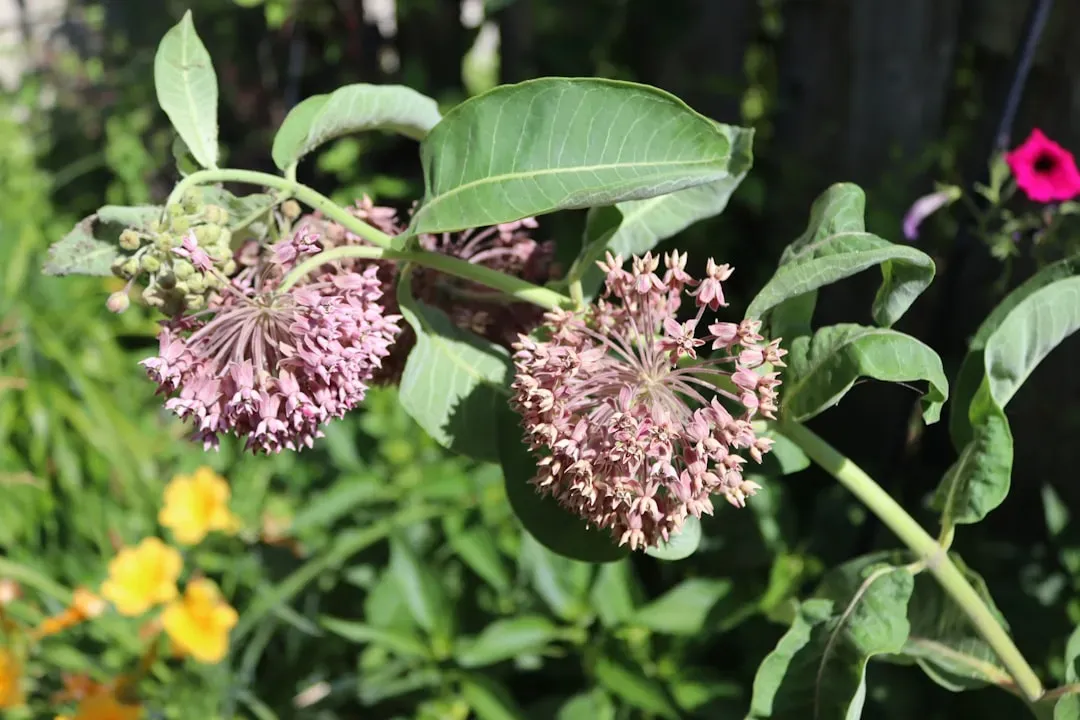
Milkweed is the sole host plant of the monarch butterfly. Monarchs lay eggs specifically on milkweed, the eggs hatch into caterpillars, and the caterpillars eat the foliage. No other plant in North America carries that same level of ecological responsibility for a single species. Without it, monarchs simply cannot reproduce.
Monarchs co-evolved with milkweeds, developing a unique adaptation that allows their caterpillars to feed on a plant most other insects cannot. The latex-based sap produced by milkweed plants contains toxic compounds called cardenolides – most other insects can’t digest these toxins. Monarch caterpillars, however, actually absorb these toxins as they feed on milkweed leaves, rendering themselves toxic to potential predators.
Common milkweed needs full sun, grows to two to six feet tall, and is an aggressive grower. Don’t plant it in your flowerbed, or it will take over. It has a wide-spreading root system and needs its own space to stretch out. That said, in a naturalized border, meadow strip, or backyard buffer, it’s one of the most valuable plants you can let do its thing.
Swamp Milkweed (Asclepias incarnata): The Wet-Garden Workhorse
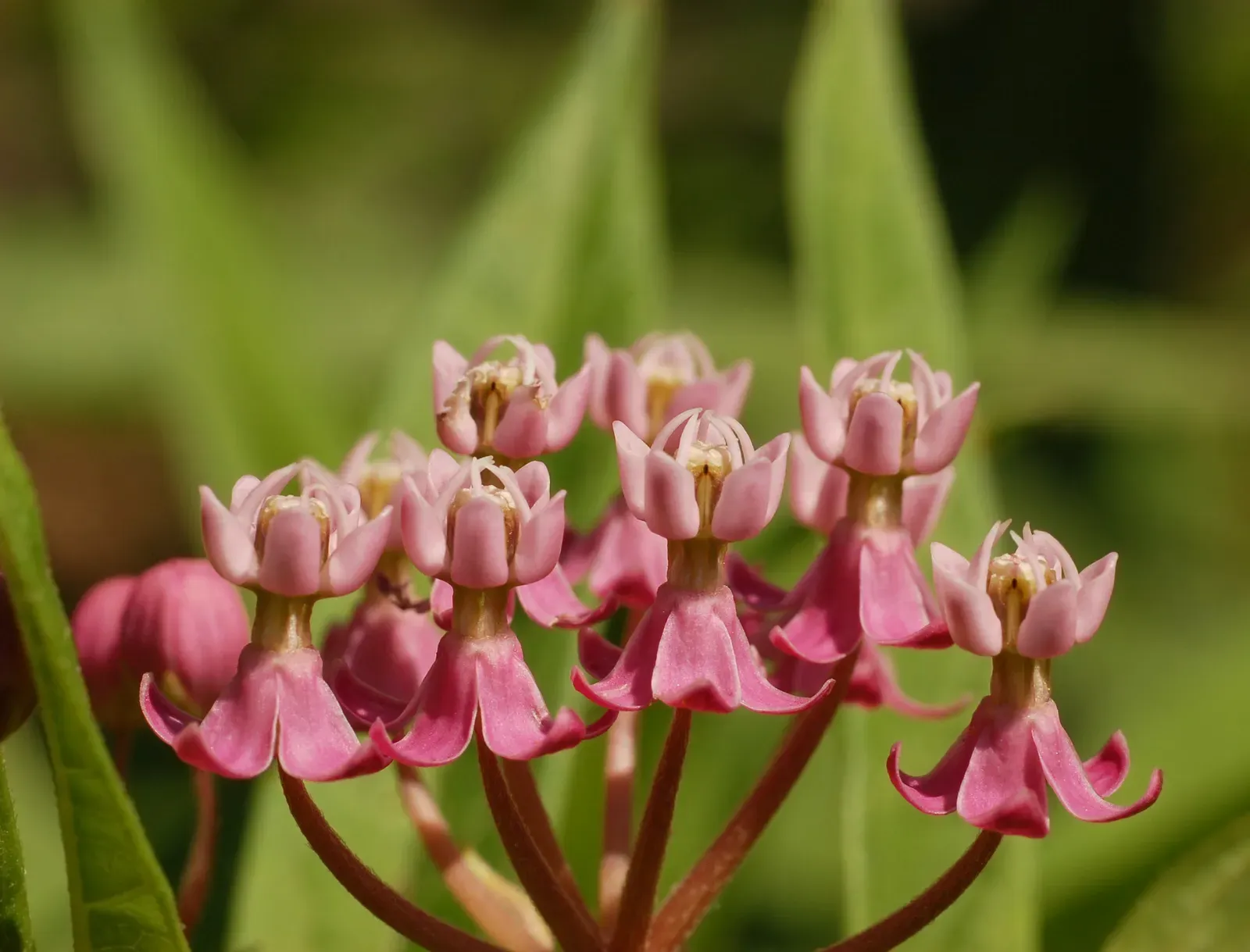
Swamp milkweed (Asclepias incarnata) and common milkweed (A. syriaca) averaged the highest number of eggs laid by female monarchs in a multi-year field study conducted by USDA Agricultural Research Service scientists alongside Iowa State University researchers. That’s not a trivial finding. It means that if you’re trying to maximize reproductive success in your garden, swamp milkweed is genuinely one of your best options.
Better behaved than common milkweed, swamp milkweed is more likely to form clumps rather than spreading out. It grows two to four feet tall, has deep rose-pink flowers, and is shade-tolerant. Swamp milkweed handles wet conditions, which makes it an excellent choice for rain gardens, low-lying spots, or any area with consistently moist soil that other plants tend to struggle in.
Butterfly Weed (Asclepias tuberosa): Brilliant Orange, Deeply Useful
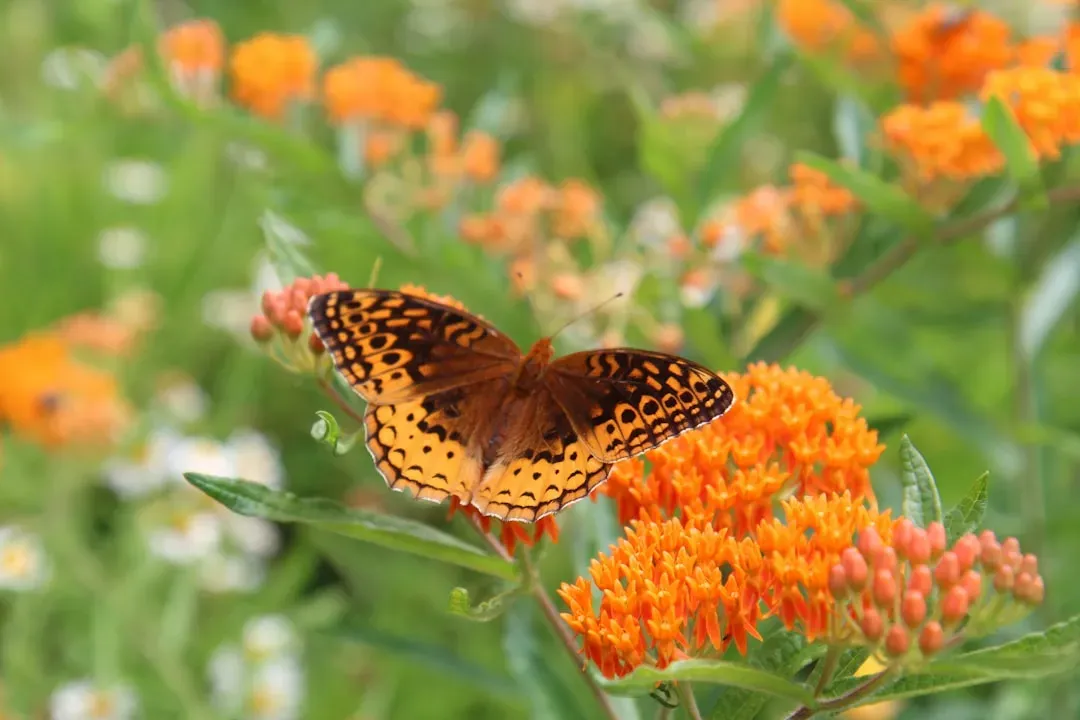
Butterfly weed (Asclepias tuberosa) grows throughout most of the monarch’s range and is widely used by migrating spring monarchs to rear offspring. With brilliant orange blooms opening in late spring, this showy milkweed is a favorite among butterflies and gardeners alike. It’s one of the few native plants that genuinely earns its place on both aesthetic and ecological terms at the same time.
Butterfly weed is a bright spot in the garden that attracts all kinds of pollinators. Less aggressive than its common cousin, butterfly weed grows only one to two and a half feet tall. It is commonly grown in gardens, adapts well to both moist and dry soil, and has very showy orange flowers. It likes full sun and is hardy in Zones 3 to 9. For gardeners short on space who still want to make a real contribution, this is the one to start with.
Goldenrod (Solidago spp.): The Most Misunderstood Native
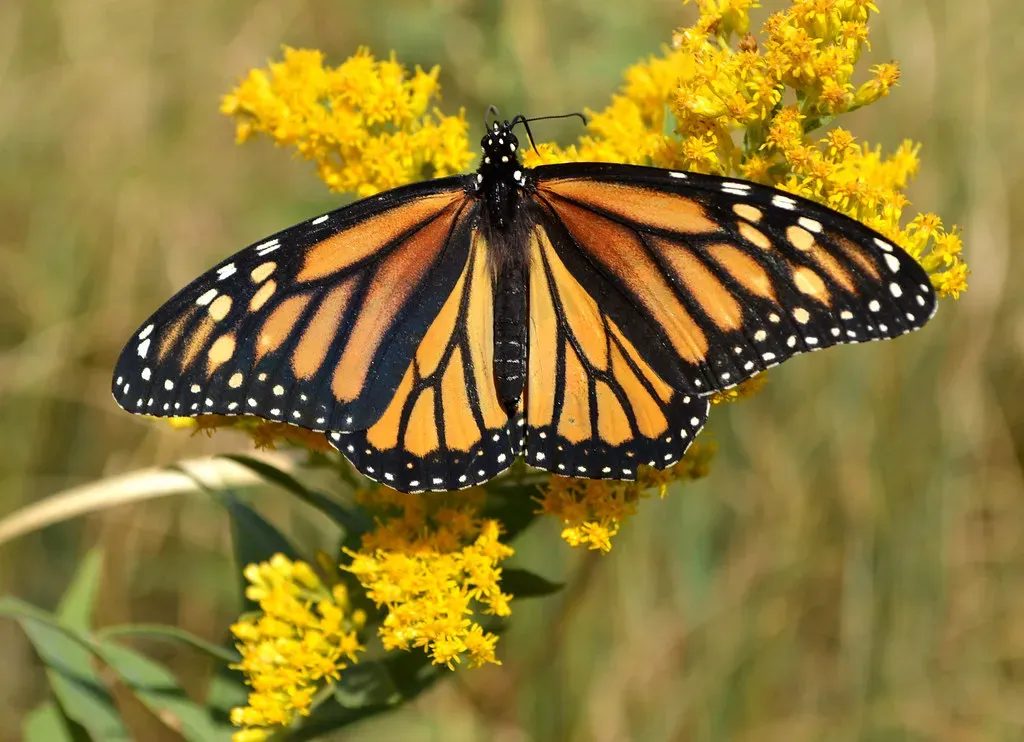
Goldenrod plants like showy goldenrod are a top nectar source for monarchs in the fall. Often confused with ragweed, goldenrod is not responsible for the infamous allergies people detest, but sadly they are sometimes blamed and removed. By learning the goldenrod native to your area and planting it, you can support a lot of important pollinators, including monarch butterflies. Removing goldenrod from your yard based on allergy fears is, unfortunately, a conservation mistake.
Native goldenrods are host plants to over 126 species of butterflies and moths and provide a great food source in the fall, when many summer-flowering plants are losing their flowers for the season. Their timing is essential: the later blooming nectar gives monarchs the power to complete the up to 3,000-mile journey the super generation of monarchs needs to make it to Mexico for winter. That late-season fuel is not optional – it’s what determines whether a monarch survives the migration.
New England Aster (Symphyotrichum novae-angliae): Purple Power in the Fall
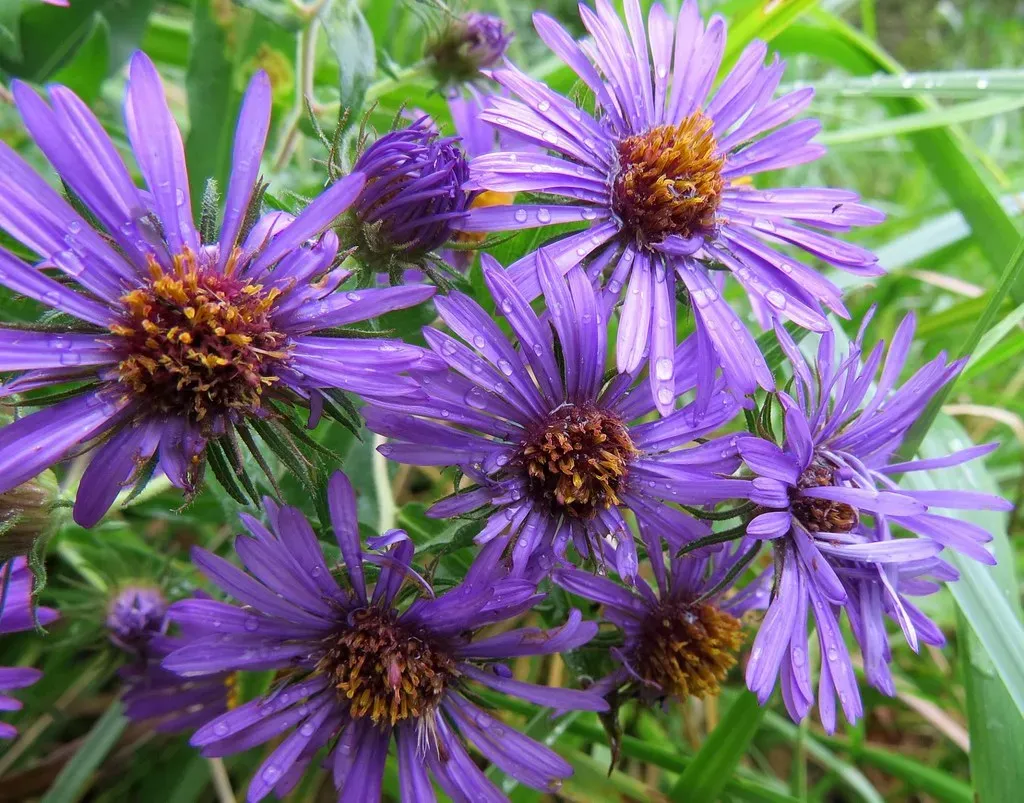
New England aster (Aster novae-angliae) and Aromatic Aster (Symphyotrichum oblongifolium) can be found buzzing with life in autumn. These are not just decorative. They are strategically timed, blooming precisely when monarchs are loading up on nectar before the long flight south. These blue-purple flowers attract a number of important pollinators, and the monarch too, and the plant is native to eastern and north America, with blooms that carry through October.
Late season flowers such as asters and goldenrods are important nectar plants, and support the monarch migration to Mexico in the fall. Planting asters in combination with goldenrod creates a fall garden that essentially acts as a refueling station along the migration route. Fall flowering species like asters, goldenrods, and blazing stars are also vital for pre-hibernation bumble bee queens, so the benefit extends well beyond monarchs alone.
Blazing Star (Liatris ligulistylis): The Monarch Magnet
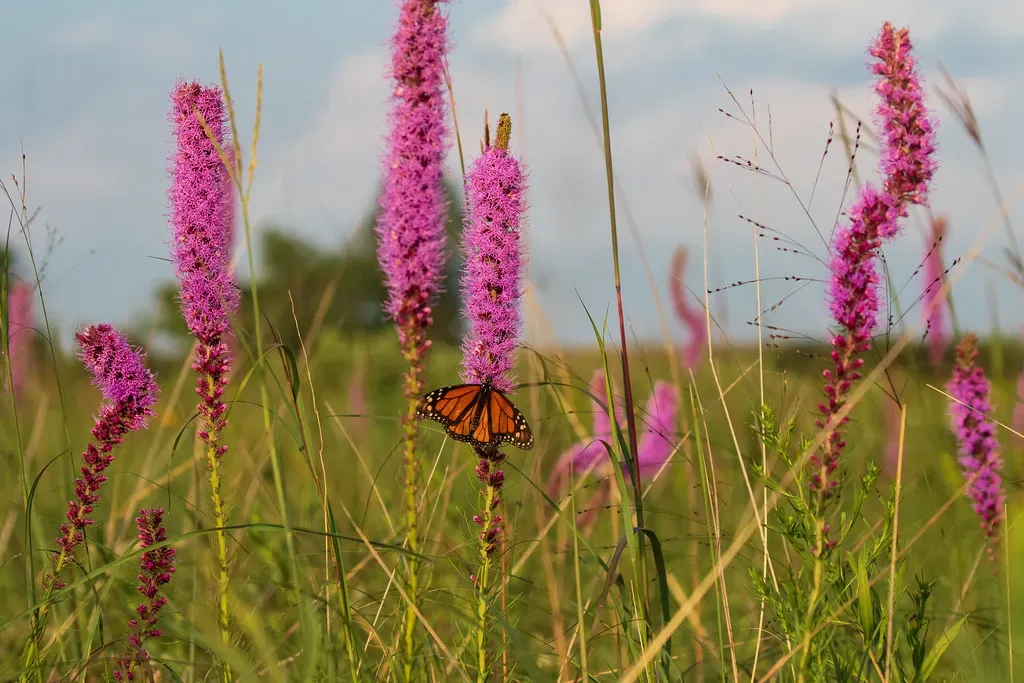
A three-year survey across North Dakota identified blazing stars, native thistles, and milkweeds as the three most important nectar sources for monarchs and regal fritillaries. The researchers tracked floral resources across 954 site visits and found that each plant group peaked at a different time, meaning the loss of any one of them would leave a gap in the food supply. Among all the blazing star species, Liatris ligulistylis stands out specifically for monarchs.
Blazing star species are butterfly magnets. When in bloom it’s not unusual to see clusters of monarchs jockeying for position on the purple flower spikes – which is exactly why this plant has been included on nearly every monarch nectar guide produced by conservation organizations. Blooming in late summer, its tall flower spikes open from the top down, providing a long-lasting nectar source. Monarchs regularly visit this Liatris species, making it an essential choice for supporting their migration.
Purple Coneflower (Echinacea purpurea): A Workhorse Nectar Plant
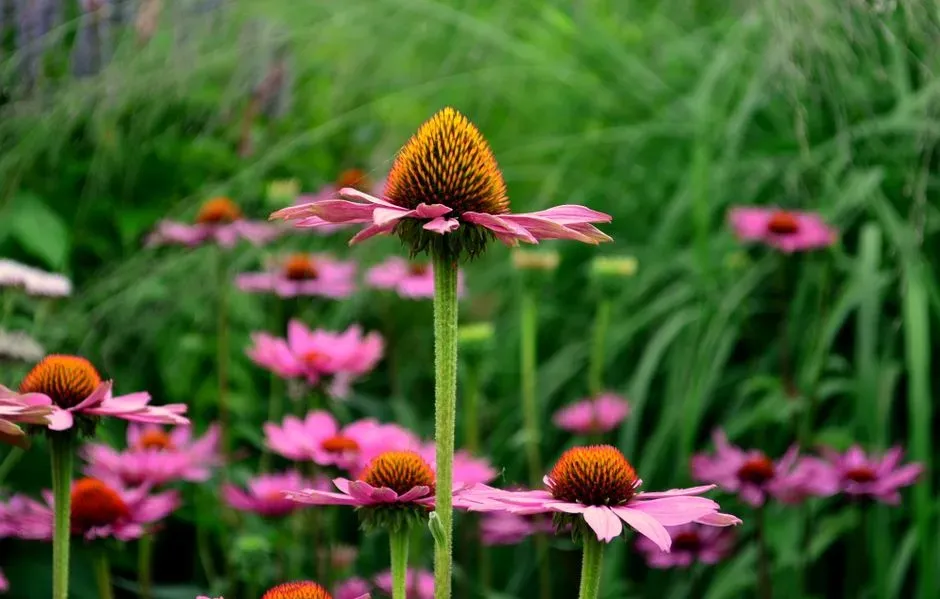
A few of the many nectar plants that are important to monarchs and many other insect species are eastern blazing star (Liatris scariosa), New England aster (Symphyotrichum novae-angliae), showy goldenrod (Solidago speciosa), and purple coneflower (Echinacea purpurea). Coneflower earns its place on that list through consistent, dependable performance across a wide range of soil types and climates. It’s one of the most reliably useful plants in any monarch-focused garden.
Coneflowers are native perennials that are both tough and easy to grow. Adult monarchs sip nectar from a wide range of flowers: coneflowers, goldenrod, asters, and plenty of plants that have nothing to do with milkweed. Coneflower bridges the summer bloom window nicely, filling the gap between early-season milkweeds and the fall-blooming asters and goldenrod. It also holds its seed heads through winter, which benefits birds long after the butterflies have gone south.
Lavender Hyssop (Agastache foeniculum): The Underestimated Pollinator Magnet
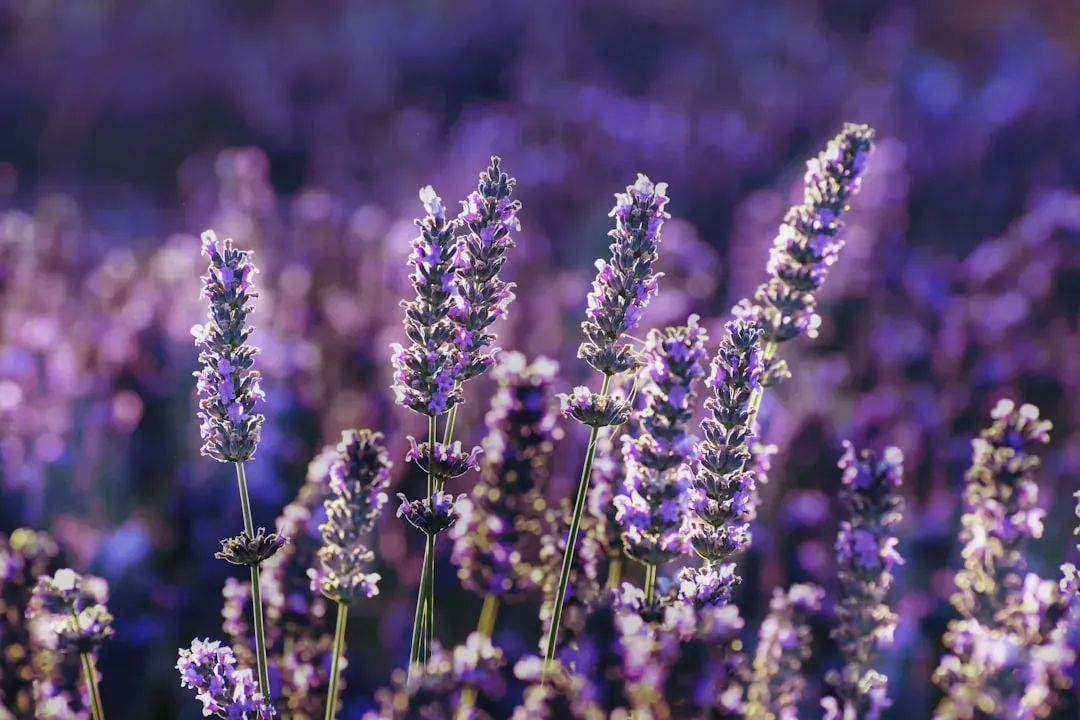
Butterflies are drawn like a magnet to the flowers of lavender hyssop (Agastache foeniculum). Along with attracting monarchs, hyssop blooms make excellent cut flowers. Plants are floriferous, producing an abundance of long-lasting, fragrant flower spikes that stretch from early summer well into fall. Few native plants offer that kind of sustained nectar production over such a long season.
What makes lavender hyssop genuinely compelling from an ecological standpoint is its bloom duration. Plants produce an abundance of long-lasting, fragrant floral spikes early summer through fall. That extended window means monarchs passing through at different points in their migratory cycle can use it. Hummingbirds depend on many of the same flowers that provide nectar for spring and fall migrating monarchs, making lavender hyssop one of those rare plants that serves multiple high-value wildlife groups simultaneously – all while requiring very little from the gardener who plants it.
A Garden Worth Building
Monarch populations have been under serious pressure for decades. The loss of milkweed plants in the monarch’s spring and summer breeding areas across the United States is believed to be a significant factor contributing to reduced numbers recorded in overwintering sites in California and Mexico. Agricultural intensification, development of rural lands, and the use of mowing and herbicides to control roadside vegetation have all reduced the abundance of milkweeds in the landscape.
The good news is that the fix is genuinely accessible. Planting milkweed and other native wildflowers, especially late-season nectar plants such as goldenrod and asters, will increase the survival chances of visiting monarchs and other pollinators by providing an energy source, shelter for adults, and host plants for larvae. You don’t need acreage. A modest sunny patch, planted thoughtfully with a mix of the species above, can function as a genuine waystation.
There’s a broader point here worth sitting with. Every one of these eight plants does something specific at a specific time in the monarch’s life cycle. None of them are interchangeable, and none are redundant. The most effective monarch gardens are layered across the season, from spring milkweeds that catch returning adults heading north, through summer coneflowers and hyssop, to the fall goldenrods, asters, and blazing stars that fuel the final migration south. A single plant is a contribution. A full seasonal sequence is a lifeline.

- 14 Birds of Prey That Dominate the Skies of North America - August 13, 2026
- Signs Your Cat Is Trying to Warn You About Danger - August 13, 2026
- According to Native American Tradition, Coyotes Were Clever Teachers Rather Than Villains - August 13, 2026