
The bold blue bandit at the feeder
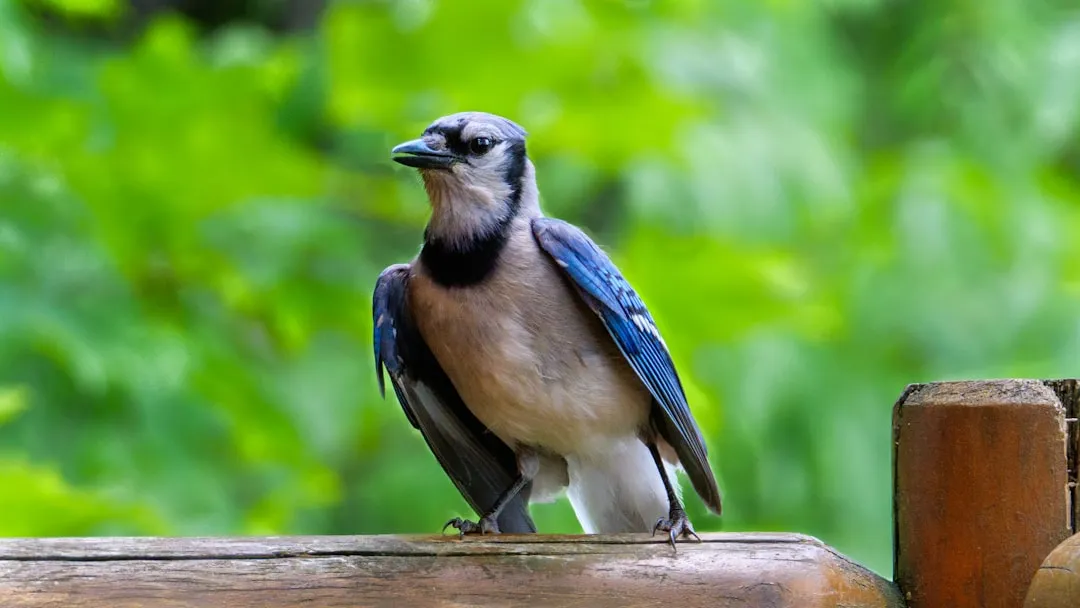
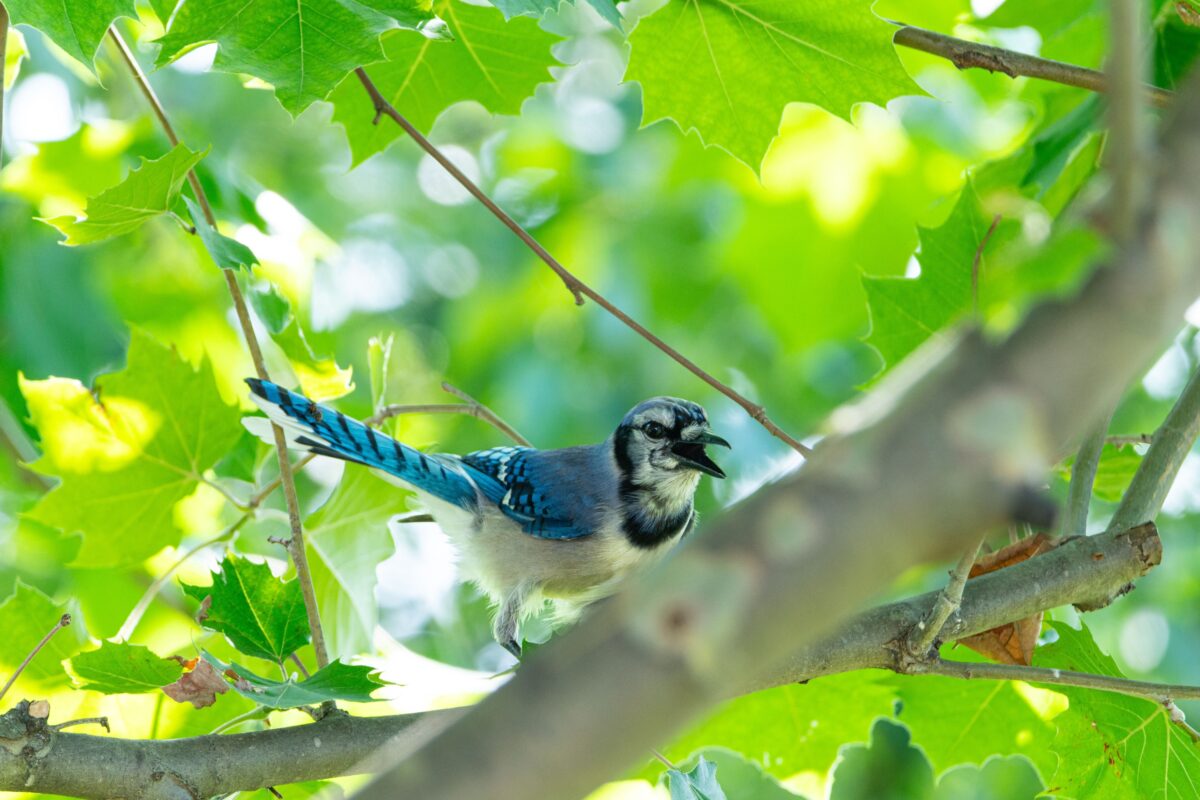
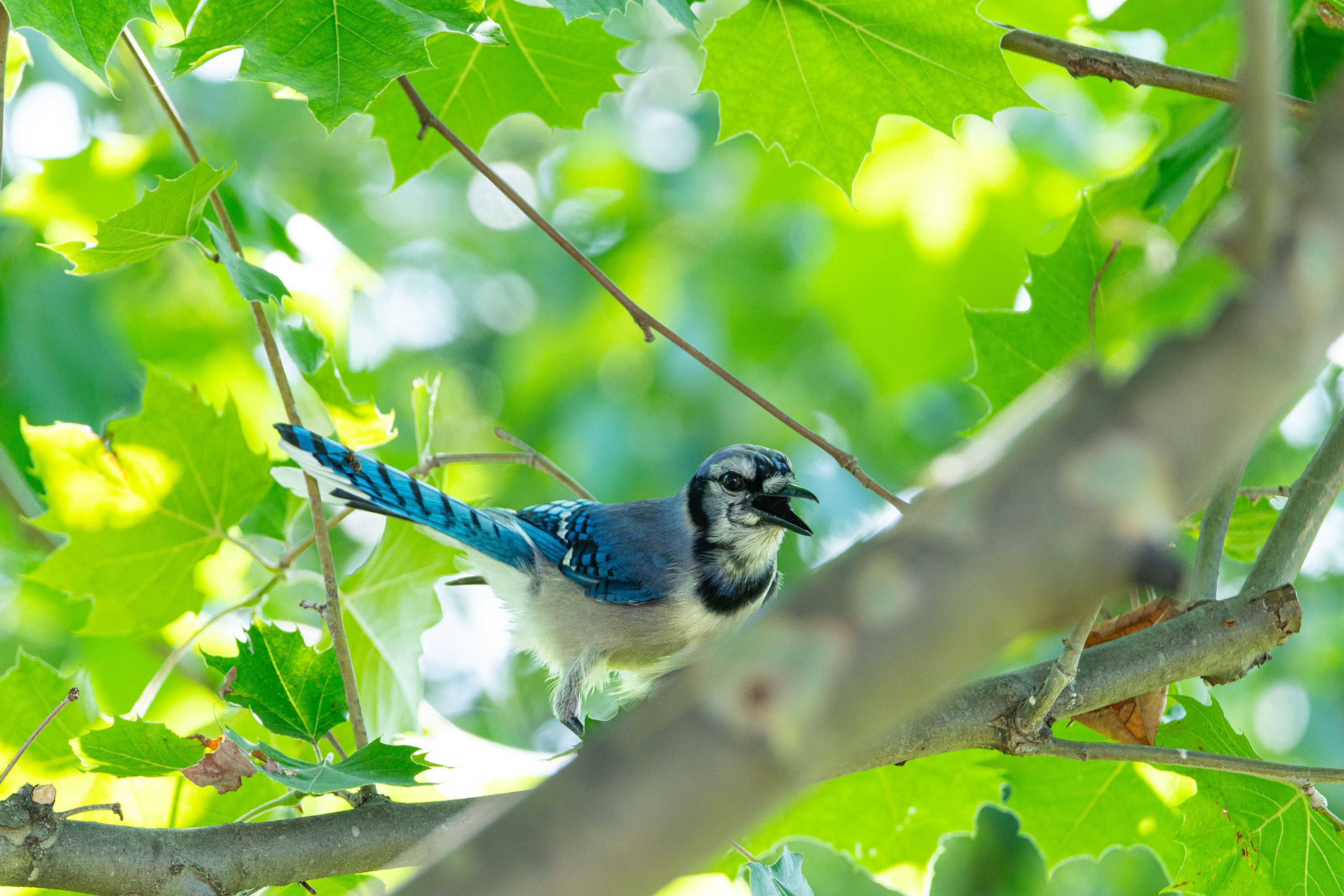
Ask anyone who fills a bird feeder regularly and they’ll tell you the same thing. Blue jays aren’t shy birds. They’re confident, bold, and fiercely territorial, especially when food is involved, often chasing away smaller species so they can have the food source to themselves. It isn’t subtle either. A jay tends to announce itself loudly before it even lands.
What looks like plain bullying actually has a practical explanation behind it. This territorial behavior isn’t about being mean, it’s survival, since competition for food in the wild is tough and blue jays simply use their size and loud voices to secure their share. That doesn’t make it any less intimidating if you’re a chickadee trying to grab a quick meal before winter sets in.
A hawk’s voice from a songbird’s throat
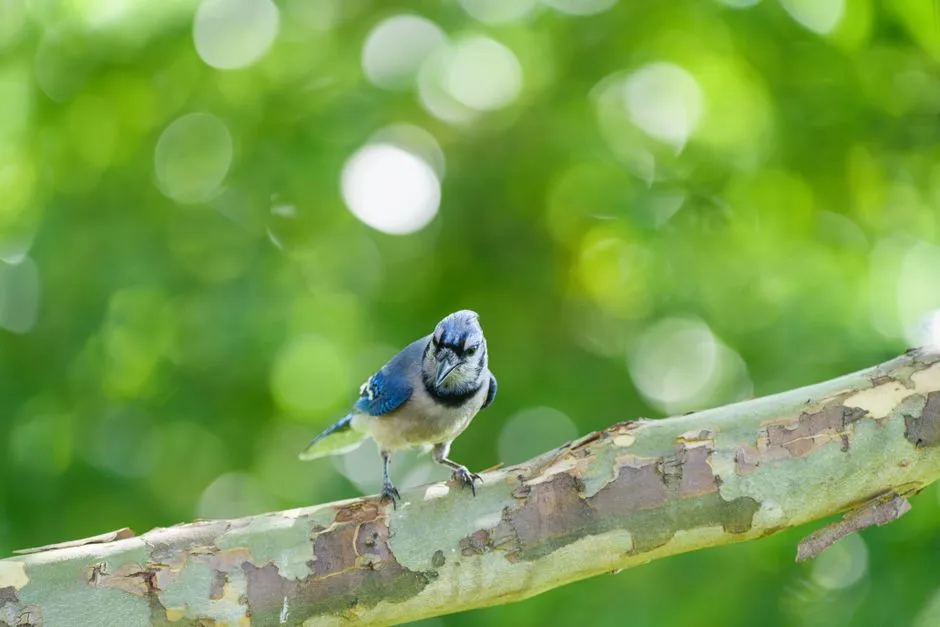
Here’s where things get genuinely strange. Blue jays may occasionally impersonate the calls of raptors, especially those of the red-tailed and red-shouldered hawks, possibly to test whether a hawk is in the vicinity, though also possibly to scare off other birds that may compete for food sources. The mimicry is remarkably convincing, enough to fool experienced birders on a regular basis.
Researchers haven’t landed on one tidy explanation for the behavior. There’s a popular theory that jays do this to scare other birds away from food sources, but the evidence for that is weak, and researchers who’ve studied the behavior across many contexts found no single compelling explanation, since the mimicry appears in so many different situations that it likely serves the same general purpose communication role as their standard calls. So the next time a hawk scream erupts from your hedge and nothing with talons ever appears, you can probably blame the jay hiding just out of sight.
Nest raiders in the neighborhood
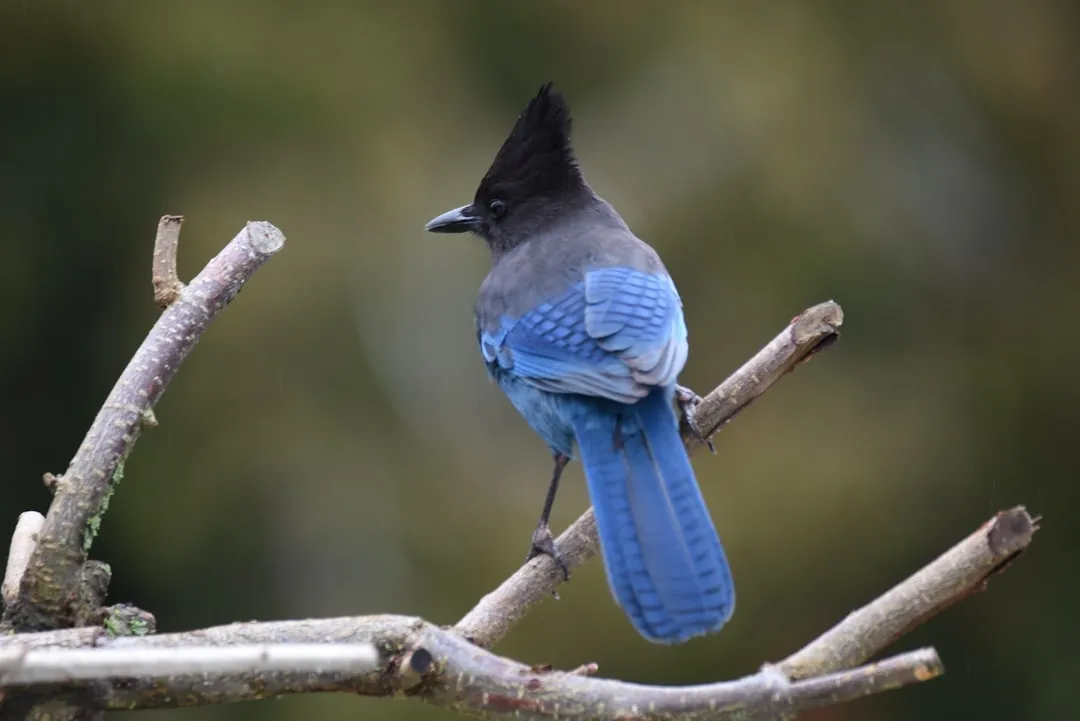
This is the accusation that sticks hardest, and it isn’t baseless. Blue jays have also been known to attack or kill other smaller birds and foliage-roosting bat species, and the blue jay may raid other birds’ nests, stealing eggs, chicks, and nests. For anyone trying to attract warblers or cardinals to a yard, watching a jay work through a nest is not a pleasant sight.
Still, the scale of the problem gets exaggerated more often than not. Blue jays are known to take and eat eggs and nestlings of other birds, but we don’t know how common this is, since an extensive study of blue jay feeding habits found only about one percent of jays had evidence of eggs or birds in their stomachs, with most of their diet made up of insects and nuts. The behavior is real, just rarer than the jay’s reputation suggests.
Mobbing: turning the tables on predators
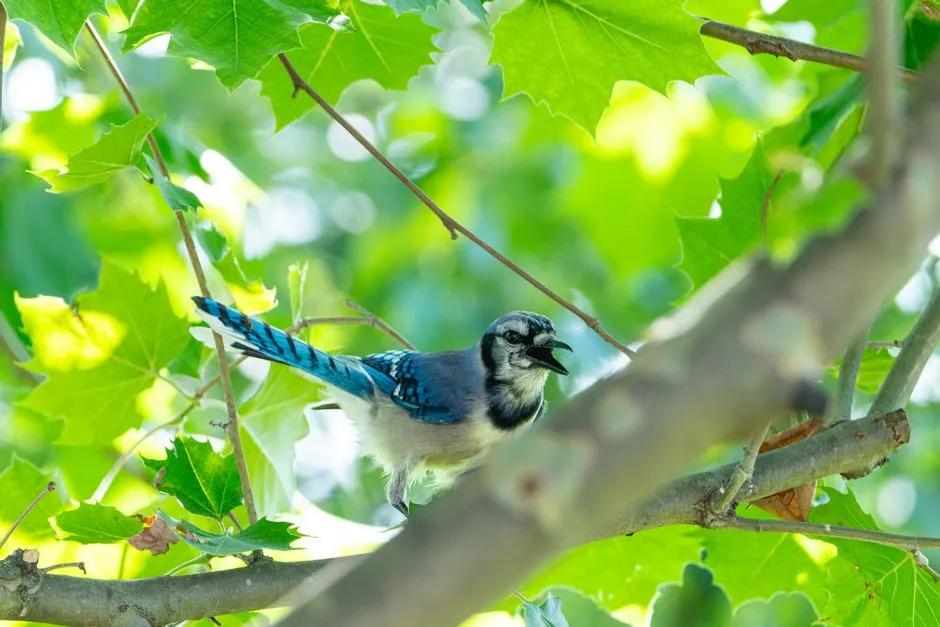
What’s easy to miss in all this talk of aggression is how much of it actually protects other birds rather than harming them. Blue jays don’t just defend their own nests individually. They practice mobbing, a communal defense strategy where multiple jays swarm a predator together, shrieking and diving at it until it leaves, with hawks and owls as the usual targets, though jays will also mob crows, raccoons, cats, and snakes. It’s an impressive display of coordinated nerve for a bird that weighs about as much as a deck of cards.
The benefits ripple outward well beyond the jays themselves. The mobbing also functions as a neighborhood alarm system, alerting every bird in the area that a predator is nearby, so while it looks like pure aggression, it’s actually a defensive behavior that benefits the broader bird community, with even smaller songbirds gaining protection when blue jays raise the alarm. That’s a strange kind of neighborhood watch, loud and abrasive, but effective.
The intelligence behind the intimidation
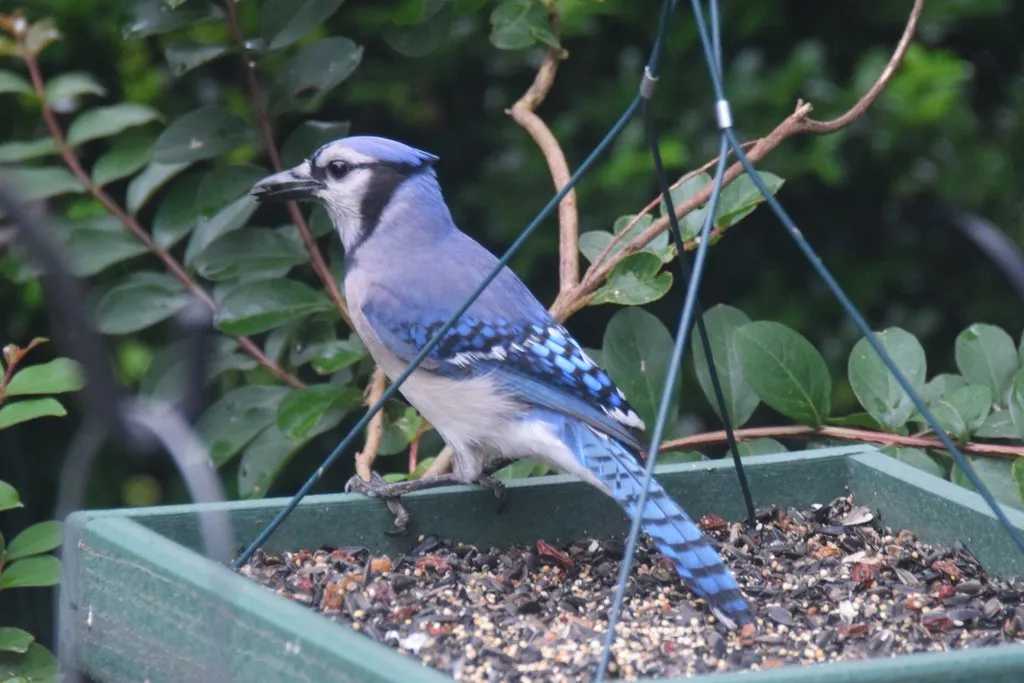
Part of what makes blue jays unsettling to some backyard visitors is how obviously smart they are. Blue jays, like other corvids, are highly curious and are considered intelligent birds, and young individuals playfully snatch brightly colored or reflective objects, carrying them around until they lose interest. That curiosity extends into problem solving that goes well beyond simple instinct.
Their memory and planning ability are just as notable as their cleverness in the moment. Blue jays will sometimes cache food, though to what extent differs widely among individuals. Add in their talent for holding several acorns at once using a specialized throat pouch, and you get a bird that plans ahead, remembers where it hid things, and rarely misses an opportunity.
Not always the bully: where blue jays fall in the pecking order
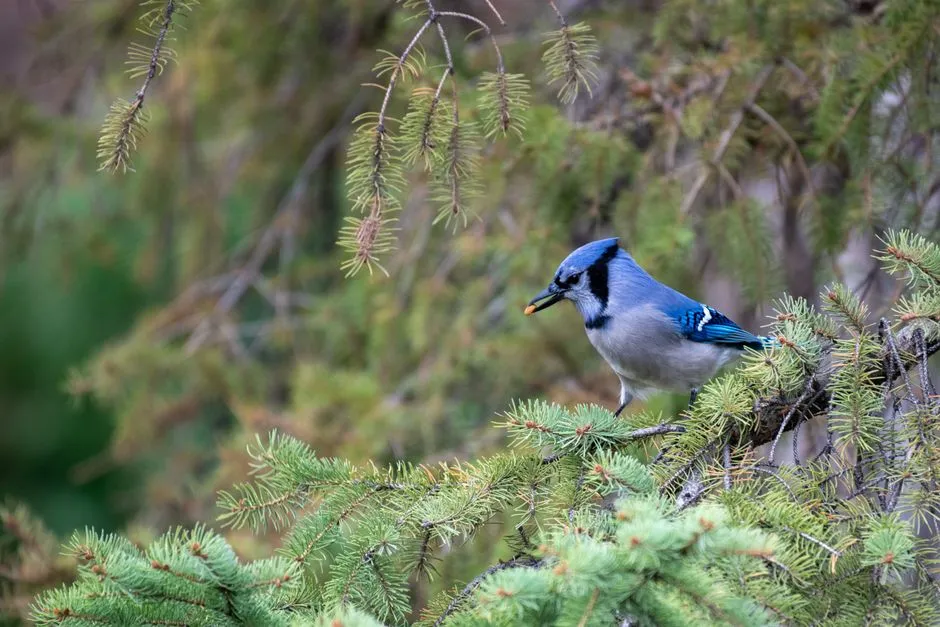
For all their swagger, blue jays aren’t actually at the top of the backyard food chain. Although seemingly contentious in their general behavior, blue jays are frequently subservient to other medium-sized birds who visit bird feeders, and in Florida, blue jays were dominated at feeders by eastern gray squirrels, Florida scrub jays, common grackles, and red-headed woodpeckers. Some of those same species were even observed pushing jays away from food entirely.
It’s a useful reminder that reputation and reality don’t always line up perfectly. All of which were occasionally observed to aggressively prevent the jays from feeding. The jay that terrifies your finches might, ten minutes later, get chased off by a squirrel with no patience for competition.
Living with a blue jay in your yard
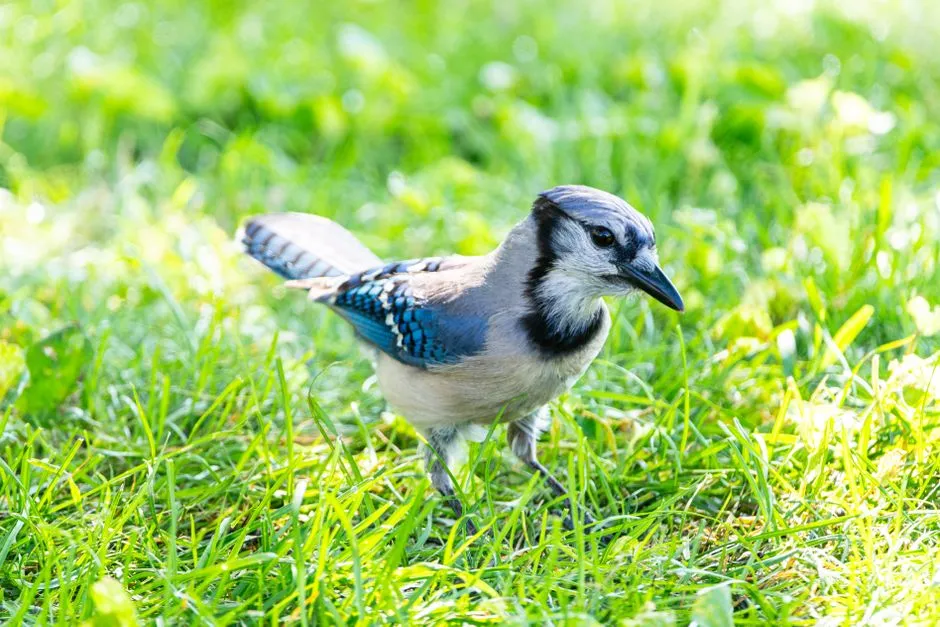
If a nesting pair has taken up residence near your porch, patience tends to work better than confrontation. If a nesting blue jay is dive bombing you, the simplest fix is avoidance, detouring around the area if possible, keeping yard work brief near the nest, and avoiding the area at dawn, dusk, or on cold days when parents need to keep eggs and chicks warm, since the whole ordeal typically lasts only a few weeks. It’s temporary, even if it doesn’t feel that way when you’re getting buzzed on your way to the mailbox.
For feeder conflicts, a small adjustment can go a long way toward keeping the peace. At feeders, you can reduce conflict by offering multiple feeding stations spaced apart, which gives smaller birds a chance to eat while the jays monopolize one spot. It won’t stop the jays from showing up, but it does give everyone else a fighting chance.
Final thoughts

- Why Wolves Were Reintroduced to Yellowstone - July 15, 2026
- The Resurgence of America’s Wild Horses: A Symbol of Freedom and Hope - July 15, 2026
- 10 Cat Breeds That Tolerate Dogs Surprisingly Well - July 15, 2026