
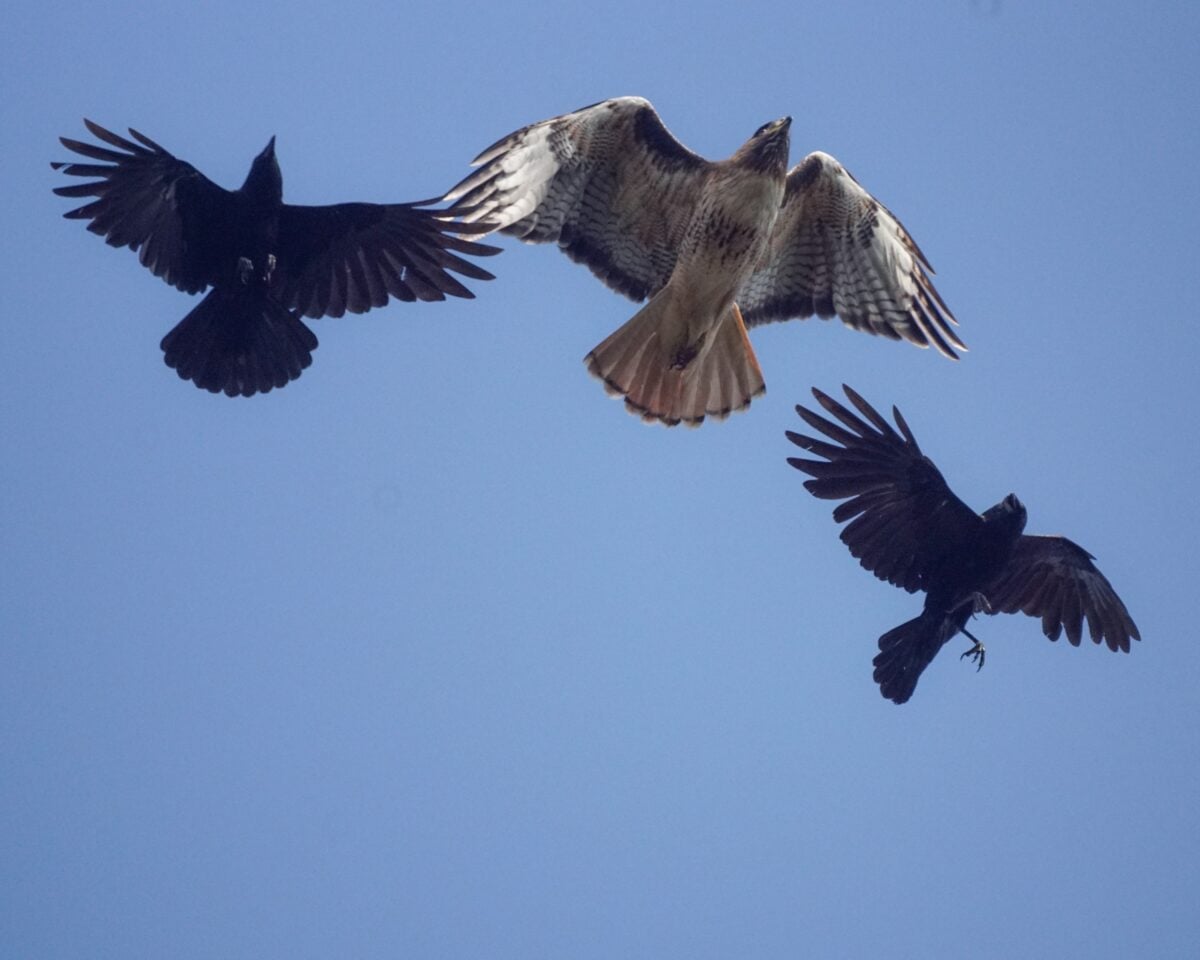
Most people glance up, see a hawk being trailed by a screaming pack of crows, and assume it’s just nature being loud and messy. It isn’t. That sky-high chaos is actually one of the most decoded conversations in the bird world, and once you know how to read it, you’ll realize you’ve had the power dynamics backwards this whole time.
Biologists, longtime birders, and even old folklore all agree on one thing: that noisy chase means something specific is happening, and it usually isn’t good news for the hawk. Here’s what’s really going on every time the crows show up uninvited.
#1 – Crows Are Sounding a Neighborhood-Wide Alarm
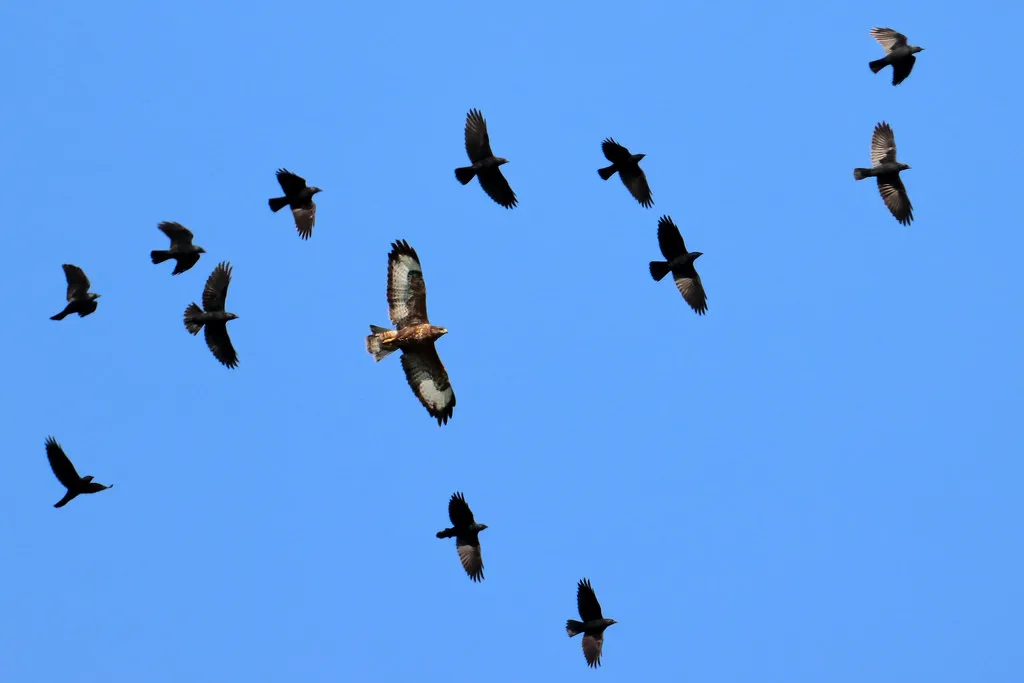
When crows suddenly start tailing a hawk, they’re not just being annoying. They’re activating a full-blown neighborhood alarm system. Biologists call this “mobbing” – when smaller birds gang up on a predator using sound and harassment instead of claws and teeth.
The crows’ harsh caws carry far, pulling in other crows and sometimes even different species to join the chase. To human ears it’s just a racket. To wildlife, it’s a siren blaring: danger in the sky, eyes up.
Fast Facts
- Mobbing behavior has been documented in dozens of bird species worldwide, not just crows.
- Common mobbing targets include hawks, owls, eagles, and even neighborhood cats.
- The behavior spikes hardest during nesting season, when eggs or chicks are nearby.
- Alarm calls can pull in crows from several blocks away in suburban and urban settings.
This isn’t random panic. It’s coordinated risk management. Crows are deeply social, and warning everyone else also protects their own. Owls, hawks, and eagles are the usual targets, especially near nesting or feeding grounds.
What looks like chaos from the ground is actually closer to a neighborhood watch group text going off all at once – loud, urgent, and completely intentional.
#2 – You’re Watching an Intelligence Battle, Not a Size Battle
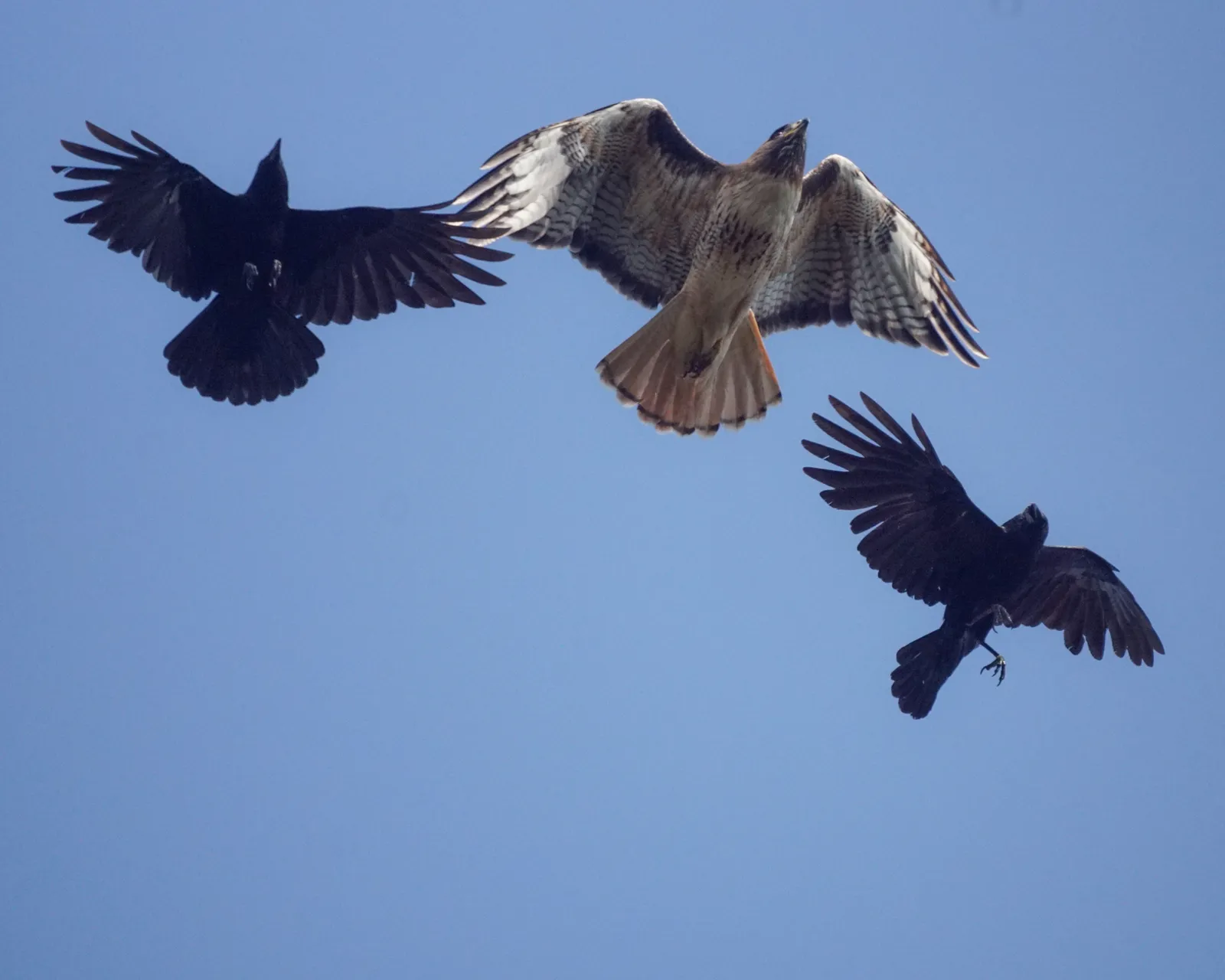
At first glance, the hawk looks like the obvious winner. Bigger, armed with talons, dripping with apex-predator energy. But when crows follow a hawk, you’re actually watching brains go up against brawn, and the brains usually come out ahead.
Crows rank among the smartest birds on the planet. Some tests put their problem-solving on par with a young child. They recognize individual human faces, remember who wronged them years later, and adjust their tactics based on what actually works.
So when they mob a hawk, they aren’t suicidally attacking something stronger. They’re pressuring it into a decision: leave, hunt somewhere else, or burn energy dodging a swarm it can’t shake.
The crows’ real weapon is strategy and teamwork, not beaks. Hunting under constant harassment ruins a hawk’s stealth advantage, so it usually just relocates. It’s less a fight and more a forced eviction, carried out by a group of very smart tenants who refuse to move out.
#3 – There’s Almost Always a Nest, Eggs, or Chicks at Stake
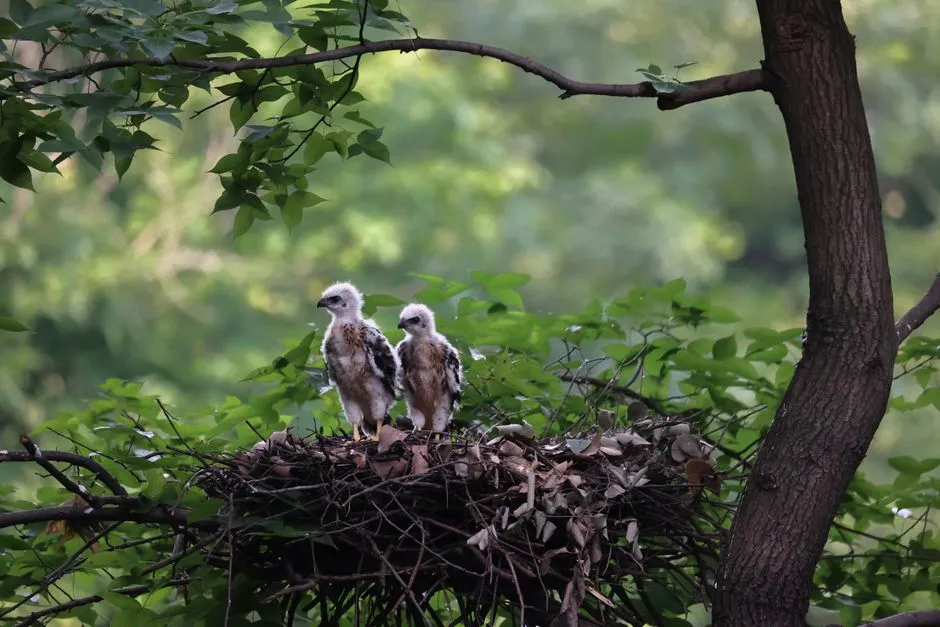
If a hawk is gliding casually and a few crows suddenly lock on and refuse to quit, you can safely assume something vulnerable is nearby. Crows don’t burn energy on extended mobbing for no reason.
- Hidden nests with eggs or chicks
- Known feeding spots or roosts
- Recently fledged young still learning to fly
Most people assume crows are just bullies, but in this scenario they’re desperate parents. Hawks are expert nest raiders, and one successful strike can erase an entire year of effort in seconds.
That’s why the behavior flips so fast, from casual gliding to ferocious focus, the moment a hawk drifts near trees or brush where nests tend to hide. In those moments you’re not watching a random bird chase. You’re watching raw, unfiltered parental defense.
#4 – Other Animals Are Secretly Eavesdropping on the Chaos
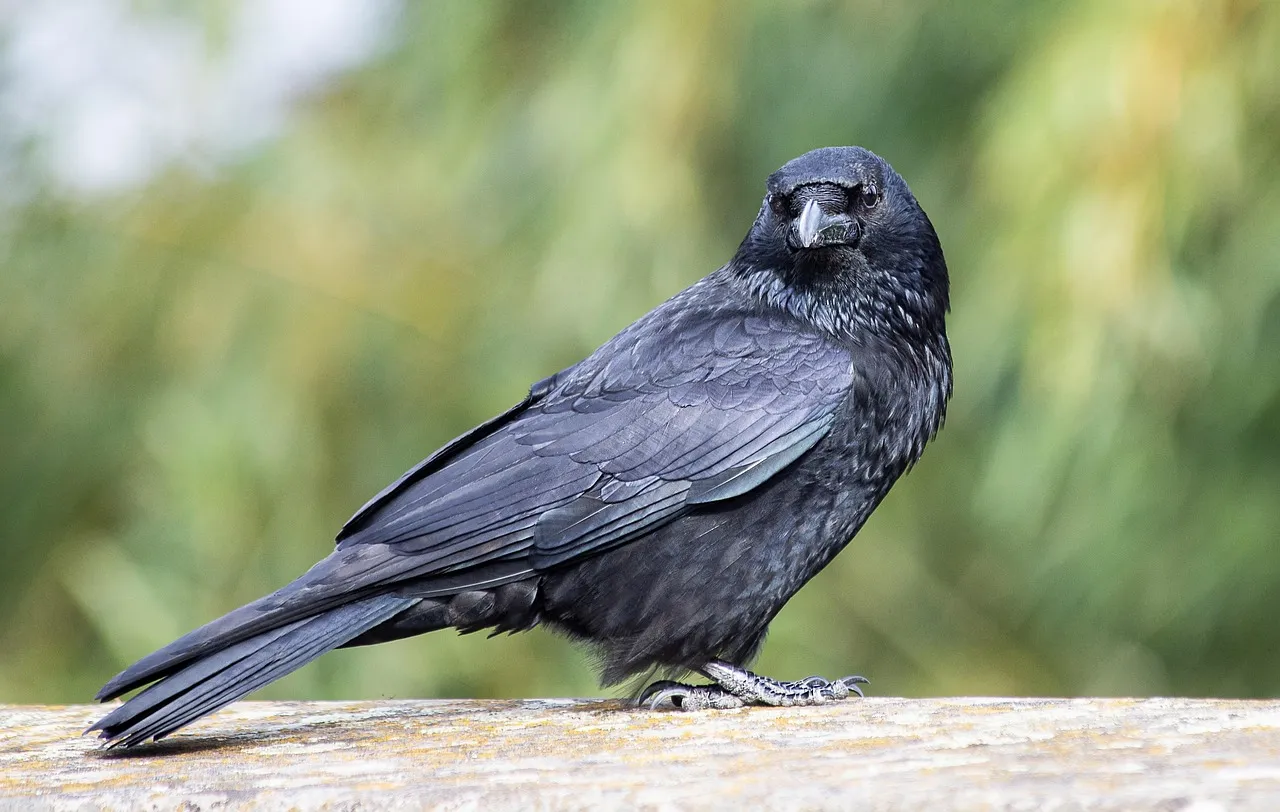
Here’s the part almost nobody talks about: the crows aren’t just warning other birds, they’re tipping off half the ecosystem without meaning to. Squirrels, rabbits, songbirds, even other predators have learned to key into crow alarms.
When crows start trailing a hawk, animals on the ground often freeze, hide, or bolt for cover, because they’ve learned that big raptors overhead mean trouble for anything that moves. Mixed-species flocks have been observed changing their behavior based purely on crow calls, with no direct threat to themselves at all.
Quick Compare
- Squirrels and rabbits: freeze or dash for cover almost instantly.
- Songbirds: often join the chorus, adding their own alarm calls.
- Larger grazing animals: usually stay put, unaffected by the noise.
- Other raptors nearby: may investigate the commotion or steer clear of it entirely.
In plain terms, crows are the loudmouth neighbors everyone secretly relies on. Their mobbing signals help other animals dodge becoming lunch, even though nobody asked them for the favor.
It’s one of the clearest real-world examples of a single species accidentally building a free information network that the whole neighborhood taps into. So when crows tail a hawk, you’re not just watching their drama. You’re watching the entire food web flinch at once.
#5 – You May Be Witnessing a Crow “Teaching Moment”
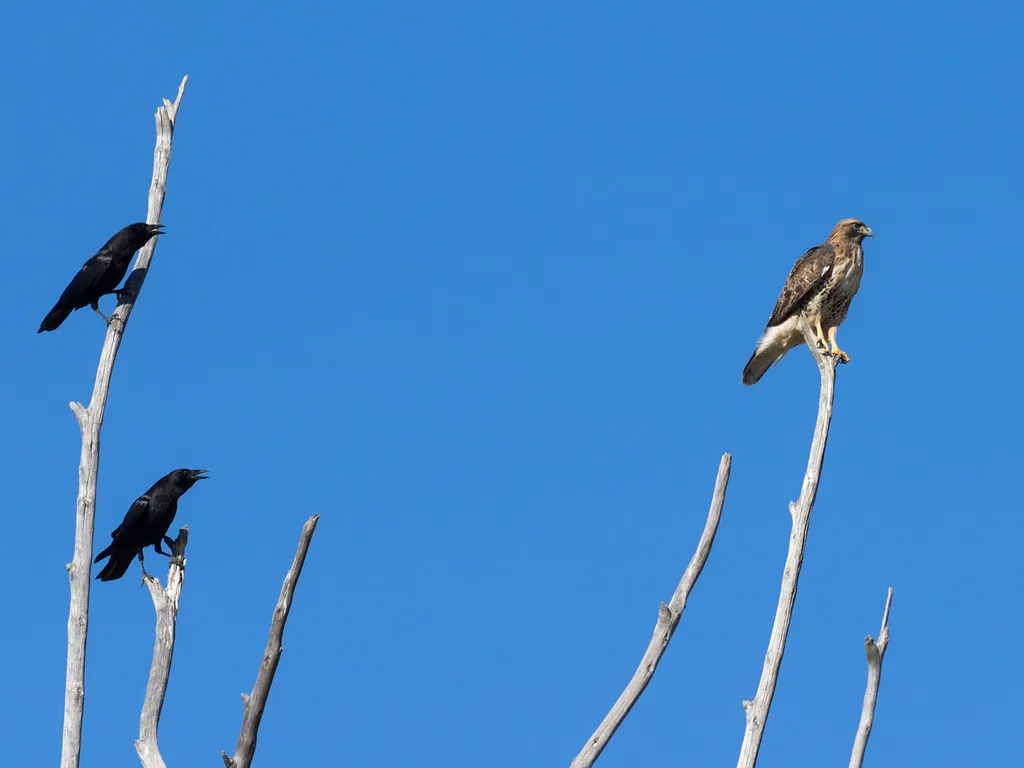
One of the strangest truths about crows: they hold grudges, and they pass that grudge down like family history. When adults start following and harassing a hawk, look closer. You’ll often spot younger crows hanging just behind the main action, watching instead of joining in.
This isn’t just a brawl. It’s a training session. Juvenile crows study how adults respond to threats, which predators to mob, and exactly how close is safe to get.
Researchers have documented crows recognizing and remembering specific dangerous individuals for years, changing their routes and routines around them long after the fact. That memory appears to spread through the flock almost like cultural knowledge, passed from bird to bird rather than relearned from scratch.
So when a hawk shows up, it isn’t just one crow’s opinion driving the chase. It’s a shared, real-time consensus: this one’s trouble. You’re watching survival skills being rehearsed and handed down like a family story nobody wrote down but everyone remembers.
#6 – In Folklore, It’s Read as an Omen, and Not a Gentle One
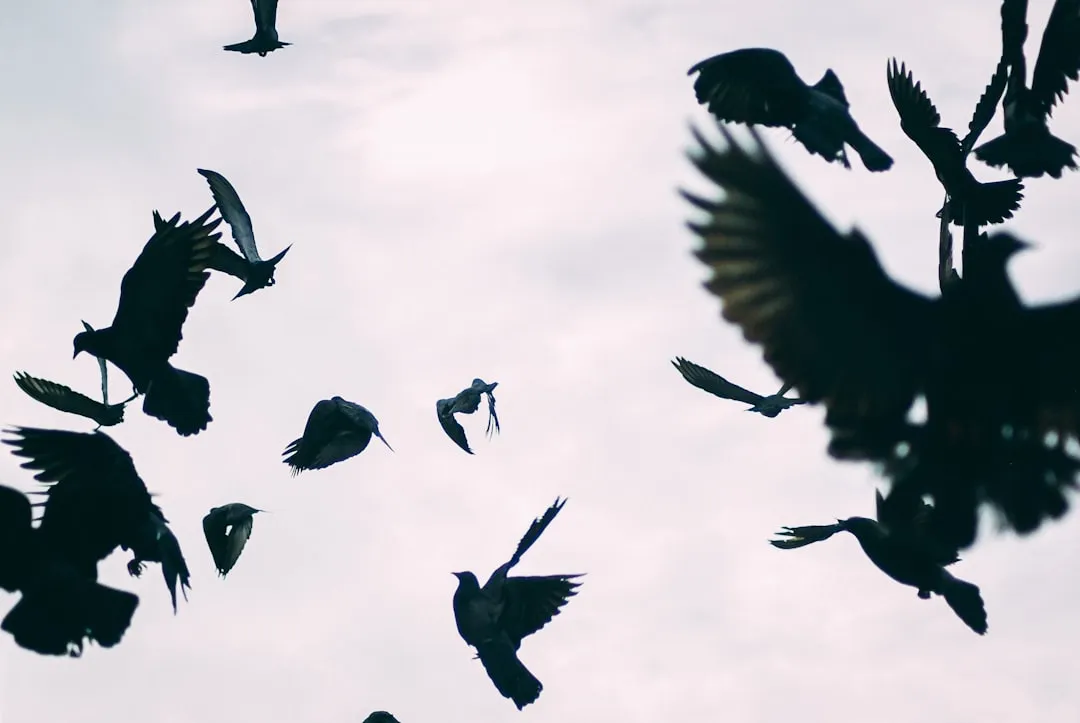
While scientists talk about mobbing and predator-prey dynamics, traditional cultures often read something heavier into a crow-versus-hawk standoff. In many folklore traditions, hawks symbolize sharp focus and singular ambition, while crows represent community, memory, and the things that go unseen.
So when crows start following a hawk, some interpreters describe it as the group challenging a lone hunter, or instinct pushing back against raw ambition. You’ll hear people frame it two ways: the hawk as a powerful force or decision arriving, the crows as a chorus of warnings, doubts, or information that’s easy to ignore.
To be clear, this reading is symbolic, not scientific. But it’s striking how often people who notice this exact drama unfolding overhead say it felt personal, like something in their own life was being mirrored back at them.
A push to slow down. A nudge to reconsider a risky move. A reminder to pay attention to warning signs already being ignored. You don’t have to believe in omens to admit it’s hard not to feel watched when a whole murder of crows lights up the sky like that.
#7 – Sometimes the Hawk Is the Distraction, and the Crows Are the Real Story
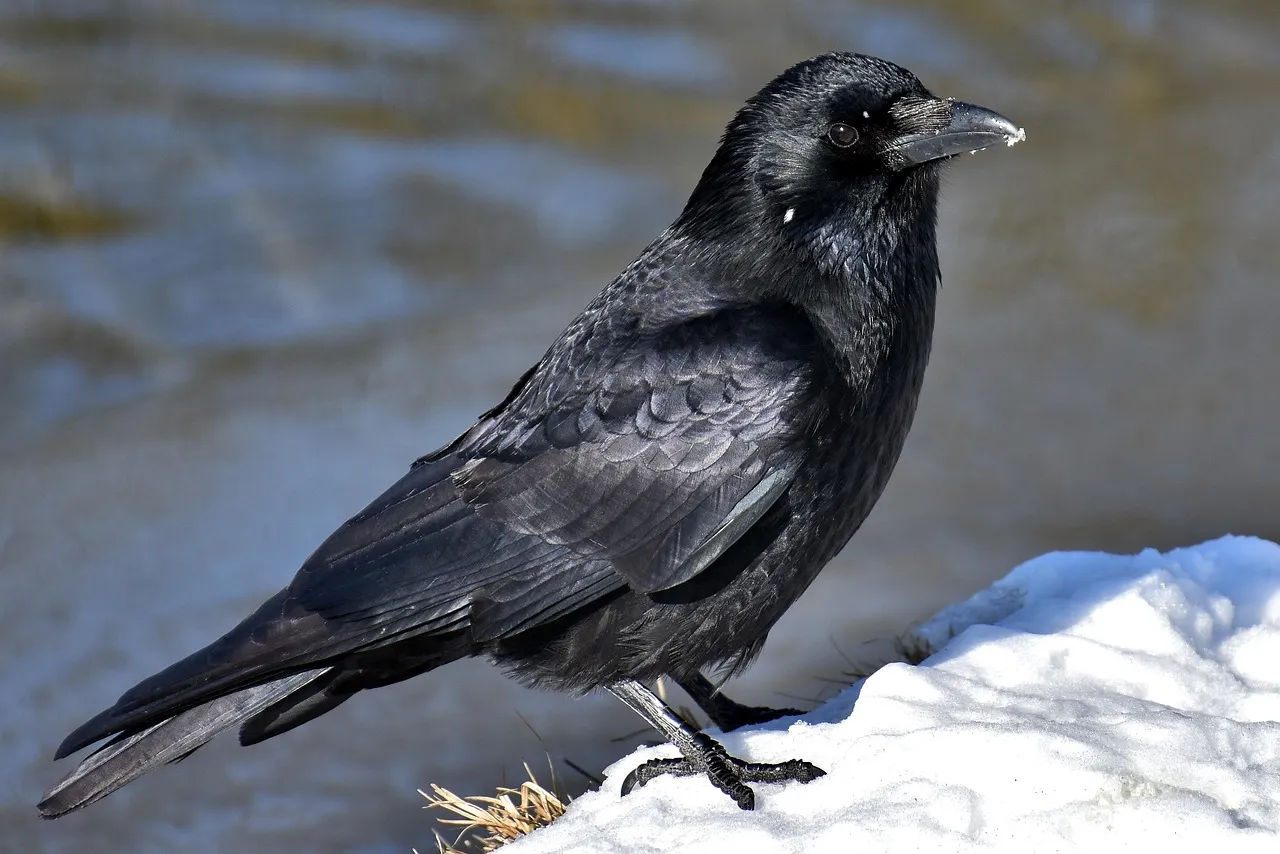
Here’s the twist that makes people rethink everything: we obsess over the hawk because it looks dramatic, but the crows are usually the ones actually running the show. They decide when to escalate, when to call in reinforcements, and when to break off the chase entirely.
If they succeed, the hawk leaves, the territory holds, and life quietly resets. The hawk gets the visual drama and the headlines, but the crows wrote the entire script from start to finish.
Worth Knowing
- Crows sit nowhere near the top of the raw food chain, yet they often dictate where hawks will and won’t hunt.
- A single bad encounter with a crow flock can shape a hawk’s habits in that territory for a long time.
- Crow family groups frequently include extended relatives who help defend the same shared turf.
- Researchers increasingly describe crow social networks as functioning like a real information economy.
This is exactly why many longtime birders half-jokingly call crows the unofficial landlords of suburban and rural skies. They’re nowhere near the top of the food chain on paper, but their social structure and communication give them outsized influence anyway.
When they choose to follow a hawk, they’re enforcing boundaries, broadcasting intel, and in a real sense shaping where that hawk will and won’t hunt going forward. You’re not just watching a predator and its would-be victims. You’re watching a noisy, ongoing negotiation over who gets to feel safe in that particular patch of sky.
The Bottom Line
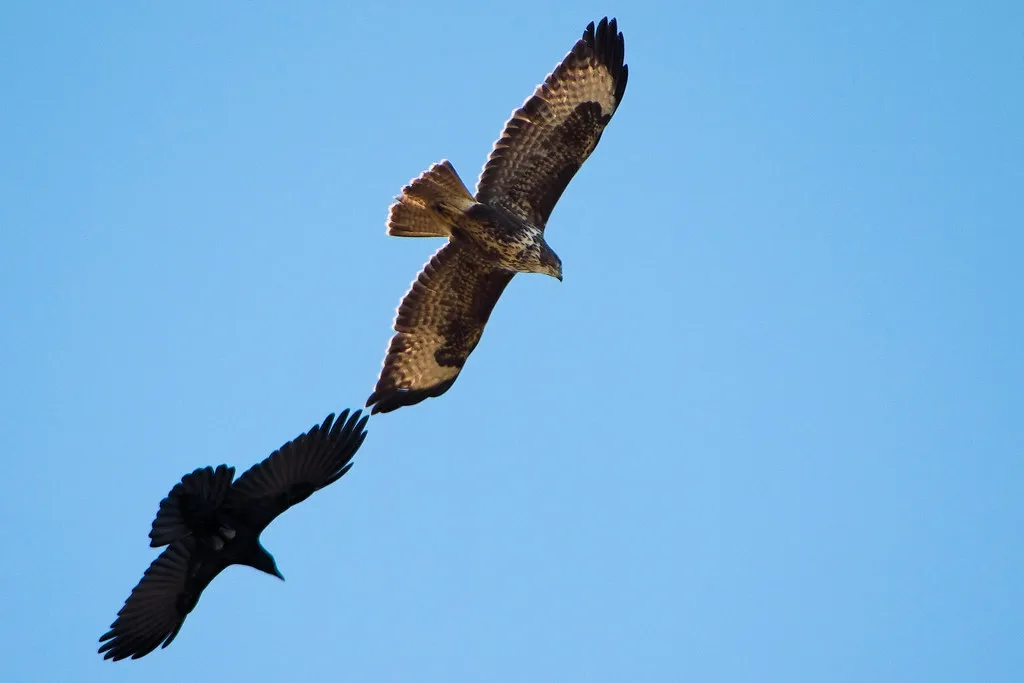
When crows begin following a hawk, it’s not chaos and it’s not birds “just being loud.” It’s a coordinated alarm, a tactical eviction, and sometimes a cross-species public service announcement rolled into one messy, screeching event.
Crows are defending nests, training their young, and broadcasting danger to anything smart enough to listen in. The hawk isn’t always the ruthless king of the sky people assume it is. More often, it’s being hustled out of town by a tight-knit community that flatly refuses to stay quiet.
Personally, I think most people badly underestimate how much agency crows actually have in these moments. We love the clean, simple story of one fierce predator ruling the sky, but the noisier, more complicated truth is that community pressure wins more often than raw power does.
So the next time you see crows trailing a hawk, don’t just watch the hawk. Ask yourself whether you’re really seeing brute strength at work, or a group that figured out, a long time ago, that information and numbers beat talons every time.

- What It Means When Crows Begin Following a Hawk - August 4, 2026
- 7 Things That Attract Groundhogs Into a Garden - August 4, 2026
- 12 Pollinator Gardens That Also Attract Songbirds - August 4, 2026