
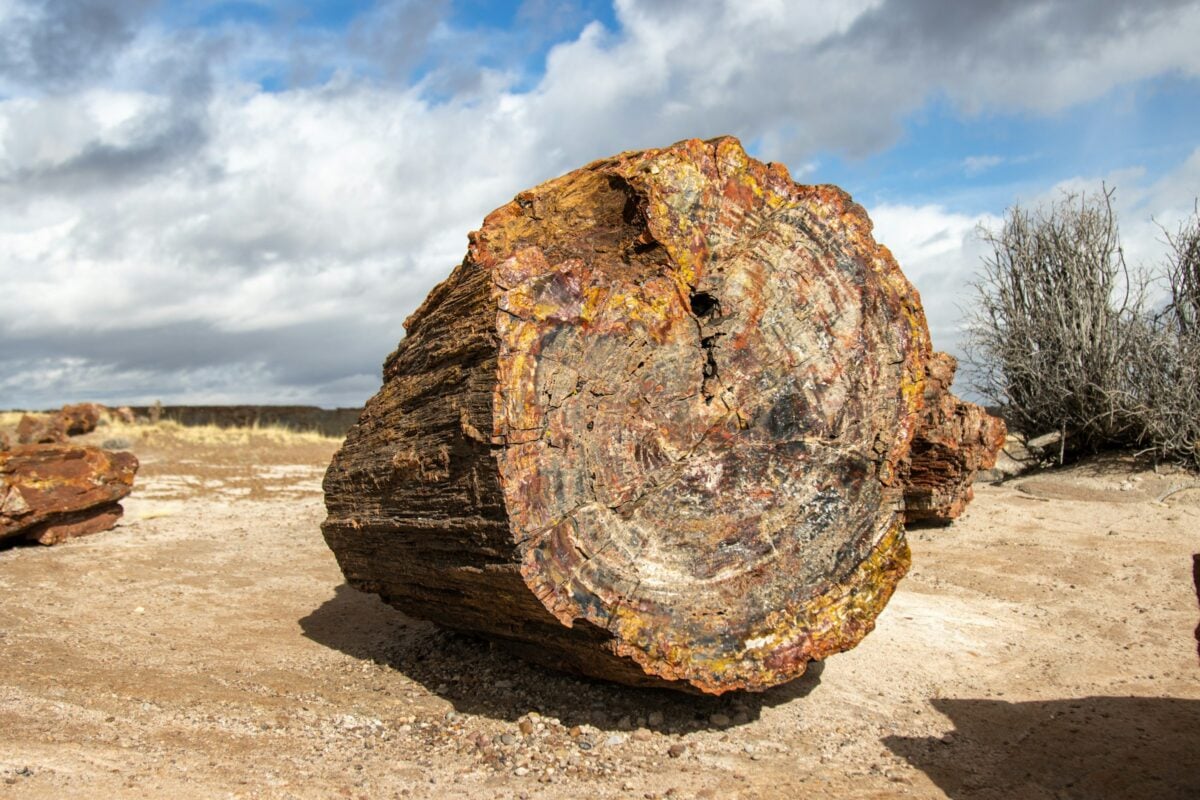
If you have ever wanted to walk through a forest frozen in time, the Petrified Forest National Park in Arizona is probably the closest you’ll get. Here, ancient trees have turned into shimmering stone, scattered across a high desert landscape that looks part science museum, part alien planet. It is one of those places where your brain keeps insisting you are looking at wood, even as your hands tell you very clearly that it is rock.
What makes these stone trees so strangely beautiful is not just how they look, but the story they tell: of vanished swamps, drifting continents, and ecosystems that collapsed hundreds of millions of years ago. The more you learn, the more mind‑bending it becomes. Let’s dive into ten of the most fascinating, science‑backed facts about these stone giants and the world they came from.
1. These “trees” are older than the dinosaurs you’re picturing
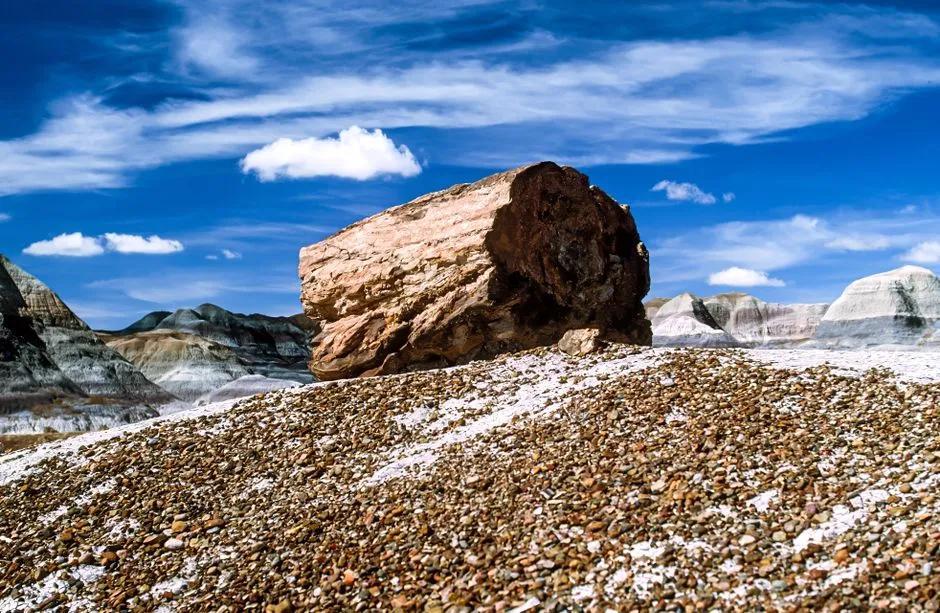
Here is the first shocking twist: the petrified logs in Petrified Forest National Park are mostly from the Late Triassic period, roughly more than two hundred million years ago. That means they predate famous dinosaurs like Tyrannosaurus rex or Triceratops by well over a hundred million years. When these trees were alive, the creatures wandering around them were early dinosaurs and strange reptilian species that would look unfamiliar to most people today.
It is easy to assume that anything fossil‑related belongs to a single, fuzzy “dinosaur era,” but the park’s stone trees come from a much deeper slice of Earth’s past. Back then, the continents were still clustered as part of the supercontinent Pangaea, and the land that is now Arizona sat closer to the equator. Imagining today’s arid, windy plateau as a warm, marshy lowland forest takes a bit of mental effort, but that contrast is exactly what makes these fossils so captivating.
2. They started as living rainforest giants, not desert stumps
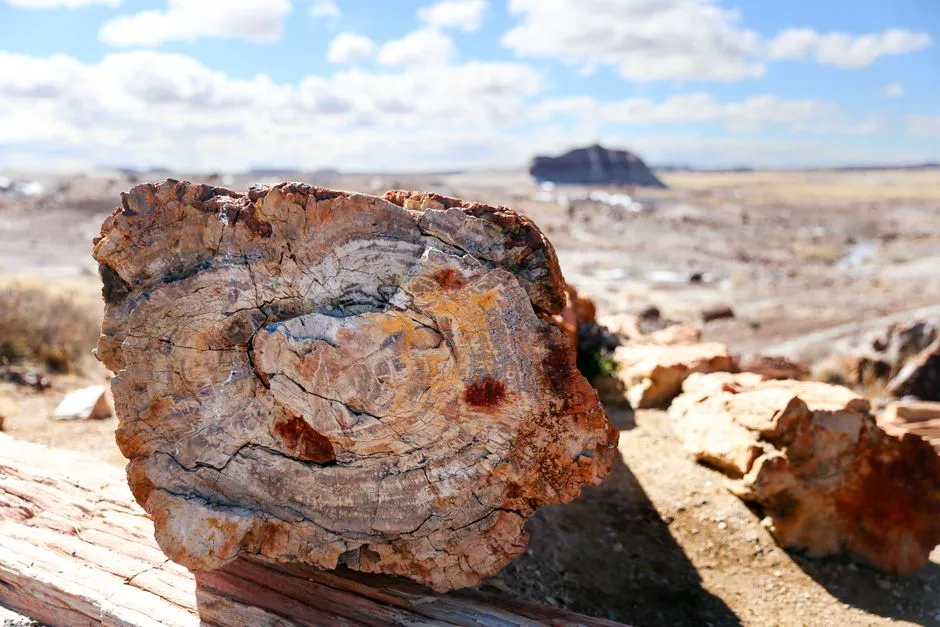
Standing in the blazing Arizona sun, it is hard to believe this place was once lush and humid. Yet geological and fossil evidence show that the region used to host dense, river‑fed forests and swampy floodplains. These were not small groves, but sprawling ecosystems packed with tall trees, ferns, and other vegetation that thrived in a tropical to subtropical climate.
Over time, climate shifts and tectonic movements transformed this wet landscape into the dry high desert we know today. In a way, every stone log scattered across the badlands is a reminder that the planet is never static. What looks like an eternal desert is actually just one chapter in a much longer environmental story, and the petrified trees are the surviving characters from a very different scene.
3. The “stone” is mostly quartz, colored by trace minerals
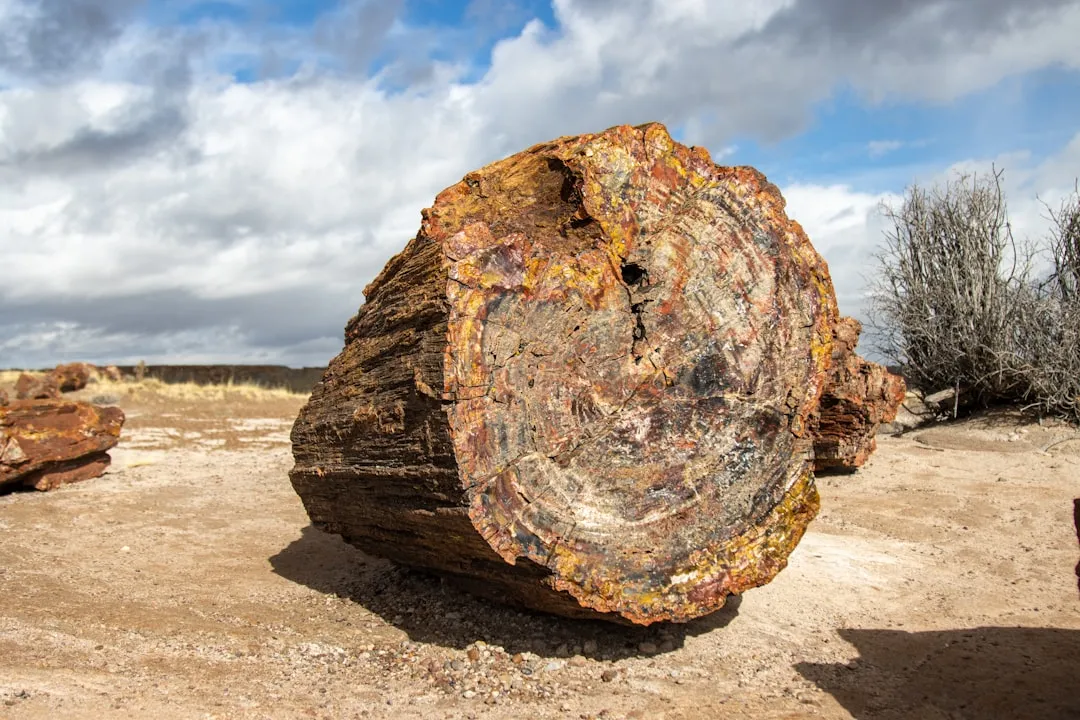
At a glance, many of the logs look like painted wood: bands of red, purple, orange, yellow, black, and white run through them like brushstrokes. But slice them open and you will find they are almost entirely made of microcrystalline quartz, a form of silica. The original organic wood has been replaced cell by cell, leaving behind a mineral replica that is heavier, harder, and far more durable than any living trunk.
The wild colors come from tiny amounts of other elements that slipped into the silica as it crystallized. Iron can produce reds and yellows, manganese can add purples and pinks, and carbon can darken the stone to deep gray or black. It is a bit like nature doing stained glass work at a microscopic level, carefully filling in every pore of the original tree with shining mineral pigments over immense stretches of time.
4. Petrification is a race against decay – and these trees won
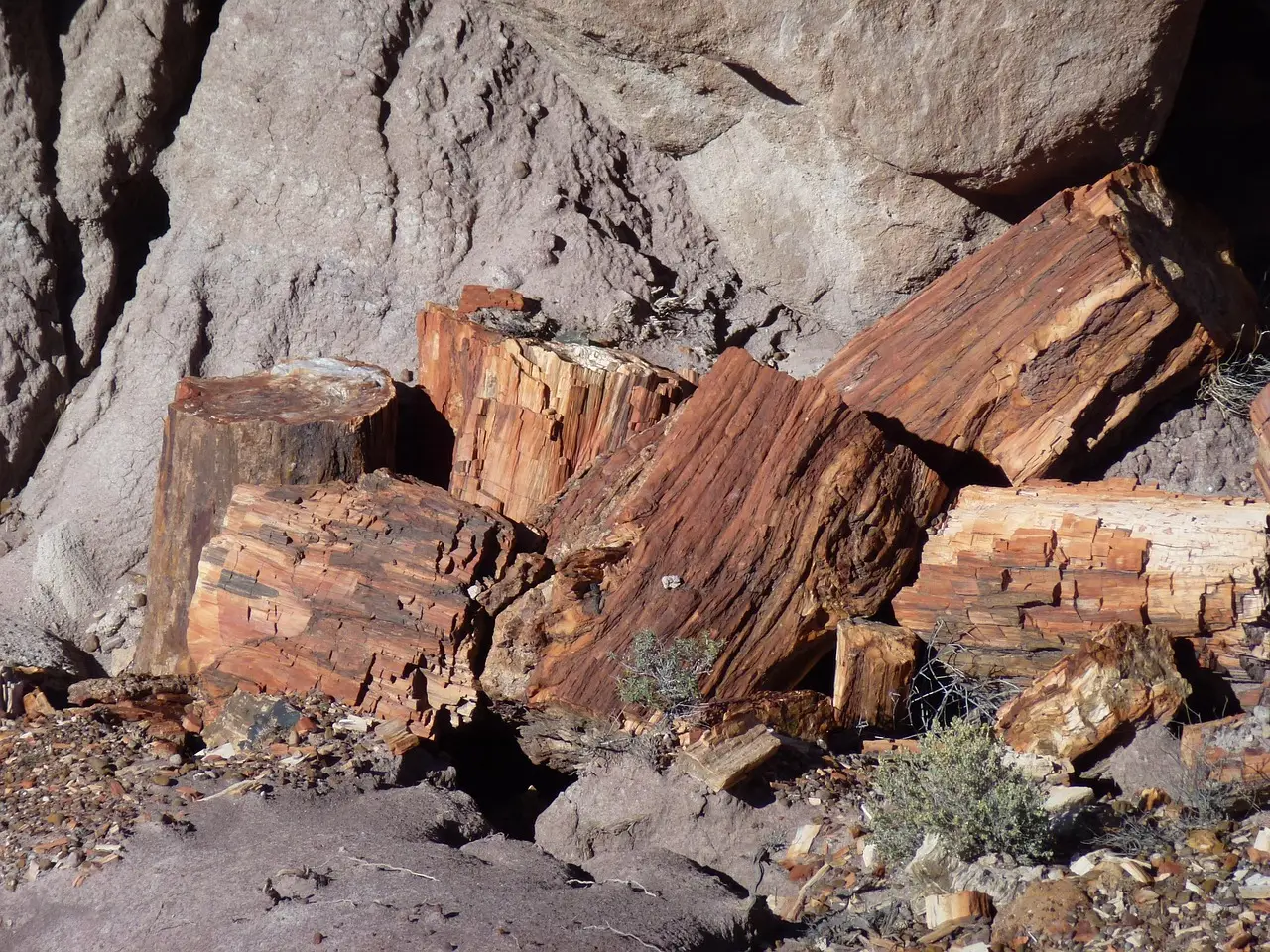
Turning a tree into stone is not as simple as burying it and waiting. Normally, dead wood rots away, is eaten, or burns; the odds are stacked against long‑term preservation. For petrification to happen, the trees had to be rapidly buried by sediment, often in river channels or flood deposits, cutting them off from oxygen and slowing down decay long enough for minerals to move in.
Groundwater rich in dissolved silica then seeped through the buried logs, gradually filling empty spaces in the wood. As the silica precipitated out of solution, it formed solid quartz inside the microscopic structure of the tree. Over a very long period, that mineral buildup essentially copied the log in stone, preserving growth rings, bark textures, and even tiny details that you can still see today if you look closely at broken surfaces.
5. The original trees were not pines, but extinct relatives
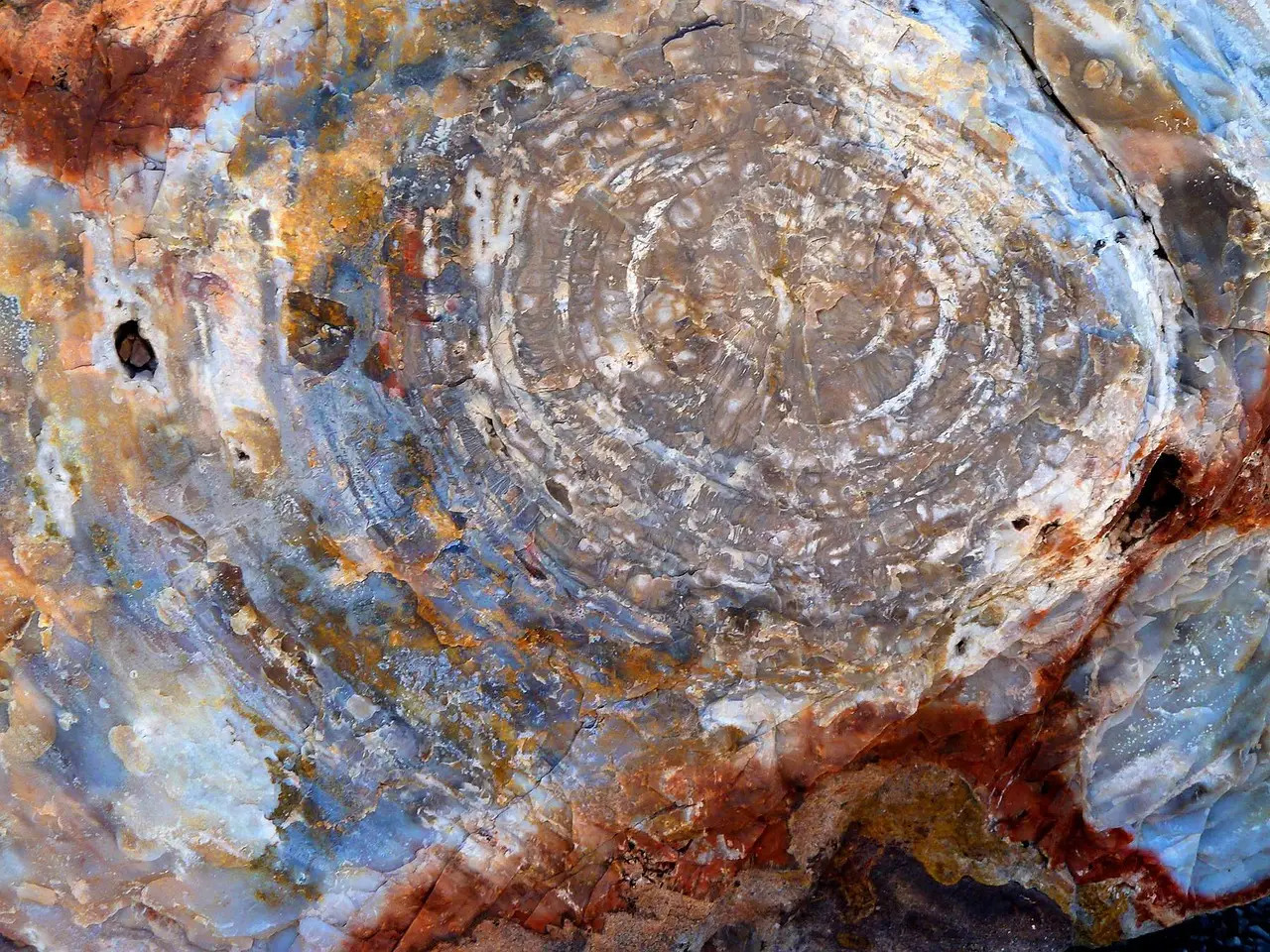
Many visitors casually call the stone logs “petrified pine,” but that is not quite right. Most of the fossil wood in the park comes from species of ancient conifer‑like trees that are now extinct. They were relatives of modern conifers, but not identical to the pines, spruces, or firs we see in forests today. Their internal structure and bark textures, studied under microscopes, show unique patterns that set them apart.
Scientists have given these fossil woods names based on their microscopic anatomy and overall form, often grouping them into genera that only exist in the fossil record. That might sound technical, but the point is simple: you are not just looking at old versions of today’s trees. You are looking at entire lineages that disappeared, leaving behind mineral skeletons as evidence they were ever here at all.
6. The park protects one of the richest Late Triassic fossil sites on Earth
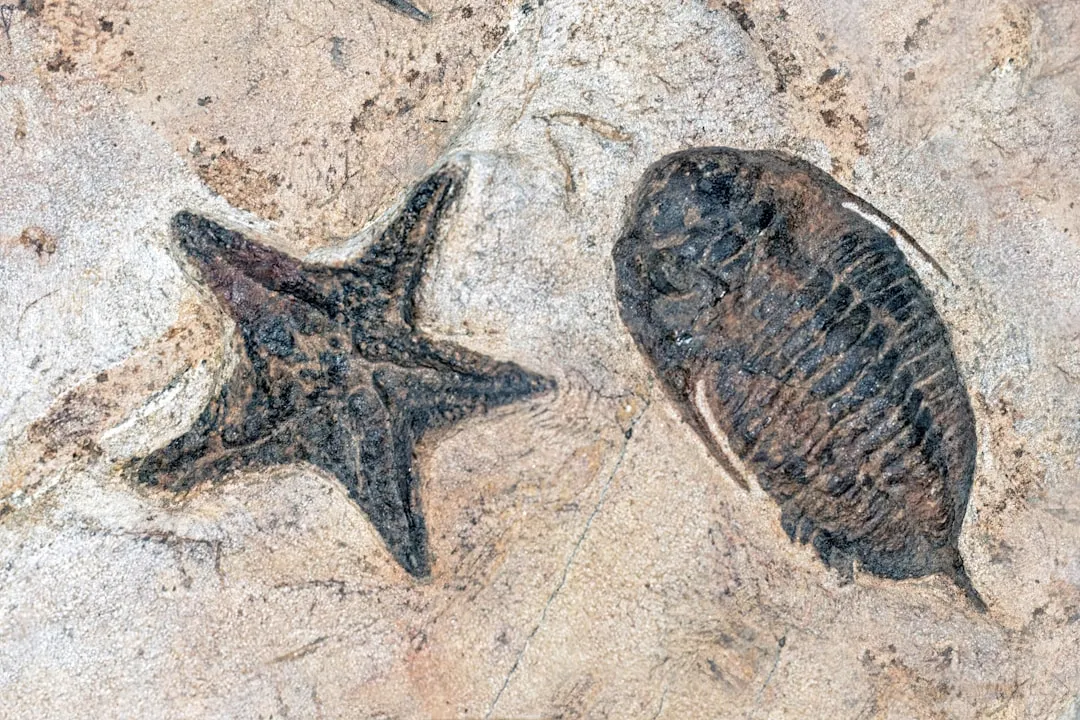
Although the stone trees get most of the attention, they are just one part of a much bigger paleontological story. The sediments that hold the petrified wood also preserve fossils of early dinosaurs, crocodile‑like reptiles, amphibians, fish, and even invertebrates. Together, they form one of the most important windows into life on land during the Late Triassic, a time when dinosaurs were just starting to diversify.
For paleontologists, this area is like a vast, layered archive of a world in transition. By studying the fossil bones, teeth, and plant remains alongside the petrified logs, researchers can piece together how ecosystems were structured and how they changed through time. That makes the park not only visually striking for visitors, but scientifically irreplaceable for understanding the deep history of life.
7. The “broken logs” were not cut – they snapped naturally
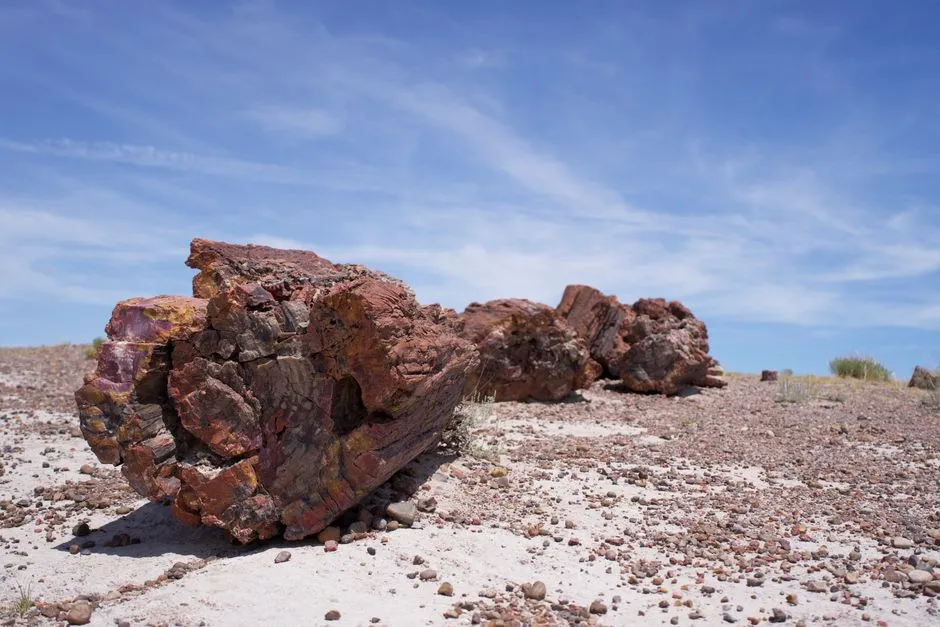
One of the most striking sights in the park is long lines of what look like neatly chopped rounds of firewood made of stone. At first glance, it almost feels like some ancient logging crew came through with a gigantic saw. In reality, the logs broke apart naturally as the surrounding rock layers shifted and eroded over millions of years.
As the buried logs turned to quartz, they became rigid and brittle. When the sedimentary rock holding them was uplifted, compressed, and eventually exposed to erosion, stress fractures formed along the length of the fossil trunks. Those cracks caused the petrified trees to snap into sections, which then weathered out of the surrounding rock and rolled slightly apart, creating that unmistakable “stack of stone segments” look that confuses so many eyes.
8. People used to haul away huge amounts of petrified wood
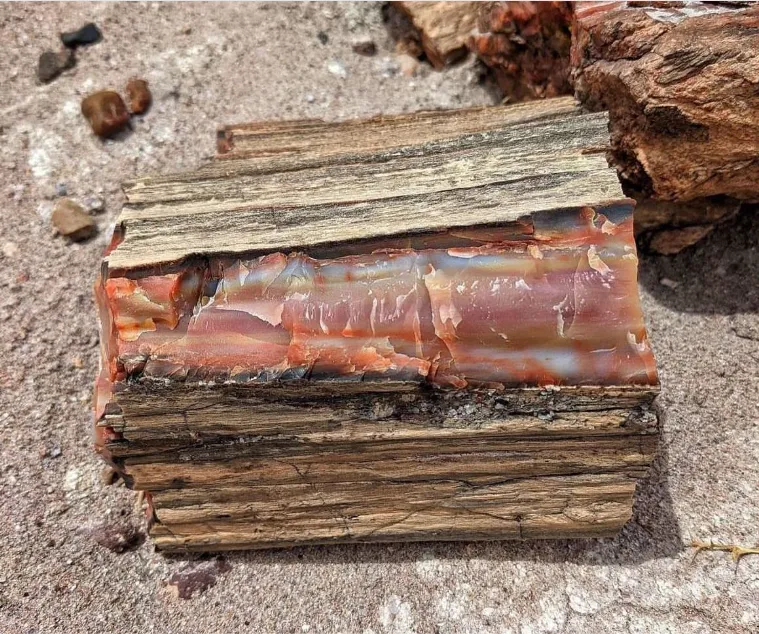
Before the area was protected, visitors and locals removed an enormous amount of petrified wood for souvenirs, building materials, and decorative pieces. For a long time, the stone logs were treated almost like an open quarry of colorful, convenient rock. You can still see old photographs of wagons and early trucks piled high with chunks of fossil wood heading away from the region.
That casual removal had a real impact on the landscape, reducing the amount of visible petrified wood in easily accessible areas. The eventual creation of the national park and stricter protection rules were not just bureaucratic steps; they were a necessary response to the realization that this unique resource was being steadily chipped away. Today, taking even a small piece is prohibited, and that shift in attitude has helped preserve the remaining treasures for everyone to see.
9. Climate change is rewriting the story yet again
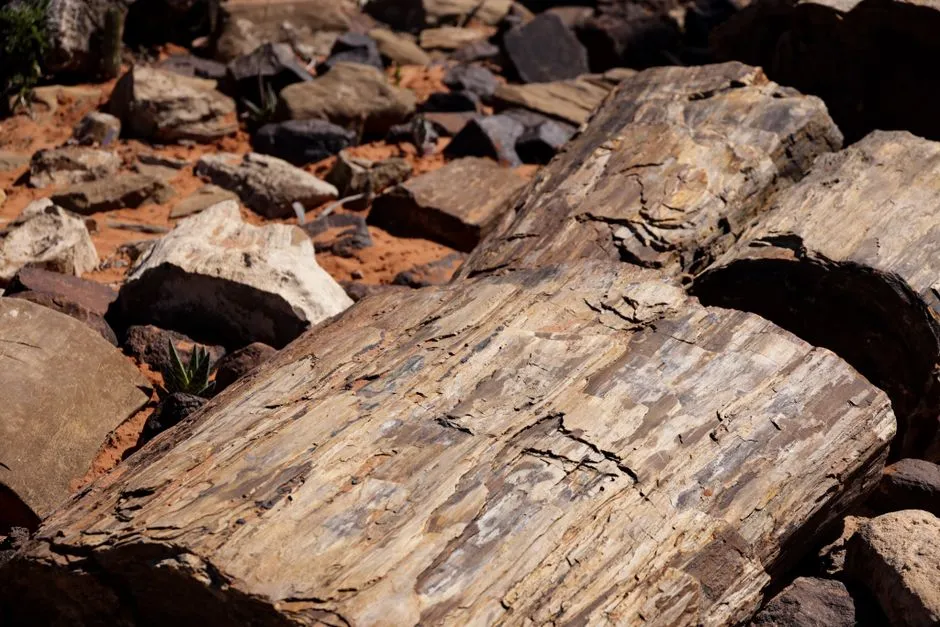
The petrified trees are relics of an ancient climate shift, but they now sit in a modern world that is also rapidly changing. Higher temperatures, more intense storms, and shifting patterns of rainfall can all affect erosion rates, vegetation cover, and even how visitors experience the park. In some places, heavier downpours can speed up the exposure of new fossils while simultaneously wearing away delicate surfaces more quickly.
On a more subtle level, the contrast between the Triassic greenhouse world and today’s warming climate serves as a kind of cautionary background. It reminds us that Earth’s systems can swing dramatically over time, and that ecosystems we take for granted are not guaranteed to last. Walking among the stone logs, it is hard not to feel that we are living through our own chapter of environmental upheaval, even if the timescales are different.
10. The stone trees are scientific tools, not just beautiful relics
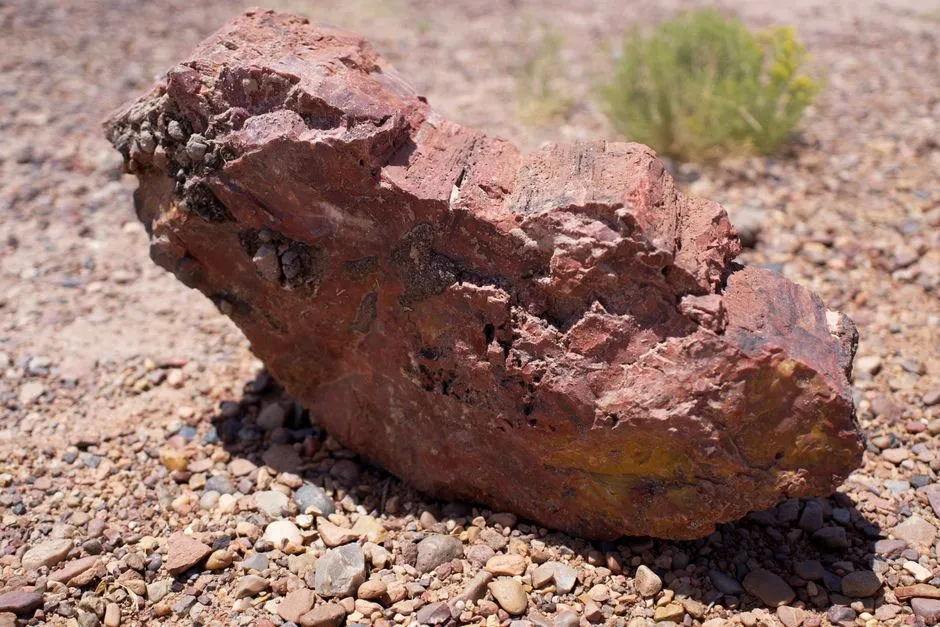
It is tempting to think of the petrified logs mainly as striking natural art pieces, but to researchers they are also data. By examining growth rings, cell structure, and mineral patterns, scientists can infer how fast the ancient trees grew, what kinds of seasonal changes they experienced, and even aspects of the chemistry of the water and soil they lived in. Each polished cross‑section can function like a chart of environmental conditions written in stone.
In my view, this is what makes the Petrified Forest so special: it is where aesthetics and evidence meet. You can stand there simply admiring the colors and shapes, or you can see them as pages from a two‑hundred‑million‑year‑old field notebook. Either way, the stone trees quietly insist that the past is not really gone; it is sitting in front of us, if we are willing to look closely and ask better questions.
Conclusion: A forest that refuses to disappear
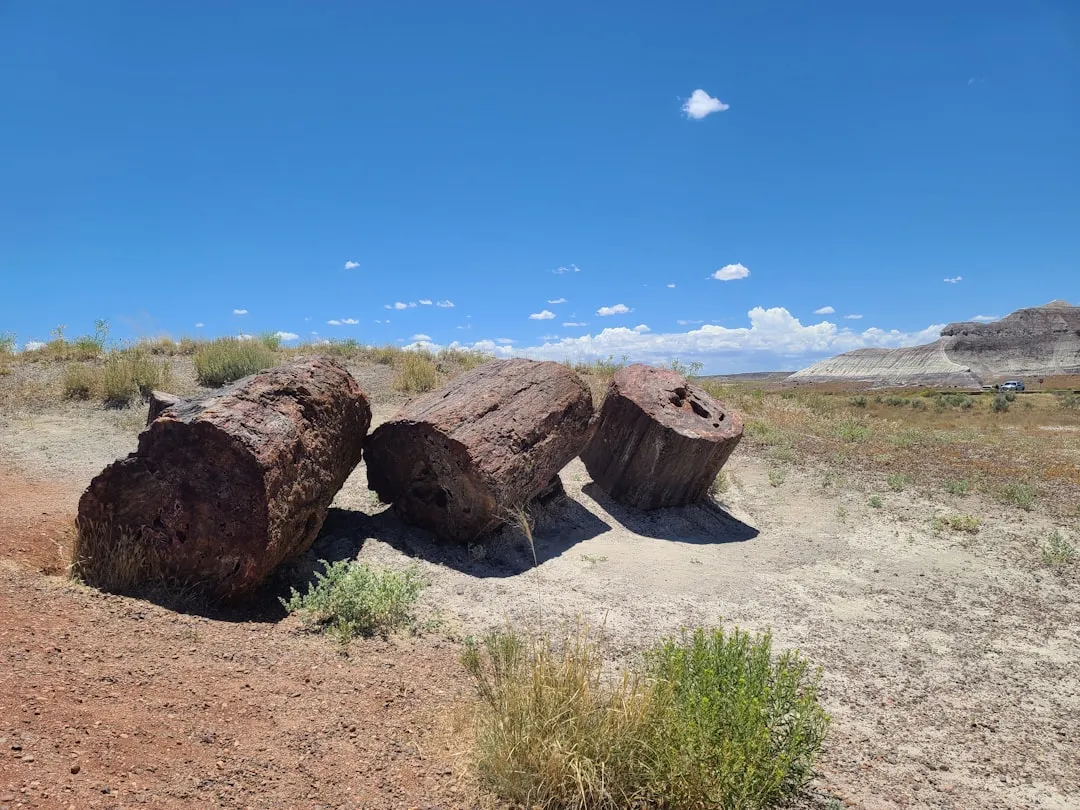
There is something stubbornly moving about a forest that will not completely die, even after its wood has been replaced by quartz and its world has vanished. The Petrified Forest’s stone trees feel like a protest against how quickly we usually forget the past: they occupy physical space, demand our attention, and tell a story that stretches far beyond human timelines. When you realize these logs once shaded reptiles in a sweltering Triassic swamp, the everyday worries of modern life suddenly feel very small.
Personally, I think places like this are a quiet test of our priorities. Do we treat them as backdrops for photos and souvenirs, or as rare chances to understand how fragile and temporary our own moment might be? The stone trees cannot answer that for us, but they make the question impossible to ignore. If a long‑dead forest can leave such a lasting mark, what kind of trace do you think our age will leave behind?

- 10 Fascinating Facts About the Petrified Forest's Stone Trees - August 6, 2026
- 7 Things Skunks Do Before They Spray - August 6, 2026
- 7 Reasons Sea Otters Matter to California's Kelp Forests - August 6, 2026