
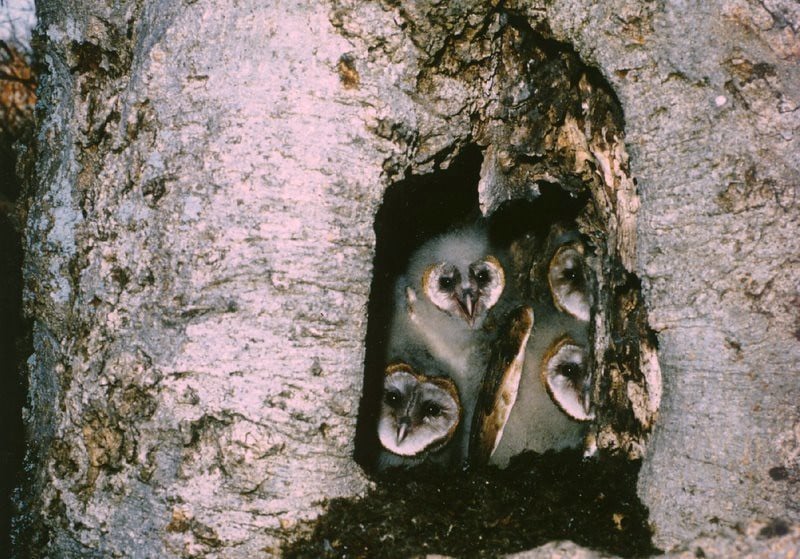
Walk through an old forest at dusk and it’s easy to overlook the gray, broken snags scattered between the living trunks. Most people see them as debris, or even as a hazard that needs to be cleared. Yet for many owl species, those dead, hollowed trees are not background clutter at all – they’re the difference between having a home and having nowhere to raise their young.
It sounds almost backwards: why would a bird of prey, so sharp and precise, rely on something as decayed and unstable as a rotting tree? That puzzle has quietly shaped decades of wildlife biology research. The deeper scientists look, the clearer it becomes that if you want owls, you need dead wood. And once you see forests through an owl’s eyes, you can’t unsee how much is at stake every time an old, dead tree gets taken down.
#1 Why Owls Love Trees That Look “Worthless” To Us
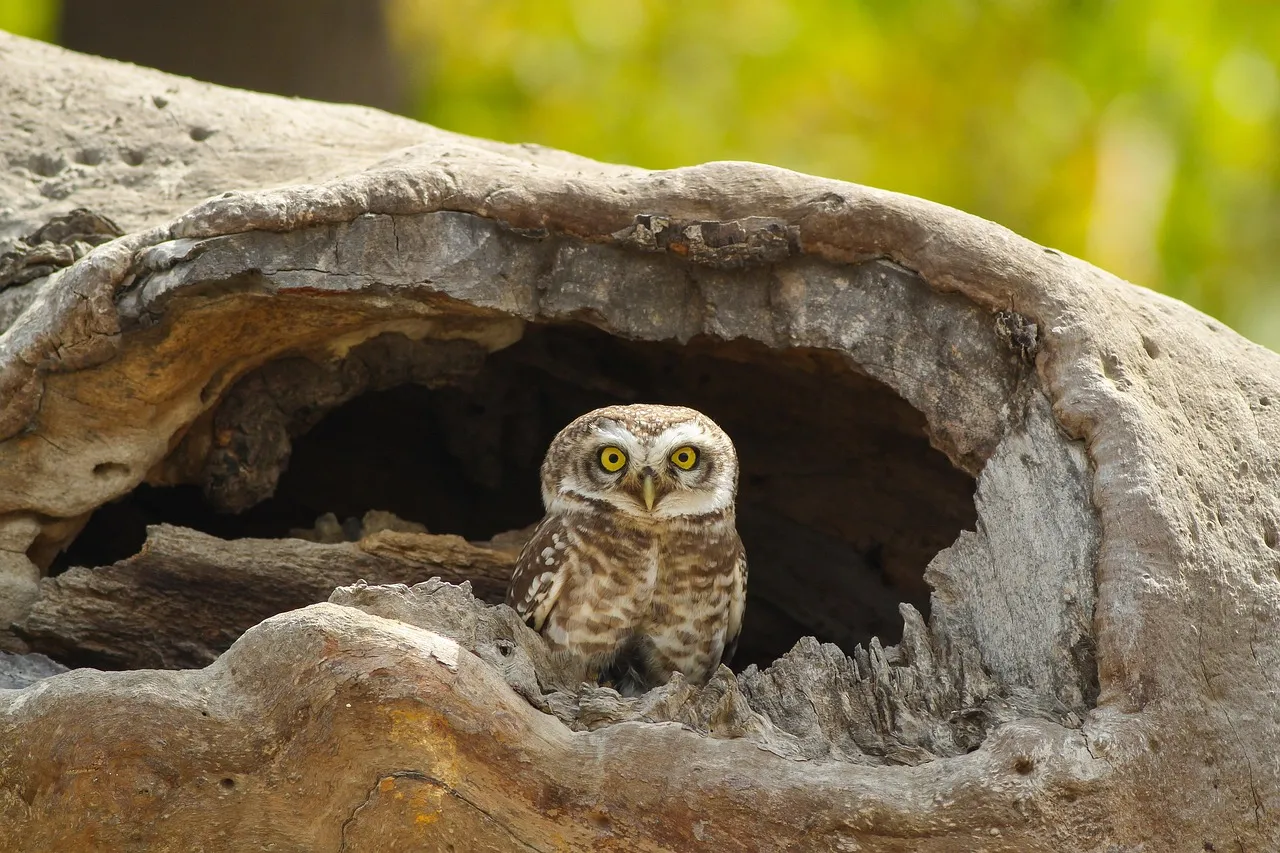
It feels counterintuitive that a powerful predator would choose to nest in the same kind of tree your neighbor wants removed from their backyard. But from an owl’s point of view, a dead or dying tree is like an all-in-one apartment building: pre-made cavities, broken limbs to perch on, and a structure soft enough for woodpeckers to carve into. Living trees are often too hard, too smooth, or too crowded with leaves to offer the same ready-made shelter.
Think about it like real estate in a crowded city. Brand-new, polished towers look impressive, but old brick buildings often have the quirky lofts, hidden courtyards, and tucked-away corners that people fall in love with. Dead trees are those quirky buildings for owls. They’re not pretty in a postcard sense, but biologically they’re prime property, and every time we “clean up” a landscape, we risk wiping out an entire neighborhood of potential owl homes.
#2 Cavity Nesting: Why Dead Trees Make the Best Nurseries
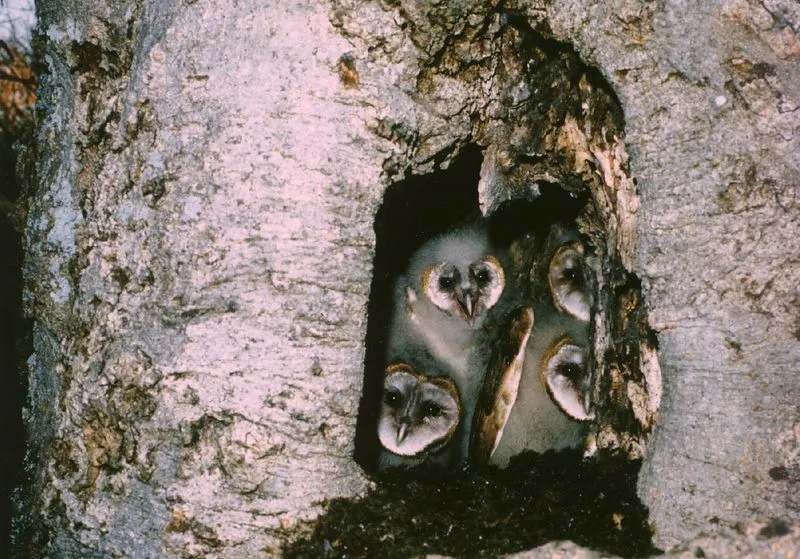
Many owl species do not build their own nests from scratch. Instead, they rely on natural cavities, broken tops, or old woodpecker holes – all features that are far more common in trees that are dead or in the process of dying. The wood in these snags is softer, more likely to crack, and more welcoming to insects and fungi that help carve out pockets and hollows over time.
For an owl pair searching for a place to raise chicks, these cavities are like move-in-ready apartments. They provide a secure, enclosed space where eggs can be kept warm and hidden from predators and harsh weather. In contrast, living trees in younger or heavily managed forests may have smooth bark, fewer broken branches, and almost no deep cavities at all, leaving owls with limited or no nesting options even if food is abundant nearby.
#3 Dead Wood, Rich Food: How Snags Boost the Owl Menu
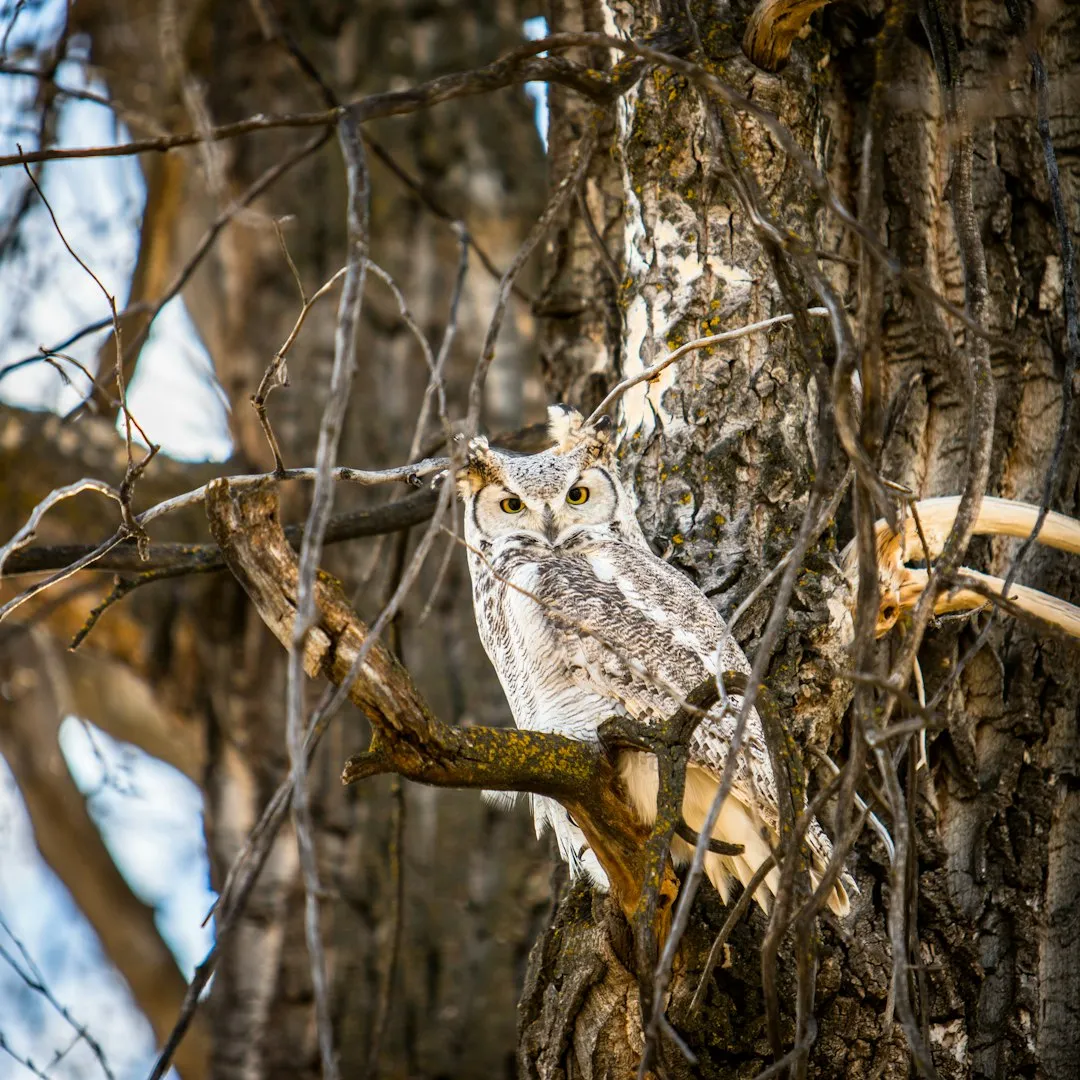
Owls may nest in cavities, but they still have to eat – a lot. Dead and decaying trees are hotspots for insects, fungi, and mosses, which draw in woodpeckers, songbirds, and small mammals. Those small mammals, like mice and voles, are exactly what many owls are hunting. So a snag is not just housing; it is also a key piece in a much larger buffet line that starts with rot and ends with a silent swoop at midnight.
Imagine a dead tree as a little ecosystem tower: beetles burrow in the soft wood, woodpeckers hammer into those beetle tunnels, fallen logs grow mushrooms, and rodents scurry through the leaf litter, feeding on seeds and invertebrates. An owl perched nearby gets a front-row seat to all this movement. Take away the dead wood, and the entire food web flattens out. The forest might still look green and healthy to us, but to an owl, it becomes much quieter – and much poorer – almost overnight.
#4 Old-Growth Forests vs. “Clean” Forests: A Hidden Trade-Off
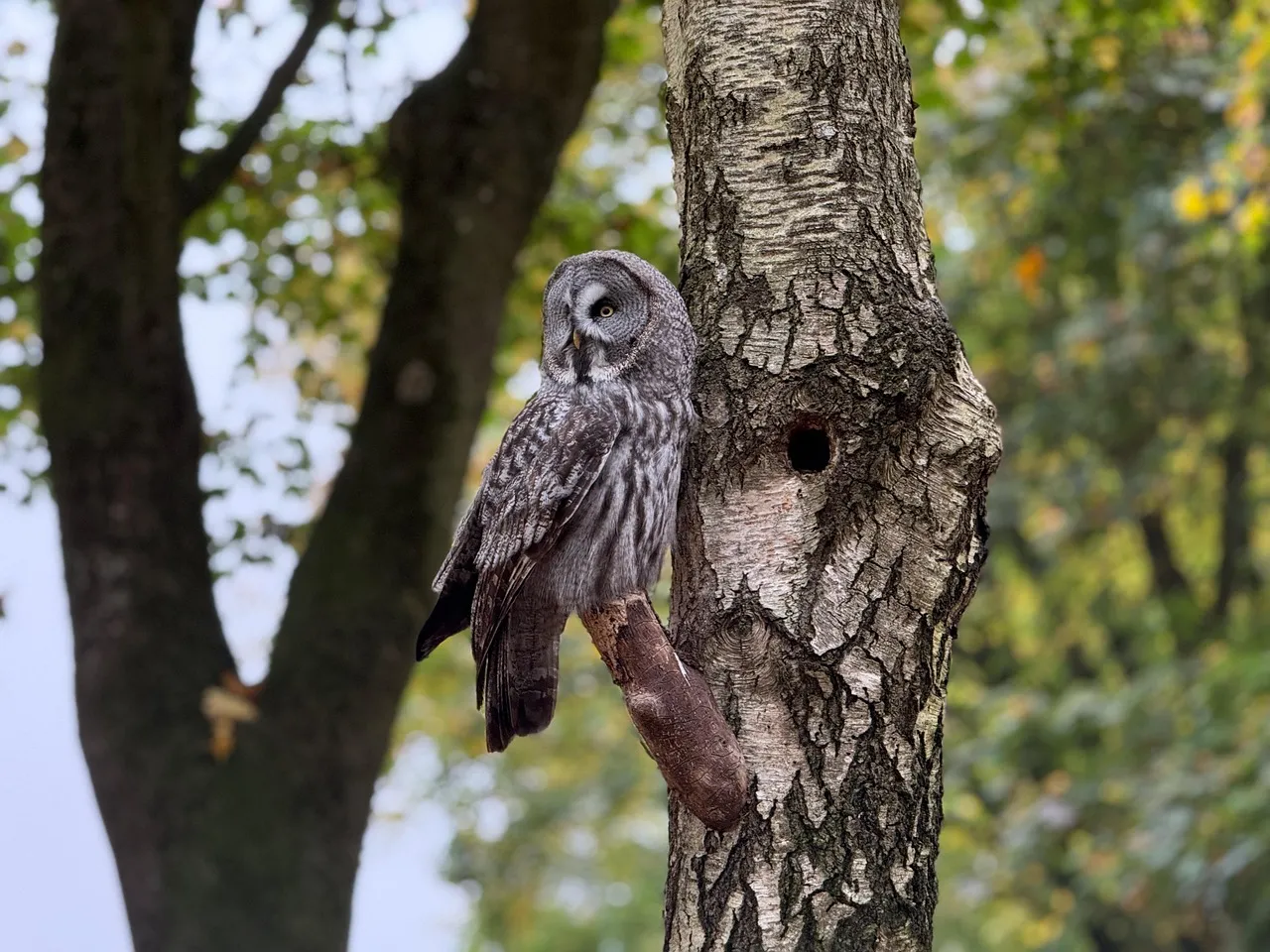
Wildlife biologists have found that owls are often far more common in older forests where dead trees are allowed to stand, compared to younger, intensively thinned or manicured stands. Older forests naturally accumulate snags: lightning strikes, storms, disease, and simple age all take their toll, creating a mosaic of live and dead trunks. That mix may look messy, but it offers an incredible range of nesting and perching spots for different owl species.
By contrast, many managed forests are kept tidy: dead trees are cut for safety, aesthetics, or timber value; underbrush is cleared; and the focus is on straight, evenly spaced, healthy trunks. To a human, it can look like order and good stewardship. To an owl, it can feel like living in a street with no doorways, no attics, and nowhere to raise a family. The forest might meet our idea of “healthy,” but ecologically it can be strangely hollow, especially at night when owls are trying to hunt and call to mates.
#5 Backyard Owls: The Surprising Power of Letting One Tree Stand
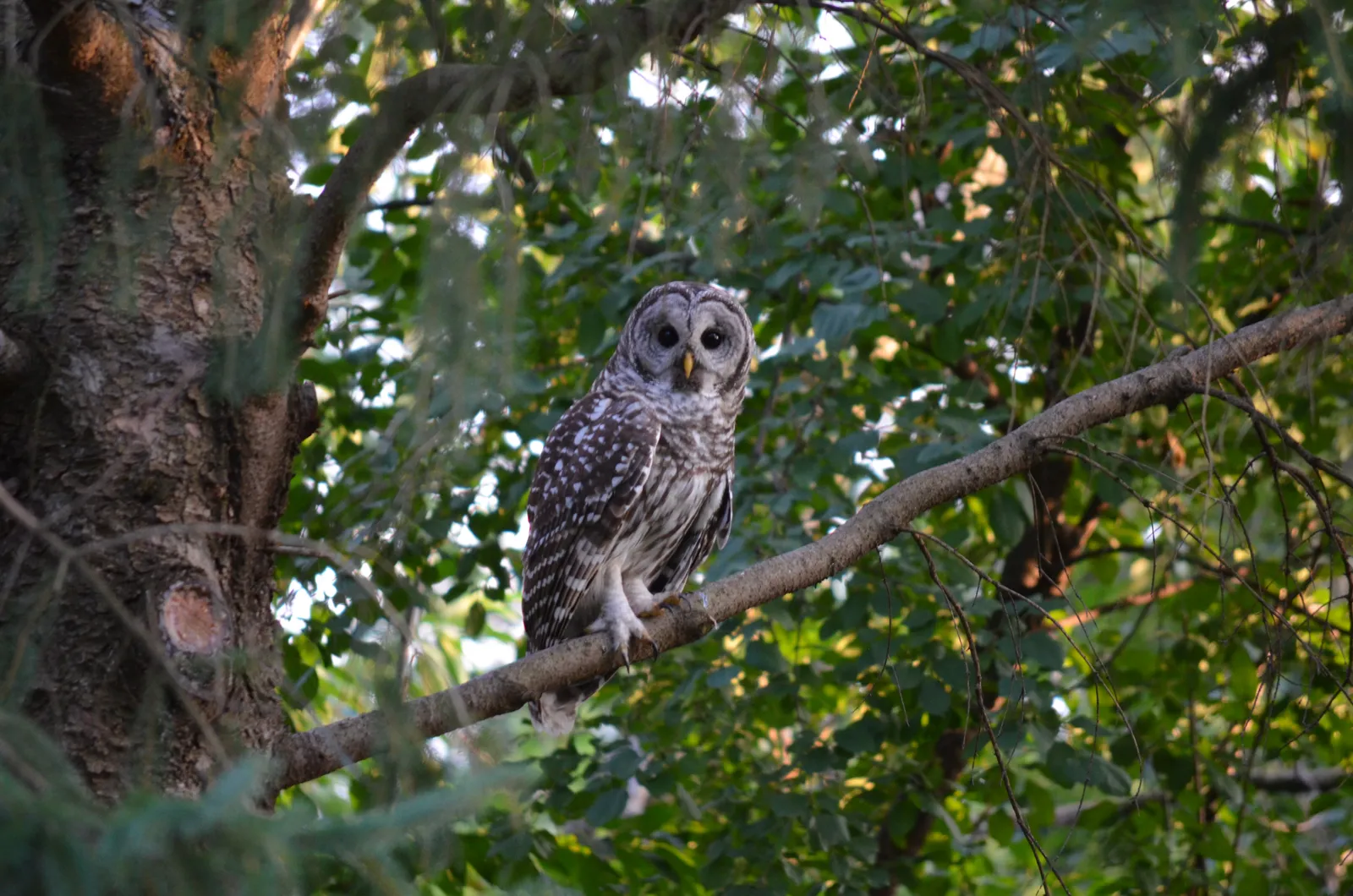
This isn’t just a remote wilderness story. For many people, their closest encounter with an owl is in a park, on a golf course, or even over their own driveway. And in those semi-urban spaces, a single old tree – especially a partially dead one with cavities or broken limbs – can be the only viable nesting site in the area. Removing it for convenience or appearance may quietly evict a pair of owls that have used it for years.
I’ve watched neighbors debate whether to take down an old, leaning tree, and I get it: safety comes first. But I’ve also seen barred owls and screech-owls repeatedly return to the same snag year after year, almost like a family coming back to a beloved vacation cabin. If even a handful of homeowners and city managers chose to leave safe, out-of-the-way dead trees standing, entire neighborhoods could shift from being owl deserts to becoming active nighttime territories full of hoots, hunts, and fledgling flights.
#6 Logging, Fire, and the Politics of “Clean-Up”
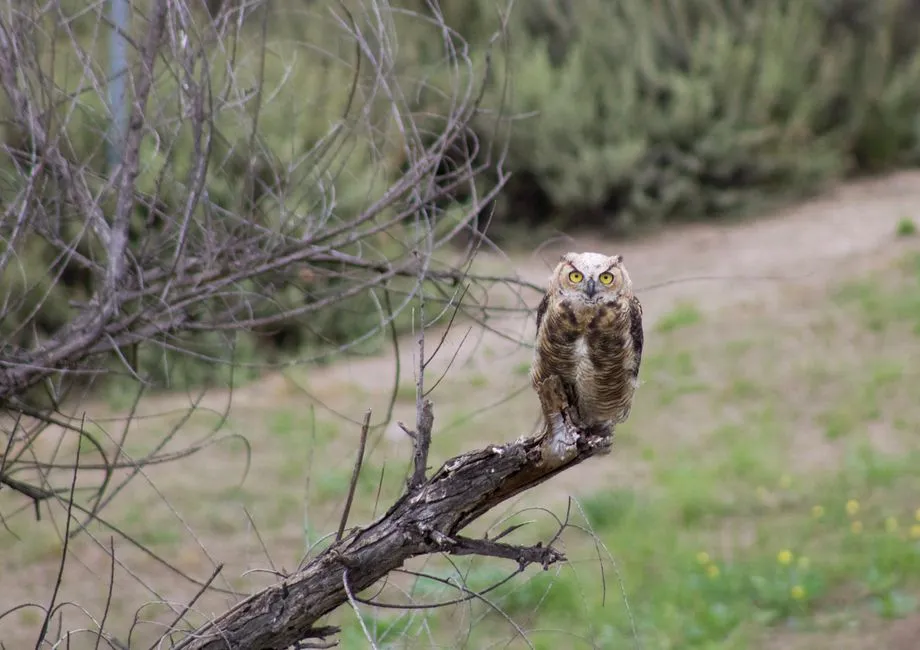
After storms, wildfires, or logging operations, there’s a strong instinct to “clean up” the forest by removing fallen and dead trees. Economically, salvaging timber can make sense, and there will always be cases where safety or infrastructure demand it. But from an owl’s perspective, that post-disturbance landscape is actually full of new opportunities: standing fire-killed trees, broken tops, and decaying trunks that could serve as nesting and hunting platforms for decades.
When every snag is hauled out, the forest might look more orderly and less scarred, but wildlife loses critical habitat that cannot be recreated overnight. It can take many decades for a tree to grow, die, and soften enough to become a prime nesting snag. That time lag is one reason wildlife biologists push for retaining some dead trees after cutting and fires. They are not just leftovers; they are investments in the future of owls, woodpeckers, bats, and many other species that depend on the architecture of death to keep life going.
#7 What You Can Do To Make the World Safer for Owls
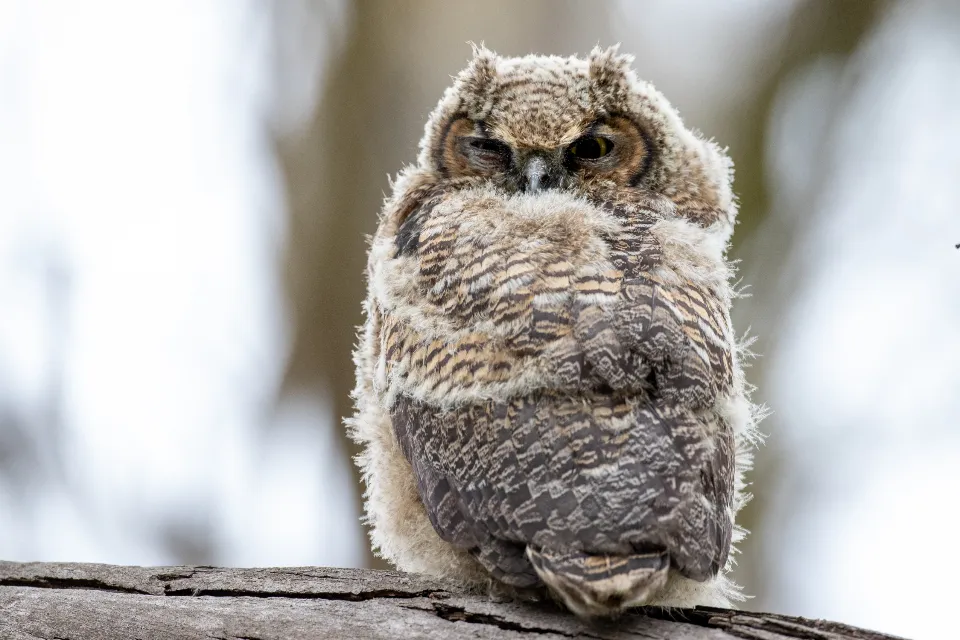
It is easy to feel powerless when you hear that owl habitat depends on forest structures that take generations to form. But small, practical decisions add up. If you own land, you can talk with arborists about leaving safe portions of dead or dying trees as wildlife snags instead of cutting everything flush to the ground. In places where that is not possible, well-designed nest boxes placed at the right height and in quiet corners can sometimes stand in as artificial cavities.
Even if you do not own a single tree, you still have a voice. You can support local policies and park plans that keep some dead trees standing, talk with friends about why that “ugly” snag at the edge of the field might be someone’s home, and stay curious about the nightlife in your own neighborhood. The next time you hear an owl calling in the dark, you might picture not just the bird itself, but the hollow, ghostly tree it depends on. Once you know that, it is hard not to ask: if we want those voices in our nights, what are we willing to leave standing by day?
Conclusion: Rethinking What a “Healthy” Forest Looks Like
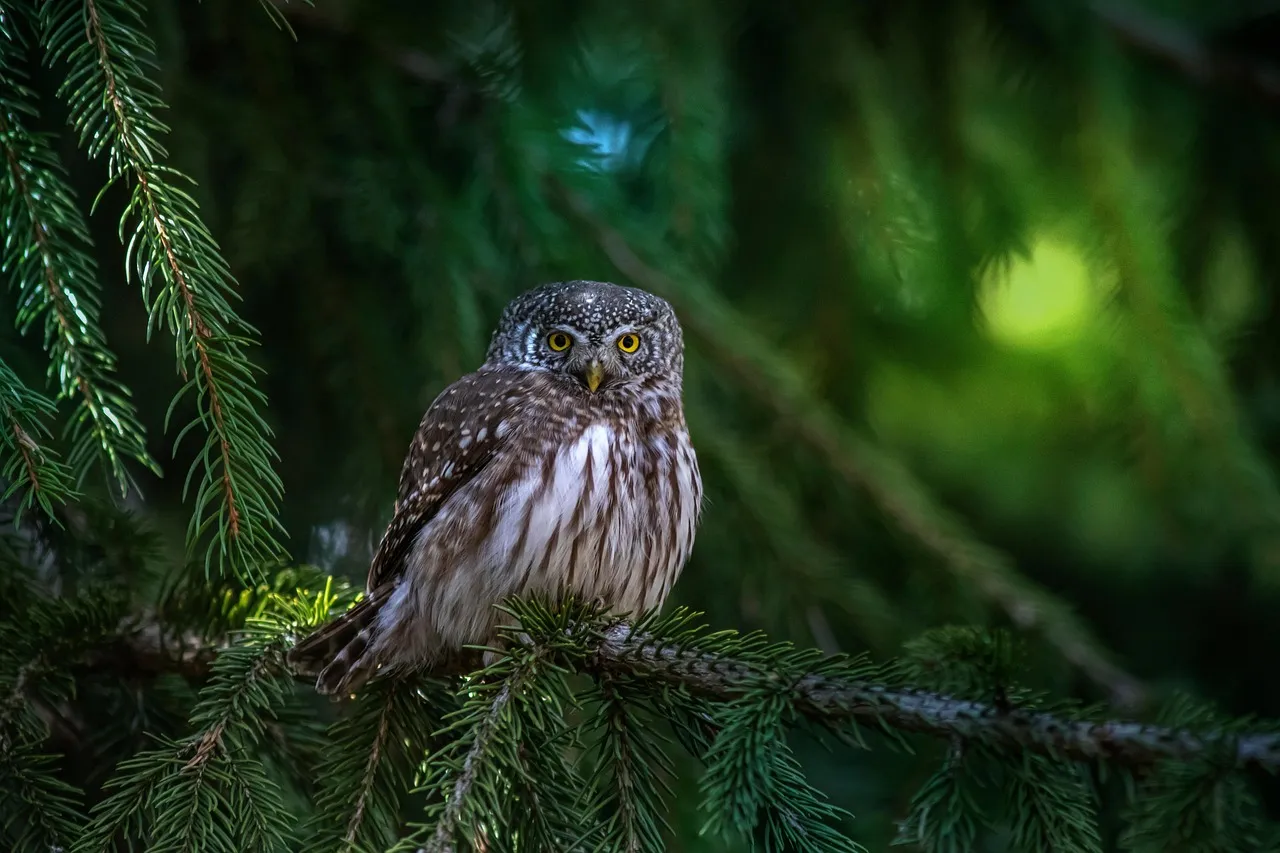
When wildlife biology tells us that owls depend more on dead trees than on living ones, it is really asking us to rethink our sense of what is valuable. A straight, green trunk looks healthy to us, but for many owl species, the cracked, hollow, fungus-streaked snag nearby may matter far more. Life in the forest is layered on top of decay, and owls are one of the clearest, most charismatic reminders of that quiet truth.
If we keep treating dead wood as waste to be removed rather than habitat to be protected, we risk emptying our forests of some of their most iconic night-time residents. But with a little imagination – and a bit more tolerance for rough edges and broken silhouettes – we can make room for both safety and wildness. The real question is simple and surprisingly personal: the next time you see an old dead tree, will you see a problem to fix or a home worth fighting for?

- Wildlife Biology Says Owls Depend on Dead Trees More Than Living Ones - August 14, 2026
- 10 Cat Breeds That Tolerate Dogs Surprisingly Well - August 14, 2026
- Which North American Flower Are You According to Your Zodiac Sign - August 14, 2026