
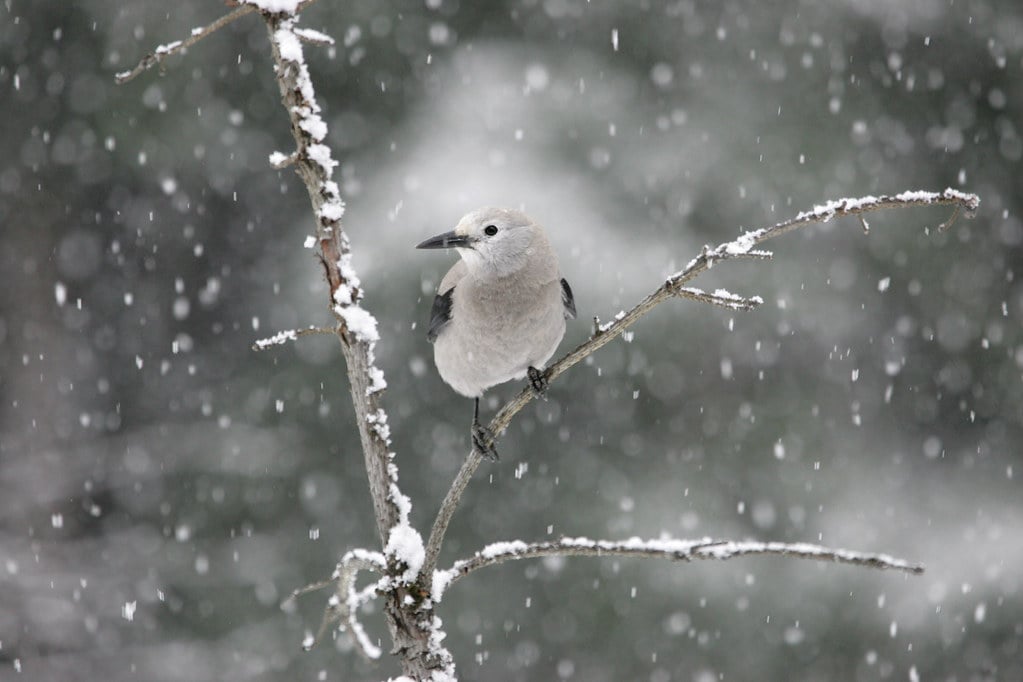
Imagine hiding your entire winter food supply across miles of rugged mountain forest, then finding most of it again months later under deep snow. No map, no GPS, no color-coded spreadsheet on your laptop. Just your brain. That is everyday life for Clark’s nutcrackers, a gray-and-black crow relative of the high western mountains that has quietly shattered our assumptions about what animal memory can do.
When I first learned that a bird could remember thousands of tiny stash spots, I honestly thought it sounded like an exaggeration. Then I dug into the science and realized the reality is actually more impressive, not less. These birds are not just good at hide-and-seek; their entire existence is built around a memory system that would put the average human to shame. Once you see how it works, it changes how you think about intelligence, survival, and even your own forgetful moments.
The Mountain Bird With a Superbrain
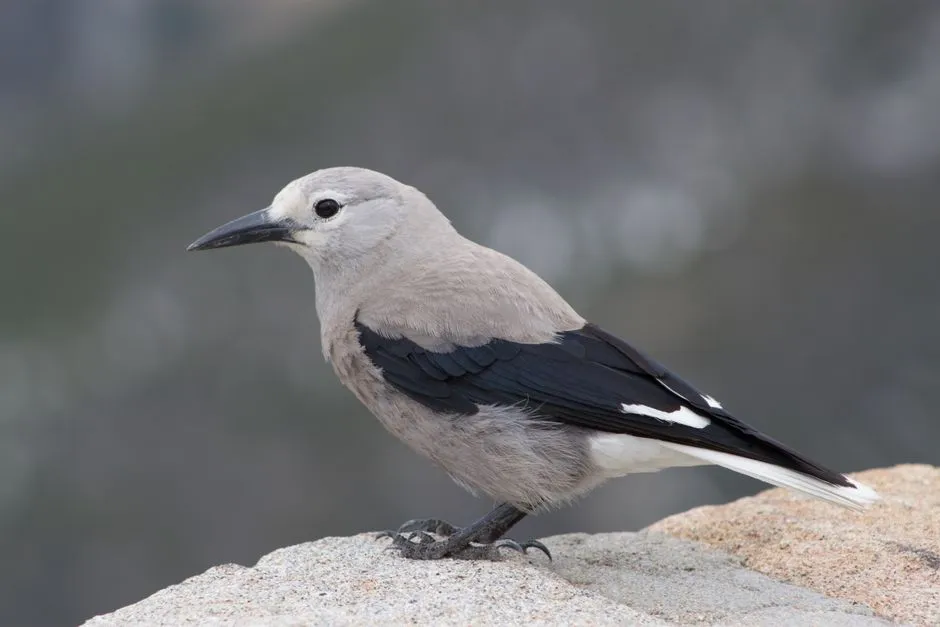
Clark’s nutcrackers look pretty unassuming at first glance: soft gray body, black wings, sturdy beak, often perched high in conifer trees of the Rockies and other western mountain ranges. You might not guess that behind those pale eyes sits one of the most remarkable memory systems in the animal kingdom. These birds specialize in pine seeds, especially from high-elevation stone pines, and their entire year revolves around collecting and hiding them.
Ornithologists describe them as scatter-hoarders, meaning they do not store food in one big cache like a pantry but instead tuck seeds into tens of thousands of tiny hiding spots. That strategy only works if they can actually find enough of those stashes again, and this is where their memory becomes almost unsettling. We are not talking about remembering where you left your keys; we are talking about keeping track of thousands of invisible pockets of food under changing snow and soil for months on end.
Thousands of Caches, One Tiny Navigator
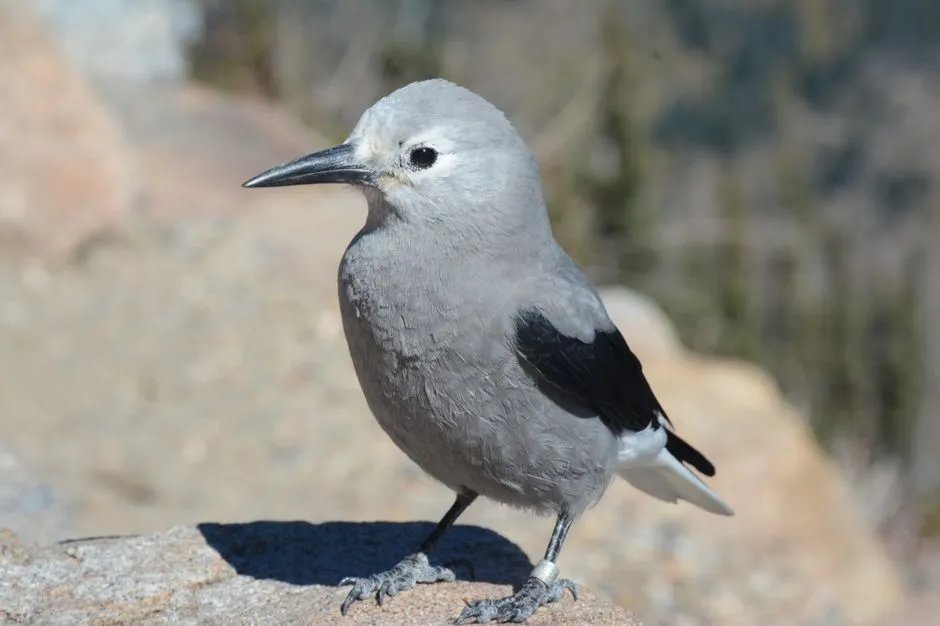
Researchers studying Clark’s nutcrackers have repeatedly found that an individual bird can remember the locations of thousands of seed caches scattered over large areas. In some controlled experiments and field estimates, the numbers climb into the range of several thousand separate hiding spots for a single season. Think about what that means in practical terms: a bird weighing less than a smartphone is mentally tracking a complex, invisible map of resources spread across forests and mountainsides.
What makes this truly wild is that the caches themselves are not obvious landmarks. Often they are just a few seeds buried a couple of centimeters under soil, leaf litter, or snow. To us, a hillside might look like one continuous blanket of white, but to a nutcracker it is more like a mental grid of remembered spots. They return to many of these caches months later, long after any physical sign has disappeared, using only spatial memory and subtle cues that most of us would never notice.
How Do They Actually Remember All Those Spots?
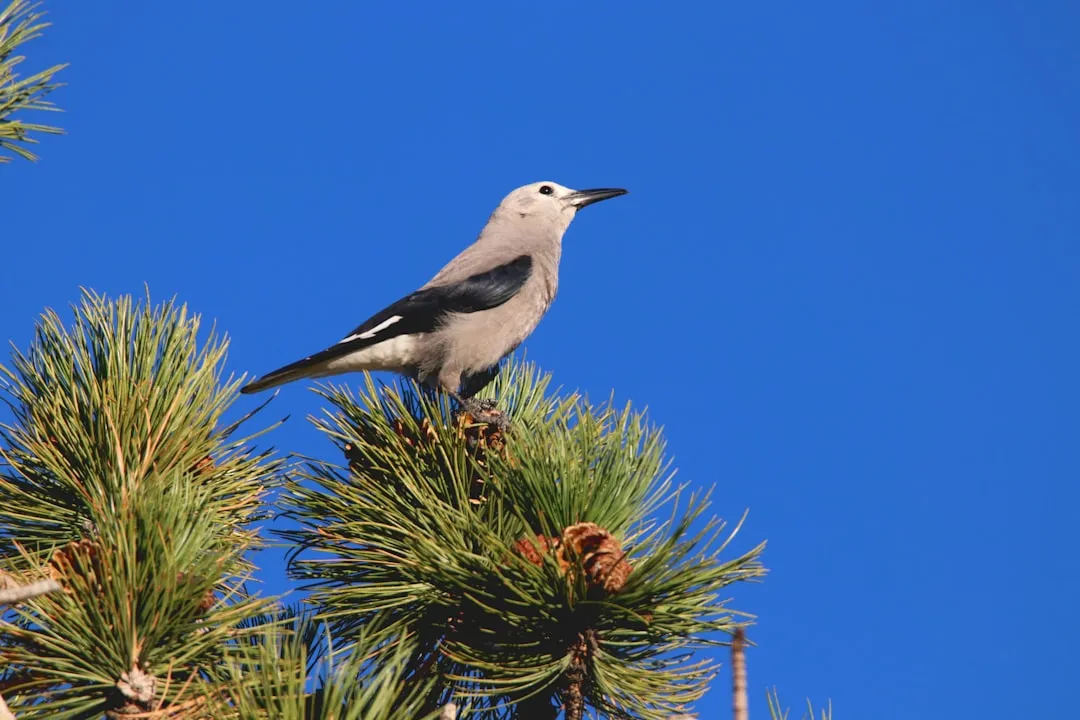
So how does a bird’s brain pull this off without bursting? A big part of the answer lies in spatial memory, the same broad kind of ability we use when we navigate a familiar city or recall where our car is parked. Clark’s nutcrackers appear to create rich mental maps of their environment, tying each cache location to landmarks like rocks, logs, tree trunks, slopes, or even the angle of the terrain. Instead of remembering each spot as a random point, they seem to remember relationships, patterns, and spatial layouts.
On top of that, their brains are physically specialized for this challenge. Like other food-storing birds, Clark’s nutcrackers have a well-developed hippocampus, the brain region heavily involved in memory and spatial navigation. You can think of their hippocampus as a mental filing system honed by millions of years of evolution to catalog hiding spots instead of phone numbers. While scientists are still working out the fine details, the broad picture is clear: this bird’s entire neural architecture has been sculpted to solve the problem of not starving in winter.
Precision Under Snow, Wind, and Time
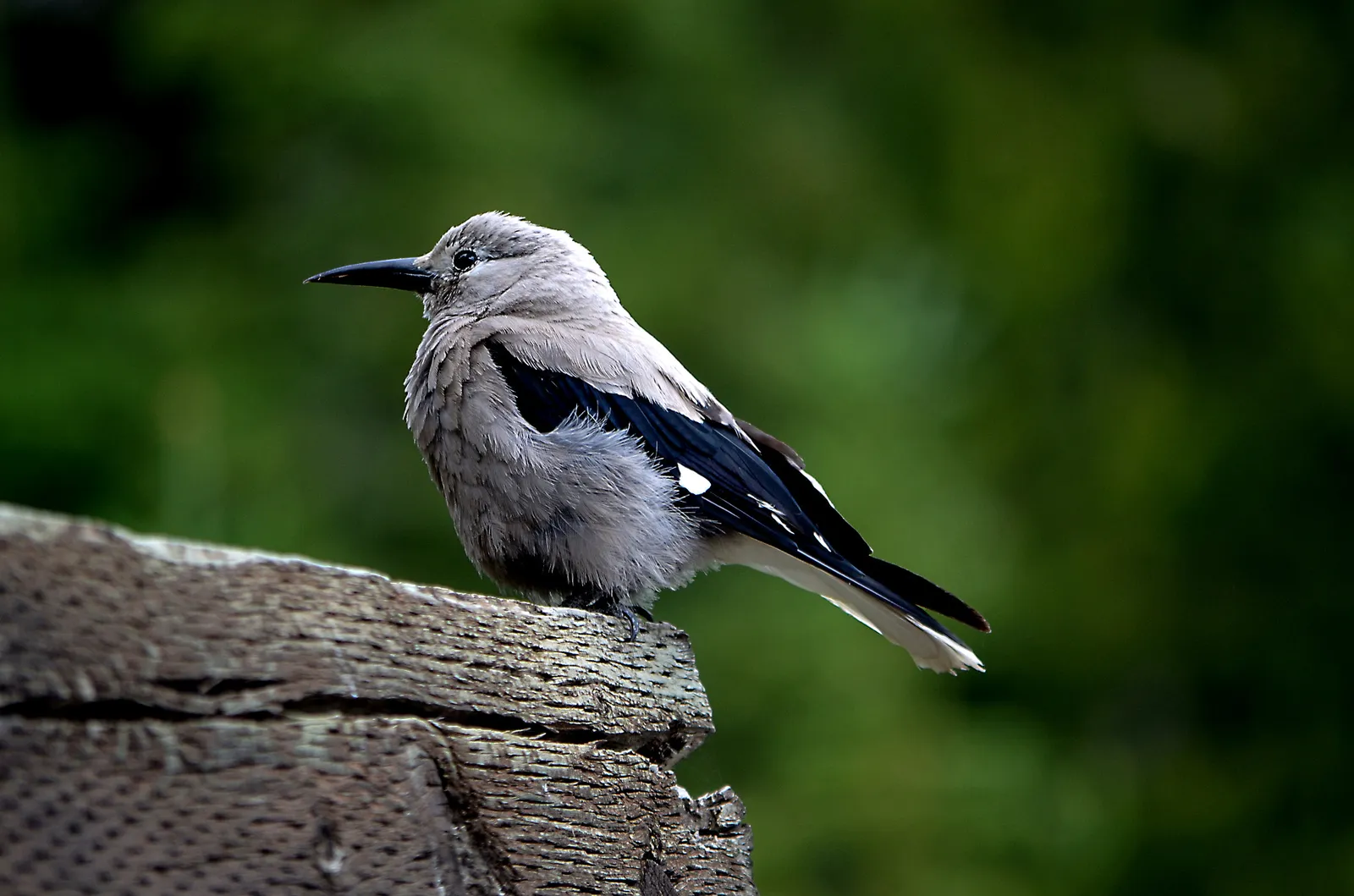
Remembering thousands of locations is impressive on its own, but doing it accurately after months of weather, snow, and shifting ground is on another level. Many of those caches get buried under winter snowpack, sometimes deep enough that nothing visible marks the exact spot. Yet nutcrackers return to these places and dig down with startling precision, often within a few centimeters of where they originally hid the seeds.
Of course, not every single cache is recovered. Some are forgotten or abandoned, and that turns out to be pivotal for the ecosystem. The important point is that the birds recover enough of their scattered wealth to survive late winter and early spring, when other food is scarce. Their memory does not have to be perfect; it just has to be accurate enough, often in the face of storms, avalanches, animal tracks, and subtle environmental changes that would scramble a less specialized navigator.
Memory That Shapes the Forest
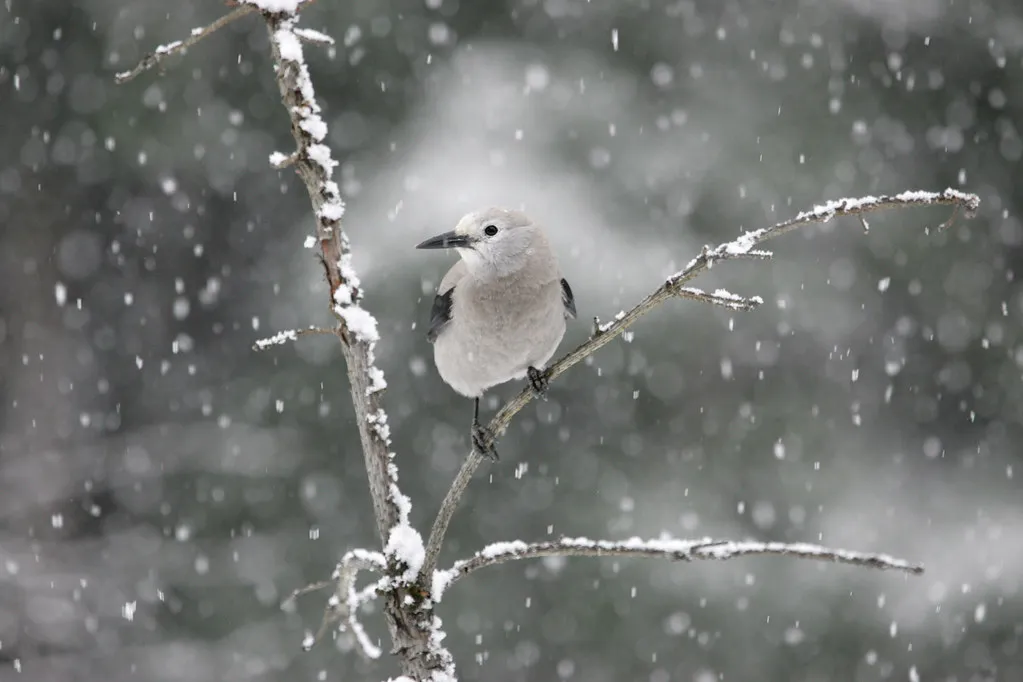
Here is where the story gets even more beautiful: the same memory-based behavior that keeps nutcrackers alive also helps shape entire forests. The seeds they fail to recover are not wasted. Many of those forgotten caches germinate into new pine seedlings, particularly for tree species whose cones do not open on their own and rely on animals to move their seeds. Clark’s nutcrackers, by remembering most of their hoards and forgetting a fraction, become accidental foresters.
You can walk through some high-elevation pine stands in the western mountains and see the birds’ influence written in the pattern of trees. Clumps of pines often sprout where birds once buried clusters of seeds, effectively planting mini orchards of their future food sources. To me, there is something almost poetic here: a bird’s imperfect memory, strong but not flawless, literally re-designs the landscape over decades.
What Nutcrackers Reveal About Intelligence
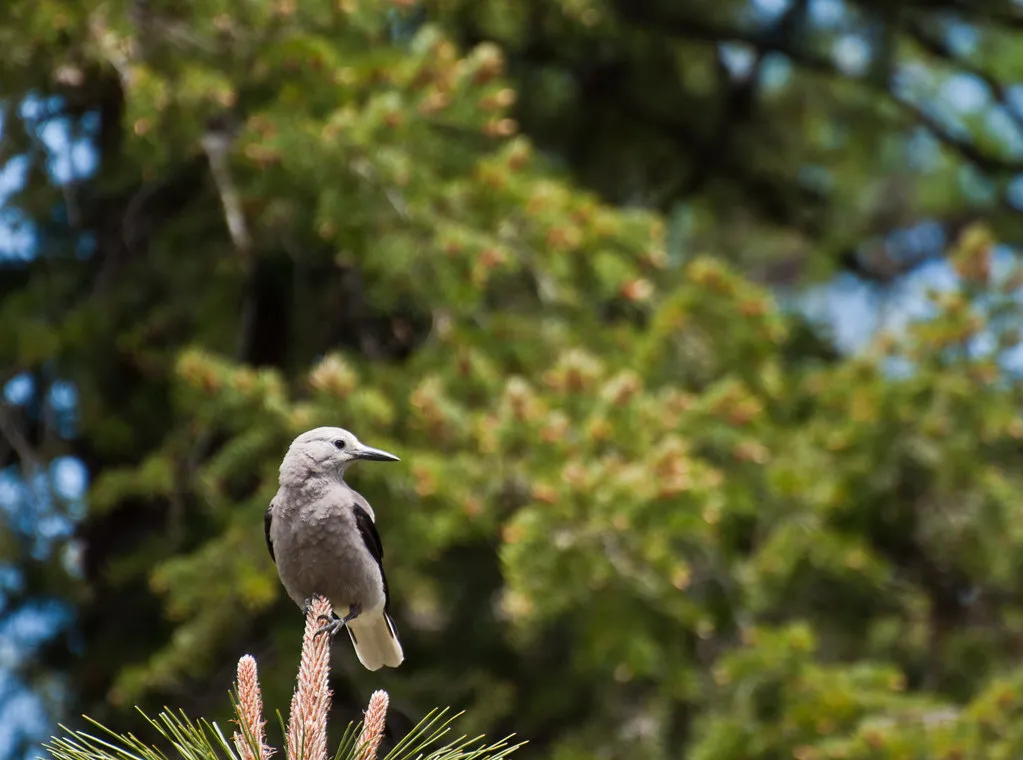
It is tempting to think of intelligence as something humans own, with animals lined up behind us on a scale of more or less smart. Clark’s nutcrackers blow that idea apart. Their memory is highly specialized, tuned to solving one core problem remarkably well: where is my food, and how do I find it again when the world looks completely different? In their niche, they outperform us with ease. I cannot remember where I put a document on my own laptop half the time, let alone thousands of invisible points on a mountain.
This is a humbling reminder that intelligence is not one single thing but a toolkit built for specific problems. The nutcracker’s mental talents might not help it solve algebra or write poetry, but in a snowbound forest they are life or death. In that context, we are not the main characters; we are just one more animal with a particular set of tricks. If anything, studying these birds should make us question our habit of measuring every mind against our own narrow checklist.
What Their Memory Says About Us
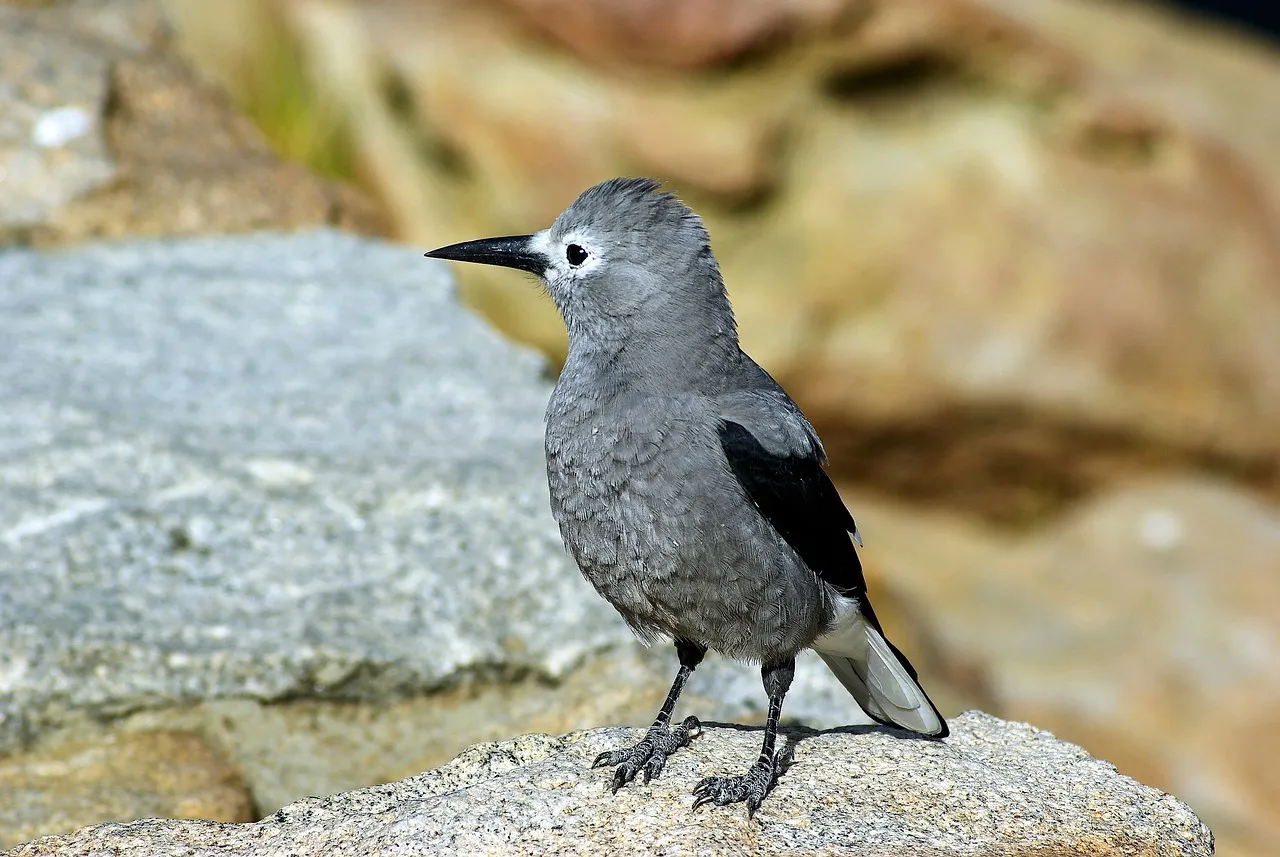
I find it oddly comforting that a bird’s winter survival depends on remembering where it buried its snacks, because it feels a lot like us trying to keep track of passwords, appointments, and where we left the remote. The big difference is that nutcrackers cannot outsource their memory to phones or sticky notes; their brains have to handle it all. In a strange way, their success makes our forgetfulness look less like a personal failing and more like a sign that our minds evolved for very different challenges.
Here is my honest opinion: Clark’s nutcrackers deserve to change how we talk about intelligence in everyday life. Instead of asking which species is smartest in some vague, competitive sense, we should be asking what each species is a genius at. These birds are memory specialists operating at a level that, if it came from a gadget or an app, we would call cutting-edge technology. Next time you cannot remember where you parked, maybe the lesson is not that you are scattered, but that your brain was never meant to be a nutcracker’s brain – and that is perfectly fine. Still, it is hard not to wonder what you would do with that kind of memory power.
