
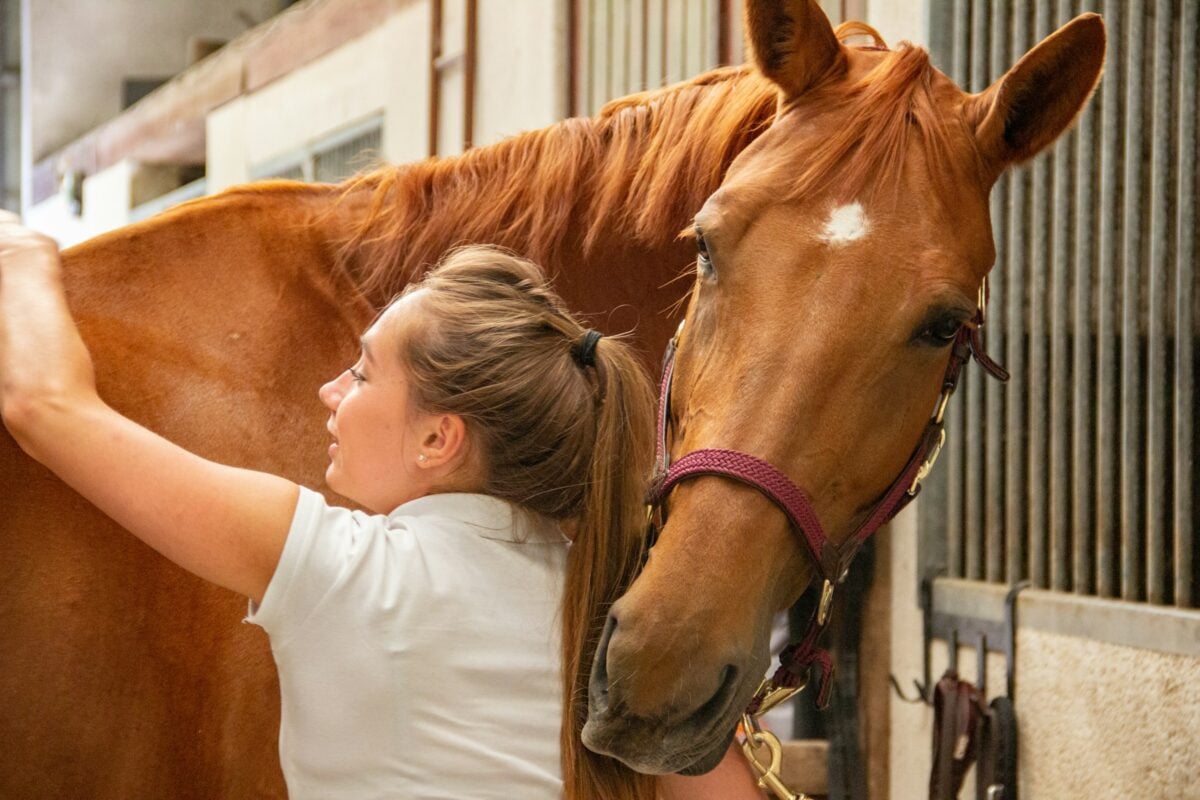
Picture a horse stepping off the trailer, walking calmly through the gate and standing there like a statue. Everyone sighs with relief: he’s settling in. Here’s the twist. That calm look is often the least reliable thing in the whole scene.
The real verdict arrives earlier, in signals so small most owners never catch them: an ear flick, a held breath, a twitch of the nostril. Some of the signs that look like trouble are actually good news, and some that look like good manners are a horse holding on by a thread. The countdown below might change how you read your own horse, and the signal at #1 usually happens when nobody is watching.
#22 – The Head Goes Up and the Scan Begins
🔥 Would you like to save this?
We'll email this post to you, so you can come back to it later!
Your horse’s first move is rarely about you. Before he looks at the people, the gate or the hay, he looks at everything else.
A horse that lifts his head the second he arrives is running a safety sweep. Horses are prey animals, and their eyes sit on the sides of the head, giving a field of view often cited at around 340 degrees. Even so, they have blind spots directly in front of the nose and directly behind the body.
That’s why you’ll see the head rise, then swing slowly left and right. He’s closing the gaps in his picture of the place, one patch of horizon at a time.
Don’t read this as bad behaviour. It’s information gathering, and the way the head moves tells you how well it’s going.
- Head high and still: collecting data
- Head high and swinging: widening the search
- Head high with a rigid neck: close to overload
But the ears are doing something even more revealing in the background…
#21 – Ears Swivel Like Radar Dishes
🔥 Would you like to save this?
We'll email this post to you, so you can come back to it later!
Ears are the most honest part of a new horse. A horse can hide a lot with a quiet body, but his ears keep leaking the truth.
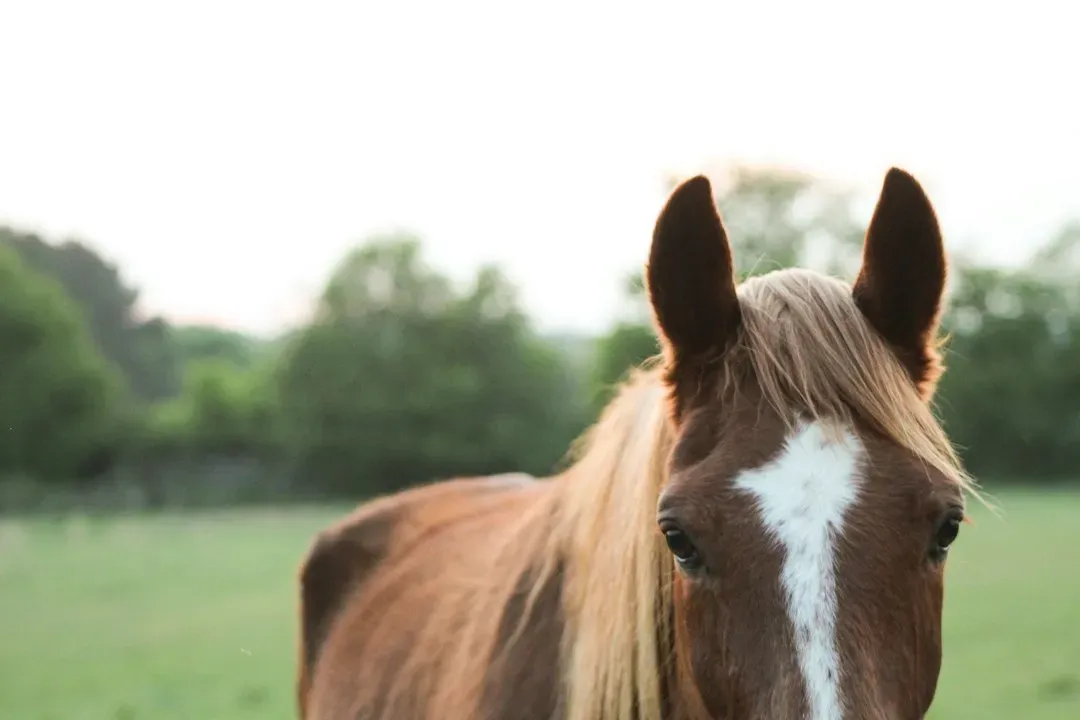
Each ear can rotate independently toward different sounds. That means he can track the gate, the neighbouring field and you at the same time. Ears can turn through roughly 180 degrees, so the direction of the tips shows exactly where his attention is pointed.
Ears pricked forward mean interest. Ears angled sideways and soft usually mean a horse who’s listening but not worried. Ears pinned flat back are a different message entirely.
Watch for rapid back-and-forth flicking. That’s often a horse sorting through too many new noises at once, like someone trying to follow three conversations in a crowded room.
But what the nose does next surprises even experienced riders…
#20 – The Long, Slow Sniff of the Ground
🔥 Would you like to save this?
We'll email this post to you, so you can come back to it later!
A horse sniffing the ground is reading a document you can’t see. To him, the dirt is a diary of everyone who’s been here before.
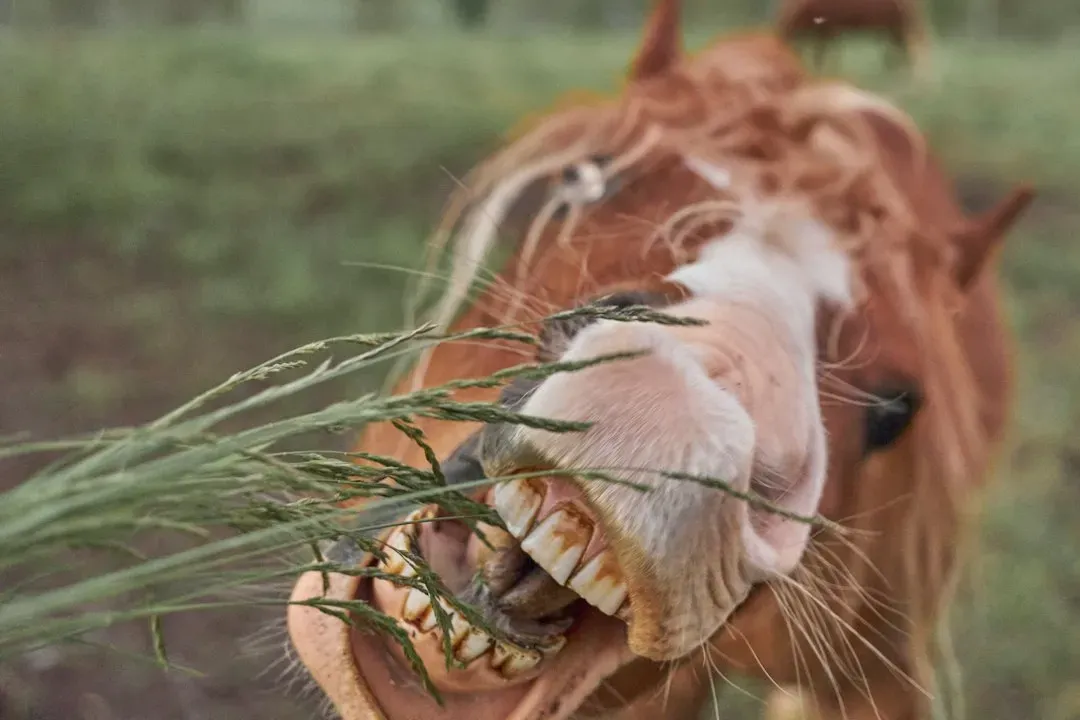
Smell can tell a horse who passed through, what they ate and possibly how they felt. Horses can also curl the upper lip in a flehmen response, which is linked to drawing scents toward a specialised scent organ. It looks ridiculous, but it’s normal investigation.
A horse that sniffs deliberately, with a lowered nose, is usually engaged rather than panicking. A horse that sniffs in frantic bursts while moving fast is often too tense to take much in.
Letting him sniff isn’t a delay. It’s the horse doing his homework, and a horse who finishes his homework tends to settle faster.
And the breathing that goes with it can give the game away…
#19 – Nostrils Flare and Breathing Quickens
🔥 Would you like to save this?
We'll email this post to you, so you can come back to it later!
Breathing is the signal most owners never watch. It’s also one of the hardest for a horse to fake.
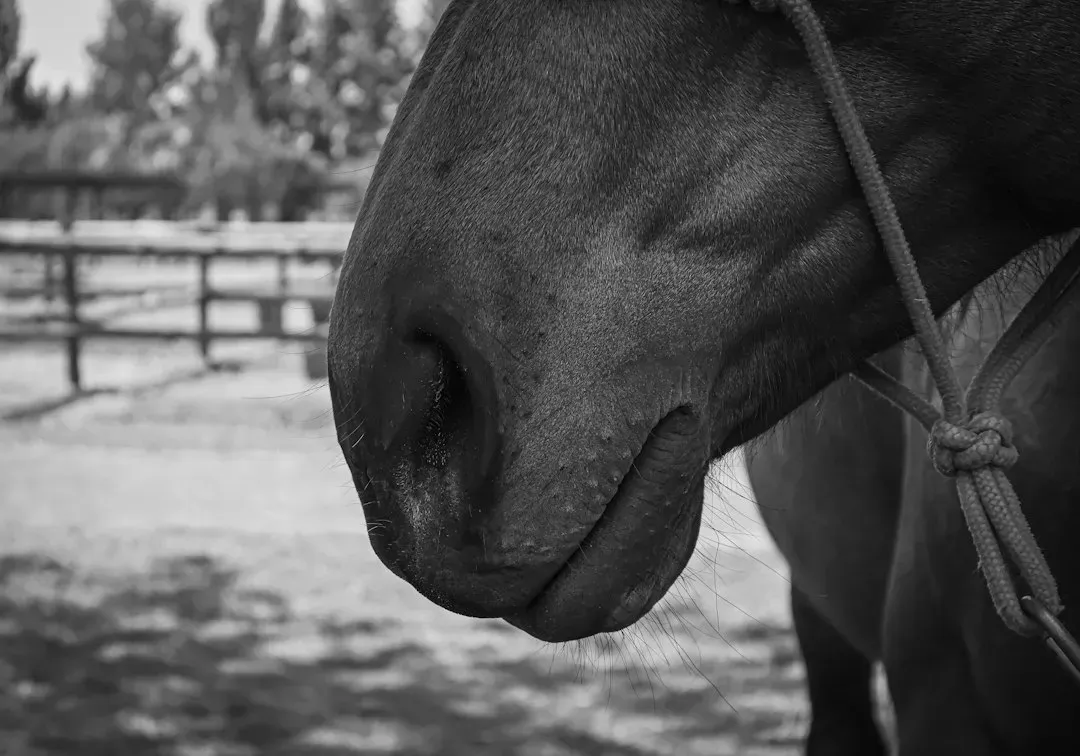
When a horse is processing something unfamiliar, the nostrils widen and the breath gets faster and shallower. That’s a normal part of arousal. A horse may hold his breath briefly when he first spots something odd, then blow out in a rush once he decides it’s harmless.
Watch the flanks and the nostrils together. Slow, rhythmic breathing means he’s regulating himself. Short, fast breaths that carry on after he’s stopped moving mean he’s still on alert.
- Wide nostrils, quick breath: high alert
- Soft nostrils, steady breath: settling
- Held breath, then a sigh: decision made
Try breathing slowly yourself. Horses read your rhythm too, and yours can be the easiest thing in the yard for him to copy.
Fast Facts
- A resting adult horse typically takes about 8 to 16 breaths a minute
- Resting heart rate usually sits around 28 to 44 beats a minute
- Normal temperature runs roughly 99 to 101.5°F
- Record these at home on a calm day so you have a baseline to compare
But there’s one sound people constantly get wrong…
#18 – The Snort Everyone Misreads
🔥 Would you like to save this?
We'll email this post to you, so you can come back to it later!
A snort isn’t always fear. Sometimes it’s the opposite.
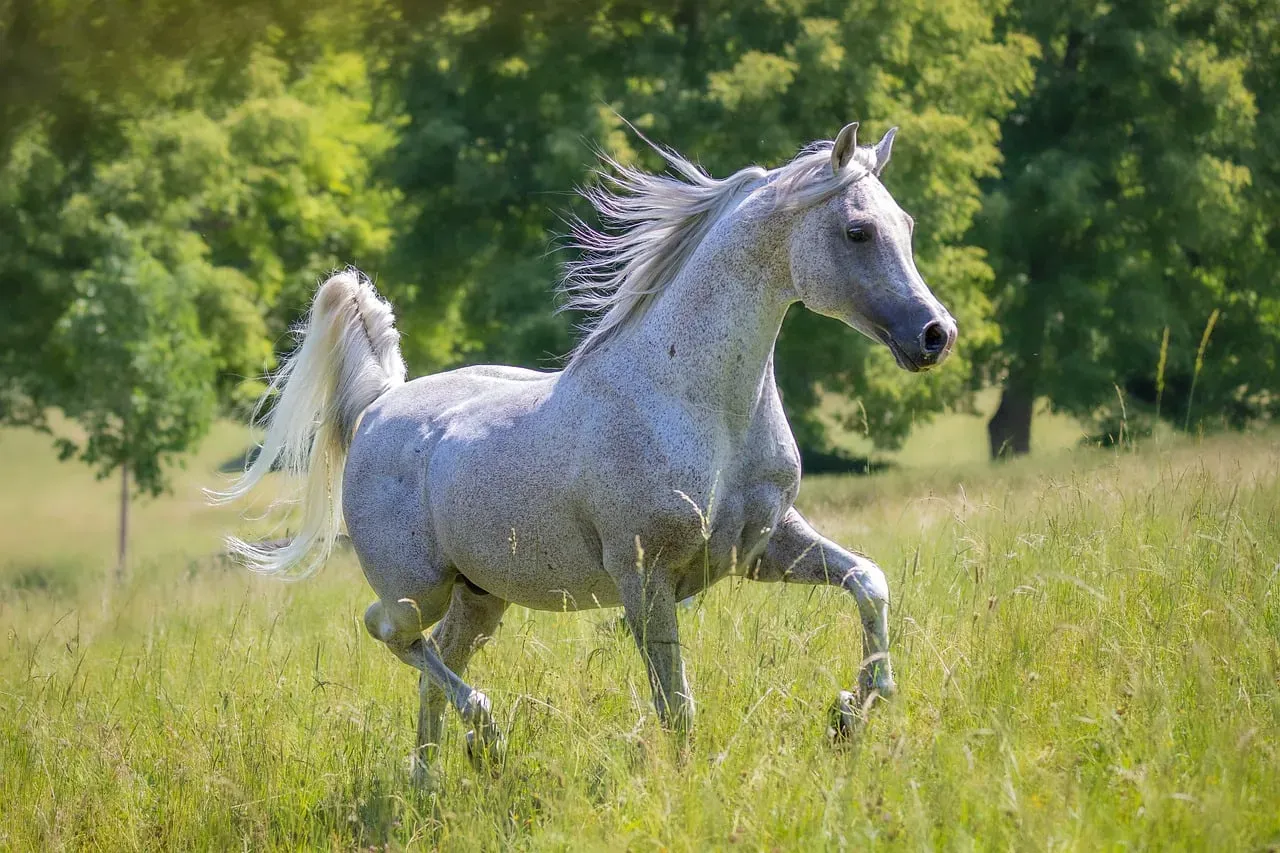
A sharp, startled snort with a raised head, wide eyes and a tense body is an alarm. It tells the herd something unfamiliar is nearby. The same sound, in a looser body, can be a release after a tense moment.
Context is everything. Look at the neck, the eye and the feet. A horse who snorts and then lowers his head is often letting pressure go, like a person exhaling after a close call.
The mistake is treating every snort as a problem to fix. Plenty of horses snort repeatedly while they investigate a new place, then quietly stop.
But the signal that comes next is far more serious…
#17 – Freezing in Place
🔥 Would you like to save this?
We'll email this post to you, so you can come back to it later!
A frozen horse isn’t calm. He’s computing.
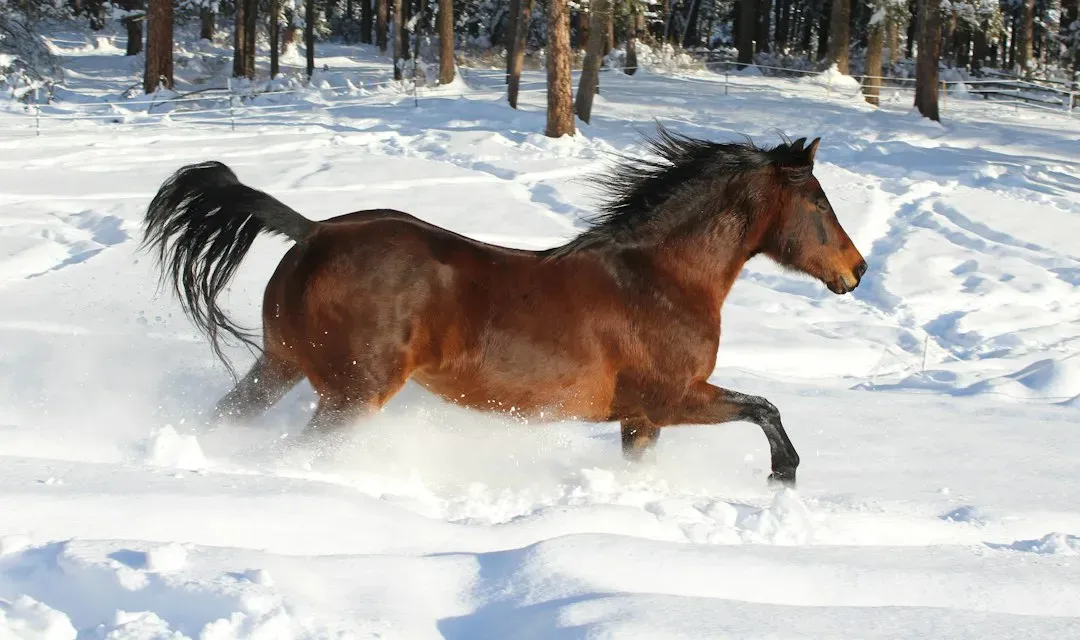
Freezing is often the step between noticing something and choosing whether to flee or approach. The muscles lock, the head rises and the horse stares. It can look like obedience, but the body is loaded like a spring.
Handlers sometimes mistake this stillness for good manners. Then the horse bolts when a bucket rattles, and everyone is shocked. The quiet was never relaxation.
Give a frozen horse time and space. Pulling, shouting or pushing him forward can tip the decision toward flight.
- Stillness plus a hard stare: assessing a threat
- Stillness plus a soft eye: resting or listening
And the body behind the freeze has its own tell…
#16 – The Back and Neck Turn to Wood
🔥 Would you like to save this?
We'll email this post to you, so you can come back to it later!
Tension shows in the topline before it shows in the feet. By the time a worried horse starts to move, his body has been telling you for a while.
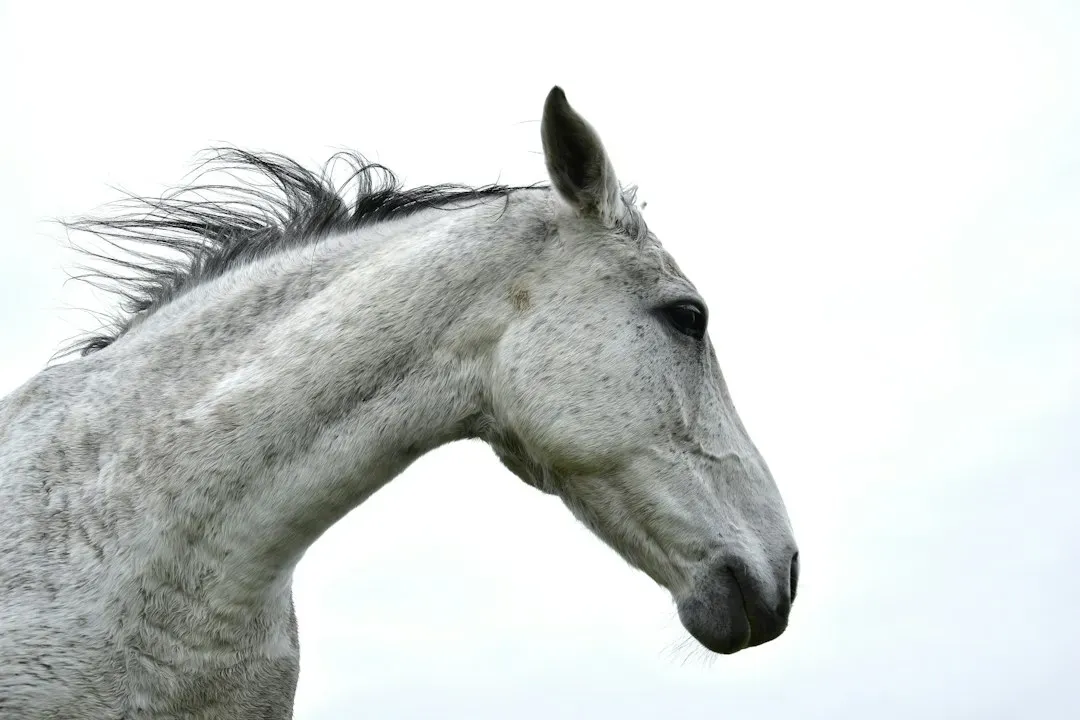
A worried horse braces. The neck stiffens, the back hollows slightly and the muscles along the topline look hard. Horses can carry this tension for hours without making a sound.
Place a hand gently on the shoulder. A firm, unyielding body means he’s still holding on, while a settled horse feels softer and more flexible under your palm.
Notice how he bends, too. A tense horse resists turning his head to the side. A relaxed one follows the lead rope easily.
- Rigid neck, short strides: still guarded
- Swinging neck, long strides: starting to let go
Many people judge relaxation by whether the horse is quiet. A better test is whether the body is soft.
But the face holds an even more detailed message…
#15 – The Eye Tells the Truth
🔥 Would you like to save this?
We'll email this post to you, so you can come back to it later!
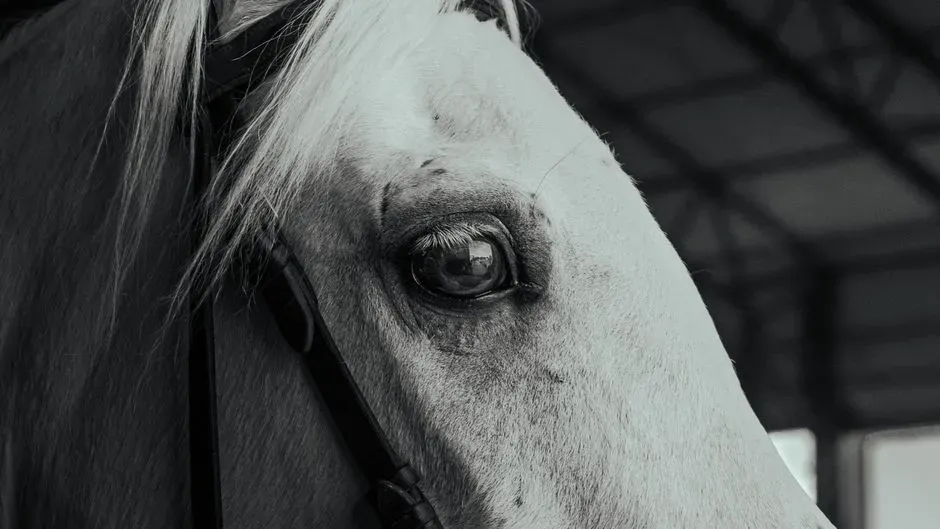
An eye can say what a body hides.
A soft, rounded eye with relaxed lids suggests a horse at ease. A wide eye with visible white and tight skin above it suggests worry. Researchers have developed facial-expression scales to assess pain and stress in horses, and the eyes and surrounding muscles are a key part of them.
Look for a tense, sharp look around the eyes, with the muscles above them drawn tight. It can show up before any obvious body language does.
Slow blinks and drooping upper lids are usually good signs. A glazed, fixed stare is not.
But there’s a signal that moves far more than the eye does…
#14 – The Tail Gives Away the Mood
🔥 Would you like to save this?
We'll email this post to you, so you can come back to it later!
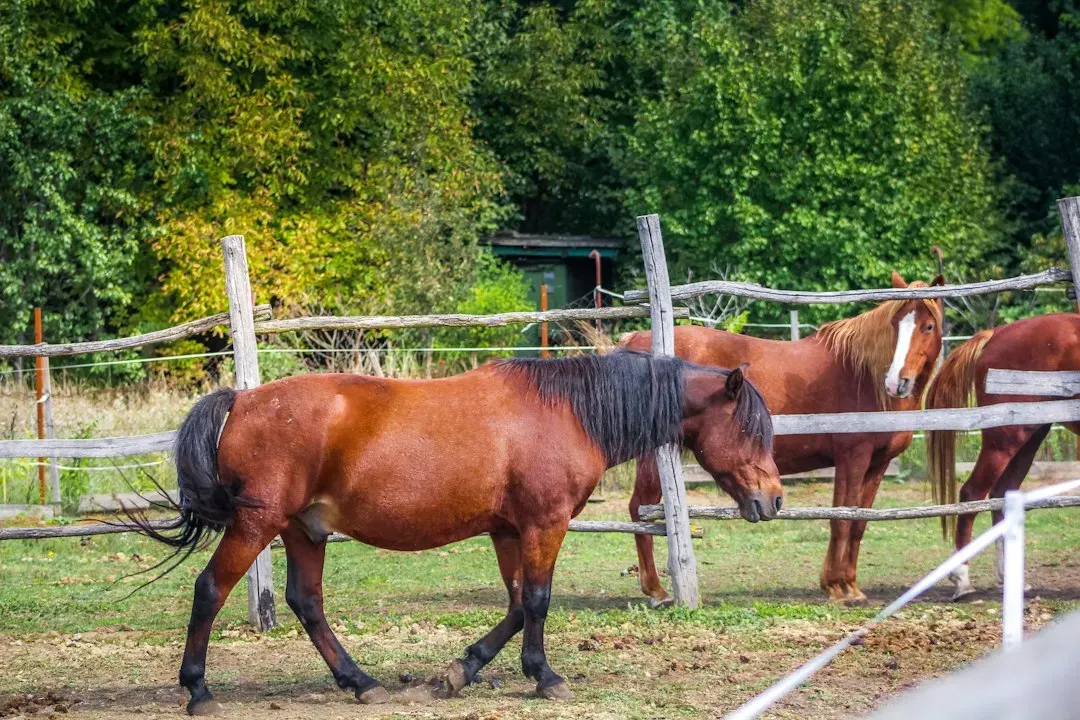
The tail is a flag, and horses use it constantly. Once you start watching it, you’ll wonder how you ever missed it.
A tail clamped tightly against the body points to tension or discomfort. A tail carried high can mean excitement or alertness. Some breeds naturally carry the tail higher, so a “flag” doesn’t mean the same thing on every horse.
Swishing is another message. Quick, sharp swishes with no flies around usually mean irritation. Slow, loose swinging tends to go with relaxation.
A tail that hangs loose and sways with the walk usually belongs to a horse who’s no longer bracing against his surroundings.
- Clamped: tense or uneasy
- High: alert or aroused
- Loose and swaying: settling
But the next signal involves a lot of walking, and it’s more complicated…
#13 – Pacing the Fence Line
🔥 Would you like to save this?
We'll email this post to you, so you can come back to it later!
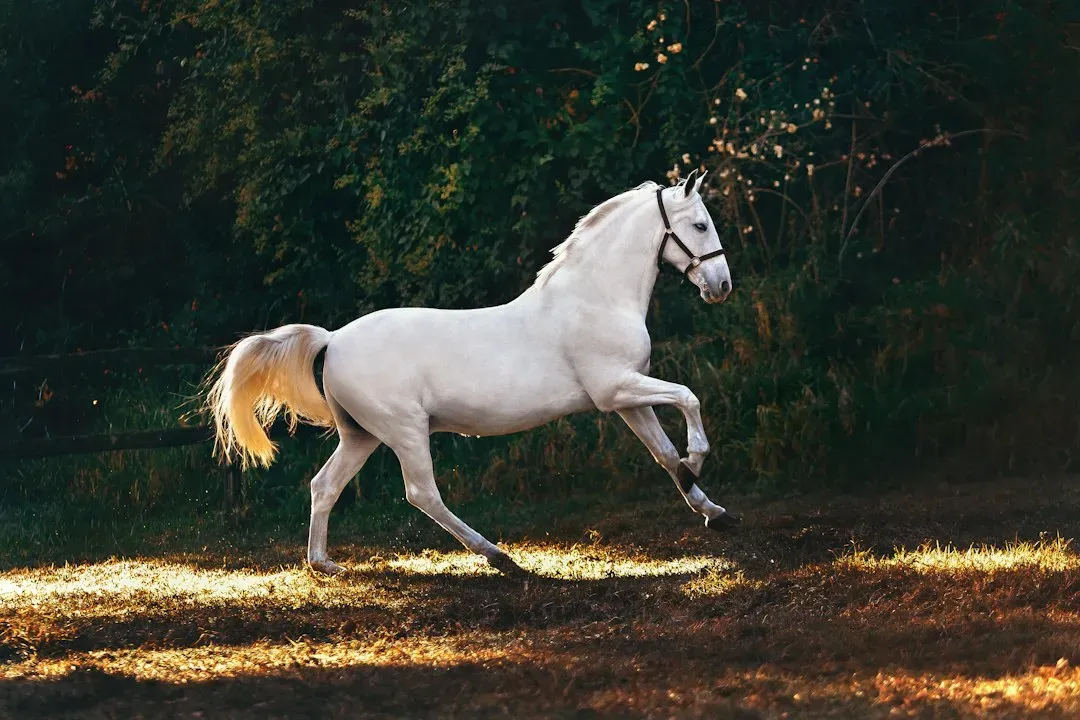
A horse that walks the boundary is mapping his new world.
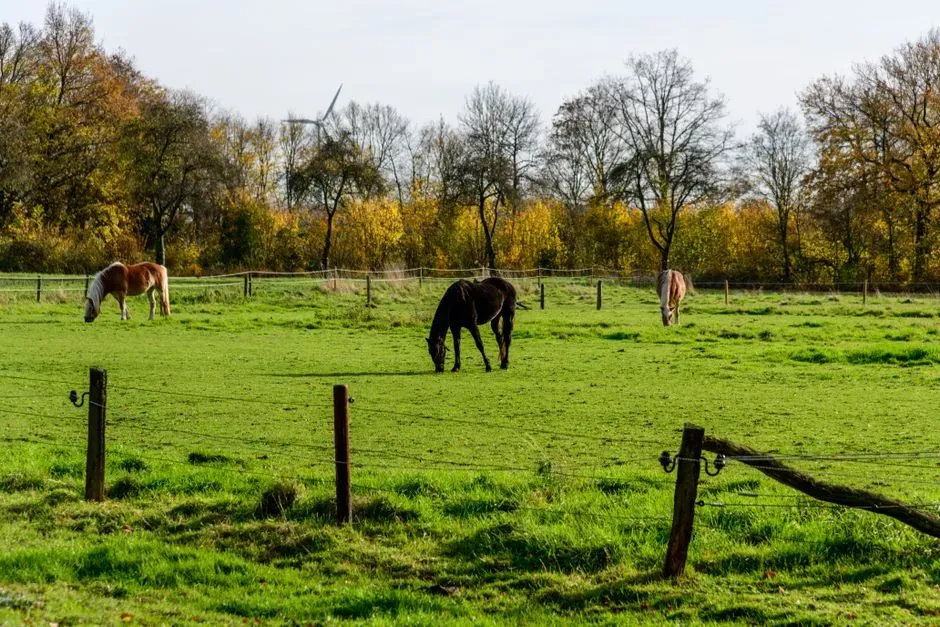
In a new paddock, many horses walk the perimeter, often briskly. It lets them learn where the edges are, where the gates sit and what’s beyond the rails. Walking the fence is normal at first and often fades within a day or two.
The worry is a horse who keeps going for hours, drips with sweat or ignores food and water. That pattern points to distress rather than exploration.
Many people turn a new arrival straight out with the resident herd and let them sort it out. That’s a gamble. Introductions over a fence, with space to retreat, are generally considered safer.
Ask your vet or an experienced trainer how long your particular horse should be kept separate.
Worth Knowing
- Brisk perimeter walking that eases within a day or two is usually just mapping
- Keep water and forage easy to reach so exploring never costs him a meal
- Fence-line introductions give both horses room to back away
- Sweating, skipped meals or non-stop pacing for hours: time to call for help
But the loudest signal is still to come…

Hand Blown Glass Hummingbird Feeders for Outdoors Hanging, 24oz Wild Bird Nectar Feeder
Check Price on AmazonAs an Amazon Associate, we earn from qualifying purchases.
10/7/2026 1:23 pm GMTi

PetSafe Oasys Pet Fountain, 1/2 Gallon (64 oz), Small Dogs & Cats
Check Price on AmazonAs an Amazon Associate, we earn from qualifying purchases.
10/8/2026 8:14 am GMTi

Halloween Dog Collar with Bow, Orange Cute Ghost Collar,
Check Price on AmazonAs an Amazon Associate, we earn from qualifying purchases.
10/9/2026 2:43 pm GMTi

Dog Stairs for Bed 18" H, 4-Step Dog Steps for High Bed
Check Price on AmazonAs an Amazon Associate, we earn from qualifying purchases.
10/9/2026 2:42 pm GMTi

Portable Dog Water Bottle Foldable Dog Travel Water Bottle
Check Price on AmazonAs an Amazon Associate, we earn from qualifying purchases.
10/7/2026 1:29 pm GMTi
#12 – The Call Across the Distance
🔥 Would you like to save this?
We'll email this post to you, so you can come back to it later!
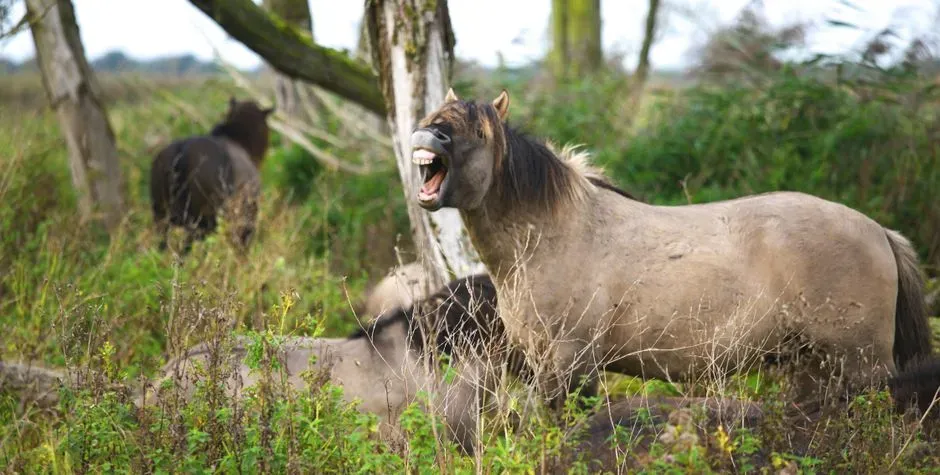
A whinny is a search party of one.
Horses call to locate companions, and a new horse in a new yard may call repeatedly, especially in the first hours. Research suggests horses can recognise familiar companions by voice, so the call may be aimed at one specific missing friend.
Listen to what answers. A resident horse calling back can be reassuring, while silence can deepen the caller’s worry.
Calls tend to taper as the horse finds company and a routine. If the calling goes on constantly for days, it’s worth asking whether he has enough social contact.
But the most surprising signals involve things you’d rather not look at…
#11 – Sniffing the Manure Piles
🔥 Would you like to save this?
We'll email this post to you, so you can come back to it later!
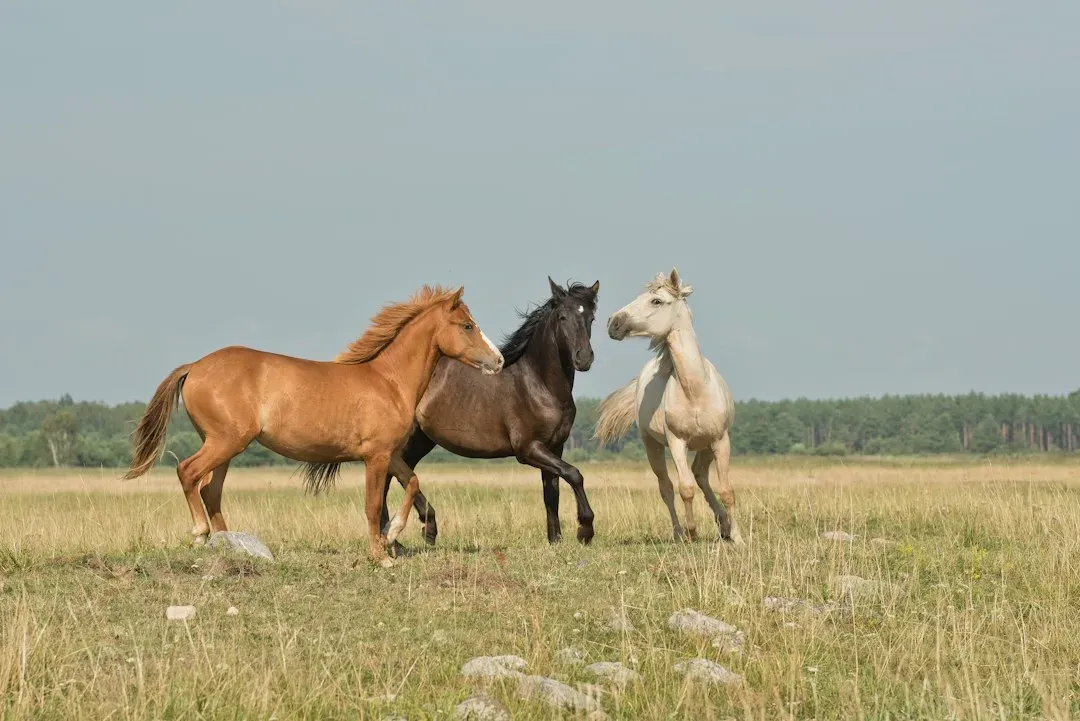
It sounds gross. To a horse, it’s a message board.
Horses investigate manure with careful attention. Stallions are especially known for sniffing and covering other horses’ droppings, and some geldings show similar behaviour. Manure carries social and identity information a human can’t detect.
A new horse stopping at the manure pile is usually just reading up on the residents. It’s normal, not a sign of a problem.
Your job is to watch what he produces. Stress and travel can change manure, and many vets suggest keeping an eye on droppings after a move.
- Fewer piles than normal: worth noting
- Very loose or very dry: worth mentioning to your vet
- No manure for many hours: call the vet
But what the horse refuses to drink may matter even more…
#10 – Refusing the Water
🔥 Would you like to save this?
We'll email this post to you, so you can come back to it later!
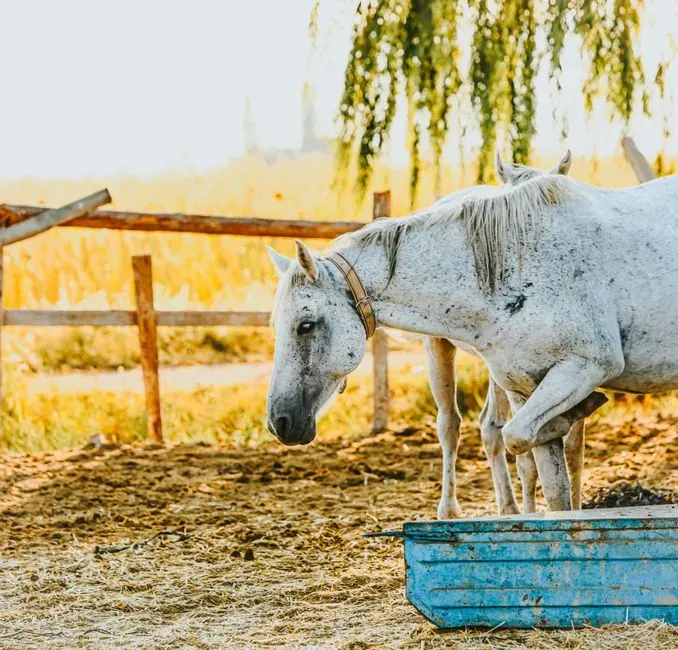
A full trough means nothing if the horse won’t touch it.
New water can taste and smell different, and a nervous horse may simply not drink. Horses can go off their water after a move, and it’s one of the first things experienced handlers check.
Reduced drinking matters because dehydration can contribute to digestive problems, including impaction colic. Travel stress adds to the risk.
Watch quietly from a distance. Horses often drink once nobody is hovering. If the trough stays untouched for many hours, contact your vet.
And food refusal comes with its own warnings…
#9 – Picking at the Hay
🔥 Would you like to save this?
We'll email this post to you, so you can come back to it later!
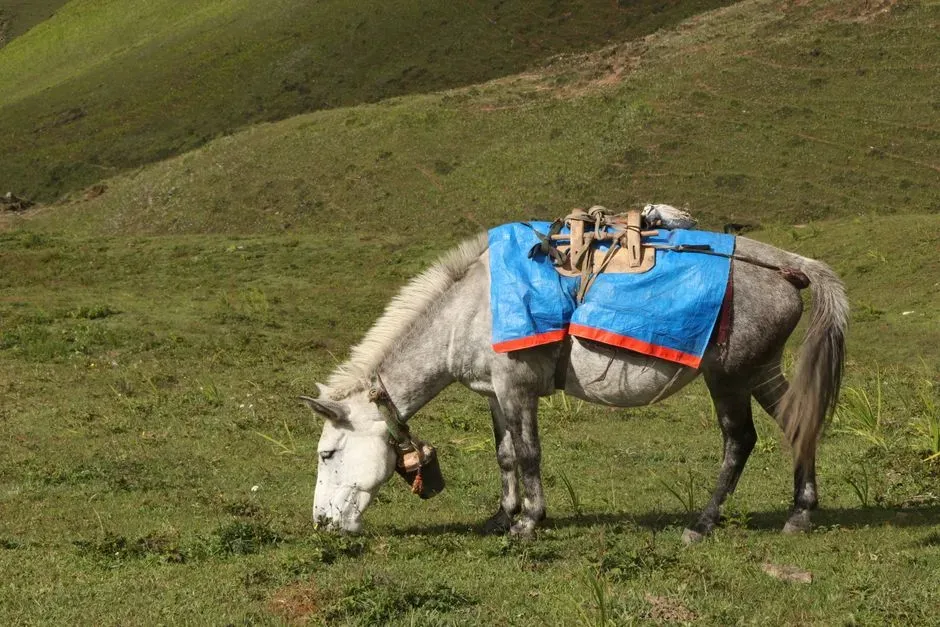
How a horse eats says more than whether he eats.
A nervous horse may take a mouthful, lift his head to scan, then chew with the head still raised. Eating with the head high is a sign he’s still monitoring his surroundings.
Appetite can dip for a short time after a move, especially when a horse is stressed. That’s not unusual. A complete refusal to eat over many hours is.
Horses are built to graze for much of the day, and their digestive systems work best with steady forage. Long gaps between meals aren’t good news.
- Eating with the head up: still watchful
- Eating slowly with a lowered head: relaxing
- Not eating at all: call your vet
But the horse’s eye may be on something else entirely, and that’s you…
#8 – Staying Close to the Handler
🔥 Would you like to save this?
We'll email this post to you, so you can come back to it later!
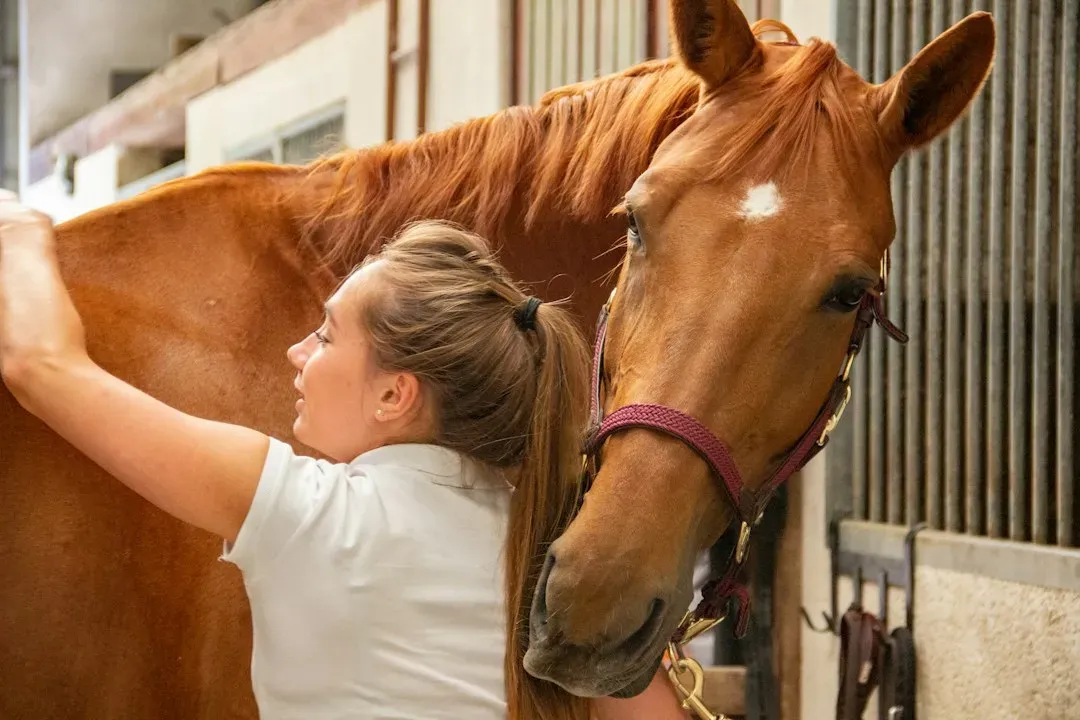
A horse that sticks to your side is borrowing your confidence.
In a strange place, many horses use their person as an anchor. They stay close, match your pace and watch your every move. Your breathing and body tension can influence how safe they feel.
If you hurry, grip the rope tightly or hold your breath, the horse may pick up on it. Slowing down and softening your shoulders can help.
Don’t mistake closeness for total comfort. He may simply be choosing the most familiar thing nearby.
But there’s another thing the horse is quietly checking while he stands beside you…
#7 – Keeping an Eye on the Exits
🔥 Would you like to save this?
We'll email this post to you, so you can come back to it later!
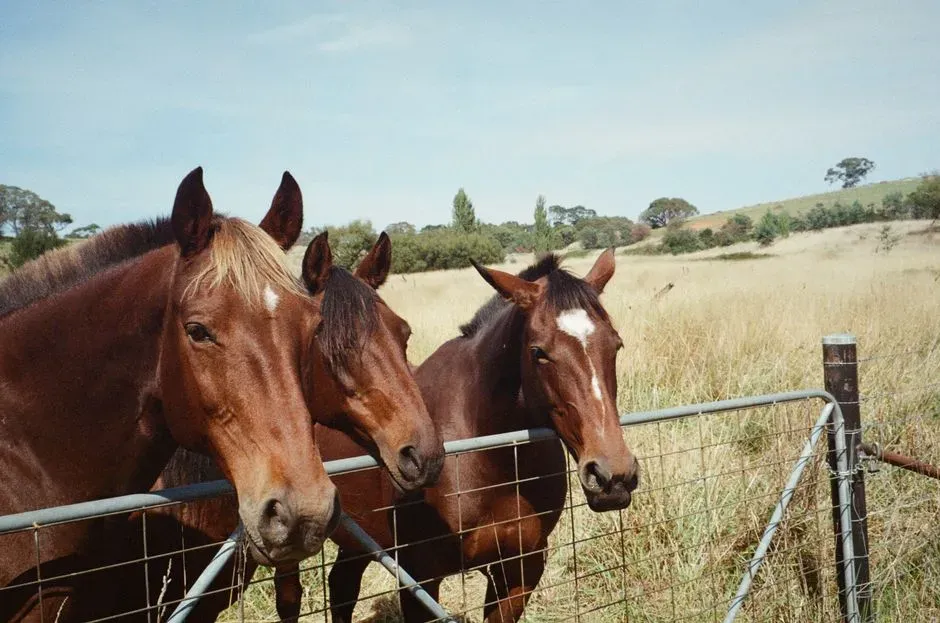
Horses always know where the way out is.
For an animal that survives by moving, the escape route matters. A new horse often orients toward gates, openings and the direction he came from. Standing near the gate isn’t stubbornness. It’s a safety decision.
You may notice him placing himself where he can see the entrance. He might avoid tight corners or dead ends until he knows the space.
This is why cramped, cluttered or dim areas can be harder for a new horse. Clear, open spaces with good visibility tend to help.
- Check that gates and latches are secure
- Remove loose items that could startle or injure
- Avoid forcing a horse into a corner
But the next sign is far subtler, and it’s in the legs…
#6 – The Cocked Hind Leg
🔥 Would you like to save this?
We'll email this post to you, so you can come back to it later!
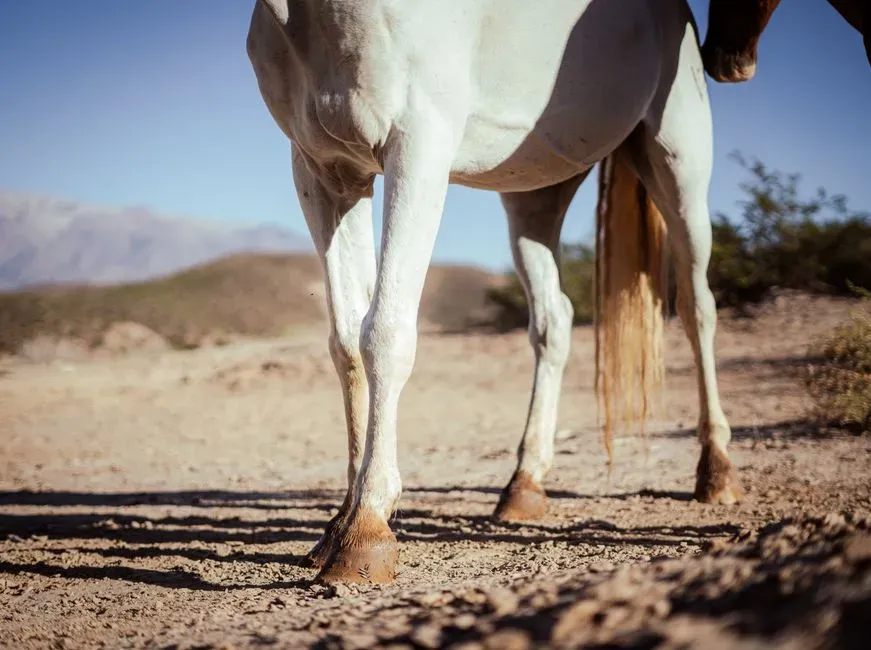
A resting hind leg is a quiet vote of confidence.
When a horse relaxes, he often rests one hind leg, tipping the hip and letting the hoof soften onto its toe. Horses can doze on their feet thanks to a special arrangement of tissue in their legs, often called the stay apparatus.
That only happens when he feels reasonably safe. A tense horse tends to stand square, with weight ready to move in any direction.
Watch also for a drooping lower lip and heavy eyelids. Together with the resting leg, these are strong signs he’s dropping his guard.
But the next signal is one you can see from across the yard…

Glass Hummingbird Feeder for Outdoors Hanging, 16 oz Leak-Proof Nectar Feeder with Bee Guards & Ant Moat
Check Price on AmazonAs an Amazon Associate, we earn from qualifying purchases.
10/7/2026 1:22 pm GMTi

Halloween Cat Costume Cloak Witch Hat Pet Accessories
Check Price on AmazonAs an Amazon Associate, we earn from qualifying purchases.
10/9/2026 2:44 pm GMTi

Smart Bird Feeder with Camera Solar Powered, 2K HD Live Video, 10,000+ Bird Species AI Identification
Check Price on AmazonAs an Amazon Associate, we earn from qualifying purchases.
10/7/2026 1:22 pm GMTi

Glass Hummingbird Feeder for Outdoors Hanging
Check Price on AmazonAs an Amazon Associate, we earn from qualifying purchases.
10/7/2026 1:21 pm GMTi

Orthopedic Extra Large Dog Bed, Waterproof Washable XL Pet Bed 44"
Check Price on AmazonAs an Amazon Associate, we earn from qualifying purchases.
10/7/2026 1:32 pm GMTi
#5 – The Head Drops Low
🔥 Would you like to save this?
We'll email this post to you, so you can come back to it later!
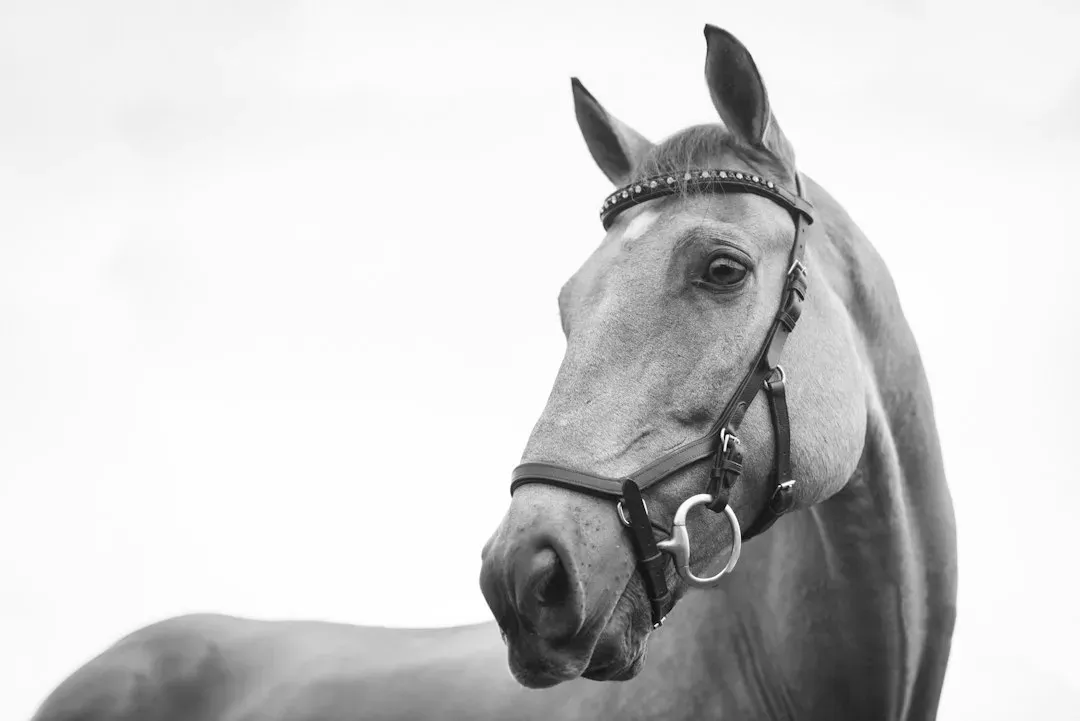
A lowered head is among the most trusted signs of settling.
As a horse’s arousal falls, the head and neck usually drop. The poll softens and the nose moves closer to the ground. Head position tends to follow the horse’s emotional state.
There’s a catch. A head hanging low with dull eyes and little response can signal exhaustion, illness or shutting down, rather than relaxation.
Compare the head to the rest of the body. A truly relaxed horse has bright, soft eyes, loose lips and ears that move freely.
- Low head with soft eyes: relaxed
- Low head with a blank stare: check for illness or overwhelm
Many people treat a quiet horse as a happy horse. That’s a risky shortcut.
But the sign that follows is the most argued about in the horse world…
#4 – Licking and Chewing
🔥 Would you like to save this?
We'll email this post to you, so you can come back to it later!
Everyone has an opinion on this one.
Licking and chewing is often described as a sign of release, especially after a tense moment. A horse may lick, chew and lower his head as he processes something. Not all behaviour experts agree that it reliably shows relaxation or learning.
Some argue it can be a coping response rather than a pure sign of calm. It’s best treated as one clue among several, not a trophy to chase.
If you see it, check the rest of the body. Is the neck softer? Is the breathing slower? Those details tell you far more.
But the next behaviour looks alarming to many owners, and often shouldn’t…
#3 – Rolling in the New Dirt
🔥 Would you like to save this?
We'll email this post to you, so you can come back to it later!
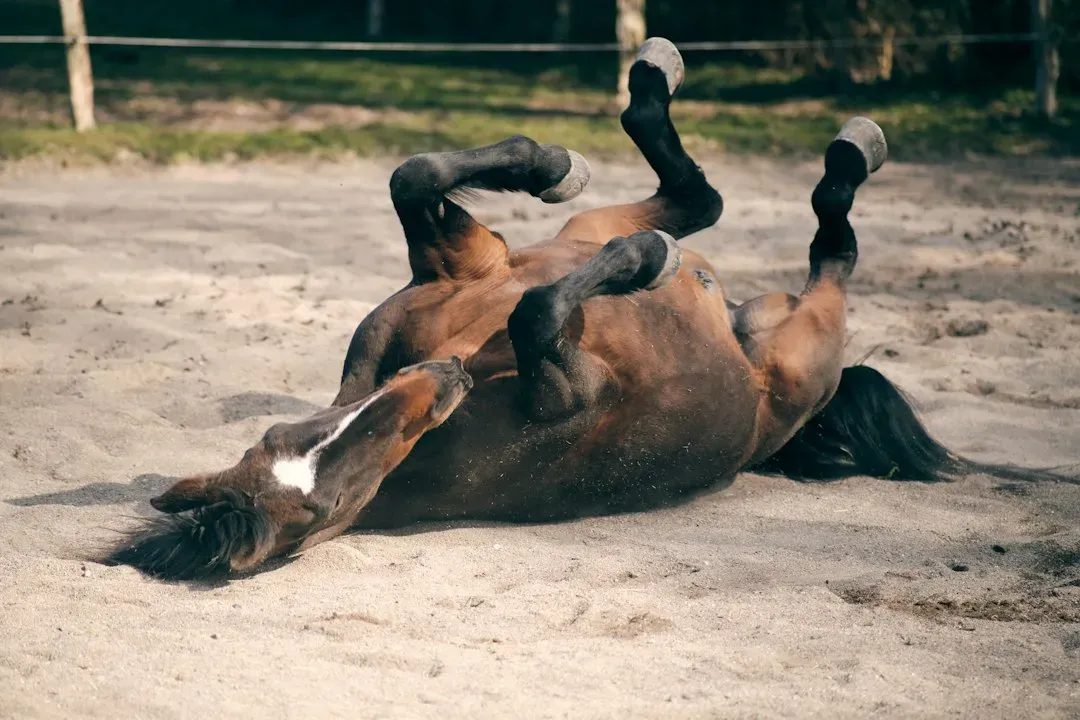
A good roll can be a horse claiming his patch.
Many horses roll soon after arriving in a new space, especially once the tack or rugs come off. Rolling can leave the horse smelling like his new surroundings. It also simply feels good, particularly after sweating.
A single, relaxed roll followed by a shake and a return to normal behaviour is typically harmless. It shows he feels safe enough to put his body in a vulnerable position.
Know the difference between this and colic. Repeated, violent rolling, sweating, looking at the flanks or refusing food are emergency signs. Call your vet immediately.
- One roll, then up and shaking: normal
- Repeated rolling with distress: urgent
But even rolling comes second to the signal that follows…
#2 – The First Real Mouthful of Grass
🔥 Would you like to save this?
We'll email this post to you, so you can come back to it later!
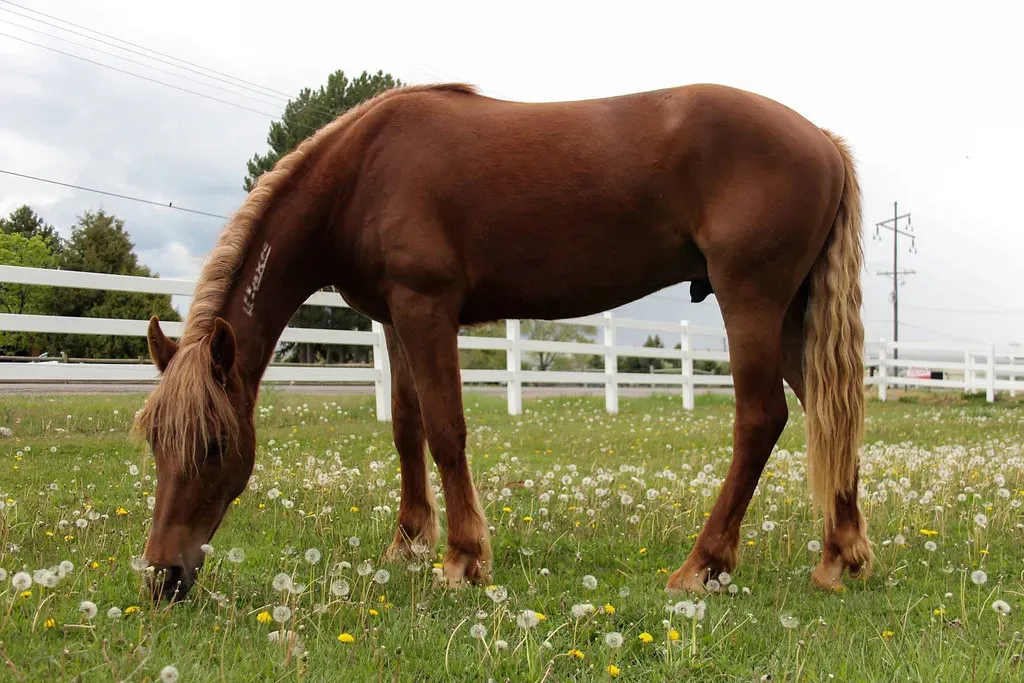
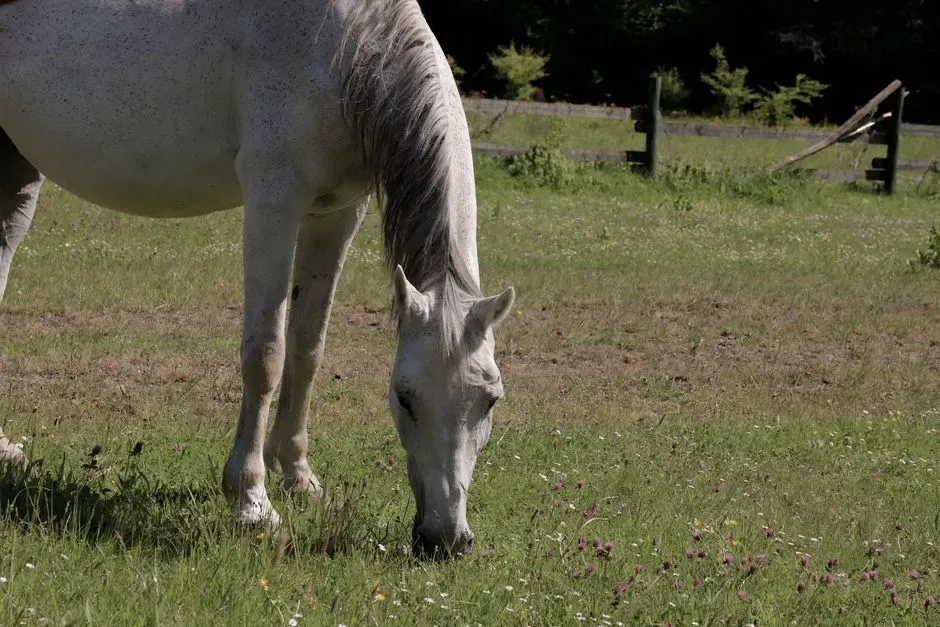
Grazing is the moment a horse finally takes his guard down.
Not every graze counts. A horse who snatches grass while staring into the distance is still anxious. A horse who grazes steadily, moving forward with a low head and soft ears, is truly settling.
Look for rhythm. Slow, continuous chewing, a relaxed tail and a body that isn’t braced all point to comfort.

Professional 7 in 1 Dog Paw Cleaner for Dogs & Cats - Includes 1 Portable Paw Washer, 1 Bath Brush
Check Price on AmazonAs an Amazon Associate, we earn from qualifying purchases.
10/7/2026 1:26 pm GMTi

2 Pcs Halloween Pet Hat Bandana Set, Witch Pumpkin Costumes for Dogs
Check Price on AmazonAs an Amazon Associate, we earn from qualifying purchases.
10/9/2026 2:45 pm GMTi

Earth Rated XL Dog & Puppy Pee Pads, Discreet Top, Max Absorbency
Check Price on AmazonAs an Amazon Associate, we earn from qualifying purchases.
10/7/2026 1:28 pm GMTi

Air Purifiers for Home Pets Large Room Up to 3000 Ft²,HEPA Air Cleaner with Washable Double-Side Filter, PM2.5 Air Quality Monitor,15dB Sleep Mode for Bedroom Odor Dust Pollen,White
Check Price on AmazonAs an Amazon Associate, we earn from qualifying purchases.
10/8/2026 8:23 am GMTi
Quick Compare
- Still anxious: quick snatches, head popping up, eyes fixed on the distance
- Truly settling: steady steps, low head, soft ears, rhythmic chewing
- The tiebreaker: a tail that hangs loose and a body that isn’t braced
One practical warning: don’t give a newly arrived horse unlimited rich grass straight away. A sudden change in diet can upset the digestive system, so introduce grazing gradually and follow your vet’s guidance.
But there’s one signal that outranks them all, and it happens when no one’s watching…
#1 – Lying Down to Sleep
🔥 Would you like to save this?
We'll email this post to you, so you can come back to it later!
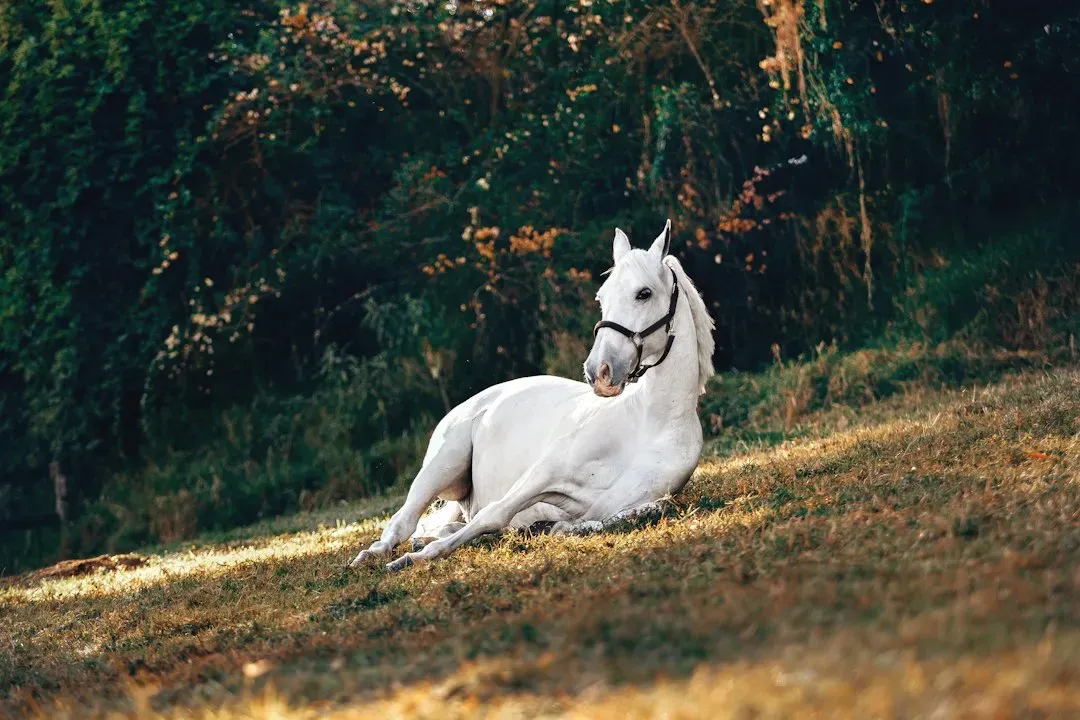
Rest is the ultimate proof of trust.
Horses can doze standing, but deeper sleep needs them to lie down. A horse who lies flat out in a new yard is telling you he feels safe enough to be completely vulnerable. That usually takes time.
Don’t be alarmed if a new horse doesn’t lie down for the first several nights. Many don’t. It’s common for them to stay on their feet until they trust the setting and their neighbours.
Herd life matters here. In groups, some horses rest while others stay alert, which is why a horse who feels part of a group often settles faster. If a horse never lies down over a prolonged period, talk to your vet.
A new yard isn’t a test of obedience. It’s a negotiation about safety, and the horse is the only one who gets to decide when it’s over. The loud horse isn’t always the worried one, and the silent one isn’t always the calm one. No single sign proves anything on its own.
My view: stop rushing. The people who get the best horses out of a move aren’t the ones with the cleverest techniques. They’re the ones who give time, space, water, forage and company, then read the whole body instead of one flashy signal.
So the next time a horse walks quietly into a new place and everyone says he’s fine, look at the ears, the breath and the tail before you believe it. Which sign did you spot first when your horse arrived somewhere new?

- 14 Wildlife Permits American Parks Waive Entirely for Visitors Past 62 - November 6, 2026
- Before a Horse Accepts an Unfamiliar Yard 22 Quiet Signals Come First - November 6, 2026
- 22 Gentle Comforts an Ageing Cat Seeks Once a House Grows Colder - November 6, 2026