


While flipping rocks in a shallow creek behind his family’s Asheville, North Carolina home, 8-year-old Lucas Peterson let out a shout that brought his mom running. Clutched gently in his hand was a bright blue crawfish, shimmering like a sapphire in the sun.
“I thought it was plastic at first,” said his mother, Danielle. “But then it twitched, and we realized it was real.”
Photos of the crustacean quickly made the rounds online, and local wildlife experts confirmed the obvious: Lucas had discovered a rare genetic mutation of the common crawfish, likely a Procambarus clarkii, that affects roughly 1 in 2 million individuals.
Why So Blue?

The bright blue color in crawfish comes from a genetic mutation affecting the way proteins bind to pigments in the shell. Instead of the usual muddy red or brown tones, the mutation gives the exoskeleton a vivid cobalt or electric blue hue.
Though occasionally bred in captivity for aquariums, blue crawfish are rarely seen in the wild due to their high visibility to predators like fish, raccoons, and birds.
“They’re basically wearing a neon sign that says ‘Eat Me,’” said Dr. Jared Linwood, a biologist with the North Carolina Wildlife Resources Commission.
From Creek to Conservation
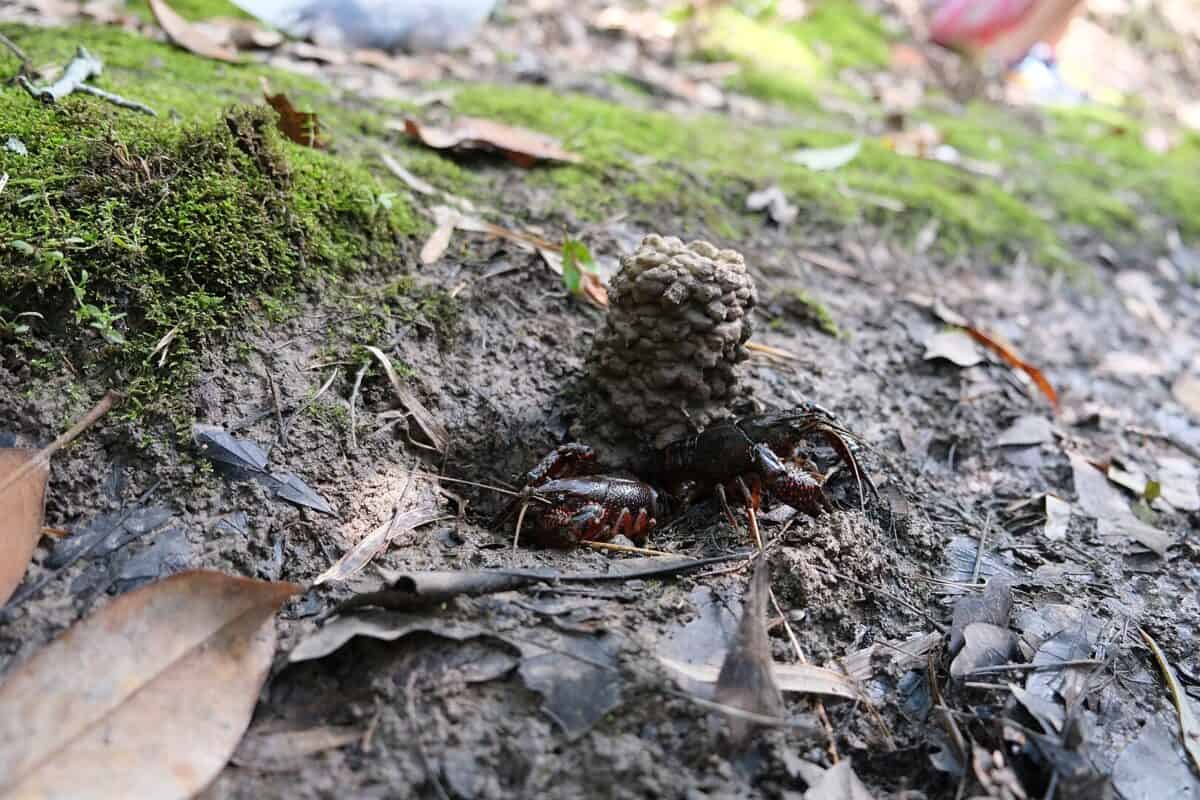
Rather than keep the crawfish, Lucas and his family worked with a local conservation group to safely relocate it to a protected freshwater habitat nearby. It’s now part of a small educational program teaching kids about biodiversity and freshwater ecosystems.
Officials used the opportunity to remind residents that even ordinary-looking creeks can hold remarkable surprises — and that native species are worth protecting, flashy or not.
If you come across a strangely colored animal:
- Don’t touch or move it without expert guidance
- Snap a photo and report the sighting to local wildlife services
- Avoid altering the habitat — even for a better picture
A Little Blue Crawfish Wonder
Lucas, now something of a neighborhood celebrity, has a simple takeaway: “I just wanted to find frogs. But I guess this guy was better.”
In a world where rare wildlife often hides far from sight, sometimes it shows up right in your backyard — you just have to look.

- Coatimundi Attacks Arizona Hiker in Rare Desert Confrontation - July 17, 2026
- Rabid Bat Bites Texas Man—Fourth Kerr County Case This Year - July 17, 2026
- Colorado’s Rattlesnake Den Livestreams 2,000 Snakes - July 15, 2026