


Locals strolling along Popham Beach in Maine were stunned to find what looked like a pulsating, gelatinous mass sprawled on the sand. Upon closer inspection, it was a giant lion’s mane jellyfish — its deep red bell half-buried, with tentacles trailing behind like tangled seaweed.
“It looked like something out of a sci-fi movie,” said Trina Walker, who found it while walking her dog. “I thought it was a plastic sheet until it moved.”
Measuring roughly 1.8 meters (6 feet) across with tentacles likely twice that length, the jellyfish had washed ashore during high tide and was still alive when discovered.
What Is a Lion’s Mane Jellyfish?
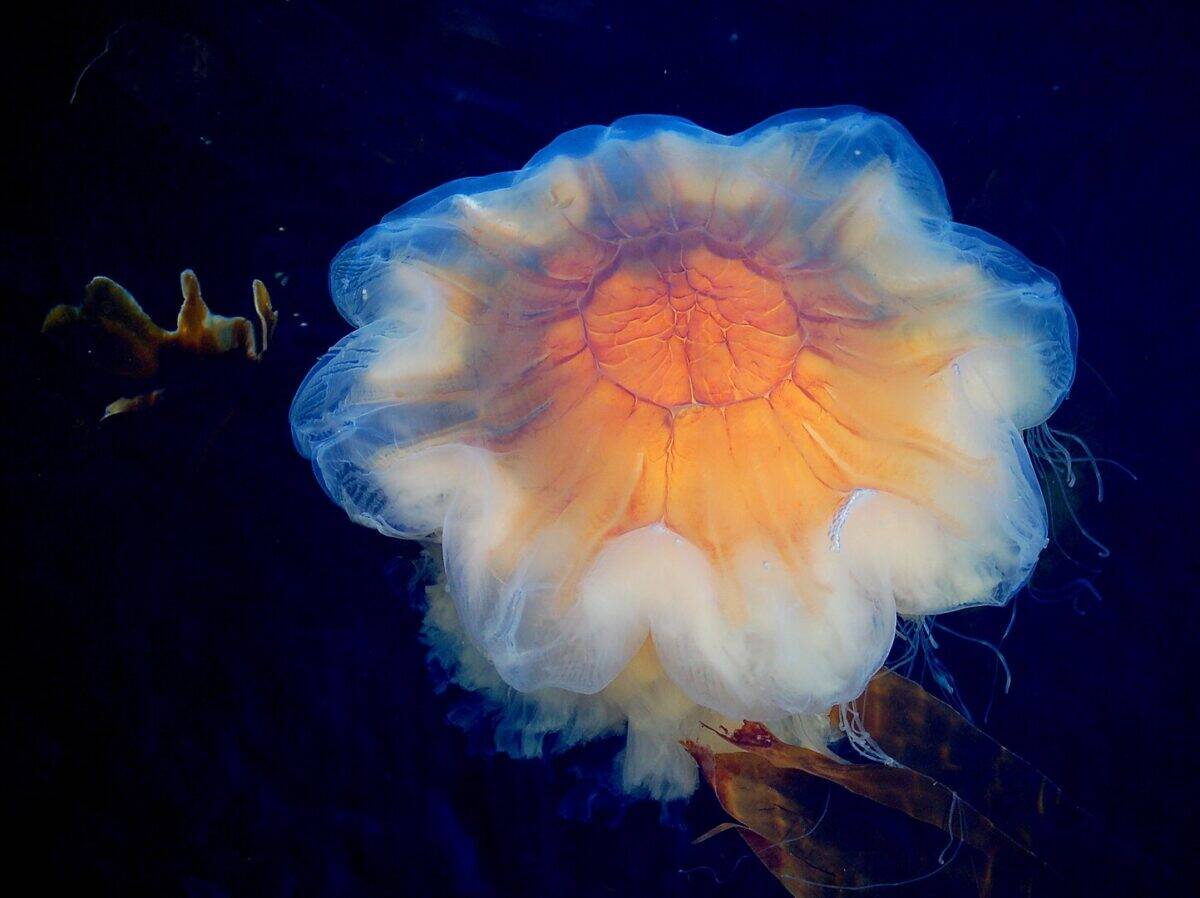
The lion’s mane jellyfish (Cyanea capillata) is the largest known species of jellyfish. Found in the colder waters of the North Atlantic and Arctic, it can grow up to 2.4 meters (8 feet) in diameter, with tentacles reaching over 30 meters (100 feet) long — making it one of the longest animals on Earth.
Its sting isn’t usually deadly to humans, but contact can cause painful welts, skin irritation, and allergic reactions. Marine biologists say sightings along the U.S. East Coast are becoming more frequent, likely due to warming ocean currents.
Beached But Not Harmless

Even after stranding, the jellyfish was still capable of stinging. Park officials cordoned off the area and warned beachgoers not to touch the creature — or any jellyfish found along the shoreline.
- Lion’s mane jellyfish can still sting when dead
- Tentacles may detach and float separately, posing a risk
- Vinegar and saltwater rinses can help reduce sting pain, but medical help is advised for reactions
Maine’s Department of Marine Resources has since taken samples from the jellyfish to study trends in local jellyfish populations.
Why It Matters
The presence of such a massive jellyfish so close to shore is unusual — but not unheard of. Experts say it may signal shifts in ocean ecosystems tied to temperature and current changes.
“It’s not a monster from the deep,” said marine ecologist Dr. Lila Koh, “but it is a signal. Big jellies this far south are rare, and we need to pay attention.”

- Texas Ranchers Injured and Horses Killed in Aggressive Bee Attack - July 19, 2026
- Cougar Attack on Cyclists Shakes Washington Wilderness - July 19, 2026
- Snake Found in Arizona Toilet Shocks Homeowner - July 19, 2026