


In the early 1900s, a horse named Clever Hans captivated the world with his seemingly supernatural mathematical abilities. This Orlov Trotter horse, owned by Wilhelm von Osten, a mathematics teacher and amateur horse trainer in Germany, appeared to perform arithmetic, identify musical intervals, tell time, and even understand German language. Hans would tap his hoof to indicate numbers or letters, answering complex questions with such consistency that he became a sensation across Europe. Von Osten, believing he had discovered extraordinary cognitive abilities in horses, spent years developing Hans’s talents through dedicated training.
The story of Clever Hans represents one of the most famous cases of unintentional cueing in animal cognition studies. What began as a sincere attempt to demonstrate animal intelligence eventually exposed fundamental flaws in scientific methodology and revealed important insights about nonverbal communication. The legacy of this remarkable horse continues to influence psychological research, animal cognition studies, and scientific methodology more than a century later, making it one of the most instructive episodes in the history of behavioral science.
Wilhelm von Osten: The Man Behind the Phenomenon
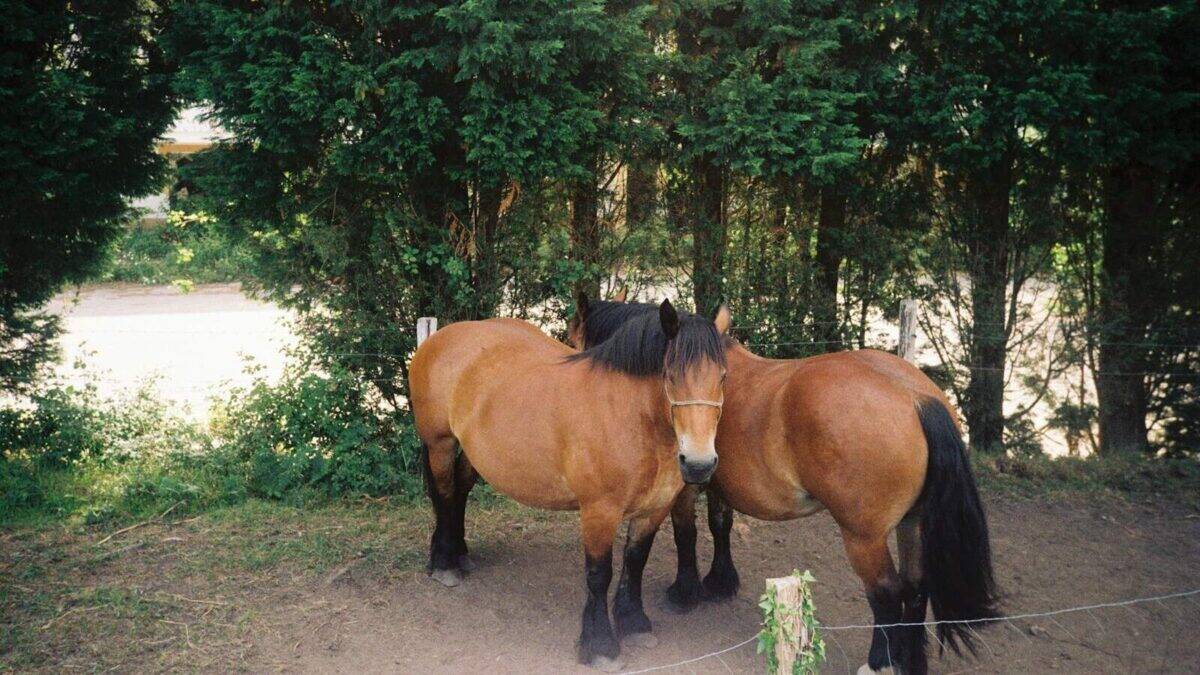
Wilhelm von Osten was an elderly mathematics teacher, former gymnasium instructor, and amateur horse trainer who devoted the latter part of his life to proving that animals possessed high-level cognitive abilities. Born in 1838, von Osten had previously attempted to educate a cat and a bear before focusing his attention on horses. He believed firmly that animals had untapped intellectual potential that conventional thinking failed to recognize. After several years working with an initial horse that showed little progress, he acquired Hans around 1888 and began his systematic training.
Von Osten was by all accounts sincere in his beliefs about Hans’s abilities. He never charged admission to Hans’s performances, refused financial offers for the horse, and seemed genuinely convinced that his teaching methods had unlocked extraordinary mental capacities in his equine student. His teaching methodology involved patience, repetition, and reward-based training. What made von Osten’s case particularly compelling was that he appeared to have no obvious motive for deception, which contributed significantly to the initial credibility of Clever Hans’s abilities among both the public and scientific community.
The Performances That Stunned Audiences

Hans’s performances followed a consistent pattern that astonished observers. When presented with a question, often written on a blackboard or spoken aloud, Hans would tap his right front hoof the appropriate number of times to indicate his answer. For example, when asked to add 3+4, Hans would tap his hoof seven times and then stop. He could reportedly multiply, divide, work with fractions, and even extract square roots. Beyond mathematics, Hans demonstrated an apparent ability to identify people by name, spell words by tapping out corresponding letters of the alphabet, and distinguish musical tones.
What made these performances particularly compelling was their public nature. Hans performed these feats in front of large audiences that included distinguished scientists, military officers, and other prominent figures of German society. The horse would answer questions posed not only by von Osten but by complete strangers, seeming to understand their queries regardless of who asked them. This apparent ability to respond accurately to questions from anyone—not just his owner—made the phenomenon even more baffling and convinced many skeptics that something extraordinary was occurring.
Initial Scientific Scrutiny and Endorsements

The remarkable abilities of Clever Hans did not escape scientific attention. In 1904, the German Board of Education appointed a commission to investigate Hans’s abilities. This commission included a veterinarian, a circus manager, a cavalry officer, and several schoolteachers. After their investigation, they concluded that no trickery was involved. Their report, while not explicitly endorsing the claim that Hans could actually think or calculate, nevertheless found no evidence of fraud or deliberate signaling from von Osten. This official validation from a respected commission only enhanced Hans’s fame.
Several prominent scientists also examined Hans and came away impressed. Carl Stumpf, a respected psychologist and philosopher from the University of Berlin, initially endorsed the phenomenon as genuine. Notable scientists like Pfungst’s mentor, philosopher and psychologist Carl Stumpf, were unable to detect any fraud in their initial examinations. The apparent scientific endorsement of Hans’s abilities made newspaper headlines across Europe and America, spreading the story of the calculating horse far beyond Germany. The scientific community was divided, with some accepting the possibility of advanced cognition in horses while others remained deeply skeptical.
The Investigation of Oskar Pfungst

In 1907, a comprehensive scientific investigation finally solved the mystery of Clever Hans. Oskar Pfungst, a psychologist working under the direction of Carl Stumpf at the Psychological Institute in Berlin, conducted a series of rigorous experiments designed to determine exactly how Hans was arriving at his answers. Pfungst’s approach was methodical and innovative. He systematically varied the conditions under which Hans was asked questions, including cases where the questioner didn’t know the answer, where Hans couldn’t see the questioner, and where the questioner wore blinders.
The results were revealing: Hans could answer questions correctly only when the questioner knew the answer and when Hans could see the questioner. Pfungst discovered that when questioners knew the answer, they would inadvertently give subtle cues as Hans approached the correct number of taps. These included slight forward inclinations of the head, raised eyebrows, flared nostrils, or slight changes in facial expression. When Hans reached the correct number, the questioner would make an almost imperceptible movement as they prepared to acknowledge the correct answer, and Hans would stop tapping. The horse had learned to watch for these unintentional signals rather than actually calculating the answers.
The Clever Hans Effect Explained

What became known as the “Clever Hans Effect” describes a form of involuntary and unconscious cueing, where humans unknowingly provide subtle cues that influence an animal’s behavior. The most remarkable aspect of this phenomenon was that neither Hans nor the questioners were aware of this communication channel. Von Osten wasn’t deliberately signaling to Hans—he genuinely believed the horse was calculating. Similarly, other questioners had no awareness that they were providing cues. Hans had simply developed an extraordinary sensitivity to minute changes in human posture, expression, and tension.
This sensitivity demonstrates horses’ remarkable ability to read human body language, likely an evolutionary adaptation from their history as prey animals who must be acutely aware of predators’ intentions. Hans had essentially learned to solve a different problem than the one everyone thought he was solving. Rather than calculating mathematical problems, he was calculating when humans expected him to stop tapping. The case illustrates how animals can develop behaviors that appear to demonstrate human-like cognition but actually reflect different cognitive processes entirely—in this case, exceptional observational skills rather than mathematical ability.
Public Reaction to the Revelation
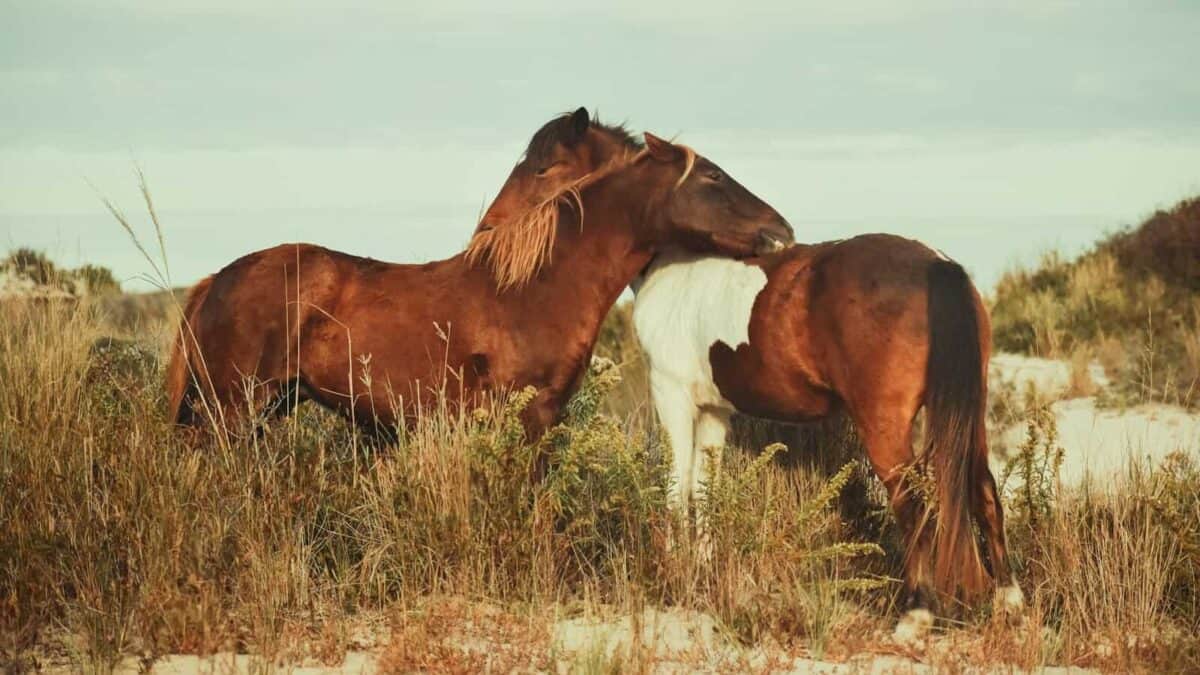
When Pfungst published his findings in 1907 in a book titled “Das Pferd des Herrn von Osten” (The Horse of Mr. von Osten), the public reaction was mixed. Many were disappointed that Hans wasn’t actually performing mathematical calculations, and the story gradually faded from headlines. Von Osten himself never accepted Pfungst’s explanation and continued to believe in Hans’s cognitive abilities until his death in 1909. After von Osten’s death, Hans was acquired by several different owners and reportedly continued to perform, though with considerably less fanfare.
Interestingly, despite the debunking, some continued to attribute special abilities to Hans. The subtlety with which Hans could detect unconscious human cues was itself remarkable and indicated a form of intelligence, if not the type initially claimed. The public’s willingness to believe in extraordinary animal abilities revealed a deep-seated desire to bridge the cognitive gap between humans and animals. This aspect of the Clever Hans phenomenon—the human tendency to anthropomorphize animal behavior and overinterpret it through a human cognitive lens—remains relevant in how we understand human-animal relationships today.
The Scientific Legacy in Psychology
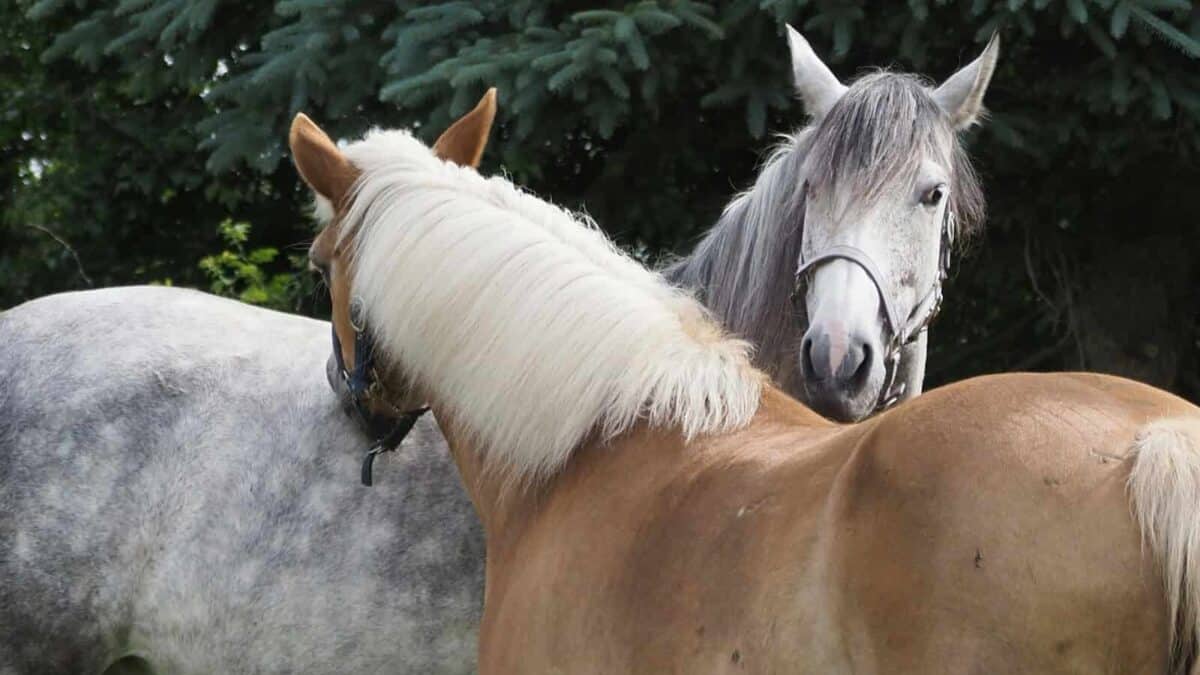
The Clever Hans case revolutionized experimental psychology by highlighting the critical importance of controlling for experimenter expectancy effects. Pfungst’s work demonstrated how researchers’ expectations could unconsciously influence experimental outcomes, a phenomenon later termed “experimenter bias.” This realization led to the development of double-blind experimental designs, where neither the subjects nor the researchers interacting with them know which condition is being tested, thereby preventing unconscious cueing.
Beyond methodology, the case significantly influenced the emerging field of comparative psychology. It served as a cautionary tale against anthropomorphizing animal behavior and assuming human-like cognitive processes in animals without rigorous evidence. The Clever Hans effect prompted researchers to develop more sophisticated methods for testing animal cognition that could distinguish between genuine understanding and responses to subtle cues. Ironically, while the case initially seemed to demonstrate remarkable animal intelligence, it ultimately led to more conservative approaches to interpreting animal behavior in scientific contexts.
Impact on Modern Animal Cognition Studies

The legacy of Clever Hans continues to influence contemporary animal cognition research. Modern studies employ rigorous controls to prevent unintentional cueing, including automated testing apparatus, remote observation, and careful experimental designs that eliminate the possibility of Clever Hans effects. When scientists today claim evidence of complex cognition in animals—whether numerical abilities in chimpanzees, tool use in crows, or language comprehension in dogs—they must demonstrate that the animals aren’t simply responding to unconscious human cues.
Despite these precautions, reinterpretations of animal cognition studies occasionally reveal Clever Hans-like effects. For example, some studies of animal language acquisition have been criticized for insufficient controls against cueing. However, legitimate evidence of complex cognition in various species has accumulated through carefully controlled studies that account for these potential confounds. The field has evolved from simply asking whether animals can think like humans to exploring the unique and often surprising ways different species perceive and process information. In this more nuanced approach to animal cognition, the Clever Hans case remains an essential cautionary tale.
The Biological Basis of Hans’s Abilities

While Hans wasn’t performing mathematical calculations, his perceptual abilities were extraordinary in their own right. Horses evolved as prey animals with visual systems optimized for detecting subtle movements that might signal predator threats. Their eyes, positioned on the sides of their head, provide nearly 350-degree vision. They are particularly sensitive to motion in their visual field and can detect minute changes in posture and expression that humans typically wouldn’t notice. Hans had essentially repurposed these evolved capacities for a different context—detecting unconscious human cues.
Hans’s abilities also reflected the remarkable capacity of animals for associative learning. Through thousands of repetitions, Hans had formed strong associations between certain subtle human behaviors and the appropriate response (stopping his tapping). This type of conditioning doesn’t require complex cognition but relies on fundamental learning processes common across many species. The case demonstrates how impressive behaviors can emerge from relatively simple learning mechanisms when paired with acute perceptual abilities. In this sense, Hans was indeed clever, just not in the way initially believed.
Similar Cases Throughout History

The Clever Hans phenomenon is not isolated in history. Numerous cases of supposedly intelligent animals have later been revealed to involve similar cueing effects. In the 1920s, “Clever Marian,” another horse claimed to have mathematical abilities, was shown to be responding to subtle cues. Similarly, in the 1960s, “Lady Wonder,” a horse who could allegedly read minds and spell out messages, was investigated by parapsychologist Joseph Banks Rhine, who initially endorsed her abilities before later experiments revealed she was responding to unconscious cues from her handler.
More recently, controversies have emerged around studies of animal language acquisition and numerical abilities. Some researchers have questioned whether apes using sign language or lexigrams are truly generating language spontaneously or responding to subtle cues from experimenters who have developed close relationships with them. These ongoing debates reflect the enduring challenge of designing experiments that can definitively separate genuine cognitive abilities from responses to unintentional human cues. The Clever Hans legacy continues to remind researchers of the need for stringent controls and skeptical analysis of extraordinary claims about animal cognition.
Conclusion: The Enduring Lessons of Clever Hans

The story of Clever Hans represents one of the most instructive episodes in the history of behavioral science, offering lessons that remain relevant more than a century later. What initially appeared to be evidence of remarkable mathematical ability in a horse ultimately revealed the subtle, unconscious ways humans communicate with animals and the extraordinary sensitivity with which animals can detect these cues. The case demonstrates both the human tendency to project our own cognitive processes onto animals and the importance of rigorous scientific methodology to avoid such misinterpretations.
Perhaps most importantly, the Clever Hans phenomenon reminds us that animal intelligence often manifests in ways fundamentally different from human intelligence. Rather than asking whether animals can think like humans, modern researchers explore the unique cognitive adaptations that allow different species to thrive in their ecological niches. Hans wasn’t solving arithmetic problems, but his ability to detect subtle human cues demonstrated impressive perceptual and learning capacities that were valuable in their own right.
The legacy of Clever Hans extends beyond animal cognition to influence experimental design across the behavioral sciences, highlighting the crucial importance of controlling for experimenter expectancy effects. In an era of increasing interest in animal cognition and growing ethical concerns about animal welfare based on cognitive capacities, the lessons of Clever Hans remain essential for balanced, rigorous approaches to understanding the minds of other species.
While Hans may have “fooled the world,” the ultimate outcome was anything but foolish—it was a significant step forward in how we understand both animal behavior and the process of scientific investigation itself. In exposing a misunderstanding about one horse’s abilities, Oskar Pfungst helped establish methodological principles that continue to advance our genuine understanding of animal minds and the remarkable diversity of intelligence in the natural world.

From exploring the marine wonders in the Azores and witnessing the vast savannas of Kenya, to delving deep into the rich biodiversity of South Africa and traversing iconic landscapes in Australia and the US like Yellowstone, Chris's experiences are vast.
With a penchant for diving alongside sharks, the ocean holds a special place in his heart.
Through his academic insights, he champions wildlife conservation, striving with 'Animals Around The Globe' to cultivate a profound connection between humans and animals, enhancing our mutual appreciation.
Connect with him at Feedback@animalsaroundtheglobe.com.
- Could Some Animals Actually Recognize Themselves in the Mirror? - August 12, 2026
- Balto: The Real Hero of the Serum Run - August 12, 2026
- The Most Isolated Animal Population in the United States - August 12, 2026
Leave a comment
You must be logged in to post a comment.