
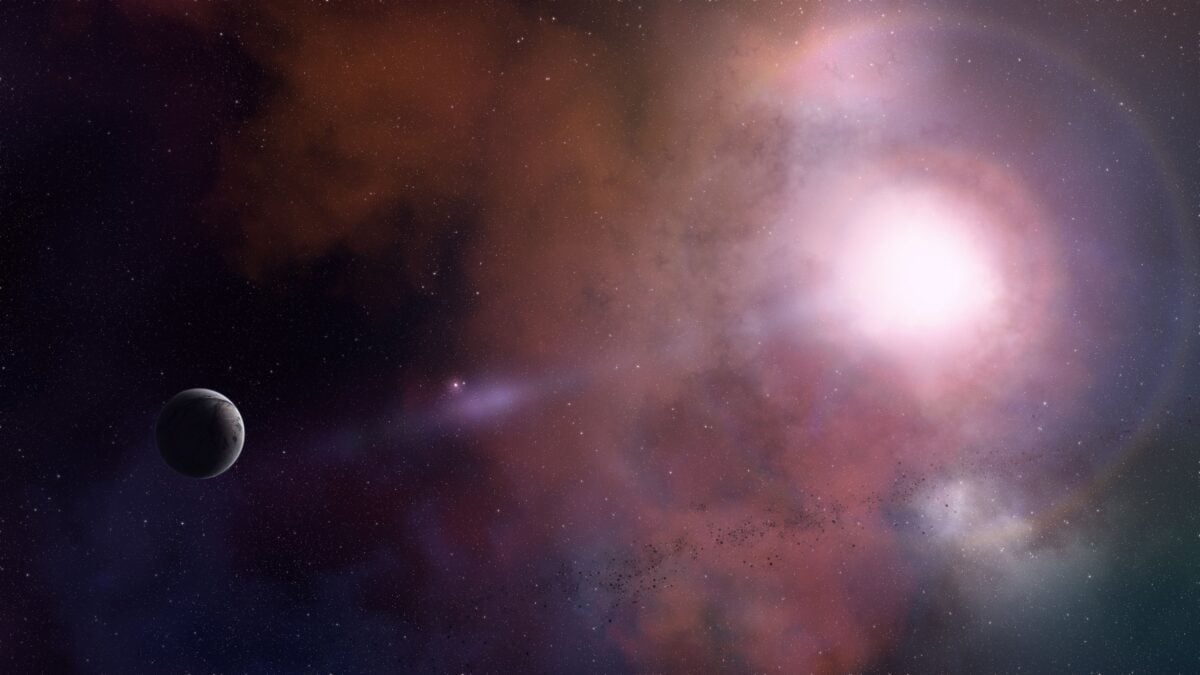
Picture everything you’ve ever seen in the night sky: every star, planet, gas cloud and galaxy. Now accept that all of it adds up to only a sliver of what’s out there. Most of the cosmos, by the standard accounting, is made of something we can’t see, touch or capture in a lab.
That isn’t a fringe claim. It’s the working model of modern cosmology, built from decades of measurements that keep pointing the same way. Still, “working model” is the key phrase, and the gaps in it are more interesting than the tidy pie chart suggests.
The Cosmic Pie Chart That Humbles Everyone
🔥 Would you like to save this?
We'll email this post to you, so you can come back to it later!
In the standard picture, ordinary matter makes up only around one twentieth of the universe’s total energy budget. Dark matter accounts for roughly a quarter, and dark energy takes a little over two thirds. Put those last two together and you get the nineteen out of every twenty parts that give the headline its punch.
These numbers come mostly from the Planck satellite’s map of the early universe’s afterglow, combined with galaxy surveys and supernova studies. They’re estimates with error bars, not a final tally. Yet different methods land in a similar neighborhood, which is why cosmologists take the framework seriously.
How Dark Matter First Showed Up in the Numbers
🔥 Would you like to save this?
We'll email this post to you, so you can come back to it later!
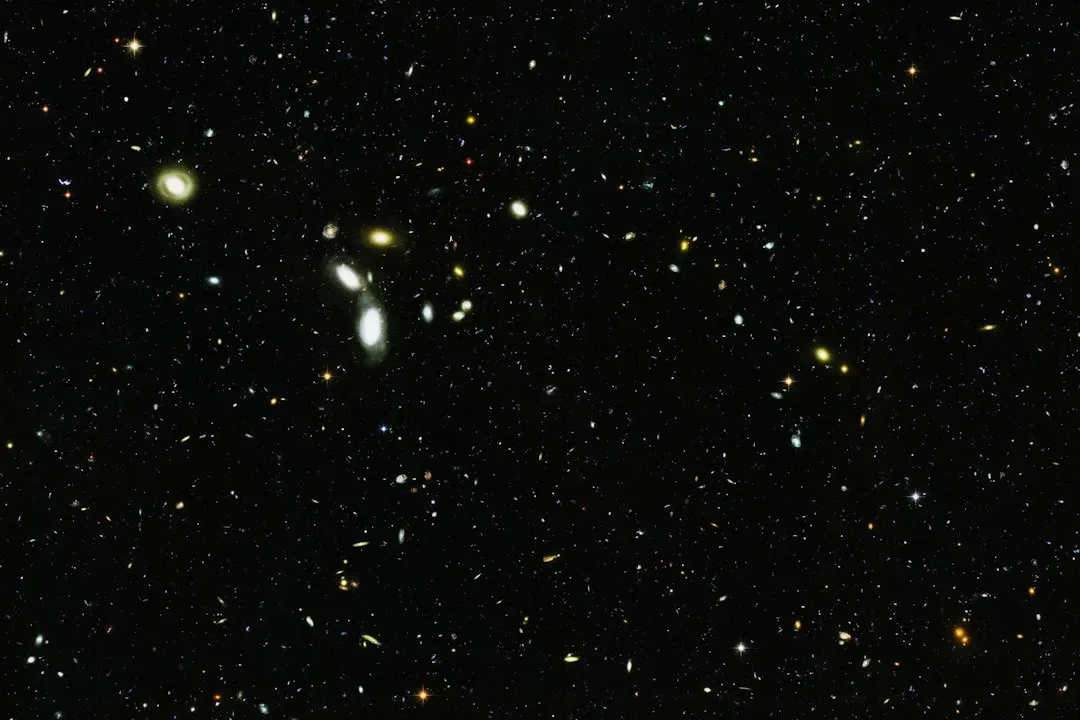
The story starts in the 1930s, when Fritz Zwicky studied galaxies in the Coma Cluster and found they moved too fast to be held together by the visible mass alone. Few people took the puzzle seriously at the time. It sat there for decades.
Then, in the 1970s, Vera Rubin and her colleagues measured how stars orbit within spiral galaxies. The outer stars moved much faster than the visible matter should allow, as if each galaxy sat inside a vast invisible halo. Gravity was clearly at work, but the source wasn’t something telescopes could see.
Why Scientists Think It’s Real Stuff and Not Just Bad Physics
🔥 Would you like to save this?
We'll email this post to you, so you can come back to it later!
A natural question is whether we’ve simply misunderstood gravity. Some researchers explore that idea, with modified gravity theories such as MOND, which tweak the laws at low accelerations. These can handle some galaxy behavior neatly.
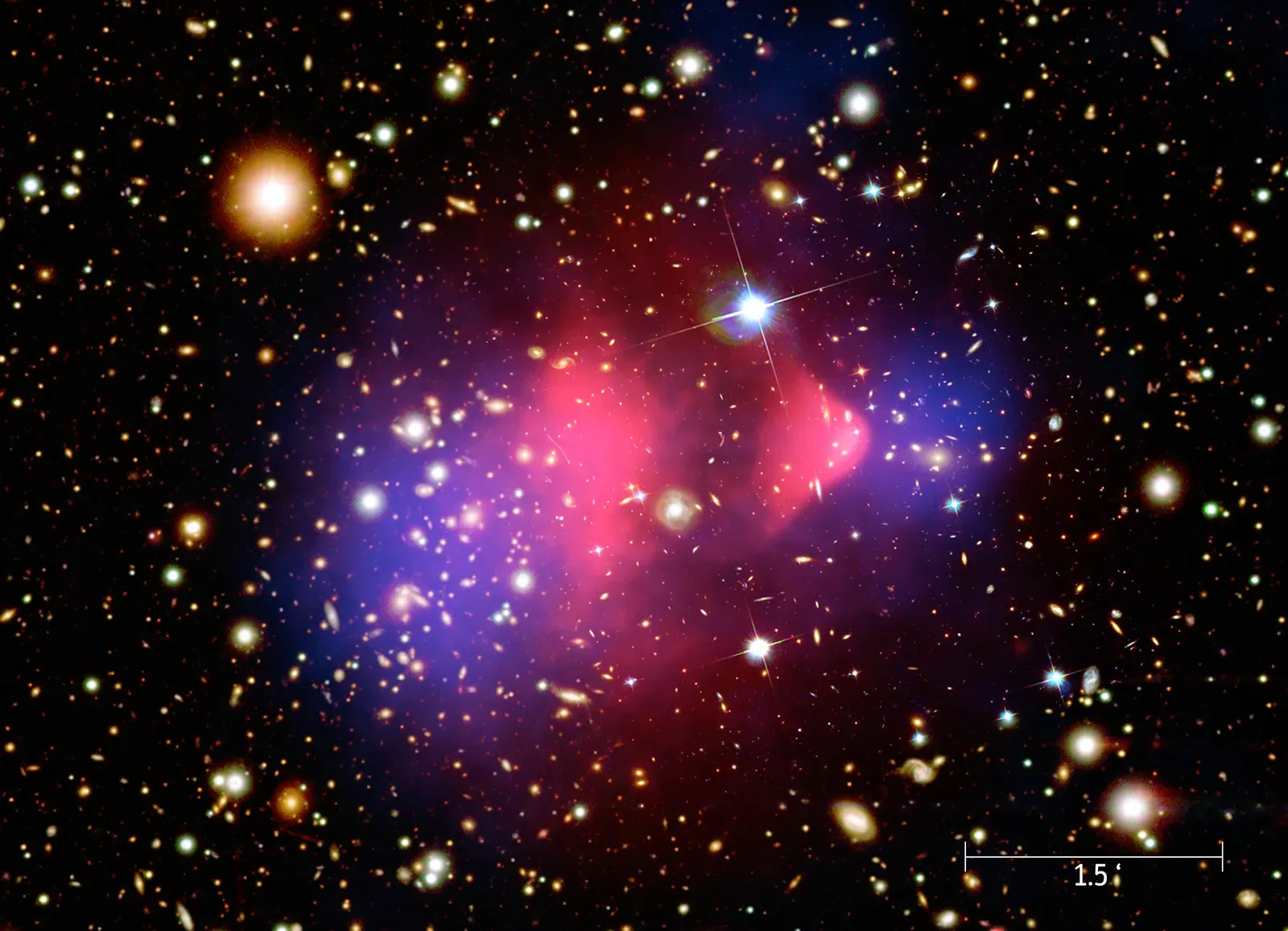
Larger scales are harder for them. Gravitational lensing in colliding galaxy clusters, like the famous Bullet Cluster, shows the bulk of the mass sitting apart from the hot visible gas. The pattern of ripples in the early universe also fits a model with unseen matter far better than one without it. That’s why most cosmologists still favor dark matter as the leading explanation.

Earth Rated XL Dog & Puppy Pee Pads, Discreet Top, Max Absorbency
Check Price on AmazonAs an Amazon Associate, we earn from qualifying purchases.
10/7/2026 1:28 pm GMTi

Halloween Dog Collar with Bow, Orange Cute Ghost Collar,
Check Price on AmazonAs an Amazon Associate, we earn from qualifying purchases.
10/9/2026 2:43 pm GMTi

Halloween Cat Costume Cloak Witch Hat Pet Accessories
Check Price on AmazonAs an Amazon Associate, we earn from qualifying purchases.
10/9/2026 2:44 pm GMTi

Smart Bird Feeder with Camera Solar Powered, 2K HD Live Video, 10,000+ Bird Species AI Identification
Check Price on AmazonAs an Amazon Associate, we earn from qualifying purchases.
10/7/2026 1:22 pm GMTi

PetSafe Oasys Pet Fountain, 1/2 Gallon (64 oz), Small Dogs & Cats
Check Price on AmazonAs an Amazon Associate, we earn from qualifying purchases.
10/8/2026 8:14 am GMTi
The Long Hunt for a Particle Nobody Has Caught
🔥 Would you like to save this?
We'll email this post to you, so you can come back to it later!
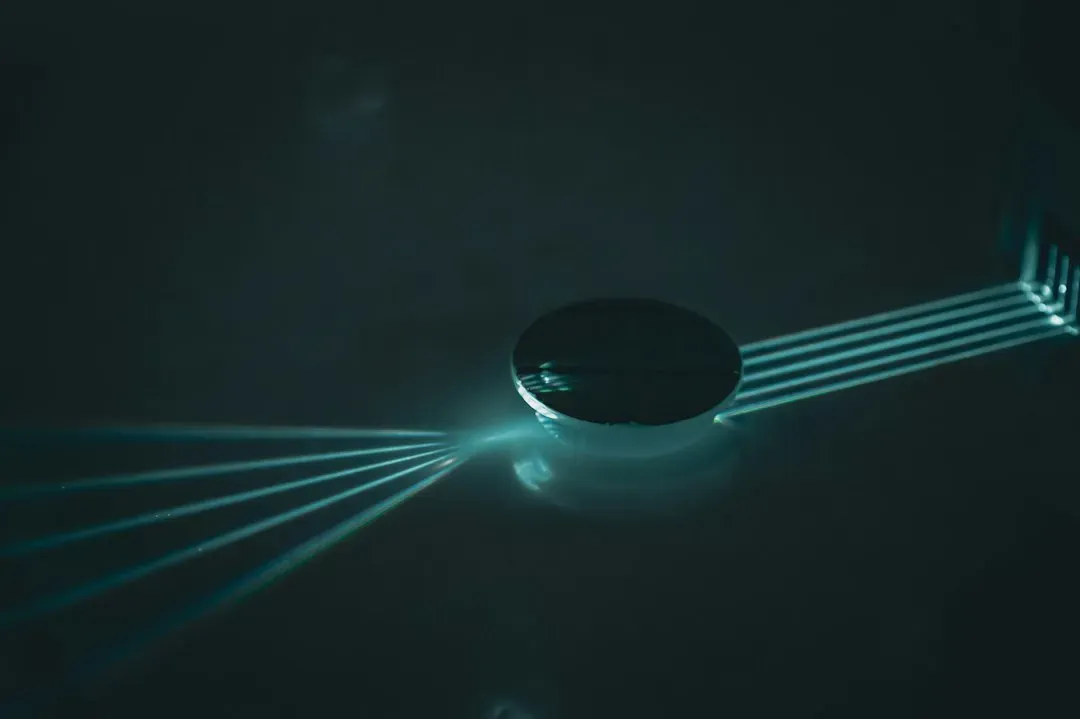
If dark matter is a particle, it would be drifting through your body right now without any noticeable effect. Experiments have spent years trying to catch a rare collision. Giant detectors filled with liquid xenon, such as LUX-ZEPLIN and XENONnT, sit deep underground to shield them from cosmic rays.
So far, they’ve found no confirmed signal. Each null result rules out some candidate particles, especially the once popular WIMPs, and pushes attention toward alternatives like axions and other lighter possibilities. Absence of evidence isn’t proof of absence here, but the search has narrowed the field in a real way.
Dark Energy and the Surprise of an Accelerating Universe
🔥 Would you like to save this?
We'll email this post to you, so you can come back to it later!
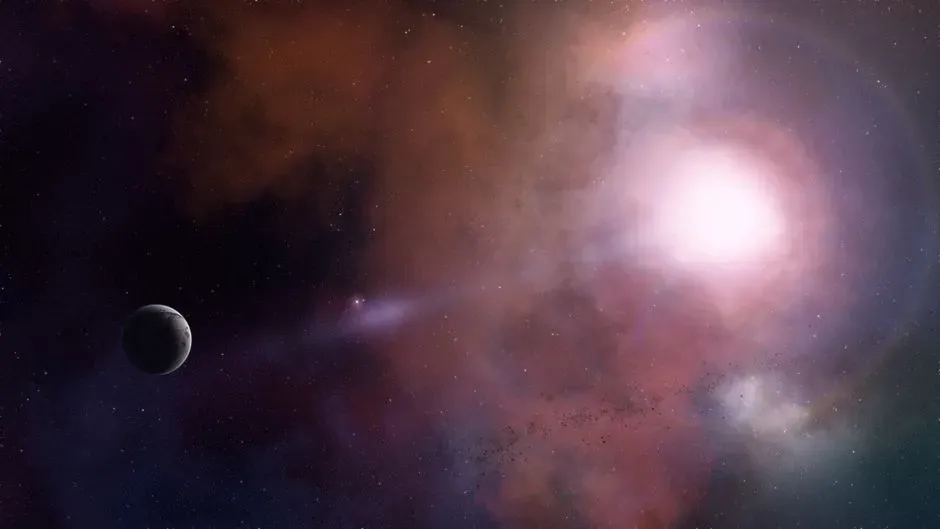
In the late 1990s, two teams studying distant exploding stars expected to see the universe’s expansion slowing down. They found the opposite, and the expansion was speeding up. That discovery earned the 2011 Nobel Prize in Physics.
The label dark energy is basically a placeholder for whatever drives that acceleration. The simplest version is a constant energy woven into space itself, often called the cosmological constant. It fits a lot of data, though nobody can explain why it has the value it does.

Glass Hummingbird Feeder for Outdoors Hanging, 16 oz Leak-Proof Nectar Feeder with Bee Guards & Ant Moat
Check Price on AmazonAs an Amazon Associate, we earn from qualifying purchases.
10/7/2026 1:22 pm GMTi

Hand Blown Glass Hummingbird Feeders for Outdoors Hanging, 24oz Wild Bird Nectar Feeder
Check Price on AmazonAs an Amazon Associate, we earn from qualifying purchases.
10/7/2026 1:23 pm GMTi

Air Purifiers for Home Pets Large Room Up to 3000 Ft²,HEPA Air Cleaner with Washable Double-Side Filter, PM2.5 Air Quality Monitor,15dB Sleep Mode for Bedroom Odor Dust Pollen,White
Check Price on AmazonAs an Amazon Associate, we earn from qualifying purchases.
10/8/2026 8:23 am GMTi

Orthopedic Extra Large Dog Bed, Waterproof Washable XL Pet Bed 44"
Check Price on AmazonAs an Amazon Associate, we earn from qualifying purchases.
10/7/2026 1:32 pm GMTi

Glass Hummingbird Feeder for Outdoors Hanging
Check Price on AmazonAs an Amazon Associate, we earn from qualifying purchases.
10/7/2026 1:21 pm GMTi
Cracks, Clues and the Road Ahead
🔥 Would you like to save this?
We'll email this post to you, so you can come back to it later!
The standard model isn’t entirely smooth. Measurements of how fast the universe is expanding today don’t quite agree with predictions from the early universe, a disagreement known as the Hubble tension. Recent results from the DESI survey have also hinted that dark energy might change over time, though that evidence is still being tested and isn’t settled.
New tools are lining up to help. The Euclid space telescope and the Vera C. Rubin Observatory are mapping huge swaths of the sky, and underground detectors keep growing in sensitivity. Whether they confirm the current picture or force a rewrite, the next several years should sharpen things considerably.

Dog Stairs for Bed 18" H, 4-Step Dog Steps for High Bed
Check Price on AmazonAs an Amazon Associate, we earn from qualifying purchases.
10/9/2026 2:42 pm GMTi

Portable Dog Water Bottle Foldable Dog Travel Water Bottle
Check Price on AmazonAs an Amazon Associate, we earn from qualifying purchases.
10/7/2026 1:29 pm GMTi

Professional 7 in 1 Dog Paw Cleaner for Dogs & Cats - Includes 1 Portable Paw Washer, 1 Bath Brush
Check Price on AmazonAs an Amazon Associate, we earn from qualifying purchases.
10/7/2026 1:26 pm GMTi

2 Pcs Halloween Pet Hat Bandana Set, Witch Pumpkin Costumes for Dogs
Check Price on AmazonAs an Amazon Associate, we earn from qualifying purchases.
10/9/2026 2:45 pm GMTi
Final Thoughts
🔥 Would you like to save this?
We'll email this post to you, so you can come back to it later!
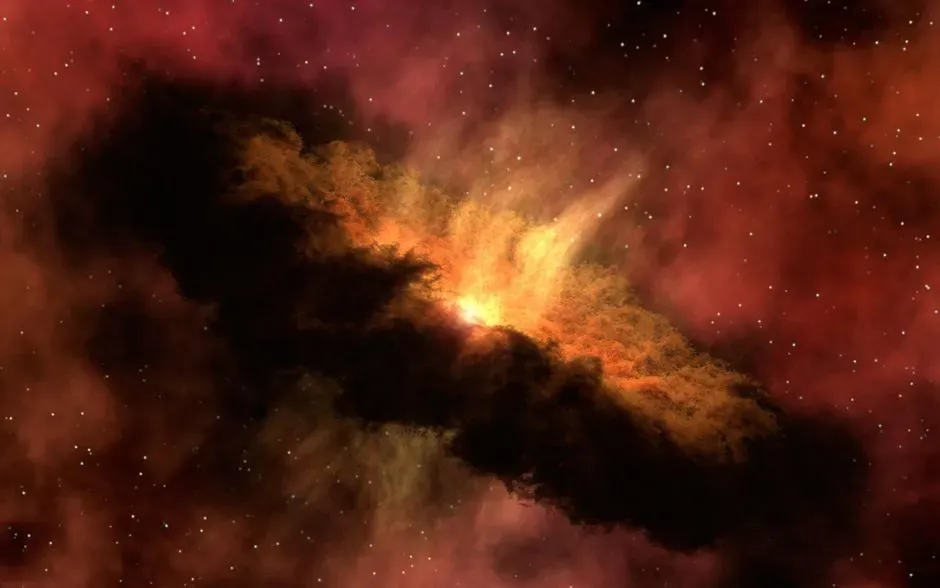
I find it oddly refreshing that science can say, with a straight face, that it has named most of the universe without understanding it. Dark matter and dark energy are less like answers and more like honest bookmarks. They mark exactly where our knowledge stops.
My view is that we should resist both easy extremes: treating these ideas as proven facts about specific substances, or dismissing them as cosmic fudge factors. The evidence for something beyond visible matter is strong. What that something is remains open, and I’d rather live with that open question than a comfortable wrong answer.

- Cosmology Says About 95% of the Universe Is Made of Dark Matter and Dark Energy – Neither of Which Has Ever Been Directly Detected - November 7, 2026
- The Ocean Animal That Matches Your Zodiac Sign’s Personality - November 7, 2026
- Earth Science Says the Green Glow of the Northern Lights Comes From Oxygen Atoms Roughly 100 Kilometers Above the Ground - November 7, 2026