

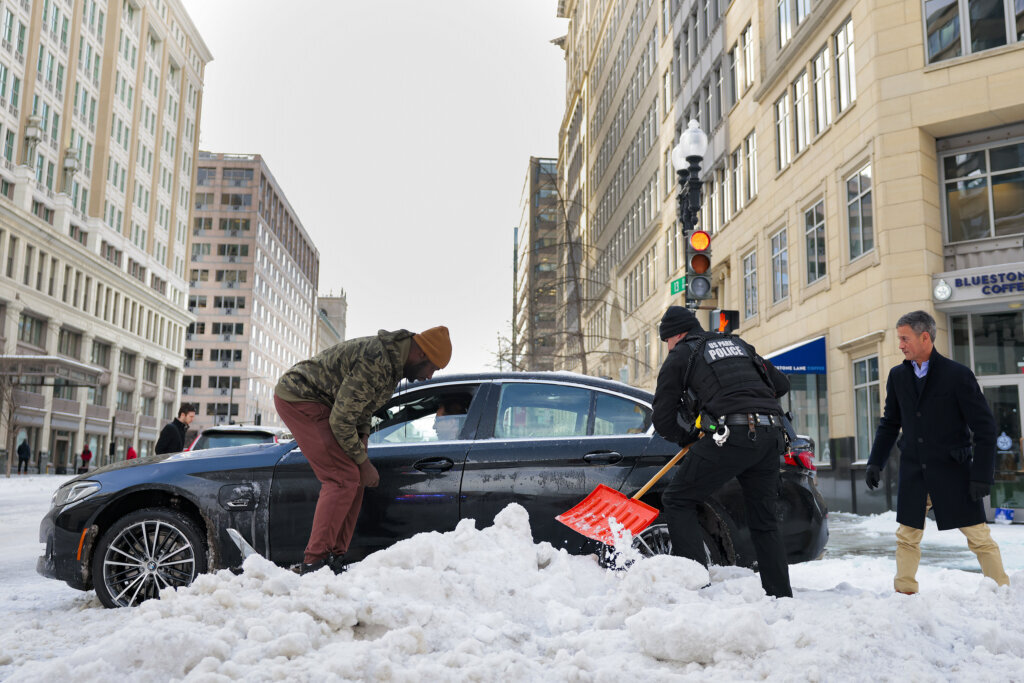
What Turned Snow Into an Ice Fortress (Image Credits: Wtop.com)
Washington, D.C. — Officials outlined the persistent struggle against hardened “snowcrete” blanketing city streets in the wake of a punishing weekend storm, while underscoring tangible advances in restoration efforts.[1][2]
What Turned Snow Into an Ice Fortress
A winter storm dumped 4 to 7 inches of snow across the District on January 24 and 25, followed by several inches of sleet and rain that compacted the accumulation.[2] Frigid temperatures then locked it in place, creating “snowcrete” — a dense, concrete-like layer of ice and snow nearly impossible for standard plows to penetrate.[1]
Clint Osborn, director of the Homeland Security and Emergency Management Agency, described the conditions as “exceptionally dangerous” due to the thick ice crust atop the snow.[1] Days of sub-freezing air, with overnight lows dipping to -3 or -4 degrees Fahrenheit, exacerbated the problem and even snapped some plow blades.[2] Department of Public Works inspector Eric Moseley, a veteran of the agency since 1999, called the buildup “almost like concrete,” noting he had never witnessed anything comparable.[3]
Residents reported treacherous crosswalks and impassable side streets on social media, fueling questions about the city’s preparedness.[4] The equivalent water content rivaled a 20-inch blizzard, officials explained, transforming routine plowing into a marathon operation across 4,416 miles of roadways.[4]
Deploying Heavy Hitters for Breakthroughs
The District ramped up its response with 285 heavy and light plows, supplemented by contracted front loaders, bobcats, and dump trucks to chip away at the frozen masses.[2] Crews shifted to “scoop and haul” tactics, targeting priority corridors like Georgia Avenue, Connecticut Avenue, 16th Street, and Wisconsin Avenue.[3]
Anthony Crispino, interim director of the Department of Public Works, announced plans to introduce even heavier machinery on problem spots, aiming to render streets safely navigable.[1] Workers transported loads to a burgeoning snow field at the former RFK Stadium site — now spanning two football fields in length and two stories high.[2] Heavy salting preceded mechanical pushes, allowing crews to revisit and clear after initial softening.[3]
- 285 plows initially deployed, now aided by specialized heavy equipment.
- Focus on major arteries before residential routes.
- Snow hauled to RFK for centralized melting.
- 311 service calls prioritized for targeted response.
- 85 to 90 percent of roads now car-navigable.
Daily Disruptions and City Adaptations
Mayor Muriel Bowser praised the round-the-clock efforts of snow teams from Public Works and the Department of Transportation, thanking workers for prioritizing safety.[1] The city waived fines for nearly 200 businesses and residents unable to clear sidewalks within eight hours post-storm, with Bowser quipping, “If you feel people are frustrated now, give them a ticket for ‘snowcrete’ they can’t remove.”[2]
D.C. Public Schools planned a two-hour delay for Thursday and Friday reopenings after thorough campus checks, while Metro restored 122 of 126 bus routes and aimed for full weekday service.[1] Trash collection paused, but officials outlined a phased resumption starting with city cans.[4] The snow emergency extended through Thursday morning to facilitate these shifts.[2]
Toward Clearer Paths and Cautious Optimism
Sharon Kershbaum, Department of Transportation director, anticipated “big changes” in the coming days, including lifted parking bans in emergency zones.[1] Yet a cold streak threatened to persist into early February, with forecasts eyeing another coastal system that could add 4 inches of snow this weekend.[2]
- Snowcrete demands heavy equipment beyond standard plows, slowing but not stopping progress.
- Over 85 percent of roads now passable; schools and transit resuming with precautions.
- Fines suspended amid icy sidewalks; focus remains on safety first.
City crews demonstrated grit against an unusually stubborn foe, paving the way for normalcy as temperatures linger low. How has the snowcrete affected your neighborhood? Tell us in the comments.

- Urban Coyotes Show Remarkable Adaptability, Learning to Thrive in City Environments - July 22, 2026
- Beavers Are Nature’s Engineers, Creating Vital Habitats for Other Wildlife Species - July 21, 2026
- The Recovery of the California Condor Offers Hope for Other Critically Endangered Birds - July 21, 2026