

Worried about unexpected vet bills?
Pet insurance can cover thousands in unexpected vet costs. Get a free quote from Lemonade in under 2 minutes.
Get My Free Quote →Sponsored · Opens Lemonade.com
In the mysterious depths of our oceans lives one of nature’s most extraordinary visual artists—the cuttlefish. These remarkable cephalopods possess an unparalleled ability to transform their appearance in milliseconds, producing dazzling displays of colors, patterns, and textures that seem almost magical to human observers. Unlike chameleons, which are often incorrectly cited as the animal kingdom’s premier color-changers, cuttlefish can alter their appearance faster and with greater complexity, creating rippling waves of color that flow across their bodies like living screens. This astonishing capability isn’t merely for show—it serves critical functions in their survival, communication, and hunting strategies. Through specialized skin cells called chromatophores, papillae, and iridophores, cuttlefish have evolved one of the most sophisticated visual communication systems in the animal kingdom, allowing them to flash colors that both communicate with other marine creatures and confuse potential prey.
The Biological Machinery Behind Color Changes

The cuttlefish’s ability to change color relies on a remarkable biological system consisting of three specialized types of cells embedded in their skin. The most numerous are chromatophores—tiny, elastic sacs filled with pigment that can expand or contract under neural control. When a chromatophore expands, its pigment becomes more visible, and when it contracts, the pigment becomes concentrated and less visible. Beneath the chromatophores lie iridophores, which reflect light and produce iridescent blues and greens, and leucophores, which reflect white light and create bright white spots. Together, these three cell types work in concert, allowing cuttlefish to produce a vast palette of colors and patterns. What’s most impressive is the neural control system behind these changes—cuttlefish can independently control thousands of chromatophores, creating intricate patterns in fractions of a second without consciously thinking about each individual cell. This autonomous control system allows them to respond almost instantaneously to environmental changes or social interactions.
Communication Among Cuttlefish: A Visual Language
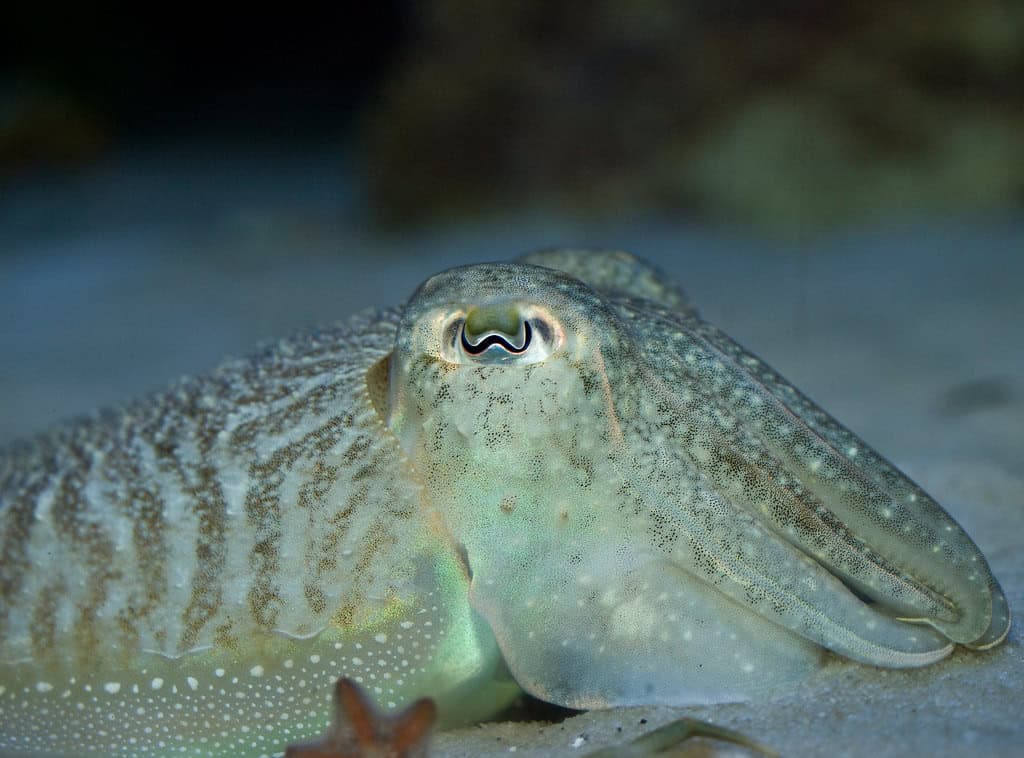
Cuttlefish have developed a sophisticated visual language that rivals human sign language in its complexity. During mating season, males display specific patterns to attract females, often showing split coloration—appearing with one pattern facing a female they’re courting and simultaneously displaying a different pattern on the side facing rival males. This dual signaling allows them to court and warn off competitors simultaneously. Researchers have documented over 30 distinct patterns used in various social contexts, including aggression displays, submission signals, and mating invitations. What makes this communication system particularly fascinating is its speed—cuttlefish can transition between patterns in less than a second, allowing for rapid exchanges of information. Unlike humans who primarily rely on sound for communication, cuttlefish have evolved in an environment where visual signals travel better than acoustic ones, leading to this advanced form of “skin language” that scientists are still working to fully decode.
The Hypnotic Hunting Strategy
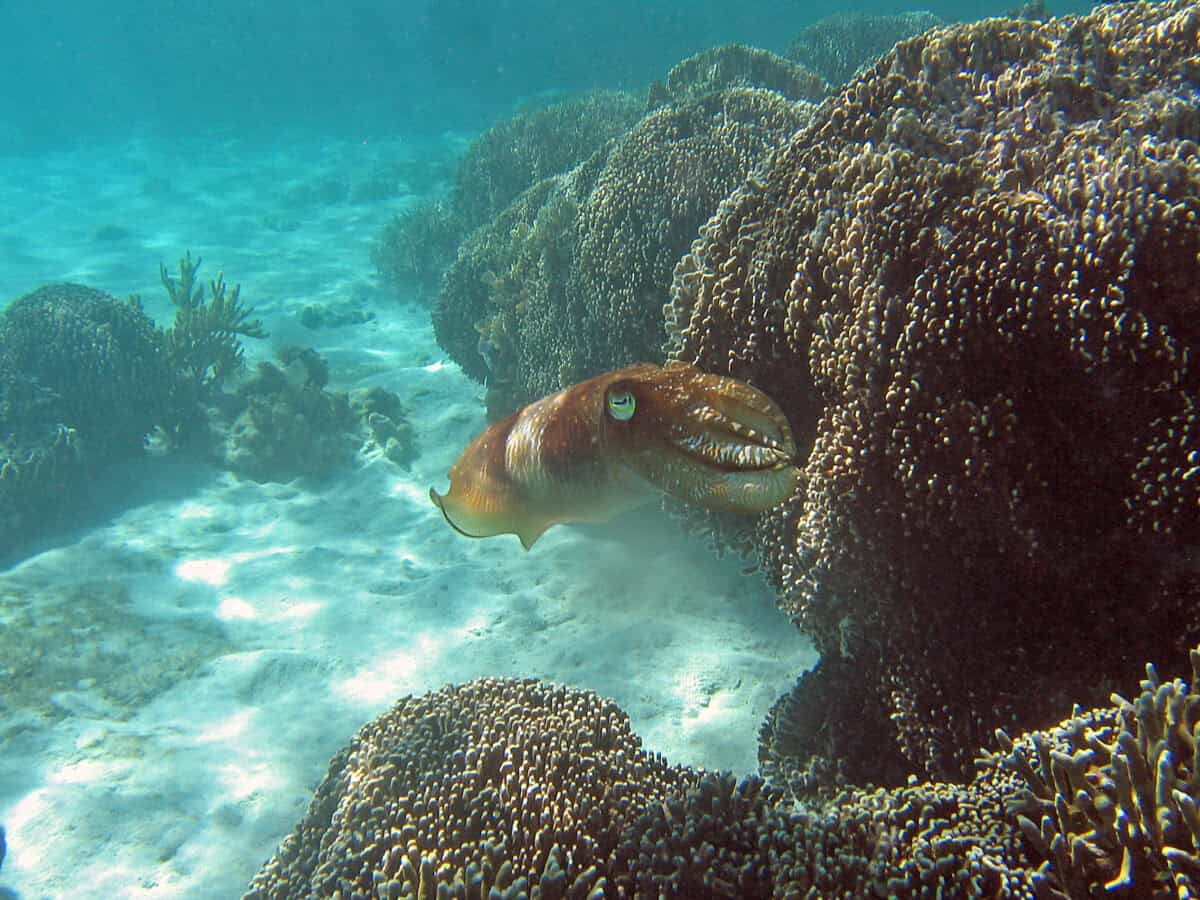
Perhaps the most mesmerizing use of cuttlefish color displays occurs during hunting. Cuttlefish employ a strategy called the “passing cloud” display—a rippling band of dark coloration that moves across their body—to disorient and confuse potential prey. This pulsating pattern creates the illusion of a moving shadow passing overhead, temporarily disorienting small fish and crustaceans. While the prey is momentarily confused about which direction the threat is coming from, the cuttlefish strikes with its two specialized feeding tentacles. These tentacles shoot out at remarkable speed—the entire strike sequence occurs in less than a tenth of a second. The color display essentially serves as a form of visual misdirection, similar to a magician’s sleight of hand. This hunting technique is particularly effective because it exploits fundamental aspects of visual processing in prey animals, which are evolutionarily programmed to respond to sudden changes in light and shadow as potential threats.
Camouflage: The Ultimate Disappearing Act
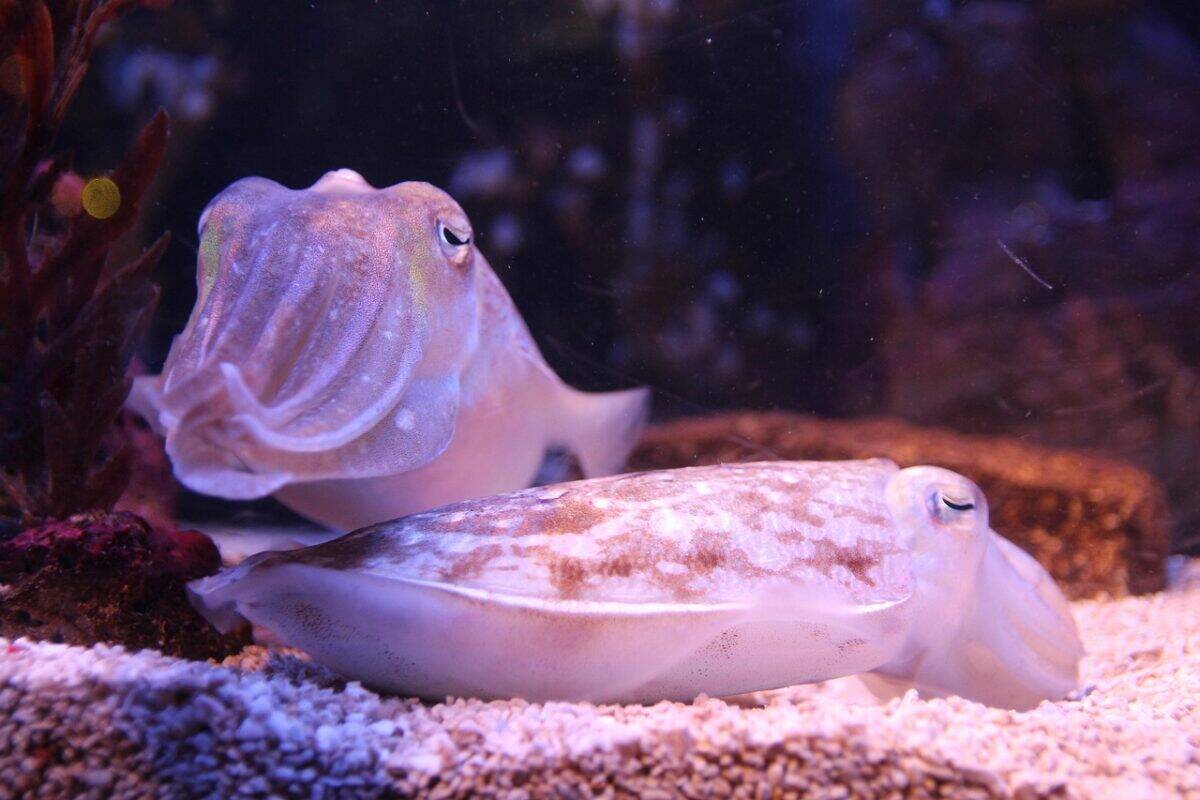
While flashy displays help cuttlefish hunt and communicate, their color-changing abilities also serve a crucial defensive function through camouflage. Cuttlefish can match the color, pattern, and even texture of their surroundings with astonishing accuracy. What makes this ability particularly remarkable is that cuttlefish are colorblind—they see the world in shades of green and blue but can’t perceive red. Yet somehow, they can mimic red backgrounds perfectly. Scientists believe they may be using the brightness and contrast of objects rather than their actual color to create matching patterns. Within seconds of settling on a new background, a cuttlefish analyzes its surroundings and adjusts its appearance accordingly. They can mimic sand, coral, rocks, and even complex patterns like checkerboards in laboratory settings. This camouflage capability is so advanced that it has inspired research in military technology and adaptive camouflage systems. Unlike static camouflage, the cuttlefish’s dynamic approach allows them to remain hidden while moving through constantly changing underwater environments.
Emotional Coloration: Moods on Display
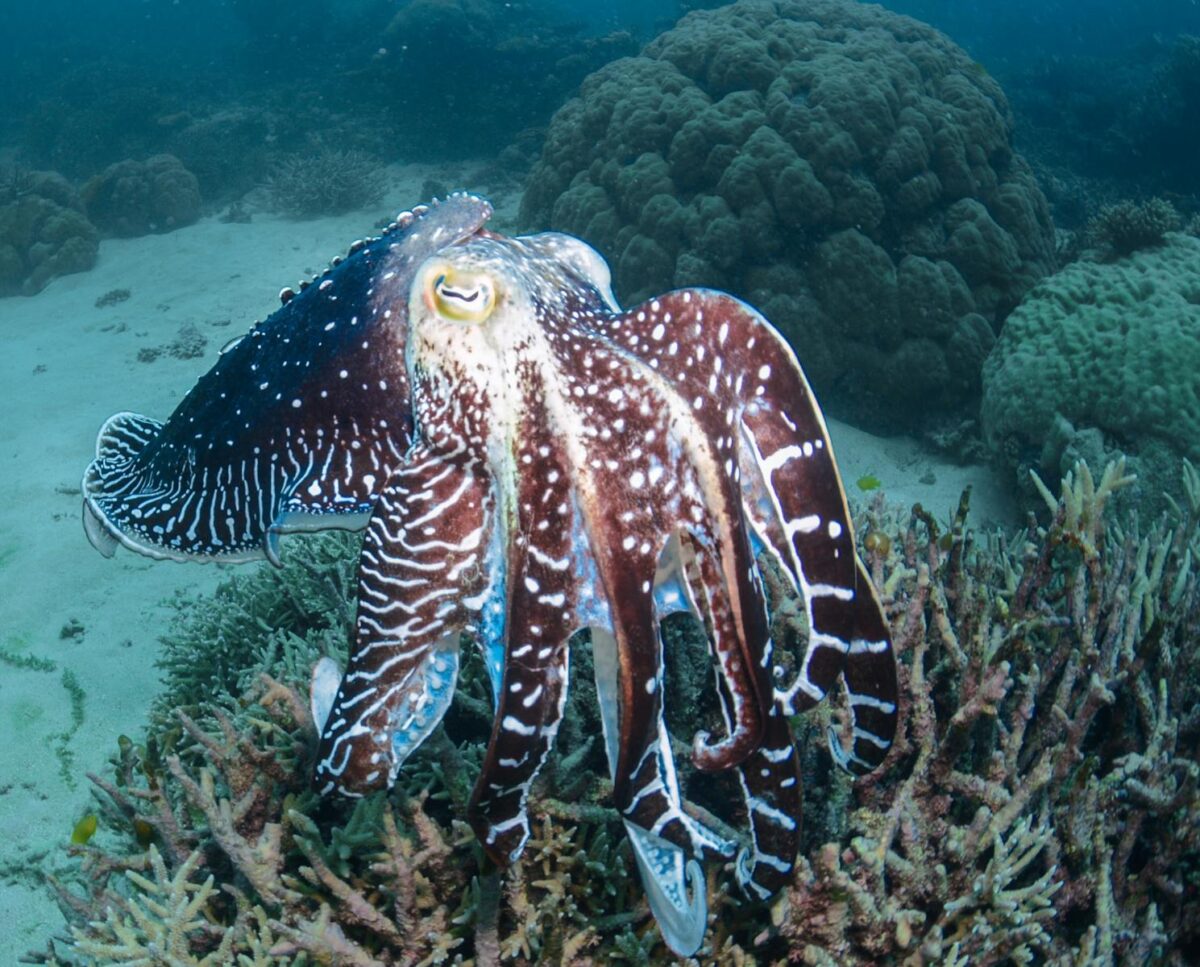
Cuttlefish coloration goes beyond practical hunting and defense—it also serves as a window into their emotional and physiological states. When stressed or alarmed, cuttlefish often display dark bands across their bodies, sometimes accompanied by a blanching of surrounding areas. During courtship, males can show intense zebra-like patterns with high contrast that signal their fitness and readiness to mate. Interestingly, sleeping cuttlefish display distinctive two-toned patterns, with a pale top and darker underside, suggesting that color control has some autonomic components that continue even during rest. Researchers have even observed what appears to be color displays associated with learning and problem-solving—cuttlefish working on cognitive tasks sometimes exhibit specific patterns that may indicate concentration or processing. This transparent display of internal states makes cuttlefish excellent subjects for studying emotions in non-mammalian species and challenges our understanding of how emotions manifest across different evolutionary lineages.
The Arms Race with Prey Species

The hypnotic hunting strategy of cuttlefish represents one move in an ongoing evolutionary arms race with their prey. Many prey species have developed countermeasures against the cuttlefish’s visual manipulation. Some crustaceans have evolved visual systems that are less susceptible to the disorienting effects of passing cloud displays. Certain fish species have learned to recognize the characteristic shape of a camouflaged cuttlefish and will flee even when the cuttlefish appears perfectly matched to its background. This ongoing adaptation and counter-adaptation has pushed cuttlefish to develop increasingly sophisticated visual displays. Recent research suggests that cuttlefish can adjust their hunting techniques based on the specific prey species they’re targeting, using different patterns and approaches depending on whether they’re hunting visually sensitive fish or tactile-oriented crustaceans. This demonstrates not just the sophistication of their color-changing abilities, but also their cognitive flexibility in deploying these abilities strategically based on context and target.
The Neural Control System: A Brain Dedicated to Color

The neural architecture supporting the cuttlefish’s color-changing abilities is as impressive as the visual displays themselves. A significant portion of the cuttlefish brain is dedicated solely to processing visual information and controlling chromatophores. Unlike human color production, which requires conscious thought and external tools, the cuttlefish’s color changes are handled by specialized brain regions that operate semi-autonomously. This allows for both conscious control when needed (such as during communication) and automatic responses to environmental stimuli (like camouflage). Neuroimaging studies have revealed that the optic lobes of cuttlefish—regions that process visual information—are proportionally much larger than in most other animals, comprising a substantial percentage of their total brain volume. Each chromatophore is controlled by multiple motor neurons, allowing for fine-grained adjustments in size and color intensity. This neural investment reflects the evolutionary importance of visual communication and camouflage to cuttlefish survival, and represents one of the most direct brain-to-skin control systems known in the animal kingdom.
Color Changes in Social Hierarchies

Cuttlefish use their color-changing abilities to establish and maintain social hierarchies within groups. Dominant males often display bright, high-contrast patterns that signal their status to potential rivals. These displays typically feature bold zebra stripes or mottled patterns that highlight the animal’s size and vitality. Subordinate males, by contrast, may adopt more muted patterns or even female-mimicking displays to avoid confrontation with dominant individuals. During competitive interactions, cuttlefish engage in escalating visual displays before resorting to physical contact, with each animal trying to outdo the other with increasingly intense color patterns. These visual showdowns allow cuttlefish to resolve conflicts with minimal physical risk, as determining dominance through display rather than combat reduces the chance of injury. Research has shown that winners of these display contests enjoy preferential access to females and prime hunting territories, demonstrating the real-world advantages conveyed by mastery of color communication.
Adaptation to Local Environments

Cuttlefish species around the world have evolved regional variations in their color-changing abilities that reflect their local environments. Species living in the vibrant, colorful coral reefs of tropical waters typically have more complex chromatophore arrangements and can produce more varied patterns than their counterparts from sandy or muddy habitats. These adaptations match the visual complexity of their surroundings. For example, the flamboyant cuttlefish (Metasepia pfefferi) found in tropical Indo-Pacific waters has evolved particularly dramatic color displays featuring bright yellows, reds, and purples—colors that stand out dramatically against its habitat. By contrast, the European common cuttlefish (Sepia officinalis) tends toward more subdued browns, grays, and mottled patterns that blend with the rocky and sandy bottoms of the Mediterranean and Eastern Atlantic. These regional adaptations demonstrate how natural selection has fine-tuned the color-changing capabilities of different cuttlefish species to match the specific visual environments they inhabit, optimizing both their hunting success and predator avoidance.
Limitations and Vulnerabilities

Despite their remarkable color-changing abilities, cuttlefish do face limitations and vulnerabilities in their visual communication system. Their colorblindness presents a significant constraint—while they can match colors they cannot see (like red), they do so through brightness and pattern matching rather than true color perception. This creates situations where their camouflage might be less effective against predators with more sophisticated color vision. Additionally, their reliance on visual communication makes them vulnerable in low-light conditions or murky waters where visibility is reduced. Some predators, particularly dolphins and sharks, have evolved to detect the subtle movements of cuttlefish chromatophores even when they’re attempting to remain camouflaged. Climate change poses another threat, as ocean acidification may affect the development and functionality of chromatophores in developing cuttlefish. Research has shown that cuttlefish raised in more acidic water conditions typical of projected future oceans show reduced complexity in their color displays and slower response times, potentially compromising both their communication and hunting abilities.
Learning and Adaptation in Individual Cuttlefish

Beyond the species-level adaptations, individual cuttlefish demonstrate remarkable learning abilities related to their color displays. Young cuttlefish are not born with a complete repertoire of patterns—they learn and refine their displays through observation and experience. Laboratory studies have shown that juvenile cuttlefish exposed to various backgrounds develop more complex camouflage abilities than those raised in visually simple environments. They can also learn from successful hunting experiences, refining their passing cloud displays based on which variations proved most effective with particular prey types. This capacity for learning extends to social interactions as well, with cuttlefish adjusting their communication displays based on the responses they receive from conspecifics. Fascinatingly, there appears to be individual variation in color-changing proficiency—some cuttlefish consistently produce more effective camouflage or more persuasive mating displays than others. This individual variation provides the raw material for natural selection, potentially driving the continued evolution of ever more sophisticated color-changing abilities in future generations of cuttlefish.
The Future of Cuttlefish Research and Conservation

The remarkable color-changing abilities of cuttlefish continue to inspire both scientific research and technological innovation. Scientists are using advanced imaging techniques to decode the full vocabulary of cuttlefish skin patterns, creating the first comprehensive dictionaries of cephalopod visual language. This research not only enhances our understanding of animal communication but also provides insights into the evolution of complex signaling systems. Engineers are developing biomimetic materials inspired by cuttlefish skin that can change color or texture on command, with potential applications ranging from military camouflage to adaptive architecture. However, these fascinating creatures face increasing threats from ocean warming, acidification, habitat destruction, and overfishing. Conservation efforts are critical to ensure that future generations will be able to witness and study these masters of visual communication. By protecting cuttlefish habitats and implementing sustainable fishing practices, we can help preserve these remarkable animals whose sophisticated color displays still have much to teach us about communication, perception, and the endless creativity of evolutionary adaptation.
Worried about unexpected vet bills?
Pet insurance can cover thousands in unexpected vet costs. Get a free quote from Lemonade in under 2 minutes.
Get My Free Quote →Sponsored · Opens Lemonade.com

- The Impact of Boat Noise on Dolphin Communication - June 11, 2026
- 20 Baby Animals Too Cute to Handle - June 11, 2026
- Meet 10 Cat Breeds That Make Great Home Guardians - June 11, 2026