
Ask almost anyone to name the fastest dog on Earth and the answer comes back in half a second: the Greyhound. Case closed. Except the paperwork says otherwise. Guinness lists Star Title, a Greyhound, at 41.83 mph on a straight track. Yet in 1996, Guinness listed a Saluki at 42.8 mph.
That’s only the start. A long-haired aristocrat, a cuddly red family dog and a glamorous show dog are all quietly closing in on 40 mph. Many of the “top speeds” you see online come from sources that can’t agree with each other. So here is the ranking, what the numbers really say, and the one matchup that might change who you’d bet on.
#9 – The 30 mph Club: Shepherds, Collies, Huskies and Poodles
🔥 Would you like to save this?
We'll email this post to you, so you can come back to it later!
The dogs owners brag about as “fast” barely register on this list.
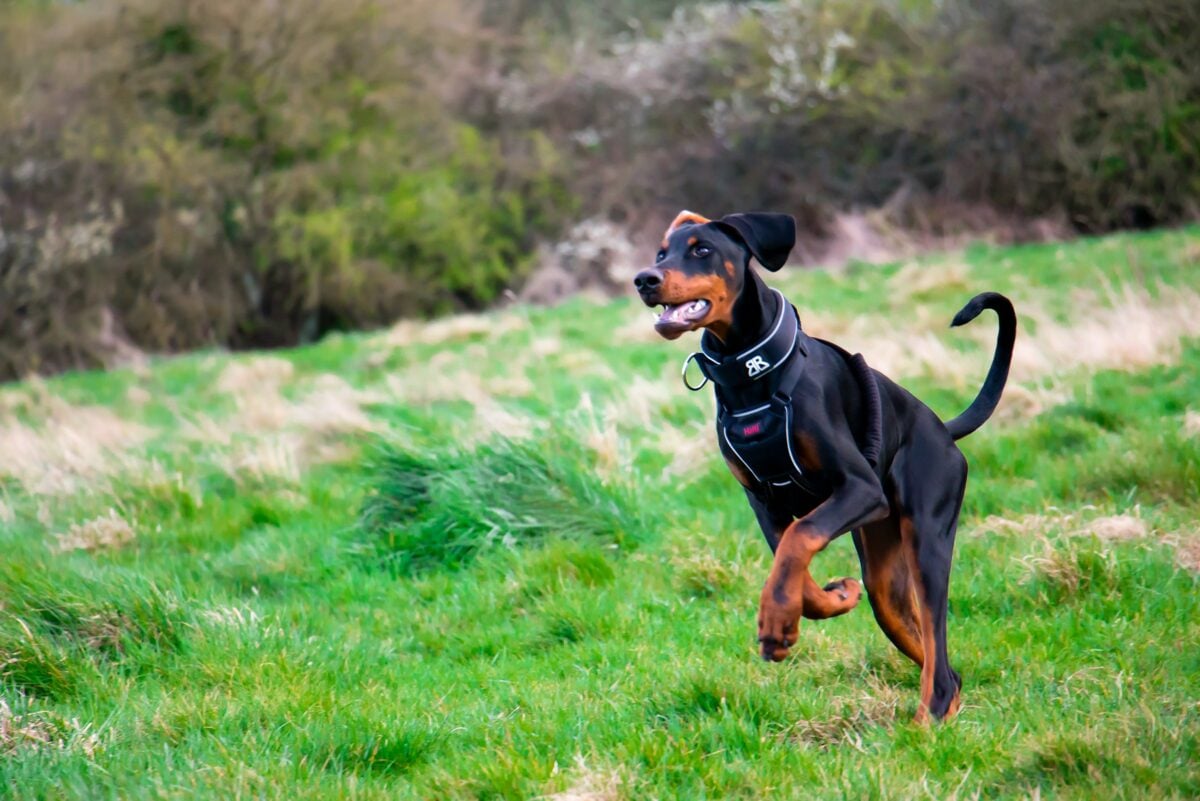
Medium-to-large breeds like German Shepherds and Labrador Retrievers typically max out around 30 mph. One German Shepherd named Duska was clocked at 31.37 mph. That is a real athletic feat, but it is the entry ticket here, not the podium.
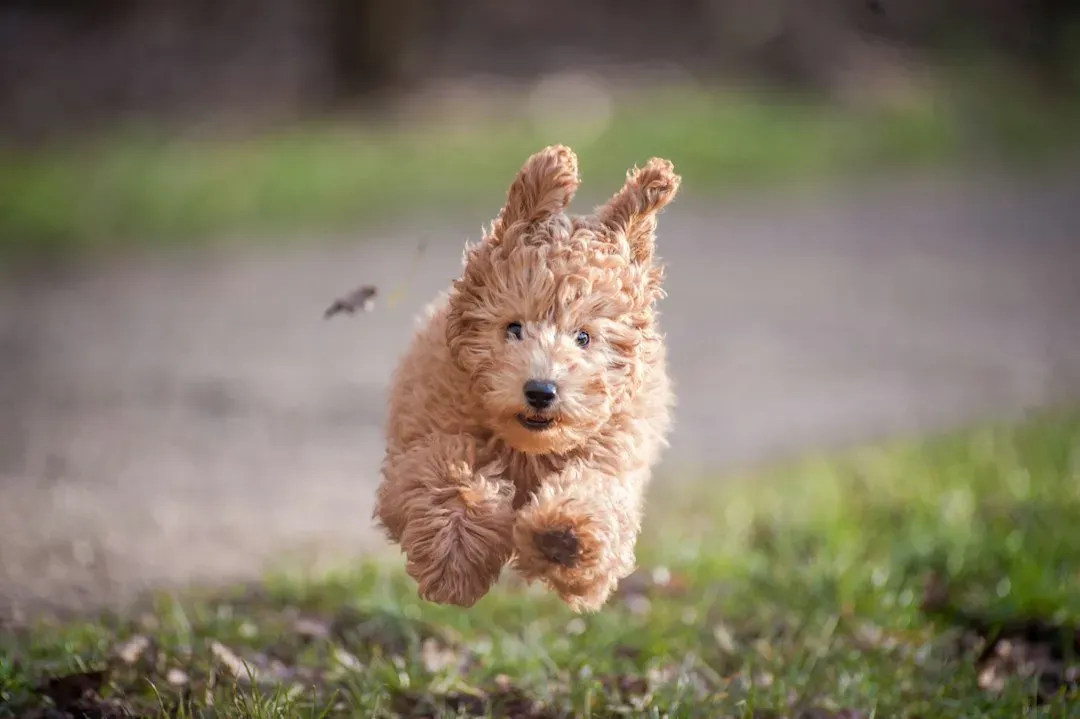
Border Collies and Siberian Huskies are also usually listed at about 30 mph. The Husky was bred to pull light loads over long distances in brutal cold, so its gift is efficiency, not flash. Then there’s the real surprise. Standard Poodles, so often dismissed as couch potatoes, can reach around 30 mph (48 km/h). Remember that this breed started out as a water retriever, built to launch itself after ducks.
The 30 mph group in short:
- German Shepherd: about 30 mph
- Border Collie: about 30 mph
- Siberian Husky: about 30 mph
- Standard Poodle: about 30 mph
For context, the average adult dog manages roughly 15–20 mph in a short sprint, while an elite human sprinter peaks at 27–28 mph. So these breeds are quick. They are also nowhere near the top.
Many owners swear the Border Collie is the best canine athlete alive. On straight-line speed, the numbers say otherwise. Herding agility, stamina and sprint speed are different skills, and speed lists mostly measure only one of them.
But the next breed started out with a very different job description, and it isn’t a runner’s résumé…
#8 – Doberman Pinscher: The Bodyguard That Can Actually Sprint
🔥 Would you like to save this?
We'll email this post to you, so you can come back to it later!
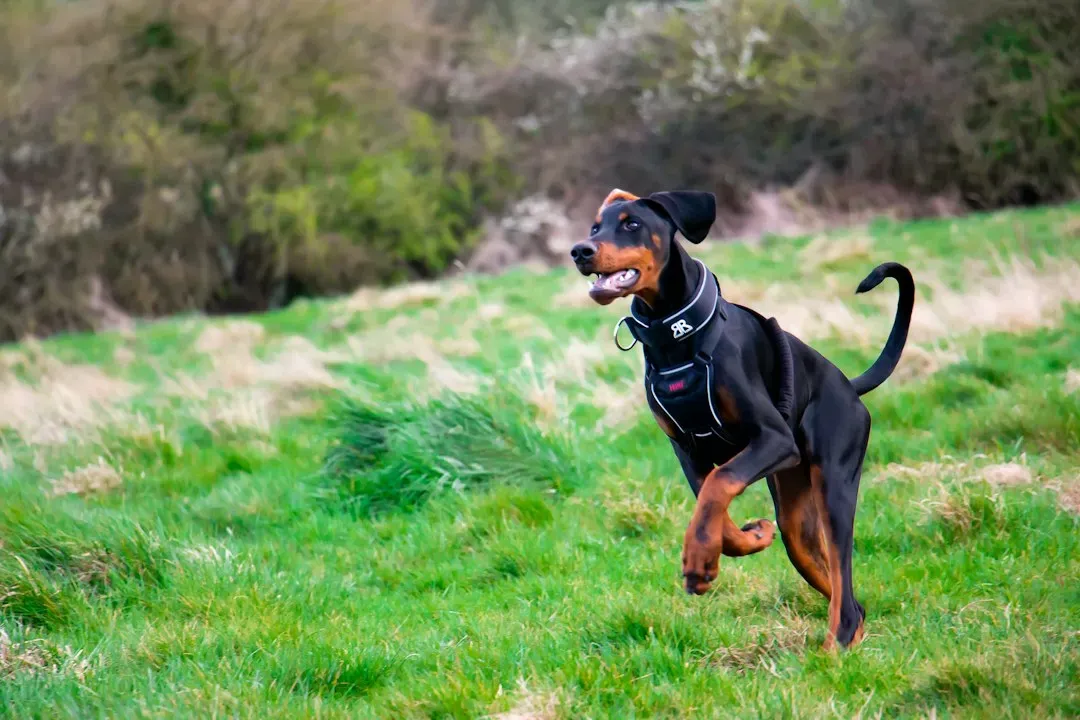
Nobody designed this dog for a racetrack, and it still hits 32 mph.
The Doberman was developed in 19th-century Germany as a personal protection dog, earning the nickname “Tax Collector’s Dog.” The breed is tied to Louis Dobermann, a tax collector who wanted a formidable partner on his rounds. Its job was to stop trouble, not chase hares across a field.
Even so, Dobermans can reach about 32 mph (51 km/h). A dog built to guard a tax collector can outrun a Border Collie and a German Shepherd. That tells you how much raw athleticism sits in a lean, muscular frame with long legs and a deep chest.
Why it lands here:
- Top speed: about 32 mph
- Origin: Germany, 19th century
- Original role: personal protection
Sources describe the breed as intelligent and well suited to working roles. That brains-plus-power combination is why you see Dobermans in protection and working jobs, not on racing circuits.
Here’s the unpopular opinion. Speed lists tend to flatter working breeds and punish sighthounds for being “just” fast. A Doberman’s 32 mph comes with a body built for control and power. Sighthounds are built to chase down prey in a straight line, and that is a different engineering brief.
Think of the Doberman as the best all-rounder in the group below the real speedsters. Next up is a breed that looks like it belongs in a museum, and it clocks a similar speed…
#7 – Borzoi: The Elegant Giant That Runs Like a Sprinter
🔥 Would you like to save this?
We'll email this post to you, so you can come back to it later!
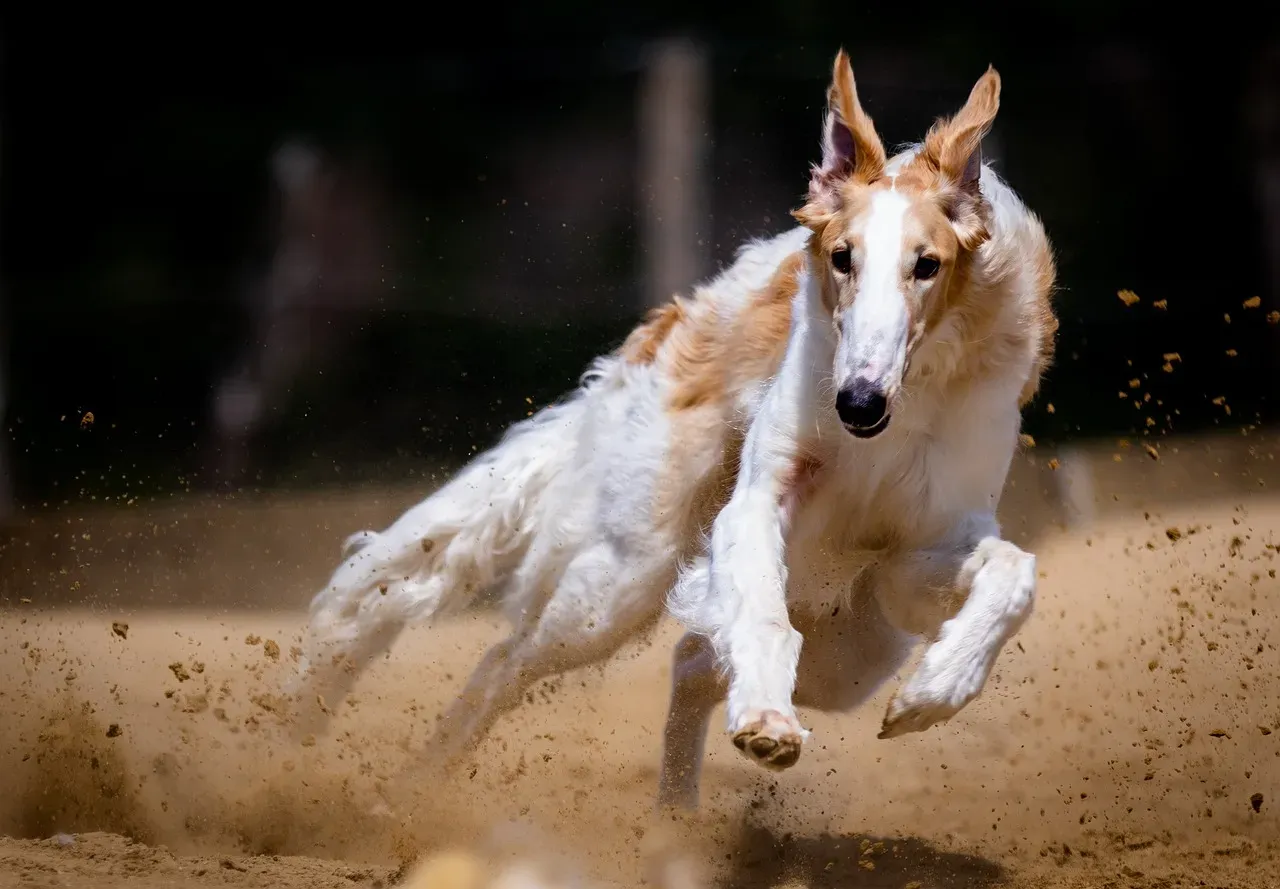
Looks can fool you: this long-haired aristocrat is a serious runner.
Borzoi top out at about 35 mph. Other lists put the figure at 34 mph. That one-mph gap is a reminder that most breed speeds are estimates. They aren’t lab-certified measurements.
The Borzoi is a Russian sighthound historically associated with hunting wolves, and its name comes from a Russian word for “swift.” Sighthounds track prey by sight across open ground, not by scent. That is why their bodies look the way they do: long legs, deep chests and flexible spines.
A large dog carrying a big frame can still run roughly as fast as a Whippet. That is unusual, because size normally works against top-end speed. Picture a dog that stands taller than most coffee tables, then picture it doing double the speed of the average pet.
Quick facts:
- Estimated top speed: 34–35 mph
- Type: sighthound
- Build: large, long-legged, deep-chested
The average speed for all breeds combined is between 15 and 20 mph. The Borzoi is running at roughly double that.
One caution. Many lists rank the Borzoi right next to the Whippet and treat decimal points as gospel. Don’t. The honest takeaway is that both live in the mid-30s.
The next breed is smaller, but it has a nickname that tells you how seriously people once took its speed…
#6 – Whippet: The “Poor Man’s Racehorse” With a Hidden Superpower
🔥 Would you like to save this?
We'll email this post to you, so you can come back to it later!
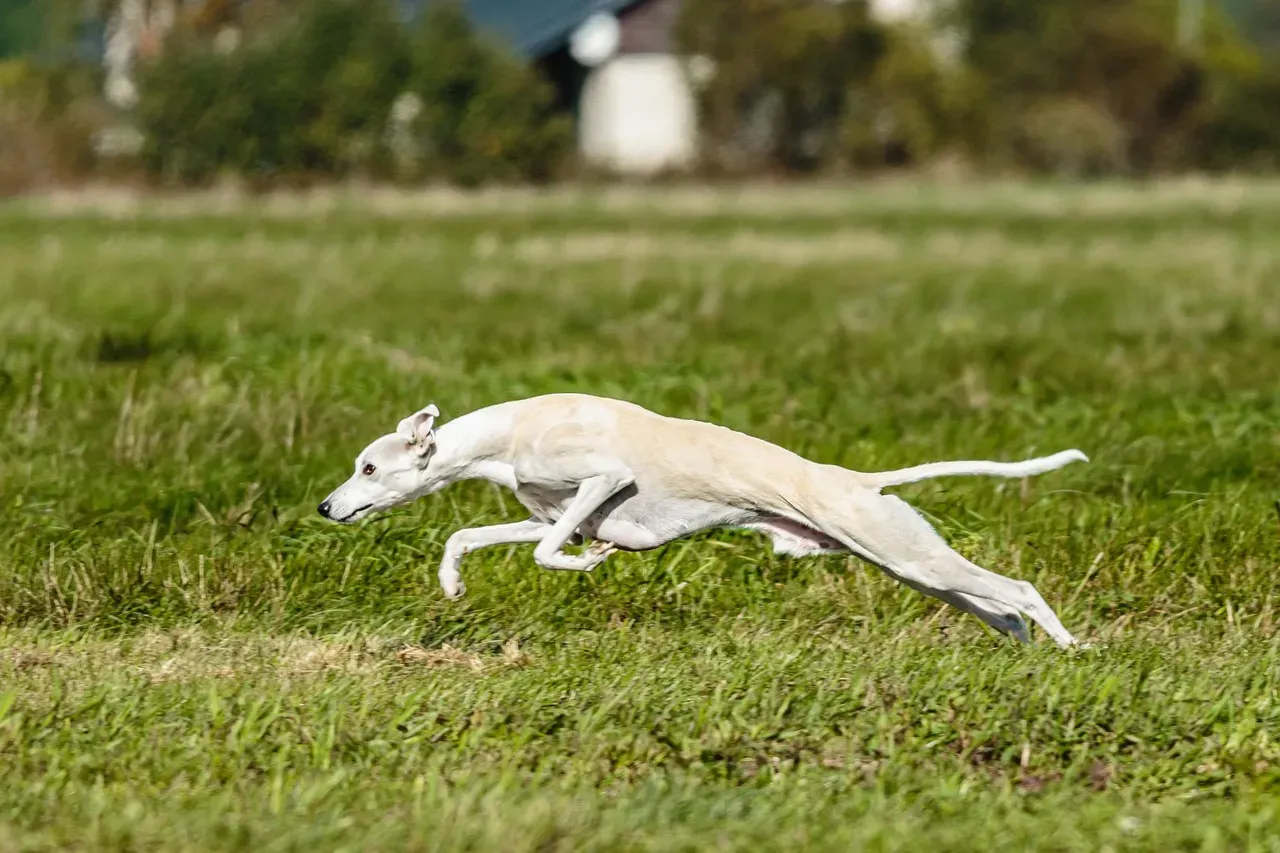
Pound for pound, no dog accelerates like this one.
The Whippet is nicknamed the “poor man’s racehorse” because working-class people in England raced them for sport. It originated in Northern England, bred from the Greyhound crossed with terriers. Owners wanted a fast dog that cost far less to keep than a horse or a full-size racing Greyhound.
Most lists give the Whippet a top speed of about 35 mph. One puts it at 36 mph over short distances. Another puts it at 40 mph. The spread is real, so treat any single figure with caution.
The number that matters may be acceleration. The Whippet has the fastest running speed within its weight and size range and is believed to have the fastest idle-to-running acceleration of any dog. Standing still to full sprint is where it shines.
What makes it work:
- Lightweight, lean body
- High lung capacity
- A sleek, S-shaped silhouette with long legs
Quick Compare: Whippet vs. Greyhound
| Trait | Whippet | Greyhound |
|---|---|---|
| Typical weight | About 25–40 lb | About 60–70 lb |
| Typical height | About 18–22 in | About 27–30 in |
| Known for | Explosive acceleration | Top-end speed and stamina |
That size gap is the point. Despite being roughly half the Greyhound’s weight, the Whippet’s body is built for speed. You could argue the Whippet is the better-designed athlete and the Greyhound is simply the bigger engine.
And the next entry is a small dog with a very big claim, one that is more disputed than you might think…

Smart Bird Feeder with Camera Solar Powered, 2K HD Live Video, 10,000+ Bird Species AI Identification
Check Price on AmazonAs an Amazon Associate, we earn from qualifying purchases.
10/7/2026 1:22 pm GMTi

Portable Dog Water Bottle Foldable Dog Travel Water Bottle
Check Price on AmazonAs an Amazon Associate, we earn from qualifying purchases.
10/7/2026 1:29 pm GMTi

Orthopedic Extra Large Dog Bed, Waterproof Washable XL Pet Bed 44"
Check Price on AmazonAs an Amazon Associate, we earn from qualifying purchases.
10/7/2026 1:32 pm GMTi

Earth Rated XL Dog & Puppy Pee Pads, Discreet Top, Max Absorbency
Check Price on AmazonAs an Amazon Associate, we earn from qualifying purchases.
10/7/2026 1:28 pm GMTi

Professional 7 in 1 Dog Paw Cleaner for Dogs & Cats - Includes 1 Portable Paw Washer, 1 Bath Brush
Check Price on AmazonAs an Amazon Associate, we earn from qualifying purchases.
10/7/2026 1:26 pm GMTi
#5 – Jack Russell Terrier: The Fastest Small Dog? It Depends Who You Ask
🔥 Would you like to save this?
We'll email this post to you, so you can come back to it later!
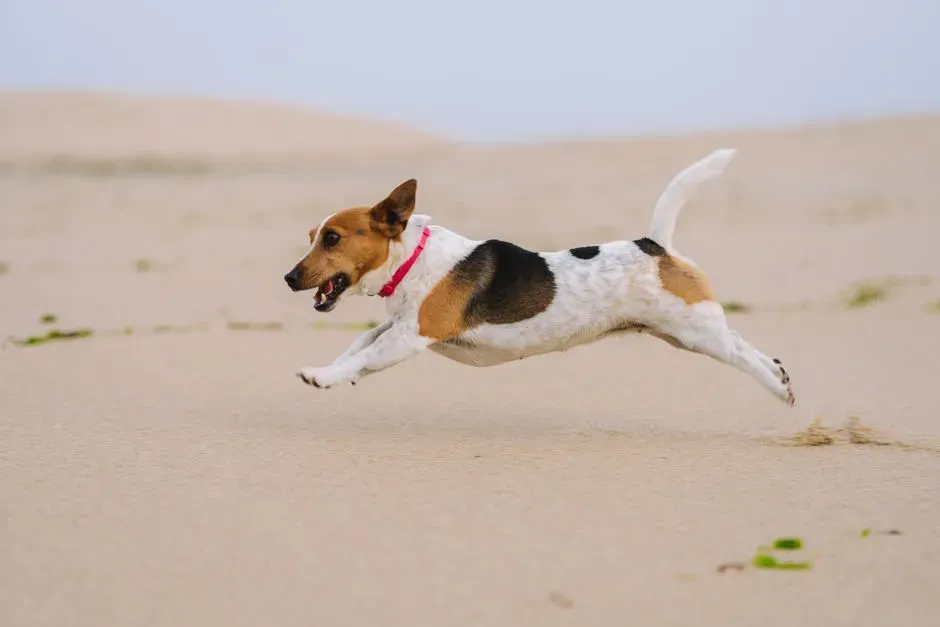
This pint-sized terrier shows up near the top of some lists and in the middle of others.
Jack Russells were originally bred for fox hunting and small game, and one list gives them a top speed of 38 mph (61 km/h). That would put them ahead of the Whippet. The breed takes its name from a 19th-century English parson, the Reverend John “Jack” Russell, who wanted a dog with the nerve and energy to keep pace with a fox hunt.
But another source lists the Jack Russell at 35 mph. Horse & Hound puts it at 30 mph and notes that the short legs don’t lend themselves to natural aerodynamics. That is an eight-mph swing for the same dog.
Here is how the estimates compare:
- 38 mph: one popular ranking
- 35 mph: another ranking
- 30 mph: a British magazine’s figure
The likely reason for the confusion is that there’s no standard test. Breed speed figures get copied from list to list, and the original source often disappears.
Here’s where we plant a flag. The Jack Russell is probably the most overrated speedster on many lists, and the most underrated on others. What isn’t in dispute is its explosive energy, which comes from a hunting-dog background where quick bursts mattered.
The next breed has no such confusion, and it’s a name most casual fans overlook…
#4 – Hungarian Vizsla: The Hunting Dog Quietly Hitting 40 mph
🔥 Would you like to save this?
We'll email this post to you, so you can come back to it later!
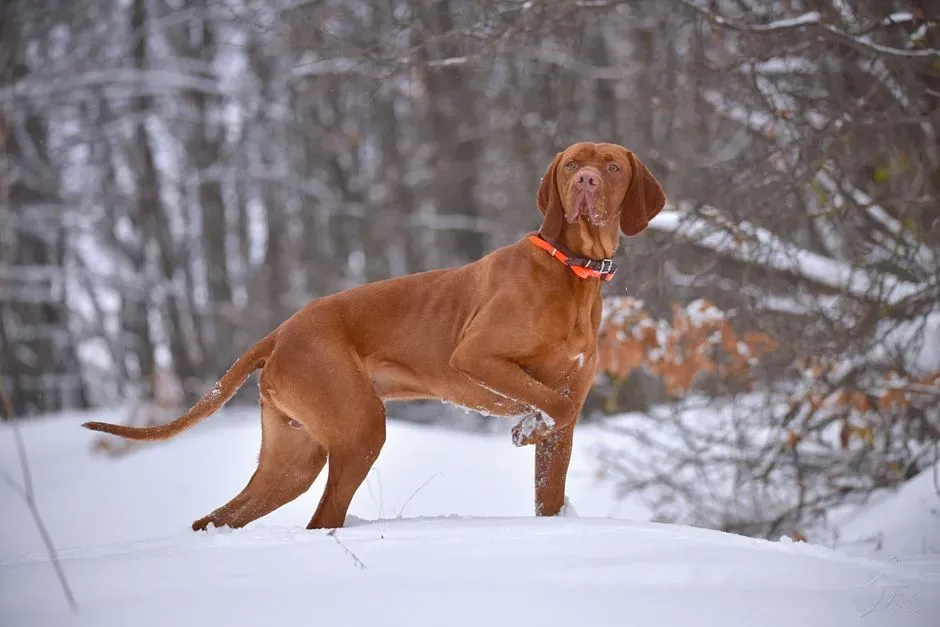
Most people know it as a cuddly red family dog, but the speed figures say otherwise.
The Hungarian Vizsla is listed as one of the fastest dog breeds, reaching 40 mph. Horse & Hound also lists the Vizsla at 40 mph. Two independent lists matching is rarer than you’d think in this category.
The Vizsla is a Hungarian hunting breed, and stamina and speed both matter in that work. A hunter on foot needs a dog that can cover big stretches of field all day, then still have gas left to burst after a bird. It is one of the few non-sighthounds on the list that reaches the same speed tier as an Afghan Hound.
Why the Vizsla belongs here:
- Reported top speed: about 40 mph
- Slim build and strong leg muscles
- Hunting background that rewards sustained athleticism
Here is the controversial bit. Many casual dog lovers assume only sighthounds can run this fast. The Vizsla is the evidence that you can reach the 40 mph tier with a different job description.
Worth Knowing: Living With a Vizsla
- Typical weight: roughly 45–60 pounds, lean rather than bulky
- Typical height: about 21–25 inches at the shoulder
- Coat: short, smooth and solid golden-rust
- Nickname: the “Velcro dog,” for how closely it sticks to its person
That also raises a practical point. A dog that can run this fast needs space and a purpose for its energy. Owners often underestimate how much exercise a lean athletic breed needs to stay settled at home.
Next is a breed that looks like it spent a lot of time at a hairdresser, yet it holds the same speed…
#3 – Afghan Hound: The Glamorous Coat Hides a Real Runner
🔥 Would you like to save this?
We'll email this post to you, so you can come back to it later!
The silky coat is a distraction. This dog is an aerodynamic athlete.
The Afghan Hound is one of the oldest dog breeds and hails from Afghanistan. It has long legs, an aerodynamic body and a thick, silky coat, and it can reach 40 mph (64 km/h). That coat was no fashion statement. It came from a breed shaped by rugged, mountainous country.
That means a dog most people associate with grooming appointments runs as fast as any hunting breed outside the top two. The coat is a surprise because heavy, long hair sounds like drag. Yet the numbers keep the breed in the same tier as the Vizsla.
What you should know:
- Estimated top speed: about 40 mph
- Listed third on one ranking, at 64.4 kph
- One of the few breeds said to approach the Greyhound’s pace, along with Salukis and Whippets
The Afghan Hound sits in a strange spot. It has the speed, but it rarely gets the credit. People photograph the coat and forget the legs.
Here’s our opinion: it is the most underrated athlete on this list. When people talk about fast dogs, they jump from the Greyhound to the Saluki to the Whippet. The Afghan Hound deserves to be in that sentence every time.
Now for the two breeds that fight for the title, and one of them has a record that may surprise you…

Halloween Dog Collar with Bow, Orange Cute Ghost Collar,
Check Price on AmazonAs an Amazon Associate, we earn from qualifying purchases.
10/9/2026 2:43 pm GMTi

Glass Hummingbird Feeder for Outdoors Hanging, 16 oz Leak-Proof Nectar Feeder with Bee Guards & Ant Moat
Check Price on AmazonAs an Amazon Associate, we earn from qualifying purchases.
10/7/2026 1:22 pm GMTi

Hand Blown Glass Hummingbird Feeders for Outdoors Hanging, 24oz Wild Bird Nectar Feeder
Check Price on AmazonAs an Amazon Associate, we earn from qualifying purchases.
10/7/2026 1:23 pm GMTi

2 Pcs Halloween Pet Hat Bandana Set, Witch Pumpkin Costumes for Dogs
Check Price on AmazonAs an Amazon Associate, we earn from qualifying purchases.
10/9/2026 2:45 pm GMTi

Halloween Cat Costume Cloak Witch Hat Pet Accessories
Check Price on AmazonAs an Amazon Associate, we earn from qualifying purchases.
10/9/2026 2:44 pm GMTi
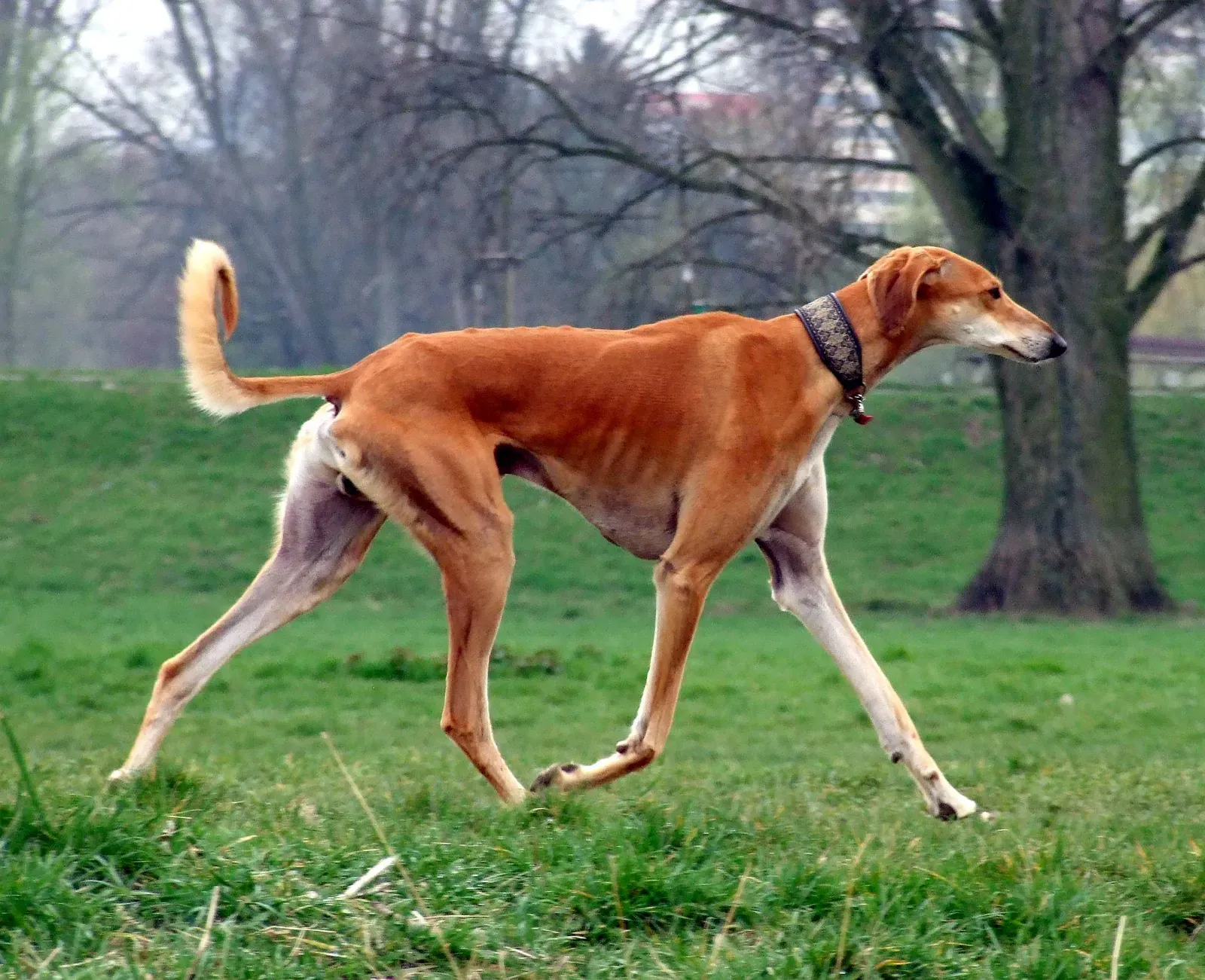
#2 – Saluki: The Desert Hound That May Be the Real Champion
🔥 Would you like to save this?
We'll email this post to you, so you can come back to it later!
On paper it’s second place. Over a longer course, it may be first.
The Saluki originates from the Fertile Crescent. It has a build very similar to the Greyhound’s and is an ancient sighthound breed. Horse & Hound describes it as the second-fastest breed and says a quick Saluki could give a Greyhound a run for its money.
Here’s the twist. In 1996, the Guinness Book of Records listed a Saluki as the fastest dog, at 68.8 km/h (42.8 mph). That’s faster than the 41.83 mph Guinness lists for the Greyhound’s record. The Greyhound’s higher “45 mph” number is the widely quoted peak, not the certified one.
Where each breed wins:
- The Greyhound is credited as the fastest up to about 800 metres (2,600 ft).
- The Saluki is thought to be faster over longer distances.
The Saluki’s history makes the speed believable. Bedouin hunters would sometimes ride close to their quarry on a camel holding such a dog, then throw it toward the prey at speed to give it a running start. That is a breed built for sustained pursuit across open desert, not just a quick dash.
Some experts argue the Saluki deserves the overall title. But there’s one breed that holds the benchmark that all the others are measured against…
#1 – Greyhound: Still the King, but Not for the Reason You Think
🔥 Would you like to save this?
We'll email this post to you, so you can come back to it later!
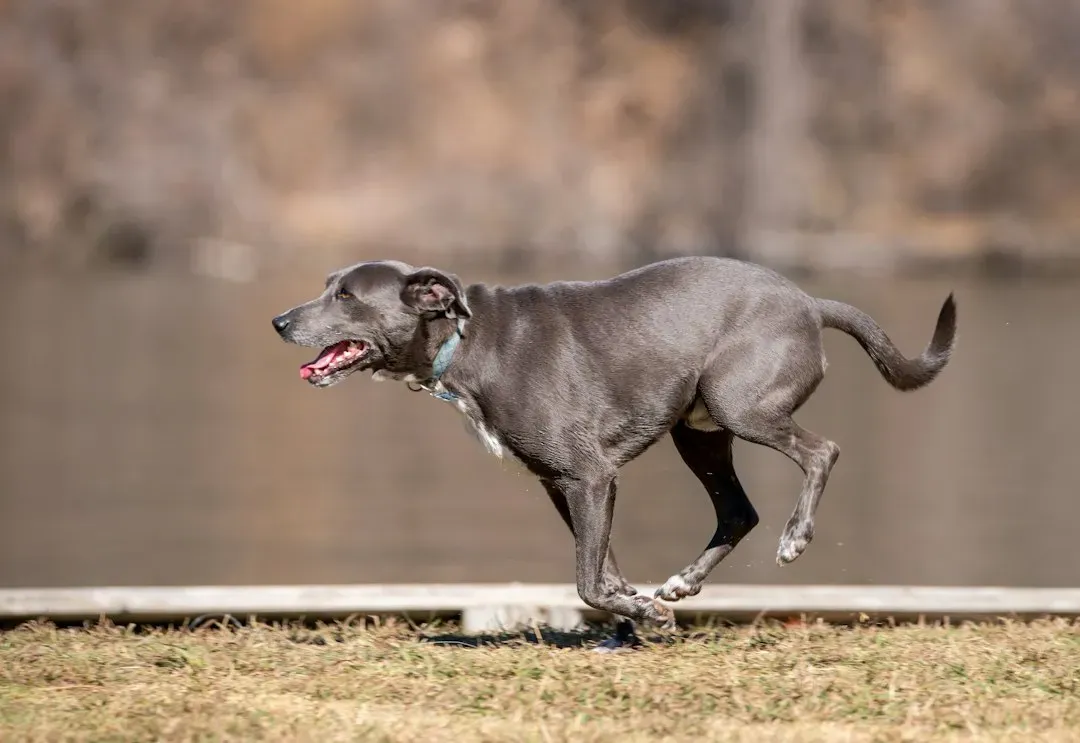
The crown belongs to the Greyhound, though the story is more interesting than “45 mph.”
No known breed has surpassed the Greyhound’s top speed of 45 mph. It has been bred to race since the 18th century. It can reach top speed in about six strides.
The certified numbers are slightly lower. Star Title covered 366 metres (400 yards) in 19.57 seconds, at 67.32 km/h (41.83 mph). That run took place on March 5, 1994, in Wyong, New South Wales, Australia. The 45 mph figure is the commonly cited peak, and Star Title’s mark is the officially recorded one.

Dog Stairs for Bed 18" H, 4-Step Dog Steps for High Bed
Check Price on AmazonAs an Amazon Associate, we earn from qualifying purchases.
10/9/2026 2:42 pm GMTi

PetSafe Oasys Pet Fountain, 1/2 Gallon (64 oz), Small Dogs & Cats
Check Price on AmazonAs an Amazon Associate, we earn from qualifying purchases.
10/8/2026 8:14 am GMTi

Air Purifiers for Home Pets Large Room Up to 3000 Ft²,HEPA Air Cleaner with Washable Double-Side Filter, PM2.5 Air Quality Monitor,15dB Sleep Mode for Bedroom Odor Dust Pollen,White
Check Price on AmazonAs an Amazon Associate, we earn from qualifying purchases.
10/8/2026 8:23 am GMTi

Glass Hummingbird Feeder for Outdoors Hanging
Check Price on AmazonAs an Amazon Associate, we earn from qualifying purchases.
10/7/2026 1:21 pm GMTi
Worth Knowing: The Retired Racer
- Lifespan: typically about 10–14 years
- Many Greyhounds are adopted as pets after their racing careers end
- At home, they tend to be gentle and low-key, not hyperactive
- Despite the speed, most are happy with short daily bursts of exercise
The real surprise is stamina. Greyhounds can sustain 35 mph for as much as seven miles. Horse & Hound notes that a cheetah wins the 0–60 mph race, but a Greyhound would beat it over seven miles. The Greyhound is a sprinter that can also keep going.
Why it still wins:
- Fast acceleration, with top speed in about six strides
- Slow-motion footage shows two moments in each stride when all four feet leave the ground
- A confirmed Guinness record on the books
And here’s the irony. For a dog this fast, the breed is famous at home for being a champion napper, which is how it earned the nickname “45-mph couch potato.”
So the Greyhound stays on top. But “serious competition” is no exaggeration, as the Saluki and a handful of others stay right behind it.
The Bottom Line
🔥 Would you like to save this?
We'll email this post to you, so you can come back to it later!
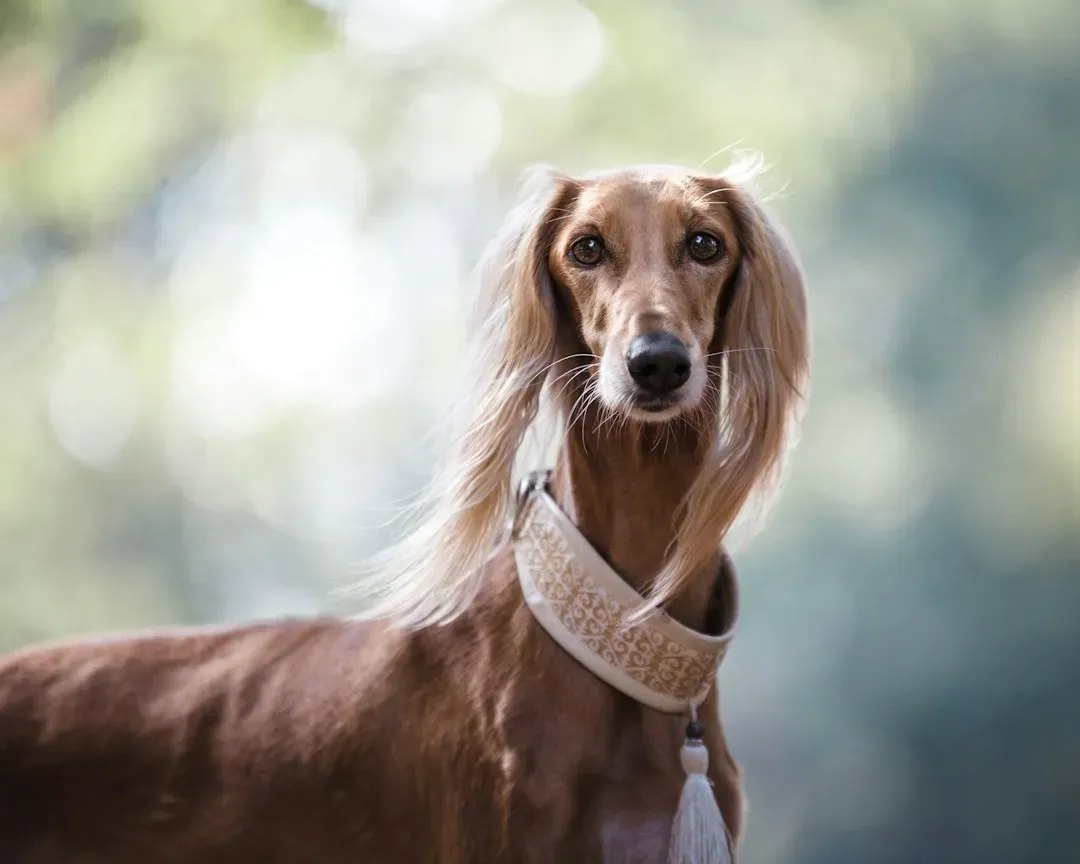
The Greyhound deserves the crown, but not the aura of invincibility. Its certified record sits below a Saluki’s Guinness listing, and the gap between the two is small enough to fall inside the margin of error of these numbers. Over a short sprint, the Greyhound wins. Over a long course, we’d lean toward the Saluki.
Be wary of anyone who quotes breed speeds to the decimal point, because the Jack Russell and Whippet figures show how loose the data really is. The Afghan Hound is the most overlooked athlete on this list. Every time a list shuffles these dogs by a single mph, it’s telling you more about its own guesswork than about the dogs.
So, a 400-yard dash or a multi-mile chase: which breed gets your money?

- Fastest Dog Breeds on Earth, Ranked by Top Speed – The Greyhound Has Serious Competition - November 6, 2026
- Dog Breeds With the Best Sense of Smell, Ranked – Beagles Aren't Where You'd Expect - November 6, 2026
- Clingiest Dog Breeds, Ranked: 17 Dogs That Follow Their Person From Room to Room - November 6, 2026