

You come home after a rotten day, drop your bag, and sigh. Your cat looks up from the windowsill, watches you for a beat, then wanders over. Was that coincidence, or did she just size you up?
For a long time, cats had a reputation as aloof creatures who tolerate us mainly for food. A growing pile of research points to something more interesting, and a little more flattering. Cats seem to pay close attention to how we look and how we sound, and they may be putting the two together.
The Italian Experiment That Got Everyone Talking

🔥 Would you like to save this?
We'll email this post to you, so you can come back to it later!
The study most often cited here is “Emotion Recognition in Cats,” published in the journal Animals in 2020 by researchers at the University of Bari in Italy. The team wanted to know whether cats can integrate visual and auditory signals to recognize human and cat emotions, and whether they adjust their behavior to the emotion they perceive. It’s a neat question, because it asks whether a cat can link what it hears to what it sees.
The setup was simple. If a sound was hissing or purring, a matching cat face was projected, and if it was laughing or human growling, a human happy or angry face appeared. The idea was that a cat with some mental picture of an emotion would look longer at the face that fit the sound.
What the Cats Actually Did

🔥 Would you like to save this?
We'll email this post to you, so you can come back to it later!
The results were encouraging, though not dramatic. Cats looked significantly longer at the face matching the sound for cat hiss, human anger and human happiness, but not for cat purr. The authors suggest there may simply not be an easy, distinguishable face for purring.
The authors themselves described the looking bias toward matching faces as weak in places. That’s worth remembering. The finding is a real signal, but it isn’t proof that your cat holds a rich understanding of your feelings. The researchers concluded that cats matched the human sounds and faces of happiness and anger, suggesting some cognitive representation of those emotions.
Why Combining Face and Voice Matters
🔥 Would you like to save this?
We'll email this post to you, so you can come back to it later!
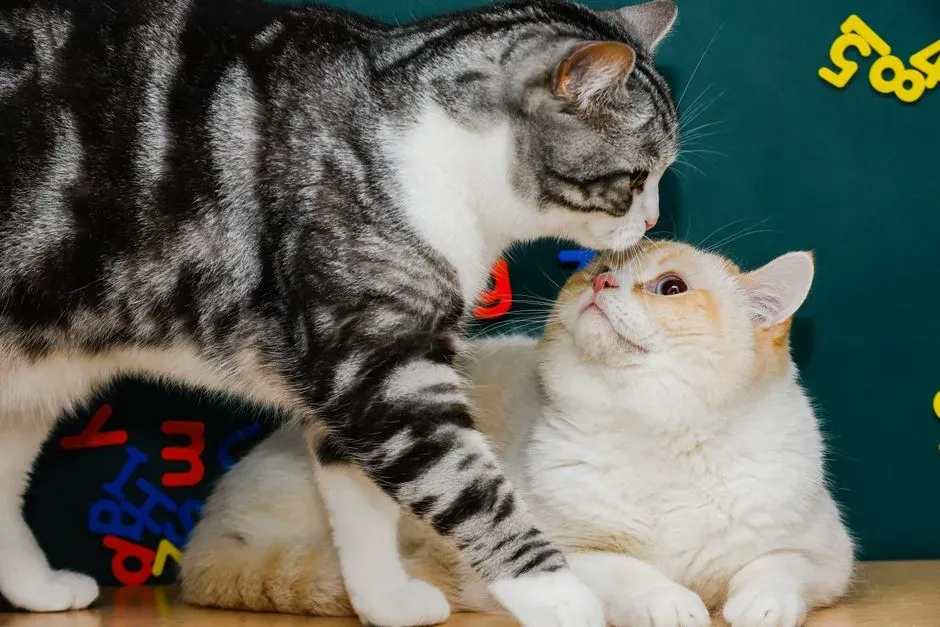
Psychologists call this kind of matching cross-modal recognition. It means linking information from different senses into one idea, like knowing that a certain voice belongs to a certain face. It’s a bigger mental step than reacting to a loud noise or a sudden movement.
Earlier work hints that cats can do something similar with identity. One study found that, at least in a café setting, cats could predict their owner’s face on hearing the owner’s voice. If a cat can tie your voice to your face, tying your angry voice to your angry face isn’t a huge leap. Still, researchers describe this as early evidence, not a settled picture.

Glass Hummingbird Feeder for Outdoors Hanging, 16 oz Leak-Proof Nectar Feeder with Bee Guards & Ant Moat
Check Price on AmazonAs an Amazon Associate, we earn from qualifying purchases.
10/7/2026 1:22 pm GMTi

Air Purifiers for Home Pets Large Room Up to 3000 Ft²,HEPA Air Cleaner with Washable Double-Side Filter, PM2.5 Air Quality Monitor,15dB Sleep Mode for Bedroom Odor Dust Pollen,White
Check Price on AmazonAs an Amazon Associate, we earn from qualifying purchases.
10/8/2026 8:23 am GMTi

Hand Blown Glass Hummingbird Feeders for Outdoors Hanging, 24oz Wild Bird Nectar Feeder
Check Price on AmazonAs an Amazon Associate, we earn from qualifying purchases.
10/7/2026 1:23 pm GMTi

2 Pcs Halloween Pet Hat Bandana Set, Witch Pumpkin Costumes for Dogs
Check Price on AmazonAs an Amazon Associate, we earn from qualifying purchases.
10/9/2026 2:45 pm GMTi

Halloween Cat Costume Cloak Witch Hat Pet Accessories
Check Price on AmazonAs an Amazon Associate, we earn from qualifying purchases.
10/9/2026 2:44 pm GMTi
How Cats Respond When You’re Happy or Upset

🔥 Would you like to save this?
We'll email this post to you, so you can come back to it later!
Behavior outside the lab tells a similar story. Cats have been shown to spend more time in contact with owners expressing happiness than with owners expressing anger. That fits what many of us notice at home, where a cheerful mood often brings a cat closer.
There’s also the question of guidance. Research suggests cats use emotional information from human facial expressions to steer their behavior, especially around novel or potentially threatening things. In other words, your expression can work like a quiet signal about whether something new is safe. A calm, warm face and voice may genuinely help a nervous cat.
Familiar Voices, Familiar Faces

🔥 Would you like to save this?
We'll email this post to you, so you can come back to it later!
Cats don’t treat everyone equally. A team in Japan has reported that cats can tell their owner’s voice from a stranger’s. Reviews of the field also suggest cats may learn to read their own owner’s expressions over time. That points to cats gradually learning how a specific person’s face signals mood.
So the “reading” may be less about universal human emotion and more about knowing you. Your cat has likely spent years watching your face and listening to your tone in the same kitchen, at the same hours. Strangers probably get a blunter read, though the research on that is thinner.

Professional 7 in 1 Dog Paw Cleaner for Dogs & Cats - Includes 1 Portable Paw Washer, 1 Bath Brush
Check Price on AmazonAs an Amazon Associate, we earn from qualifying purchases.
10/7/2026 1:26 pm GMTi

Orthopedic Extra Large Dog Bed, Waterproof Washable XL Pet Bed 44"
Check Price on AmazonAs an Amazon Associate, we earn from qualifying purchases.
10/7/2026 1:32 pm GMTi

Smart Bird Feeder with Camera Solar Powered, 2K HD Live Video, 10,000+ Bird Species AI Identification
Check Price on AmazonAs an Amazon Associate, we earn from qualifying purchases.
10/7/2026 1:22 pm GMTi

PetSafe Oasys Pet Fountain, 1/2 Gallon (64 oz), Small Dogs & Cats
Check Price on AmazonAs an Amazon Associate, we earn from qualifying purchases.
10/8/2026 8:14 am GMTi

Portable Dog Water Bottle Foldable Dog Travel Water Bottle
Check Price on AmazonAs an Amazon Associate, we earn from qualifying purchases.
10/7/2026 1:29 pm GMTi
What We Still Don’t Know
🔥 Would you like to save this?
We'll email this post to you, so you can come back to it later!
It would be easy to oversell all this. Some popular write-ups declare the evidence clear and call it a pinnacle of feline intelligence, which goes well beyond what the studies claim. The Bari experiment used a limited set of emotions, mainly happiness and anger, and measured looking time rather than anything like feelings.
Cats might also respond to our emotions without understanding them the way people do. Reacting to a tense voice isn’t the same as grasping that you’re sad. Researchers are still sorting out how much is learned, how much is instinct, and how much varies from cat to cat.

Dog Stairs for Bed 18" H, 4-Step Dog Steps for High Bed
Check Price on AmazonAs an Amazon Associate, we earn from qualifying purchases.
10/9/2026 2:42 pm GMTi

Glass Hummingbird Feeder for Outdoors Hanging
Check Price on AmazonAs an Amazon Associate, we earn from qualifying purchases.
10/7/2026 1:21 pm GMTi

Earth Rated XL Dog & Puppy Pee Pads, Discreet Top, Max Absorbency
Check Price on AmazonAs an Amazon Associate, we earn from qualifying purchases.
10/7/2026 1:28 pm GMTi

Halloween Dog Collar with Bow, Orange Cute Ghost Collar,
Check Price on AmazonAs an Amazon Associate, we earn from qualifying purchases.
10/9/2026 2:43 pm GMTi
Final Thoughts

🔥 Would you like to save this?
We'll email this post to you, so you can come back to it later!
My own view is that the evidence is solid enough to retire the old idea of cats as emotionally oblivious. It’s not strong enough to claim they’re quietly counseling us through bad days. The truth sits somewhere in between, and that’s a perfectly good place for it.
If you take one practical thing from this, make it that your face and your voice are both being heard. Matching a soft tone with a relaxed expression is probably the clearest message you can send a cat. They’re watching more closely than they let on.

- Feline Psychology Says Cats Read Human Emotions by Combining Your Facial Expression With the Tone of Your Voice - November 7, 2026
- What It Means When a Deer Stamps Its Hoof and Snorts at You - November 7, 2026
- Animal Behavior Says New Caledonian Crows Make Hooked Tools and Can Solve Puzzles That Take Several Steps - November 7, 2026