


Amidst the lush wetlands and dense mangroves of South and Southeast Asia resides the fishing cat (Prionailurus viverrinus), a remarkable creature distinguished by its adeptness in both water and on land. This medium-sized wildcat is recognized for its unique adaptations to aquatic hunting, a rare trait among felines. While its name suggests a singular focus on fishing, the fishing cat’s diet and lifestyle encompass a diversity that paints a picture of a skilled and adaptable predator. However, this elusive creature is currently at risk, with its population declining due to significant threats from habitat destruction and human encroachment.
Physical Characteristics and Adaptations

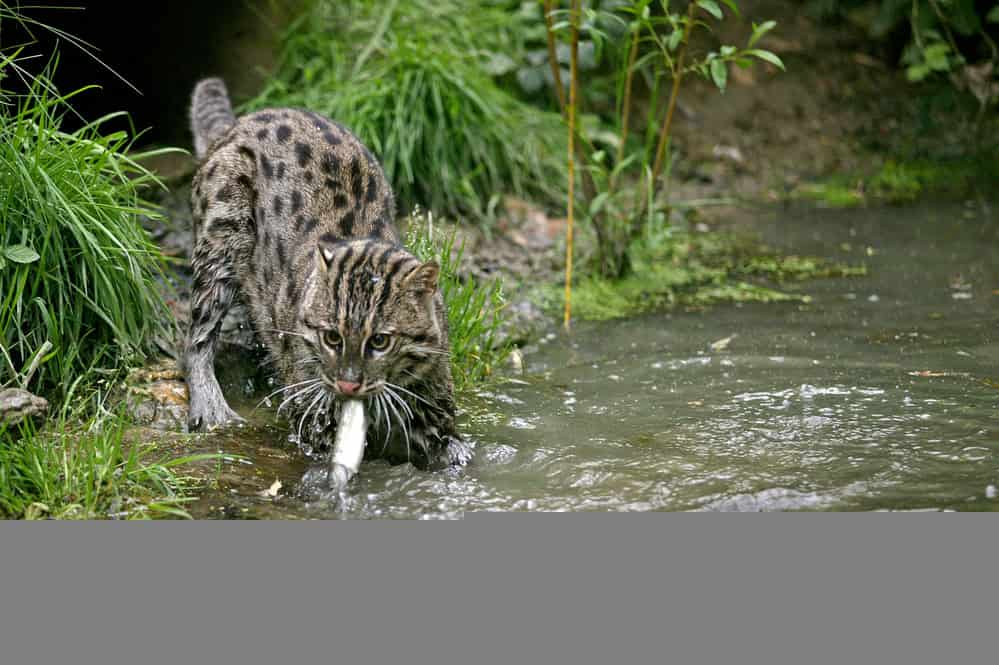
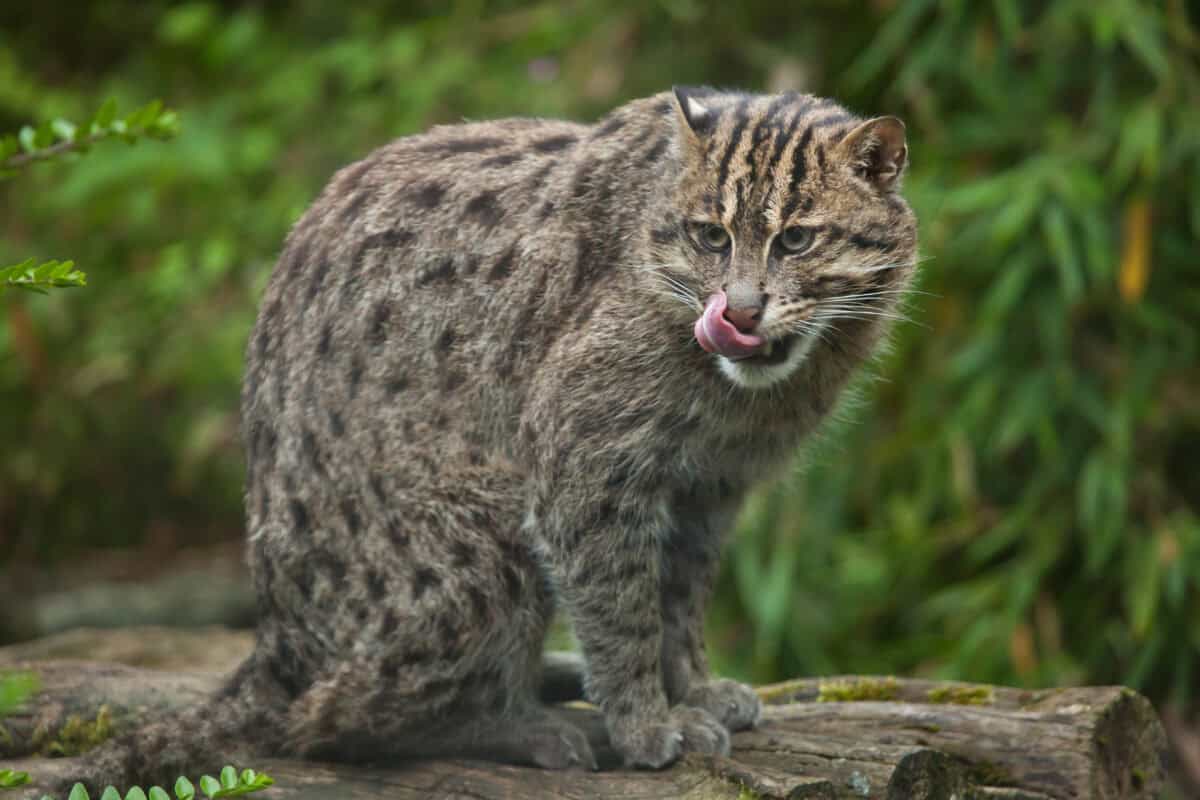
The fishing cat is notable for several distinct features that make it particularly suited to its semi-aquatic lifestyle. Adult fishing cats weigh between 6 to 16 kilograms, with males generally being larger than females. Their coats are olive-gray with black stripes and spots, providing effective camouflage in their swampy habitats. One of the cat’s most distinctive features is its partially webbed front paws. These webs allow the fishing cat to skillfully navigate through water, enhancing its ability to pursue fish, its primary prey, beneath the water’s surface.
Additionally, the fishing cat has a strong, stocky build and a relatively short tail, which aids in balance and agility when moving through dense underbrush or shallow waters. The cat’s nostrils can close when submerged, an adaptation that underscores its proficiency as a swimmer.
Ecological Role and Diet

Fishing cats inhabit a range of wetland ecosystems, including marshes, flooded forests, and mangrove swamps. These environments, often teeming with biodiversity, provide a rich array of food sources. Although fish are a primary component of their diet, fishing cats also consume crustaceans, amphibians, small mammals, and birds, showcasing their adaptability as opportunistic feeders.
In their role as apex predators within their ecological niche, fishing cats help regulate the populations of various species, thereby maintaining a balanced ecosystem. They are also considered indicator species, as their presence often signals a healthy wetland habitat.
Conservation Status and Threats
Despite their ecological significance, fishing cats are classified as Vulnerable on the International Union for Conservation of Nature (IUCN) Red List. The primary threat to their survival is habitat loss due to the conversion of wetlands for agriculture, aquaculture, and urban development. Wetlands are disappearing at an alarming rate, contributing to the fragmentation of the fishing cat’s natural range and reducing the availability of prey.
Pollution, poaching, and retaliatory killings by farmers protecting their livestock also pose significant risks to fishing cat populations. Climate change further exacerbates these challenges, leading to altered rainfall patterns, rising sea levels, and changes in freshwater availability, all of which impact wetland habitats.
Conservation Efforts
Conservationists are actively working to protect the remaining habitats of fishing cats and to mitigate threats. Initiatives include habitat restoration projects, legal protection of wetland areas, and public awareness campaigns aimed at reducing human-wildlife conflicts. Organizations are also conducting research to better understand the ecology and behavior of fishing cats, which is critical for developing effective conservation strategies.
Furthermore, some sanctuary and rehabilitation projects are providing refuge and care for fishing cats affected by habitat loss and conflict. These efforts, combined with community engagement and policy advocacy, are vital for the long-term survival of these captivating felines.
Conclusion

Fishing cats, with their remarkable adaptations and compelling role in wetland ecosystems, are an integral component of Asia’s biodiversity. Their decline is an urgent signal of the broader environmental challenges facing wetlands worldwide. While the path to their preservation is fraught with challenges, a concerted effort encompassing research, conservation, and education offers hope. By safeguarding the habitats these cats depend on, we not only ensure their survival but also affirm our commitment to protecting the earth’s natural heritage.

As a little kid, I fell in love with nature, wildlife, and animals. Living in the USA, South Africa, Italy, China and Germany gave me the opportunity to discover the world's Wildlife. My favorite animals are Mountain Gorillas, Siberian Tigers, and Great White Sharks.
I'm a certified PADI Open Water Diver, went to Everest Base Camp and Trekked Gorillas in Uganda. I hold a Master of Science in Economics and Finance.
Please send any feedback to feedback@animalsaroundtheglobe.com
- 11 Most Endangered Insects Buzzing in America Today - July 22, 2026
- 10 Most Frequently Googled Animal Birth Facts - July 22, 2026
- 10 Incredible Migration Journeys in the Animal Kingdom - July 22, 2026