

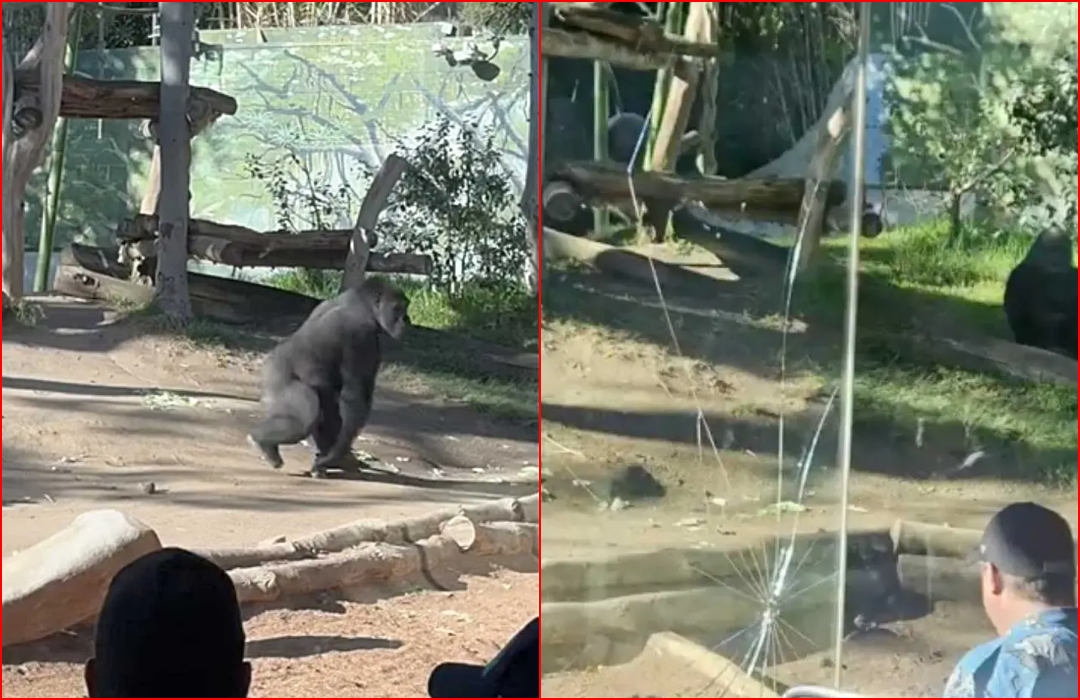
On October 11, 2025, visitors at the San Diego Zoo witnessed an astonishing—and unnerving—scene. A 10-year-old western lowland gorilla named Denny charged full speed into the viewing barrier, herculean in force, and left a massive crack sprawling across the enclosure’s tempered glass. The moment was captured on video, prompting gasps, trembling frames, and comparisons by onlookers to an earthquake. Though no one was injured—neither Denny nor another gorilla in the habitat—the incident sparked questions about gorilla behavior, enclosure safety, and the emotional impact on zoo visitors.
This dramatic event offers more than a viral snippet—it gives us a window into primate psychology, zoo safety protocols, and the delicate balance between captive animal welfare and public viewing. Below, we examine the incident in detail, explore possible causes, assess the zoo’s response, and reflect on what this says about our relationship with animals in human care.
The Incident: What Happened
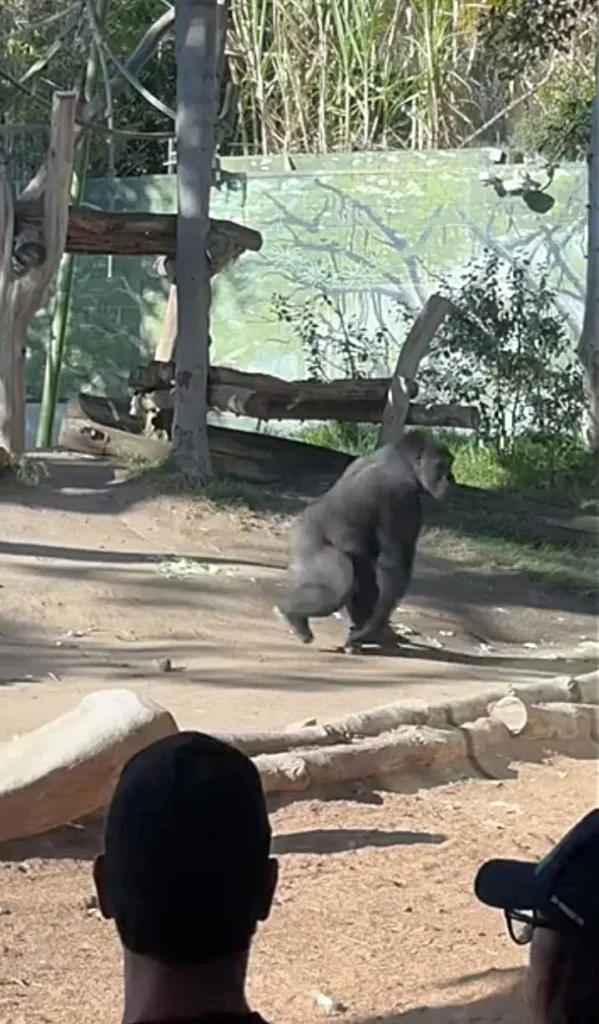
According to the San Diego Zoo Wildlife Alliance, Denny collided with one of three layered tempered glass panels in the gorilla habitat, fracturing the first layer. People.com The crack was extensive, spider-webbing across the surface, and startled guests described the impact as “earthquake-like.” People.com Witnesses reported that the gorilla appeared to take a running start, then leapt into the barrier. One visitor, Katya Sutil, estimated the crack spanned about six feet. People.com+1 She also recalled falling back in shock as the glass shuddered.
While the crowd reacted in alarm, zoo officials confirmed that both gorillas present were unharmed. People.com They immediately closed off the gorilla viewing habitat and relocated Denny and his companion to behind-the-scenes enclosures until the damaged panel could be safely replaced.
Why Did Denny Do That? Behavioral Context
The San Diego Zoo Wildlife Alliance statement noted that such behavior, though dramatic, is not necessarily abnormal—especially in adolescent male gorillas. Young males often display bursts of energy: charging, dragging objects, running laterally, or otherwise showing off strength or testing boundaries are part of their natural behavioral repertoire. People.com In captivity, these expressions sometimes manifest more forcefully, especially when environmental—or social—conditions prompt frustration or stimulation.
It’s also possible that Denny’s action was a redirected behavior or an impulse borne of excitement, competition with the other gorilla, or simply exploratory assertiveness. One witness described seeing the two gorillas “taunting each other,” with back-and-forth motions toward the glass. People.com In wild gorilla troops, displays of dominance, boundary-testing, and environmental interaction are routine. In a constructed habitat, the physical barrier may channel those impulses in dramatic fashion.
Zoo Response and Safety Measures
Upon learning of the crack, zoo management acted swiftly. They closed the gorilla forest habitat to visitors and kept the animals off exhibit until repairs could be made. People.com+1 The broken panel was one of three in a layered safety barrier, meaning that although the first layer fractured, additional layers remained intact—preventing a full breach. People.com Zoo officials also affirmed that such an outcome—cracks in tempered glass—is not inherently cause for alarm when infrastructure is designed with multi-layered protection.
In their public comment, the zoo emphasized that no reversal in protocol or enclosure design is immediately warranted, since the behavior falls within expected naturalistic expressions, especially among juvenile males. People.com That said, the incident will almost certainly prompt inspections, stress assessments, and possibly reinforcement of barriers to mitigate future occurrences.
Visitor Reactions and Emotional Impact
People present at the zoo that day described shock, fear, and disbelief. One visitor, Jackie Doubler, said the noise and tremor “felt like an earthquake.” People.com Others recalled gasps, shrieks, and a strong jolt that made people step back. People.com+1 The emotional tension was heightened by the visible crack developing in real time and the proximity of the gorilla to the public.
Beyond immediate danger, such events affect public trust in zoo safety and animal care. Visitors expect both safe viewing and animal welfare. Incidents like these get amplified—through social media, news reports, and word of mouth—raising questions in the public mind about how effectively zoos balance spectacle, security, and animal behavior.
This incident underscores how powerful primates are—and how they still retain wild instincts, even in captivity. Structurally, zoo habitats must anticipate extreme events: forceful impact, unpredictable behavior, and sustained stress. Glass, no matter how thick or layered, has limits. Engineers and zoo designers must constantly evaluate materials, redundancy, and visibility under duress.
While Denny’s behavior may have been within the norm for adolescent gorillas, it also signals a need for constant vigilance, monitoring, and adaptation in animal care.
