
Worried about unexpected vet bills?
Pet insurance can cover thousands in unexpected vet costs. Get a free quote from Lemonade in under 2 minutes.
Get My Free Quote →Sponsored · Opens Lemonade.com
Picture this. You are blindfolded, spun around, dropped in the middle of a dense forest at midnight, and told to catch a mosquito mid-flight. Sounds impossible, right? For a bat, that is just a Tuesday night. These small, misunderstood creatures do exactly this – and with breathtaking precision – every single time the sun goes down.
There is something almost otherworldly about the way bats move through total darkness without bumping into a single thing. No GPS, no flashlight, no hesitation. What they have instead is arguably one of the most sophisticated natural navigation systems ever evolved on this planet. Curious how it works? Let’s dive in.
What Is Echolocation and Where Did the Science Begin?
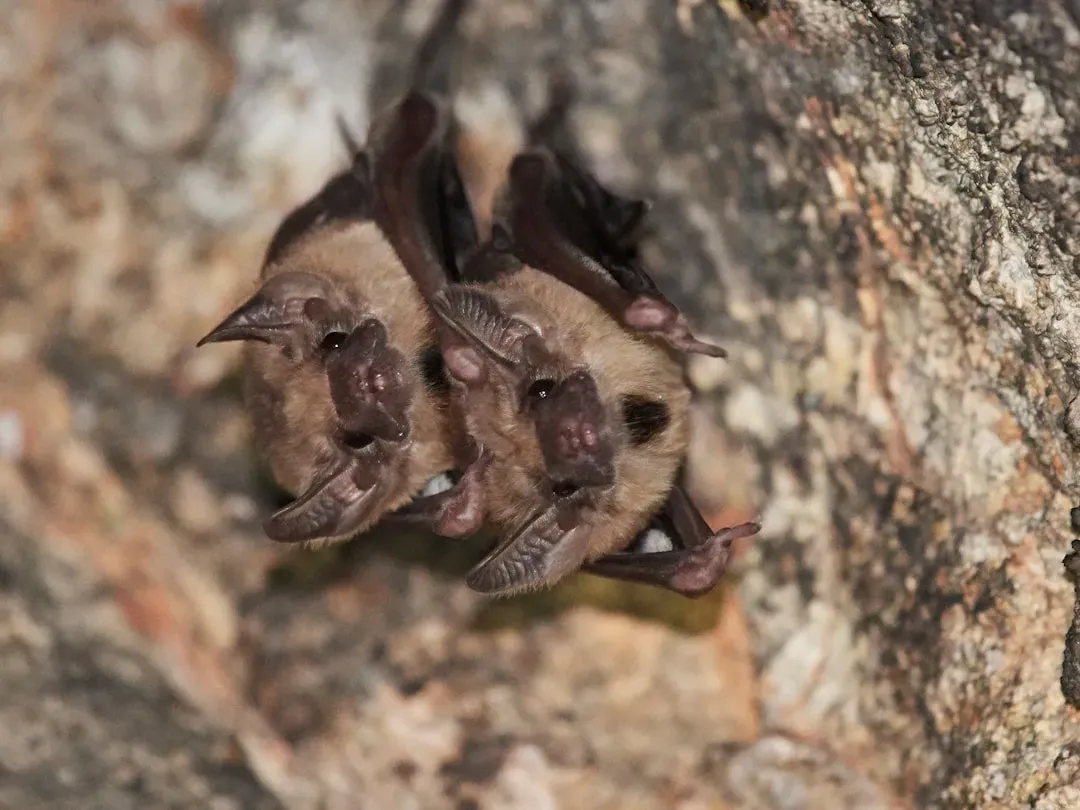
Echolocation is the process of sending out a high-frequency pulse of sound, which is reflected off solid objects in the environment. By listening for the sound reflections, it becomes possible to build up a complete picture of the surrounding space. Think of it like a biological flashlight made entirely of sound. Instead of light bouncing off walls, it is noise doing the heavy lifting.
As early as 1793, Italian researcher Lazzaro Spallanzani demonstrated that blinded bats could still find their way around their enclosure, while deafened bats completely lost their sense of direction. That was a jaw-dropping discovery for its time. The scientific community had no framework to explain it.
The term “echolocation” was first coined by the late Harvard zoologist Donald R. Griffin who, back in 1938, used a microphone sensitive to ultrasound to listen to bats. It took humanity over a century after Spallanzani’s experiments to finally put the right name to this phenomenon. Honestly, the bats were way ahead of us the whole time.
How the Mechanics Actually Work: Sound as a Sixth Sense
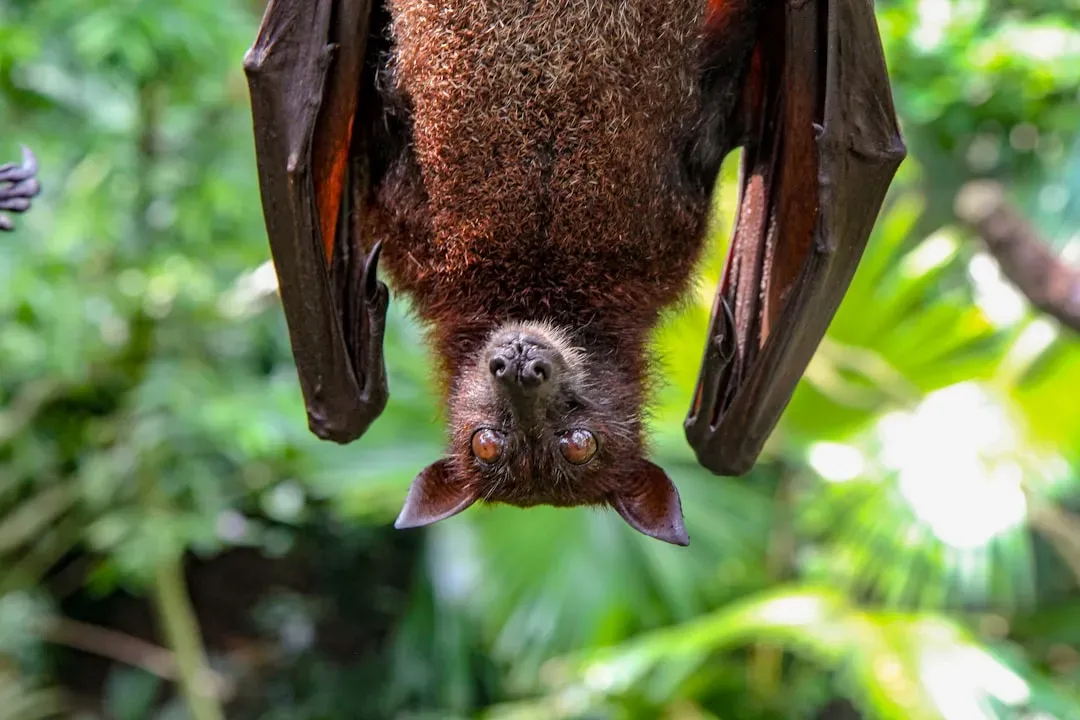
Echolocation – the active use of sonar along with special morphological and physiological adaptations – allows bats to “see” with sound. Most bats produce echolocation sounds by contracting their larynx, or voice box. It is a muscular, deliberate act. Not passive at all.
Ranging is achieved by measuring the time delay between the animal’s own sound emission and any echoes that return from the environment. Imagine clapping your hands in a room and knowing, from the echo alone, exactly how far away every wall is. Bats do this continuously, at extraordinary speed, in real time.
Sound striking close objects will be reflected back sooner and be louder than sound striking a more distant obstacle. Similarly, by listening for changes in the phase of the echo, bats can determine the type of surface from which the sound was bounced back – a hard, continuous object such as a wall will produce a sharper echo than softer objects such as foliage. It is an astonishingly rich stream of information, all extracted from something as simple as a chirp.
Using echolocation, bats can detect objects as thin as a human hair in complete darkness. Let that sink in. A human hair. In pitch black. That is not just impressive – it is humbling.
The Ear, the Brain, and the Deafening Secret
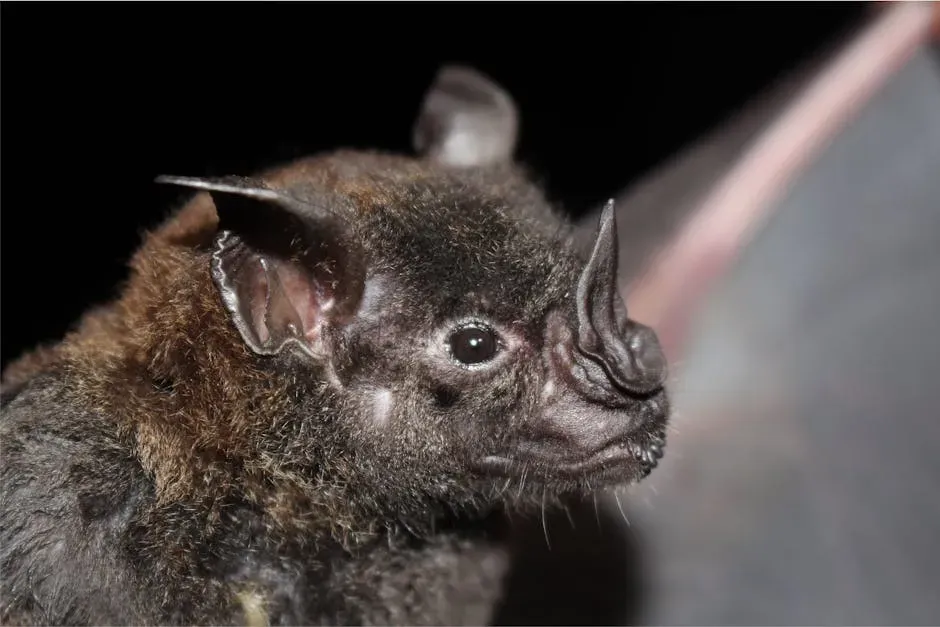
Here is something most people have absolutely no idea about. Just before it calls, the bat contracts its middle ear muscle, effectively dialing down its hearing, so the mammal is not deafened by its own cries. The situation is then reversed almost instantly, so the echoes can be detected. It is essentially a built-in volume control that switches on and off in milliseconds. The engineering equivalent of this in human technology would be extraordinary.
In terms of loudness, bats emit calls as low as 50 dB and as high as 120 dB, which is louder than a smoke detector 10 centimeters from your ear. That is startling. These tiny creatures are screaming at volumes that would damage human hearing, yet we cannot even hear them because the frequencies are so high.
The external structure of bats’ ears also plays an important role in receiving echoes. The large variation in sizes, shapes, folds and wrinkles are thought to aid in the reception and funneling of echoes and sounds emitted from prey. Those odd, elaborate ear shapes that make some bats look almost alien? Those are precision acoustic instruments, shaped by millions of years of evolution.
Two major groups of bats that use echolocation have different structures for connecting the inner ear to the brain, suggesting that the hearing function for echolocation evolved quite differently, possibly twice, among bats. Nature, it seems, found two separate solutions to the same remarkable problem.
Hunting in the Dark: The Bat as a Precision Predator
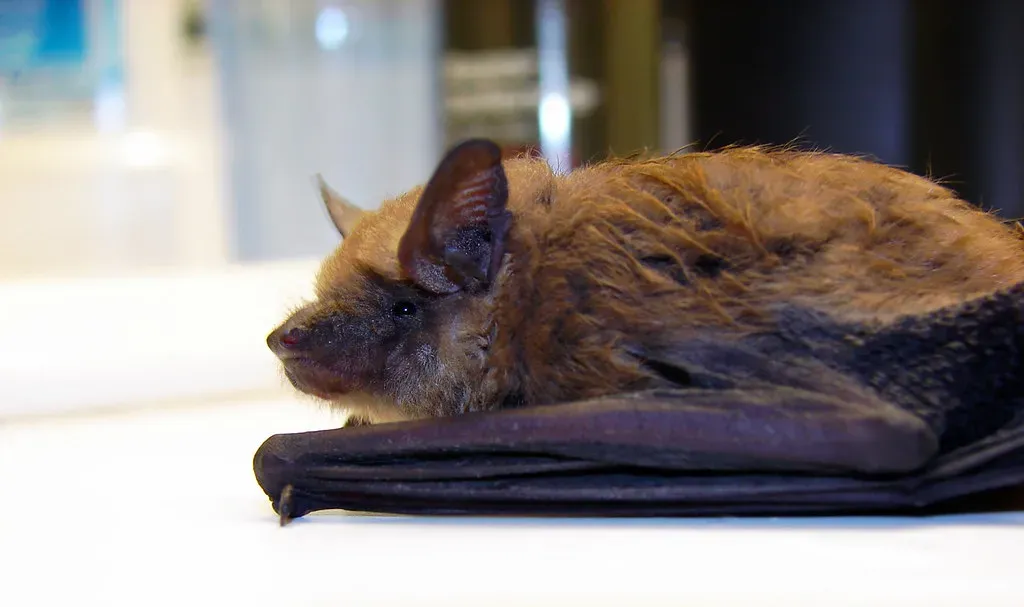
When a bat detects an insect it wants to eat, it produces a rapid series of calls to pin-point the exact location of its prey, then swoops in. Researchers call this the “feeding buzz” – a rapid-fire sequence of calls that tightens like a spotlight on a moving target. Watching it through thermal imaging is genuinely thrilling.
Although low frequency sound travels further than high-frequency sound, calls at higher frequencies give the bats more detailed information – such as size, range, position, speed and direction of a prey’s flight. This is why bats favor high frequencies during active hunting. More detail means a cleaner strike.
Moths are food for many bats and some moths have evolved fascinating tactics to survive bat attacks. Some species have fuzzy wings that will reflect bat echolocation pulses. Other moths have “ears” which can sense bat echolocation. It is an evolutionary arms race happening every night above our heads. The bats push forward, the moths push back. Once a bat is detected, these moths may fly in loops, make noises to startle the bat, or fold up their wings and dive to avoid capture. Some bats have evolved methods to counter moth evasive maneuvers, such as producing pulses that can detect fuzzy wings.
The Cognitive Map: Bats Know Exactly Where They Are
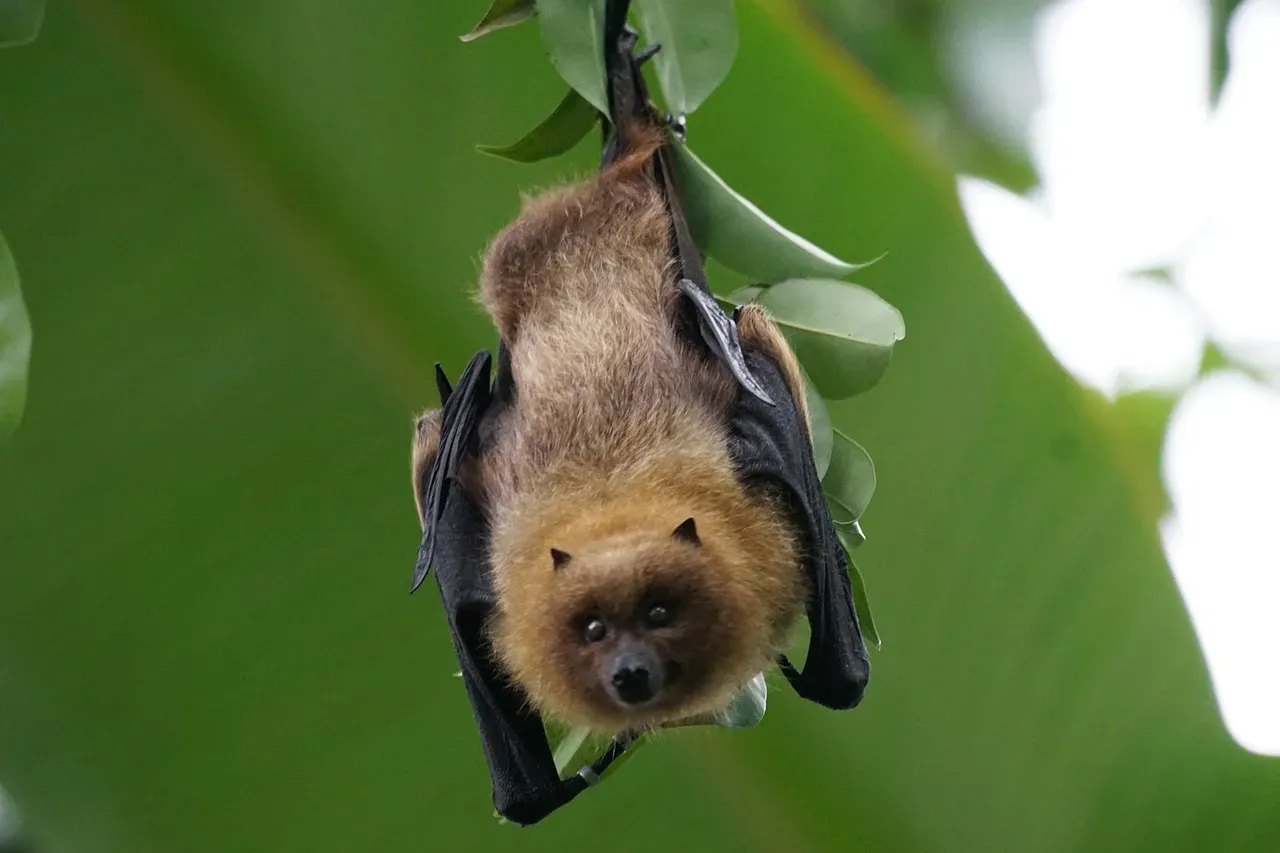
This is where things get genuinely mind-blowing. For a long time, scientists believed bats used echolocation only for short-range obstacle avoidance. Recent research has blown that idea wide open.
Echolocating bats have been found to possess an acoustic cognitive map of their home range, enabling them to navigate over kilometer-scale distances using echolocation alone. They are not just avoiding trees. They are navigating like they have a mental map of the entire landscape, drawn entirely from sound.
Remarkably, even with echolocation alone, the vast majority of bats returned to their roosts within minutes, demonstrating that bats can conduct kilometer-scale navigation using only this highly directional, and relatively local, mode of sensing. In 2026, a University of Bristol-led study added another layer to this story. A long-standing mystery about how wild bats navigate complex environments in complete darkness with remarkable precision has been solved in a new Bristol-led study. While it is well known that bats hunting at night use biosonar to map their surroundings, the question of how they process thousands of overlapping echoes in real time when navigating more complex habitats like forests had long remained a mystery.
Research revealed that bats have a preference for flying near areas that provide rich acoustic information. Bats may rely on memory to access familiar routes or locations, integrating both real-time echolocation data and past experiences to optimize their flight paths. This complex interplay between memory and sensory input enhances their adaptive navigation strategies. They are not just reacting. They are remembering. Planning. Optimizing. That is sophisticated cognition by any standard.
Conclusion
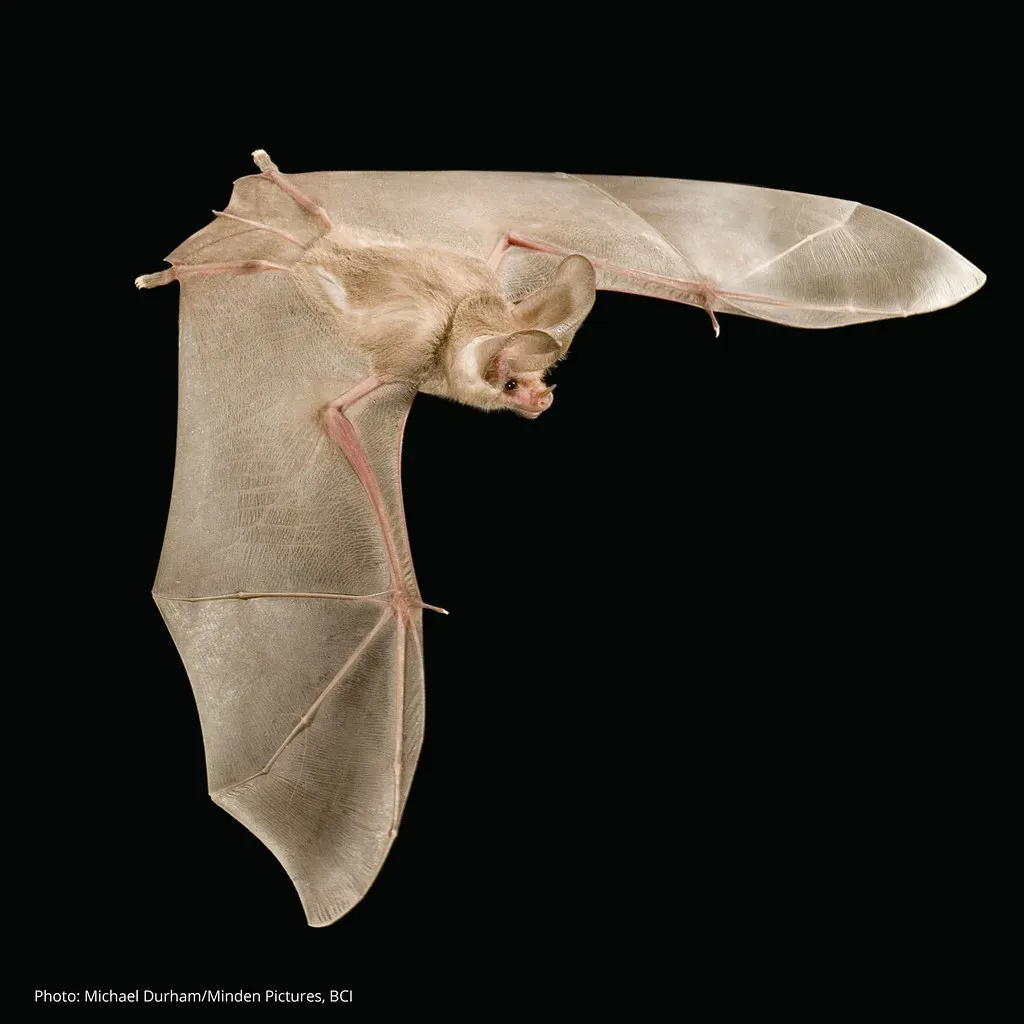
Bats are, without question, one of nature’s most underestimated masterpieces. What looks like chaotic fluttering in the dark is actually a real-time symphony of sound, memory, biology, and split-second decision-making that took millions of years to perfect. The findings of recent research serve as a potential blueprint for developing advanced navigation systems. By understanding how bats combine echolocation with memory to navigate, scientists can draw parallels in designing autonomous vehicles or drones that require minimal visual input.
From blindfolded scientists in 18th-century Europe to cutting-edge CT scans and acoustic tracking technology in 2026, our journey to understand how bats “see” with sound is still very much underway. Echolocation also plays a vital role in social interactions among bats, as some species use specific calls to communicate with each other. This ability to navigate and forage in the dark contributes significantly to their ecological role as pollinators and pest controllers.
Next time you spot a bat darting silently across a summer sky, pause for a moment. That creature is painting a real-time acoustic portrait of the world around it, in complete darkness, faster than you can blink. What would you have guessed was going on up there?
Worried about unexpected vet bills?
Pet insurance can cover thousands in unexpected vet costs. Get a free quote from Lemonade in under 2 minutes.
Get My Free Quote →Sponsored · Opens Lemonade.com

- 15 Dog Breeds Vets Say Have Become Nearly Impossible to Keep Healthy Past Age 6 - June 4, 2026
- 13 Dog Breeds Vets Refuse to Recommend Even When Owners Specifically Ask for Them - June 4, 2026
- Psychology Says Dogs Are More Likely to Act Out When They Sense Their Owner Is Suppressing Rage - June 4, 2026