

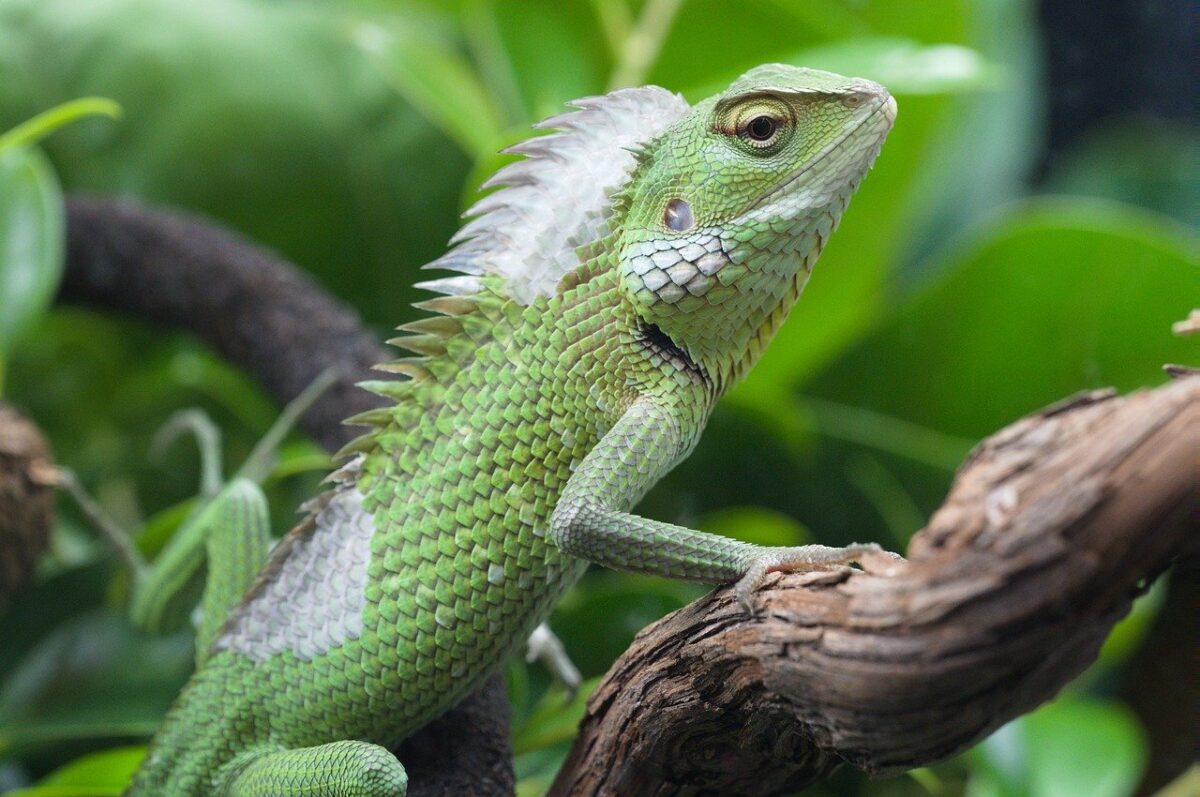
Filtered Sunlight Drives Reptile Vitality (Image Credits: Pixabay)
Arboreal reptiles from dense forest environments flourish in vivariums where lighting recreates the soft, dappled rays filtering through overhead foliage.
Filtered Sunlight Drives Reptile Vitality
These tree-climbing species evolved under canopy cover that tempers direct sunlight into gentle gradients. Harsh beams rarely reach their habitats, so enclosures must prioritize diffused illumination to promote natural activity patterns. Chameleons, for instance, begin their day around 200 lux levels post-sunrise, while geckos stay hidden until twilight dims to under 50 lux. Proper setups enhance calcium metabolism, appetite, and reproductive cues through balanced wavelengths.
Health improvements extend to vibrant coloration, as full-spectrum light sharpens visual perception and reduces stress. Owners notice brighter hues and increased activity when mimicking these conditions. Linear fixtures deliver even coverage across vertical spaces, preventing the pitfalls of spotty exposure.
Key Components of a Complete Setup
UVB radiation stands as the cornerstone, enabling vitamin D3 production at moderate levels of 2.0 to 5.0 UVI for most forest dwellers. Lower outputs suit rainforest natives, avoiding overload in shaded zones. UVA complements this by aiding food detection and breeding behaviors, paired with visible light in the 5500K to 6500K range for plant growth and realism.
Temperature gradients arise naturally from these sources, with basking spots tailored to species needs and cooler retreats nearby. Kits like the Arcadia ShadeDweller Arboreal ProT5 UVB combine low UVB, full spectrum, and uniform output in a compact design. Such professional solutions mount easily on enclosure tops, fostering self-regulated exposure.
- UVB tubes for metabolism support
- UVA/full-spectrum for behavior and colors
- Heat emitters for gentle warmth
- Timers for natural cycles
Placement Strategies for Vertical Habitats
Position fixtures 8 to 12 inches above primary basking branches to achieve target UVI via the inverse square law. Aim for 60 percent vertical coverage, using multiples in tall or wide enclosures. Gradual transitions from lit to shaded areas prove crucial, as one expert noted: “The key to successful arboreal lighting lies in creating gradual transitions between illuminated and shaded areas, allowing animals to self-regulate their UV exposure throughout the day.”
Ventilation systems, including screen tops and fans, manage heat buildup without drafts. Infrared thermometers verify stable temperatures, preserving lamp efficiency. This approach ensures reptiles climb freely between intensities, mirroring wild choices.
Tailored Recommendations by Species
Different groups demand nuanced adjustments to thrive.
| Species Group | Recommended UVI | Photoperiod (hours) | Fixture Distance (inches) |
|---|---|---|---|
| Chameleons | 3.0-5.0 | 12-14 | 8-12 |
| Day-active Geckos | 2.0-3.0 | 10-12 | 10-15 |
| Tree Skinks | 4.0-6.0 | 12-14 | 6-10 |
| Arboreal Snakes | 1.0-2.0 | 8-10 | 12-18 |
Digital timers simulate 12 to 14-hour days in peak seasons, shortening for brumation. Dawn and dusk dimming eases transitions for sensitive nocturnal types.
Key Takeaways
- Prioritize gradients over intense hotspots for shade-adapted species.
- Replace UVB lamps every 12 to 18 months to combat output fade.
- Monitor behavior – lethargy signals low light, while dull colors hint at imbalances.
Reptile enthusiasts achieve thriving pets by treating lighting as a dynamic ecosystem element rather than a mere accessory. Regular cleaning removes dust that cuts transmission by up to 30 percent, and UV meters pinpoint issues early. What lighting tweaks have transformed your reptile’s enclosure? Share your experiences in the comments.

- Urban Coyotes Show Remarkable Adaptability, Learning to Thrive in City Environments - July 22, 2026
- Beavers Are Nature’s Engineers, Creating Vital Habitats for Other Wildlife Species - July 21, 2026
- The Recovery of the California Condor Offers Hope for Other Critically Endangered Birds - July 21, 2026