

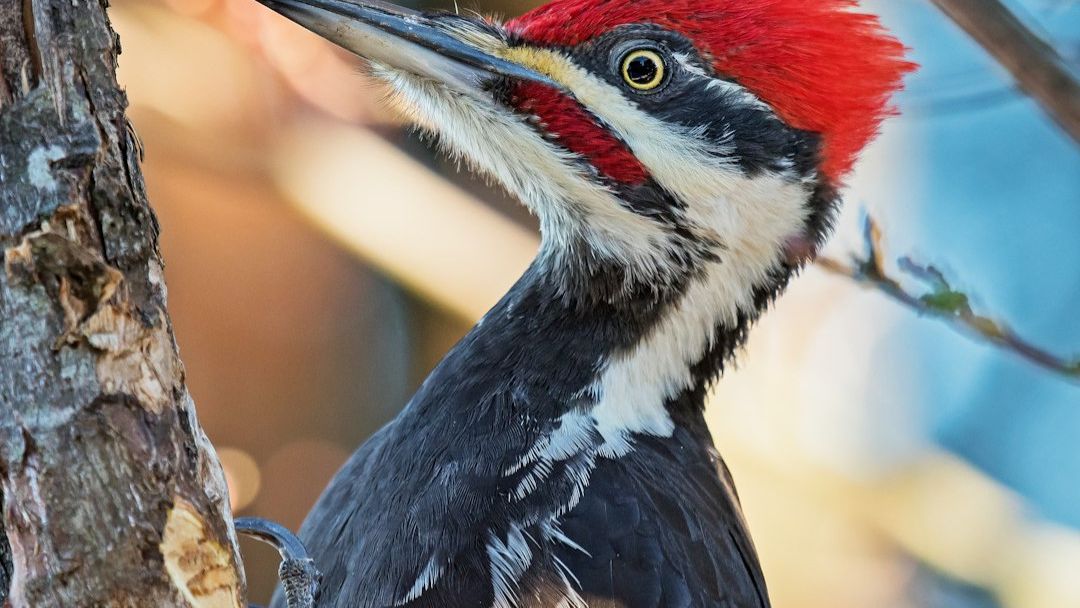
There’s something almost comical about watching a woodpecker at work. The bird slams its beak into a tree at speeds that would knock any other creature senseless, yet it just keeps going, seemingly unbothered. For decades, scientists and engineers alike have marveled at this and assumed the bird’s skull must be nature’s perfect shock absorber.
Here’s the thing though – that assumption might be fundamentally wrong. New research is flipping the popular narrative on its head, and the real story behind how woodpeckers survive their own relentless hammering is far more fascinating than the myth we’ve been told. Let’s dive in.
The Myth That Captured the Scientific World
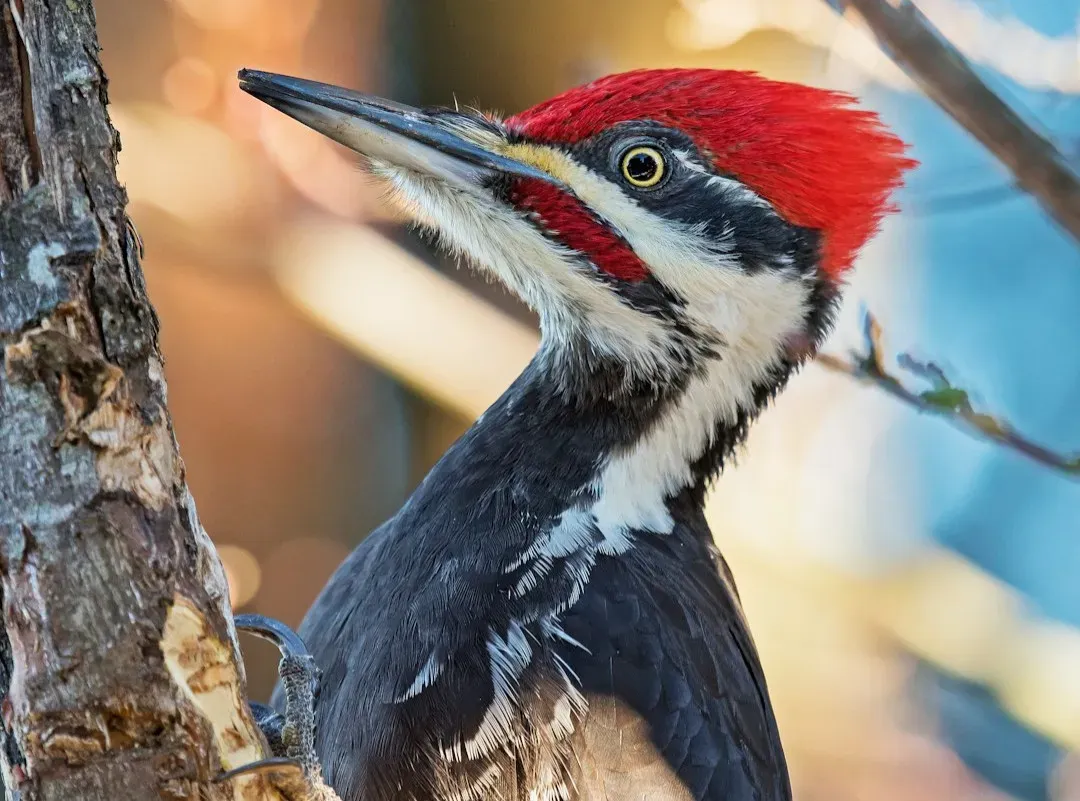
It sounds almost too poetic to question. A bird that drums its beak into bark thousands of times a day must have evolved some extraordinary biological cushioning system, right? That idea became so widely accepted that it inspired helmet designs, protective equipment for athletes, and even aerospace engineering concepts.
The notion was that spongy bone tissue around the woodpecker’s skull acted like a built-in crash helmet, absorbing and dispersing the shock of each impact before it could rattle the brain. It was elegant. It was intuitive. It was also, according to recent research, almost certainly not the whole picture – and possibly quite misleading.
What Researchers Actually Found Inside the Skull
Scientists who studied woodpecker skull mechanics discovered something surprising. Rather than absorbing shock, the skull structure appears to be remarkably stiff. The brain sits in a very tight, snug cavity with very little room to slosh around, which is actually the opposite of what you’d design if your goal were cushioning.
Think of it this way: if you wanted to protect a fragile object during transport, you might pack it in soft foam. Woodpeckers, it turns out, are more like wrapping that object tightly in rigid plastic. The brain barely moves at all relative to the skull because the cavity leaves almost no space for movement. Less motion means less trauma, and that’s the real genius here.
The Role of the Hyoid Bone
One of the most fascinating structures in any bird is the woodpecker’s hyoid bone, a long, ribbon-like structure that wraps around the entire skull like a seatbelt. For years, some researchers thought this might play a role in shock absorption, looping up and over the skull to somehow buffer the impact forces.
However, the newer analysis suggests the hyoid’s primary function is related to tongue mechanics and food retrieval, not impact protection. It’s a remarkable structure no matter what, but attributing shock absorption to it may have been a case of scientists finding a dramatic answer they wanted rather than the one the data actually supported. Honestly, that kind of wishful interpretation happens more often in science than most people realize.
Rethinking Brain Injury Science Through a Tiny Bird
Here is where this story gets genuinely important beyond ornithology. The woodpecker has long been used as a model for understanding concussion prevention in humans. If the foundational assumption about how its skull works was flawed, that has real implications for how we design protective gear and think about traumatic brain injury.
The newer understanding suggests that minimizing relative brain movement – rather than absorbing impact energy – might be a more effective design principle. That’s a subtle but significant shift. For engineers working on helmets for football players, cyclists, or military personnel, this reframing could open entirely new directions for research and product development.
How the Bird Avoids Brain Damage at All
So if the skull isn’t cushioning the blow, why doesn’t the woodpecker get a concussion with every strike? Part of the answer lies in the sheer geometry of the impact. The bird strikes in an almost perfectly straight line, which means forces travel directly through the structure rather than creating rotational acceleration in the brain. Rotational force, it turns out, is one of the biggest drivers of concussion in humans.
There’s also the matter of scale. The woodpecker’s brain is small and light, and the forces involved, while rapid, don’t generate the same relative stress on brain tissue that similar impacts would on a larger animal. It’s a bit like how insects can fall from tremendous heights without injury – physics at that scale simply behaves differently than we might intuitively expect.
The Danger of Over-Romanticizing Nature’s Solutions
I think this research is a useful reminder that biomimicry, fascinating as it is, can go badly wrong when built on a shaky premise. Scientists and engineers have spent years studying woodpecker anatomy to replicate something that may not work the way they thought. That’s not a failure of curiosity – it’s a failure of scrutiny.
Nature is brilliant, but it doesn’t optimize for human engineering goals. The woodpecker evolved under a completely different set of pressures, across millions of years, with countless trade-offs built in. Assuming we can simply reverse-engineer its features and apply them to human technology requires an enormous amount of careful, rigorous verification. The woodpecker story is a case study in why that verification step matters so much.
What This Means for Future Research
The revised understanding of woodpecker skull mechanics opens up genuinely exciting new questions. If stiffness and geometric alignment are the real protective factors, researchers will want to explore whether those principles can be applied to next-generation helmet design in ways that previous cushion-focused approaches couldn’t achieve.
There is also a broader scientific takeaway here. Reexamining accepted ideas, even ones that seem obviously correct and have been cited for decades, is not a sign of weakness in science. It’s exactly how the process is supposed to work. The woodpecker hasn’t changed. Our understanding of it has, and that distinction makes all the difference.
Conclusion: Nature Is Smarter Than Our Stories About It
The woodpecker is still one of the most extraordinary animals on the planet. Nothing about this new research diminishes that. What it does do is strip away a tidy, feel-good explanation and replace it with something messier, more precise, and ultimately more useful.
Sometimes the most compelling scientific revisions aren’t the ones that reveal something entirely new. They’re the ones that correct something we were confidently wrong about. The woodpecker kept hammering away all along, completely indifferent to how we were interpreting it. Maybe there’s a lesson in that kind of quiet, relentless indifference to narrative.
What do you think – does this change how you see the idea of learning from nature? Drop your thoughts in the comments.

- Beavers Are Nature’s Engineers, Creating Vital Habitats for Other Wildlife Species - July 21, 2026
- The Recovery of the California Condor Offers Hope for Other Critically Endangered Birds - July 21, 2026
- Bats Play a Crucial Role in Controlling Insect Populations Across the United States - July 21, 2026