

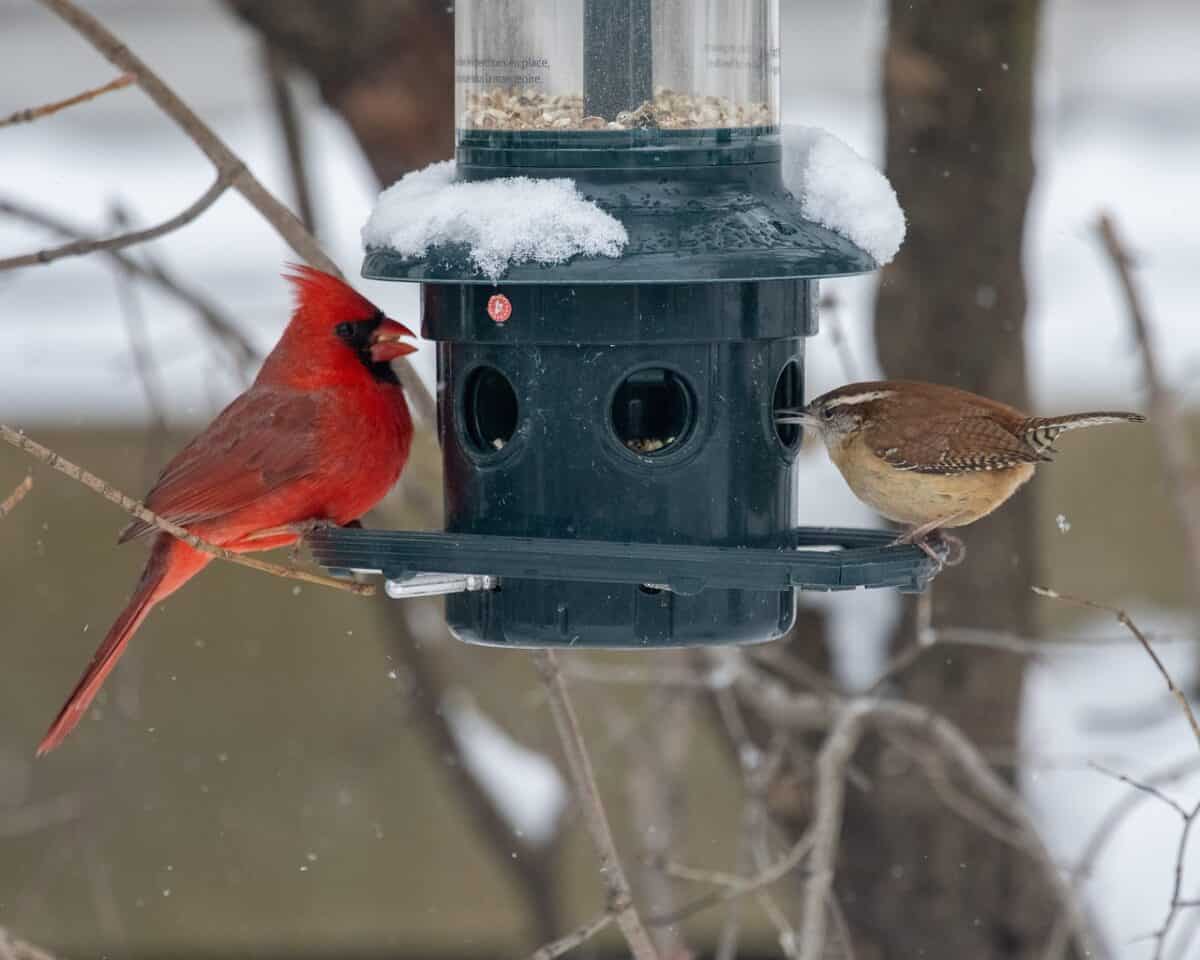
As temperatures drop and snow blankets much of North America, many bird species face the challenging winter months with remarkable adaptations and survival strategies. One such strategy brings them closer to human habitation – bird feeders. These backyard sanctuaries become critical lifelines for both year-round resident birds and seasonal visitors during the harshest winter conditions. For bird enthusiasts across America, winter offers a unique opportunity to observe a diverse array of feathered visitors that might otherwise remain hidden in forests and fields. This article explores the fascinating winter birds that regularly visit American feeders, their behaviors, dietary preferences, and how you can create the most welcoming environment for your seasonal avian guests.
The Winter Feeder Phenomenon
🔥 Would you like to save this?
We'll email this post to you, so you can come back to it later!
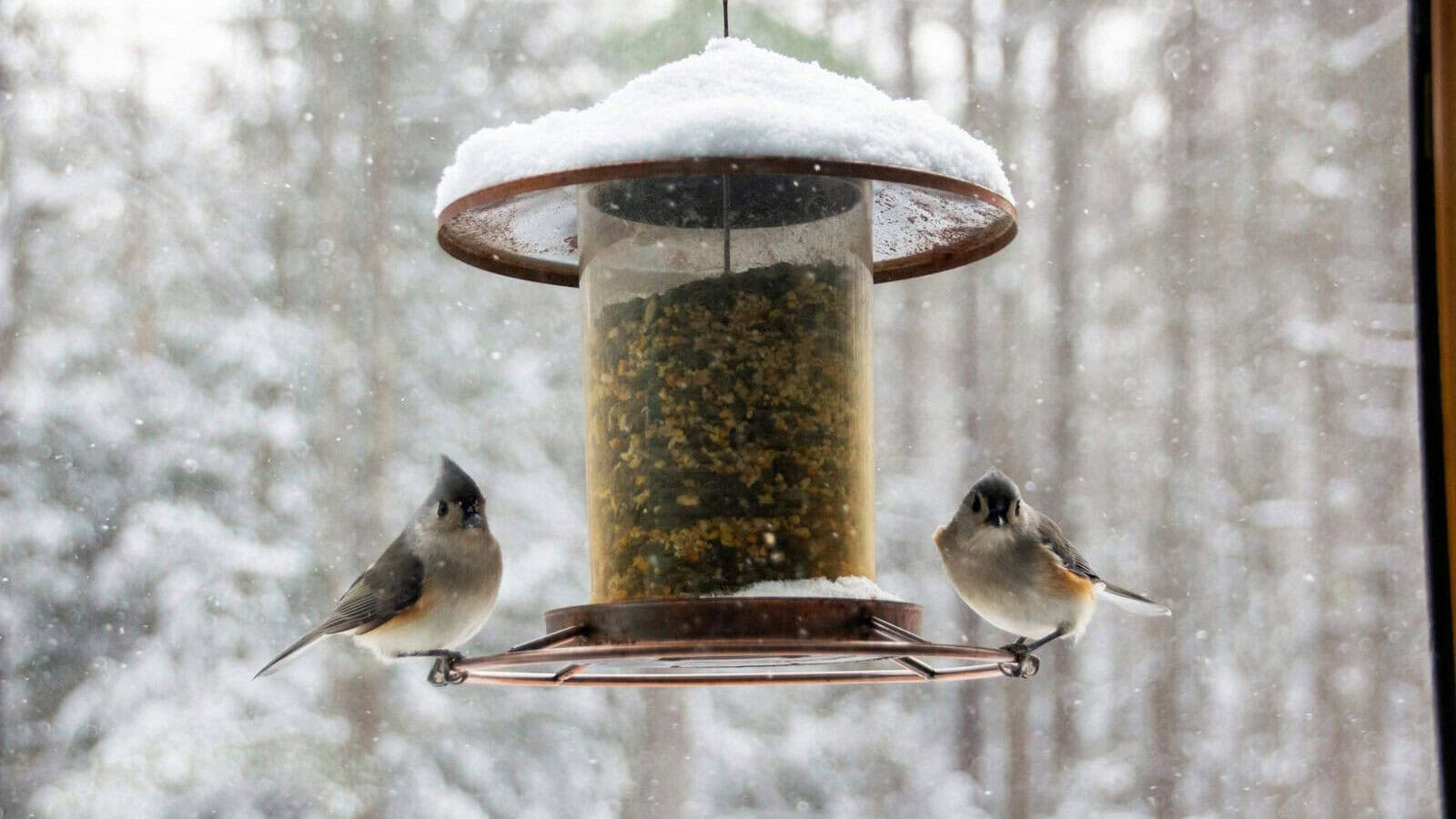
Winter bird feeding has become one of North America’s most popular wildlife-related activities, with an estimated 59 million Americans participating each year. During the coldest months, when natural food sources like insects and berries become scarce, bird feeders provide vital supplementary nutrition that helps many species survive. Studies show that consistent access to bird feeders can significantly impact local winter bird survival rates, particularly during severe weather events.
The relationship between humans and winter birds creates a mutually beneficial arrangement. Birds receive life-sustaining nourishment during food-scarce months, while humans gain the joy of wildlife observation, educational opportunities, and the satisfaction of supporting conservation efforts. Many bird enthusiasts report that winter feeding stations attract the greatest diversity and volume of birds compared to any other season, making it the prime time for bird watching and photography.
Northern Cardinals: Winter’s Iconic Visitors
🔥 Would you like to save this?
We'll email this post to you, so you can come back to it later!
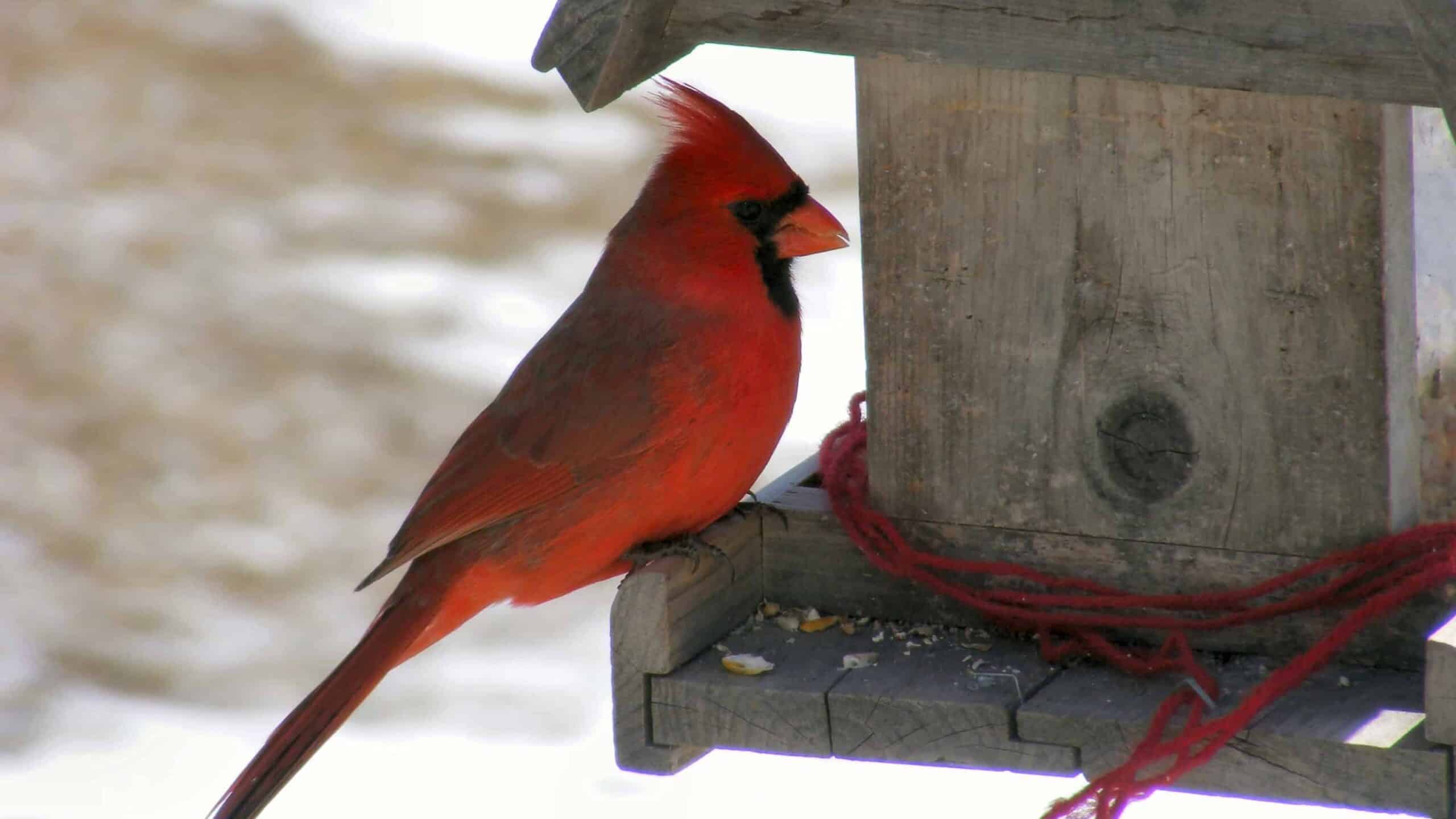
Perhaps no bird symbolizes winter feeding more than the Northern Cardinal (Cardinalis cardinalis). These striking birds with their vibrant red plumage provide a dramatic contrast against snowy landscapes. Cardinals are non-migratory, meaning they remain in their territories year-round across the eastern and central United States. During winter, they become particularly visible as they readily visit feeders in pairs or small family groups.
Cardinals prefer feeding stations that offer sunflower seeds, safflower seeds, and cracked corn. Unlike many species, cardinals feed primarily in early morning and late evening hours. Their distinctive crest, thick bill, and the male’s brilliant red coloration make them unmistakable visitors. Female cardinals, with their reddish-brown coloration accented by red highlights, are equally regular feeder visitors. These birds maintain pair bonds throughout the year, often arriving at feeders as couples, making them a favorite among winter bird watchers.
Dark-Eyed Juncos: Snowbirds of Winter
🔥 Would you like to save this?
We'll email this post to you, so you can come back to it later!
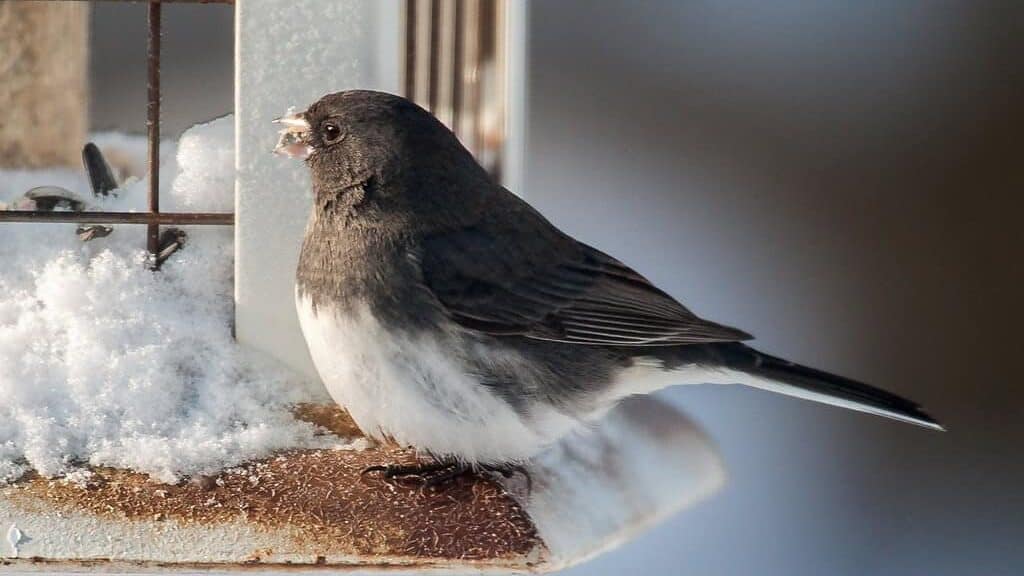
Dark-eyed Juncos (Junco hyemalis) earn their nickname “snowbirds” by appearing in much of the United States just as winter arrives. These medium-sized sparrows breed in northern forests and mountainous regions but descend to lower elevations and more southerly locations when cold weather sets in. For many Americans, the arrival of juncos at backyard feeders signals winter’s official beginning. With their distinctive slate-gray upper parts and white bellies, juncos create a visual echo of winter skies above snow-covered ground.
Juncos typically feed on the ground beneath feeders, preferring white millet, cracked corn, and black oil sunflower seeds that have fallen. They employ a characteristic feeding behavior called “scratching,” where they hop backward to uncover seeds hidden in snow or leaf litter. Juncos often arrive in flocks that can number from a few individuals to several dozen birds, creating bustling activity beneath feeding stations. Their gentle calls and constant movement make them engaging subjects for winter bird observation.
Chickadees: The Fearless Winter Regulars
🔥 Would you like to save this?
We'll email this post to you, so you can come back to it later!
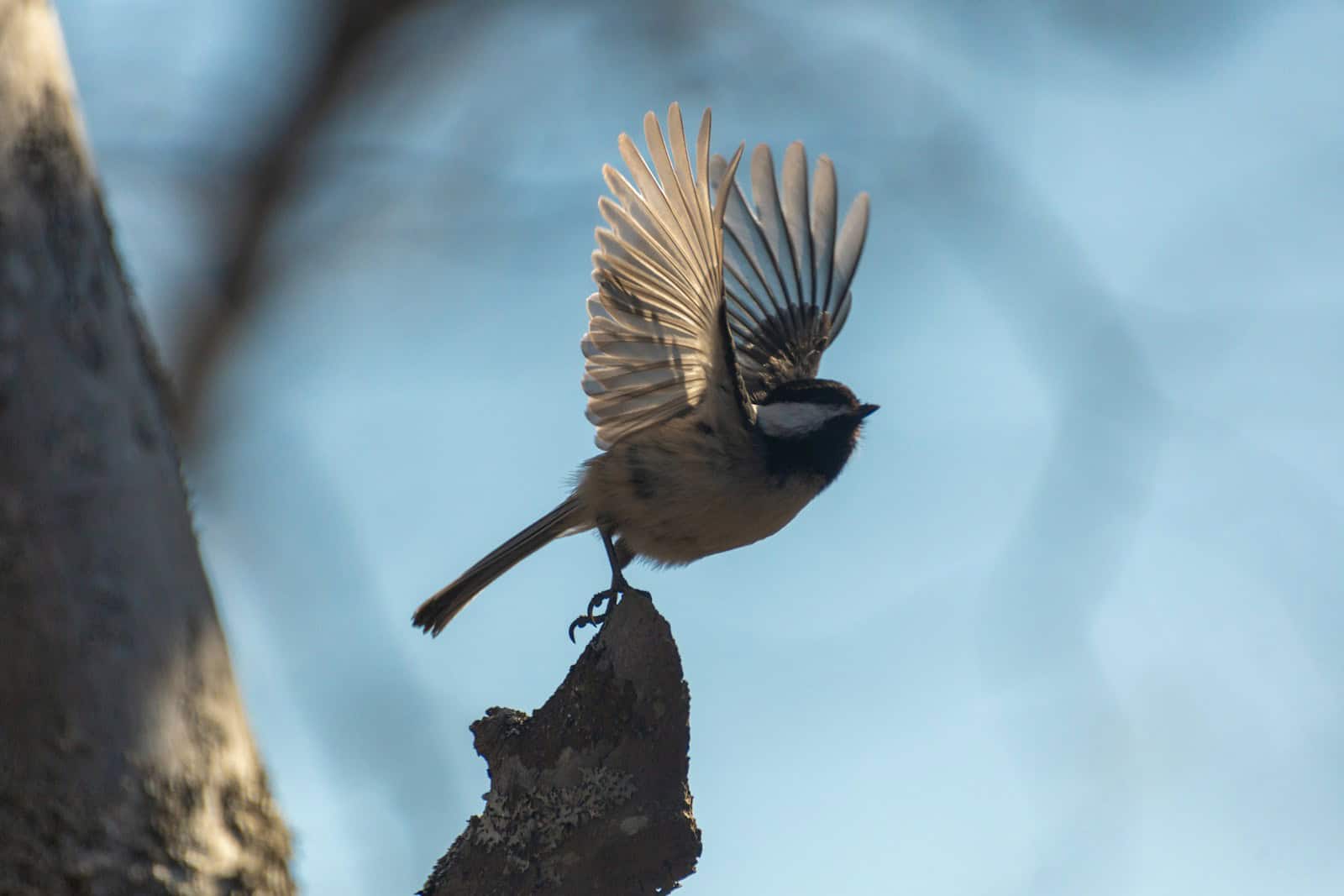
Two chickadee species dominate winter feeders across America – the Black-capped Chickadee (Poecile atricapillus) in northern regions and the Carolina Chickadee (Poecile carolinensis) in southeastern states. These tiny, round birds with black caps and bibs are among the most fearless feeder visitors, often being the first to investigate new feeding stations. Chickadees are year-round residents that form loose winter flocks, sometimes leading mixed-species feeding groups that include nuthatches, titmice, and woodpeckers.
Remarkably adaptable, chickadees have developed several physiological adaptations to survive winter, including the ability to lower their body temperature by up to 15 degrees Fahrenheit during cold nights – a controlled hypothermia that conserves energy. They also possess exceptional spatial memory, allowing them to cache seeds in hundreds of different locations and remember these hiding spots for weeks. At feeders, chickadees prefer black oil sunflower seeds, suet, and peanuts. Their acrobatic feeding style and characteristic “chick-a-dee-dee-dee” call provide endless entertainment for winter bird watchers.
Nuthatches: The Upside-Down Specialists
🔥 Would you like to save this?
We'll email this post to you, so you can come back to it later!
Two nuthatch species commonly visit winter feeders: the White-breasted Nuthatch (Sitta carolinensis) and the smaller Red-breasted Nuthatch (Sitta canadensis). These birds are instantly recognizable by their unique feeding behavior – they’re the only North American birds that routinely climb headfirst down tree trunks and feeder poles. This distinctive upside-down position gives them access to food resources that other birds might miss. White-breasted Nuthatches are year-round residents across much of the United States, while Red-breasted Nuthatches perform irregular winter migrations from northern forests when cone crops fail.
At feeders, nuthatches show a strong preference for black oil sunflower seeds, peanuts, and suet. They typically grab a single seed, fly to a nearby tree, and wedge it into bark crevices before hammering it open with their sharp bills – a behavior that earned them their name (“nuthatch” derives from “nut hacker”). Nuthatches are known for their nasal calls and tend to be assertive at feeding stations despite their small size. Their stocky bodies, short tails, and long, pointed bills create a distinctive silhouette that winter bird watchers come to recognize and appreciate.
Finches: Winter’s Colorful Irruptives
🔥 Would you like to save this?
We'll email this post to you, so you can come back to it later!
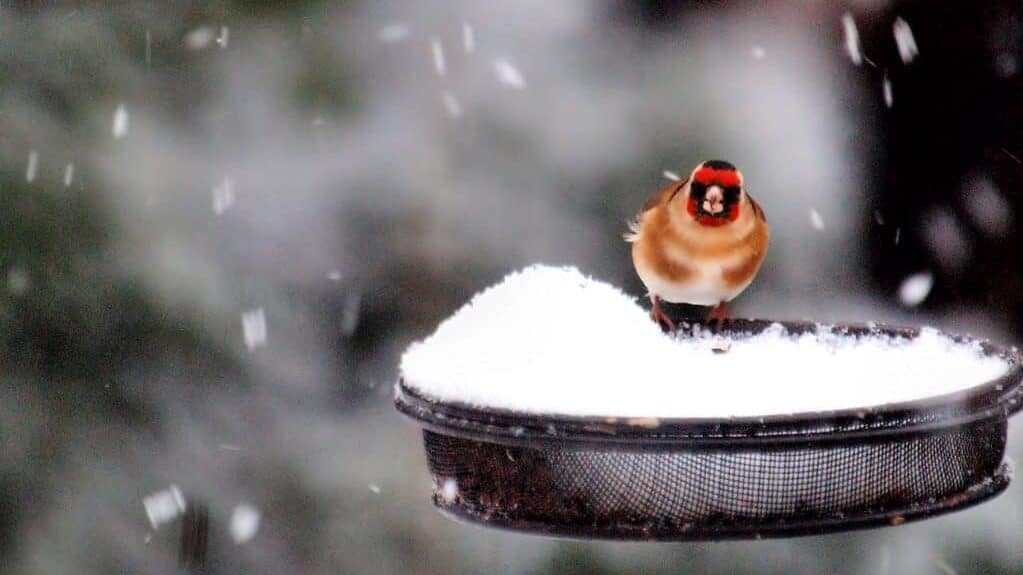
Winter finches provide some of the most exciting and unpredictable backyard feeding experiences. Species like American Goldfinches (Spinus tristis), House Finches (Haemorhous mexicanus), Purple Finches (Haemorhous purpureus), and during irruption years, Pine Siskins (Spinus pinus), Common Redpolls (Acanthis flammea), and Evening Grosbeaks (Coccothraustes vespertinus) can suddenly appear at feeders in large numbers. These irruptive movements typically occur when seed crops fail in their northern breeding territories, forcing birds to venture far south in search of food.
Finches show strong preferences for nyjer (thistle) seed and black oil sunflower seeds. They tend to feed in flocks, creating colorful, active scenes at tube and platform feeders. American Goldfinches, which molt into duller plumage for winter, still display distinctive flying patterns and sweet calls. House Finches, introduced to eastern North America in the 1940s, now frequent feeders nationwide with males showing variable red coloration. The rarer Purple Finch visits during irruption years, with males displaying a raspberry-colored plumage that appears as though the bird was “dipped in raspberry juice,” as Roger Tory Peterson famously described.

Portable Dog Water Bottle Foldable Dog Travel Water Bottle
Check Price on AmazonAs an Amazon Associate, we earn from qualifying purchases.
10/7/2026 1:29 pm GMTi

Air Purifiers for Home Pets Large Room Up to 3000 Ft²,HEPA Air Cleaner with Washable Double-Side Filter, PM2.5 Air Quality Monitor,15dB Sleep Mode for Bedroom Odor Dust Pollen,White
Check Price on AmazonAs an Amazon Associate, we earn from qualifying purchases.
10/8/2026 8:23 am GMTi

Earth Rated XL Dog & Puppy Pee Pads, Discreet Top, Max Absorbency
Check Price on AmazonAs an Amazon Associate, we earn from qualifying purchases.
10/7/2026 1:28 pm GMTi

Professional 7 in 1 Dog Paw Cleaner for Dogs & Cats - Includes 1 Portable Paw Washer, 1 Bath Brush
Check Price on AmazonAs an Amazon Associate, we earn from qualifying purchases.
10/7/2026 1:26 pm GMTi

PetSafe Oasys Pet Fountain, 1/2 Gallon (64 oz), Small Dogs & Cats
Check Price on AmazonAs an Amazon Associate, we earn from qualifying purchases.
10/8/2026 8:14 am GMTi
Woodpeckers: Suet Station Specialists
🔥 Would you like to save this?
We'll email this post to you, so you can come back to it later!
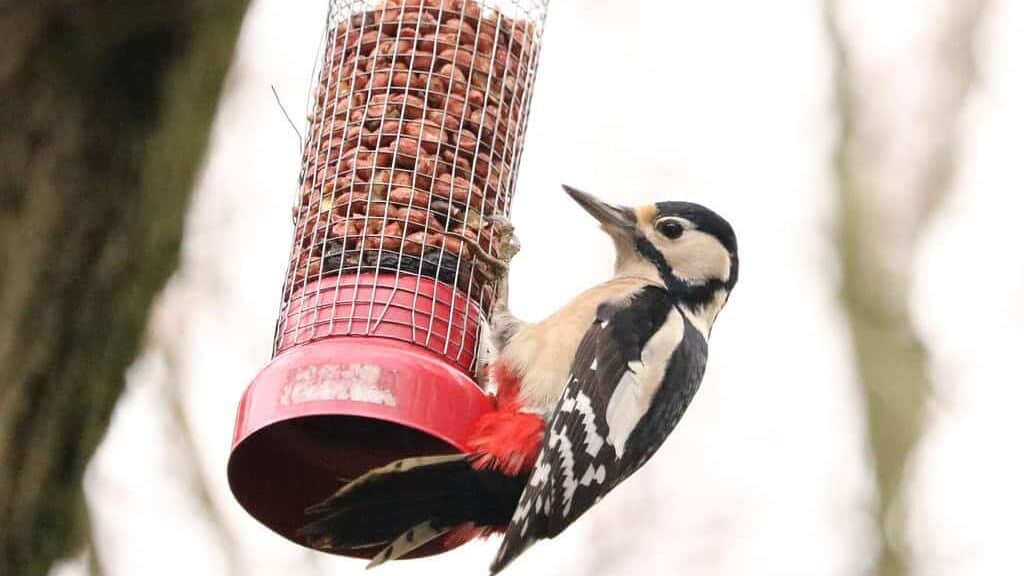
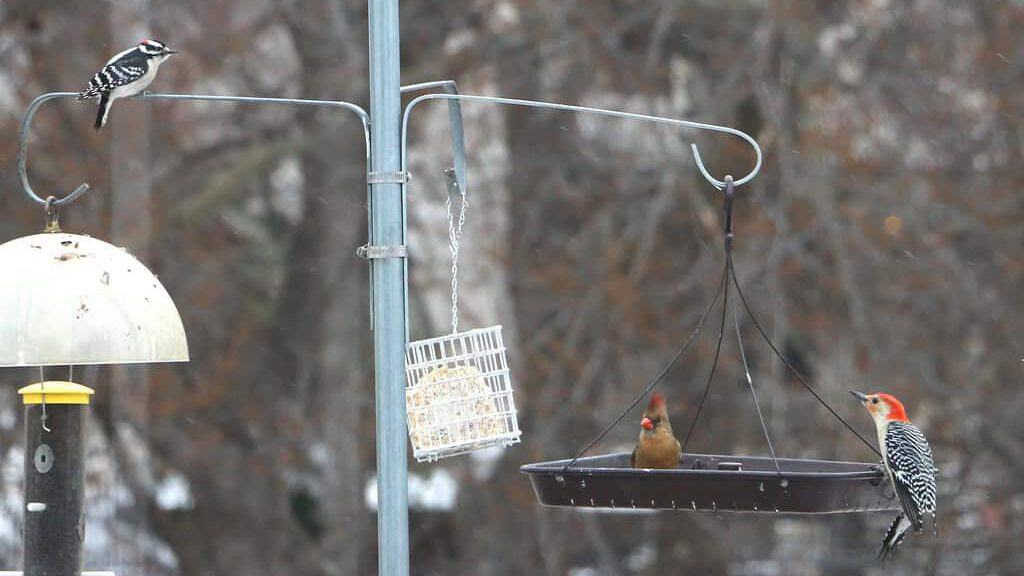
Winter brings increased woodpecker activity to backyard feeding stations, particularly those offering suet. The Downy Woodpecker (Dryobates pubescens) and its larger lookalike, the Hairy Woodpecker (Dryobates villosus), become regular visitors, with their striking black-and-white patterns and males’ red nape patches. In eastern and central regions, the Red-bellied Woodpecker (Melanerpes carolinus) – despite its misleading name, as its most noticeable feature is actually a red cap – frequents suet feeders. Northern Flickers (Colaptes auratus) and Yellow-bellied Sapsuckers (Sphyrapicus varius) may also make appearances in certain regions.
Woodpeckers primarily visit feeders for high-energy suet, though they also consume black oil sunflower seeds and peanuts. Their specialized zygodactyl feet (with two toes forward and two backward) allow them to cling vertically to feeder surfaces. Woodpeckers play crucial ecological roles during winter by continuing to excavate insect larvae from trees and creating cavities that provide shelter for many species during harsh weather. Their rhythmic drumming and distinct calls bring auditory diversity to the winter landscape, while their boldly patterned plumage adds visual interest to feeding stations.
Sparrows: The Ground-Feeding Flock
🔥 Would you like to save this?
We'll email this post to you, so you can come back to it later!
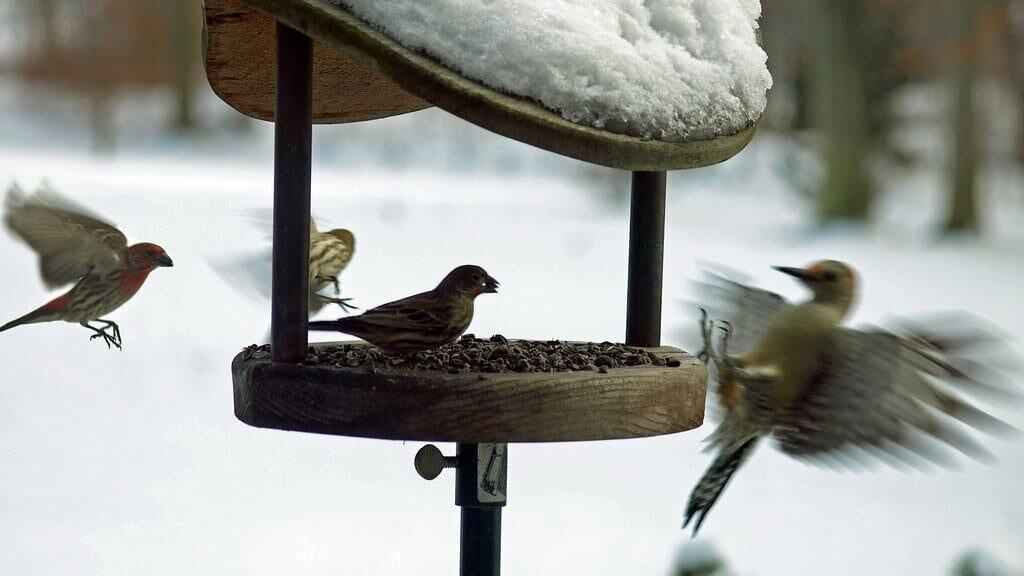
Several sparrow species become prominent winter feeder visitors, particularly at ground feeding stations or beneath elevated feeders. The American Tree Sparrow (Spizelloides arborea), despite its name, breeds in the Arctic tundra and visits the United States only during winter months. These charming birds with rusty caps and a single dark spot on their unmarked breasts often feed in small flocks. White-throated Sparrows (Zonotrichia albicollis) and White-crowned Sparrows (Zonotrichia leucophrys) also migrate south for winter, bringing their distinctive head patterns and melodious calls to feeding areas.
Song Sparrows (Melospiza melodia) and Field Sparrows (Spizella pusilla) may remain year-round in milder regions, becoming more visible at feeders during winter. These sparrows primarily consume millet, cracked corn, and sunflower seeds scattered on the ground or on platform feeders. They prefer feeding areas with nearby brush piles or dense shrubbery that provide quick escape from predators. The introduced House Sparrow (Passer domesticus), while often less welcomed by birders due to its aggressive nature toward native species, also becomes a common sight at winter feeding stations across urban and suburban landscapes.
Blue Jays: The Watchful Winter Sentinels
🔥 Would you like to save this?
We'll email this post to you, so you can come back to it later!
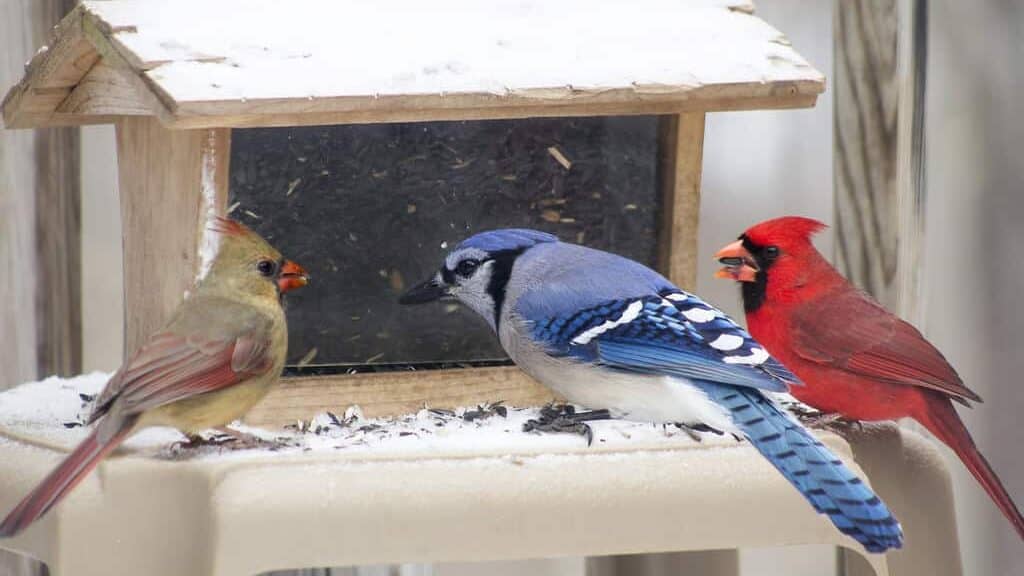
Blue Jays (Cyanocitta cristata) bring both color and commotion to winter feeding stations across eastern and central North America. These large, crested birds with vibrant blue, white, and black plumage often arrive in small family groups, announcing their presence with a variety of loud calls. While some Blue Jays migrate, many remain year-round residents, becoming more dependent on feeders during winter months. They serve as important sentinels, alerting other birds to potential dangers with their distinctive “jay-jay” alarm calls.
At feeders, Blue Jays display remarkable intelligence and adaptability. They prefer peanuts in the shell, whole corn kernels, and sunflower seeds. Jays are known for their caching behavior, often collecting and hiding dozens of seeds during a single feeding visit, which helps with forest regeneration when these seeds are forgotten and eventually germinate. Their habit of mimicking hawk calls occasionally creates false alarms at feeding stations. Despite sometimes bullying smaller birds, Blue Jays’ striking appearance and complex behaviors make them fascinating winter feeder visitors that many bird enthusiasts eagerly anticipate.

Halloween Cat Costume Cloak Witch Hat Pet Accessories
Check Price on AmazonAs an Amazon Associate, we earn from qualifying purchases.
10/9/2026 2:44 pm GMTi

2 Pcs Halloween Pet Hat Bandana Set, Witch Pumpkin Costumes for Dogs
Check Price on AmazonAs an Amazon Associate, we earn from qualifying purchases.
10/9/2026 2:45 pm GMTi

Orthopedic Extra Large Dog Bed, Waterproof Washable XL Pet Bed 44"
Check Price on AmazonAs an Amazon Associate, we earn from qualifying purchases.
10/7/2026 1:32 pm GMTi

Halloween Dog Collar with Bow, Orange Cute Ghost Collar,
Check Price on AmazonAs an Amazon Associate, we earn from qualifying purchases.
10/9/2026 2:43 pm GMTi

Glass Hummingbird Feeder for Outdoors Hanging, 16 oz Leak-Proof Nectar Feeder with Bee Guards & Ant Moat
Check Price on AmazonAs an Amazon Associate, we earn from qualifying purchases.
10/7/2026 1:22 pm GMTi
Mourning Doves: Peaceful Winter Visitors
🔥 Would you like to save this?
We'll email this post to you, so you can come back to it later!
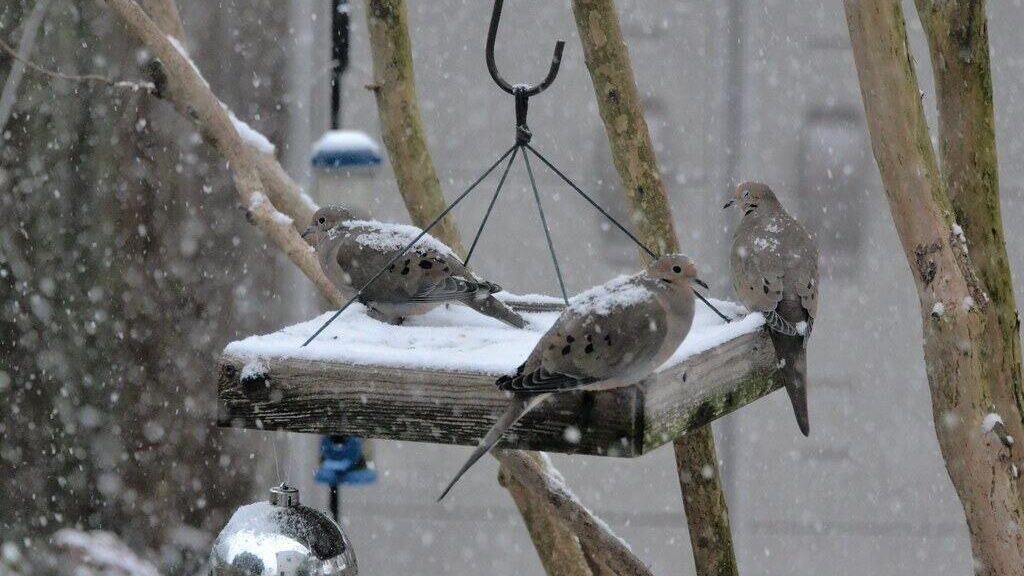
Mourning Doves (Zenaida macroura) become particularly visible at winter feeding stations, often appearing in pairs or small flocks that grow larger as temperatures drop. These medium-sized birds with soft brown-gray plumage and long, pointed tails create a peaceful presence as they forage for fallen seeds. While some northern populations migrate south, mourning doves can be found year-round in much of the United States, becoming more feeder-dependent during winter months when natural seeds become less accessible under snow and ice.
At feeding stations, Mourning Doves prefer feeding on the ground or large platform feeders where they can comfortably perch. They primarily consume millet, cracked corn, and black oil sunflower seeds. Unlike many birds that crack seeds open, doves swallow seeds whole and grind them in their muscular gizzards. They can consume up to 20% of their body weight daily and often visit feeding areas in early morning and late afternoon. Their soft cooing calls and gentle nature make them welcome winter visitors, though their slow, waddling ground movement makes them vulnerable to predators near feeding stations.
Creating the Ideal Winter Feeding Station
🔥 Would you like to save this?
We'll email this post to you, so you can come back to it later!
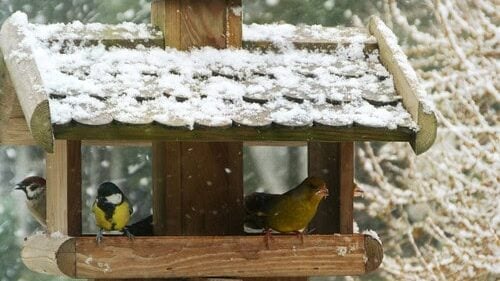
Successful winter bird feeding requires strategic planning. Offer diverse foods to attract maximum species diversity: black oil sunflower seeds appeal to most feeder birds; nyjer (thistle) seeds attract finches; suet cakes draw woodpeckers, chickadees, and nuthatches; safflower seeds discourage squirrels while attracting cardinals; and white millet serves ground-feeding sparrows and juncos. Multiple feeder styles accommodate different feeding preferences – tube feeders for finches, platform feeders for larger birds, suet cages for woodpeckers, and ground feeding areas for sparrows and doves.

Glass Hummingbird Feeder for Outdoors Hanging
Check Price on AmazonAs an Amazon Associate, we earn from qualifying purchases.
10/7/2026 1:21 pm GMTi

Smart Bird Feeder with Camera Solar Powered, 2K HD Live Video, 10,000+ Bird Species AI Identification
Check Price on AmazonAs an Amazon Associate, we earn from qualifying purchases.
10/7/2026 1:22 pm GMTi

Dog Stairs for Bed 18" H, 4-Step Dog Steps for High Bed
Check Price on AmazonAs an Amazon Associate, we earn from qualifying purchases.
10/9/2026 2:42 pm GMTi

Hand Blown Glass Hummingbird Feeders for Outdoors Hanging, 24oz Wild Bird Nectar Feeder
Check Price on AmazonAs an Amazon Associate, we earn from qualifying purchases.
10/7/2026 1:23 pm GMTi
Feeder placement significantly impacts bird safety and visitation rates. Position feeders near protective cover like evergreen shrubs or brush piles that offer quick escape from predators, but not so close that predators can launch ambush attacks. Maintain consistent feeding throughout winter once you’ve started, as birds come to rely on these food sources during harsh weather. Regular cleaning prevents disease transmission, particularly during wet periods when seeds can spoil quickly. Providing fresh water through heated bird baths becomes especially valuable during freezing conditions when natural water sources are unavailable.
Winter bird feeding creates a unique connection between humans and wildlife during a season often characterized by isolation and stillness. The birds that visit American feeders each winter represent diverse adaptations, migrations patterns, and survival strategies that have evolved over millennia. By providing supplemental nutrition during the challenging winter months, bird enthusiasts not only support local bird populations but also create opportunities for scientific observation that contribute to our understanding of avian ecology and behavior.
The personal rewards of winter bird feeding extend beyond conservation. The flash of a cardinal against fresh snow, the acrobatics of chickadees at a suet feeder, the gentle cooing of mourning doves, and the sudden irruption of northern finches all provide moments of joy and wonder during winter’s darkest days. As climate change alters traditional migration patterns and habitat availability, backyard feeding stations may become increasingly important for bird conservation. By learning to identify and appreciate the birds that flock to American feeders each winter, we develop deeper connections to the natural world and our role in preserving it for future generations.

- Meet the Birds That Flock to American Feeders Each Winter - November 9, 2026
- What It Actually Means When a Hummingbird Visits You - November 9, 2026
- 15 Dog Breeds With the Sassiest Personalities - November 9, 2026
Leave a comment
You must be logged in to post a comment.