


Welcome to the world’s largest owl! Owls, with their mesmerizing large eyes and silent flight, are iconic creatures of the night skies. Beyond their captivating appearance lies a world of fascinating facts, including their remarkable hunting prowess and diverse habitats. Today, we delve into the realm of owls to discover the largest owl species in the world: Blakiston’s fish owl.
The Largest Owl in the World

🔥 Would you like to save this?
We'll email this post to you, so you can come back to it later!
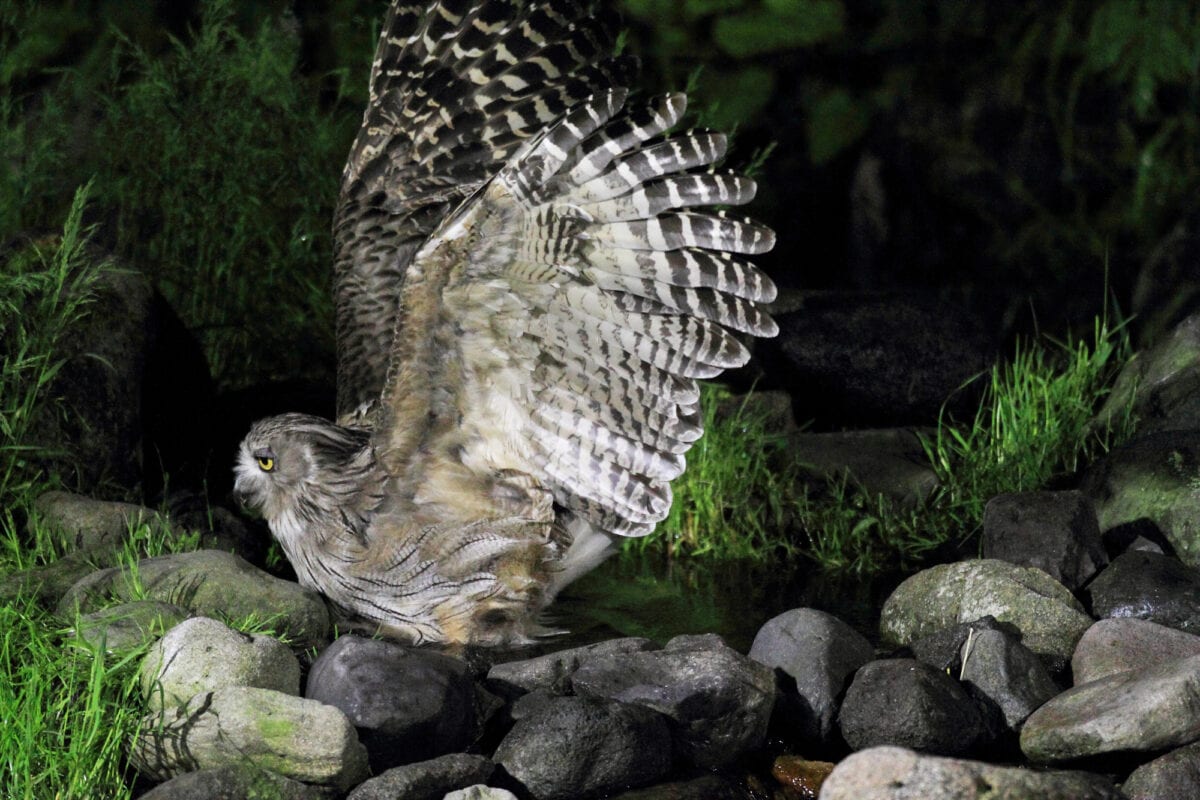
Blakiston’s fish owl reigns supreme as the largest owl species globally, boasting an impressive wingspan that can stretch up to six feet. Found primarily in the forests of Japan, China, and Russia, these magnificent birds are endangered, with dwindling populations raising concerns among conservationists.
Named after the English naturalist Thomas Blakiston, who first documented the species in Japan in 1883, these owls have a penchant for hunting fish. Their preferred habitat near water bodies provides ample opportunities to pursue their piscine prey, showcasing their adaptability to diverse environments.
About These Larger Birds

🔥 Would you like to save this?
We'll email this post to you, so you can come back to it later!
Owls, although often associated with darkness, come in various shapes and sizes. Ranging from the petite to the imposing, these birds of prey share common features such as keen eyesight, hooked beaks, and powerful talons. Their wings, in particular, are marvels of aerodynamic design, enabling them to soar through the air with precision and stealth.
One notable characteristic is their ability to fly silently, a trait facilitated by specialized wing and feather structures. While many species are nocturnal, some, like the northern hawk owl, are diurnal hunters, adapting their habits to suit their environments.
What Type of Birds Are They?
🔥 Would you like to save this?
We'll email this post to you, so you can come back to it later!
Classified as raptors, they exhibit all the hallmarks of predatory birds. Their carnivorous diet, sharp beaks, and formidable feet equipped with razor-sharp talons mark them as efficient hunters. With exceptional eyesight, these birds can detect prey from great distances, ensuring successful hunts even in the cover of darkness.
Other Large Owls

🔥 Would you like to save this?
We'll email this post to you, so you can come back to it later!
While Blakiston’s fish owl holds the title of the largest based on wingspan, other formidable owls also command attention. The Eurasian eagle-owl, with its imposing stature and impressive wingspan, ranks as the second-largest globally. Additionally, snowy owls, although lighter in weight, boast substantial wingspans, underscoring the diversity within this family.
Let’s explore the physical features of the owl to further understand them…
Eye Structure
Owls have large, forward-facing eyes which gives them great night vision.

🔥 Would you like to save this?
We'll email this post to you, so you can come back to it later!
Facial Disc

🔥 Would you like to save this?
We'll email this post to you, so you can come back to it later!
The facial disc of an owl helps to funnel sound to its ears.
Beak

🔥 Would you like to save this?
We'll email this post to you, so you can come back to it later!
Owls have sharp, hooked beaks.
Plumage

🔥 Would you like to save this?
We'll email this post to you, so you can come back to it later!
Owls have soft, dense feathers that give them silent flight.
Talons

🔥 Would you like to save this?
We'll email this post to you, so you can come back to it later!
Owls’ talons are strong and curved. They are perfect for catching and holding prey.
Wing Shape

🔥 Would you like to save this?
We'll email this post to you, so you can come back to it later!
The broad wings of owls give them maneuverability and efficient gliding.
Size Variations

🔥 Would you like to save this?
We'll email this post to you, so you can come back to it later!
They range in size from the tiny Elf Owl to the large Eurasian Eagle-Owl.
Ear Tufts

🔥 Would you like to save this?
We'll email this post to you, so you can come back to it later!
Some owl species have ear tufts that help with camouflage and communication.
Neck Rotation

🔥 Would you like to save this?
We'll email this post to you, so you can come back to it later!
Owls can rotate their heads up to 270 degrees! This is due to flexible neck vertebrae.
Feet Structure

🔥 Would you like to save this?
We'll email this post to you, so you can come back to it later!
They have zygodactyl feet. Which means they have two toes facing forward and two backward for a strong grip.
Camouflage

🔥 Would you like to save this?
We'll email this post to you, so you can come back to it later!
Owls’ feather patterns and colors help them blend into their surroundings.
Nocturnal Adaptations

🔥 Would you like to save this?
We'll email this post to you, so you can come back to it later!
They have heightened senses and silent flight for nocturnal hunting.
Silent Flight

🔥 Would you like to save this?
We'll email this post to you, so you can come back to it later!
Owls’ feather structure includes serrated edges that minimize noise during flight.
Binocular Vision

🔥 Would you like to save this?
We'll email this post to you, so you can come back to it later!
The forward-facing eyes of owls give amazing depth perception.
Ear Asymmetry

🔥 Would you like to save this?
We'll email this post to you, so you can come back to it later!
They have asymmetrical ear placements.
Wrapping Up

🔥 Would you like to save this?
We'll email this post to you, so you can come back to it later!
In conclusion, these animals, with their enigmatic presence and predatory prowess, captivate the imagination and inspire awe. Furthermore, from the largest species like Blakiston’s fish owl to the majestic snowy owl, these birds embody nature’s ingenuity and resilience. As stewards of the environment, it falls upon us to protect and preserve these magnificent creatures for generations to come.
Thank you for following along with this article –
Next up in the animal kingdom:

For any feedback please message Feedback@animalsaroundtheglobe.com
- Just How Big are Moose - November 5, 2026
- Discover The World Of Gibbons - November 1, 2026
- Meet The 20 Most Popular Animals Of Utah - October 31, 2026