
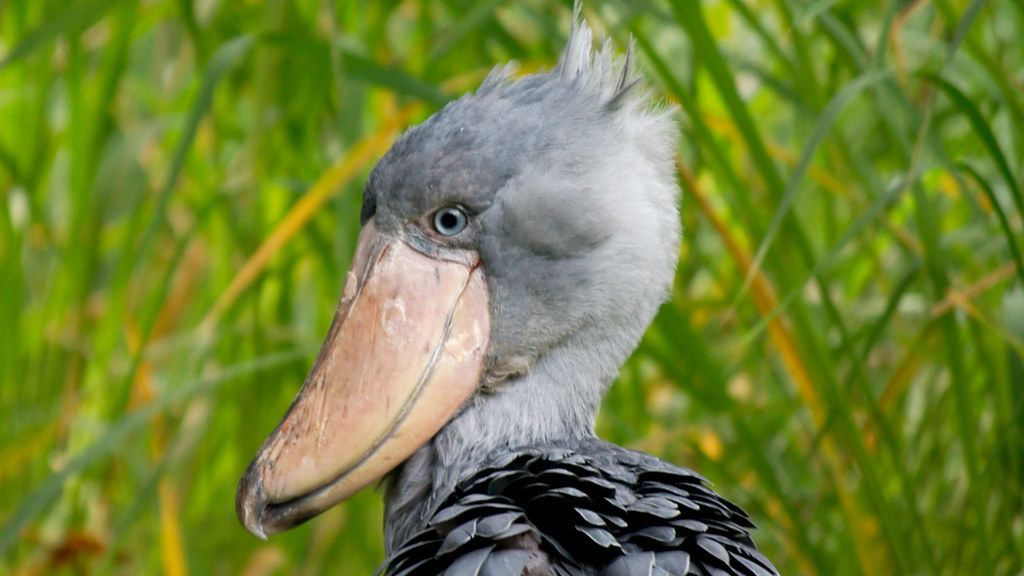
There’s a bird standing somewhere deep in the papyrus swamps of Central Africa right now, completely motionless, staring at the water with the quiet intensity of something that genuinely does not care whether you notice it or not. It’s not a gargoyle. It’s not a prop from a fantasy film. It’s the shoebill stork, and once you’ve seen one, you don’t forget it.
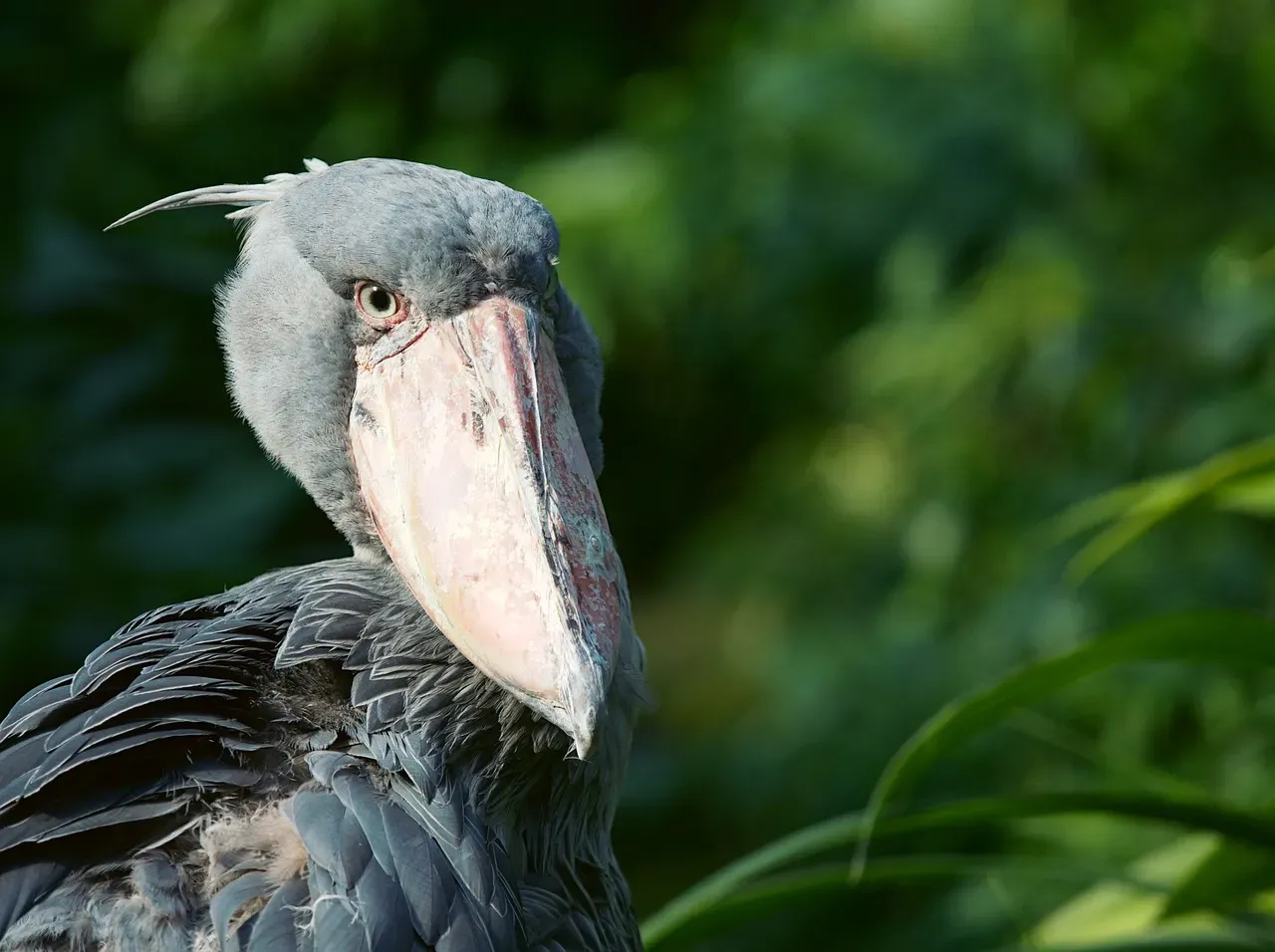
Shoebills have a prehistoric, dinosaur-like appearance with grey feathers, yellow eyes, and a white belly in adults. That description barely scratches the surface. The bird carries an almost unsettling stillness, combined with a silhouette that feels borrowed from a much older era of life on Earth. It has captivated biologists, wildlife photographers, and curious internet users in equal measure, and for good reason.
#1: A Body Built Like Nothing Else on Earth
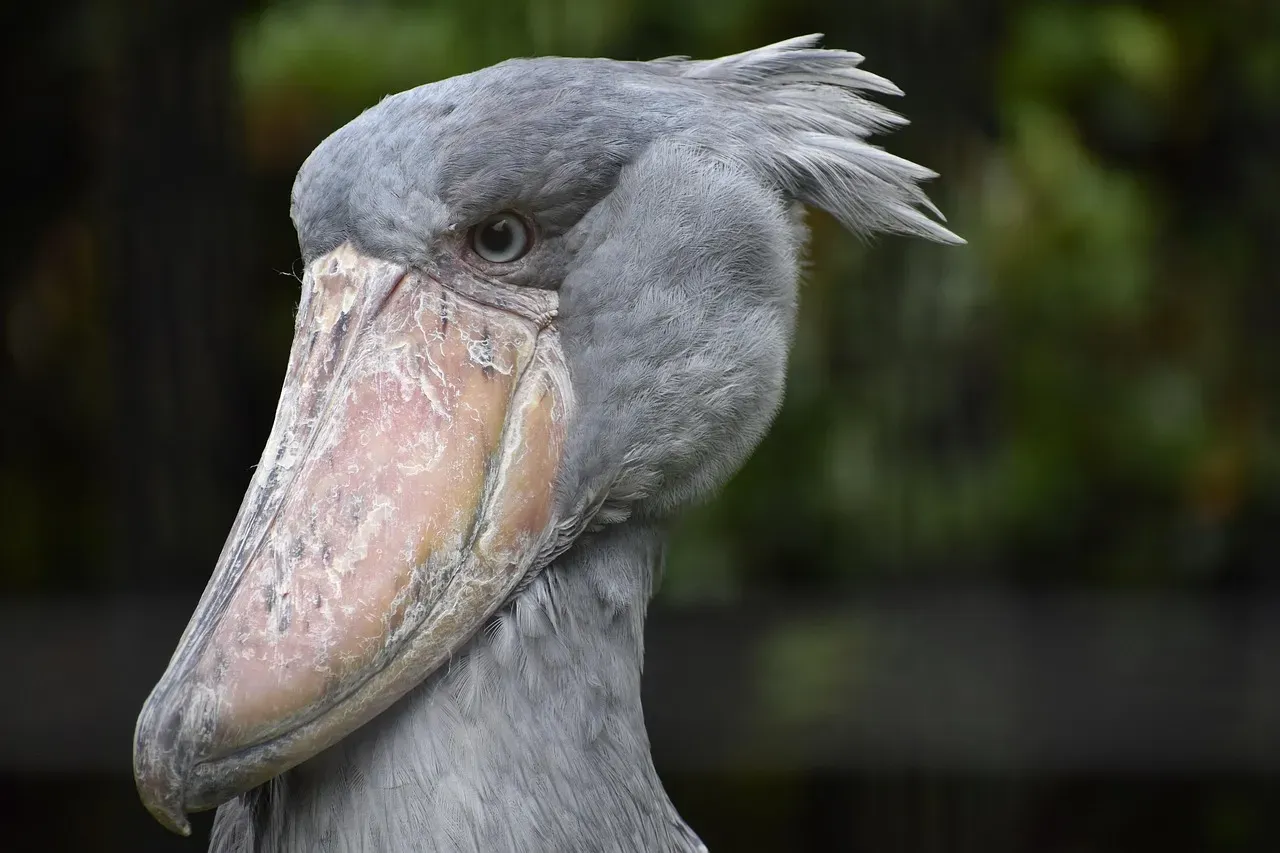
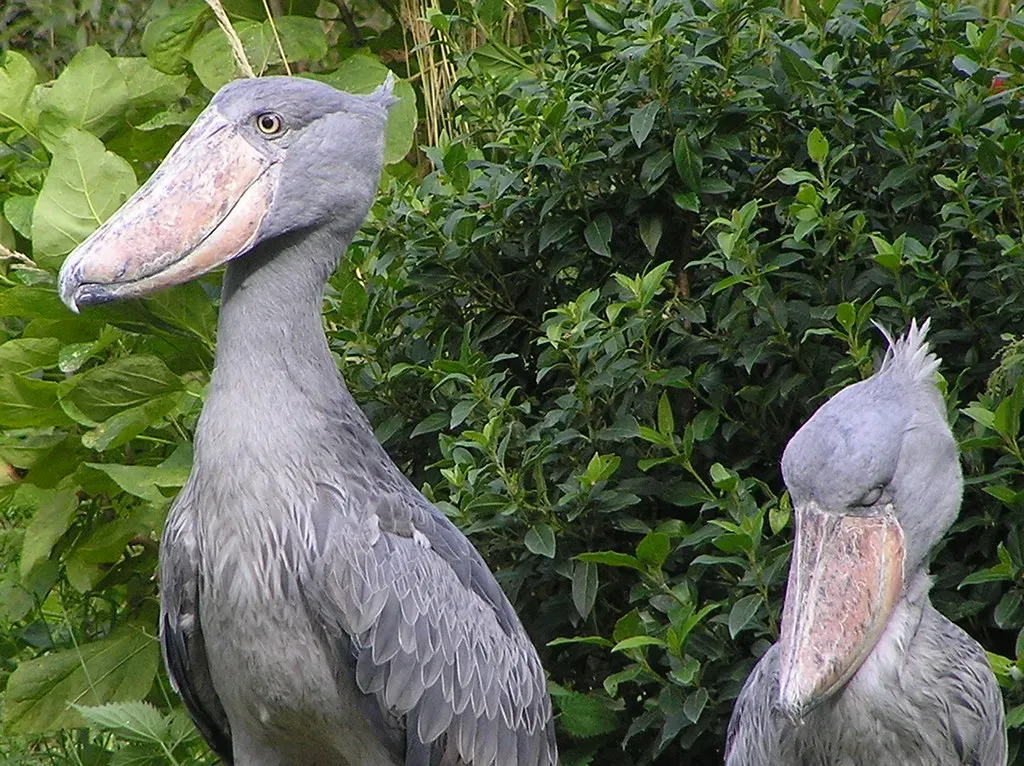
The shoebill is a tall bird, with a typical height range of 110 to 140 cm, with some specimens reaching as much as 152 cm. Its wingspan stretches from 230 to 260 cm, which translates to roughly seven and a half to eight and a half feet across. That’s not a small animal. That’s a bird that, standing next to an average adult human, reaches well past the waist.
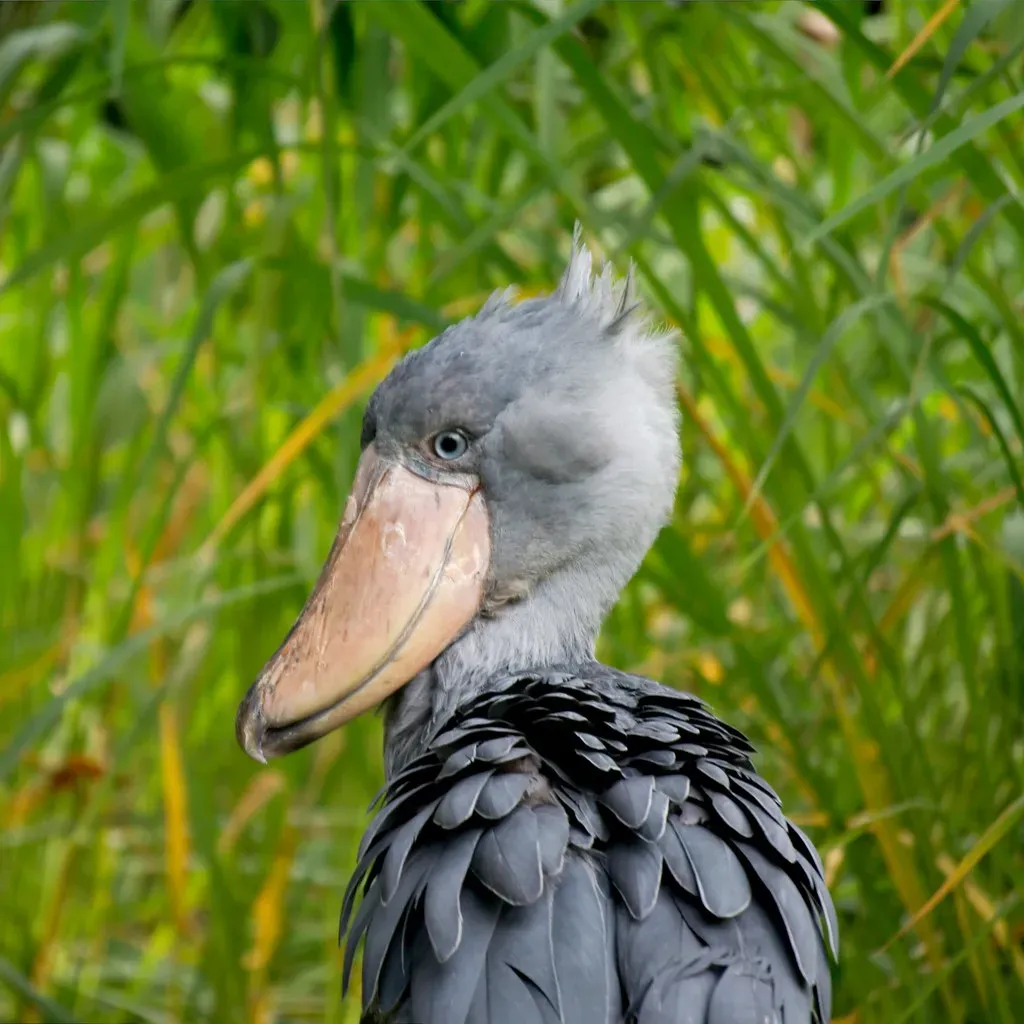
The plumage is slaty blue-grey overall with a darker grey head. The primary feathers are black-tipped and the secondaries have a greenish tint, while the underparts shade to a lighter grey. Combined with its small, shaggy nuchal crest and piercing yellowish or greyish-white eyes, the overall effect is something deeply odd to look at. It doesn’t resemble anything familiar, which is precisely why people find it so compelling.
Its slate-gray plumage and piercing yellow eyes lend it a somewhat prehistoric appearance, reminiscent of creatures from the Jurassic era, hence the frequent comparisons to dinosaurs. Whether that comparison is scientifically precise or not, it’s hard to argue with on a purely visual level.
#2: That Bill Is the Main Event
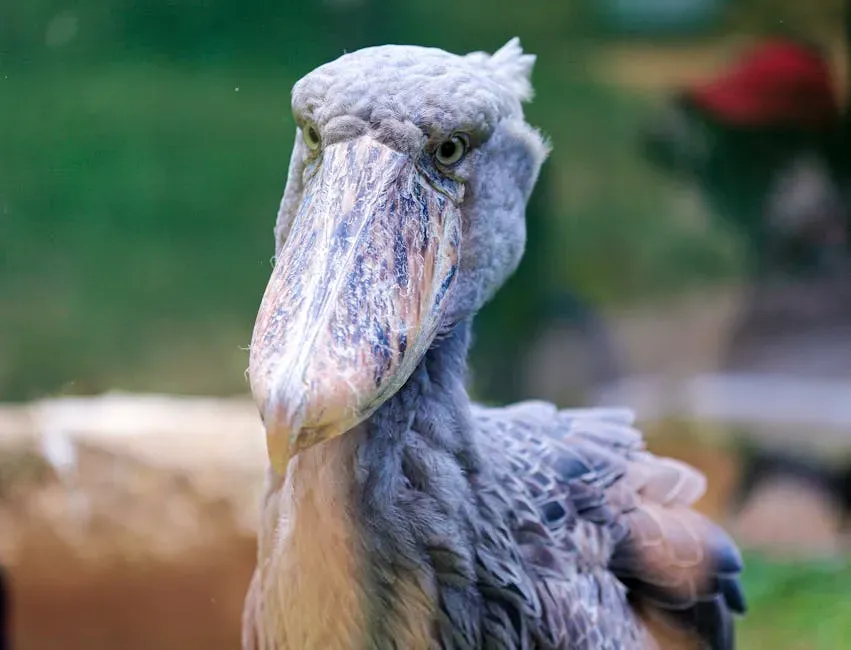
The signature feature of the species is its huge, bulbous bill, which is pinkish in color with erratic greyish markings. The exposed culmen measures 18.8 to 24 cm, making it the third-longest bill among living birds after pelicans and large storks. The sheer width of it is what tends to stop people cold.
At roughly 9 inches long and 4 inches wide, the shoebill’s bill is not delicate or flexible. It is dense, hollow, and edged with razor-sharp margins. The upper mandible ends in a prominent hooked tip, a biological structure designed to grip, decapitate, or crush struggling prey. This is not an ornamental feature. It’s a precision tool shaped entirely by millions of years of evolutionary pressure.
The shoebill’s large bill evolved as an adaptation to its swampy hunting grounds, where it hunts slippery animals. The beak shape is ideal for catching and crushing large slippery prey. Their beaks are also frequently used as a tool to scoop up water to cool themselves off in the tropical African sun. Few anatomical structures in the bird world work this hard.
#3: The Hunting Style Is Genuinely Eerie
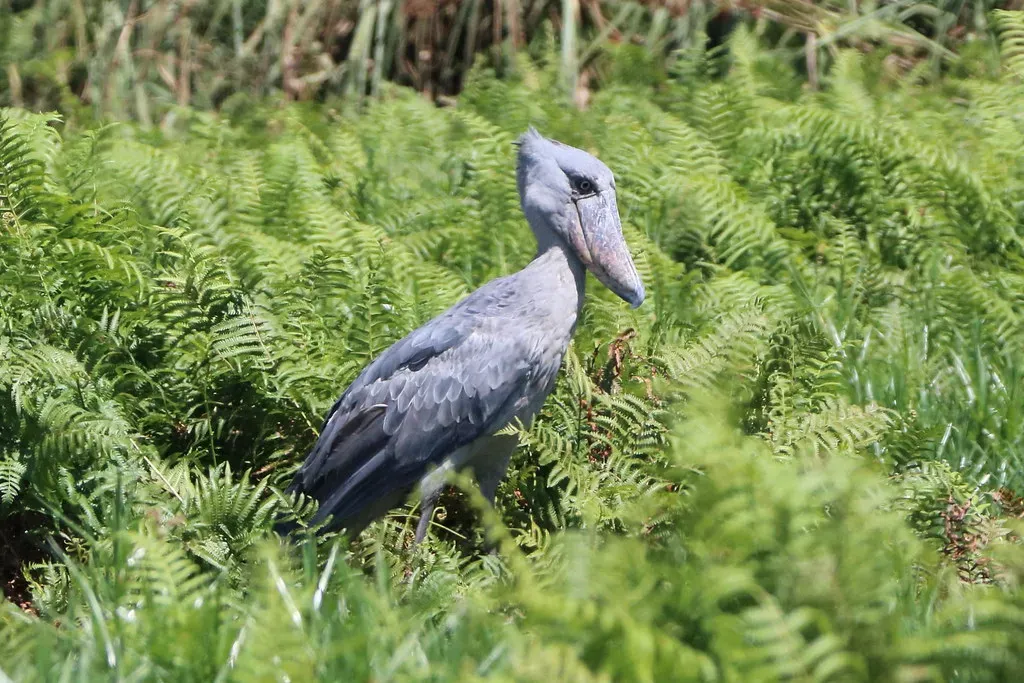
Shoebills can stay motionless for hours, so when a hapless lungfish comes up for air, it might not notice this lethal bird looming until it’s too late. The birds practice a hunting technique called “collapsing,” which involves lunging or falling forward on their prey. It’s a move that looks almost accidental until you realize the accuracy involved.
The principal senses used during hunting are vision and hearing. In order to facilitate binocular vision, shoebill storks hold their heads and bills vertically downward against the breast. They are also found where there is poorly oxygenated water, which causes the fish living in the water to surface for air more often, increasing the likelihood a shoebill stork will successfully capture its prey.
Shoebills are expert hunters, often standing motionless for long periods to ambush prey such as lungfish, frogs, snakes, snails, rodents, baby crocodiles, and occasionally even baby antelopes. The breadth of that menu is a reminder that this bird, quiet and still as it may appear, is one of the more formidable predators in its habitat.
#4: A Taxonomic Puzzle That Took Decades to Untangle
This family is monotypic. It contains only one genus, and that genus contains only one species: the Shoebill, and it’s not closely related to any other bird on the planet. That alone makes it extraordinary from a biological standpoint. Most birds belong to large, well-populated families. The shoebill stands alone.
Traditionally considered as allied with the storks, it was retained in that classification for many years. Based on osteological evidence, the suggestion of a pelecaniform affinity was first made in 1957. A 2008 DNA study reinforced their membership among the Pelecaniformes, effectively settling a debate that had stretched across several scientific generations. Currently they are placed in their own family and order, Balaenicipitiformes.
So far, two fossilized relatives of the shoebill have been described: Goliathia from the Early Oligocene of Egypt and Paludiavis from the Late Miocene of Pakistan and Tunisia. Fossil evidence suggests that shoebill storks have been around for at least 30 million years, with their earliest ancestors likely living in Africa during the Eocene epoch. That’s an ancient lineage, and the bird’s appearance quietly reflects it.
#5: A Species Under Pressure, and Running Out of Time
The International Union for the Conservation of Nature estimates that there are only between 3,300 and 5,300 adult shoebills left in the world, and the population is going down. As land is cleared for pasture, habitat loss is a major threat, and sometimes cattle will trample on nests. Agricultural burning and pollution from the oil industry and tanneries also affect their habitats.
Shoebills are hunted as food in some places, and in others, they’re hunted because they’re considered a bad omen. Because of their appearance, they are highly sought after for the illegal trade. Chicks are taken from nests just before fledging and often transported to the Middle East where they end up in private collections. The irony is that the same otherworldly looks that draw people to admire them also make them a target.
Ecotourism has emerged as a meaningful tool, with the shoebill functioning as a flagship wetland bird attracting guided tourism in range states, contributing to conservation education and habitat protection campaigns. Places like Uganda’s Mabamba Swamp have built small but important ecotourism economies around shoebill sightings, giving local communities a tangible reason to protect the bird’s habitat rather than drain it.
A Closing Thought
The shoebill stork is not a relic, exactly. It’s a fully modern, highly specialized predator that has simply never been under pressure to look like anything other than what it is. Its strangeness is not a flaw or an accident. It’s the result of tens of millions of years of very quiet, very patient refinement.
What genuinely concerns me is that we risk losing this bird before the wider world even fully understands it. A creature this distinctive, this ecologically singular, this visually arresting deserves more than a shrinking wetland and a declining population count. The shoebill doesn’t need our wonder. It was here long before us. The real question is whether we’ll make enough space for it to stay.

- Why Wolves Were Reintroduced to Yellowstone - July 15, 2026
- The Resurgence of America’s Wild Horses: A Symbol of Freedom and Hope - July 15, 2026
- 10 Cat Breeds That Tolerate Dogs Surprisingly Well - July 15, 2026