

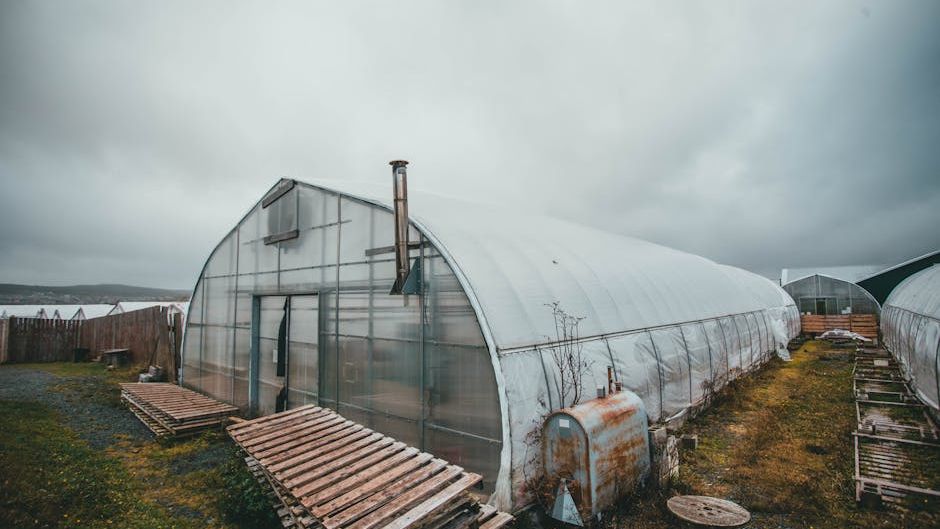
Pennsylvania greenhouse stays warm by storing heat underground – Image for illustrative purposes only (Image credits: Pexels)
Greenhouses in cold climates often rely on fossil fuels to maintain steady temperatures through winter. One operation in south-central Pennsylvania has turned to a different approach by capturing excess daytime heat and storing it underground for later use. The method, known as a climate battery, draws on the thermal mass of the earth itself to regulate conditions without burning propane or other fuels. This setup allows subtropical plants to survive and even produce fruit during months when outdoor temperatures would otherwise make such growth impossible.
How the Climate Battery Captures and Releases Heat
The system begins with a network of perforated pipes buried beneath the greenhouse floor. During sunny days, fans pull warm air from the structure down through these pipes, transferring heat into the surrounding soil. The ground acts as a large thermal reservoir, absorbing and holding the energy at depths where temperatures remain relatively stable year-round.
At night or on cloudy days, the process reverses. Cooler air from the greenhouse is circulated through the same pipes, picking up stored warmth from the soil before returning to the growing space. This cycle maintains interior temperatures in a range suitable for plants even when outside conditions drop well below freezing. The design requires no external energy source beyond the initial fan operation, which runs on electricity that can come from renewable sources.
Practical Results for Crop Production
Farmers using the technology report consistent success with heat-loving crops such as figs and other subtropical fruits. These plants remain productive through the winter months instead of entering dormancy or suffering damage. The stable environment also reduces stress on the plants, leading to healthier growth and higher yields compared with traditional unheated high tunnels.
Energy savings represent another clear advantage. Conventional greenhouses in similar climates can consume large amounts of propane for heating. The climate battery eliminates that ongoing fuel cost after the initial installation. Operators note that the system pays for itself over time through reduced operating expenses and extended growing seasons.
Limitations and Ongoing Refinements
While effective, the approach has boundaries. Soil thermal capacity varies with local geology and moisture levels, so performance differs from site to site. Initial construction involves significant excavation and piping work, raising upfront costs that may deter smaller operations. The system also works best in structures with good insulation and airtight coverings to minimize heat loss.
Researchers and practitioners continue to test variations in pipe depth, spacing, and fan controls to improve efficiency. Some installations combine the climate battery with other passive techniques, such as double-layer plastic glazing, to further reduce energy needs. These adjustments help address remaining challenges while preserving the core benefit of fossil-fuel-free temperature control.
Broader Implications for Sustainable Agriculture
The Pennsylvania example illustrates how simple engineering can harness natural resources to extend growing seasons in temperate regions. As energy prices fluctuate and concerns about emissions grow, methods like this offer a scalable path toward lower-impact food production. Similar systems are appearing at other farms, suggesting wider adoption may follow as design knowledge spreads.
Ultimately, the climate battery shows that reliable winter growing does not have to depend on continuous fuel inputs. By working with the earth’s own heat storage capacity, growers can maintain productive environments while cutting both costs and environmental impact.

As a little kid, I fell in love with nature, wildlife, and animals. Living in the USA, South Africa, Italy, China and Germany gave me the opportunity to discover the world's Wildlife. My favorite animals are Mountain Gorillas, Siberian Tigers, and Great White Sharks.
I'm a certified PADI Open Water Diver, went to Everest Base Camp and Trekked Gorillas in Uganda. I hold a Master of Science in Economics and Finance.
Please send any feedback to feedback@animalsaroundtheglobe.com
- 20 Most Charming and Beautiful Towns in the United States - July 22, 2026
- 10 Times Wildlife Took Over a Human City - July 22, 2026
- 11 Fiercest Storms That Changed U.S. History - July 22, 2026