

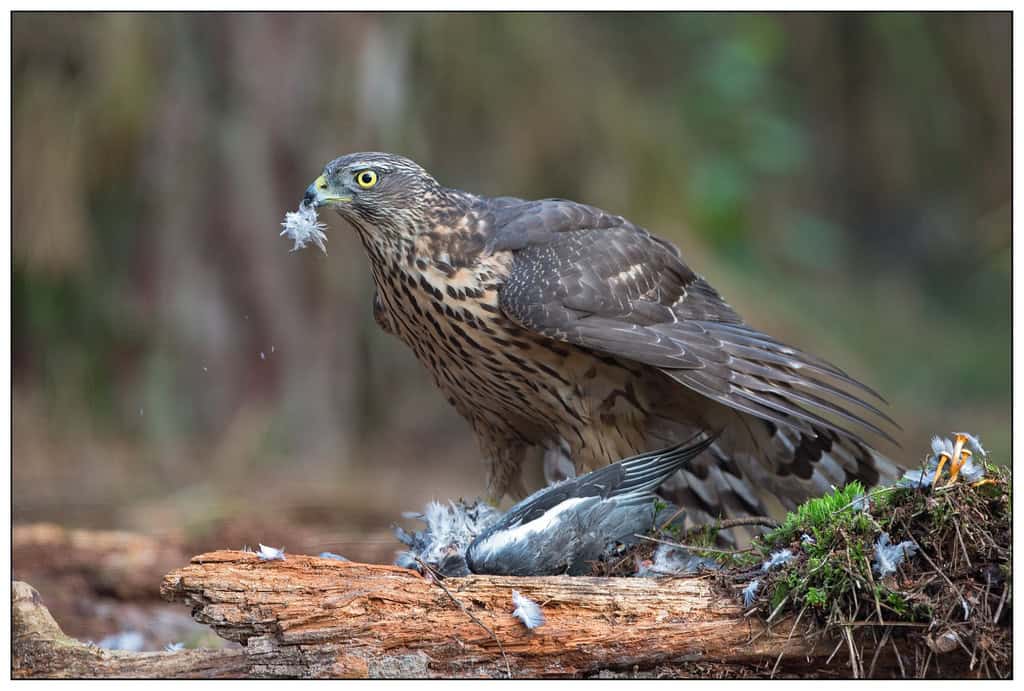
The American wilderness harbors many secretive hunters that silently stalk through forest shadows, rarely glimpsed by human eyes. From elusive felines to stealthy canids and powerful birds of prey, these predators maintain crucial ecological balance within North America’s diverse forest ecosystems. Despite their importance, many forest-dwelling carnivores remain mysterious, their presence often detected only through tracks, scat, or the occasional lucky sighting. Their secretive nature, combined with habitat loss and human persecution, has made some of these magnificent creatures increasingly rare. This article explores twelve remarkable predators that haunt American forests, highlighting their unique hunting strategies, ecological roles, and the challenges they face in an ever-changing landscape.
The Secretive Mountain Lion
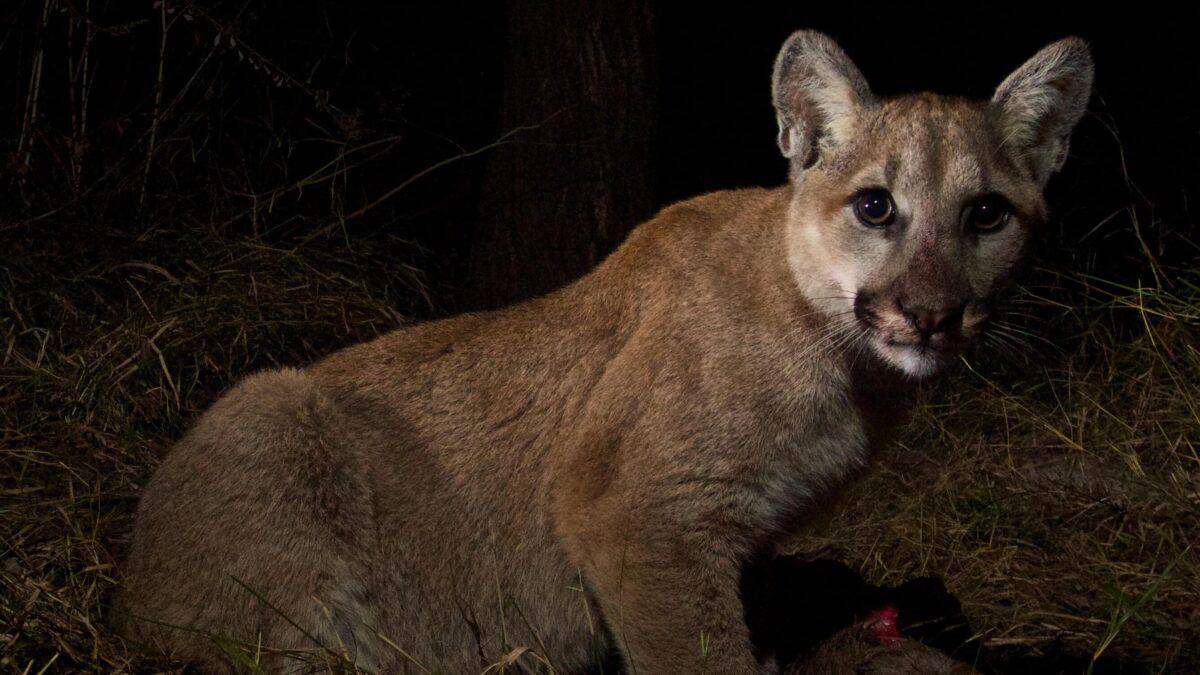
Also known as pumas, cougars, or panthers, mountain lions (Puma concolor) are North America’s largest wildcats and among its most elusive forest predators. Despite weighing up to 180 pounds and measuring over eight feet from nose to tail, these tawny cats are masters of stealth, often living in close proximity to humans without detection. Mountain lions range across diverse forest habitats from the Canadian Yukon to the tip of South America, yet encounters are exceedingly rare due to their solitary, nocturnal nature and remarkable ability to avoid human detection.
Mountain lions are ambush predators, using forest cover to stalk prey before launching powerful, decisive attacks. Their primary prey includes deer, elk, and smaller mammals, with a single cat requiring the equivalent of one deer per week. Unlike other big cats, mountain lions cannot roar but instead communicate through purrs, whistles, and distinctive screams that have earned them the nickname “catamount” or “screamer.” Conservation efforts have helped stabilize some populations after decades of bounty hunting, but habitat fragmentation and human conflict continue to threaten these magnificent forest predators.
The Phantom Gray Wolf
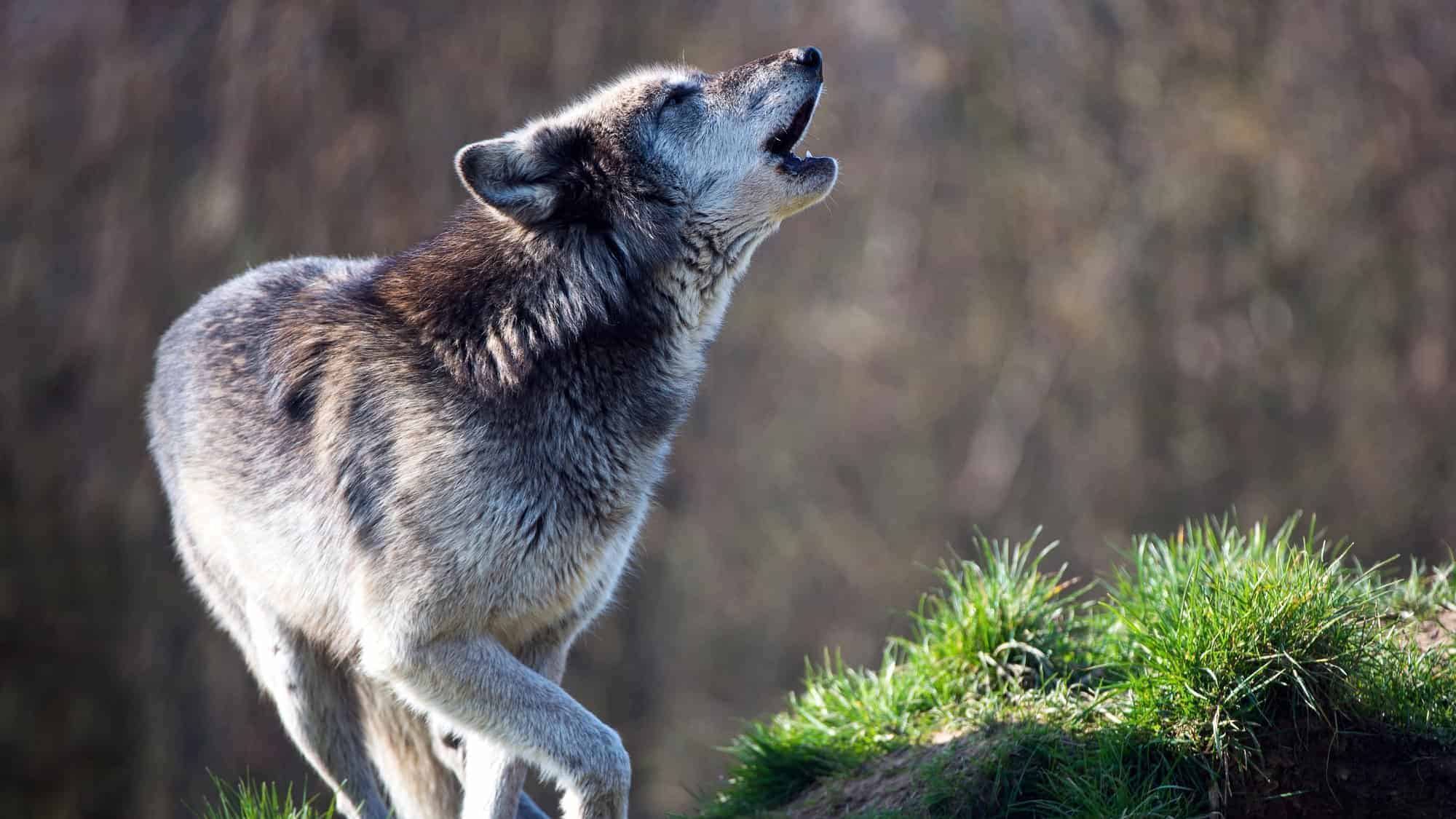
Once widespread throughout North American forests, the gray wolf (Canis lupus) was nearly eradicated from the contiguous United States by the mid-20th century. Today, following reintroduction efforts and natural recovery, wolves have reclaimed portions of their historic range in northern forests, though catching sight of these intelligent predators remains an extraordinary event. Gray wolves are highly social animals that typically live in family groups called packs, working cooperatively to hunt prey much larger than themselves, including deer, elk, and moose.
Despite their fearsome reputation, wolves are naturally wary of humans and actively avoid contact. They communicate through a complex language of howls, whines, growls, and body postures that helps maintain pack cohesion across vast territories that can span over 1,000 square miles in forested regions. Wolves play a critical role in forest ecosystem health by controlling prey populations and indirectly influencing vegetation patterns through what ecologists call a “trophic cascade.” Despite their protected status, wolves face ongoing challenges from habitat loss, human conflict, and political controversies surrounding their management.
The Shadow-Dwelling Canada Lynx
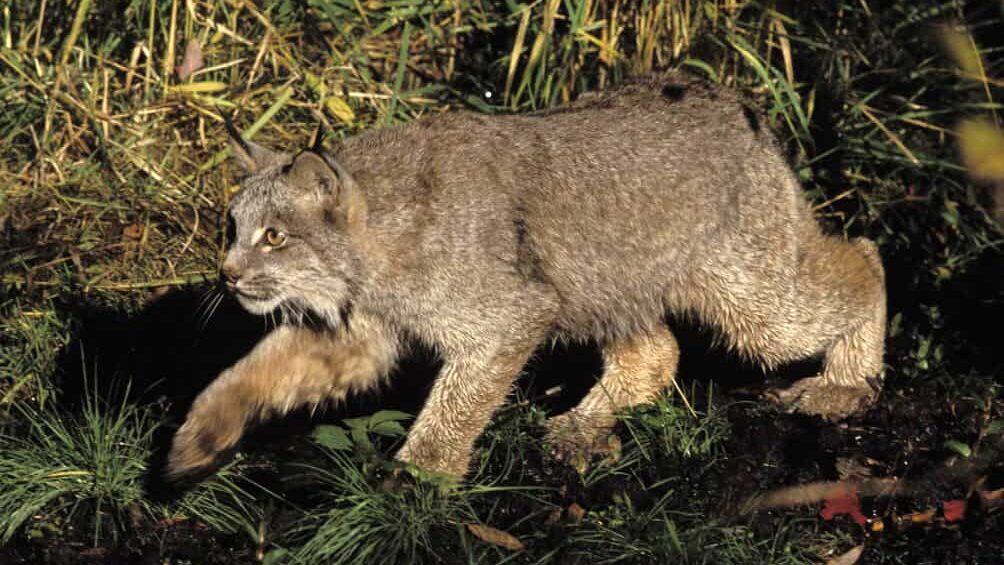
The Canada lynx (Lynx canadensis) is perfectly adapted to life in northern coniferous forests, with its thick fur, snowshoe-like paws, and specialized hunting skills. These medium-sized wildcats, weighing between 15-30 pounds, are so secretive that many lifetime residents of lynx habitat have never glimpsed one. Their distinctive features include triangular ears with black tufts, a short “bobbed” tail with a black tip, and exceptionally long legs that help them navigate deep snow during winter hunts.
The lynx shares a fascinating ecological relationship with its primary prey, the snowshoe hare, with lynx populations rising and falling in response to the hare’s 10-year population cycles. These specialized predators can detect prey under snow using their exceptional hearing and can leap more than 20 feet to pounce on unsuspecting hares. Climate change poses a significant threat to lynx populations, as warming temperatures affect snowpack and shift the range of their preferred boreal forest habitat. The U.S. Fish and Wildlife Service lists the Canada lynx as threatened in the contiguous United States, where preserving large tracts of undisturbed forest is essential for their survival.
The Enigmatic American Marten
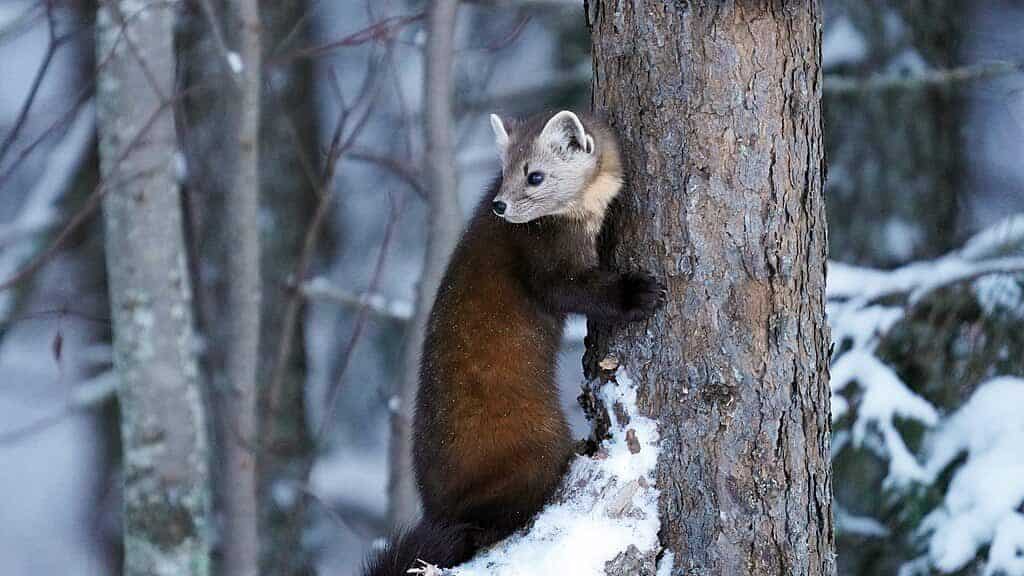
The American marten (Martes americana) is a small but fierce predator belonging to the mustelid family, which includes weasels, otters, and wolverines. Despite being only the size of a house cat, these agile hunters are remarkably effective predators within northern and mountain forests. Their slender bodies, ranging from 18-27 inches in length and weighing 1-3 pounds, enable them to pursue prey through dense undergrowth and tree canopies with astonishing speed and agility.
Martens prefer mature coniferous or mixed forests with abundant dead trees and complex structure, where they hunt voles, mice, squirrels, and birds. They’re also opportunistic omnivores, consuming berries, honey, and insects when available. Unlike many forest predators, martens remain active throughout winter, hunting beneath the snow in subnivean zones where small mammals create tunnel networks. Their fur was historically prized in the fur trade, leading to significant population declines, but sustainable forest management practices have helped many populations recover. Martens serve as excellent indicators of forest ecosystem health, as they require intact, mature forest habitats with high structural complexity to thrive.
The Reclusive Fisher
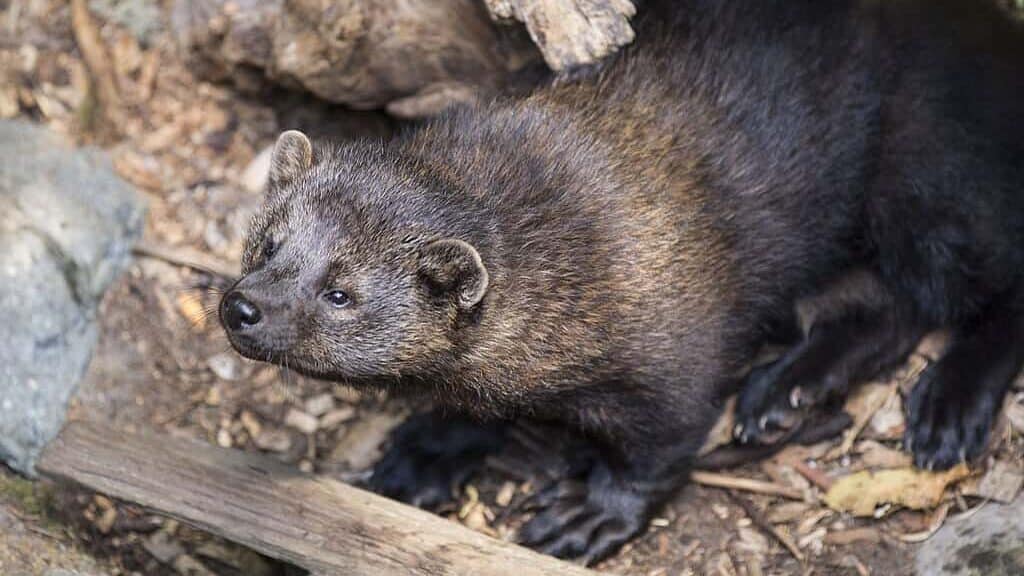
Despite its name, the fisher (Pekania pennanti) rarely catches fish, instead establishing itself as one of North America’s most specialized predators. This larger cousin of the marten inhabits dense coniferous and mixed forests from Canada to the northern United States, with some populations in the Pacific Northwest and isolated mountainous regions. Weighing between 4-13 pounds with males nearly twice the size of females, fishers possess a long, muscular body covered in dark brown to black fur with occasional white patches on the chest.
What makes fishers truly remarkable is their specialized ability to hunt porcupines, one of the forest’s most well-defended creatures. Using calculated attacks targeting the porcupine’s face, fishers systematically wear down their spiny prey before accessing the unprotected underside. This specialized predation helps regulate porcupine populations that might otherwise damage forest trees through extensive bark feeding. Fishers also hunt snowshoe hares, squirrels, birds, and carrion, making them important regulators of forest ecosystems. Historical trapping and forest fragmentation severely reduced fisher populations, but conservation efforts have helped restore them to portions of their former range, though they remain elusive due to their solitary nature and preference for dense forest interiors.
The Fierce Northern Goshawk
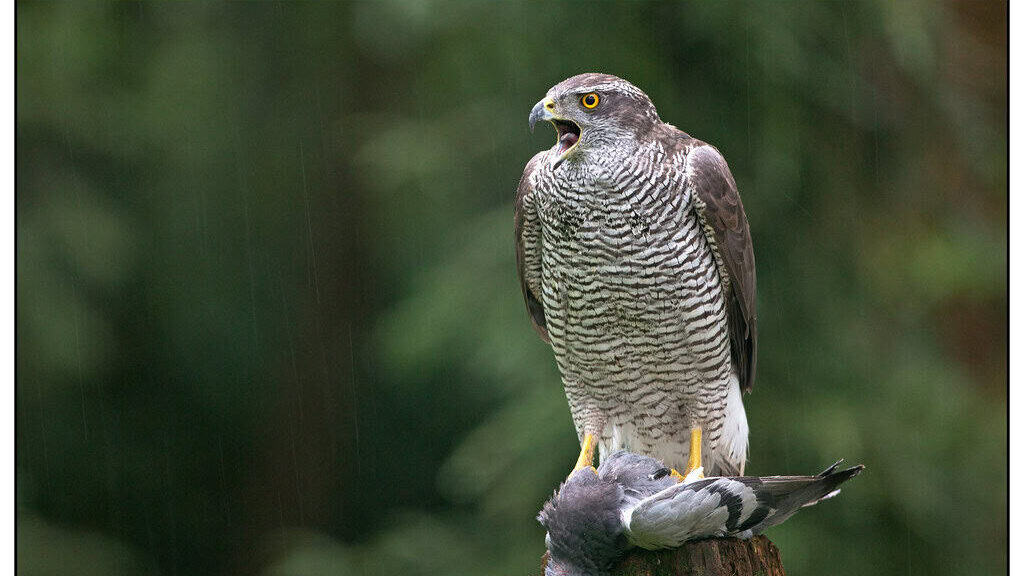
The northern goshawk (Accipiter gentilis) is often described as the “phantom of the forest” for its secretive nature and explosive hunting style. This powerful raptor inhabits mature forests across North America, Europe, and Asia, preferring large tracts of undisturbed woodland with open understory that facilitates hunting. With a wingspan reaching four feet and distinctive gray-blue plumage, white eyebrow stripe, and piercing red eyes, adult goshawks are formidable predators capable of taking prey as large as grouse, rabbits, and squirrels.
Goshawks hunt using a combination of stealth and extraordinary speed, remaining perched and hidden until the perfect moment to launch through the forest in high-speed pursuit, maneuvering between trees with remarkable agility. During breeding season, goshawks become highly territorial and may aggressively defend nest sites against intruders, including humans who venture too close. Forest management practices that reduce old-growth and mature forest have negatively impacted goshawk populations in many regions, as these birds require large contiguous forest blocks with trees suitable for their substantial stick nests. The U.S. Forest Service often uses goshawk presence as an indicator of forest ecosystem health and diversity.
The Stealthy Bobcat
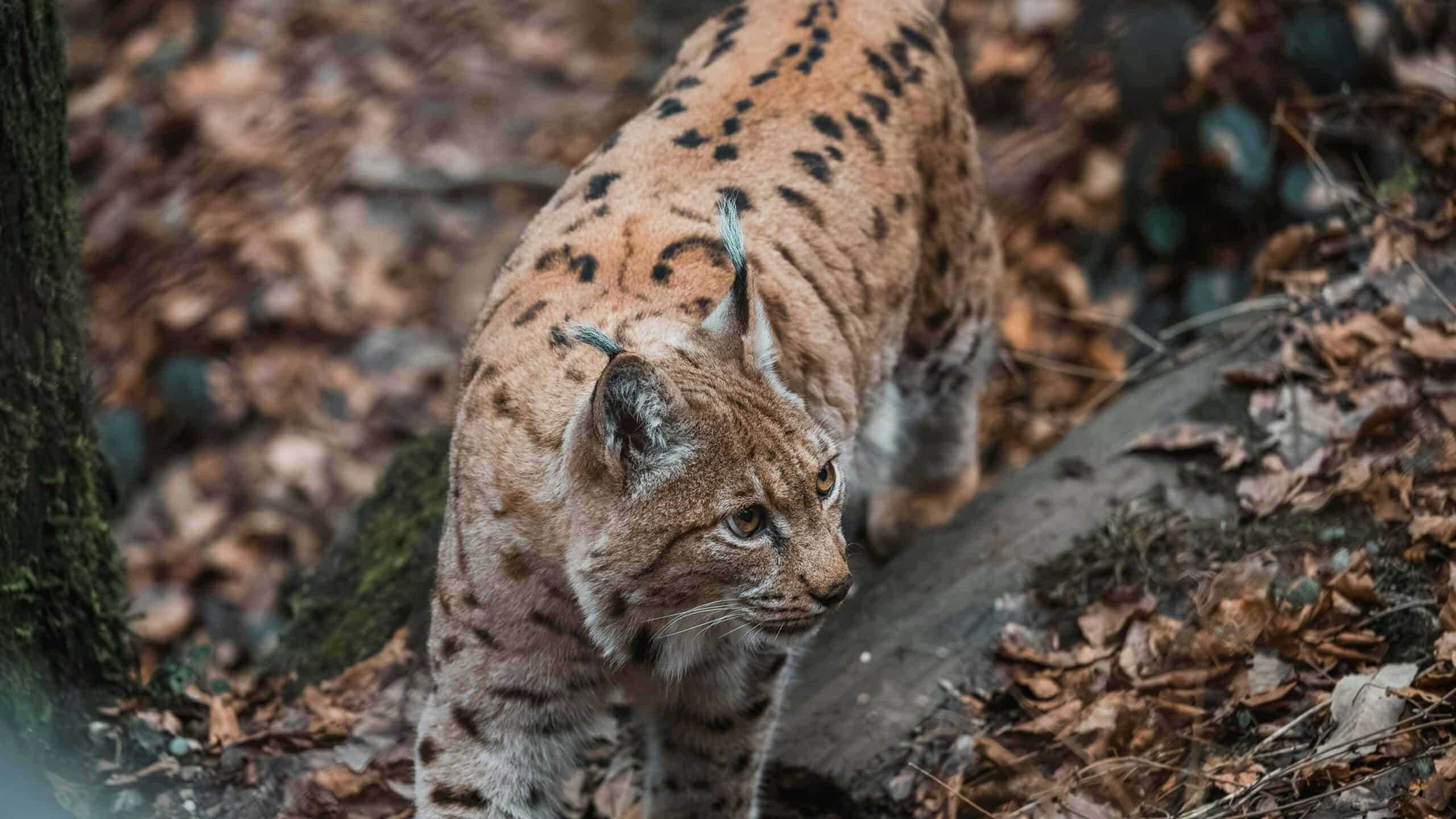
The bobcat (Lynx rufus) is North America’s most widespread wildcat, inhabiting diverse forest types from southern Canada to Mexico. Despite their prevalence, these medium-sized predators weighing 15-35 pounds are seldom seen due to their exceptional stealth and primarily nocturnal hunting habits. Bobcats are distinguished by their reddish-brown spotted coat, distinctive facial ruff, black ear tufts, and the short “bobbed” tail that gives them their name. Their adaptability has allowed them to persist in fragmented forest habitats where larger predators have disappeared.
These solitary hunters employ a patient stalk-and-ambush strategy, using their acute senses and natural camouflage to approach prey undetected before launching a powerful pounce. Their diet includes rabbits, rodents, birds, and occasionally deer, especially during harsh winters when they may target fawns or weakened adults. Bobcats maintain exclusive territories marked with scent, scratch marks, and scat deposits, with males typically controlling larger areas that overlap with several females. Unlike many forest predators, bobcat populations have remained relatively stable, though they face ongoing threats from habitat fragmentation, roadkill mortality, and incidental trapping. Their presence in an ecosystem often indicates healthy prey populations and sufficient forest cover.
The Cunning Red Fox

The red fox (Vulpes vulpes) is among the most adaptable forest predators, occupying diverse habitats from wilderness areas to suburban woodlots across North America, Europe, Asia, and introduced regions of Australia. Despite their bright rusty-red coat, black legs, and white-tipped tail, these medium-sized canids weighing 8-15 pounds are rarely spotted in their forest habitats due to their exceptional wariness and primarily crepuscular activity patterns. Red foxes prefer mixed landscapes with forest edges, meadows, and agricultural areas that provide diverse hunting opportunities.
Known for their intelligence and problem-solving abilities, red foxes employ varied hunting techniques from the classic “mousing leap” to catch small prey beneath snow to complex stalking strategies for larger targets. Their omnivorous diet includes rodents, rabbits, birds, insects, fruits, and even human food waste in areas with anthropogenic influence. Red foxes create extensive underground den systems for raising their young (called kits), often using the same site for generations if undisturbed. While adaptable to human presence, they maintain secretive behaviors in forest settings, where they play crucial roles controlling rodent populations and dispersing seeds of fruit-bearing plants. Despite facing threats from habitat loss and competition with coyotes, red foxes demonstrate remarkable resilience across their extensive range.
The Formidable Black Bear
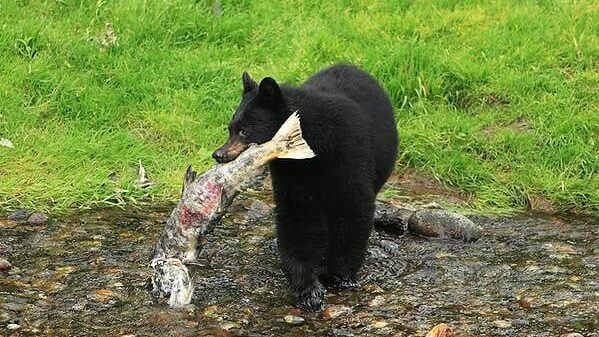
The American black bear (Ursus americanus) is the most common and widely distributed bear species in North America, yet encounters remain relatively rare due to their natural wariness and preference for avoiding human contact. Despite the name, these forest omnivores can be black, brown, cinnamon, or even white (in coastal British Columbia), typically weighing between 200-600 pounds, with males substantially larger than females. Black bears inhabit diverse forest types from Florida swamps to Alaskan mountains, requiring large tracts of woodland with adequate food resources and denning sites.
Unlike popular misconceptions portraying bears as primarily meat-eaters, black bears obtain roughly 80% of their nutrition from plant sources including berries, nuts, grasses, and tree cambium. They opportunistically consume insects, fish, and occasionally larger prey or carrion when available. Their ecological role in forests includes seed dispersal, nutrient cycling through scat deposition, and regulation of prey populations. Black bears possess remarkable memory for food locations and return to productive sites seasonally, particularly berry patches and nut-producing trees. Though bear populations have recovered in many regions following historical persecution, they face ongoing challenges from habitat fragmentation, human food conditioning, and climate-driven changes to their food resources. Contrary to their fearsome reputation, black bears typically avoid human encounters, with most sightings limited to fleeting glimpses as they retreat into forest cover.
The Elusive Eastern Spotted Skunk
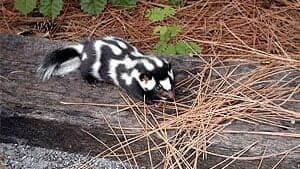
The eastern spotted skunk (Spilogale putorius) represents one of North America’s most dramatically declining yet least studied forest predators. These diminutive carnivores, weighing just 1-2 pounds, are significantly smaller than their more familiar striped cousins and feature a distinctive broken pattern of white spots and stripes on glossy black fur. Once common throughout eastern and central forests, spotted skunk populations have plummeted by more than 90% since the 1950s for reasons not fully understood, earning them “threatened” or “endangered” status in several states.
Unlike the bold behavior of striped skunks, eastern spotted skunks are exceptionally secretive, primarily nocturnal, and rarely encountered even by researchers specifically seeking them. They prefer dense forest understory, rocky outcrops, and brushy areas where they hunt insects, small mammals, birds, eggs, and fruits. When threatened, spotted skunks perform a remarkable handstand warning display, balancing on front paws with tail erect before spraying their powerful defensive musk if the threat persists. Their predatory activities help control forest insect and rodent populations, while their secretive behavior makes them valuable indicators of undisturbed habitat. Recent conservation efforts include targeted research using camera traps and tracking devices to better understand their habitat requirements and develop effective management strategies for this vanishing forest predator.
The Swift-Flying Great Horned Owl
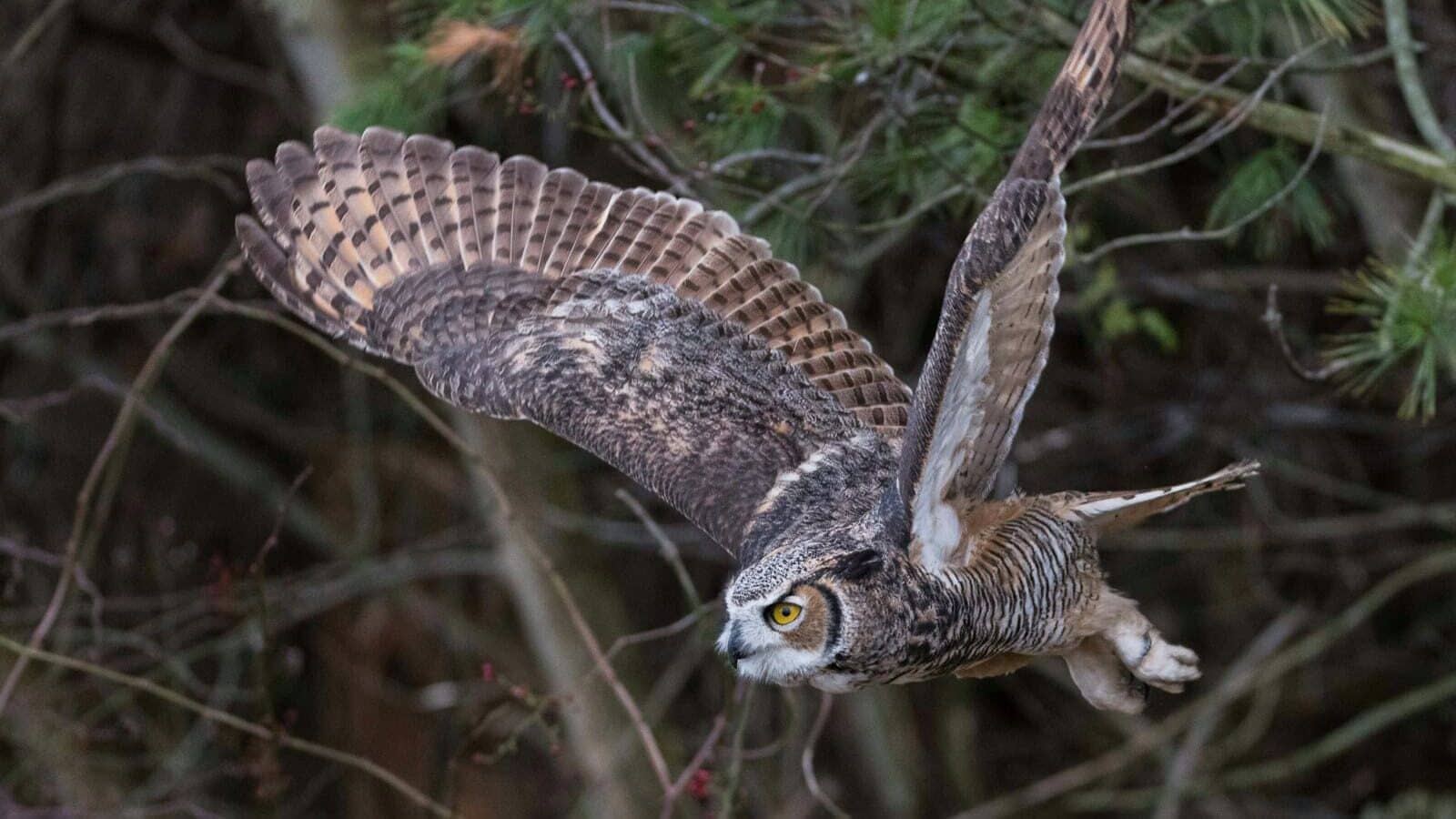
The great horned owl (Bubo virginianus) reigns as one of North America’s most powerful aerial predators, yet remains seldom seen despite its widespread distribution across diverse forest habitats. These impressive raptors, weighing 2-5 pounds with wingspans reaching five feet, are identified by their large size, prominent ear tufts (which aren’t actually ears), and distinctive hooting call that resonates through forests on winter nights. Their exceptional adaptability has enabled them to inhabit environments ranging from Arctic treeline to desert canyons, though they prefer areas with a mix of forest for nesting and open spaces for hunting.
As nocturnal ambush predators, great horned owls possess specialized adaptations including asymmetrical ear placement for precise sound location, specialized wing feathers for silent flight, and powerful talons capable of exerting over 300 pounds of pressure per square inch. Their diverse diet includes rabbits, rodents, other birds (including raptors), skunks, and occasionally domestic pets in suburban interfaces. Unlike many forest predators, great horned owls don’t build their own nests but instead appropriate abandoned hawk, crow, or squirrel nests, or use natural cavities in cliffs or trees. Their tendency to begin nesting in mid-winter, often with snow still covering their territories, demonstrates remarkable cold hardiness. While populations remain stable across most of their range, these nocturnal hunters face threats from collisions with vehicles and structures, secondary rodenticide poisoning, and habitat fragmentation that reduces their preferred forest hunting grounds.
The Tenacious Wolverine
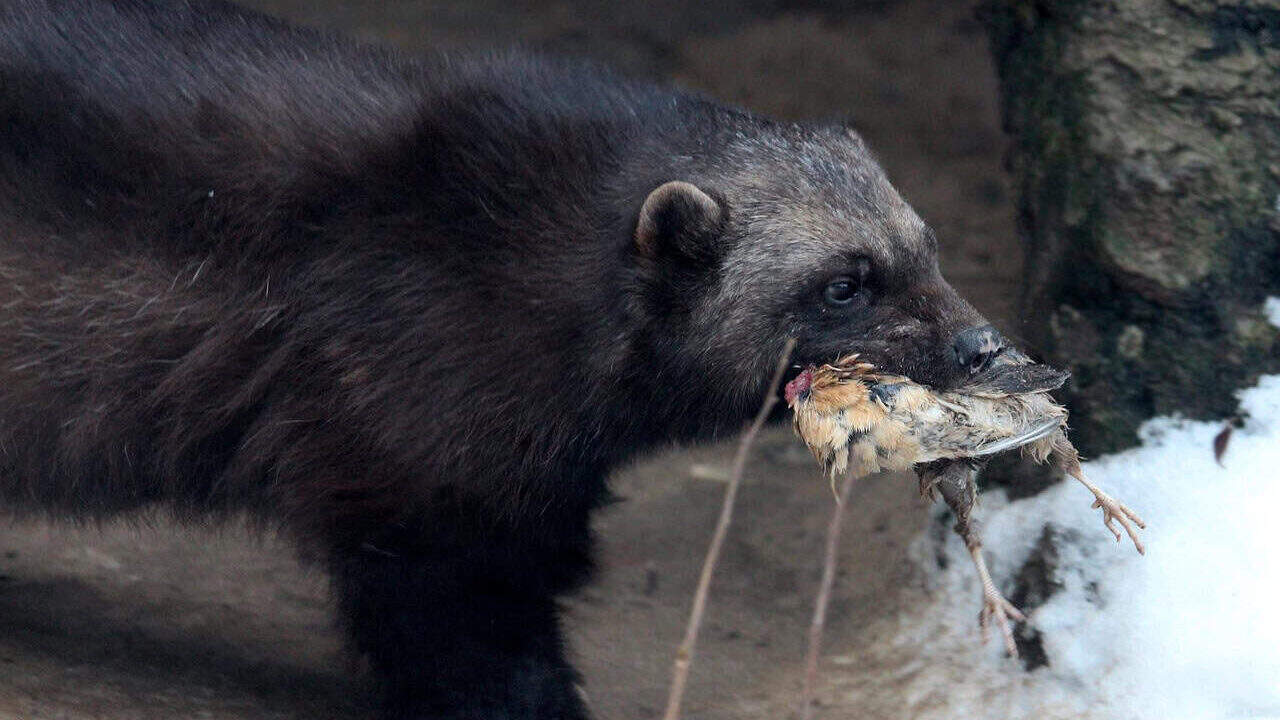
The wolverine (Gulo gulo) embodies the wild essence of remote northern forests, earning its reputation as one of North America’s most elusive and tenacious predators. Despite resembling a small bear, this largest terrestrial member of the mustelid family typically weighs just 20-40 pounds but possesses strength disproportionate to its size, capable of driving away wolves and bears from kills. Wolverines require vast territories of 100-500 square miles of undisturbed habitat, primarily in boreal forests, taiga, and alpine regions of Alaska, Canada, and the northernmost contiguous United States.
Wolverines combine incredible endurance with opportunistic hunting strategies, traveling up to 15 miles daily across challenging terrain in search of prey and carrion. Their specialized molars can crush frozen meat and bone, allowing them to scavenge carcasses unusable by other predators during harsh winter months. Perhaps most remarkably, wolverines require persistent spring snow cover for denning and food storage, making them particularly vulnerable to climate change as warming temperatures reduce suitable habitat. Researchers estimate fewer than 300 wolverines remain in the contiguous United States, primarily in remote mountain forests of Montana, Idaho, Wyoming, and Washington. Conservation efforts focus on maintaining connectivity between isolated populations and preserving large wilderness areas where these phantom predators can persist far from human disturbance.
America’s forest predators face unprecedented challenges in the 21st century, with habitat fragmentation representing perhaps the most significant threat. As forests become increasingly divided by roads, development, and agricultural conversion, predators requiring large

- 21 Scary Creatures You Might Run Into While Hiking In The U.S - June 3, 2026
- The Difference Between Turtles and Tortoises—Explained - June 3, 2026
- What Makes Owls the Silent Predators of the Night? - June 3, 2026