

Stand at the edge of almost any Florida wetland in early spring and you might catch a glimpse of one of the state’s most striking comeback stories gliding overhead. Large, prehistoric-looking, with a bald gray head and a wingspan stretching over five feet, the wood stork commands attention. For decades, spotting one felt like a small miracle. Today, that’s starting to change.
The U.S. Fish and Wildlife Service officially removed the wood stork from the federal list of endangered and threatened wildlife in early 2026, a milestone that would have seemed almost impossible four decades ago, when the bird was on the brink of extinction. It’s a story rooted in patience, persistent conservation work, and the gradual healing of some of Florida’s most vital wild places.
A Bird That Was Nearly Lost
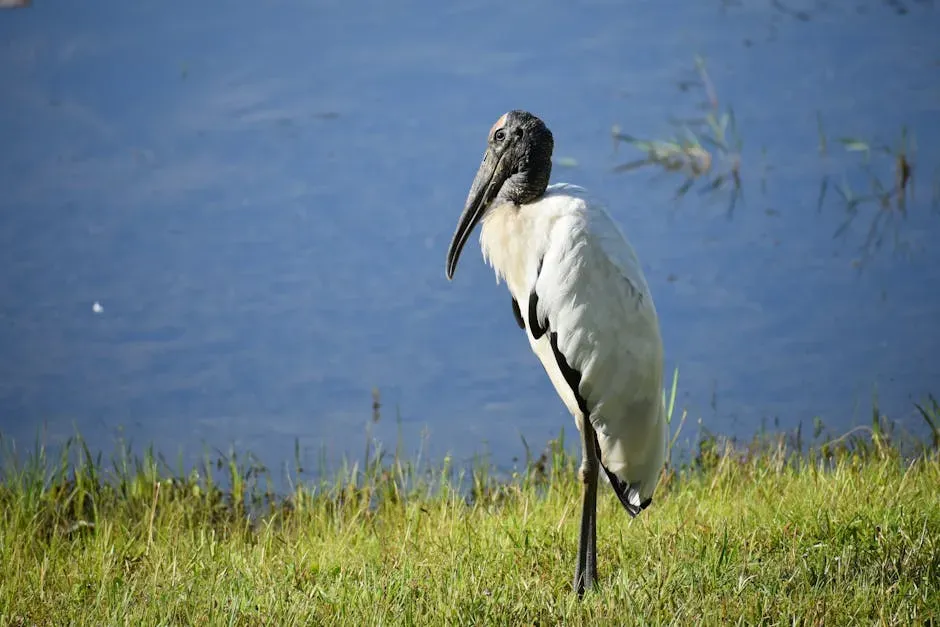
When the wood stork was listed under the Endangered Species Act in 1984, its population had plummeted by over three quarters since the 1930s, and it holds the distinction of being the only stork species that breeds in the United States. The numbers were stark and alarming.
The species had declined from approximately 20,000 nesting pairs in the late 1930s to just 5,000 pairs by the late 1970s, a collapse driven largely by the draining and development of wetlands. Once a bird that filled the Florida skies, it had been quietly disappearing for a generation.
Before their numbers dwindled, roughly seven in ten wood storks resided in the Everglades. Degradation of that ecosystem through wetland destruction and changes in water use rendered much of the habitat unsuitable. The loss wasn’t just of birds. It was the quiet unraveling of an entire ecological community.
What Makes the Wood Stork So Distinctive
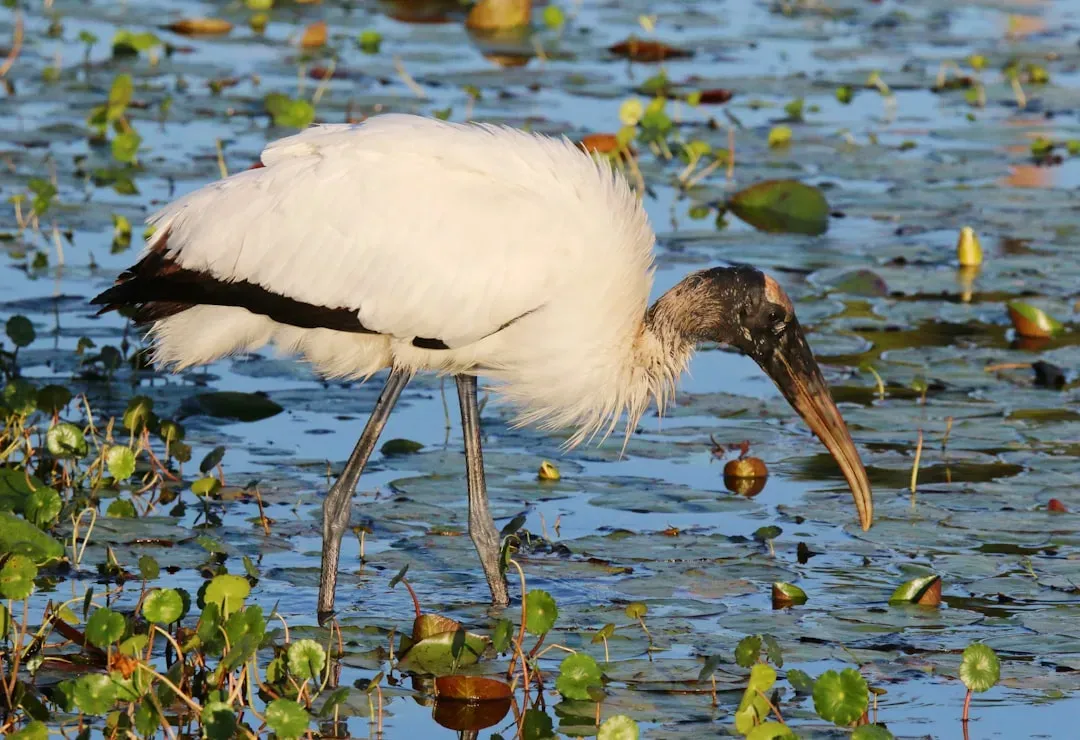
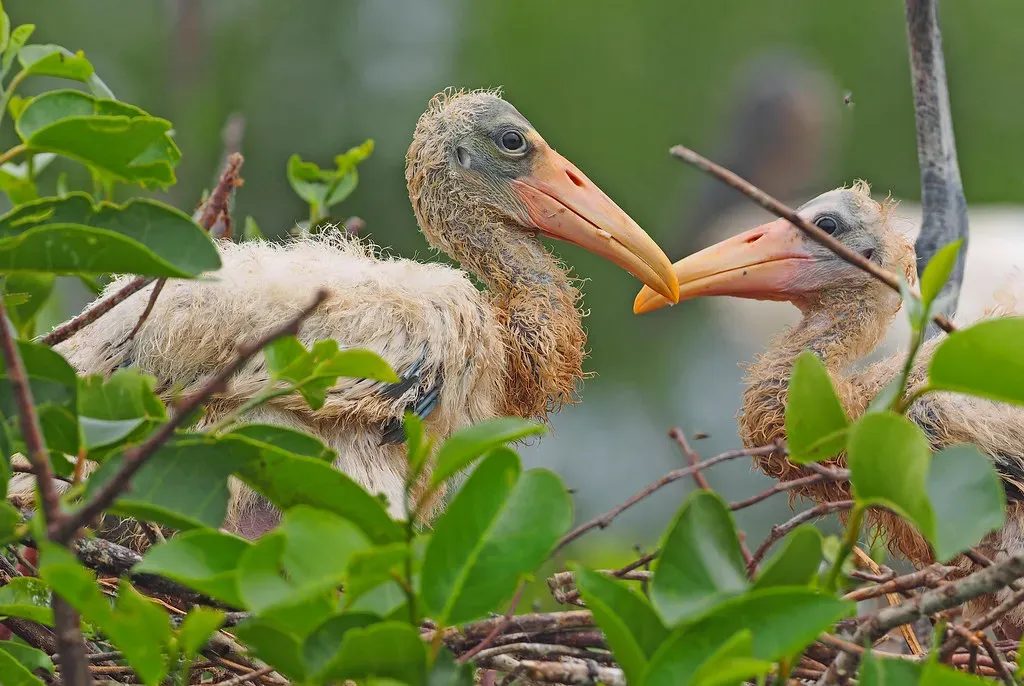
This prehistoric-looking wading bird stands four feet tall on long legs with a white feathered body and iridescent green and black flight feathers and tail. Its gray-colored pebbly bald head and large heavy bill have earned it the endearment of “Old Flinthead.”
Wood storks reach about 35 to 45 inches in length with a wingspan of roughly 60 to 65 inches. The plumage is white except for iridescent black feathers along the wing and tail, while the head and upper neck of adult storks carry rough, scaly gray skin rather than feathers. There’s nothing quite like watching one soar.
Storks have a very specialized tactile foraging behavior, moving their partially opened bill through the water in a side-to-side motion, often using their feet to rake or scare up aquatic prey. Once the bill detects a fish, it snaps shut in one of the quickest reflex reactions in the animal kingdom. It’s an extraordinary adaptation, and one that makes clean, shallow wetlands absolutely essential to their survival.
The Critical Role of Florida’s Wetlands
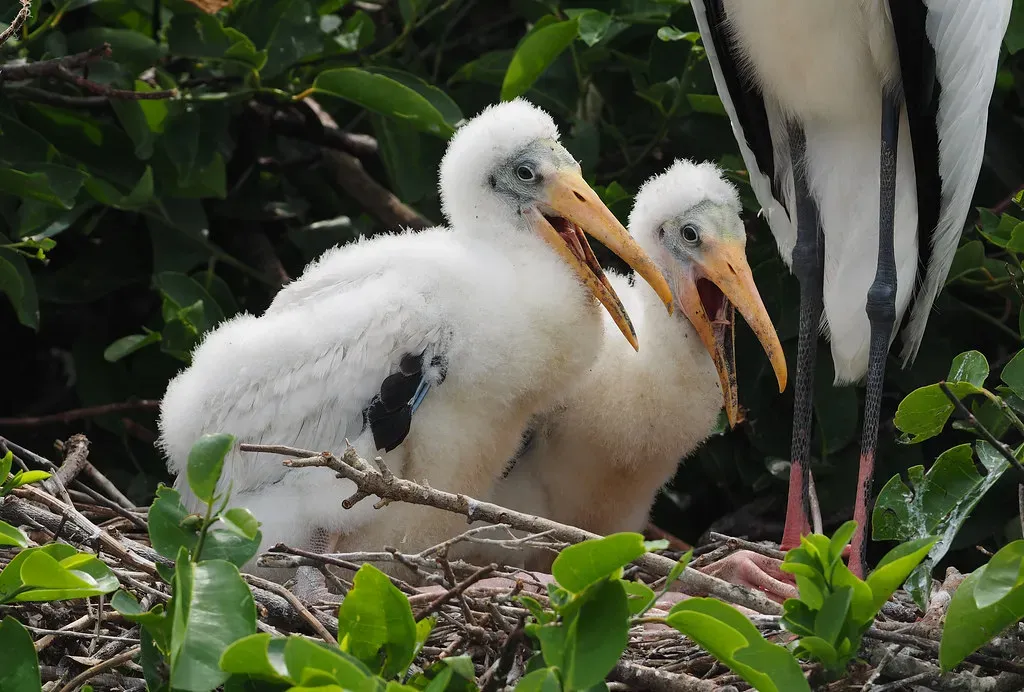
Wood storks feed mostly on fish in water between two and fifteen inches in depth, where the water is calm and uncluttered by aquatic vegetation, using that specialized tactile foraging behavior to detect prey. The relationship between water depth and food availability is tighter than it might appear.
Locating prey using tactile location allows storks to forage in muddy water but requires a relatively high prey density to be effective. Storks therefore tend to forage in wetlands that have long annual wet periods followed by drying conditions to concentrate prey during spring and early summer months for successful breeding seasons.
Wood storks nest in mixed hardwood swamps, sloughs, mangroves, and cypress domes and strands across Florida. They nest in colonies, typically in treetops, and strongly prefer nest sites surrounded by water that hold alligators, since the alligators help reduce predators like raccoons. It’s a clever arrangement that evolution has refined over millennia.
From 29 Colonies to Over 100
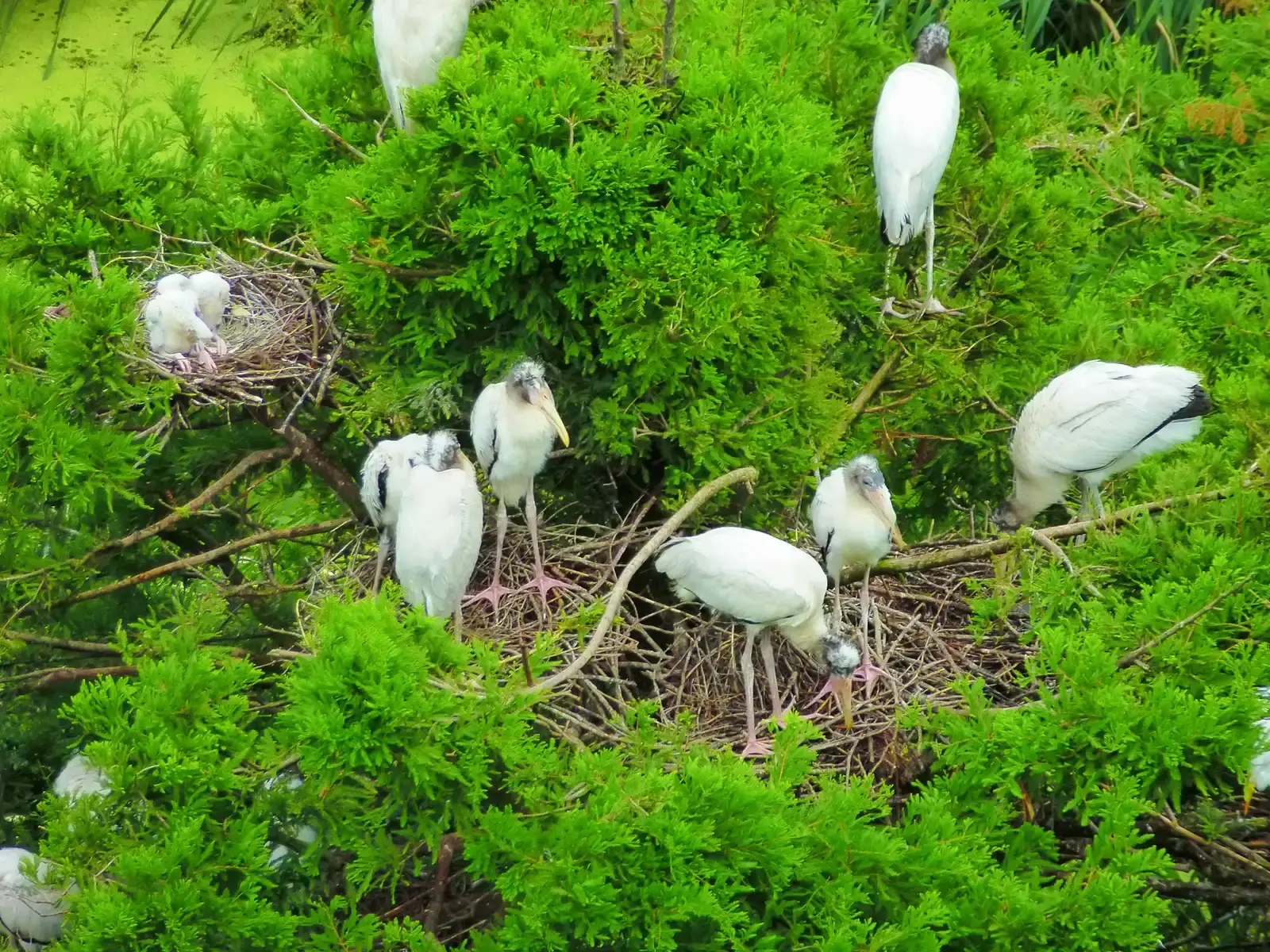
Uploaded by snowmanradio, CC BY 2.0)
When the U.S. breeding population was listed under the Endangered Species Act in 1984, its range included Florida, Georgia, South Carolina, and Alabama, with breeding concentrated in Central and South Florida across just 29 nesting colonies. That number tells you just how far the species had fallen.
Today, the wood stork breeding population is estimated at between 10,000 and 14,000 nesting pairs across roughly 100 colony sites, representing more than twice the number of nesting pairs and more than three times the number of colonies compared to when the species was listed. That’s a transformation on a scale that few conservation stories can match.
The species has successfully achieved five consecutive years of over 10,000 breeding pairs, and three of four breeding regions have averaged at least 1.5 chicks per nest for five consecutive years. In 2022 alone, there were 51 active colonies in Florida, 22 in Georgia, 28 in South Carolina, and 5 in North Carolina.
How Florida’s Nesting Season Unfolds
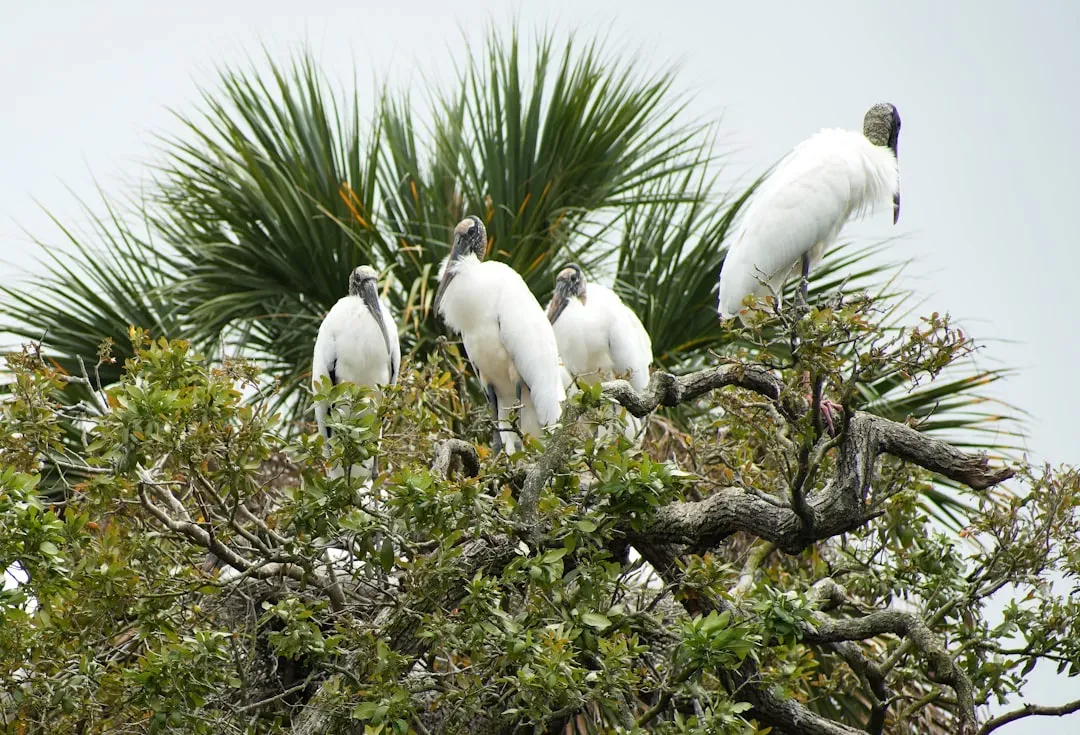
Wood storks are highly social in nesting habitats and are often seen nesting in large colonies of 100 to 500 nests. Colonies in South Florida form between late November and early March, while wood storks in Central and North Florida typically form their colonies from February into March.
In Florida, wood storks are capable of laying eggs from October through June. Females lay a single clutch of two to five eggs per season, and the average incubation period runs about 30 days, with young storks able to fly roughly 10 to 12 weeks after hatching.
Storks require between 110 and 160 days for the full annual nesting cycle, from courtship until nestlings become independent. Nesting activity may begin as early as December or as late as March in southern Florida colonies, with full-term colonies remaining active until June or July in the south and as late as July or August at more northern sites.
The Northward Shift and Expanding Range
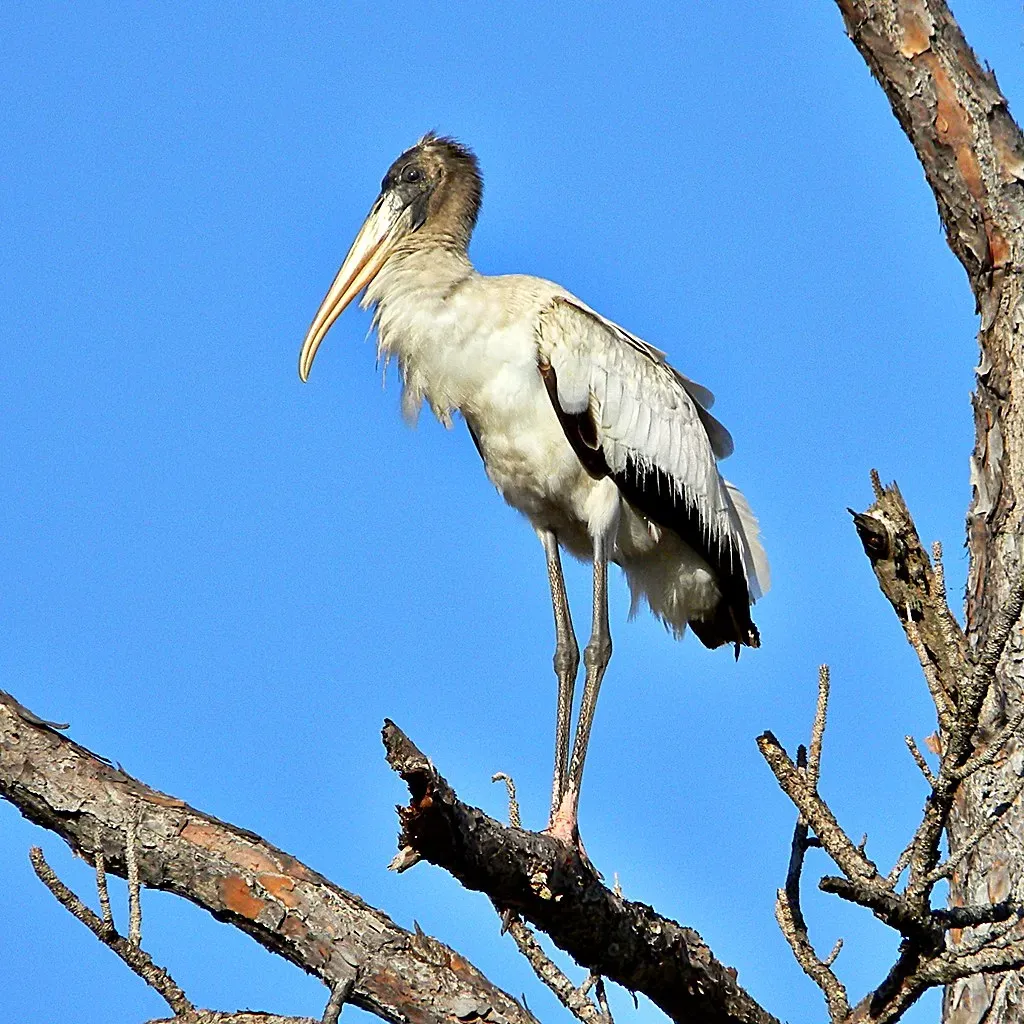
Concurrent with population declines in southern Florida, the wood stork breeding range expanded northward into central and northern Florida, Georgia, and South Carolina from the 1960s through the 1980s, and then into North Carolina in 2005, with increasing numbers of colony sites and nesting pairs becoming established in northeastern and northwestern regions annually.
Wood storks have adapted to new nesting areas, moving north into coastal salt marshes, flooded rice fields, floodplain forest wetlands, and human-created wetlands. This flexibility has proved to be one of their most important survival tools.
Dedicated conservation efforts and the birds’ adaptability are among the likely reasons behind this rebound. They have adapted to new nesting areas, including coastal salt marshes further north, flooded rice fields, floodplain forest wetlands, and even golf courses and retention ponds. Nature, it seems, finds a way when given even a modest opening.
The Corkscrew Challenge and the Fight for South Florida
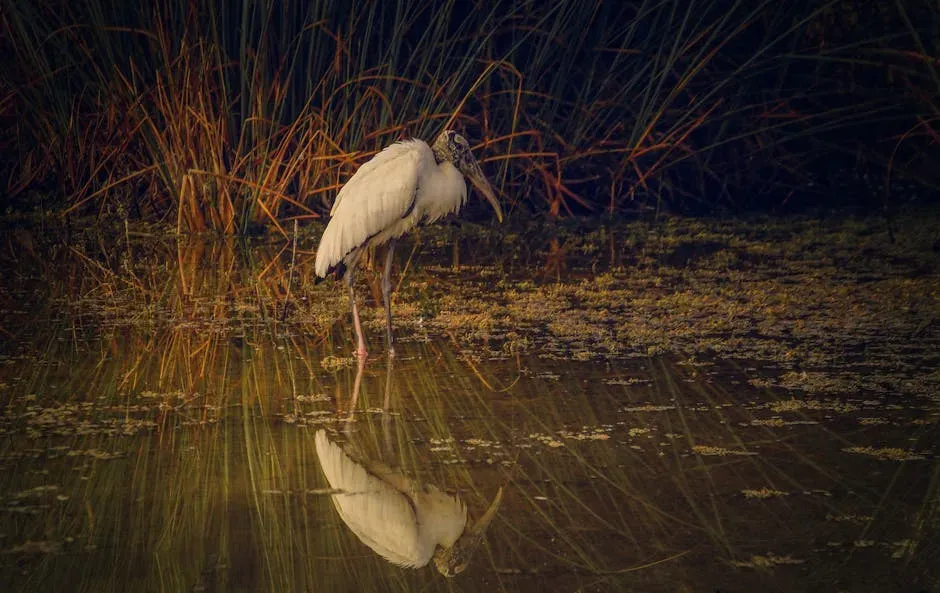
Audubon’s Corkscrew Swamp Sanctuary once hosted the largest wood stork nesting colony in North America. As development continues to impact the Southwest Florida landscape, wood storks have moved their nesting sites to inland islands that offer more protection from predators.
The wood stork’s Everglades habitat remains threatened by poor water-management practices, which have greatly changed the natural flooding and drying patterns of the ecosystem. When this cycle is upset by human-controlled activities, wood storks fail to feed and nest successfully. Nesting has crashed in Corkscrew Swamp Sanctuary, which was once the largest wood stork nursery in North America.
Launched in 2024, the Corkscrew Watershed Initiative is a new collaborative planning study by the South Florida Water Management District dedicated to the conservation and restoration of the Corkscrew Swamp in Southwest Florida, encompassing northern Collier and southern Lee counties. Key components of the initiative include habitat restoration aimed at extending the length of time that water remains on the surface of the land, and restoring natural water flows.
Conservation’s Ongoing Promise and Remaining Cautions
The official delisting of the wood stork finalized on March 9, 2026, with the U.S. Fish and Wildlife Service establishing a 10-year post-delisting monitoring plan to make sure the species’ recovery is maintained. The hard work of conservation rarely ends with a single announcement.
Environmental groups including Audubon Florida and the Center for Biological Diversity have expressed concern that populations have not recovered enough, with advocates worried about what happens to wood stork colonies found on private lands when they are no longer federally protected. These aren’t fringe concerns. Private land now shelters a meaningful share of active colonies.
The wood stork has been described as the iconic species that sparked the desire to restore the Everglades, opening a broad area of research that looks at native species as indicators of wetland health, water quality, and coastal resilience. That role isn’t ceremonial. Where wood storks nest successfully, it signals that something fundamental is going right with the land and water around them.
Conclusion
The wood stork’s return to Florida’s wetlands is one of those conservation outcomes that deserves to be acknowledged plainly. It took decades of monitoring, habitat restoration, cross-agency collaboration, and the quiet persistence of landowners and biologists working in often unglamorous conditions. The birds responded.
Still, recovery is not the same as security. Wetland pressures continue, water management in South Florida remains complicated, and the post-delisting period will test whether the protections that enabled this comeback can hold without the safety net of federal endangered-species status.
What the wood stork ultimately represents is a living measure of ecological health. When the wetlands are right, the storks nest. When they don’t, something deeper is wrong. Florida’s future, and the future of the remarkable bird that has come to symbolize it, will depend on how seriously that lesson is taken in the years ahead.

- What It Means When a Spider Builds Its Web Across Your Doorway According to Folklore From Four Continents - July 14, 2026
- Why Chickadees Remember Thousands of Hidden Food Caches Every Year - July 14, 2026
- What It Means When You See a Red-Tailed Hawk at a Significant Moment According to Native American Tradition - July 14, 2026